What Oregon Gardeners Should Still Be Watering Deeply In September
September in Oregon has a reputation for being the month when gardeners finally exhale. Summer is winding down, temperatures are softening, and everyone is waiting for the rain to show up and take watering duty off their hands.
Here is the thing though: that rain does not always arrive on schedule, and across a state as climatically diverse as Oregon, assuming fall moisture will handle everything is a gamble that newer plants and stressed shrubs tend to lose.
The coast, the Willamette Valley, and the high desert east of the Cascades are all working with completely different timelines right now, and a one-size-fits-all approach to September watering misses that reality entirely.
Plant age, soil conditions, current temperatures, and your specific location all factor into what your garden actually needs this month. The calendar is not enough on its own.
1. Newly Planted Trees And Shrubs Need Continued Deep Watering
Walk out to a tree you planted earlier this spring and press your finger two inches into the soil near the base. If the ground feels dry and powdery, that plant is likely still counting on you for moisture, even though September has arrived.
Newly planted trees and shrubs are among the highest priorities for continued deep watering in Oregon because their root systems are still developing and have not yet spread into the surrounding soil.
This is especially important for plants installed in exposed areas, sandy soils, or locations where nearby pavement and structures increase drying.
Consistent moisture during the establishment period can help new roots continue expanding before wetter weather becomes more reliable.
Established trees have extensive root networks that can reach moisture well below the surface, but a tree planted within the last year or two simply does not have that advantage yet.
During Oregon’s dry season, which can stretch well into September across the Willamette Valley, Southern and Central Oregon, the soil can remain quite dry at root depth despite cooler air temperatures.
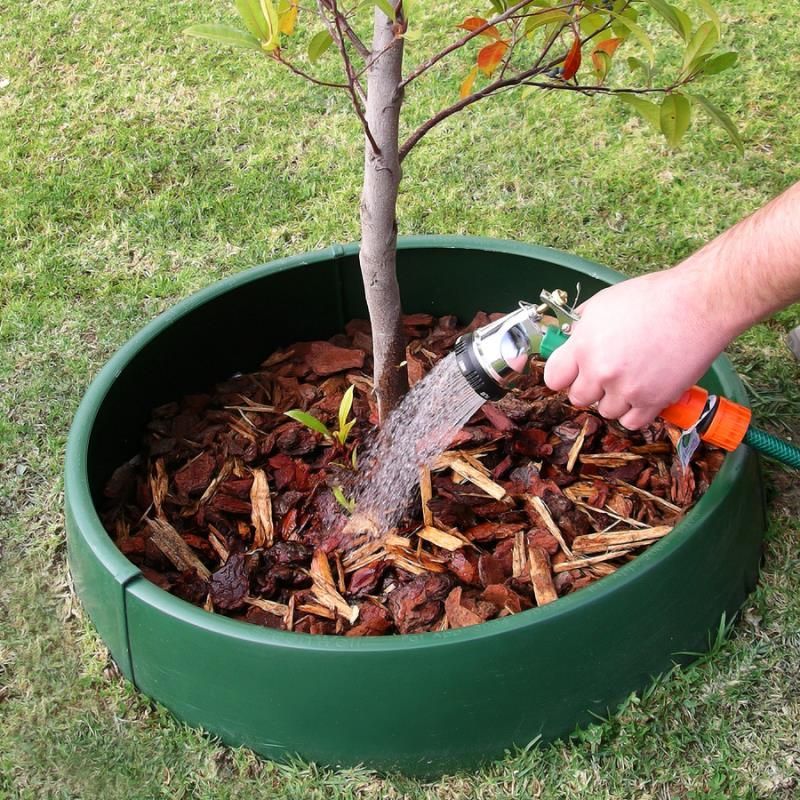
Deep watering means applying enough water to moisten the active root zone, not just wetting the top inch of soil. Slow, thorough watering encourages roots to follow moisture deeper into the ground, which supports stronger establishment over time.
Light surface watering may look helpful but often does not reach where roots are actually growing.
2. Young Fruit Trees May Still Need Deep Watering
Fruit trees planted within the last one to three years occupy a tricky middle ground in the September garden.
They may look healthy and even be carrying a small crop, but their root systems are still relatively limited compared with a mature tree that has been in the ground for decades.
In many parts of Oregon, September arrives with little or no rainfall, and young fruit trees can experience moisture stress before the rainy season reliably returns.
A tree that has established healthy roots by fall will be better positioned for the colder months ahead, but newly planted trees still need support while those roots continue developing.
Your Oregon Garden Changes Every Week. Your Plan Should Too.
Gardening in Oregon changes quickly throughout the season. Every Friday you’ll receive a simple weekly plan showing exactly what to plant, prune, fertilize, harvest, and protect so you never miss the right timing.
The goal is to maintain adequate moisture in the root zone without keeping the soil overly wet.
Mature, well-established fruit trees often manage Oregon’s dry late summer without much supplemental irrigation, especially if they are growing in deep soils with good water-holding capacity. Young trees do not yet have that buffer.
Their roots are still expanding outward and downward, and the soil volume they can access for moisture is smaller.
Watering needs for young fruit trees depend on the tree’s age, the soil type, sun exposure, and recent weather. Sandy soils dry faster than clay soils, and a tree in a warm, exposed location will need more attention than one in a cooler, partly shaded spot.
Check soil moisture a few inches below the surface before watering rather than following a rigid schedule.
3. Newly Planted Evergreens Need Extra Attention
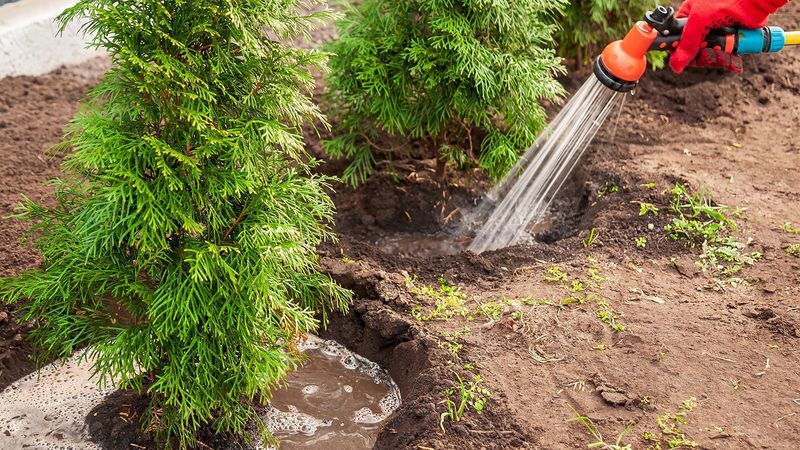
Unlike deciduous plants that shed their leaves in fall, evergreen trees and shrubs hold onto their foliage year-round, which means they continue losing moisture through their leaves even as temperatures begin to drop.
For a well-established evergreen with deep, spreading roots, this is manageable.
For one planted earlier this year or last season, it can create real stress during Oregon’s late dry summer. This is especially true for evergreens planted in exposed areas where wind, reflected heat from pavement, or fast-draining soils can increase moisture loss.
Providing adequate water during establishment helps support the plant while its root system continues expanding.
Newly installed evergreens planted in spring or early summer are still building the root systems they need to access soil moisture on their own.
Until those roots spread more widely, the plant depends on the water available in the limited soil volume immediately surrounding the root ball.
When that zone dries out, the plant has few options for finding moisture elsewhere.
Signs that a newly planted evergreen may need water include foliage that looks slightly dull, tips that appear dry or discolored, or soil that feels dry several inches below the mulch layer.
These observations should be considered alongside current weather and soil conditions rather than treated as a single definitive diagnosis.
Deep, thorough watering applied slowly gives moisture the best chance of reaching the root zone without running off the surface.
4. Tomatoes Still Need Consistent Moisture During Harvest
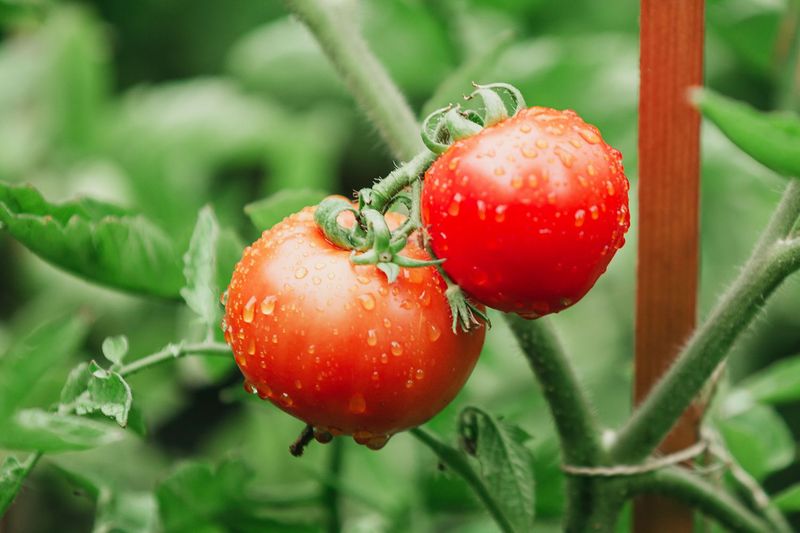
Harvest season for tomatoes in many gardens runs right through September, and the plants are still working hard even as the season winds down. Fruit that is sizing up and ripening on the vine requires consistent soil moisture to develop properly.
Letting the soil swing between very dry and then very wet can contribute to problems like blossom-end rot, a condition linked to uneven water availability affecting calcium uptake in the developing fruit.
This is one reason September watering can still matter for Oregon tomato growers, especially during stretches of warm weather with little rainfall.
Keeping moisture more consistent helps support the plant while it finishes producing and ripening fruit.
Consistent moisture does not mean keeping the soil constantly saturated. Tomato roots need oxygen as well as water, and poorly drained or waterlogged soil creates its own set of problems.
The goal is steady, even moisture in the root zone, which in a home garden tomato plant typically extends outward and downward from the base of the plant.
Oregon’s September weather can be warm and sunny, especially in the Willamette Valley and Southern Oregon, which means evaporation from the soil surface continues at a meaningful rate.
Mulching around tomato plants helps retain moisture between waterings and can reduce the need for frequent irrigation.
Check the soil a few inches down before watering to avoid both under-watering and over-watering as harvest continues.
5. Newly Planted Perennials May Need Continued Water
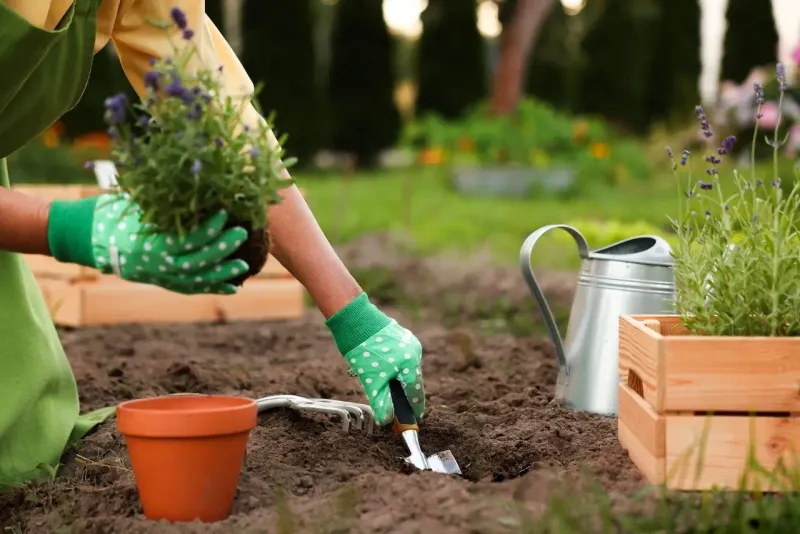
Perennials planted in spring or early summer have had a full season to get started, but that does not always mean their roots are deep enough to handle Oregon’s dry late summer on their own.
Younger plants with smaller root systems are generally less capable of accessing soil moisture at depth compared with established perennials that have been in the ground for several years.
September can be an important transition period for these newer plantings because rainfall may still be limited while the plants are preparing for dormancy.
Supporting adequate moisture during this stage can help them continue establishing before winter arrives.
Water needs vary considerably among perennial species. A drought-tolerant native like yarrow may handle dry September conditions much better than a moisture-loving plant like astilbe or ligularia.
Soil type, sunlight, slope, and nearby competition from other plants all influence how quickly a perennial’s root zone dries out. There is no single watering schedule that applies to every newly planted perennial in every Oregon garden.
A good approach is to check soil moisture a few inches below the surface near the plant’s root zone rather than relying on surface appearance alone.
Dry, crumbly soil at root depth is a more reliable indicator of moisture need than a dry soil surface, which can dry quickly even when deeper layers still hold adequate moisture.
Applying water slowly and deeply encourages roots to follow moisture downward rather than staying near the surface.
6. Container Plants Can Still Dry Out Quickly
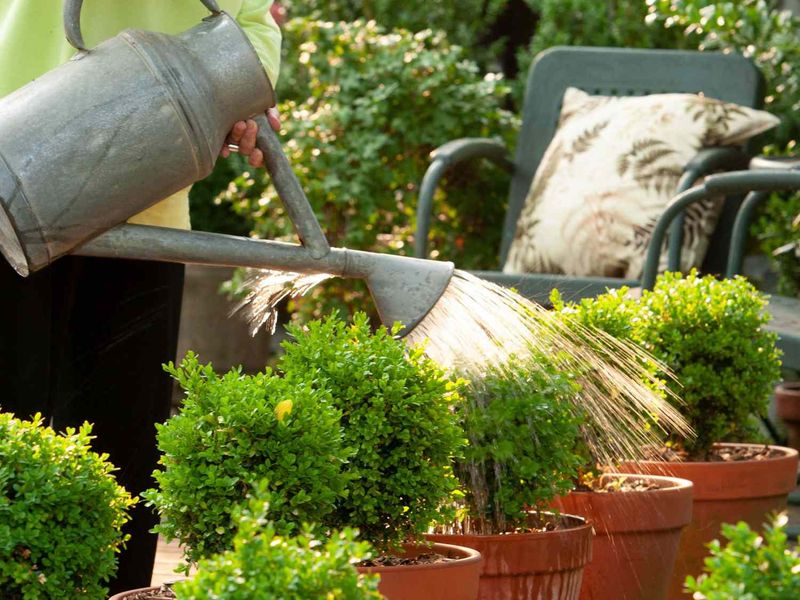
Pots and containers have a habit of drying out faster than most gardeners expect, even in September when the air feels cooler and the summer heat seems to be easing.
The limited volume of growing medium in a container has far less capacity to hold moisture than the surrounding soil in a garden bed, which means plants in pots can go from adequately moist to quite dry within a day or two during warm, breezy weather.
Container size matters quite a bit. Smaller pots and hanging baskets dry out much faster than large planters, and dark-colored containers absorb more heat from the sun, which speeds up evaporation.
Plants with dense foliage or active root systems use available moisture quickly, leaving little buffer between adequate hydration and drought stress.
Rather than watering containers on a fixed schedule, check the growing medium directly by pressing a finger an inch or two into the soil. If it feels dry at that depth, the container likely needs water.
Water thoroughly until it drains from the bottom, which ensures moisture reaches the full root zone rather than only the top layer. As Oregon’s fall weather becomes more variable, container watering frequency will naturally shift from week to week.
7. Recently Planted Native Plants May Need Water
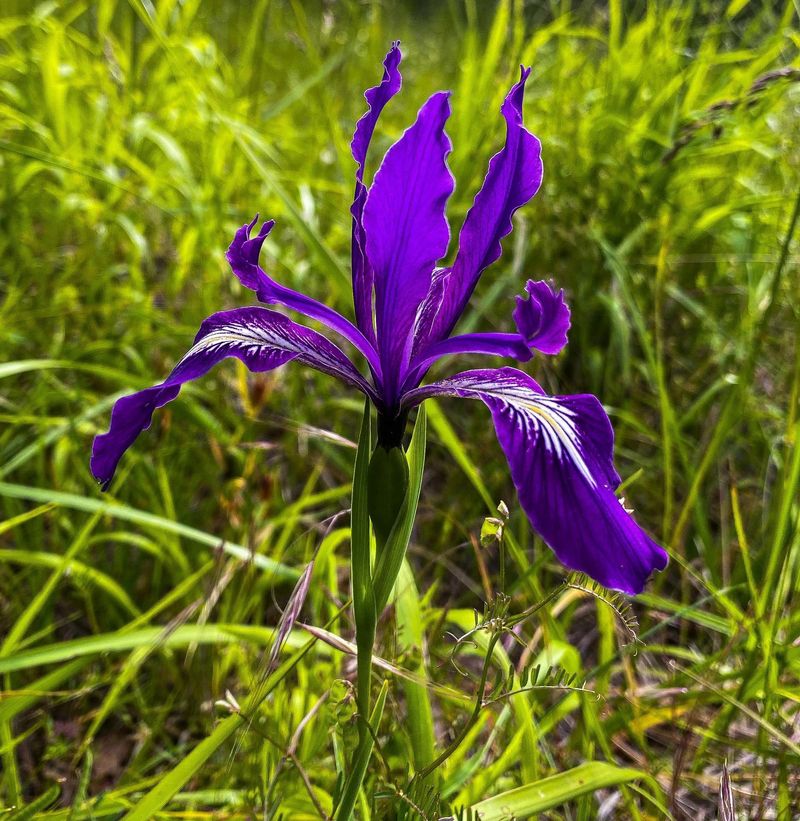
There is a common assumption that Oregon native plants can fend for themselves right after planting because they are adapted to the local climate.
That idea holds true for well-established natives with mature root systems, but it does not apply to plants that were just put in the ground this season.
A newly installed native plant is still building the root structure it needs to access soil moisture independently.
Native plants are adapted to the conditions of their natural habitat, which may differ significantly from a residential yard.
Compacted soil, reflected heat from pavement, or limited soil depth can make a yard much harsher than the open woodland or meadow where a native plant evolved.
A plant that thrives in a moist streamside habitat will need more support in a dry, sunny front yard than its native label might suggest.
During Oregon’s dry September, recently planted natives may benefit from occasional deep watering to help roots become established before fall rain arrives.
The goal is not to keep the soil constantly moist but to prevent the root zone from drying out completely while the plant is still getting settled.
Once a native plant is established over a season or two, its water needs typically decrease considerably.
8. Fall-Planted Trees And Shrubs Need Water Before Rains Return
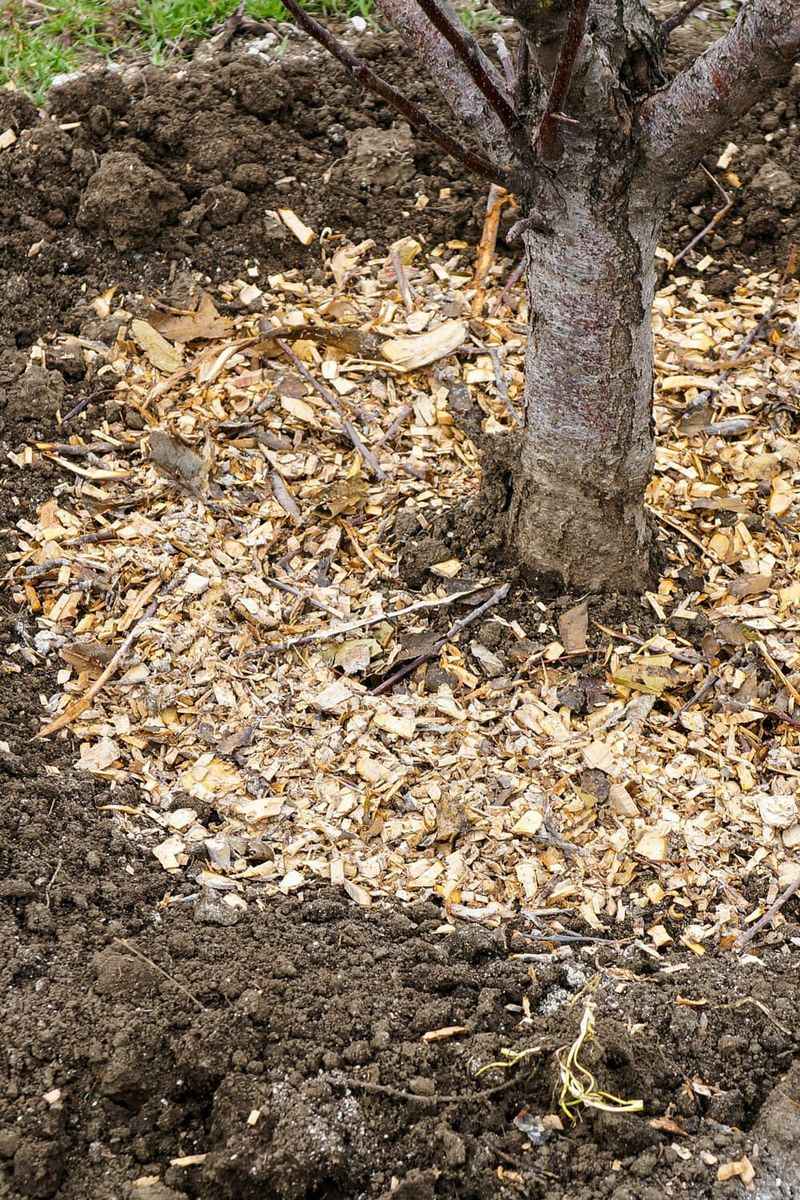
Planting trees and shrubs in early fall is a well-regarded practice in much of Oregon because cooler temperatures reduce stress on newly installed plants and the approaching rainy season can support establishment.
However, fall planting does not mean a plant can be installed and immediately left to the weather.
Until seasonal rainfall becomes regular and dependable, newly planted trees and shrubs still need supplemental irrigation.
Fall rain does not arrive on a fixed schedule, and the timing varies considerably by region. The coast tends to see earlier and more reliable fall moisture than the Willamette Valley, while Central and Eastern Oregon can remain quite dry well into October.
Gardeners who plant in September should plan to water newly installed plants consistently until the rainy season is clearly established in their area.
Deep watering at planting time and in the weeks following helps settle soil around the root ball, reduces air pockets, and gives roots the moisture they need to begin growing into surrounding soil.
Shallow or infrequent watering during this early establishment period may not adequately support root development.
Checking soil moisture a few inches below the surface near the root zone remains the most reliable way to decide when to water.