You Should Never Grow These Vining Plants In Florida, No Matter How Beautiful They Look
Florida gardens tempt with vines that promise drama and blooms, but some of them carry hidden danger. Certain vining plants take over fast, choking out other plants, damaging structures, and creating constant headaches.
Beauty alone cannot outweigh the chaos they bring. Roots creep into yards, fences, and even neighbors’ gardens, while thick foliage hides pests and disease.
Florida’s heat and fertile soil turn harmless-looking vines into unstoppable invaders. One wrong choice can ruin months of careful planning.
Admire these plants in photos, but don’t let them near your garden. Protect your space, save your time, and keep your backyard thriving.
Some vines are just too tempting to touch.
1. Coral Vine May Look Romantic But It Quickly Takes Over

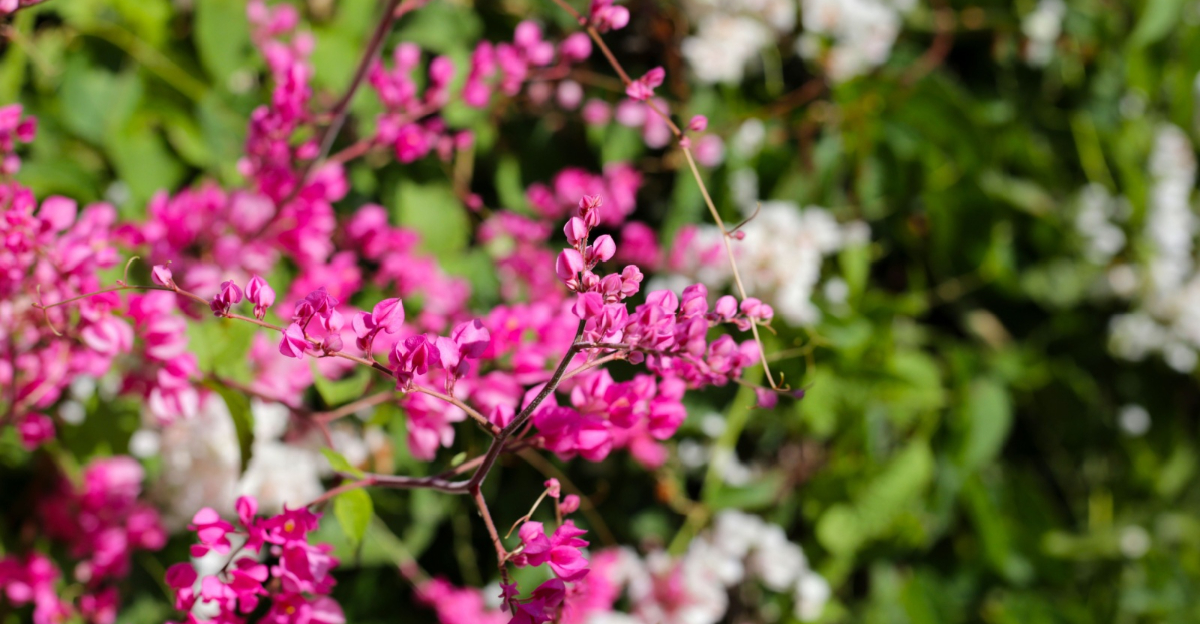
Few plants look as romantic at first glance as coral vine, with its cascading clusters of pink blooms that seem almost too pretty to resist. Introduced into Florida as an ornamental plant around 1924, it has since proven to be far more trouble than it is worth.
According to the University of Florida IFAS plant directory, coral vine tolerates poor soil and a wide range of light conditions, which makes it extremely adaptable and very hard to contain.
In Florida’s warm climate, coral vine grows aggressively along fences, over shrubs, and up into trees. It spreads through underground tubers that are surprisingly difficult to remove once the plant is established.
Even after cutting it back, new growth can shoot up quickly from roots left behind in the soil.
Florida gardening experts warn that this vine can easily overwhelm native vegetation by blocking sunlight and competing for nutrients. What starts as a charming garden accent can become a landscape takeover within just one or two growing seasons.
Native alternatives like coral honeysuckle offer similar visual appeal without the invasive risk, making them a much smarter choice for Florida yards and gardens.
2. Cat’s Claw Vine Climbs Everything In Its Path

Imagine waking up one morning to find your favorite shade tree wrapped tightly in a vine you can barely pull loose. That is exactly the kind of experience Florida homeowners describe after planting cat’s claw vine without knowing what they were getting into.
Native to the West Indies and parts of Central and South America, this vine has been listed as a Category I invasive by the Florida Exotic Plant Pest Council for more than 15 years.
Cat’s claw vine earns its name from the tiny claw-shaped tendrils it uses to grip onto almost any surface, including tree bark, brick walls, wooden fences, and concrete structures. It can reach lengths of up to 50 feet and spreads through both seeds and underground tubers.
Once established in Florida’s climate, removal becomes a serious and time-consuming challenge.
The University of Florida IFAS has documented how this vine spreads into forests, wetlands, and disturbed areas, causing significant damage to native plant communities. Florida’s warm winters allow it to grow nearly year-round, which accelerates its spread dramatically compared to cooler states.
Choosing a native climbing plant instead protects both your property and the local ecosystem from long-term harm.
3. Air Potato Vine Spreads Faster Than Most Gardeners Expect
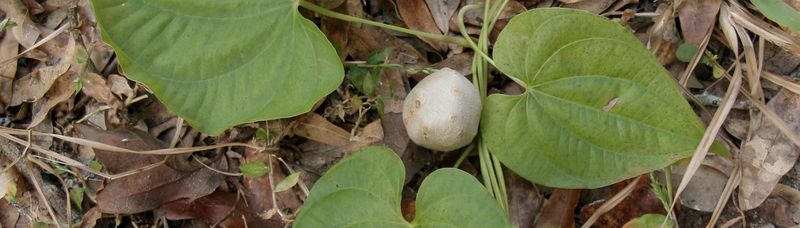
Walk through almost any overgrown Florida roadside or natural area and chances are good you will spot air potato vine smothering everything in sight. Originally from Africa and Asia, this vine was introduced to Florida in 1905 and has been causing problems ever since.
What makes it especially tricky is how it reproduces, not just through seeds, but through small aerial tubers called bulbils that drop to the ground and sprout into new plants.
A single air potato vine can produce dozens of these bulbils each season. They roll away from the parent plant, get carried by water or animals, and quickly start new vines wherever they land.
In Florida’s humid climate, growth is rapid and nearly unstoppable without consistent intervention.
The Florida Exotic Plant Pest Council lists air potato as a Category I invasive species, meaning it is actively disrupting native plant communities across the state. It covers trees and shrubs so densely that it blocks sunlight and essentially suffocates the vegetation underneath.
Florida even has a biological control program using a specific leaf beetle to help manage this vine in natural areas. For home gardeners, the smartest move is to avoid planting it entirely and report any sightings in wild areas to local extension offices.
4. Japanese Honeysuckle Crowds Out Native Plants
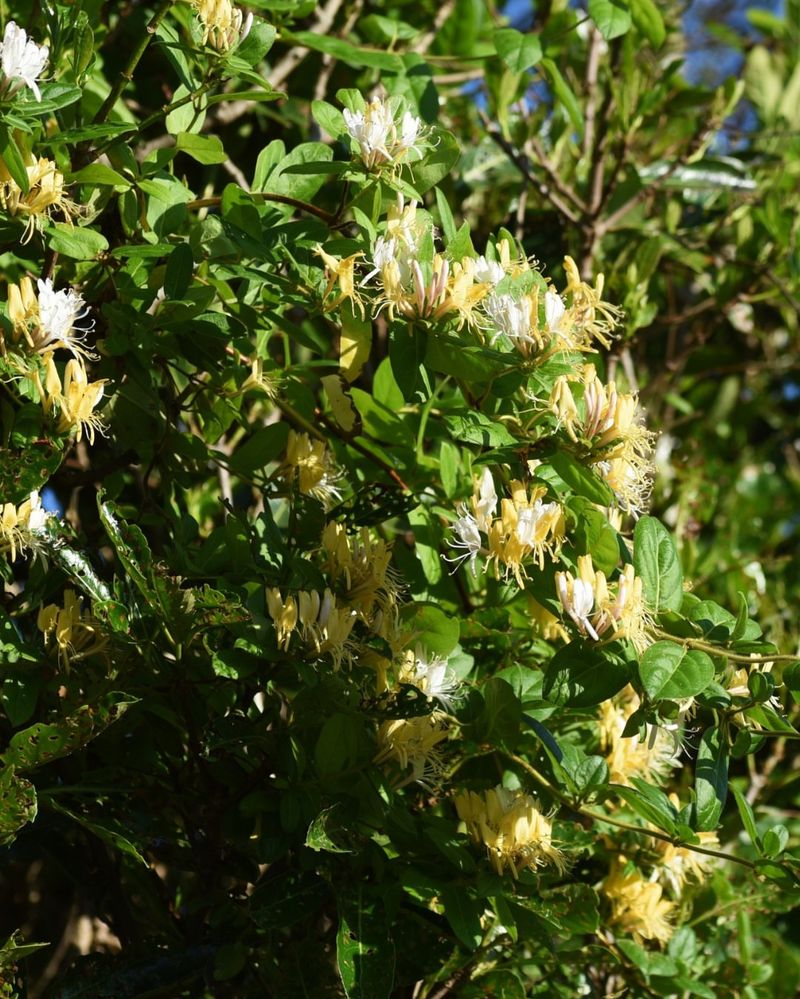
The sweet fragrance of Japanese honeysuckle might bring back fond childhood memories for many people, but Florida’s native plants have a very different relationship with this vine. Originally from Asia, Japanese honeysuckle was brought to the United States as an ornamental plant and quickly escaped into natural landscapes across the country.
In Florida, its ability to grow in a wide variety of conditions makes it a serious threat to native plant communities.
According to the University of Florida IFAS Gardening Solutions, Japanese honeysuckle can quickly engulf small trees and shrubs, putting so much weight and pressure on them that branches snap and structures collapse. It spreads through both seeds and underground runners, allowing it to move into new areas faster than most gardeners realize.
Birds eat the berries and scatter seeds widely, which makes containment even more difficult once a plant is established.
Native Florida plants like coral honeysuckle provide similar floral beauty, attract hummingbirds and butterflies, and stay well-behaved in the garden. Florida extension experts recommend removing Japanese honeysuckle from landscapes entirely and replacing it with native alternatives.
Supporting native plants helps protect the local food web that birds, insects, and other wildlife depend on throughout the year.
5. Rosary Pea Is As Dangerous As It Is Beautiful
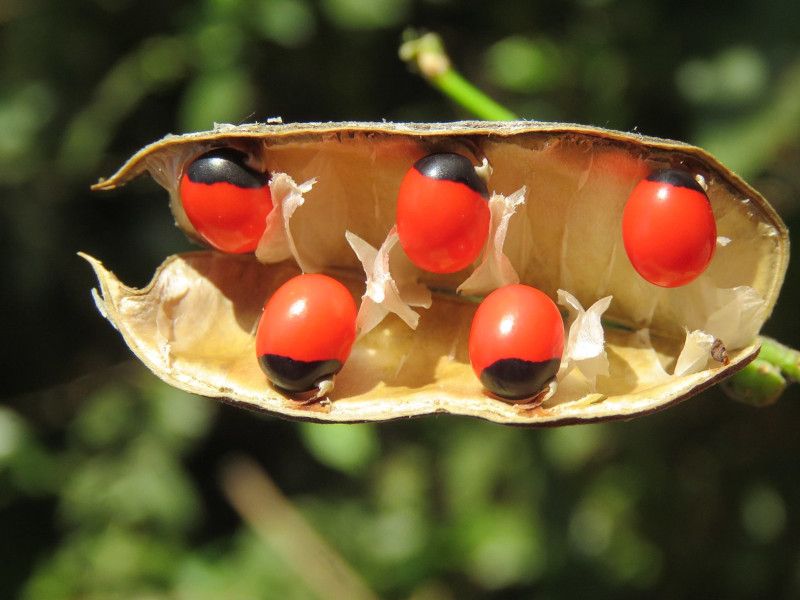
Bright red seeds with a single black dot make rosary pea one of the most visually striking plants you will ever see in Florida, but that beauty hides a very serious danger. Every part of this plant is toxic, and the seeds contain abrin, a naturally occurring poison that is considered one of the most dangerous plant toxins known to science.
Children and pets are especially at risk because the colorful seeds are easy to mistake for something harmless or even edible.
Originally from tropical Asia, rosary pea arrived in Florida in the 1930s and has since spread widely across the state. It is listed as a Category I invasive species by the Florida Exotic Plant Pest Council and is now found throughout central and south Florida in disturbed areas, roadsides, and natural areas.
The vine climbs over native shrubs and small trees, spreading aggressively through its prolific seed production.
Florida homeowners who find rosary pea growing in their yard should remove it carefully and avoid breaking open the seed pods. Wearing gloves during removal is strongly advised.
Local Florida county extension offices can provide guidance on safe removal methods. No matter how eye-catching it looks, this is one plant that should never be intentionally introduced to any Florida landscape.
6. English Ivy Slowly Smothers Trees And Structures

English ivy has a long reputation as a classic, elegant ground cover and wall climber, but underneath that tidy appearance is a plant with a surprisingly destructive habit. In Florida’s warm climate, English ivy grows far more aggressively than it does in cooler northern states, spreading across the ground and climbing up trees with very little encouragement.
Once it starts climbing a tree, it adds significant weight to branches and holds moisture against the bark, which can lead to decay over time.
As English ivy moves up a tree trunk, it eventually reaches the canopy and spreads across the branches, blocking sunlight from reaching the tree’s own leaves. The vine also provides habitat for rodents and insects at the base of trees, which can create additional problems for Florida homeowners.
Ground-level spreading can cover large areas quickly, pushing out native groundcover plants and wildflowers that local wildlife depend on.
Florida gardening experts generally advise against planting English ivy, particularly in central and south Florida where winter temperatures rarely slow its growth. Native ground covers like sunshine mimosa or Walter’s viburnum offer attractive low-maintenance alternatives that support local ecosystems.
Swapping out English ivy for native options is one of the easiest ways Florida gardeners can make a positive environmental difference in their own backyards.
7. Asian Wisterias May Look Magical But They Quickly Take Over
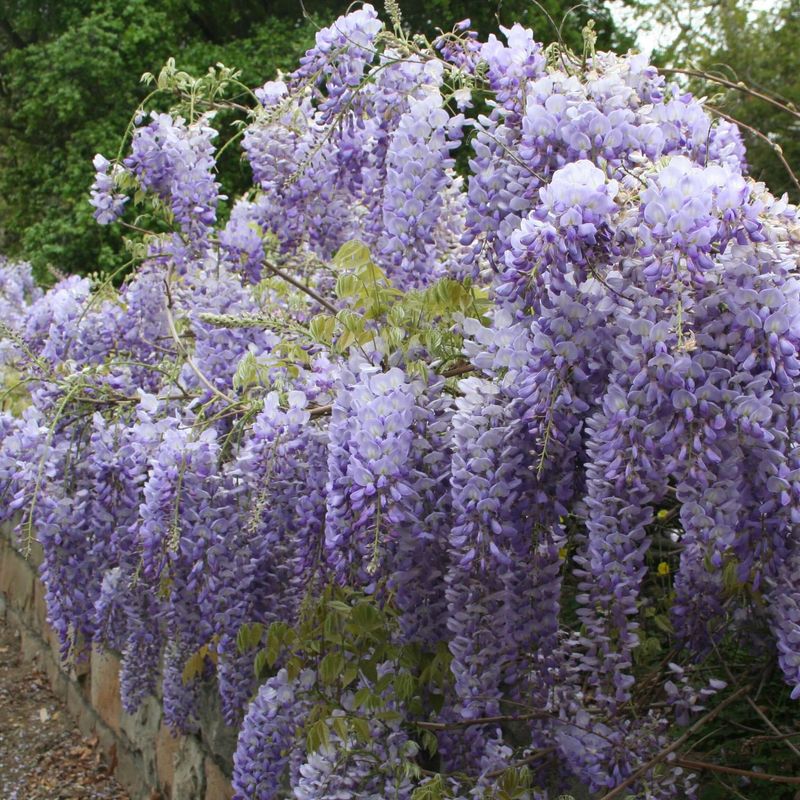
Few vines in the world are as breathtaking as a wisteria in full bloom, with long cascading clusters of purple or white flowers that look like something from a fairy tale. Unfortunately, Chinese wisteria and Japanese wisteria are not the right fit for Florida gardens, no matter how magical they appear in photographs.
Both species are considered invasive in parts of the southeastern United States, and Florida’s climate gives them ideal conditions to grow far beyond what most gardeners expect.
Asian wisterias are powerful, heavy vines that can wrap around tree trunks and branches with enough force to cause serious structural damage over time. They spread through underground runners and self-seeding, which allows them to move into wooded areas and natural spaces beyond the yard.
Once established, their root systems are extraordinarily difficult to remove completely.
The good news for Florida gardeners who love the look of wisteria is that American wisteria and Kentucky wisteria are native alternatives that offer similar floral beauty with far less aggressive growth. These native species are better suited to Florida landscapes and do not pose the same risk to surrounding vegetation and structures.
Making the switch to a native wisteria is a simple step that protects your garden and supports Florida’s native plant communities at the same time.
8. Trumpet Vine Can Quickly Become Aggressive In Warm Climates
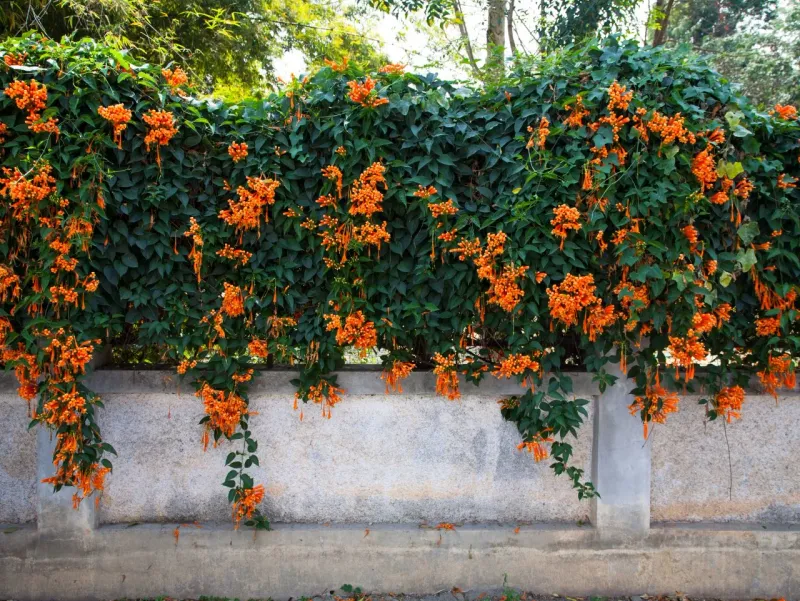
Hummingbirds absolutely love trumpet vine, and it is easy to see why Florida gardeners are tempted to plant it. The bold orange and red tubular flowers are stunning, and they attract pollinators throughout the warm season.
However, trumpet vine has a side that gardeners rarely hear about at the nursery, and it involves underground root systems that spread far beyond where the original plant was placed.
In Florida’s warm climate, trumpet vine spreads aggressively through root suckers that can pop up several feet away from the main plant, emerging through lawns, garden beds, and even between cracks in pavement or hardscape. Removing these suckers consistently is a time-consuming task that can feel never-ending during the growing season.
The vine itself can also cause skin irritation in some people, so handling it requires caution.
While trumpet vine is technically native to the eastern United States, its aggressive spreading habit makes it a poor choice for most Florida residential gardens, especially smaller yards where it can quickly take over. Florida gardeners looking for hummingbird-friendly plants have better options available, including coral honeysuckle and firebush, both of which attract pollinators without the aggressive spreading habit that makes trumpet vine such a persistent garden challenge.
9. Golden Pothos Escapes Into Natural Areas In South Florida
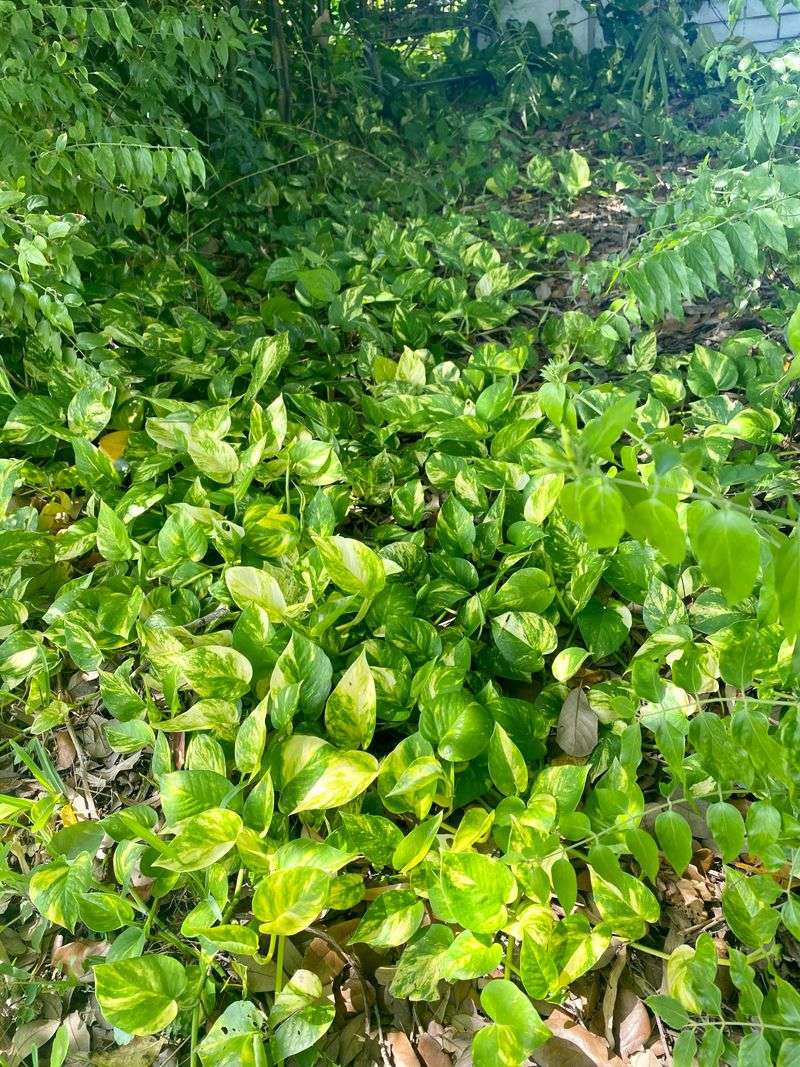
Golden pothos is probably sitting in a pot somewhere in your home right now, and it is one of the most popular houseplants in America for good reason. It is nearly impossible to neglect, grows in low light, and looks beautiful trailing from shelves or climbing a moss pole indoors.
The problem starts when Florida gardeners, especially those in South Florida, decide to plant it outside in the garden or toss cuttings into a natural area.
In South Florida’s tropical climate, golden pothos does not behave like a tame houseplant. It grows into a large, vigorous vine capable of climbing trees and covering ground in ways that shade out native vegetation.
Stem fragments that land in moist soil can root and establish new plants quickly, and the vine has been documented spreading into natural areas, parks, and conservation lands in Miami-Dade and Broward counties.
Florida’s natural areas, including hammocks and wetland edges, are especially vulnerable to pothos invasion because the vine thrives in the shaded, humid conditions found there. Keeping golden pothos safely indoors in Florida is perfectly fine, but planting it outside or discarding clippings near natural areas is something every responsible Florida gardener should avoid.
Small choices in the garden can have surprisingly large effects on Florida’s fragile native ecosystems.