Your Go-To Guide For Growing Stunning Adenium Flowers In Texas
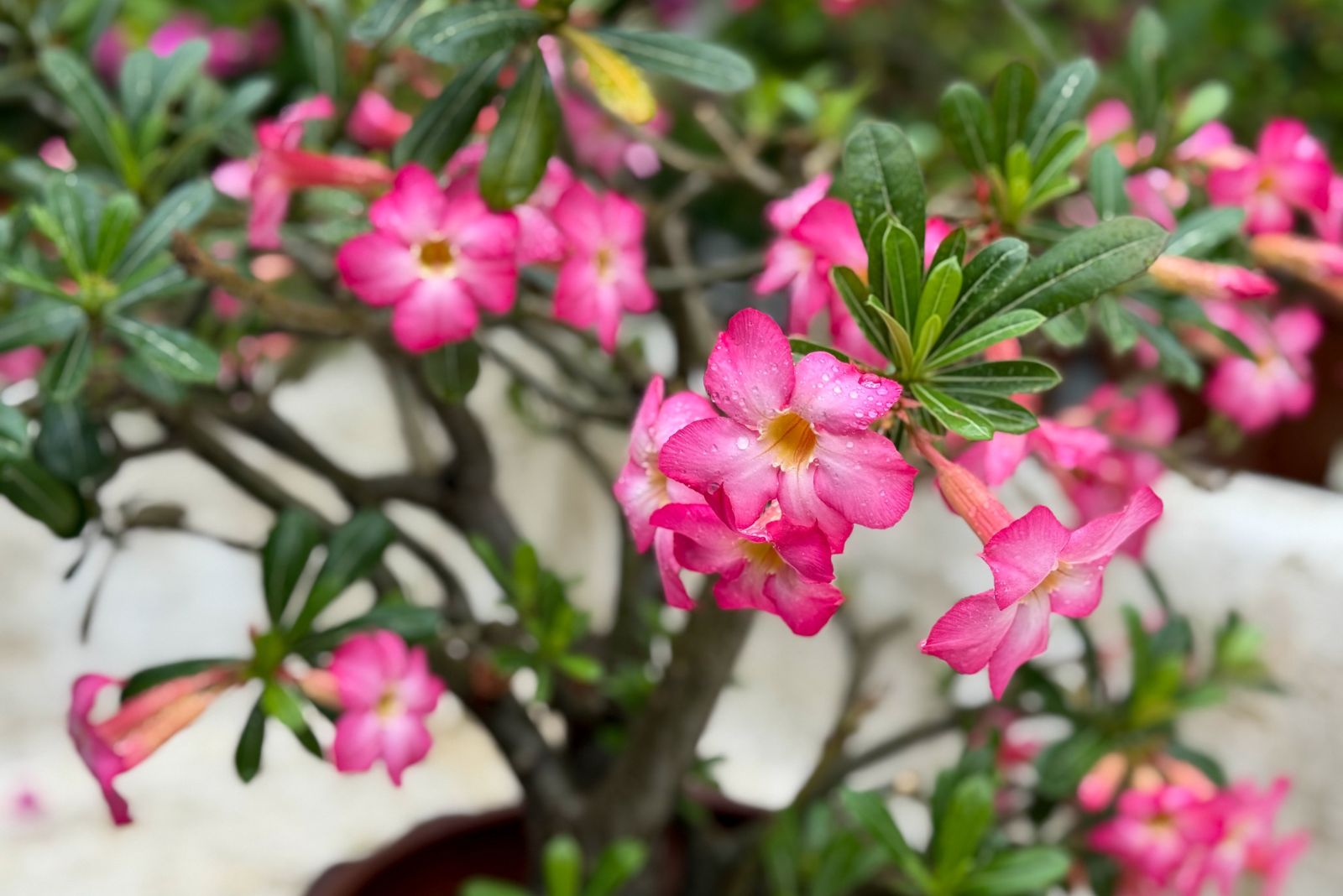
Ever seen an adenium in full bloom and wondered how to grow one that stunning in your own Texas space? Known for its bold flowers and sculptural shape, adenium brings a dramatic touch to patios, porches, and sunny windows.
This desert beauty loves warmth and light, which makes much of Texas a perfect match. With the right care, you can enjoy vibrant blooms, glossy leaves, and that signature swollen trunk that makes the plant so eye catching.
Success comes from a few key habits, including smart watering, proper soil, and plenty of sunshine. Adenium is tougher than it looks and rewards patience with colorful flowers that feel almost tropical.
Whether you are a beginner or a seasoned gardener, growing a healthy, blooming plant is completely achievable. With a little attention and the right approach, your adenium can become a true standout in your Texas garden or home.
1. Choose The Right Adenium Variety For Texas Climate
Picking the perfect adenium variety makes all the difference when growing these beauties in Texas. Not all desert roses perform equally well in our unique climate, so understanding which types thrive here sets you up for success from the start.
Texas spring weather can be unpredictable, with sudden temperature swings that some varieties handle better than others.
Adenium obesum is the most popular species for Texas gardeners because it tolerates our conditions beautifully. This variety produces large, showy flowers in multiple colors and develops that characteristic swollen trunk that makes adeniums so distinctive.
Many hybrid varieties have been developed specifically for better flowering and heat tolerance, making them excellent choices for Texas spring planting.
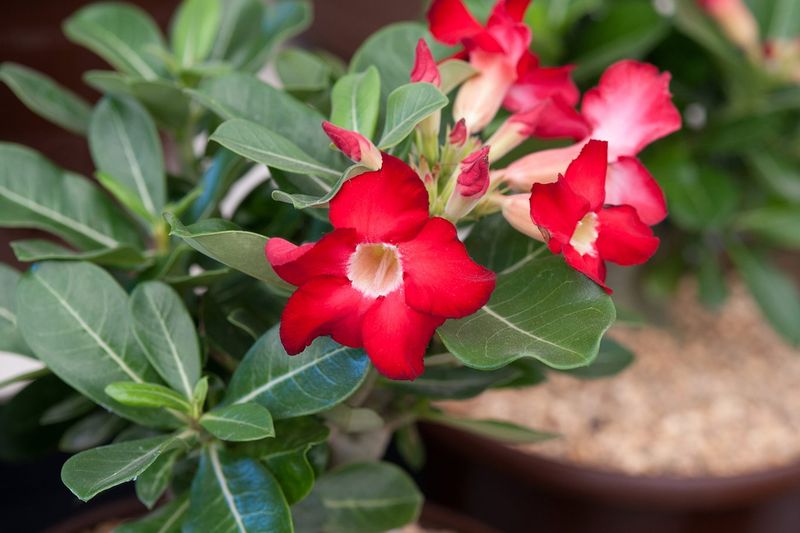
Look for varieties labeled as heat-tolerant or sun-loving when shopping at Texas nurseries. Red and pink flowering types tend to be most vigorous in our climate, though white and variegated varieties also perform well with proper care.
Some gardeners in Texas prefer grafted adeniums because they bloom faster and more reliably than seedlings.
Consider the mature size when selecting your variety, as some adeniums stay compact while others can grow several feet tall. Dwarf varieties work wonderfully in containers on Texas patios, while larger types make stunning focal points in garden beds.
Spring is the perfect time to plant any variety in Texas because the warming temperatures encourage strong root development.
Visit local nurseries in Texas to see which varieties they recommend for your specific area. Experienced growers can offer valuable insights about which types perform best in your region’s particular conditions.
Starting with the right variety gives you a huge advantage in growing spectacular adenium flowers throughout the Texas spring and summer seasons.
2. Select The Perfect Location With Plenty Of Sunshine
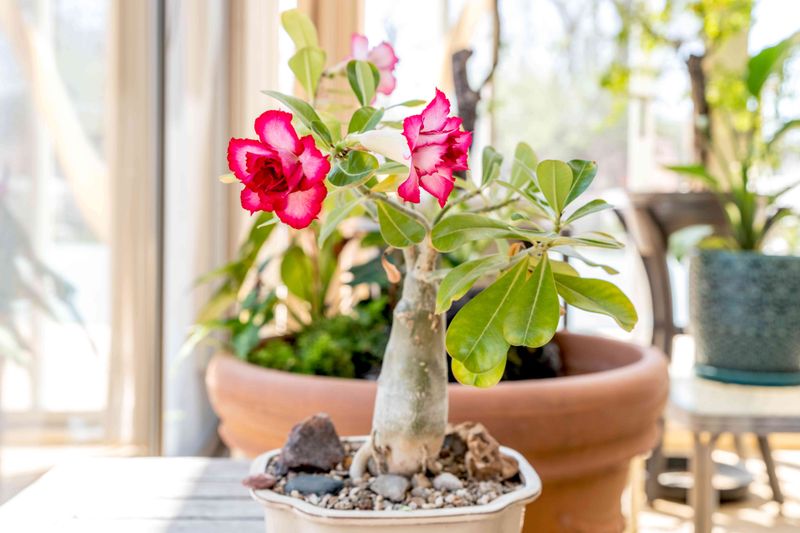
Sunlight is absolutely critical for adeniums to produce those gorgeous flowers you’re hoping for. These plants evolved in sunny, desert-like conditions and need at least six to eight hours of direct sun daily to thrive and bloom abundantly.
Texas spring provides increasingly longer days with intense sunshine that adeniums absolutely love.
Choose a south-facing location in your Texas garden where plants receive maximum sun exposure throughout the day. Morning sun is particularly beneficial because it helps dry any dew on leaves, reducing fungal problems that can occur in humid Texas springs.
Afternoon sun, while intense, actually encourages better flowering and stronger growth in adeniums.
Avoid planting adeniums under trees or near structures that cast shade during peak sunlight hours. Even partial shade can significantly reduce flowering and cause plants to become leggy and weak.
In Texas, you really can’t give these plants too much sun during the spring and summer growing seasons.
If growing adeniums in containers, place them on patios or decks where they receive unobstructed sunlight. The beauty of container growing in Texas is that you can move plants to capture the best light as the sun’s angle changes throughout spring.
Just remember that container-grown adeniums may need more frequent watering in full Texas sun.
Protection from strong winds is also important when selecting your location in Texas. While adeniums love sun, harsh winds can damage their brittle branches and knock over top-heavy container plants.
A sunny spot near a fence or wall provides ideal conditions with wind protection while still delivering the intense light these flowers crave for spectacular spring blooms.
3. Use Well-Draining Soil Mix For Healthy Root Development
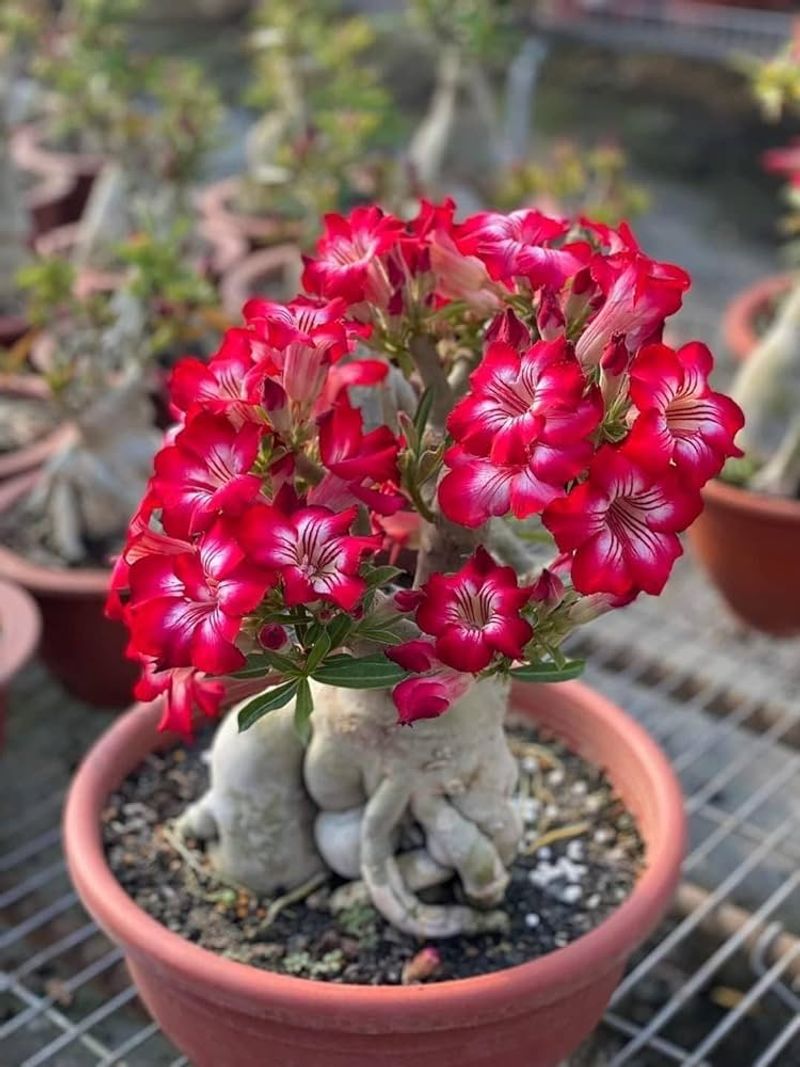
Soil quality determines whether your adeniums will flourish or struggle in Texas gardens. These succulent plants absolutely require excellent drainage because their thick roots rot quickly in soggy conditions.
Texas spring rains can be heavy and unpredictable, making proper soil preparation essential for success.
Create a custom mix using equal parts potting soil, coarse sand, and perlite or pumice for optimal drainage. This combination allows water to flow through quickly while still retaining some moisture and nutrients.
Many Texas gardeners add a small amount of compost to provide organic matter without compromising drainage.
Never use regular garden soil or heavy potting mixes for adeniums in Texas. Clay-heavy Texas soil holds too much moisture and suffocates adenium roots, leading to rot and plant decline.
If planting directly in the ground in Texas, amend your native soil heavily or create raised beds filled with the proper mix.
Commercial cactus and succulent mixes work well for adeniums if you add extra perlite or pumice. These mixes are readily available at Texas garden centers and provide a good starting point.
Testing your mix by watering it thoroughly and observing how quickly water drains helps ensure you’ve achieved the right consistency.
Container growing in Texas requires especially careful attention to soil mix because pots can trap moisture. Make sure containers have multiple drainage holes and never let pots sit in water-filled saucers.
The right soil mix combined with proper containers sets the foundation for spectacular adenium growth throughout the Texas spring season and beyond.
4. Master The Art Of Proper Watering Techniques
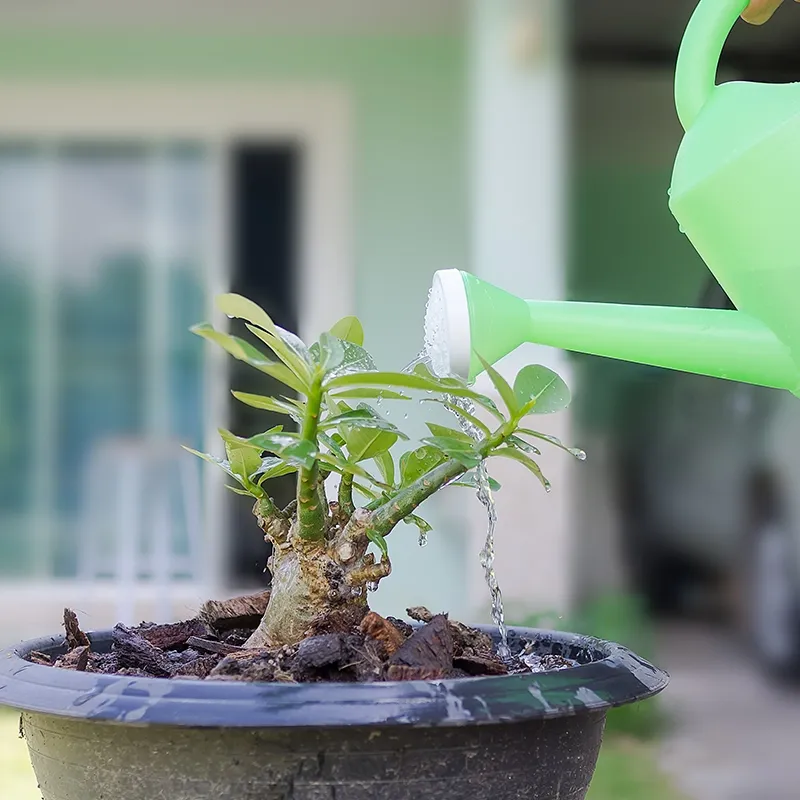
Watering adeniums correctly is probably the single most important skill Texas gardeners need to master. These plants store water in their thick trunks and roots, making them remarkably drought-tolerant once established.
However, finding the right balance between too much and too little water challenges many beginners in Texas.
During active spring growth in Texas, water your adeniums when the soil feels completely dry an inch below the surface. Stick your finger into the soil to check moisture levels rather than following a rigid schedule.
Texas spring weather varies dramatically from year to year, so your plants’ water needs will change based on temperature, humidity, and rainfall.
When you do water, drench the soil thoroughly until water runs from drainage holes, then allow it to dry completely before watering again. This deep watering followed by a dry period encourages strong root growth and prevents rot.
Shallow, frequent watering creates weak roots and increases disease problems in Texas humidity.
Morning watering works best in Texas because it allows foliage to dry before evening, reducing fungal issues. Avoid getting water on the trunk or leaves when possible, directing water to the soil instead.
Container-grown adeniums in Texas may need watering every few days during hot spring weather, while garden-planted specimens need less frequent watering.
Watch your plants for signs of watering problems throughout the Texas spring season. Wrinkled, soft trunks indicate underwatering, while yellowing leaves and mushy stems suggest overwatering.
Adjusting your watering routine based on these signals helps you develop the intuition needed for long-term success with these beautiful flowers in Texas gardens.
5. Feed Your Plants With Balanced Fertilizer Regularly
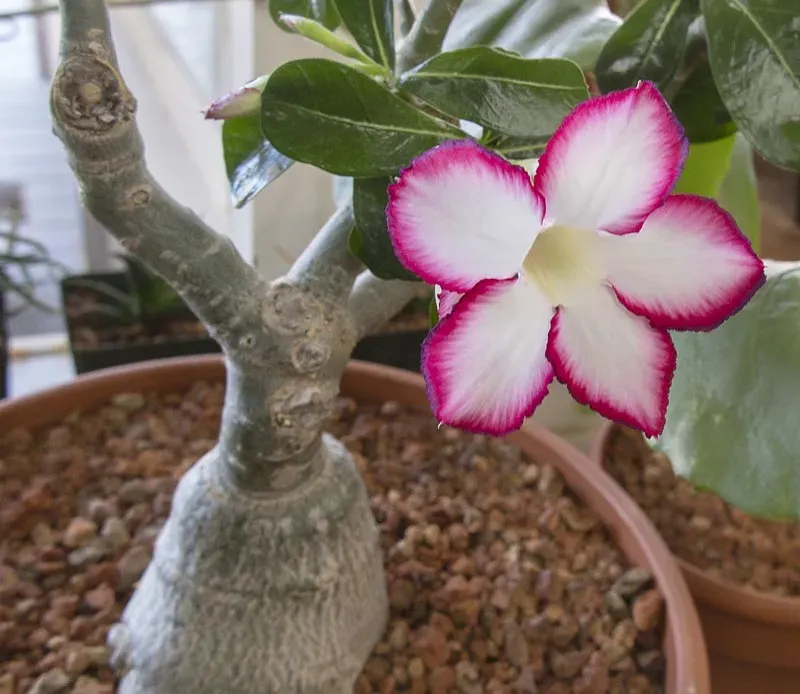
Nutrition plays a vital role in producing those abundant, colorful blooms that make adeniums so desirable. These plants are surprisingly heavy feeders during their active growing season in Texas spring and summer.
Proper fertilization transforms ordinary adeniums into spectacular flowering specimens that bloom repeatedly throughout warm weather.
Start fertilizing your adeniums in Texas when new growth appears in spring, typically around March or April. Use a balanced fertilizer with equal or near-equal amounts of nitrogen, phosphorus, and potassium, such as a 10-10-10 or 20-20-20 formula.
Some Texas gardeners prefer fertilizers slightly higher in phosphorus to encourage more blooms.
Apply liquid fertilizer at half the recommended strength every two weeks during the active growing season. This frequent, diluted feeding approach provides steady nutrition without overwhelming plants or causing fertilizer burn.
Slow-release granular fertilizers also work well for adeniums in Texas, requiring application only every few months.
Always water plants thoroughly before fertilizing to prevent root damage from concentrated nutrients. Never fertilize dry adeniums or those showing signs of stress in Texas heat.
Spring is the ideal time to establish a regular feeding schedule that will support vigorous growth and flowering throughout the season.
Reduce fertilizer frequency as temperatures cool in late fall, and stop feeding completely during winter dormancy in Texas. Adeniums naturally slow their growth in cooler weather and don’t need extra nutrients during rest periods.
Resuming fertilization in spring signals plants to wake up and start producing new growth and flower buds for another spectacular blooming season in your Texas garden.
6. Protect From Cold Snaps And Late Spring Freezes
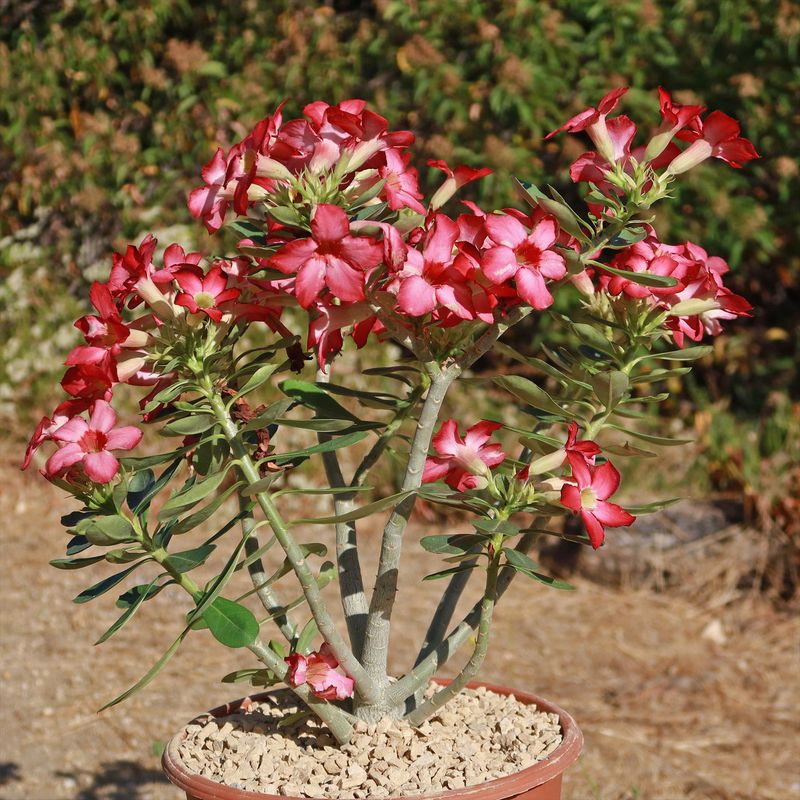
Texas spring weather keeps gardeners on their toes with unexpected cold snaps that can damage tender adeniums. These tropical plants suffer when temperatures drop below 50 degrees Fahrenheit and can be severely damaged or lost if exposed to freezing conditions.
Understanding how to protect your adeniums from cold ensures they survive to bloom beautifully.
Monitor weather forecasts closely throughout spring in Texas, especially in March and early April when late freezes sometimes occur. Even brief exposure to freezing temperatures can damage adenium leaves, stems, and flower buds.
Container-grown adeniums offer the advantage of easy mobility, allowing you to move them indoors or to protected areas when cold threatens.
For garden-planted adeniums in Texas, keep frost blankets or old sheets ready to cover plants during unexpected cold snaps. Drape covers over plants in late afternoon before temperatures drop, making sure fabric reaches the ground to trap warmth.
Remove covers once temperatures rise above 50 degrees to prevent overheating in Texas sunshine.
Bringing container adeniums indoors during cold periods requires placing them near bright windows where they still receive adequate light.
Garages or covered patios work for brief cold spells in Texas, but extended periods indoors in low light can weaken plants. Return adeniums outdoors as soon as temperatures stabilize above 55 degrees.
Some Texas gardeners grow adeniums exclusively in containers to simplify cold protection throughout the unpredictable spring season. This approach provides maximum flexibility and ensures valuable plants survive to bloom year after year.
With proper cold protection, your adeniums will reward you with stunning flowers throughout the warm Texas spring and summer months ahead.