10 Arizona Vines That Bloom for Decades From a Single Planting in Rock-Hard Soil
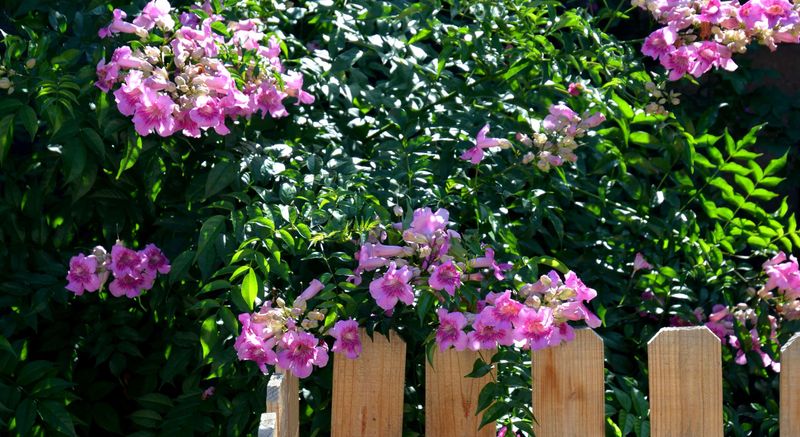
Caliche soil can feel like concrete, and most plants give up long before they reach your fence. A handful of tough vines actually push their roots through that hard ground and keep blooming year after year.
Many of them also feed hummingbirds, shelter songbirds, and shade hot walls so your house stays a little cooler. Here are ten climbers that can reward one good planting day with decades of color and life in the low desert.
1. Arizona Grape
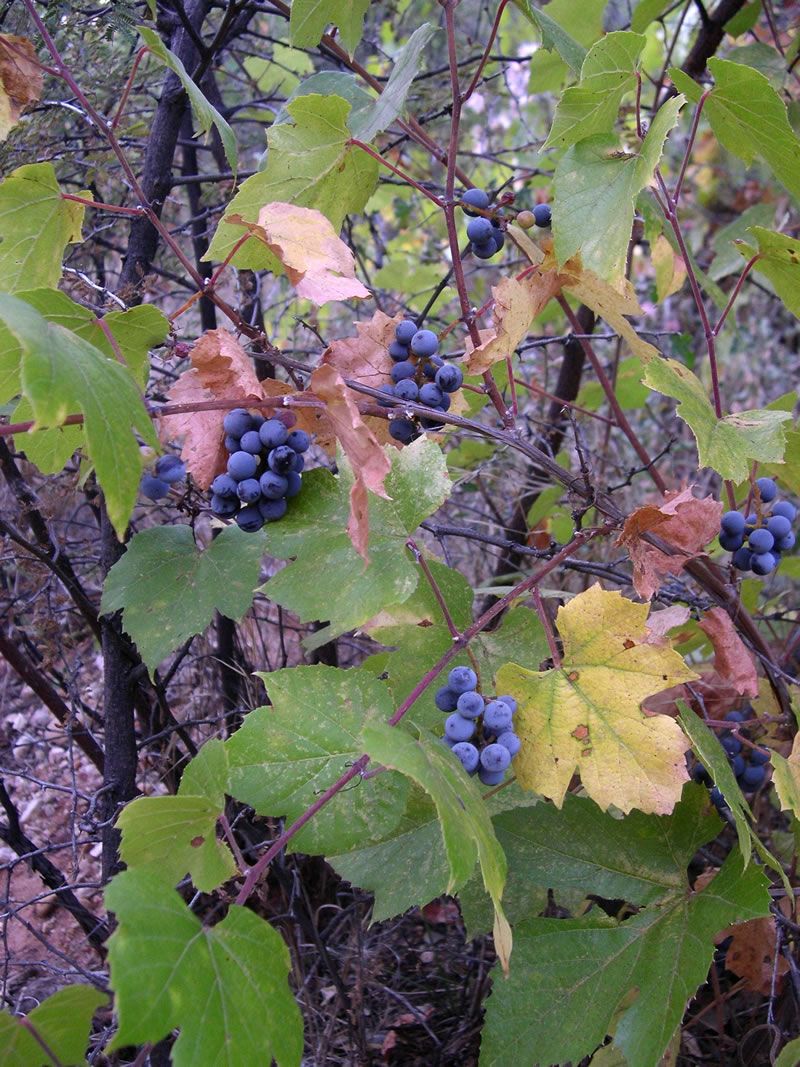
Long before anyone built a block wall in Phoenix, wild grapes were scrambling along desert washes. Arizona grape is a true native, so it already knows how to handle alkaline soil, blazing sun, and months without rain.
Its real gift is habitat. The thick, leafy canopy gives songbirds a safe spot to nest, and some birds peel the shaggy bark to line their nests.
Small dark grapes ripen in late summer and may draw finches, mockingbirds, and other wildlife that help keep insect numbers in check around the yard.
Growth is fast once roots settle in, and the vine tolerates almost any soil type, including rocky ground near caliche. Plant it in fall, from October through November, so the roots can build strength during the cooler months.
Water deeply every week or two the first summer, then taper off as it becomes established.
Give it a sturdy fence, ramada, or old tree to climb, because it can spread widely. In winter the leaves drop, which lets low winter sun warm your patio.
Come spring, fresh green growth returns, and the whole cycle repeats for many years with very little help from you.
2. Lady Banks Rose
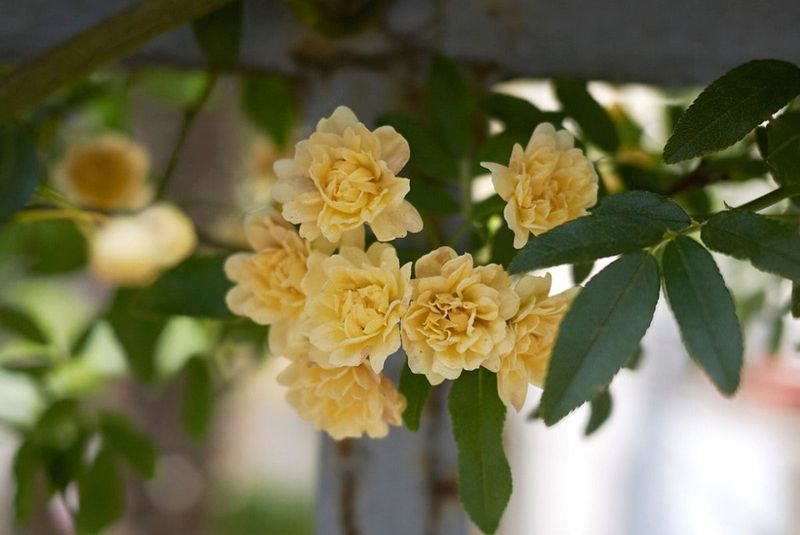
In Tombstone, a single Lady Banks rose planted in 1885 now shades an area larger than many houses. Visitors come every spring just to stand under its canopy of tiny white blossoms.
That kind of staying power is hard to beat.
Unlike most roses, this one is nearly thornless and asks for very little. It shrugs off heat, tolerates poor soil, and becomes drought-tolerant after a couple of years.
Clusters of small white or butter-yellow flowers appear in spring, pulling in bees and butterflies at a time when pollinators are hungry.
Because it grows so large, it works well for covering an ugly block wall or holding soil on a slope where erosion is a worry. The semi-evergreen leaves stay on through most winters, giving birds year-round cover.
Plant it in fall or early spring with plenty of room to spread, at least 15 feet in each direction. Deep, occasional watering beats frequent sprinkles, because it encourages roots to push down through tough ground.
Prune right after flowering if needed, since next year’s blooms form on older wood. Treat it well, and your grandkids might someday sit in its shade.
3. Queen’s Wreath
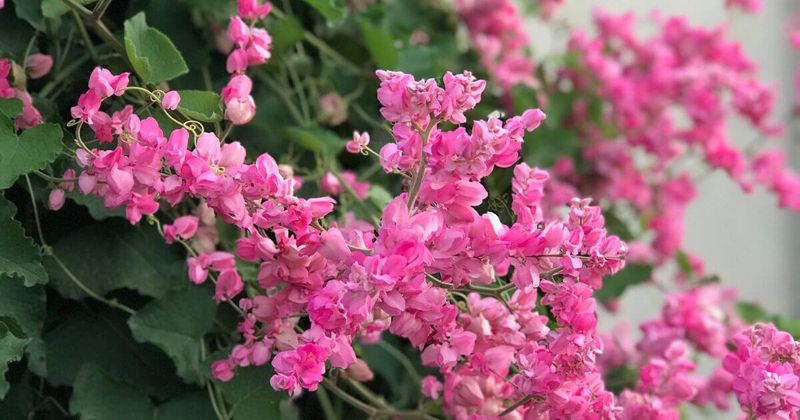
Just when August heat makes everything else look tired, Queen’s Wreath lights up. Long sprays of coral-pink flowers spill over arbors from late summer until the first frost, right in the middle of monsoon season.
Your Arizona Garden Changes Every Week. Your Plan Should Too.
Gardening in Arizona changes quickly throughout the season. Every Friday you’ll receive a simple weekly plan showing exactly what to plant, prune, fertilize, harvest, and protect so you never miss the right timing.
Bees go wild for it. Butterflies and hummingbirds visit too, so a single vine can turn a bare corner into a busy pollinator stop.
Coming from Mexico and Central America, it feels right at home in low-desert heat and reflected sun from walls.
Here is the fun part. If a hard frost knocks the top back in winter, the thick tuberous roots stay safe underground and send up new shoots in spring.
Those tubers are a big reason one planting can hang around for decades, even in hard, rocky soil.
Plant it in spring after frost danger passes or early fall, in full sun. Water deeply every week or so in summer, less once cooler weather arrives.
It climbs by itself with tendrils, so an arbor or chain-link fence works great. Many homeowners use it to shade a west-facing patio, which can make afternoons noticeably more pleasant.
Cut back frosted stems in late winter and let it do its thing.
4. Cat’s Claw Vine
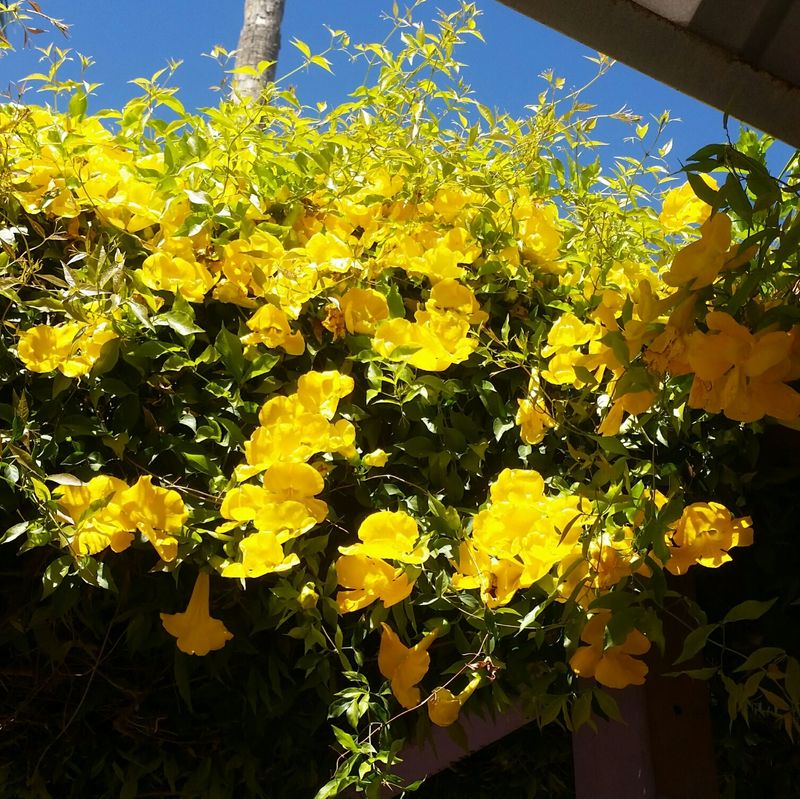
Got a sunbaked west wall that bounces heat right into your house? Cat’s claw vine was practically made for that job.
Tiny claw-like tendrils grip stucco, block, and masonry with no help at all.
In spring, the whole plant bursts into bright yellow trumpet flowers that bees happily work over. After that, a thick blanket of leaves shades the wall, and many homeowners notice the surface stays cooler through summer afternoons.
Less heat soaking into your walls can mean a little less work for the air conditioner.
Toughness is its middle name. Once established, it handles extreme heat and needs only widely spaced deep watering.
It also forms underground tubers that help it bounce back from drought or a rare cold snap, so it can stick around for a very long time.
A word of caution, though. This climber is vigorous and can spread where you do not want it, so plant it where you can trim it easily.
Keep it off wooden fences and roofs, and pull any seedlings that pop up. Plant in early spring or fall, give it a sunny wall, and enjoy a living heat shield that blooms.
5. Tangerine Beauty Crossvine
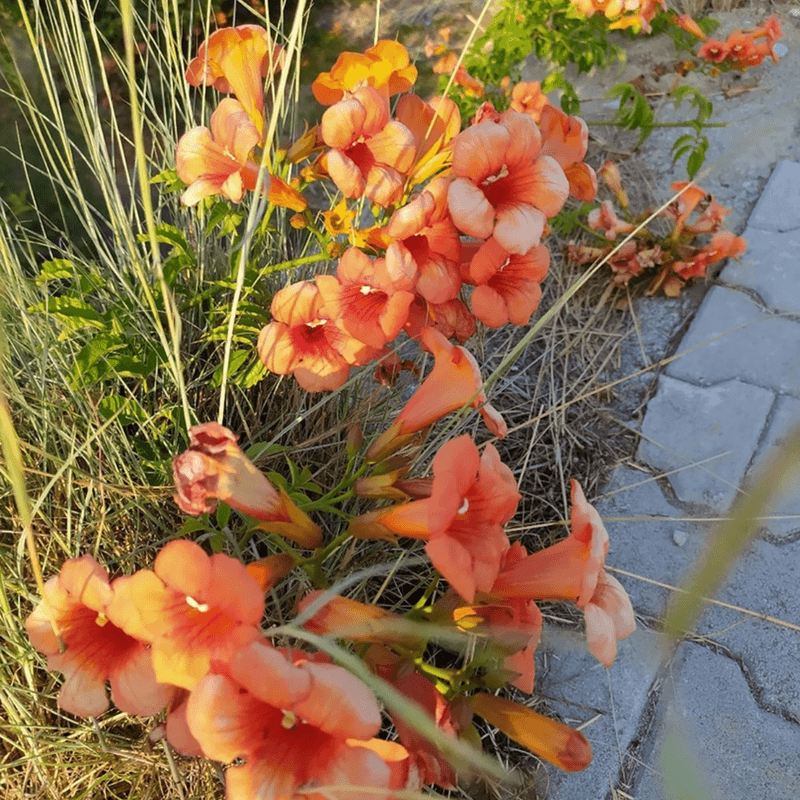
Hummingbird fans, pay attention. Tangerine Beauty crossvine produces loads of long, orange-red trumpet flowers that seem built for tiny beaks.
Once it starts blooming in spring, expect regular visitors zipping in all day.
The show often continues off and on into summer, especially with a little afternoon shade. Narrow green leaves stay on year-round in the low desert, so you get privacy and cover even in January.
Small birds and lizards may tuck into the foliage, which is a nice bonus for a habitat-friendly yard.
It grows fast and climbs using tendrils with small adhesive tips, so it can cling to walls, though a trellis gives you more control. Once roots are deep, it handles drought well and is not fussy about soil.
Mixing a bit of compost into the planting hole helps it get started in caliche.
For the best results in Phoenix or Tucson, plant it in fall and choose a spot with morning sun and some protection from the harshest late-day rays. Water deeply about once a week in summer during its first couple of years.
After that, it keeps coming back stronger, flowering season after season for many years.
6. Desert Snapdragon Vine
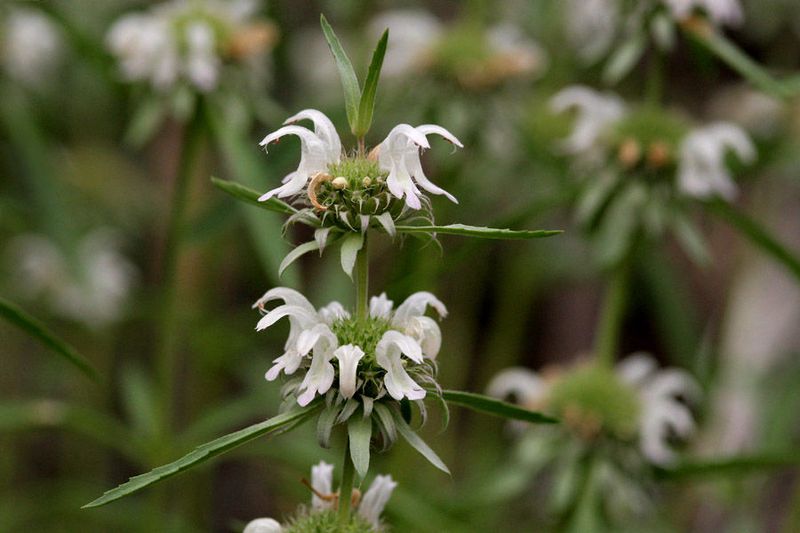
Small but mighty, desert snapdragon vine is a native charmer that proves you do not need a giant plant to make a big difference. Its little purple or pink flowers look like tiny snapdragons tucked among heart-shaped leaves.
Blooms usually show up in late summer and fall, just when hummingbirds are passing through on migration. Having a native nectar source ready at that moment can help support them on their journey.
Bees visit too, drawn by the bright tubular blossoms.
Because it tops out around eight feet, this vine is perfect for smaller spaces like a mailbox post, patio trellis, or narrow side yard. It twines by wrapping its leaf stems around support, so give it thin wire, netting, or an obelisk to grab onto.
Being native to the Southwest, it handles heat and rocky soil without complaint. In colder winters it may die back, then regrow from the roots or reseed nearby, which helps it stay in your garden for years.
Plant in fall or early spring, water deeply every week or two in summer, and let a few seeds drop so new plants can keep the tradition going.
7. Carolina Jessamine
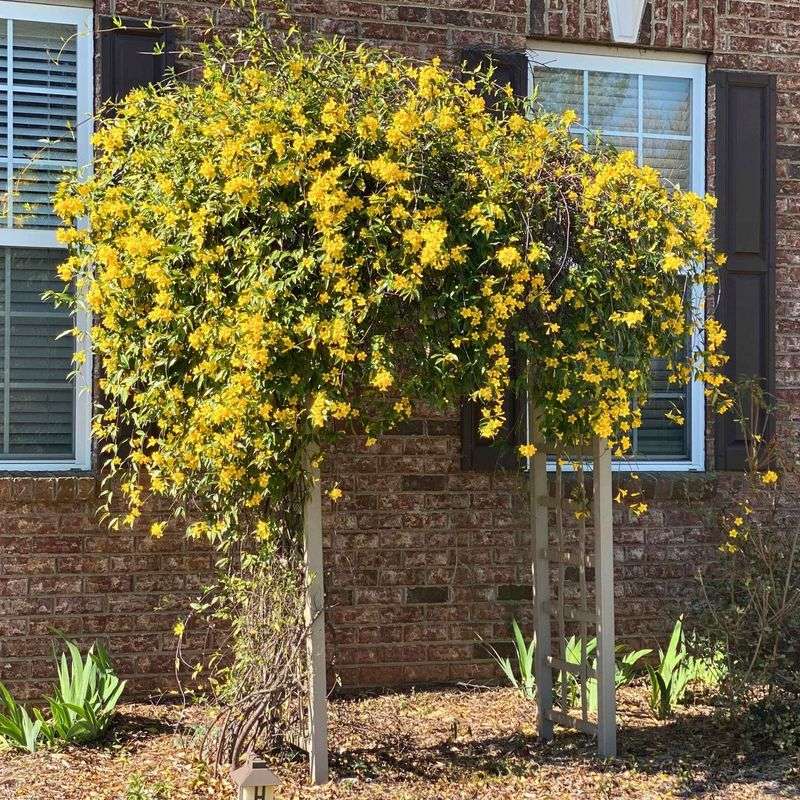
Late winter in the desert can feel a little gray. Then Carolina jessamine opens its bright yellow tubular flowers and suddenly the fence looks like sunshine.
That early timing is its special trick. Few vines bloom this early, so it offers some of the first nectar of the year for bees waking up in February and March.
The glossy evergreen leaves stay green all year, giving you steady privacy and cover for small birds.
It handles cold down to about 15 degrees, which makes it a smart pick if you live in a chilly pocket of the valley or up toward higher desert towns. It adapts to many exposures, from full sun to partial shade, though east-facing spots are ideal in the hottest areas.
One thing to know: all parts of this plant are toxic if eaten, so keep it away from spots where pets or kids might chew. It needs support to climb, like a trellis, arbor, or iron fence.
Plant in fall, water deeply every week or so during summer, and add mulch to keep roots cooler. With that care, it can keep lighting up your late winter for decades.
8. Pink Trumpet Vine
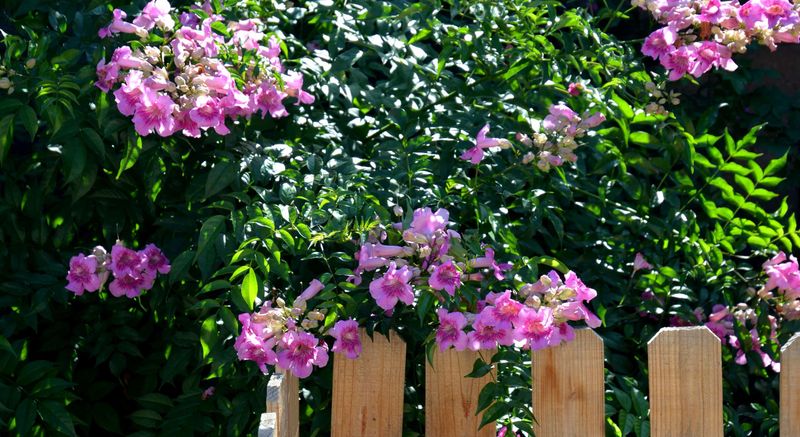
Patience pays off with pink trumpet vine. It starts slowly for the first year or two, almost like it is studying your yard, and then it takes off and climbs up to 20 feet.
From late summer into fall, big clusters of soft pink trumpet flowers appear, many with a light, sweet fragrance. Hummingbirds and bees notice fast.
The blooms arrive just as monsoon humidity fades, giving the garden a second wind when heat-stressed plants are looking rough.
Originally from South Africa, this vine loves sun and heat, which explains why it settles into the low desert so well. After establishment, watering needs drop to a deep soak every week or two in summer and far less in winter.
A light frost may burn back the tips, but it usually recovers quickly in spring.
Since it does not cling on its own, tie it to a pergola, sturdy trellis, or ramada. It makes a gorgeous shade cover for a patio.
Plant in spring after frost danger passes, or in early fall, and prune lightly in late winter to shape it. Over time, this one becomes the showpiece neighbors ask about.
9. Mexican Flame Vine
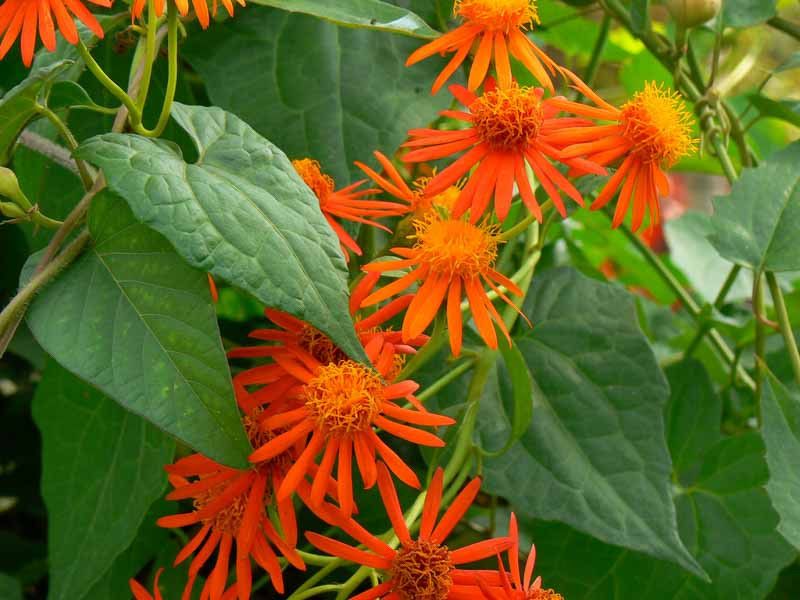
Rocky soil, full sun, and nobody around to water much? Mexican flame vine hardly notices.
Gardeners often plant it in the toughest, most neglected corner of the yard and watch it thrive anyway.
The flowers look like bright orange daisies, and they pop against the green leaves like little campfires. Butterflies love them, and hummingbirds stop by too.
In mild winters it can bloom through the cool months, offering color when much of the yard rests.
Growth is famously fast, reaching around 20 feet on a fence or trellis. Pests rarely bother it, so there is no need for sprays.
Once established, a deep watering every week or two in summer keeps it happy, and it handles poor ground better than most ornamental vines.
A hard freeze can knock it back, but it usually regrows from the base in spring. Protect it with frost cloth on very cold nights if you like, or simply trim off damaged stems when the weather warms.
Plant it in spring or early fall, give it something to twine around, and you will have a butterfly magnet that keeps going for years with very little effort on your part.
10. Star Jasmine
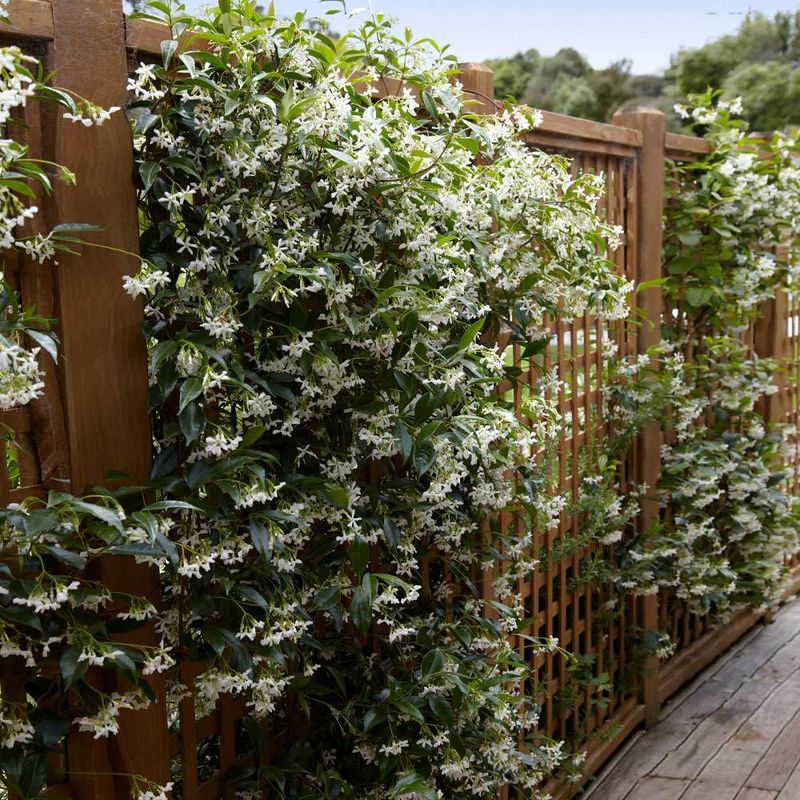
Step outside on a warm April evening and you might smell star jasmine before you see it. The sweet perfume from its small white star-shaped flowers drifts across patios and makes the whole yard feel like a resort.
Not every corner of an Arizona yard gets blasted by sun all day. North and east sides, or spots under a mesquite canopy, need a plant that likes a little shade.
Star jasmine fills that gap perfectly, staying lush and green all year long with glossy leaves.
Night-flying moths are drawn to the fragrant blooms, and bats that hunt moths and mosquitoes may patrol nearby after dark. That makes it a lovely choice near seating areas where you want a calm, living evening scene.
It climbs by twining, so train it on a trellis, or let it spread as a ground cover under trees. Plant in fall, amend the planting hole with compost to loosen caliche, and add mulch to keep roots cool.
Water deeply once or twice a week in summer, less in winter. Kept out of harsh afternoon sun, it can stay fragrant and faithful for decades.