Fast-Growing Native Arizona Hedges That Stay Green Without Constant Watering
Privacy is one of those things many homeowners do not think much about until it starts disappearing. A new view from the street, a neighboring property, or a nearby development can suddenly make a yard feel far more exposed than it once did.
That often sends people searching for a fast solution.
The problem is that quick-growing plants sometimes come with long-term drawbacks. Some need far more water than expected.
Others require constant trimming just to keep them looking presentable. What seems like an easy answer at first can become an ongoing maintenance project a few years later.
That is why more homeowners are taking a closer look at native plants. In Arizona, many are discovering that certain native hedges can grow surprisingly fast while remaining well suited to local conditions.
They provide greenery, structure, and privacy without demanding the constant watering that many traditional hedge plants rely on to stay healthy through summer.
1. Hopbush Forms Fast Privacy Screens
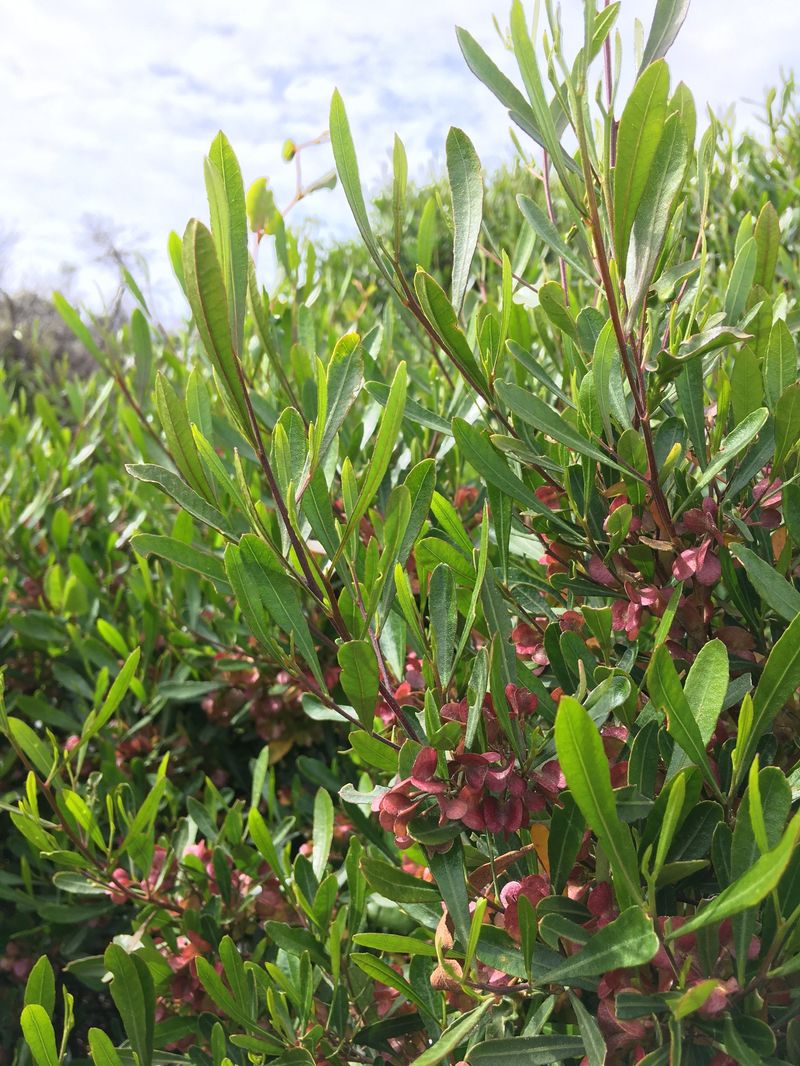
Hopbush moves fast. In warm desert climates, it can push out several feet of new growth in a single season, making it one of the quickest ways to build a real privacy screen from scratch.
Native to desert regions across the Southwest, Hopbush thrives in full sun and rocky or sandy soil. Once roots are established, usually after the first season, it rarely needs supplemental water.
Rainfall alone keeps most established plants looking healthy through summer.
Leaves stay green and dense even through intense heat. The plant holds a naturally rounded shape without much pruning, which saves time for gardeners who want low maintenance.
If you want a tighter, more formal hedge, a light trim once or twice a year is all it takes.
Hopbush also produces clusters of papery, reddish seed pods in late spring that add seasonal color. Birds are occasionally drawn to the plant, which adds a little life to the yard.
It handles reflected heat well, so planting near walls, fences, or paved areas is not a problem. Soil drainage matters more than soil quality with this one.
Avoid heavy clay or spots where water pools after rain. Give it good drainage and full sun, and Hopbush will reward you with fast, reliable growth and consistent green color through most of the year.
2. Arizona Rosewood Stays Green Through Dry Spells
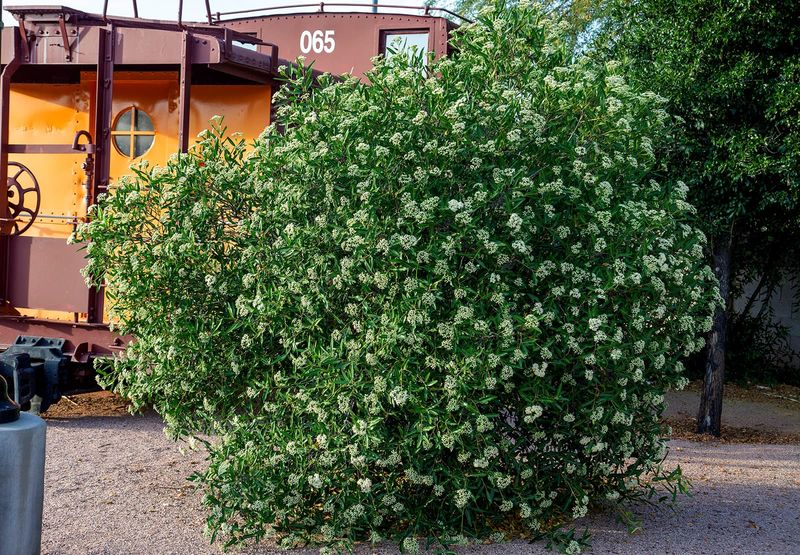
Arizona Rosewood is one of those plants that just keeps going when everything else starts to struggle. Long dry spells do not faze it much once it gets established in the ground.
Native to rocky slopes and canyon edges in the Sonoran Desert, this shrub is perfectly adapted to the region’s dry winters and brutal summers. Small, glossy leaves help it hold moisture without needing much from you.
Growth is steady rather than explosive, but it fills in well over two to three seasons.
Heights typically reach six to twelve feet depending on conditions, which makes it a solid choice for mid-height screening. The plant stays evergreen through most of the year, dropping leaves only briefly in cold snaps.
Your Arizona Garden Changes Every Week. Your Plan Should Too.
Gardening in Arizona changes quickly throughout the season. Every Friday you’ll receive a simple weekly plan showing exactly what to plant, prune, fertilize, harvest, and protect so you never miss the right timing.
In most low-elevation desert yards, it holds its green color reliably.
White flower clusters appear in spring and attract pollinators, which is a nice bonus for anyone trying to support native wildlife. Fragrance from the flowers is light and pleasant.
Pruning is optional. Left alone, Arizona Rosewood takes on a loose, natural shape that blends well into desert-style landscaping.
If a more structured hedge is the goal, shaping it once in early spring works well without stressing the plant.
Plant it in well-drained soil with full to partial sun exposure, and water it through the first two summers to help roots establish before cutting back irrigation entirely.
3. Desert Olive Handles Heat With Ease
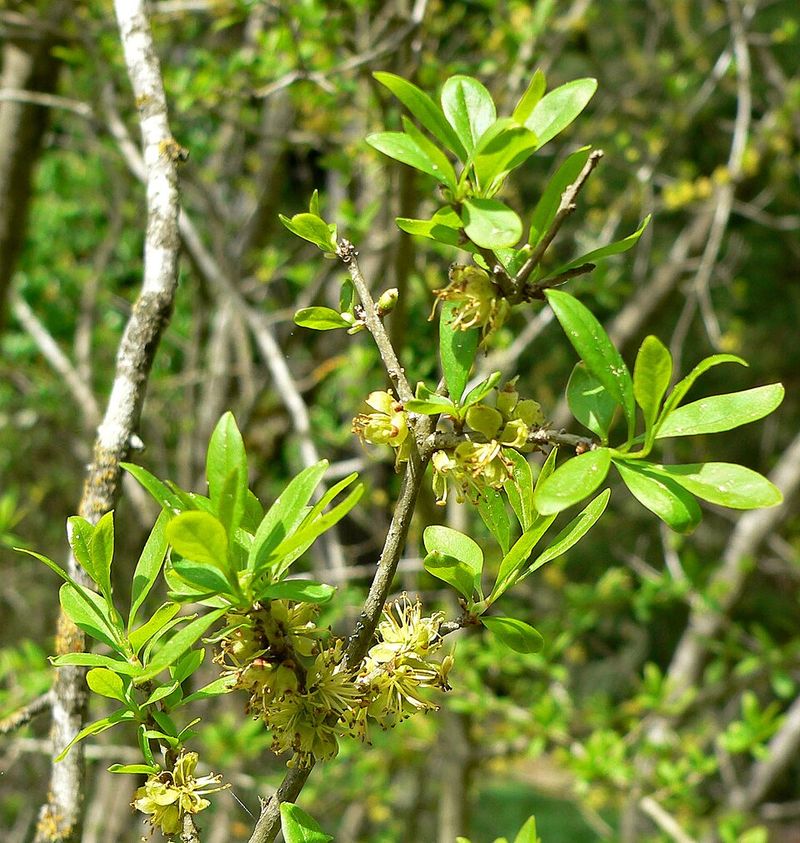
Scorching afternoon heat that flattens other plants barely registers for Desert Olive. It is built for conditions that most ornamental shrubs simply cannot handle.
Desert Olive, also called Forestiera, grows naturally in washes and rocky slopes across the Southwest. In a yard setting, it adapts quickly and starts pushing new growth within its first season.
Mature plants can reach eight to twelve feet, making them useful for taller screens and windbreaks.
Leaves are small, narrow, and a soft gray-green that stays consistent through summer heat. The plant is semi-evergreen in most low-desert locations, meaning it holds most of its leaves through winter and drops them only briefly in cold weather.
In warmer microclimates, it stays green almost year-round.
Water needs drop significantly after the first two years. Established plants typically get by on seasonal rainfall in most desert climates, though a deep soak once a month in peak summer helps maintain fuller growth.
Over-watering is more of a risk than under-watering with this species.
Small yellow flowers appear in early spring before new leaves emerge. They are not showy, but they attract early-season pollinators and beneficial insects.
Pruning Desert Olive into a formal hedge shape is straightforward. It responds well to trimming and bounces back quickly.
Plant in full sun with good drainage, and avoid shaded spots where air circulation is poor.
4. Chuparosa Produces Dense Growth With Minimal Water
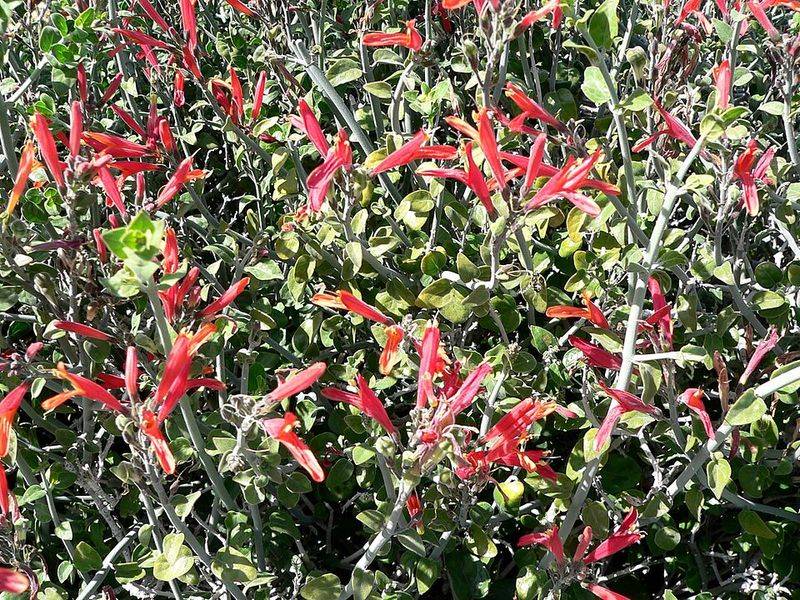
Bright red tubular flowers on a plant that barely needs water sounds too good to be true, but Chuparosa delivers exactly that. It earns its place in any low-water hedge plan.
Chuparosa is native to the Sonoran Desert and thrives in the same harsh conditions that make other plants struggle. Full sun, rocky soil, and low rainfall are basically its ideal growing conditions.
Once established, it needs almost no supplemental irrigation outside of the hottest weeks of summer.
Growth habit is dense and mounding, with arching stems that weave together over time. Left unpruned, plants can spread four to six feet wide and reach similar heights.
For hedge use, light annual shaping keeps it more compact and encourages fresh new growth from the base.
Hummingbirds are strongly attracted to the red flowers, which bloom heavily in late winter through spring and often again in fall. Planting Chuparosa near a seating area or window makes it easy to watch the activity up close.
Stems are mostly leafless during dry periods, which surprises some new gardeners. After rain or irrigation, small green leaves flush out quickly and the plant fills in again.
That cycle is completely normal and not a sign of stress. Soil drainage is important.
Avoid heavy or compacted soils that hold moisture too long. Sandy, gravelly, or decomposed granite beds suit Chuparosa best for long-term health and consistent bloom cycles.
5. Jojoba Holds Its Color Year Round
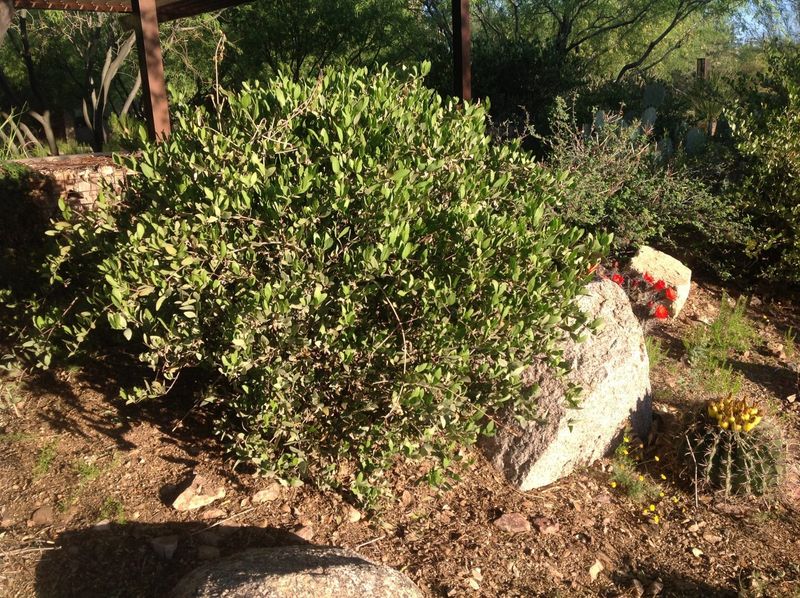
Consistency is rare in desert landscaping, but Jojoba delivers it. Green leaves, solid structure, and no dramatic seasonal changes make it one of the most dependable hedges you can plant in a hot, dry yard.
Jojoba is a true desert native, growing wild across sandy flats and rocky hillsides throughout the low desert Southwest. Leaves are thick and leathery, which helps the plant conserve moisture during long dry stretches.
Color stays a steady blue-green through summer heat, cold snaps, and everything in between.
Growth is moderate rather than rapid, but plants fill in steadily and reach six to eight feet over several seasons. Jojoba responds well to pruning, so shaping it into a formal hedge line is easy.
It bounces back quickly after trimming without skipping a beat.
Water needs are very low once roots are established. Deep watering every few weeks during summer is usually enough.
In cooler months, rainfall typically handles everything. Over-watering actually causes more problems than drought stress with this species, so err on the dry side.
Jojoba is dioecious, meaning male and female plants are separate. Female plants produce small acorn-like seeds that wildlife sometimes use for food.
If seed production matters to you, planting both sexes nearby is necessary. For pure hedge purposes, either works fine.
Plant in full sun with well-drained soil, and expect steady, reliable performance with minimal intervention year after year.
6. Wolfberry Creates Dense Branching Growth
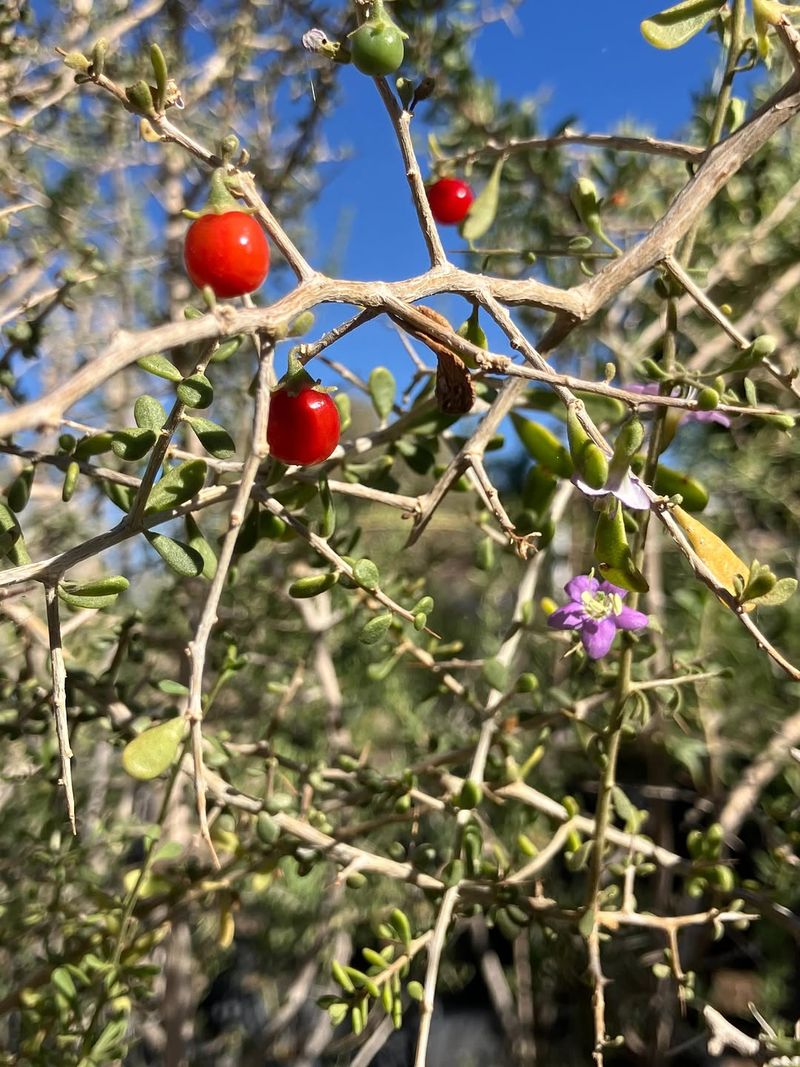
Few native plants branch as aggressively as Wolfberry. Give it space and decent sun, and it builds a thick, tangled wall of stems that creates serious visual screening over time.
Wolfberry grows naturally across desert washes and scrublands throughout the Southwest. In a yard setting, it adapts quickly and starts producing new lateral branches within the first growing season.
Over two to three years, it forms a dense, interlocking mass of stems and foliage that is hard to see through.
Leaves are small and gray-green, staying on the plant through most of the year in mild winters. During hard freezes, some leaf drop may occur, but new growth returns quickly once temperatures rise.
Overall, the plant maintains a reasonably full appearance through most seasons.
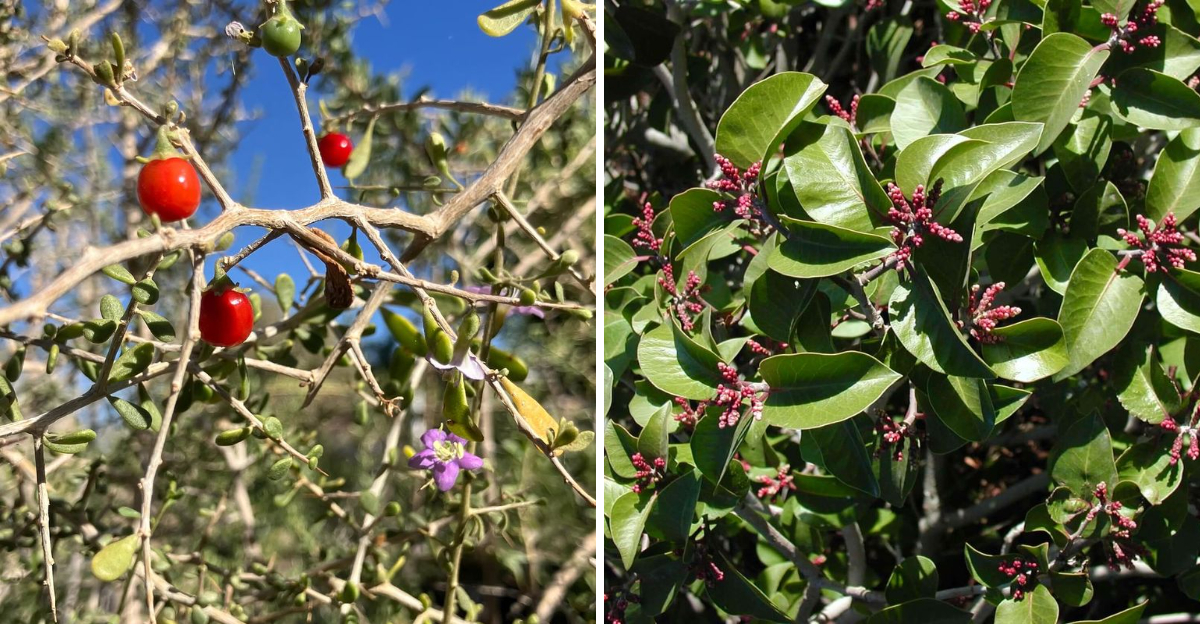
Small red berries appear in late summer and fall. Birds are drawn to them heavily, which makes Wolfberry a good choice for anyone interested in supporting local wildlife.
The berries are also edible for humans and have been used by indigenous communities in the region for generations.
Thorny stems make this plant a natural deterrent for unwanted foot traffic, which adds a practical security benefit along property edges. Pruning is possible but not always necessary.
Left to grow naturally, it fills in on its own. Plant in full sun with well-drained soil and minimal supplemental water after the first year.
Avoid heavy soil that stays wet after rain.
7. Sugar Bush Tolerates Heat And Drought
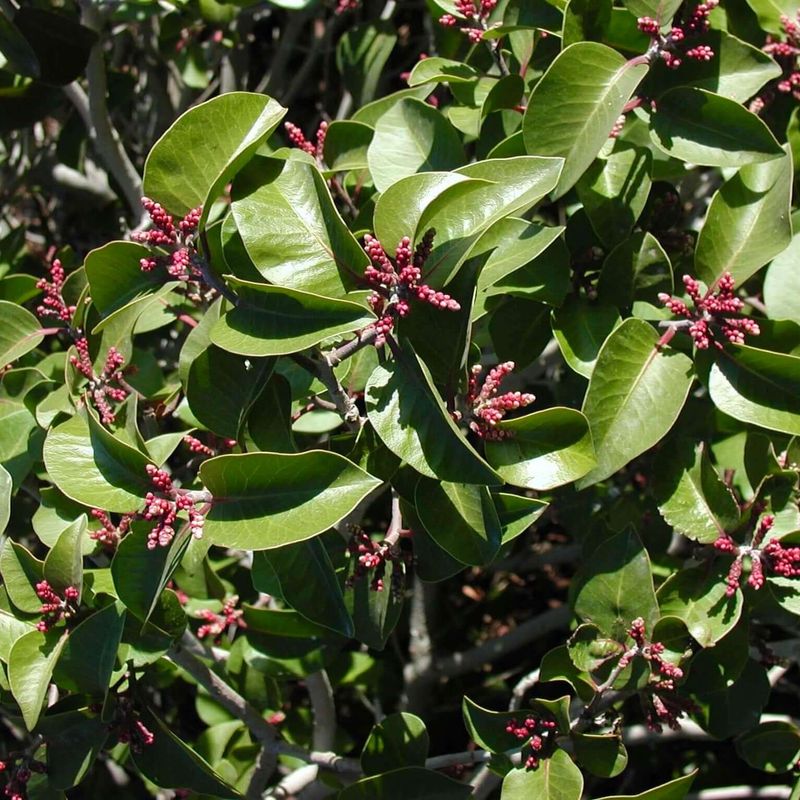
Sugar Bush has the kind of deep green, glossy foliage that makes people assume it needs a lot of water. It does not.
That lush look is completely natural even under dry, hot conditions.
Rhus ovata, commonly called Sugar Bush, grows native to rocky hillsides and chaparral zones across the Southwest. It handles reflected heat, poor soil, and low rainfall without much complaint.
Leaves are large compared to most desert shrubs, giving it a fuller, more lush appearance than typical dry-climate plants.
Growth rate is moderate. Expect steady expansion of two to three feet per year under good conditions.
Mature plants can reach eight to twelve feet tall and equally wide, making them a strong choice for taller privacy screens or windbreaks along property lines.
Clusters of small pinkish-white flowers appear in spring and attract pollinators. After flowering, sticky reddish berries develop that were historically used to make a tart beverage by indigenous communities in the region.
Birds also eat the berries regularly.
Established plants need very little supplemental water. Deep watering once or twice a month through peak summer is usually enough to maintain full, healthy growth.
In cooler months, natural rainfall is typically sufficient. Soil drainage is important.
Heavy clay soils that stay wet cause more problems than dry conditions. Full sun is preferred, though partial afternoon shade in the hottest exposures can reduce stress during extreme heat events.
8. Littleleaf Cordia Makes A Reliable Hedge
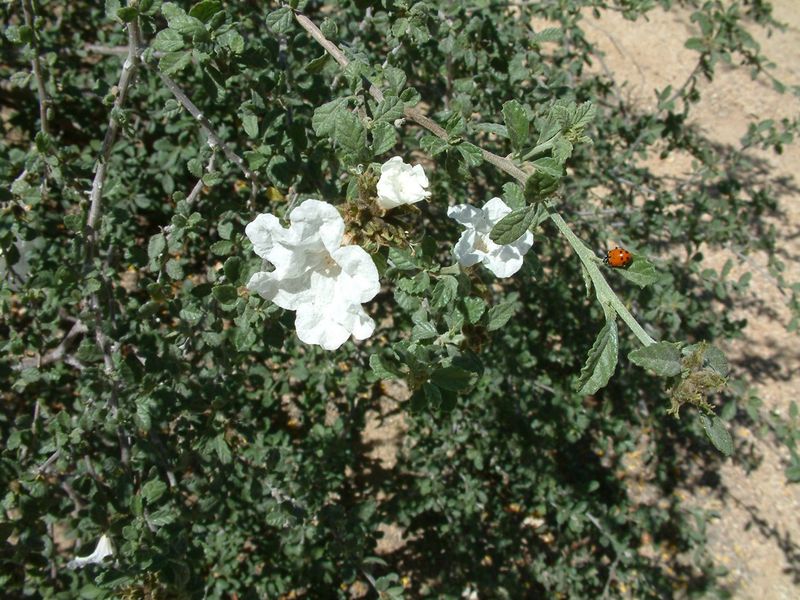
Reliability is the word that keeps coming up with Littleleaf Cordia. It does not demand attention, does not throw surprises, and keeps growing steadily through heat that would stress most other plants.
Native to Sonoran Desert washes and rocky slopes, Littleleaf Cordia is well-adapted to intense sun and minimal rainfall.
Small, rough-textured leaves reduce water loss naturally, which is part of why the plant performs so well without regular irrigation once it settles in.
Growth rate is moderate to fast under warm conditions. In the low desert, plants can gain two to four feet per year during active growing seasons.
Mature heights range from six to ten feet, which works well for medium to tall privacy screens. The plant fills in from the base up, creating a solid wall of foliage over time.
White flower clusters appear repeatedly through the warm months, often flushing after rainfall events. Pollinators visit frequently.
The flowers are small but numerous, giving the plant a lively, active look during bloom periods.
Pruning is easy and the plant recovers quickly after shaping. For a natural, informal hedge, no pruning is required at all.
For a tighter, more defined line, trimming once or twice a year in spring and early fall keeps it in shape without stressing the plant.
Plant in full sun with good drainage, water regularly through the first summer, then gradually reduce irrigation as roots establish through the second season.