4 Shrubs Oregon Gardeners Are Pulling Out (And 4 They Are Choosing To Plant In Their Place)
Oregon yards have a way of telling stories through their overgrown corners.
A shrub that looked tidy and cheerful at the nursery can quietly take over a fence line, creep into neighboring lots, or demand more pruning than a full-time job allows.
Across the state, gardeners are taking a hard look at what is growing in their borders and making some honest decisions.
From rain-soaked backyards in the Willamette Valley to drier spots east of the Cascades, people are pulling out problem plants and replacing them with shrubs that actually work with Oregon, not against it.
The four shrubs getting pulled share a common story: they spread where they should not, create more work than expected, or simply do not play well with the local ecosystem.
The four going in are native or well-adapted, wildlife-friendly, and far easier to live with long-term. No dramatic overhauls required.
Just smart swaps made by gardeners who have learned from experience, talked to their county extension office, or noticed too many seedlings popping up in places they never planted anything.
1. Butterfly Bush Gets Reconsidered
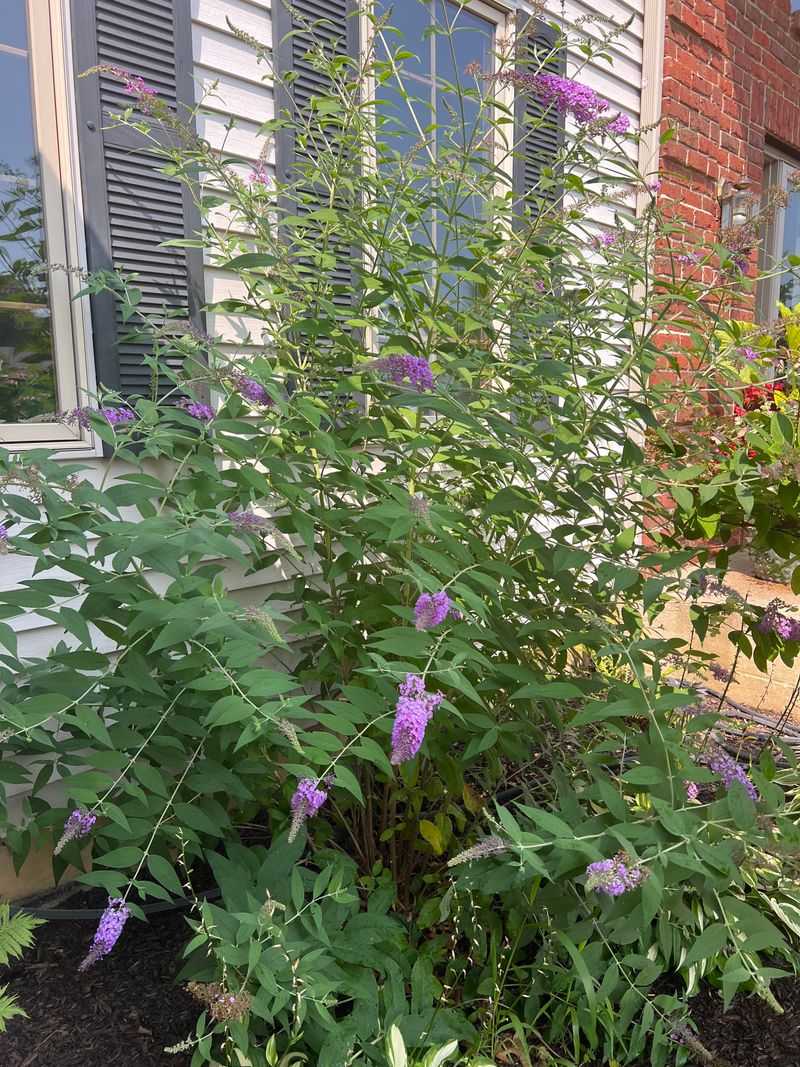
That purple-spiked shrub might be covered in monarchs and swallowtails in August, but the butterfly bush has a complicated reputation in Oregon.
Buddleja davidii is listed as a Class B noxious weed in parts of the state, and Oregon Department of Agriculture has flagged its ability to spread into disturbed areas, roadsides, and riparian zones.
The blooms are beautiful. The backstory is messier.
Butterfly bush produces thousands of tiny seeds that travel easily on wind and water.
Gardeners who deadhead religiously can slow the spread, but most gardeners eventually miss a few cycles. Seedlings start showing up in gravel paths, lawn edges, and nearby natural areas.
What started as a pollinator garden centerpiece can quietly become a neighbor problem.
The tricky part is that butterfly bush does attract butterflies as adults, but it offers no larval host value.
Native pollinators need plants where they can complete their full life cycle, not just grab a quick snack. Swapping it out for a plant that supports caterpillars too is a meaningful upgrade for any pollinator garden.
Some counties in Oregon have already restricted the sale of non-sterile varieties.
Pulling it out and replacing it with a shrub that feeds the whole food web feels like the more satisfying long-term choice for anyone serious about their garden’s role in the local ecosystem.
2. English Holly Comes Out
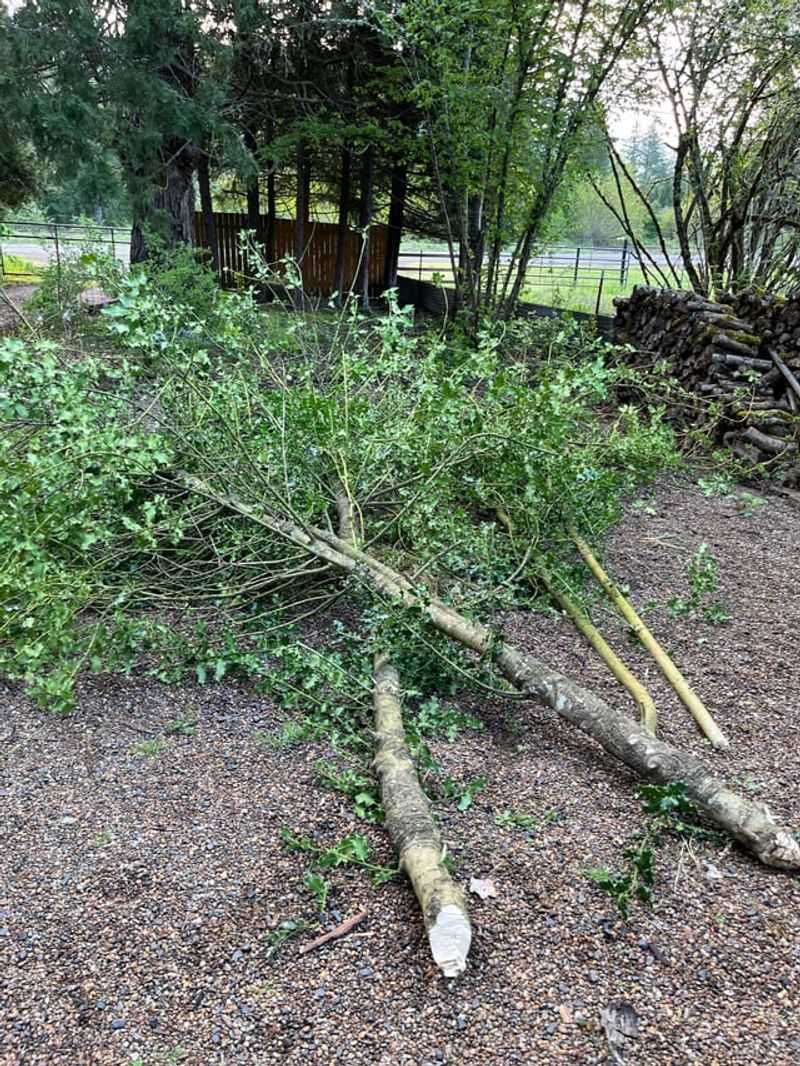
Few plants look as festive on a December wreath as English holly, but Ilex aquifolium has worn out its welcome in Oregon landscapes.
Birds love the bright red berries, which is exactly the problem.
Robins, cedar waxwings, and other species eat the fruit and spread seeds into forest understories, ravines, and parks far beyond the original planting.
Oregon State University Extension has documented holly naturalization across the western part of the state, particularly in shaded woodlands where it can establish dense colonies beneath the canopy.
Once it gets going in a forested area, it is genuinely difficult to manage. The spiny leaves make hand-pulling unpleasant, and mature shrubs can grow into small trees if left unchecked for years.
Your Oregon Garden Changes Every Week. Your Plan Should Too.
Gardening in Oregon changes quickly throughout the season. Every Friday you’ll receive a simple weekly plan showing exactly what to plant, prune, fertilize, harvest, and protect so you never miss the right timing.
In the home garden, English holly demands regular pruning to stay in bounds.
Without it, a single shrub can reach twenty feet or more. Many gardeners discover too late that what they planted as a tidy hedge has become a sprawling, multi-stemmed thicket.
Removal is not quick, but it is worth the effort.
Younger plants can be dug out with a good spade. Larger specimens may need cutting back in stages.
Once it is gone, that shady corner opens up for something that gives back to the local ecosystem without escaping the property line every spring.
3. Scotch Broom Leaves The Border
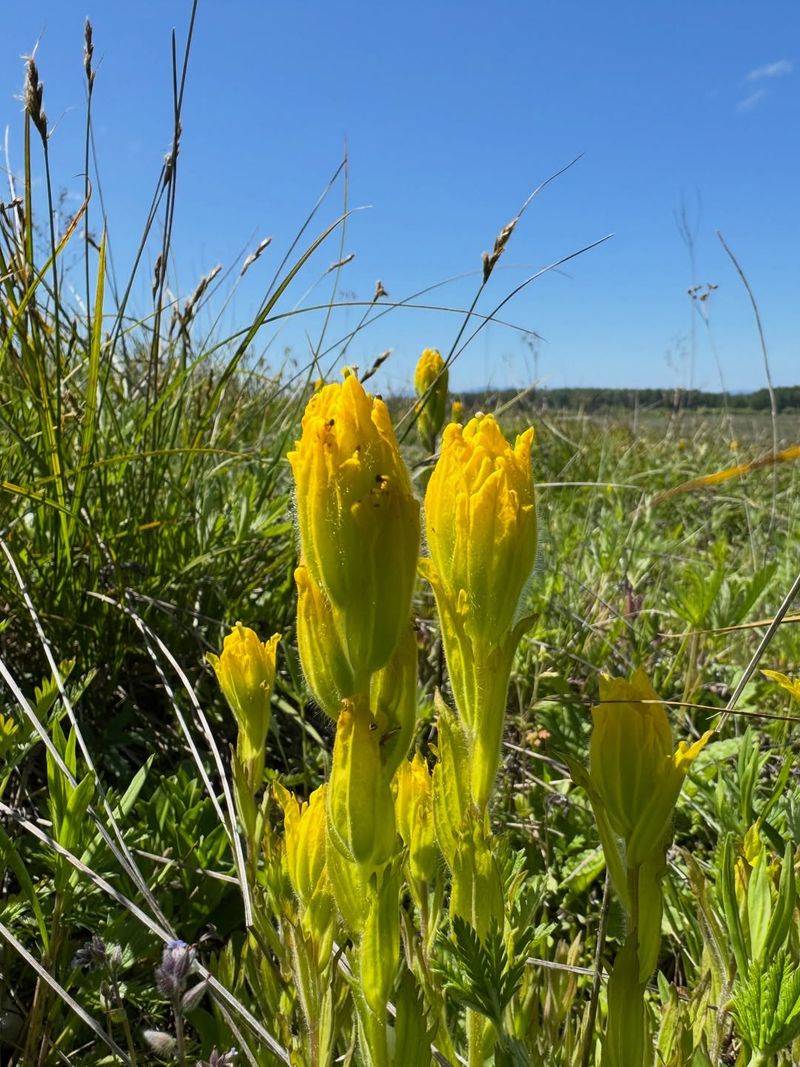
Bright yellow flowers in May can fool you.
Scotch broom looks cheerful along roadsides and sunny slopes, but Cytisus scoparius is one of the most aggressive invasive shrubs in the Pacific Northwest.
Oregon lists it as a Class B noxious weed, and anyone who has watched it march across a pasture or crowd out native vegetation on a hillside understands why removal conversations are happening in yards across the state.
Each mature plant can produce thousands of seeds annually, and those seeds stay viable in the soil for decades.
A single shrub left to bloom and set seed for a few seasons can create a persistent seed bank that makes long-term management genuinely challenging.
Pods audibly pop on hot summer days, flinging seeds several feet in every direction. It spreads fast and roots deep.
Scotch broom also fixes nitrogen in a way that actually changes soil chemistry, making sites more hospitable to other invasive plants and less suitable for native species that evolved in lower-nutrient conditions.
Pulling young plants by hand in winter or early spring, before they set seed, is the most effective approach for home gardeners.
Cutting alone is not enough since plants resprout readily from the base.
Removing it from a sunny border frees up a spot for a native shrub that offers similar structure and seasonal interest without the ecological baggage that comes with this one.
4. Himalayan Blackberry Gets Cleared
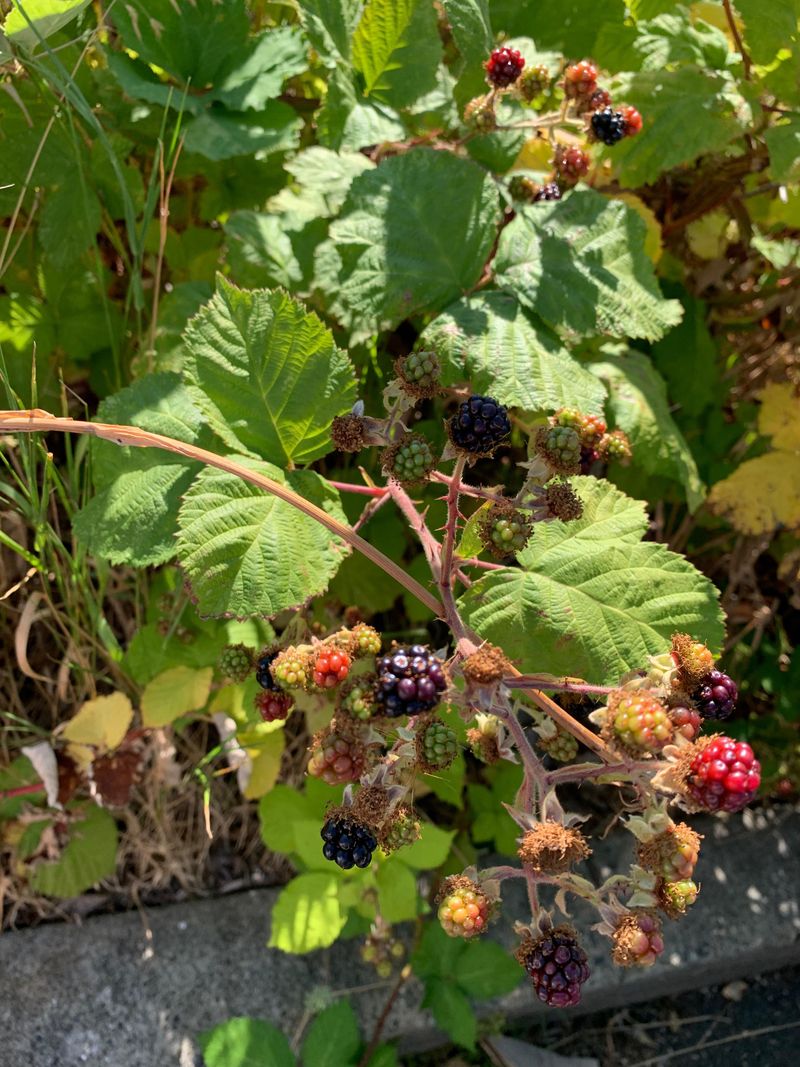
Rubus armeniacus does not sneak up on anyone.
The canes arch overhead, the thorns grab clothing and skin, and a single summer of neglect can turn a tidy garden edge into an impenetrable wall of bramble.
Himalayan blackberry is arguably the most recognized invasive plant in western Oregon, and it earns that reputation every single season.
The roots go deep and wide, and cutting canes at the surface only delays regrowth.
True removal requires digging out root crowns or repeated cutting over multiple seasons to exhaust the plant’s energy reserves. It is a long project, not a weekend task.
The berries are genuinely delicious, which is part of why many gardeners tolerate the plant longer than they should.
But the trade-off becomes clear when canes start coming up through lawn edges, under fences, and into vegetable beds. Property boundaries blur fast once Himalayan blackberry finds a foothold.
Removal is most effective in late fall or early spring when the soil is soft and root crowns are easier to locate.
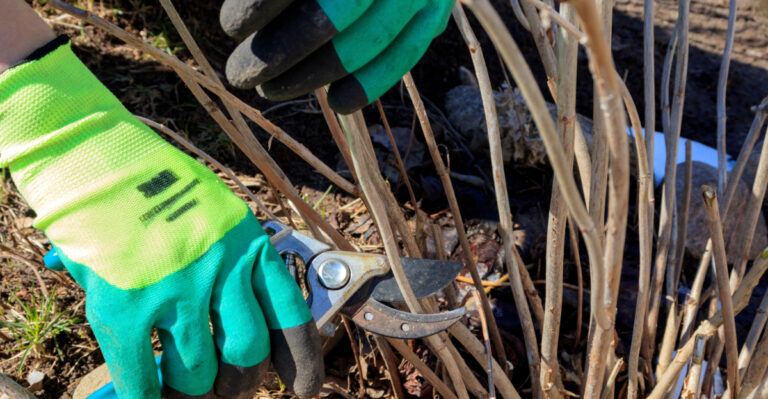
Thick gloves and long sleeves are non-negotiable.
Once cleared, the space benefits from immediate replanting to prevent the blackberry from reclaiming bare ground.
Covering the area with cardboard and mulch while a replacement shrub establishes is a practical and well-tested strategy used by Oregon gardeners who have been through this process before.
5. Red Flowering Currant Steps In
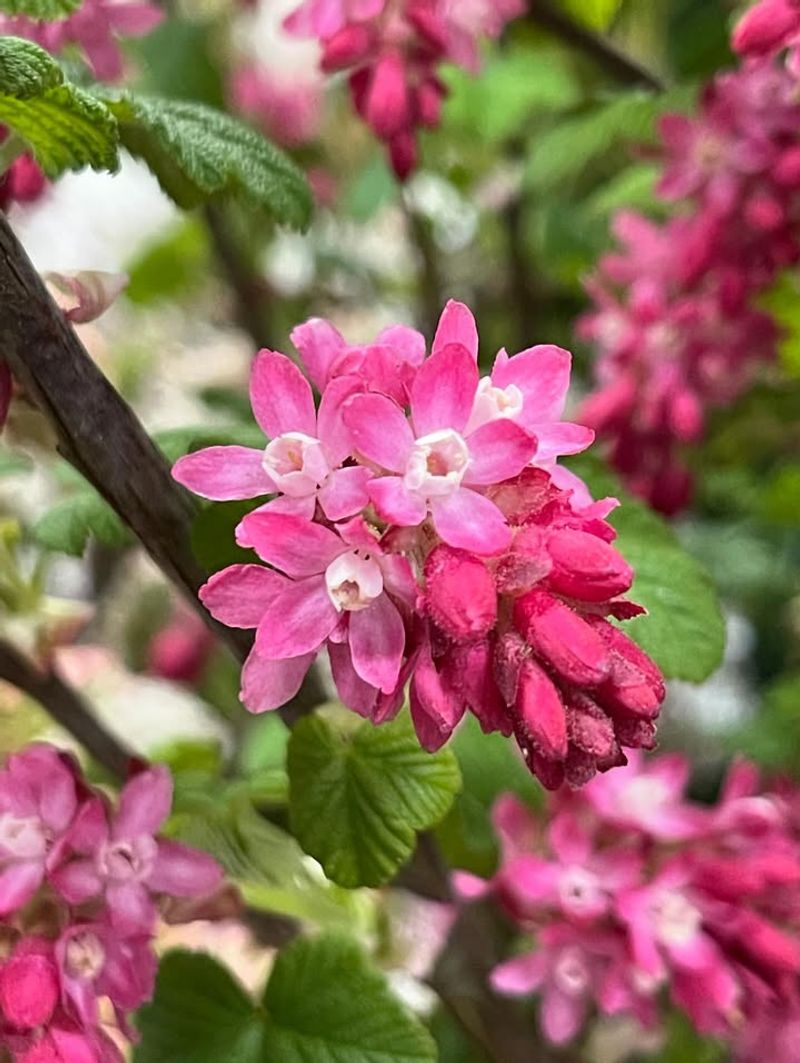
Before most other shrubs have woken up for the season, red flowering currant is already putting on a show.
Ribes sanguineum bursts into bloom in late winter and early spring, sometimes as early as February in the Willamette Valley, with cascading clusters of deep pink to red flowers that practically glow against a gray Oregon sky.
It is the kind of plant that makes neighbors stop and ask what it is.
Rufous hummingbirds time their northward migration to coincide with exactly this bloom.
Planting red flowering currant is one of the most reliable ways to welcome hummingbirds back to your yard each spring. Native bees also visit the flowers early in the season when other food sources are scarce.
It grows naturally in Oregon’s foothills and lower mountain slopes, which means it handles the wet winters and dry summers that define much of the state without complaint.
Once established, it needs very little supplemental water. It typically reaches six to ten feet tall and wide, making it a solid mid-border or foundation shrub.
After the flowers fade, blue-black berries develop that native birds find appealing in late summer.
For anyone who pulled out a butterfly bush or a struggling ornamental, this is a swap that rewards you starting in the very first spring after planting.
6. Oregon Grape Adds Evergreen Backbone
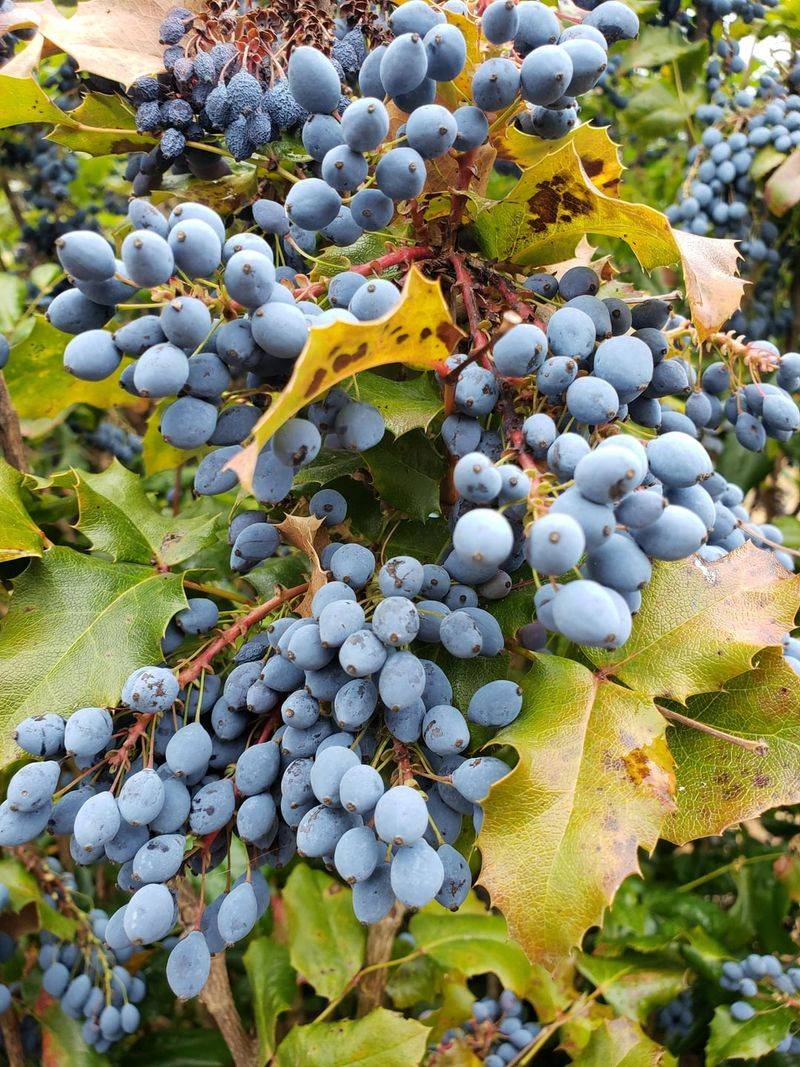
Tough, native, and underrated for decades, Oregon grape has quietly become one of the most requested shrubs at native plant nurseries across the state.
Mahonia aquifolium is Oregon’s state flower, and it earns that title by thriving in conditions that send most ornamentals into decline.
Dry shade under Douglas fir? No problem. Rocky, poor soil on a north-facing slope? It handles that too.
The evergreen foliage holds its structure through every Oregon winter, providing visual backbone when deciduous shrubs have gone bare.
Leaves turn shades of bronze and burgundy in cold weather, adding unexpected color to the garden from November through February.
Bright yellow flower clusters appear in early spring, drawing native bees that are active even on cool, partly cloudy days.
By midsummer, clusters of blue-purple berries ripen and attract birds, including cedar waxwings, robins, and band-tailed pigeons.
The berries are tart and edible, sometimes used in jams and jellies by foragers who appreciate their wild flavor. Wildlife value runs through the whole growing season with this one.
Tall Oregon grape can reach six feet or more and works well as a background shrub or informal hedge.
Low Oregon grape stays under two feet and spreads slowly as a groundcover.
Both species handle competition from tree roots, resist deer browsing better than most plants, and require almost no maintenance once established.
For gardeners replacing English holly or Scotch broom, Oregon grape is a logical and deeply satisfying choice.
7. Snowberry Feeds Fall Birds
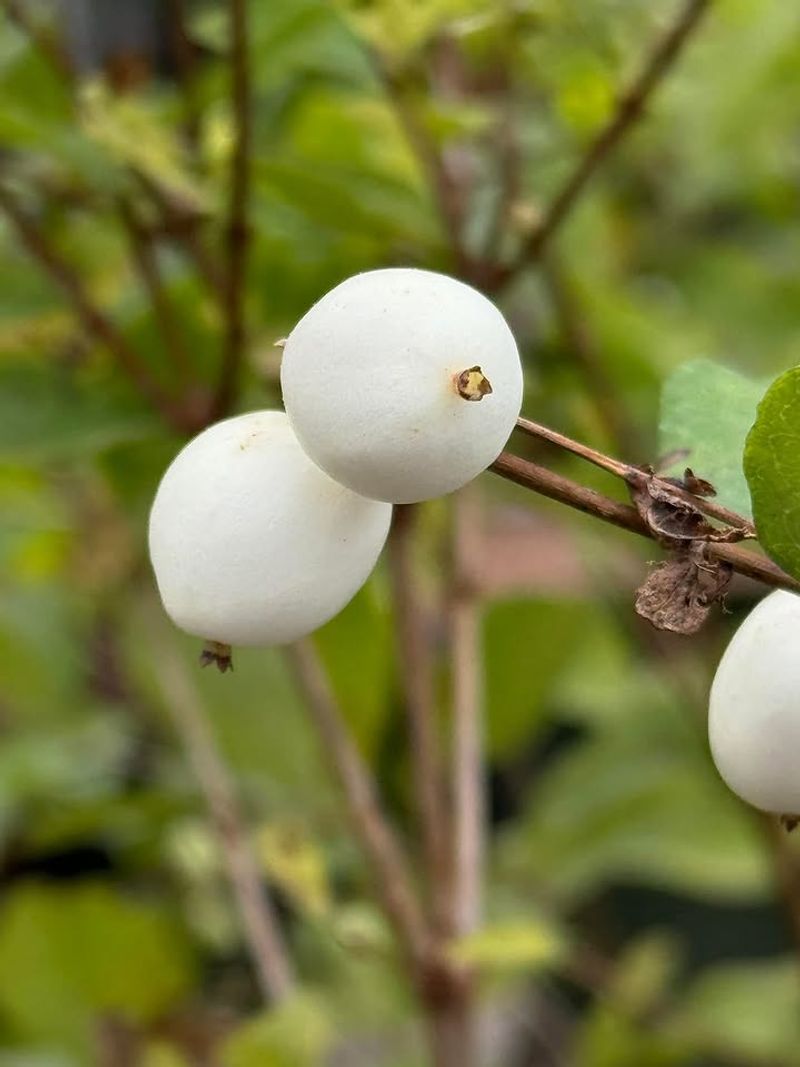
Snowberry does not demand attention, and that is honestly part of its charm.
Symphoricarpos albus grows with an easy, relaxed grace that fits naturally into informal borders, woodland edges, and naturalistic plantings without ever looking like it is trying too hard.
It is the kind of shrub that works quietly in the background and then surprises you every October with a generous display of plump white berries.
Those berries are the main event for wildlife.
Varied thrushes, robins, waxwings, and other birds forage heavily on snowberry fruit through fall and into early winter when other food sources have disappeared.
The shrub provides cover as well as calories, making it genuinely useful habitat rather than just a pretty addition to the planting bed.
Native to Oregon and much of the Pacific Northwest, snowberry grows in a wide range of conditions.
It tolerates part shade, adapts to dry or moist soils, and handles both clay and sandy ground.
It spreads slowly by root sprouts, forming loose colonies over time that stabilize slopes and fill in gaps between larger shrubs without becoming aggressive.
Plants typically reach three to five feet tall and have a soft, arching silhouette that pairs well with stiffer native shrubs like Oregon grape or red flowering currant.
Pruning is minimal. Water needs are low once the plant settles in.
For anyone replacing Himalayan blackberry along a shaded fence line or woodland edge, snowberry fills that space with far better manners and a much friendlier relationship with the surrounding landscape.
8. Oceanspray Fills The Back Row
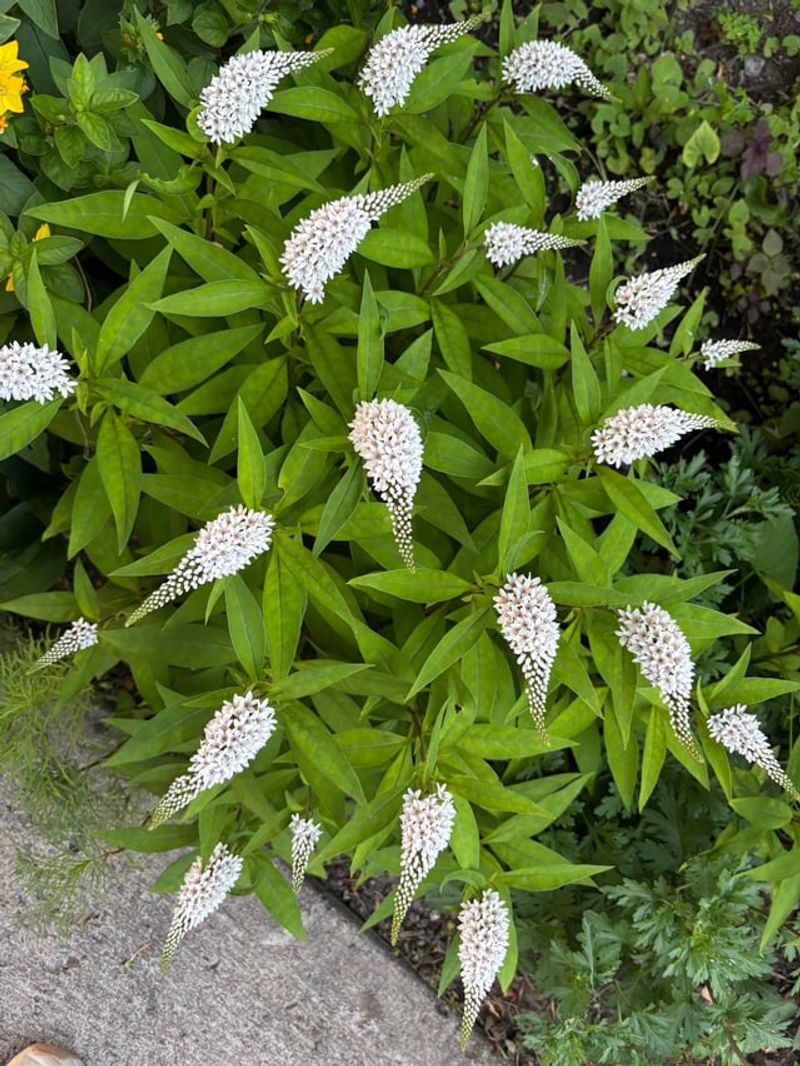
A sunny, dry slope with nothing growing on it is practically an open invitation for Scotch broom or Himalayan blackberry to move in.
Oceanspray, Holodiscus discolor, accepts that invitation first and makes itself right at home.
This tall native shrub is one of the best choices for difficult spots where water is scarce, soil is thin, and most ornamentals simply give up by July.
In early to midsummer, oceanspray puts out enormous plumes of creamy white flowers that arch gracefully from branch tips and fill the air with a light, sweet fragrance.
The flower clusters can reach a foot long on well-established plants, creating a soft, feathery display that earns the shrub its name.
Native bees, beetles, and butterflies visit the blooms in numbers that make the plant genuinely lively during peak flowering.
After blooms fade, the dried flower heads persist on the branches through fall and winter, providing texture and subtle visual interest even in the off-season.
Birds use the seeds and the dense branching structure for shelter.
The shrub grows eight to fifteen feet tall in favorable conditions, making it a strong candidate for the back row of a native planting or as an informal screen along a property edge.
Oceanspray requires almost no irrigation once established in a Pacific Northwest climate.
For anyone building a low-maintenance native border from scratch or restoring a disturbed area, this shrub delivers structure, seasonal interest, and real habitat value without any of the management headaches that come with the plants it is replacing.