7 Berry Shrubs That Feed Winter Birds In California
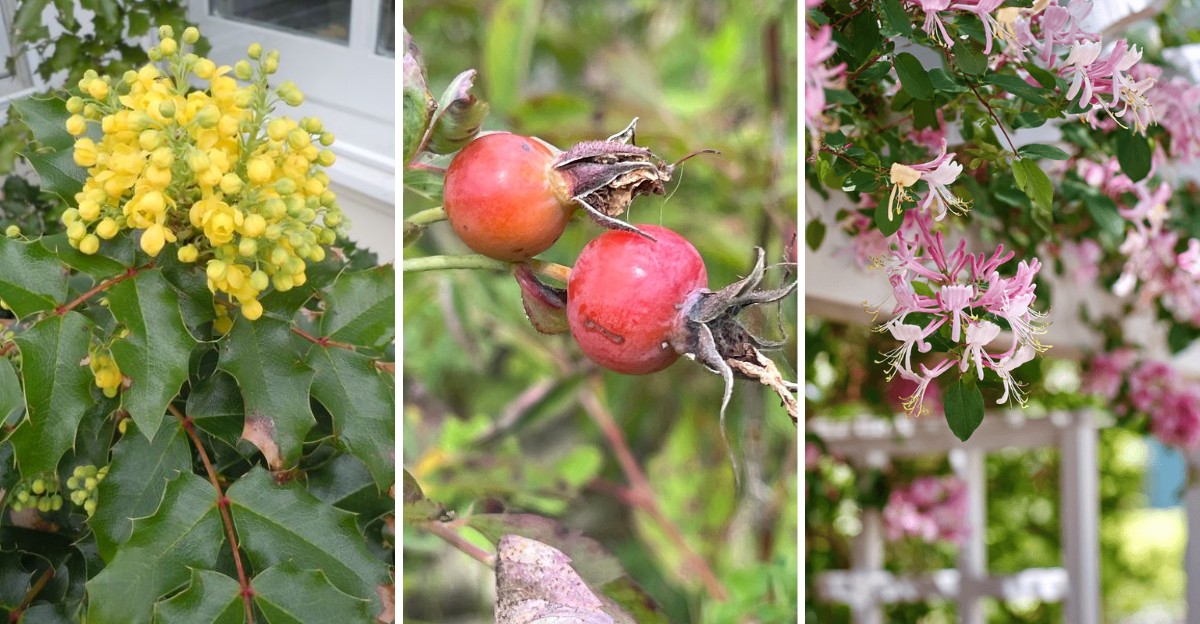
A single berry-covered shrub can provide weeks of winter food for birds, even when most garden flowers have disappeared. In California, native plants such as toyon and coffeeberry keep offering ripe fruit long after autumn begins to fade.
I’ll go out on a limb here, but I think berry shrubs deserve far more attention than traditional bird feeders. I’ve always enjoyed watching a quiet backyard suddenly fill with robins, waxwings, and other hungry visitors searching through the branches.
The trick is choosing plants that suit your corner of California. Coastal gardens, inland valleys, and cooler foothill properties have different growing conditions, and some shrubs offer better shelter alongside their fruit.
Which varieties give birds the most reliable winter pantry? A few familiar garden favorites might surprise you, especially when their colorful berries remain on the branches long after the surrounding landscape turns bare.
1. Toyon
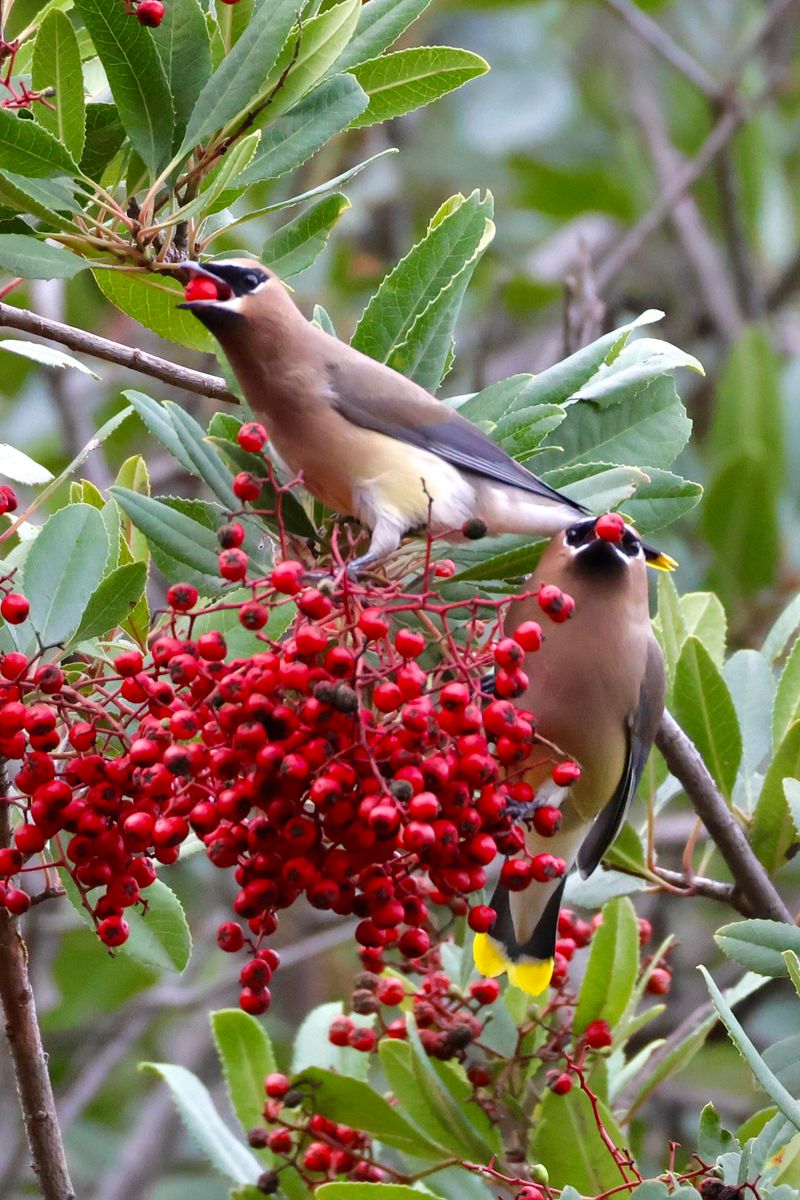
Cedar waxwings can strip a loaded toyon in an afternoon, gulping the red berries whole like candy. I have to admit that watching a flock descend on one shrub feels like catching a surprise concert.
Known scientifically as Heteromeles arbutifolia, toyon is an evergreen shrub or small tree with leathery, toothed leaves. Most garden plants settle between eight and fifteen feet tall, though wild specimens sometimes stretch much higher.
Flat clusters of small white flowers open in early summer, buzzing with bees and other busy pollinators. By late fall those blooms become bright red berries that often hang on through the coldest weeks.
Robins and western bluebirds join the waxwings, so expect plenty of busy traffic once the fruit fully ripens. Mockingbirds sometimes guard a favorite toyon fiercely, chasing rivals away from their private winter pantry with noisy scolding.
Toyon handles full sun or partial shade, and it grows happily in heavy clay or loose sandy soil. Once established, it needs only occasional deep summer watering, making it a smart pick for dry gardens.
Plant it now while winter rains help roots settle, and give each shrub room to spread outward. Southern California’s mild winters suit it beautifully, yet it also thrives in northern foothills and coastal valleys.
Raw berries contain compounds that can upset human stomachs, so leave the fresh fruit to the birds. Honestly, I can’t imagine a more cheerful sight than those scarlet clusters glowing beside a frosty window.
2. Coffeeberry
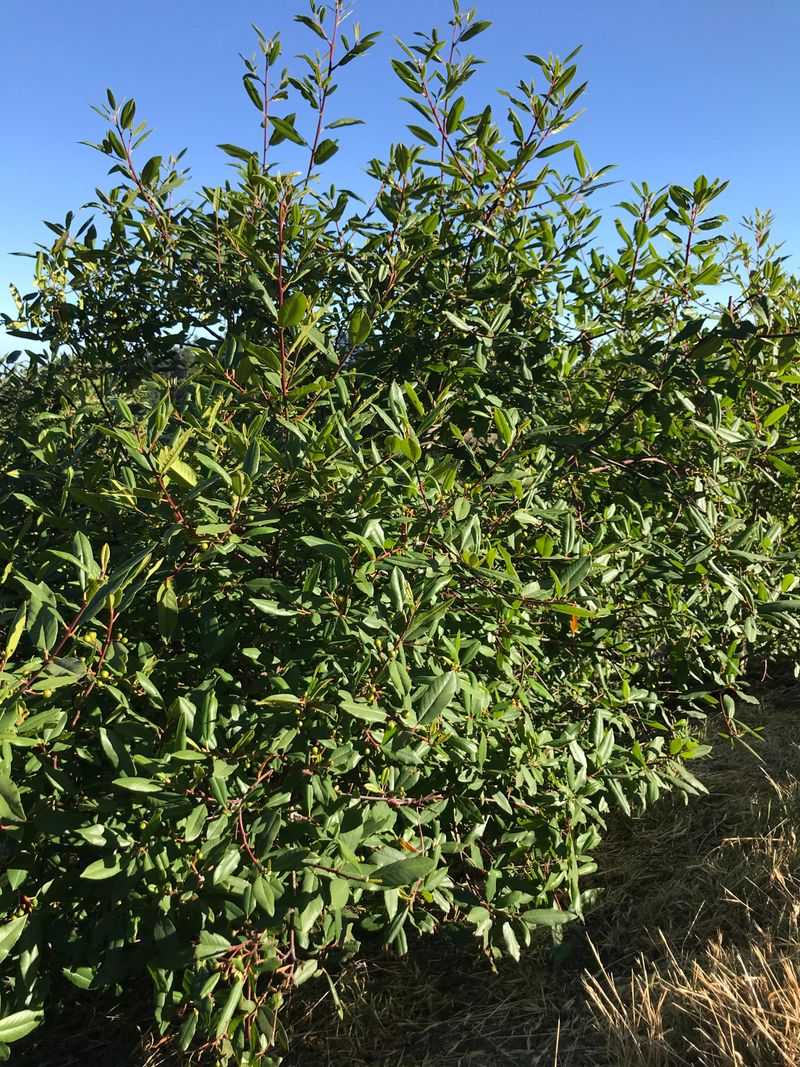
The seeds inside these glossy berries look so much like coffee beans that the shrub earned a caffeinated nickname. Sadly for coffee lovers, nobody brews a morning cup from them, but birds happily treat them as breakfast.
Botanists now call it Frangula californica, though older nursery tags may still list it as Rhamnus californica. The evergreen typically grows six to fifteen feet tall, with dark green leaves and reddish young stems.
Tiny greenish flowers appear in spring and barely catch your eye, yet bees and butterflies find them quickly. The berries then shift from green to red and finally black, ripening from late summer into fall.
Thrashers and jays devour the ripe fruit, and some berries often linger on branches into early winter. You might spot a California thrasher flipping leaf litter beneath the shrub, hunting for dropped treats.
Coffeeberry is wonderfully flexible about light, growing in full sun along the coast or partial shade in hot inland valleys. It tolerates many soil types and needs little summer water once roots settle in after two seasons.
Compact selections like ‘Eve Case’ and ‘Mound San Bruno’ fit smaller yards while still producing plenty of fruit. I like tucking one near a fence line, where it forms a tidy screen that birds treat as shelter.
The berries act as a strong laxative for people, so admire them without tasting a single one. Planting during the cool rainy months gives coffeeberry a head start before the first long dry summer.
3. California Wild Rose
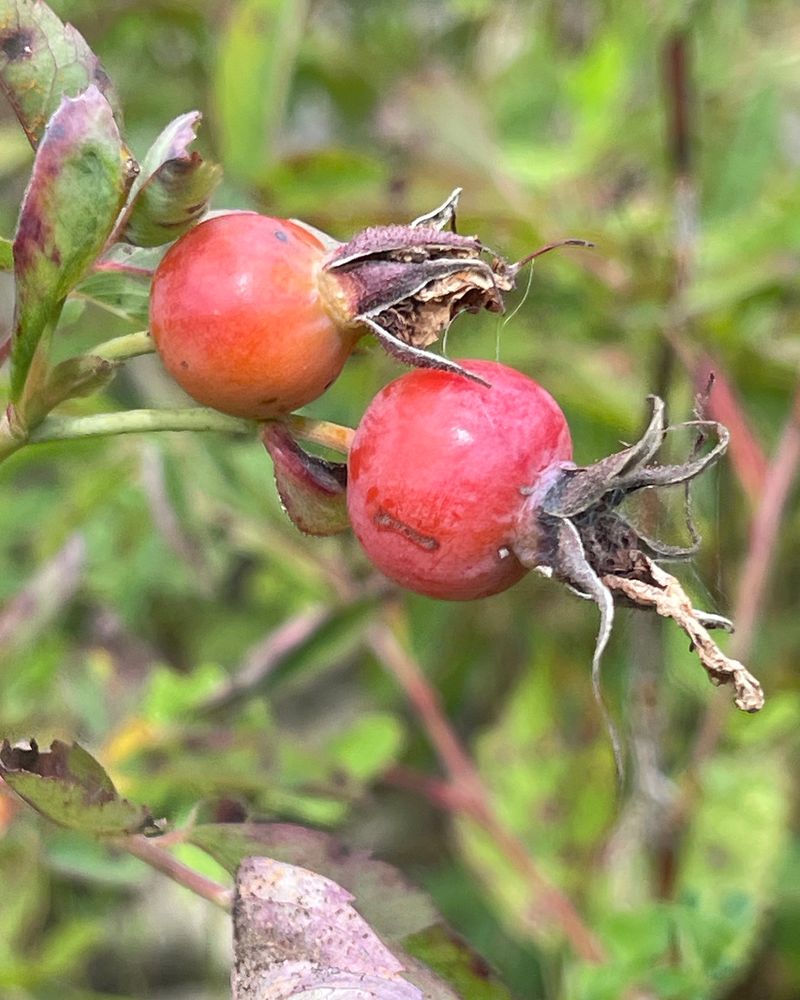
Rose hips might be the most underrated winter snack in the garden, glowing like tiny red lanterns. California wild rose holds onto those hips long after its petals fall, feeding birds through chilly months.
Rosa californica is a deciduous native shrub that usually reaches three to eight feet tall in gardens. Its stems carry curved prickles, so wear sturdy gloves and plant it away from busy walkways.
Sweet pink flowers with golden centers open from late spring into summer, drawing native bees for weeks. Personally, I adore how the fragrance drifts across the yard on warm evenings, softer than most fancy hybrids.
By autumn the blossoms turn into round red hips that soften and sweeten as cold weather arrives. Robins and quail nibble them, and the thorny thicket offers safe cover from hungry hawks circling overhead.
This rose loves moisture and naturally grows along streams, but it handles drier gardens with occasional deep watering. Give it full sun or light shade, and expect it to spread by underground runners over time.
That spreading habit makes it handy for banks and rough corners where you want a natural hedge. Skip trimming off the fading flowers, because every snipped bloom means one fewer hip for winter visitors.
Prune lightly in late winter if stems get crowded, removing the oldest canes right down near the base. You’re in for a treat when a hermit thrush slips into the tangle to snack on a hip.
4. Oregon Grape
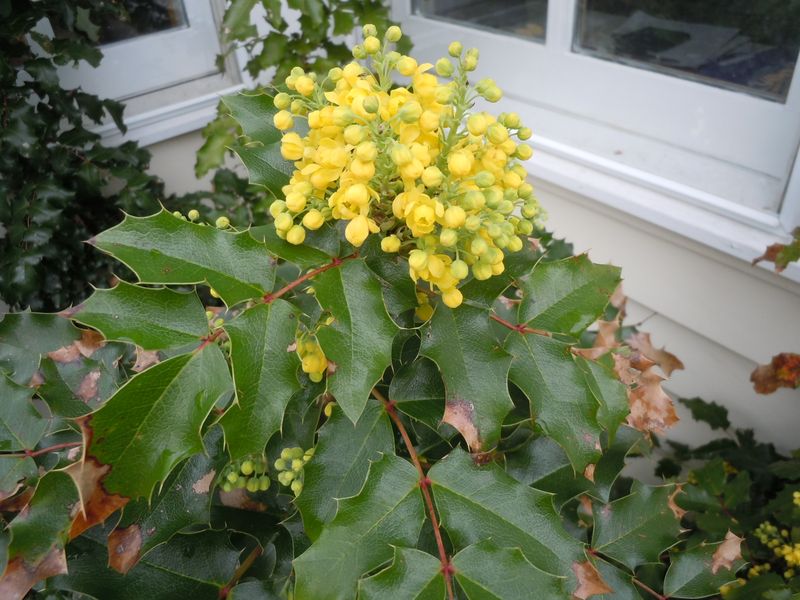
Spiky leaves that blush bronze and purple in cold weather give Oregon grape a surprisingly festive winter look. Under that prickly foliage hang dusty blue berries that birds gladly pick over when other food gets scarce.
Its scientific name is Berberis aquifolium, though many gardeners still know it by the older label Mahonia. Native from British Columbia into northern California, it usually grows about three to six feet tall.
Bright yellow flower clusters burst open in late winter or early spring, smelling faintly sweet on mild days. Hummingbirds and early bumblebees visit those blooms eagerly, since few other plants are flowering so early.
The tart berries ripen over summer, and leftovers may cling to stems into fall and early winter. Cedar waxwings and robins tend to find them, so do not expect every cluster to last long.
Oregon grape performs best in partial shade, especially where afternoon sun turns hot and harsh in summer. It likes rich, well-drained soil and appreciates occasional summer water in warmer inland gardens and valleys.
My favorite spot for it is beneath oaks or along a shady north wall, where many shrubs simply sulk. Its spiny leaves also discourage cats and curious dogs, giving small birds a safer place to perch.
Humans can eat the sour berries too, and some cooks simmer them with sugar into bright purple jelly. Still, I suggest sharing generously, since a few spoonfuls of jam matter less than happy, well-fed birds.
5. Common Snowberry
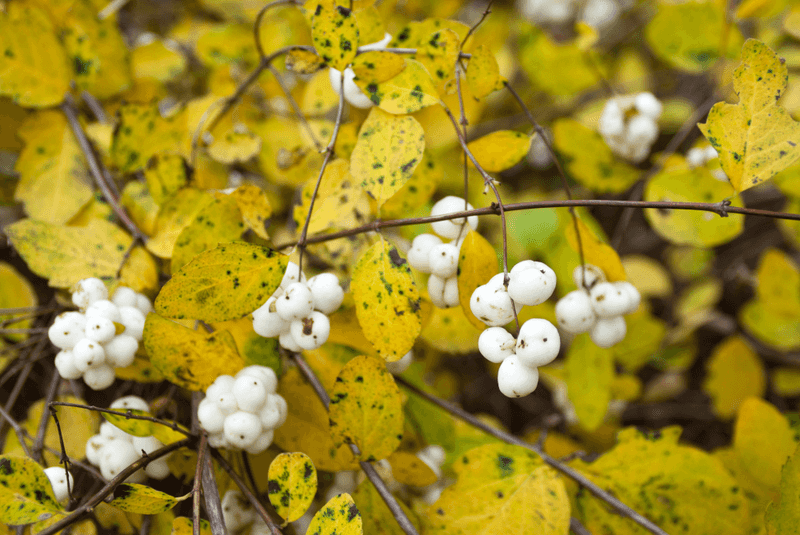
Snow rarely falls on most lowland gardens, yet this shrub hangs bright white berries on bare winter twigs. Those pearly fruits look like scattered marshmallows, and they catch the light beautifully on foggy mornings.
Common snowberry, or Symphoricarpos albus, is a deciduous native shrub that typically grows three to six feet tall. It spreads by suckers into loose thickets, which makes it a handy choice for holding soil on slopes.
Tiny pink bell flowers appear in late spring and summer, and hummingbirds sometimes stop to sip from them. Bees love them as well, so the shrub quietly earns its keep long before berries show up.
I have to be honest here, because birds do not rank snowberries as a top favorite food. Robins and varied thrushes mostly eat them later in winter, after tastier berries elsewhere have been picked clean.
That makes snowberry a valuable backup pantry, ready when hungry flocks run short during long cold snaps. Quail and other ground birds also shelter inside the twiggy thickets, hiding from hawks and prowling cats.
Snowberry tolerates bright sun or full shade and accepts heavy clay, which makes it useful beneath big trees. Give it some summer water in hot regions, though established plants handle dry spells fairly well.
Keep children from snacking on the berries, since they can cause vomiting and stomach upset in people. To my eye, those ghostly white clusters look magical beside red toyon berries in a mixed hedge.
6. Pink Honeysuckle
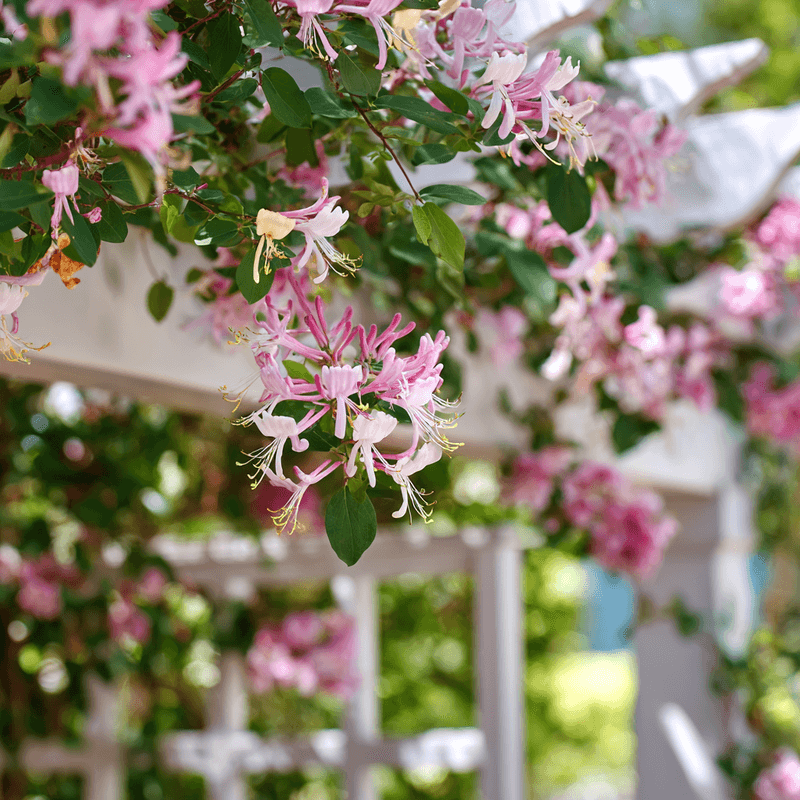
Few vines play double duty as gracefully as pink honeysuckle, feeding hummingbirds in summer and berry eaters later. Its translucent red berries shine like tiny glass beads, dangling in clusters from slender twisting stems.
Also called hairy honeysuckle, Lonicera hispidula is a native that scrambles over shrubs or sprawls across the ground. Stems can stretch many feet long, depending on the support it finds and how much water it receives.
Pink tubular flowers appear from late spring into summer, perfectly shaped for the long bills of hummingbirds. Unlike the invasive Japanese honeysuckle, this native stays well behaved and supports local wildlife without taking over.
Bright red berries ripen in late summer and fall, and some often remain on vines into winter. Thrushes and robins snatch them up, while quail search below for any fruit that drops to the ground.
You need to give it something to climb, such as a sturdy fence or a neighboring shrub. Without support it forms a loose mound, which works nicely as a casual groundcover on dry banks.
Partial shade suits it best, though coastal gardeners can grow it in fuller sun with fine results. It handles clay and dry summers once established, needing only an occasional soak during long heat waves.
What surprises me most is how many small birds tuck nests into its tangled stems each spring. The berries are not a recommended snack for people, so enjoy them visually and let wildlife feast.
7. Pacific Wax Myrtle
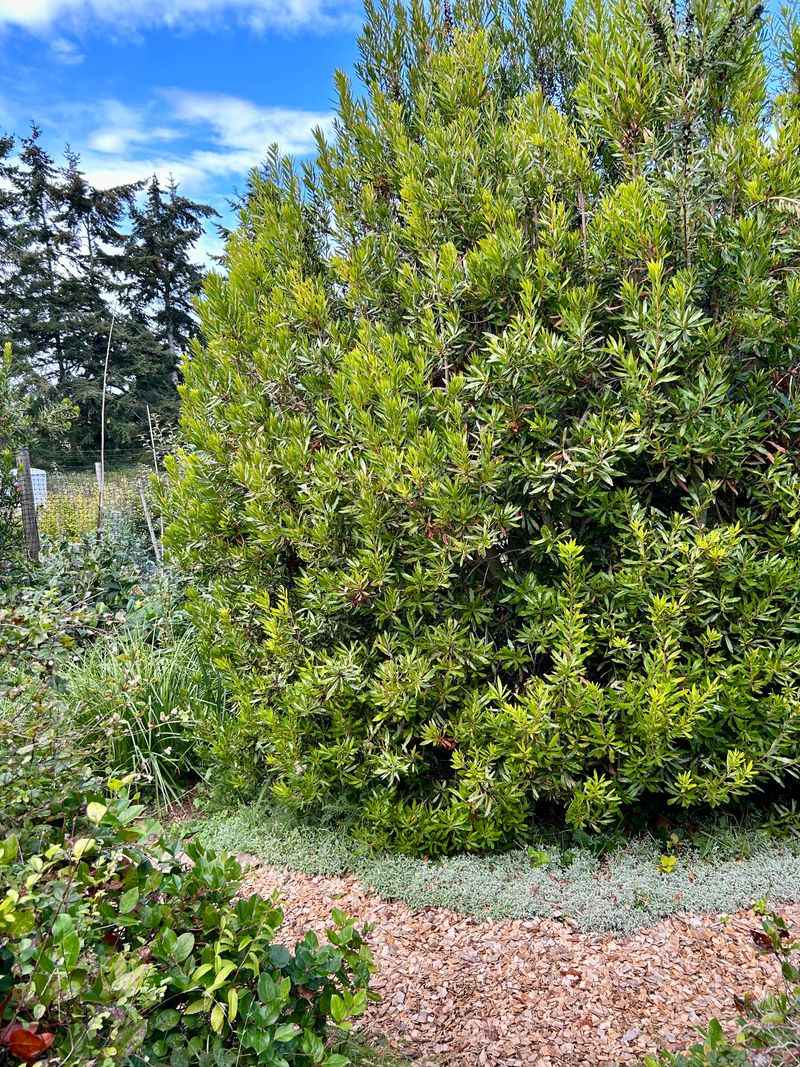
Waxy purple berries on this coastal native are packed with fat, the kind of fuel birds crave in winter. Yellow-rumped warblers are especially fond of wax myrtle fruit, since they can digest that waxy coating.
Pacific wax myrtle, Morella californica, is an evergreen shrub or small tree with glossy, pleasantly fragrant leaves. In gardens it commonly reaches ten to twenty feet, though pruning can keep it smaller and bushier.
It grows naturally along the coast from southern California up to Washington, often near dunes and creeks. Salty breezes and sandy soil rarely bother it, which makes it a real star for windy seaside gardens.
The flowers are tiny and easy to miss, but they soon give way to bumpy berries crowded along stems. Those fruits ripen in late summer and fall, and many persist well into the winter months.
Northern flickers and tree swallows visit too, and the dense foliage gives songbirds a cozy place to roost. I believe it makes one of the best living windbreaks for birds and people on breezy properties.
Plant it in full sun along the coast or partial shade inland, where summers run much hotter. Inland plants appreciate regular summer water, while coastal ones manage with occasional deep soaks once established.
Colonial candle makers boiled wax from related bayberry shrubs, a fun bit of history well worth sharing. You’ll get far more joy, though, from watching warblers flit through the branches on a gray afternoon.