7 Native North Carolina Spreaders That Close The Gaps In Liriope Edging Where Weeds Sneak In
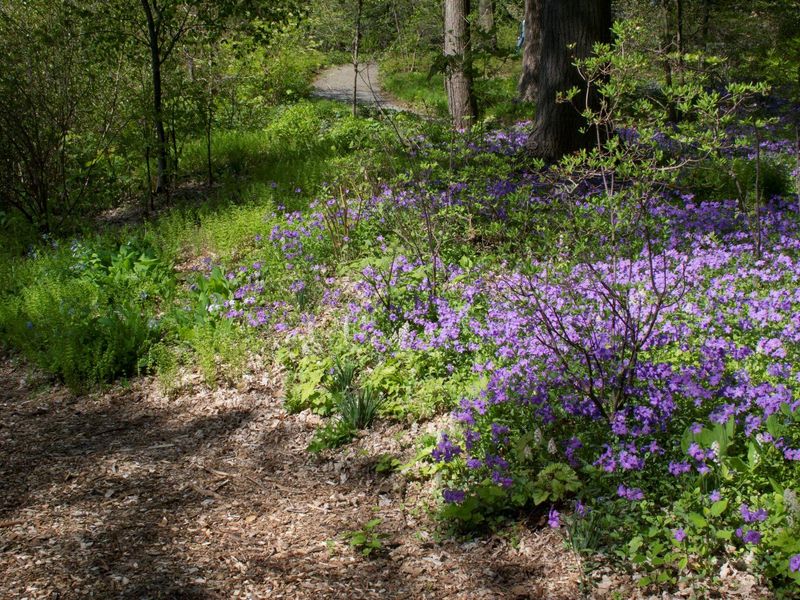
You walk out to the mailbox on a sticky July morning, coffee in hand, and there it is again. That neat row of liriope you planted along the walk has gaps between the clumps, and crabgrass has already claimed the bare red clay like it owns the place. Liriope looks tidy, but it grows in tight tufts, so the soil between plants stays open for weeds to slip in. The fix is not more mulch or more spraying.
It is filling those gaps with tough native North Carolina spreaders that knit the ground shut, feed pollinators, and ask almost nothing of you once they settle in.
1. Green And Gold Carpets The Bare Red Clay
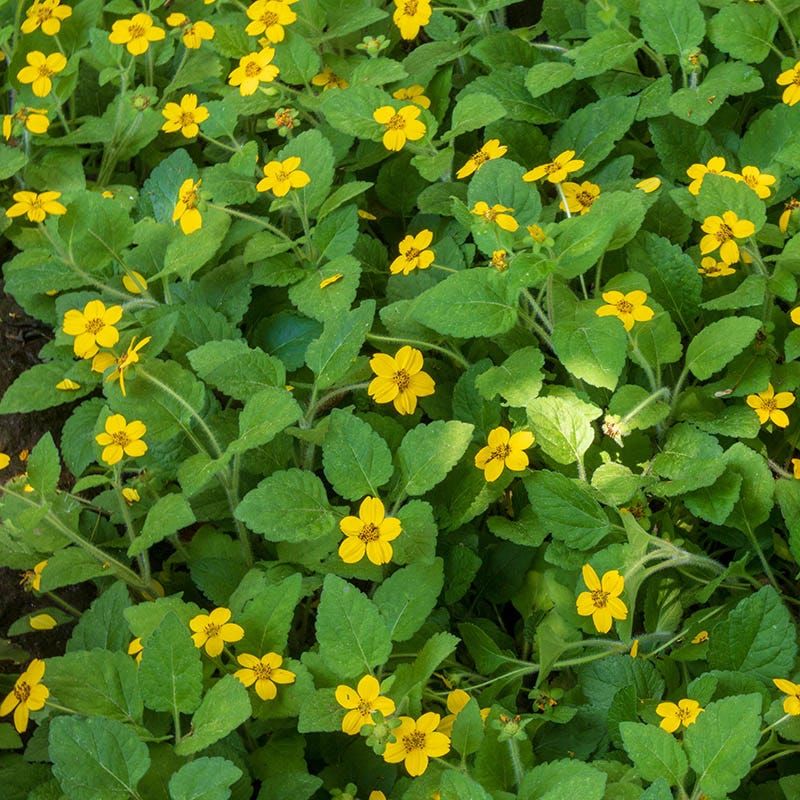
Picture the shady strip between your liriope clumps in early April, still muddy from a Piedmont storm, doing absolutely nothing. Green and gold (Chrysogonum virginianum) moves in and turns that dead zone into a low mat of soft green with cheerful yellow flowers barely six inches tall.
Here is what surprises people. It spreads by runners that hug the ground, so it creeps sideways into the gaps instead of shooting up and flopping. That low habit is exactly what liriope edging needs, because the weeds that sneak in are opportunists filling empty light.
Green and gold genuinely thrives in the dappled shade under dogwoods and oaks where grass gives up. Space plants about 12 inches apart and they will close the gaps in one or two seasons. Water them through the first summer, roughly an inch a week during dry spells, and then step back.
NC State Extension lists it as a dependable native ground cover for part shade across the state. It blooms hardest in spring, then throws scattered flowers into fall, so bees find it long after the showy stuff fades. Fill the shady gaps with it and you trade weeding for watching pollinators work.
2. Wild Ginger Fills The Deepest Shade

Some corners of a North Carolina yard barely see the sun, the north side of the house where moss grows and liriope limps along. Wild ginger (Asarum canadense) treats that gloom like a five-star resort.
The heart-shaped leaves overlap into a dense low blanket about six inches high, and they shingle together so tightly that weed seeds cannot find bare soil to land on. Its flowers hide down at ground level, little maroon jugs the ants pollinate, so you plant it for the foliage, not a show.
Wild ginger creeps slowly by underground stems called rhizomes, which sounds slow, and it is at first. But patience pays. Set plants about 10 to 12 inches apart in rich, moist soil, add a handful of leaf litter on top, and give it two or three seasons to weave shut.
Mountain gardeners in zones 6a to 7a love it because it laughs at surprise cold snaps. It is not a magic solution for dry, baking spots, so keep it in the shade where liriope struggles anyway. Once established it holds moisture in the soil and cuts the weeding along that dim edge to almost nothing.
Your North Carolina Garden Changes Every Week. Your Plan Should Too.
Gardening in North Carolina changes quickly throughout the season. Every Friday you’ll receive a simple weekly plan showing exactly what to plant, prune, fertilize, harvest, and protect so you never miss the right timing.
3. Creeping Phlox Blankets A Sunny Front Edge
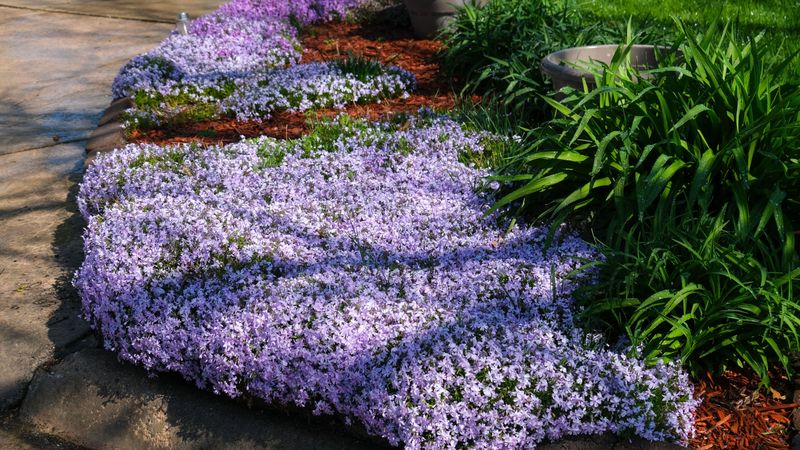
Drive through any Piedmont neighborhood in late March and you will spot sheets of pink and lavender spilling over a wall or curb. That is creeping phlox (Phlox subulata), and it does for a sunny liriope edge what nothing else quite manages.
The needle-like foliage grows into a tight mat only four to six inches tall, hugging the ground so hard that weeds get smothered before they start. And when it blooms, it does not whisper. A single plant can spread two feet wide and vanish under flowers for three or four weeks.
Creeping phlox wants full sun and good drainage, which makes it perfect for the hot, exposed front-yard strips where liriope leaves gaps. Plant it about 15 inches apart in spring or fall, and trim it back lightly after the bloom fades to keep it dense.
Butterflies and early native bees work the flowers when little else is open, a genuine gift during a cool NC spring. It stays evergreen through mild winters, so the mat keeps guarding the soil year round. Tuck it into the sunny gaps and your edging earns compliments instead of complaints.
4. Foamflower Threads Through Woodland Gaps
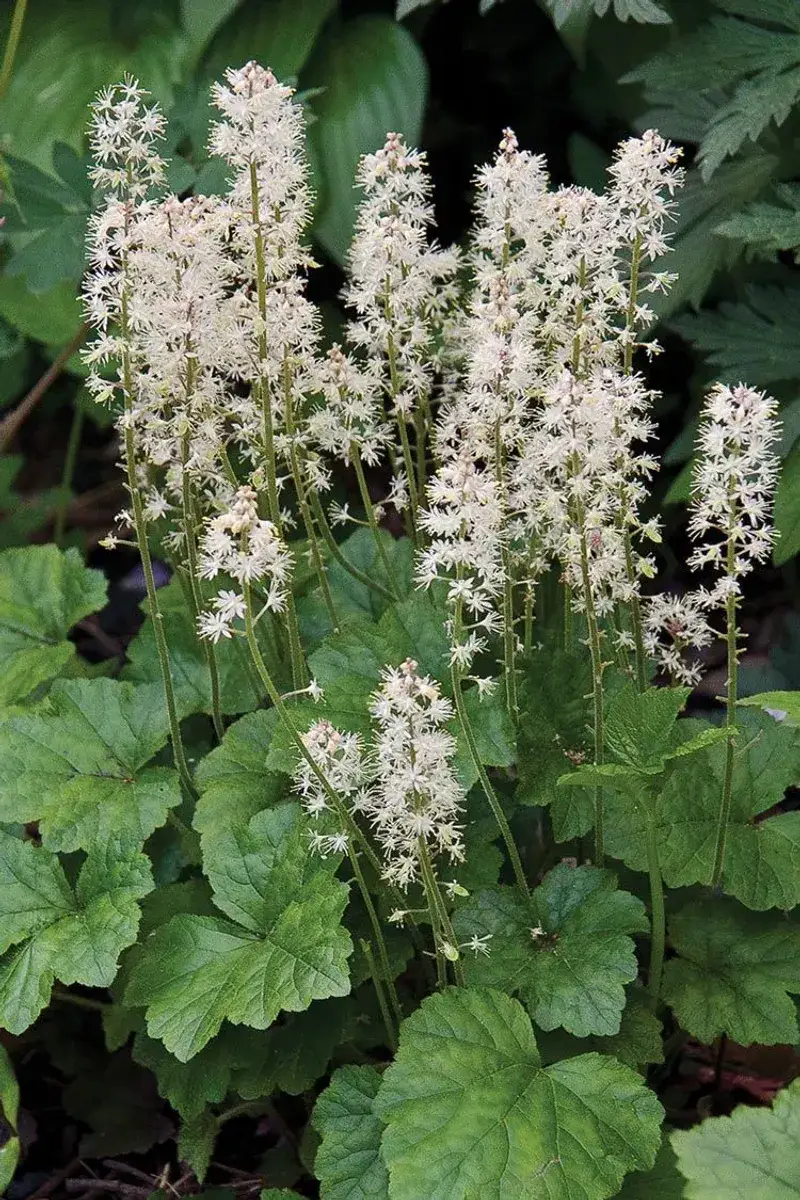
Ever notice how the prettiest weeds always show up in the trickiest spots, the moist, half-shaded band where the lawn meets the tree line? Foamflower (Tiarella cordifolia) claims that exact ground and holds it like a quiet hero with a plan.
In April it sends up airy spikes of white flowers that look like drifts of sea foam, hence the name, standing about eight to ten inches over lobed green leaves. The foliage stays low and layered, and it spreads by short runners that stitch neatly into the openings between liriope clumps.
What makes foamflower different from the others on this list is how it handles moist Piedmont clay that stays damp after those afternoon thunderstorms. Many spreaders sulk in wet feet. This one leans into it.
Set plants roughly 12 inches apart in spring, mulch lightly with shredded leaves, and keep the soil from drying out the first year. Native bees visit the flowers, and the leaves often blush burgundy through mild winter cold snaps. For the damp, dappled gaps that stay stubbornly weedy, foamflower is genuinely one of the easiest wins you can plant.
5. Golden Ragwort Marches Into Damp Openings
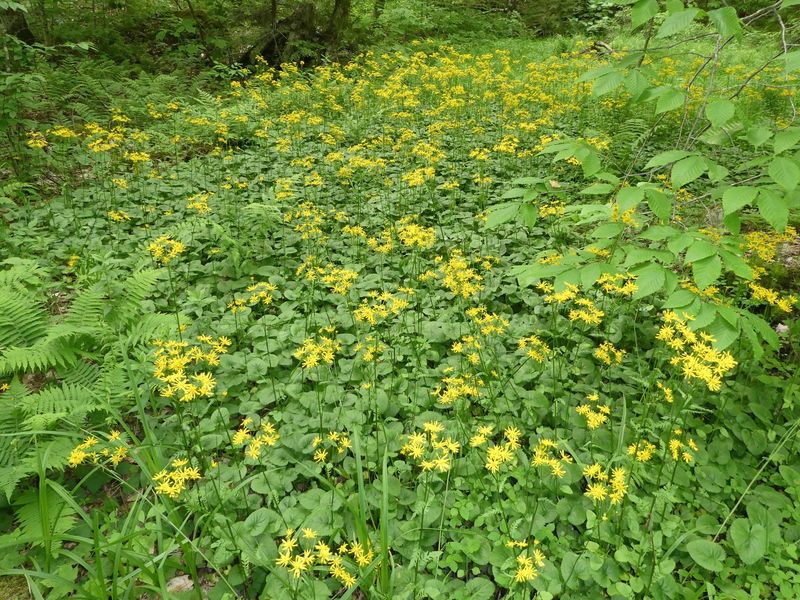
There is a myth that native plants are all slow and polite. Golden ragwort (Packera aurea) did not get the memo. Give it a damp gap and it moves in fast, forming a low rosette of rounded green leaves that stays put all year.
Come April and May it launches bright yellow daisy-like flowers on stems around one to two feet, then settles back into a tidy evergreen carpet the rest of the year. That basal foliage is the real weed-blocker, packing the soil so tight along your liriope that crabgrass and chickweed cannot get a toehold.
Golden ragwort spreads by both seed and runners, so it fills large gaps quickly across the Coastal Plain and Piedmont alike. Space starter plants about 18 inches apart in a spot that stays moist, near a downspout or a low, wet edge where liriope sulks.
Early pollinators swarm the blooms, and NC State Extension notes it as a strong native choice for rain gardens and damp ground cover. Deer usually leave it alone too. Plant it where water collects and you turn a soggy weed magnet into a self-tending patch of gold.
6. Barren Strawberry Holds A Tough Slope
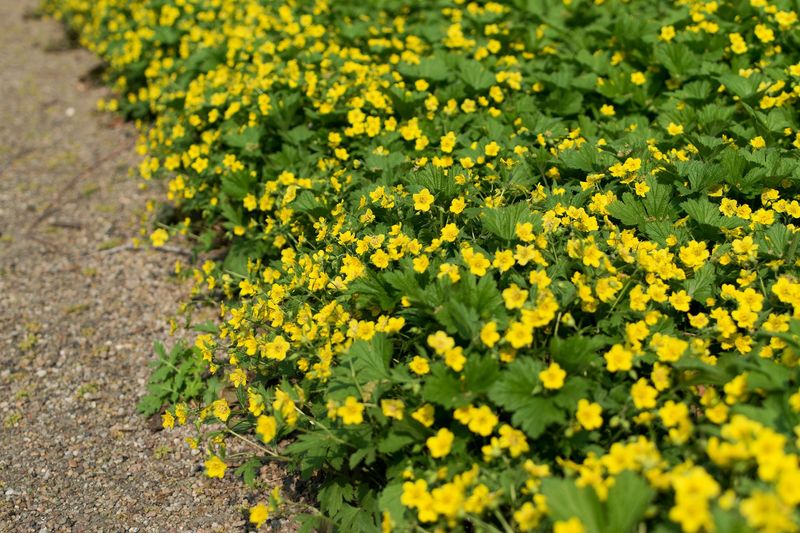
You have that one spot where nothing sticks, the slope by the driveway where water sheets off after a storm and drags the mulch with it. Barren strawberry (Geum fragarioides, once called Waldsteinia) grips that ground and refuses to let go.
The glossy three-part leaves look just like a strawberry plant, and they mat together into an evergreen cover about four to six inches tall. In spring it dots that mat with small yellow flowers, though it never makes fruit worth chasing, hence the barren in the name.
Its runners knit sideways into the gaps between liriope, anchoring soil on banks where weeds usually win by default. Full sun to part shade both suit it, which is rare and handy for edges that get patchy light.
Plant it about 12 inches apart, water through the first dry NC summer, and let those runners do the stitching. It shrugs off the Piedmont red clay that defeats fussier plants. For a slope or a hard, sunny edge that keeps eroding into weeds, barren strawberry is the quiet workhorse you did not know you needed.
7. Robin’s Plantain Softens The Sunny Fringe
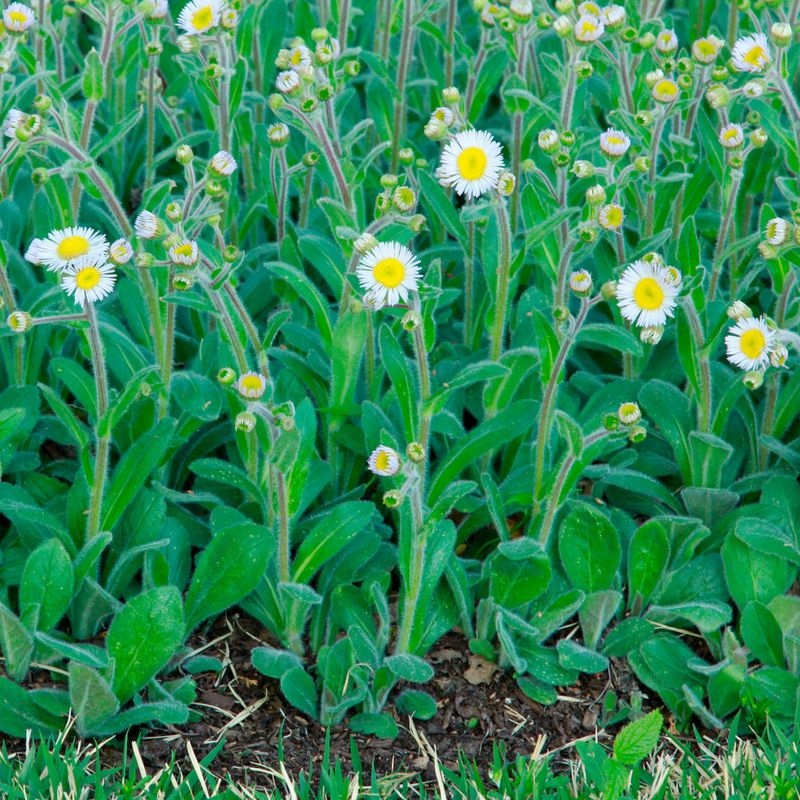
Late one May afternoon, with the porch fan running and a storm building over the Sandhills, you might catch small butterflies drifting over a haze of soft lavender flowers. That is robin’s plantain (Erigeron pulchellus), the gentlest closer on this whole list.
Fuzzy gray-green rosettes hug the ground and spread by runners called stolons, filling the gaps between liriope with a soft, low mat. In spring it sends up daisy-like flowers around one foot tall, pale lavender with sunny centers, and pollinators cannot resist them.
Robin’s plantain earns its spot because it bridges sun and light shade better than most, thriving along the bright fringe where your edging meets the open lawn. It tolerates the sandy Coastal Plain soil and the drier stretches of a Sandhills yard where moisture-lovers would fry.
Set plants about 12 to 15 inches apart in spring, water them through establishment, and let the rosettes creep. After bloom, the low foliage stays as a weed-blocking carpet into the cooler months.
Deer tend to pass it by, and the early flowers feed native bees when the season is just waking up. Fill the sunny fringe with it, and you close the last gaps while giving your yard one more quiet layer of life.