7 Reasons Why Oak Trees Keep Their Brown Leaves All Winter in Ohio
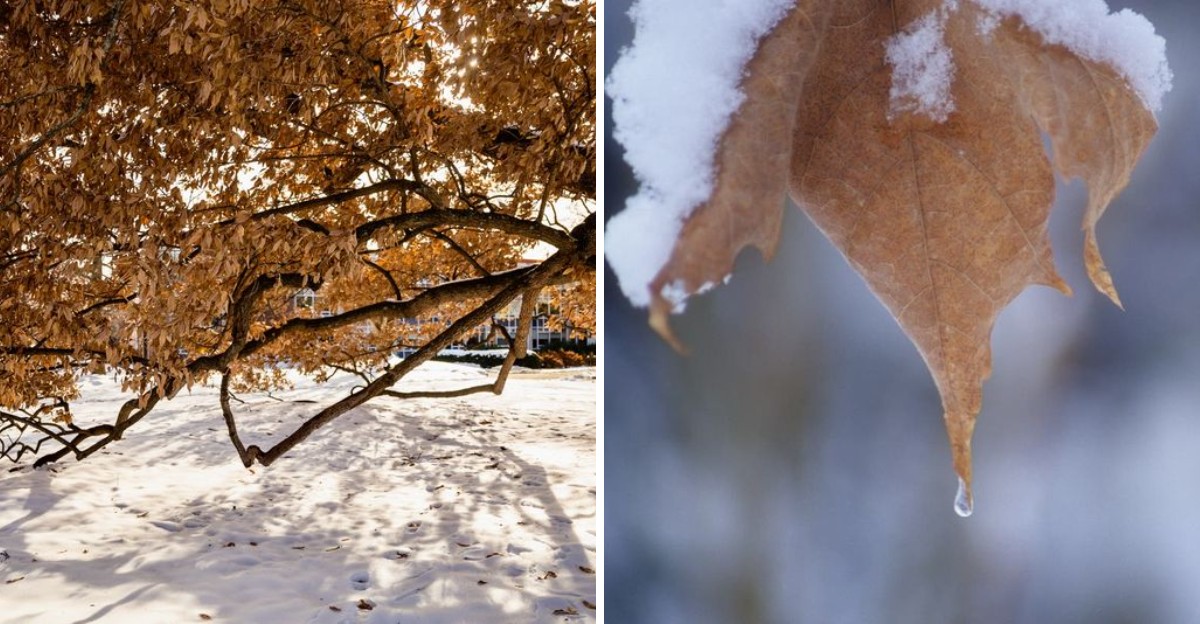
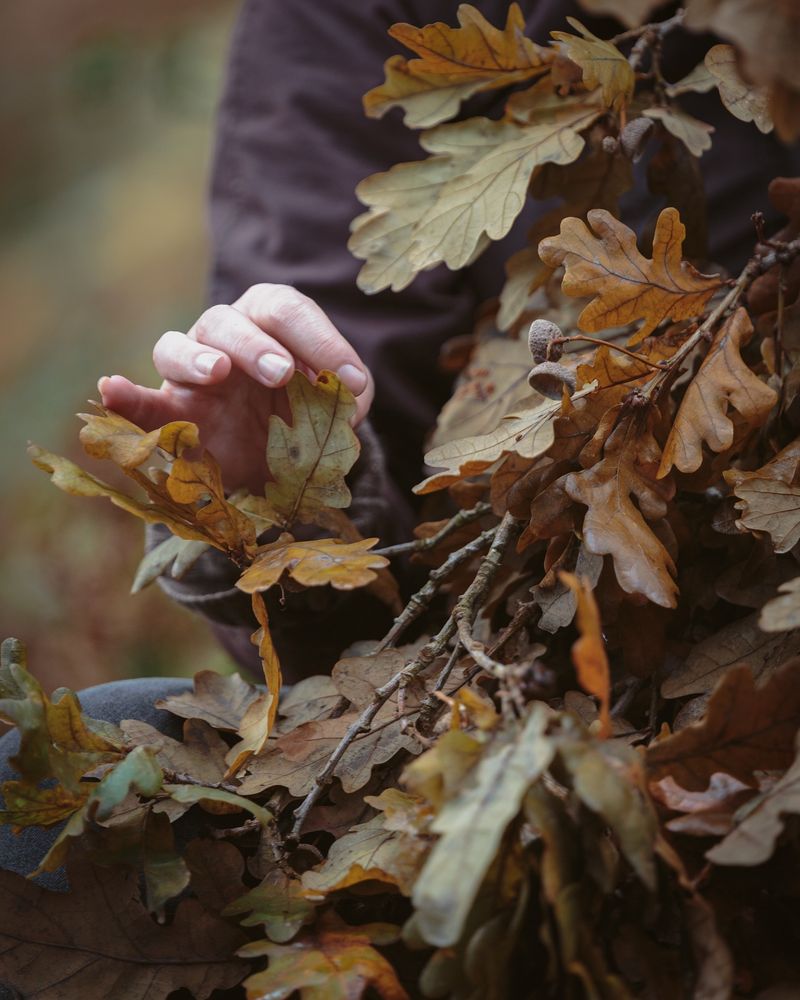
Some trees in my backyard rattle like paper bags in January, still holding leaves that turned brown back in November. Botanists even have a fancy name for this winter habit, and it sounds like a spell straight out of a storybook.
Across Ohio, those crispy leaves often cling tight through snowstorms and ice before finally letting go in spring. Interestingly, it’s the fresh buds pushing outward that do most of the work of shoving them off.
Don’t be surprised if a neighbor asks whether your tree is sick, because the scruffy look fools plenty of people. I used to worry about it too, until I learned the tree was following its own clever plan.
Scientists still debate the exact reasons, and a few of their ideas might change how you see winter yards. Why would an Ohio tree cling to brown leaves while cold wind tugs so hard?
1. A Weak Abscission Layer Keeps Oak Leaves Attached
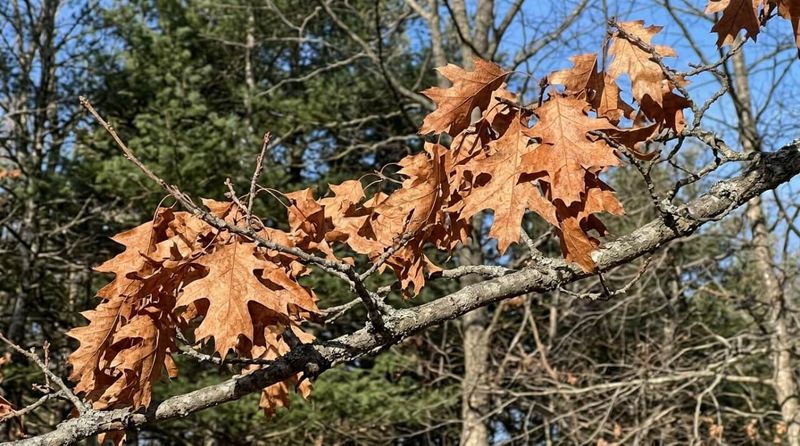
Grab a brown leaf on a young oak in January and tug, and you’ll feel surprising resistance from that stem. Most maples and ashes drop cleanly in fall, but oaks seem to hold on with a stubborn little grip.
Every deciduous leaf has a special zone of cells at its base called the abscission layer. In autumn, those cells normally weaken and separate, letting the leaf break away and drift down to the ground.
On many oaks, that layer forms only partly, so the woody connection stays strong long after the leaf browns. Botanists call this leaf retention marcescence, a word that comes from the Latin for withering or shriveling up.
Chlorophyll still breaks down on schedule, which is why the leaves fade from green to tan and copper. The leaf itself stops working for the tree, yet the attachment point simply refuses to let go for months.
Strong winds and heavy, wet snow knock some of them loose during winter storms, especially on exposed branches. Most of the rest hang on until swelling spring buds finally push the old stems off the twigs.
If you’re tempted to strip those leaves by hand, I’d suggest saving your energy for other chores. Pulling them can tear bark or damage the next season’s buds tucked right beside each old leaf stem.
My advice is to enjoy the rustle and let the tree handle its own spring cleanup schedule. Rake the fallen ones in April or May, then tuck them under shrubs as free, earthy mulch.
2. Brown Oak Leaves May Shield Winter Buds From Drying Wind
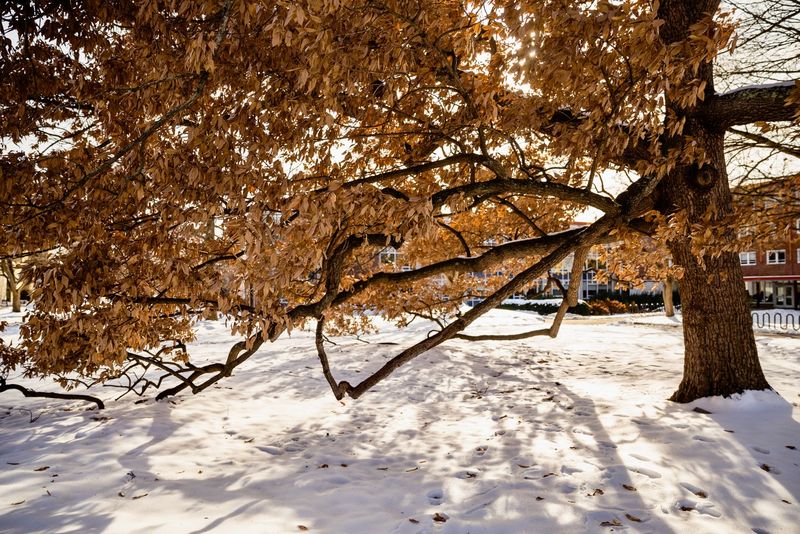
Walk past a marcescent oak on a blustery afternoon and listen, because those leaves sound like crinkling wrapping paper. I like to think of them as tiny scarves wrapped loosely around the twigs during the coldest weeks.
One popular idea suggests the leftover leaves help protect dormant buds from harsh, drying winter winds. Buds lose moisture slowly in cold weather, and frozen ground makes it hard for roots to replace that water.
Researchers have not proven this protection theory, so treat it as a reasonable guess rather than settled science. Still, it fits nicely with where marcescent oaks often grow, such as open savannas and breezy hillsides.
Each oak bud holds the tightly packed beginnings of next year’s leaves and flowers, so it matters a lot. Damage to those buds can mean a slow, patchy start once the weather warms up again in spring.
You can help young oaks in your own yard by watering deeply in late fall before the ground freezes. A well-hydrated tree heads into winter with more moisture stored in its twigs and buds.
Spread two to three inches of shredded bark or leaf mulch around the base, keeping it off the trunk. That layer holds soil moisture and evens out temperature swings during those wild freeze and thaw cycles.
Skip wrapping the whole tree in plastic or burlap, since trapped moisture can create more trouble than it solves. Let the crinkly leaves do their quiet job while you sip something warm by the window.
3. Hungry White-Tailed Deer May Skip Leafy Oak Twigs
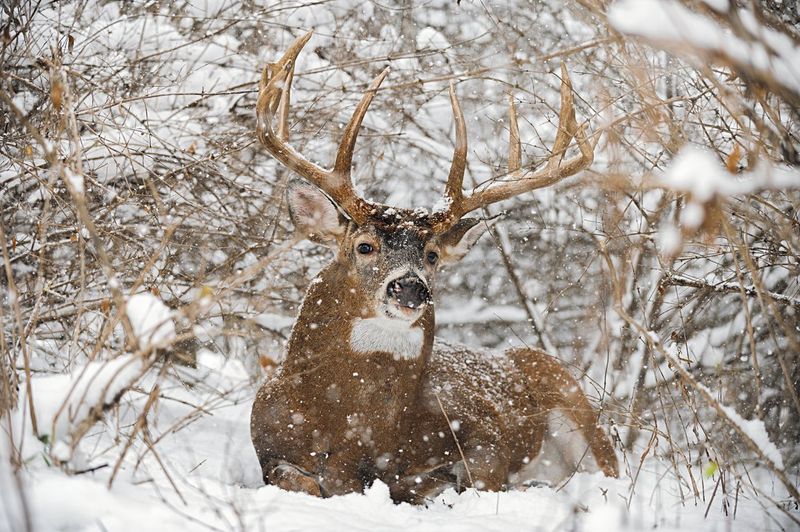
Ever watched a deer nibble its way along a winter hedge like it was a salad bar? Twig tips and plump buds are prime winter food, and young trees sit right at a perfect browsing height.
A study by scientist Claus Svendsen suggested marcescent leaves might discourage moose and deer from browsing twigs. The dry leaves offer little nutrition, and munching through them to reach buds takes extra effort for the animals.
Some people also think the papery rustle might startle a nervous deer, though that idea is mostly speculation. I could be wrong, but I’ve seen plenty of deer ignore noisy branches when food gets scarce.
White-tailed deer are abundant across much of Ohio, so leftover leaves likely help only a little. Young oaks in suburban yards still need extra backup if you want them to reach a healthy size.
Wire mesh cages or tall plastic tree tubes give seedlings the most reliable protection from hungry mouths. Make sure the barrier reaches at least four to five feet high, since deer stretch surprisingly far upward.
Bucks also rub their antlers on young trunks in fall, scraping away bark and sometimes girdling small trees. A loose cage around the trunk keeps those itchy antlers away until the tree grows thicker and sturdier.
Repellent sprays can help between rains, though you’ll need to reapply them regularly through the colder months. Pair them with fencing, and your little oak gets a much better shot at outgrowing the munching zone.
4. Late-Falling Oak Leaves Feed The Soil In Spring
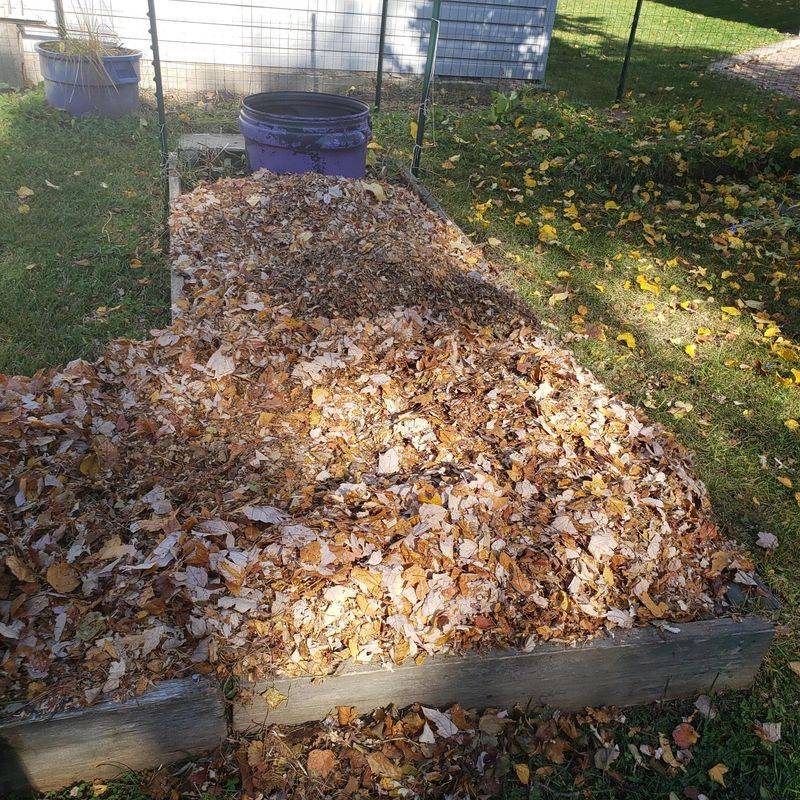
One theory caught my attention right away, because it treats those stubborn leaves like a slow-release snack. Instead of dropping in fall, the leaves land in spring, right when roots start hunting for nutrients again.
Leaves that fall in autumn break down over winter, and some nutrients can wash away with melting snow. Leaves that fall in spring decompose during the growing season, when the tree is ready to use what they release.
Scientists consider this delayed nutrient cycling idea plausible, but strong field evidence for it is still limited. Oaks also tend to thrive on poorer, drier soils, where every bit of recycled nutrition could make a difference.
Oak leaves are tough and slightly leathery, so they break down slower than maple or linden leaves. That slow pace makes them wonderful mulch, since they stay put and keep feeding soil life for months.
You can borrow this trick by leaving fallen oak leaves under trees and shrubs instead of bagging them. Shredding them first with a mower helps them settle down and decompose a bit faster in garden beds.
Many Ohio extension experts encourage keeping leaves on the property to support soil health and overwintering insects. Many moth caterpillars and helpful beetles spend the cold months tucked safely inside those crunchy leaf layers.
Just avoid smothering lawns with thick mats, since grass underneath can struggle without light and air. A thin layer mowed into the turf works well, while thicker piles belong in beds or compost bins.
5. Clinging Oak Leaves Catch Snow Around Young Trees
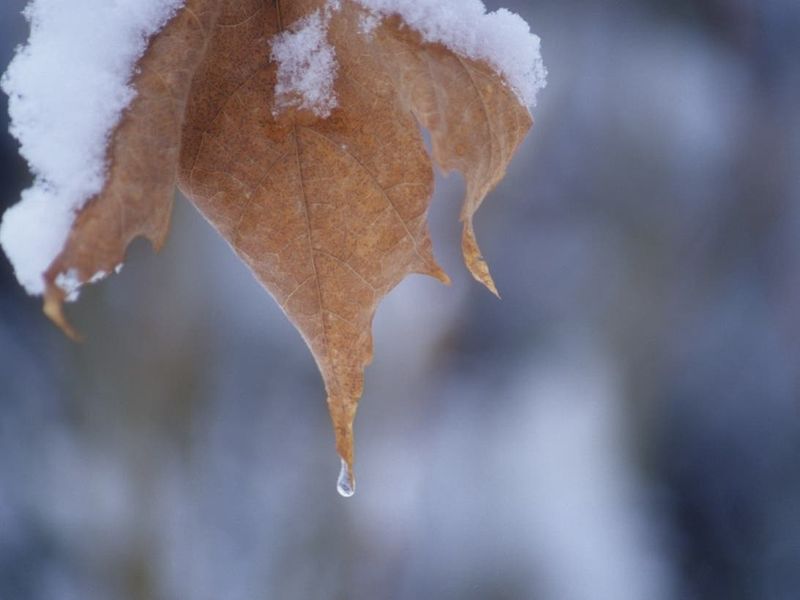
After a windy snowfall, take a peek beneath a young oak still wearing its brown coat. You might notice a little drift piled around the base, like the tree built itself a tiny snow fence.
Some researchers propose that retained leaves trap blowing snow, which later melts into the soil near the roots. That extra moisture could help trees in open, dry spots get a stronger start when spring growth begins.
This idea makes sense physically, but it hasn’t been measured widely, so I’d file it under interesting maybes. It might matter most on windswept fields where bare ground loses snow cover quickly to drifting.
Snow is surprisingly handy for gardeners, since it acts like an insulating blanket for roots and perennials. A steady snow cover keeps soil temperatures more even and reduces frost heaving of shallow-rooted plants.
You can copy the effect by shoveling clean snow onto garden beds instead of dumping it on driveways. Avoid piling snow that’s full of road salt, because the salt can harm roots and soil structure.
Young trees also benefit from a deep drink during dry stretches in early spring once the ground thaws. A slow trickle from a hose for twenty minutes or so soaks the root zone better than quick sprinkles.
Check soil with your finger a few inches down before watering, since soggy clay can stress roots too. Plenty of yards across the state have heavy clay, so drainage deserves a thoughtful look before planting oaks.
6. Young Oaks Hold More Brown Leaves Than Tall Old Oaks
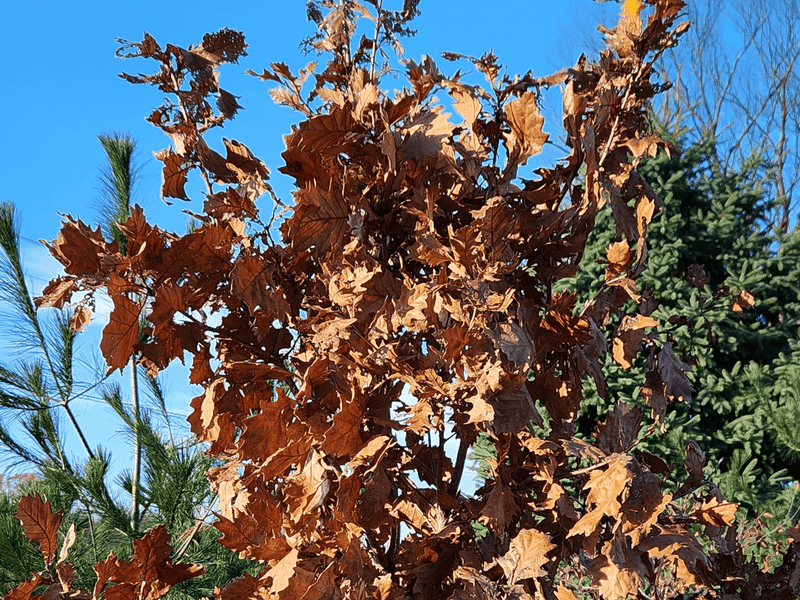
Drive past a woodland edge in February and you’ll spot small oaks wearing every single leaf, head to toe. Meanwhile, the giant oaks behind them stand mostly bare, except for a few brown clumps on lower limbs.
Marcescence is strongest on juvenile trees and on the lower branches of older ones, according to many extension sources. Botanists link this to juvenility, since the lower parts of a tree often keep youthful traits longer.
That pattern lines up nicely with the deer theory, since small trees and low branches face the most browsing. Tall crowns are out of reach anyway, so holding leaves up there offers little obvious benefit.
Species matter too, and both pin oak and white oak are well-known for holding brown leaves. American beech does the same thing, glowing a pale tan in the understory of many eastern forests.
If you’re choosing a native oak for your Ohio yard, pin oak handles wet clay but prefers acidic soil. White oak grows slowly yet lives for centuries, and both suit hardiness zones five and six nicely.
Give any oak plenty of room, since many reach sixty feet or taller with wide spreading crowns. Plant in full sun, at least twenty feet from your house, and water regularly for the first two years.
Expect your young oak to look shaggy and brown each winter for several years while it grows up. Think of it as a gangly teenage phase that slowly fades as the crown climbs higher and wider.
7. Ancient Evergreen Oak Relatives Left A Leafy Clue
Some oaks in California and Mexico stay green all year, which hints at a fascinating family history. Our northern oaks may carry a faint echo of those evergreen relatives in their winter leaf habit.
Oaks belong to the beech family, Fagaceae, which includes many evergreen species in warmer parts of the world. Some botanists suggest marcescence could be a leftover trait from ancestors that held their leaves all year round.
Oaks spread into colder regions over millions of years, slowly adapting to drop leaves for harsh winters. The incomplete shedding we see could be an evolutionary halfway point, though nobody knows for sure yet.
Weather plays a role too, because a sudden hard freeze in fall can stop the abscission layer from forming. When that happens, even trees that usually drop cleanly may hang onto frozen brown leaves for a while.
You might notice this after an early cold snap, when maples or other trees keep crispy leaves unexpectedly. Those cases usually sort themselves out with wind and rain, so there’s no reason to worry or prune.
What I love most is that a messy-looking tree carries clues stretching back millions of years in time. Those rattling leaves turn a quiet winter walk into a small mystery worth puzzling over with kids.
Next time a neighbor complains about your scruffy oak, share a bit of its ancient family story. Ohio winters feel a little less gray when you know the leaves overhead are keeping such old secrets.