These 7 Native Ohio Trees Outperform Arborvitae Along Driveways
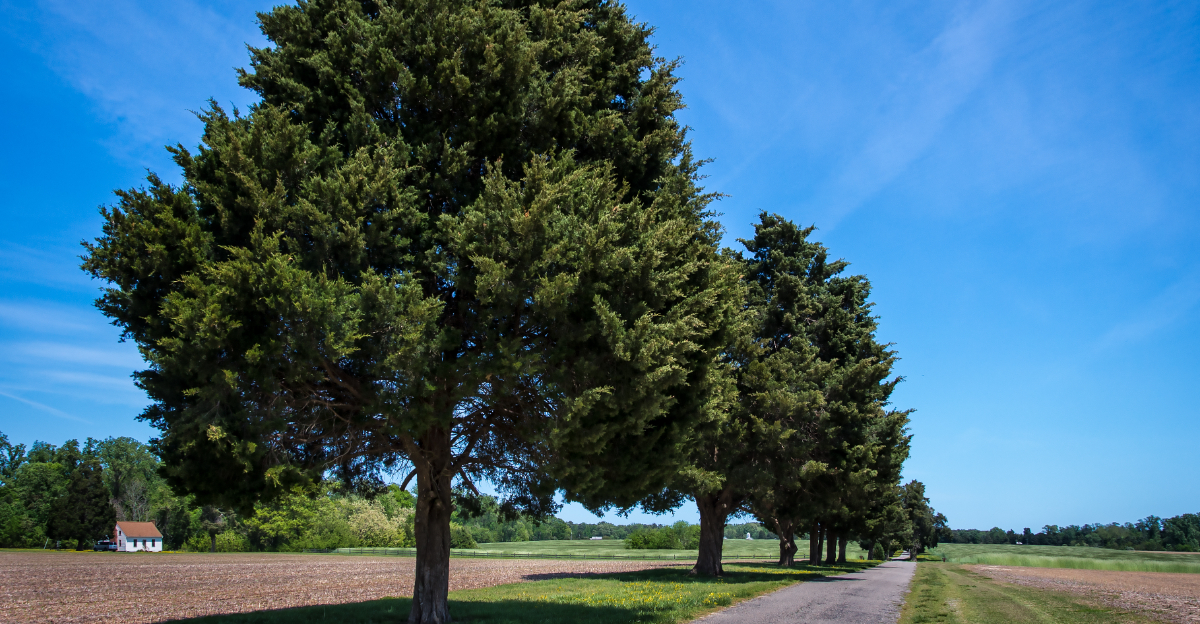
Arborvitae lines so many Ohio driveways for a reason. It’s tidy, familiar, and gives that instant sense of structure.
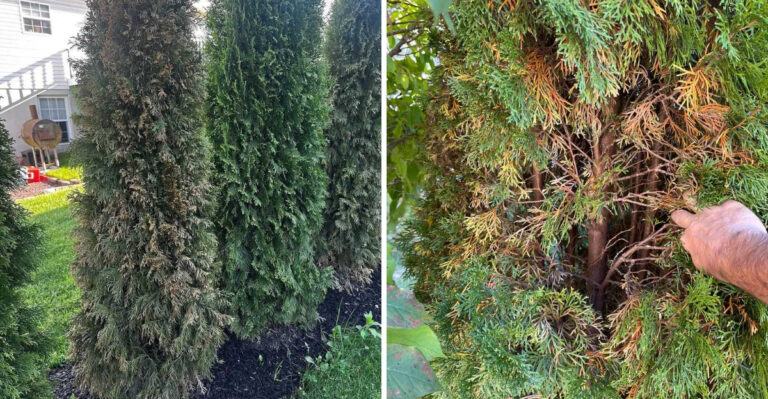
But then a rough winter hits, or a stretch of dry weather drags on, and suddenly those neat green rows start looking uneven, thin, or stressed. Sound familiar?
It’s not that arborvitae is a bad choice. It just doesn’t suit every driveway situation across Ohio.
Road salt, compacted soil, reflected heat, and wind can all take a toll, especially in exposed spots. So what are gardeners doing instead when they want something just as polished but a bit more forgiving?
They’re turning to native trees that handle local conditions with far less fuss and still deliver that strong, finished look along a drive. Think resilient, adaptable, and built for Ohio from the start.
The difference shows up faster than most people expect.
1. Eastern Redcedar Handles Harsh Driveway Conditions
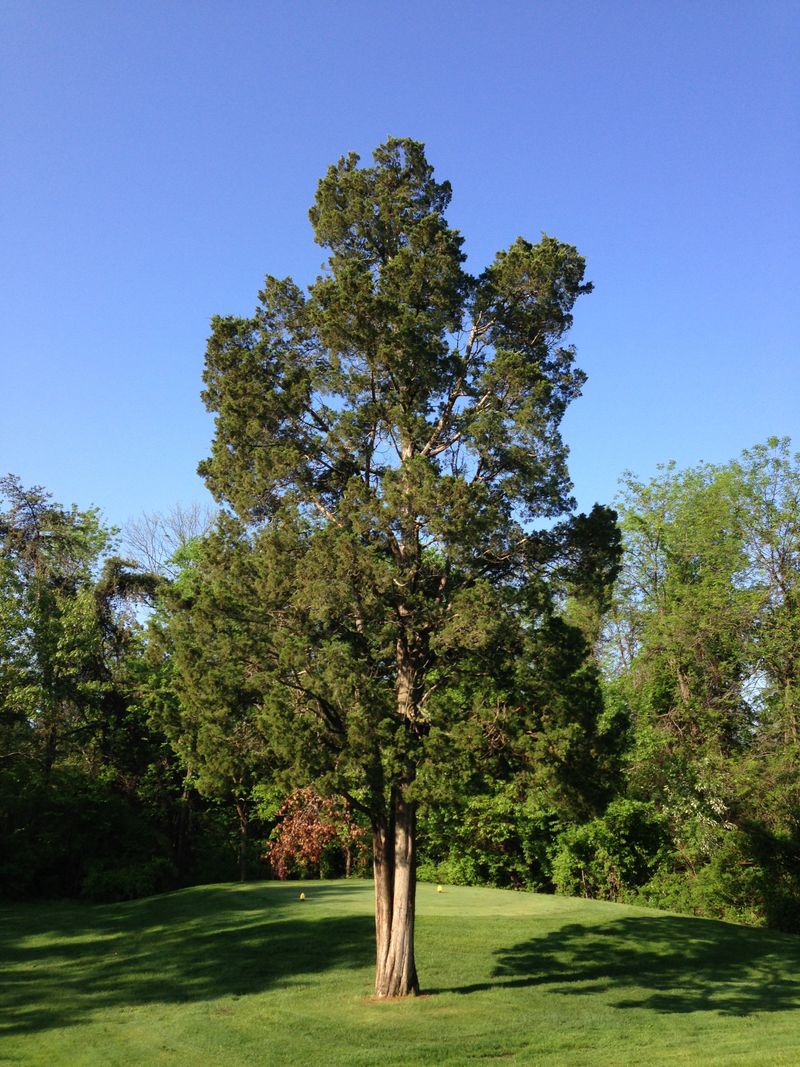
Walk past a stand of Eastern Redcedar in January and you will notice something right away: the foliage is still green, still dense, and completely unfazed by the cold.
That kind of toughness is exactly what driveways demand, and this native evergreen delivers it consistently across Ohio landscapes.
Eastern Redcedar (Juniperus virginiana) tolerates road salt far better than arborvitae. While arborvitae tips turn brown and drop after a single winter of salt spray, Eastern Redcedar shrugs it off.
It also handles drought, wind exposure, and poor or rocky soil without much complaint. According to Ohio State University Extension, this species is one of the most adaptable native conifers in the state, thriving in conditions that would stress most other evergreens.
For driveway screening, its naturally narrow, columnar form is a real advantage. Mature trees typically reach 30 to 50 feet tall with a spread of 8 to 15 feet, making them well-suited for planting in tighter spaces alongside a driveway.
Space them about 8 to 10 feet apart for a solid visual screen without crowding.
Unlike arborvitae, Eastern Redcedar does not need regular shearing to maintain its shape. The dense branching fills in naturally over time, providing year-round screening that holds up through Ohio winters.
Birds, especially cedar waxwings, rely on the blue berry-like cones for food, so you get wildlife value alongside the privacy benefit.
It does prefer full sun and well-drained soil, so avoid planting it in low spots where water pools.
If your driveway runs along a south or west-facing exposure where heat and reflected light are intense, this tree handles those conditions better than almost any other native option.
For tough driveway sites, it is hard to beat.
2. Serviceberry Adds Light Screening Without Heavy Upkeep
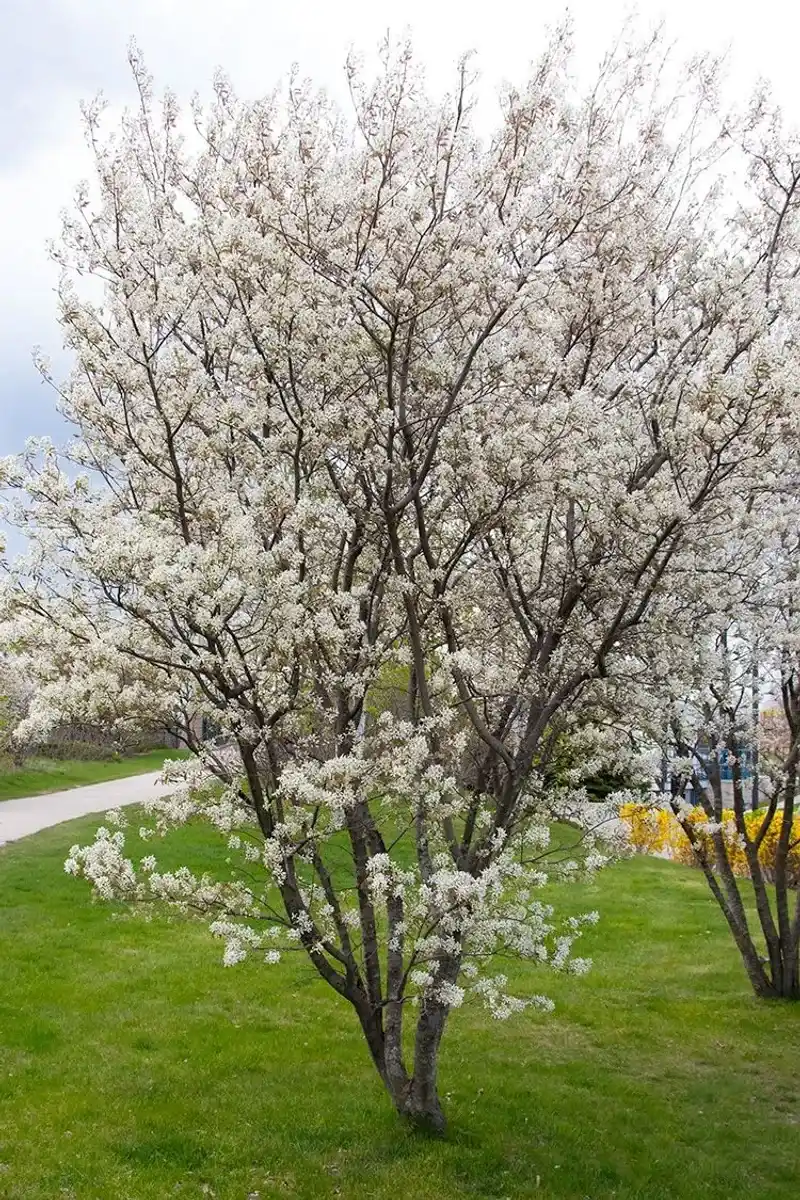
Not every driveway needs a solid wall of green. Sometimes a softer edge actually looks better, especially on a property where the front yard already has some structure.
That is where Serviceberry earns its place, offering a relaxed, natural screen that requires far less attention than arborvitae over the long run.
Serviceberry (Amelanchier species) is best described as a large native shrub or small understory tree. In Ohio, it commonly grows to 15 to 25 feet tall and spreads in a graceful, multi-stem form.
Your Ohio Garden Changes Every Week. Your Plan Should Too.
Gardening in Ohio changes quickly throughout the season. Every Friday you’ll receive a simple weekly plan showing exactly what to plant, prune, fertilize, harvest, and protect so you never miss the right timing.
It will not give you the tight, clipped hedge wall that arborvitae can produce. What it does offer is a layered, semi-transparent screen that softens the driveway edge without blocking air movement or feeling heavy in the landscape.
Maintenance is genuinely low compared to arborvitae. Serviceberry rarely needs pruning to stay tidy, and it is not prone to the fungal issues or spider mite problems that often plague arborvitae in hot, dry summers.
Ohio State University Extension notes that native Amelanchier species are generally resistant to the serious pests that affect many ornamental shrubs and trees in the region.
The seasonal interest is another strong point. White flowers appear in early spring before the leaves fully open, followed by small edible berries that ripen in early summer and attract birds.
Fall color ranges from orange to deep red, giving the driveway edge visual appeal well beyond the growing season.
Plant Serviceberry in full sun to part shade, spacing plants about 6 to 8 feet apart for a natural-looking grouping. It adapts to a range of soil types but prefers moist, well-drained conditions.
For homeowners who want a low-fuss, wildlife-friendly border along the driveway, Serviceberry is a genuinely practical choice.
3. Eastern Redbud Brings Structure And Seasonal Color
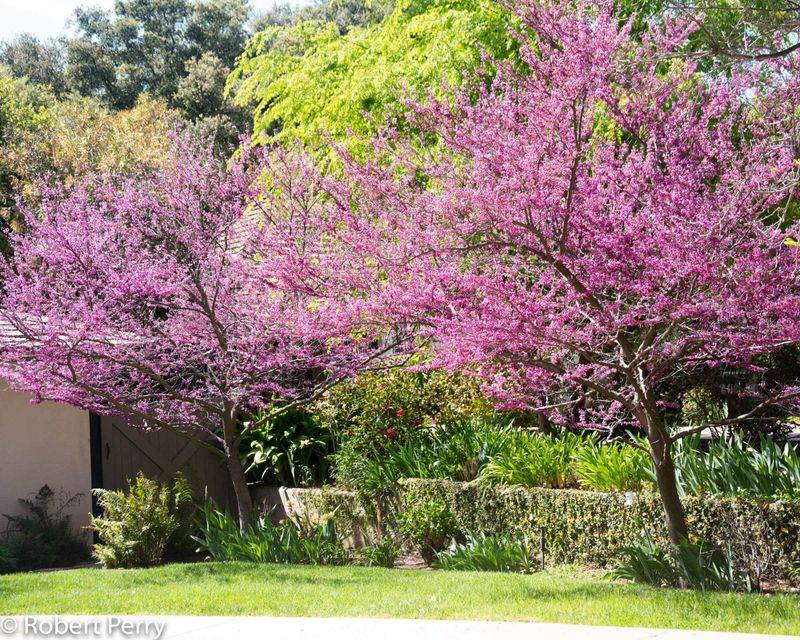
Picture driving up to your house in April when the Eastern Redbud is in full bloom. The branches are covered in bright pink-purple flowers before a single leaf has opened, creating a display that stops people in their tracks.
Along a driveway where visual impact matters, few native trees make a stronger first impression.
Eastern Redbud (Cercis canadensis) is a natural fit for driveway plantings where ornamental value takes priority over dense screening.
It grows to about 20 to 30 feet tall with a rounded, spreading canopy, which means it will not form a tight privacy wall the way arborvitae does.
What it offers instead is year-round structure and four distinct seasons of interest that arborvitae simply cannot match.
Spring brings the vivid bloom. Summer reveals large, heart-shaped leaves that create pleasant dappled shade along the driveway edge.
Fall turns those leaves yellow, and winter exposes the tree’s attractive branching pattern, which holds up well in the landscape even without foliage. That seasonal progression keeps the planting looking intentional and cared-for throughout the year.
From a practical standpoint, Eastern Redbud is well-adapted to Ohio’s clay-heavy soils and handles moderate drought once established. It prefers full sun to part shade and does best when planted away from the lowest, wettest spots in the yard.
Avoid planting directly against pavement where reflected heat can stress the roots during summer.
Space trees about 15 to 20 feet apart along the driveway to allow for their natural spread. They work especially well paired with taller background plantings for properties where layered screening is the goal.
For a driveway planting that genuinely changes with the seasons, Eastern Redbud is one of Ohio’s most rewarding native choices.
4. River Birch Handles Compacted Soil Near Driveways
Compacted soil is one of the most common and overlooked problems along residential driveways.
Years of foot traffic, parked vehicles, and construction activity leave the soil dense and poorly drained, which is exactly the kind of situation that causes arborvitae to decline slowly and unpredictably.
River Birch was built for these conditions.
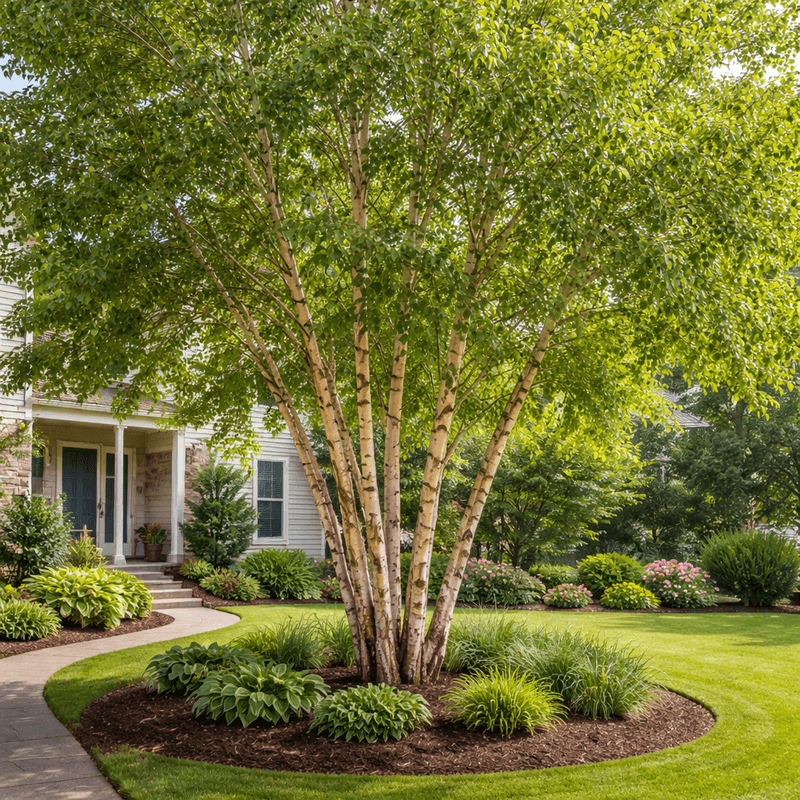
River Birch (Betula nigra) is a native Ohio tree with a well-documented tolerance for compacted, wet, and disturbed soils.
According to USDA plant data and Ohio State University Extension resources, it is one of the few ornamental trees that actually thrives in the kind of challenging soil conditions found alongside driveways and parking areas.
It also handles periodic flooding and clay soils without the decline you would see in most other landscape trees.
Growth rate is another advantage. River Birch puts on 1.5 to 3 feet of height per year under good conditions, meaning it establishes and begins providing screening relatively quickly.
Mature trees reach 40 to 70 feet tall, so this is not a small-scale planting. Give each tree at least 20 to 25 feet of space along the driveway, and consider it a long-term anchor planting rather than a quick hedge replacement.
The peeling, cinnamon-colored bark is genuinely striking in winter when the rest of the landscape is bare. That texture adds visual interest to the driveway edge during the months when most other trees look plain.
The canopy provides good shade in summer, which can actually help reduce the heat stress on nearby plants.
River Birch prefers full sun and performs best when kept consistently moist during the first two growing seasons. Once established, it becomes much more self-sufficient.
For compacted or poorly draining driveway sites, it consistently outperforms arborvitae in long-term health and resilience.
5. Hackberry Thrives Where Other Trees Struggle
Some spots along a driveway are just brutal for plants. Reflected heat from pavement, compacted subsoil left over from construction, air pollution from a nearby road, and inconsistent watering during dry spells can combine to defeat even well-chosen plantings.
Hackberry does not flinch at any of those conditions.
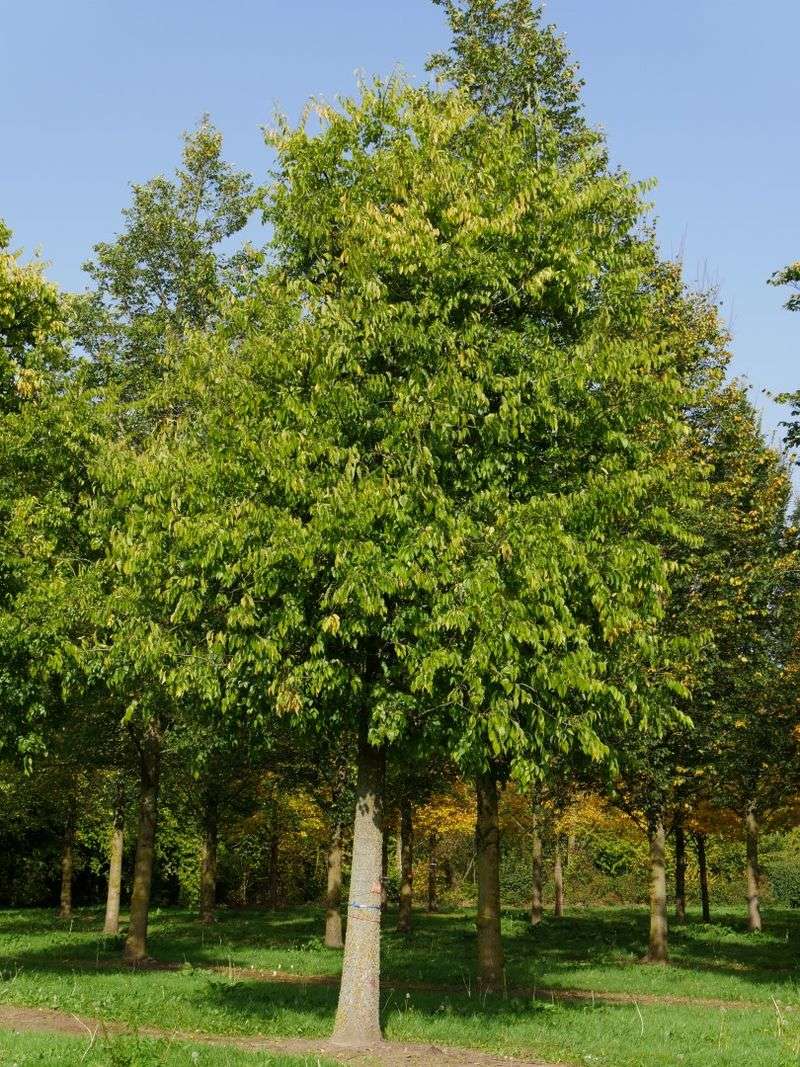
Hackberry (Celtis occidentalis) has earned a reputation among urban foresters and landscape professionals as one of the toughest native trees available for difficult sites.
It tolerates pollution, drought, poor drainage, compacted soil, and heat with a consistency that few other trees can match.
The Arbor Day Foundation and multiple university extension programs list it as a top-tier urban tree for exactly these reasons.
In terms of size, Hackberry grows to 40 to 60 feet tall with a broad, somewhat irregular canopy. It is not a formal screening tree, and it will not create the tidy, uniform edge that arborvitae provides.
What it does create is a resilient, long-lived canopy that holds up for decades with minimal intervention. Along a driveway where you want shade, wildlife habitat, and genuine durability, it is hard to argue with that track record.
The warty, corky bark gives Hackberry a distinctive texture that looks interesting in all seasons. Small dark berries ripen in fall and attract a wide range of birds, including robins, cedar waxwings, and mockingbirds.
The foliage turns a soft yellow in autumn before dropping cleanly.
Plant Hackberry in full sun to part shade, spacing trees at least 20 to 30 feet apart. It adapts to a wide range of soil pH levels and does not require amended planting beds in most Ohio yards.
For homeowners who want a low-fuss tree that genuinely thrives rather than just survives, Hackberry is one of the most dependable native options along challenging driveway sites.
6. American Hornbeam Forms A Dense Edge In Shade
Shaded driveways create a real problem for arborvitae. Without enough sun, arborvitae thins out, develops bare patches on the interior, and gradually loses its screening value.
If your driveway runs alongside a mature tree canopy or a north-facing structure, you may have already watched arborvitae slowly deteriorate in those low-light spots. American Hornbeam was shaped by nature to handle exactly that situation.
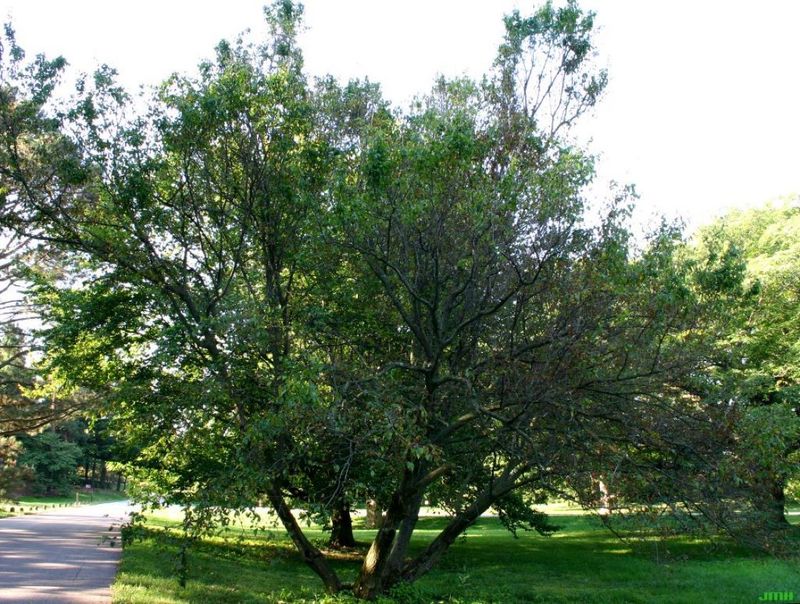
American Hornbeam (Carpinus caroliniana) is a native understory tree that grows naturally beneath the canopy of larger forest trees across Ohio.
It tolerates part shade to full shade better than most landscape trees, and its naturally dense branching pattern makes it an effective visual screen even without being formally sheared.
Mature trees typically reach 20 to 35 feet tall with a spread of similar width, fitting well in the kind of mid-scale planting space found along many residential driveways.
The branching structure is one of the most distinctive features of this tree. Even in winter, the densely layered branches create a visual barrier that helps define the driveway edge.
The smooth, gray, muscle-like bark adds an unusual and attractive texture that makes the tree interesting year-round. Fall color ranges from orange to red, which is a bonus along a driveway where seasonal change adds curb appeal.
American Hornbeam prefers moist, well-drained soil and does best in sites that do not dry out completely in summer. It is not the right choice for a hot, exposed driveway with reflected pavement heat and no shade overhead.
But for a shaded or partially shaded driveway edge where arborvitae consistently underperforms, it fills that role with much greater reliability.
Space plants about 10 to 15 feet apart along the driveway. Minimal pruning is needed once established, and it is rarely bothered by serious pests or disease in Ohio landscapes.
It is a genuinely underused native that deserves more attention from homeowners dealing with shady driveway conditions.
7. Flowering Dogwood Fits Smaller Driveway Spaces
Not every driveway has room for a 50-foot tree. Many Ohio homes have relatively tight planting strips between the driveway edge and the property line, and squeezing a large tree into that space creates its own set of problems down the road.
Flowering Dogwood was made for situations like this, offering genuine beauty and structure without overwhelming a compact space.
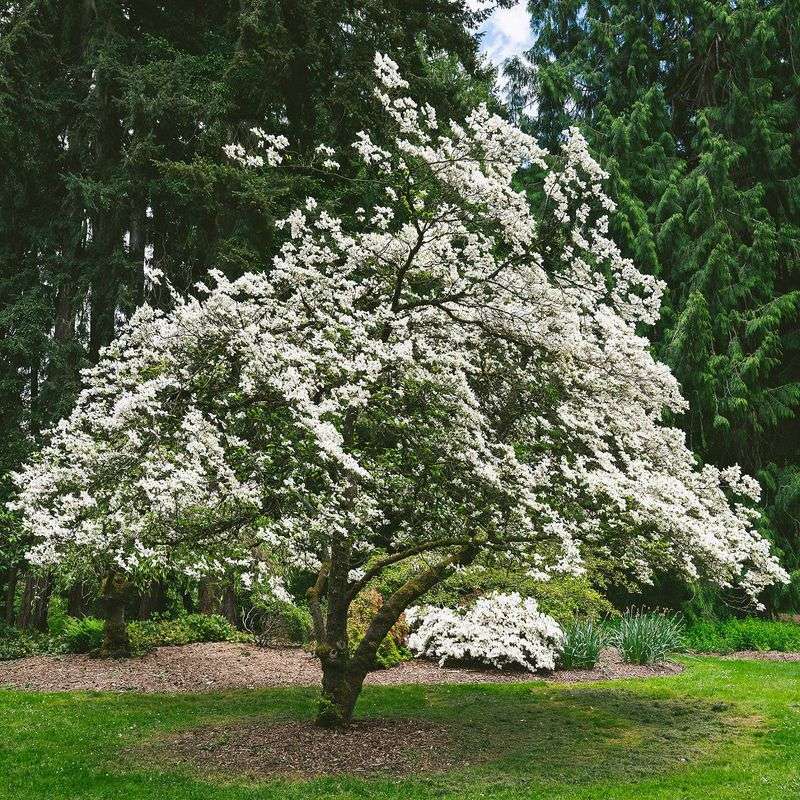
Flowering Dogwood (Cornus florida) typically grows to 15 to 25 feet tall with a spread that matches or slightly exceeds its height. The naturally layered, horizontal branching habit gives it a structured look that reads as intentional in a landscape, even without pruning.
That branching pattern also creates a soft visual screen along the driveway edge without the stiff, formal appearance of a clipped hedge.
Spring bloom is the headline feature. The large white or pink flower bracts open in April and last for two to three weeks, creating one of the most recognizable spring displays in Ohio.
After bloom, the deep green foliage holds cleanly through summer. In fall, the leaves turn scarlet red, and clusters of bright red berries appear, attracting birds through late autumn and into early winter.
Flowering Dogwood prefers part shade to full sun and does best in well-drained, slightly acidic soil.
It is more sensitive to road salt than some of the other trees on this list, so plant it at least 6 to 8 feet back from the driveway edge if winter salt application is heavy in your area.
Mulching the root zone helps retain moisture and moderate soil temperature, which reduces stress during hot Ohio summers.
Space trees 15 to 20 feet apart along the driveway for a natural-looking grouping.
With reasonable placement and basic care during establishment, Flowering Dogwood is a compact, high-impact native that earns its spot along smaller driveway spaces year after year.