8 Arizona Groundcovers That Fill In Fast but Stay Where You Plant Them
One small nursery pot of the right desert groundcover can spread six to eight feet wide yet stay ankle high. That kind of reach sounds thrilling until you remember the stories about plants that jumped fences and swallowed sidewalks.
In Arizona, the smartest spreaders grow wide from one crown instead of shooting runners under your gravel and walls. That habit gives you quick coverage over bare dirt, plus tidy edges that stay near where your shovel started.
I love how a living carpet cools the ground, and you might notice lizards and quail using it for cover. Personally, I would rather water a few tough natives than babysit a thirsty lawn through another long summer.
October is a sweet spot for planting in Arizona, since cooler soil lets young roots settle before winter. So which of these polite spreaders deserves the empty patch beside your hot driveway this fall?
1. Trailing Lantana
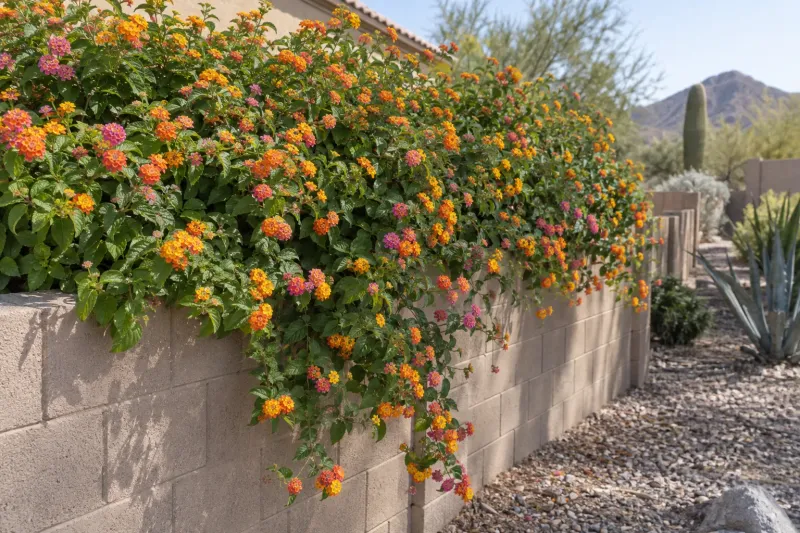
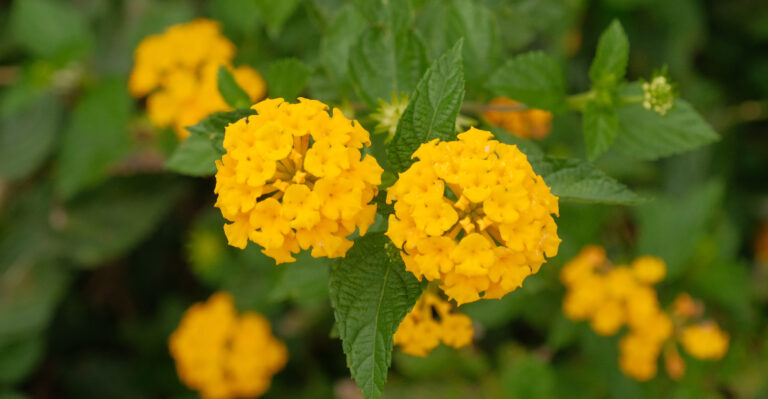
Butterflies treat a sunny bank of trailing lantana like a buffet, drifting from one purple cluster to the next all afternoon. I have watched a single plant soften a harsh rock wall in one season, and it still makes me grin.
Lantana montevidensis usually stays one to two feet tall while spreading three to six feet across hot ground. It builds that width from a central base, so you rarely find surprise sprouts popping up across the yard.
Full sun and reflected heat from pavement barely slow it down, which makes it handy along driveways and pool decks. Once roots are established, a deep soak every week or two in summer keeps blooms coming steadily.
Flowers in lavender or white show up from spring into late fall, and October often brings a fresh flush of color. A hard frost can brown the leaves, but plants usually push new growth once warmer weather returns.
Hold off on heavy pruning until late winter, because the foliage helps shelter crowns during chilly nights. Keep curious pets away from the berries and leaves, since lantana parts can upset animals that nibble them.
2. Trailing Indigo Bush
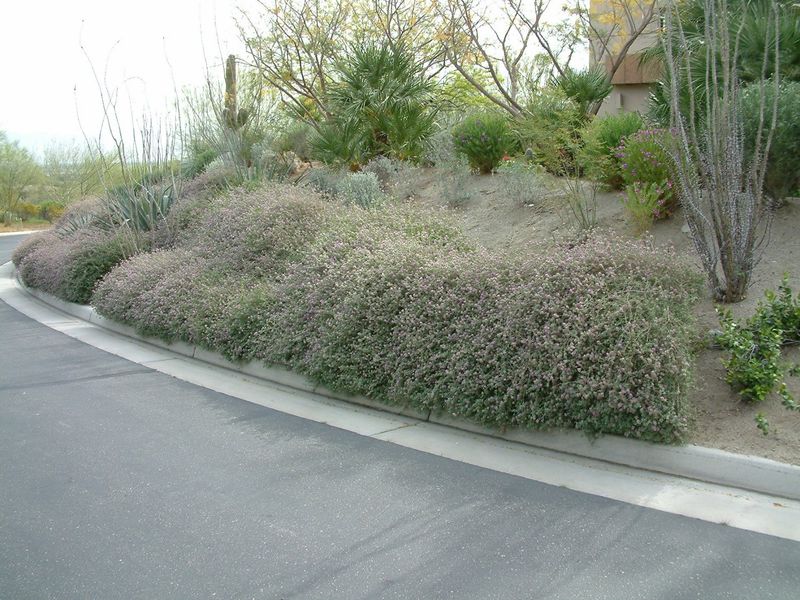
Silver leaves on trailing indigo bush catch the low October sun so brightly that a slope can look frosted at noon. Personally, I think few groundcovers look this cool while sitting in triple-digit heat all summer long.
Native to the Chihuahuan Desert, Dalea greggii usually reaches about a foot tall and spreads four to eight feet wide. Its trailing stems knit together into a soft mat that helps hold loose soil on gentle slopes.
Tiny purple pea flowers appear in spring, and native bees work them eagerly during those warm mornings. The blooms are small, so treat them as a bonus and enjoy the shimmering foliage as the main event.
You need excellent drainage for this one, because soggy soil causes far more trouble than heat or drought ever will. Once established, it often gets by on occasional deep watering, especially in the cooler months ahead.
Planting now gives roots months to settle before summer heat returns next year. Space plants generously, around five or six feet apart, and they will close the gaps without crowding nearby shrubs or paths.
3. Blackfoot Daisy
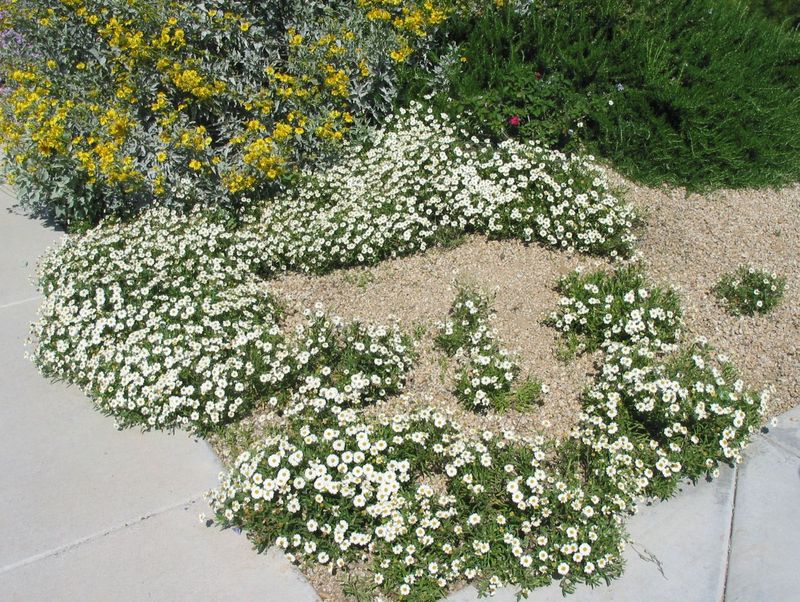
Lean close to a blackfoot daisy on a warm afternoon and you might catch a faint honey scent drifting up. I have to admit that sweet surprise turns a quick garden check into a slow, happy stroll.
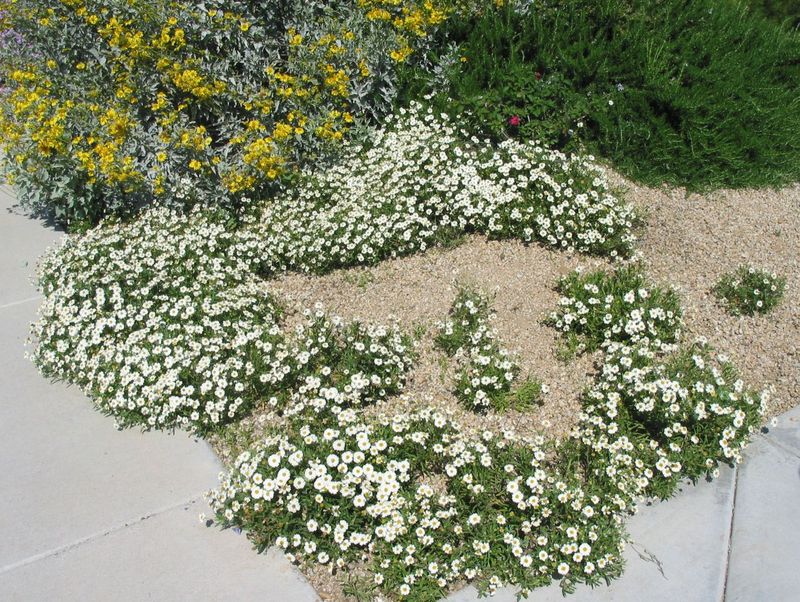
Melampodium leucanthum forms rounded mounds about six to twelve inches tall and roughly two feet wide. White petals surround a yellow center, and the flowers keep coming from spring well into the cooler weeks of fall.
Native to rocky slopes across the Southwest, this little plant loves gravelly ground and blazing sun. Rich soil or frequent watering often leads to floppy growth and root rot, so stingy care works best.
Individual plants may only last a few years, yet they drop a modest number of seeds nearby. You get gentle replacements close to the parent plant rather than a messy carpet of volunteers spreading everywhere.
Bees and small butterflies visit the blooms often, adding plenty of motion to a quiet corner. Tuck several plants along a path edge this month, about eighteen inches apart, for a tidy ribbon of white.
4. Angelita Daisy
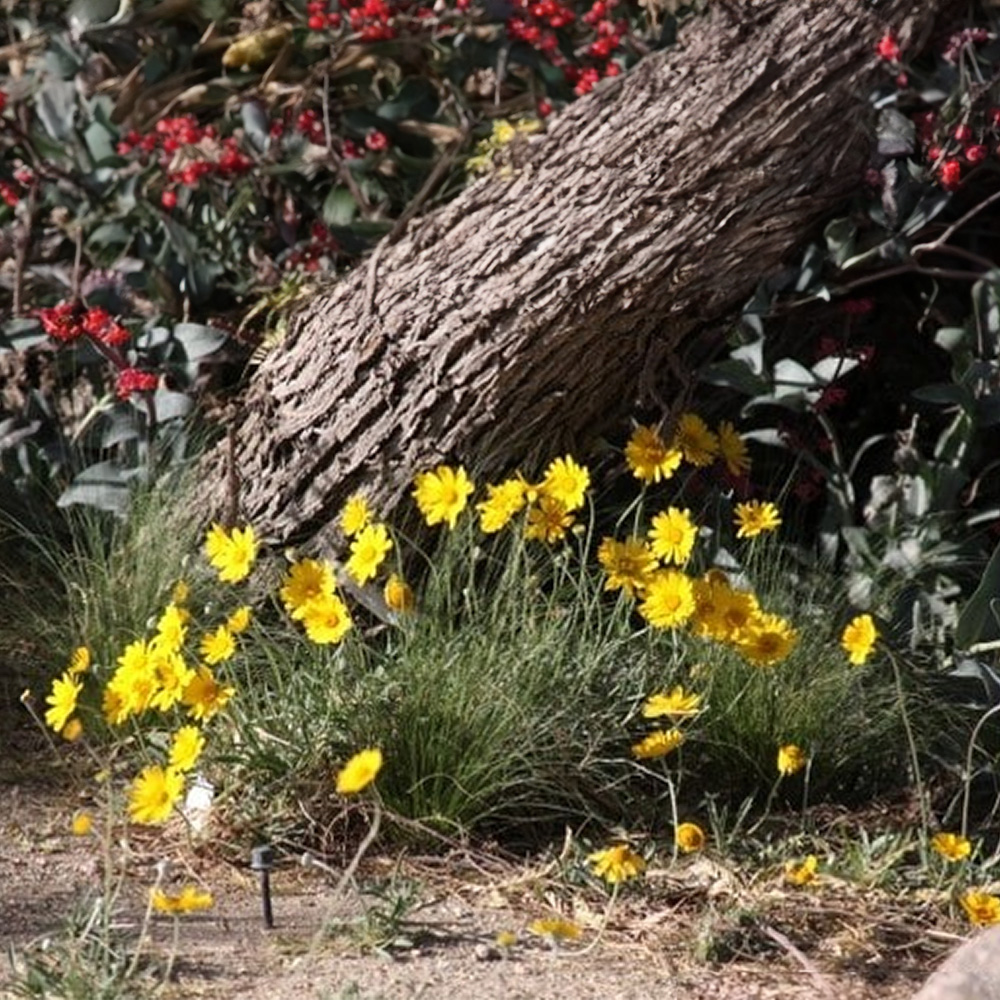
Few plants bloom as stubbornly as angelita daisy, which can flash yellow flowers in nearly every month of the year. You might spot fresh blossoms in January while most of the garden is taking a long winter nap.
Tetraneuris acaulis grows in neat tufts of narrow, grassy leaves about eight to twelve inches tall. Each clump spreads slowly to around a foot or a little more, so it fills spaces politely without wandering off.
That compact habit makes it a smart choice for edging walkways or filling pockets between boulders and agaves. Plant several in a loose cluster, and within a season they blend into one cheerful, sunny patch.
Native across much of the Southwest, it handles cold snaps at higher elevations better than many desert perennials. Low desert gardeners may notice it appreciates a bit of afternoon shade during the harshest summer stretch.
Shear off faded flower stalks occasionally to keep plants tidy and encourage more buds. Rabbits often leave it alone, which I appreciate after watching them nibble so many tender transplants down to stubs.
5. Goodding’s Verbena
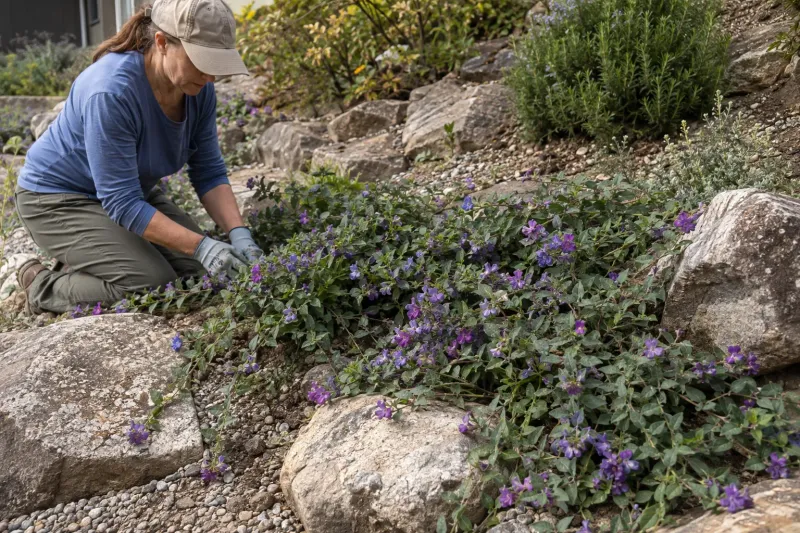
Spring hillsides near Tucson and Phoenix sometimes glow lavender thanks to a scrappy native called Goodding’s verbena. Bringing that wild color home feels like borrowing a small slice of the open desert for your own yard.
Glandularia gooddingii grows about a foot tall and spreads two to three feet wide in a single season. Clusters of pink to lavender flowers peak in spring, and a little extra water can coax another round in fall.
Butterflies love those flat flower heads, and I enjoy watching swallowtails and sulphurs hover over them on calm mornings. Planting a few near a window lets you enjoy that fluttering show without stepping outside.
Plants tend to be short-lived, often lasting only a few years before younger seedlings take over. Those volunteers usually sprout close by, so the patch shifts gently rather than marching across your whole property.
Sow seeds or set out small plants in October, giving winter rains a chance to help them settle. Full sun and fast-draining soil keep foliage healthy, while heavy shade often leads to sparse growth and mildew.
6. Prostrate Rosemary
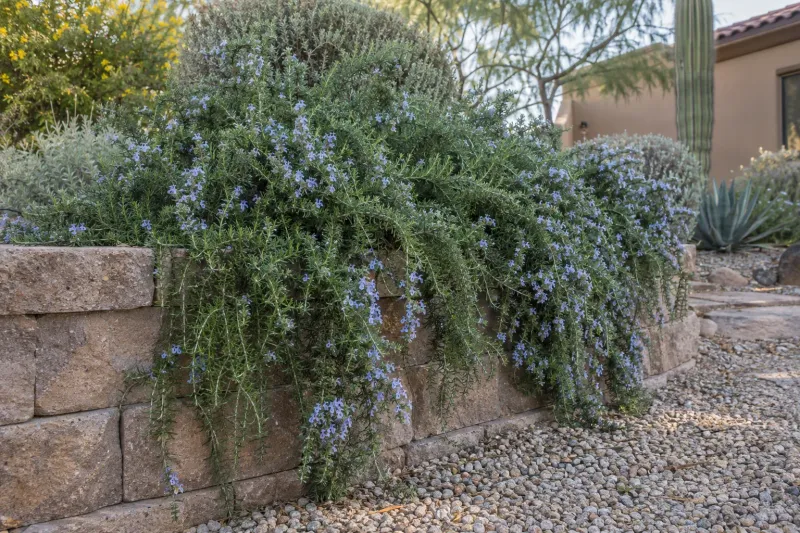
Brushing past prostrate rosemary releases a piney scent that makes the whole patio smell like a weeknight dinner. I love having a groundcover that doubles as a kitchen herb, ready for snipping whenever a recipe calls.
Salvia rosmarinus ‘Prostratus’ grows one to two feet tall and can spread four to eight feet over time. Its stems arch and trail, so it looks especially handsome spilling over retaining walls or raised planter edges.
Pale blue flowers usually open in late winter and spring, feeding bees when few other blooms are around. Fall is a great time to plant, since roots grow steadily through the mild months before summer heat.
Although it comes from the Mediterranean, rosemary handles desert sun and reflected heat with impressive grit. Deer and javelina usually skip the aromatic foliage, which gives it an edge in neighborhoods where browsing is common.
Drainage matters most, because waterlogged roots struggle quickly in heavy clay. Water deeply but infrequently once established, and trim lightly after flowering so the plant stays full instead of woody.
7. Damianita
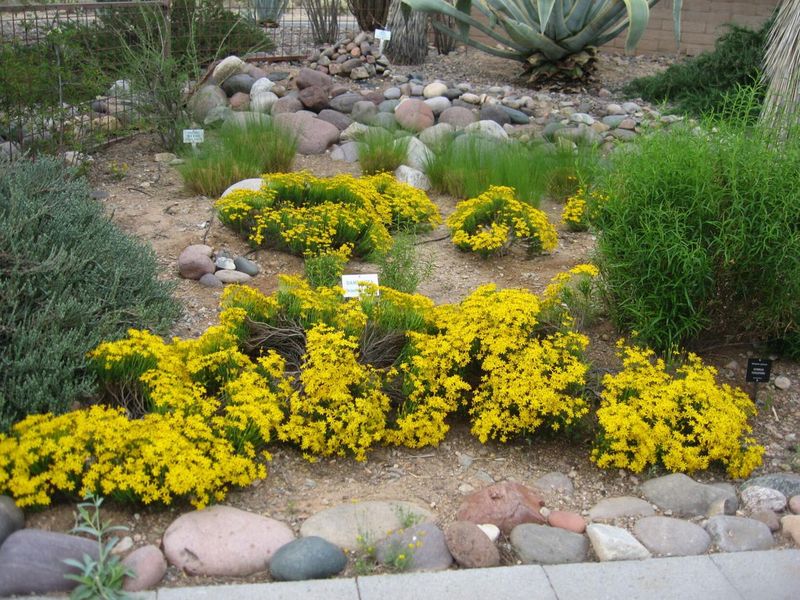
Rub a sprig of damianita between your fingers and a sharp, resiny scent lingers long after you walk away. That aromatic foliage is one reason rabbits and deer often pass it by for tastier targets nearby.
Chrysactinia mexicana forms evergreen mounds of needle-like leaves about a foot or two tall and wide. Bright golden daisies smother the plant in spring, and a second flush often shows up in the cooler weeks of fall.
Native to the Chihuahuan Desert, it shrugs off heat and handles winter cold better than many flowering groundcovers. Rocky, fast-draining soil suits it best, while rich garden beds tend to make it floppy and short-lived.
Plants grow outward from a single base, so they fill gaps quickly without sending runners into neighboring beds. Group several about two feet apart, and the mounds will touch to form a fragrant, low carpet.
A light shearing after spring bloom keeps the mounds dense and tidy. I like pairing damianita with blackfoot daisy, because the gold and white flowers look cheerful side by side along a sunny walkway.
8. Trailing Myoporum
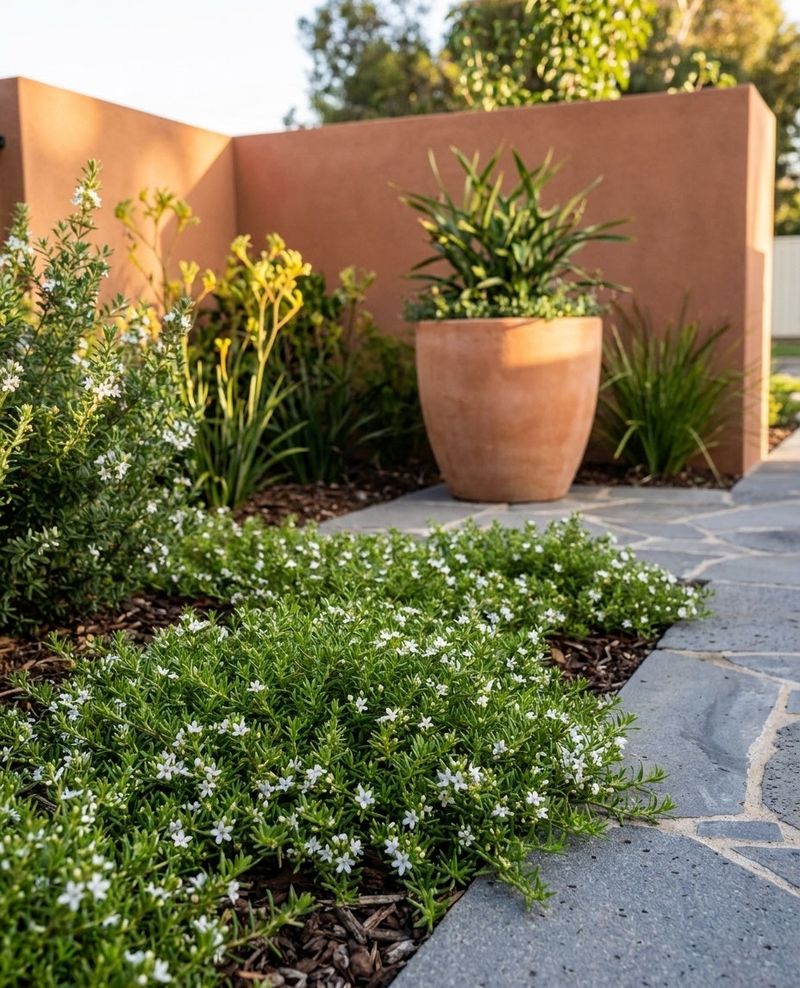
Few desert groundcovers hug the ground as tightly as trailing myoporum, which often stays just a few inches tall. Its bright green mat looks almost like a lawn from a distance, minus the weekly mowing and heavy watering.
Myoporum parvifolium can spread six to nine feet across, making it one of the quickest choices for covering large areas. Small white or pale pink star-shaped flowers dot the foliage in spring and summer, drawing in busy bees.
Stems sometimes root where they touch moist soil, yet the spread stays easy to manage with simple edging. A quick trim along borders each season keeps it out of walkways and away from neighboring shrubs.
Originally from Australia, it needs a bit more water than the natives on this list, especially during summer. Light afternoon shade in the low desert helps it look fresh, while full sun works well at milder elevations.
Plant it this fall in well-drained soil and water regularly through the first year as roots spread out. You might notice how much cooler that green carpet feels underfoot compared with bare gravel on a sunny afternoon.