Peregrine Falcons Dive On Arizona Yards At Up To 200+ MPH – Here’s What They’re Hunting
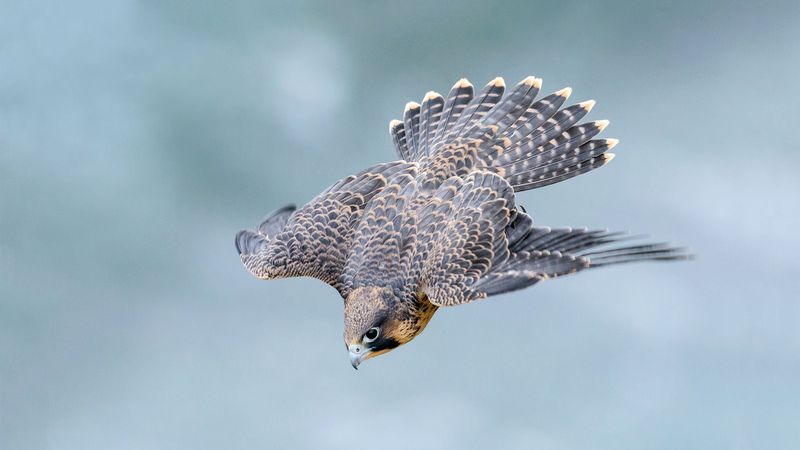
A shadow drops out of the sky over your Phoenix or Tucson backyard, moving faster than your eye can follow, and suddenly a pigeon that was just sitting on your fence is gone. Raptors that hunt near Arizona homes are more common than most people realize, and one of the most capable is the peregrine falcon.
Knowing which bird you’re actually watching, and what it’s after, matters both for understanding the local wildlife and for making smart decisions about your yard.
A Fast Dive Does Not Prove It Is a Peregrine
Watching something streak downward over your backyard at breathtaking speed is genuinely startling, and the word “peregrine” often comes to mind first. Speed alone, though, cannot confirm the identification.
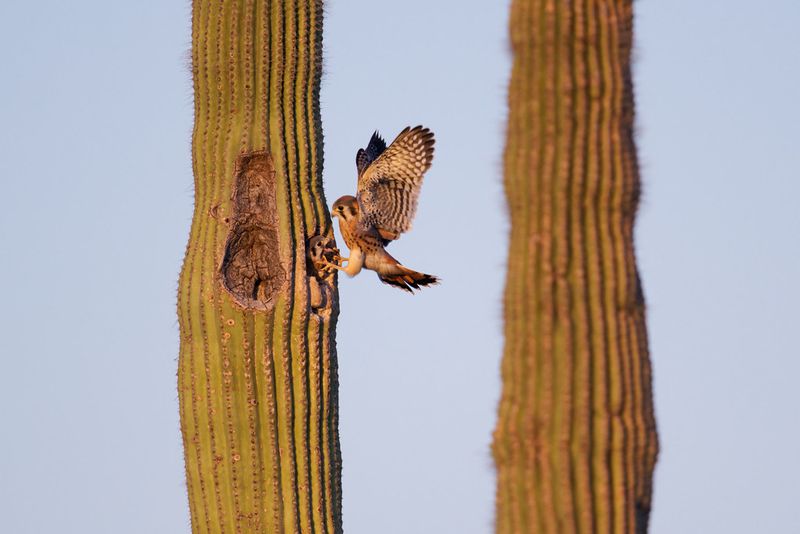
Arizona’s skies above developed neighborhoods host several fast-hunting raptors, including prairie falcons, American kestrels, and Cooper’s hawks, all of which can put on a dramatic aerial display near residential areas.
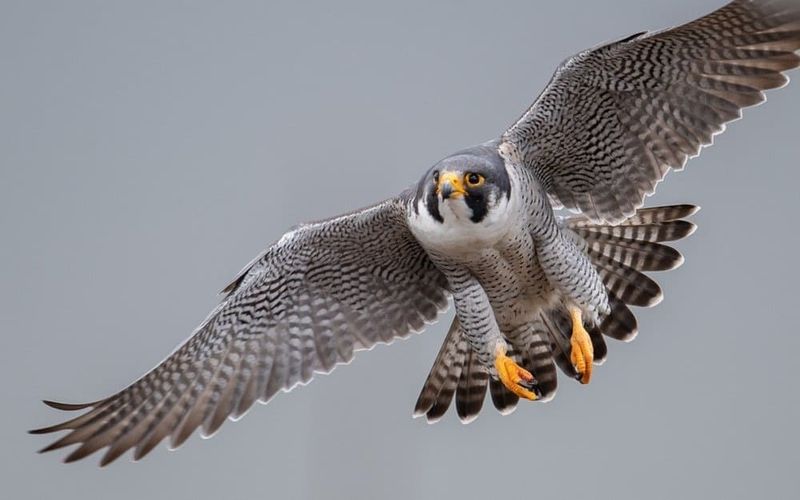
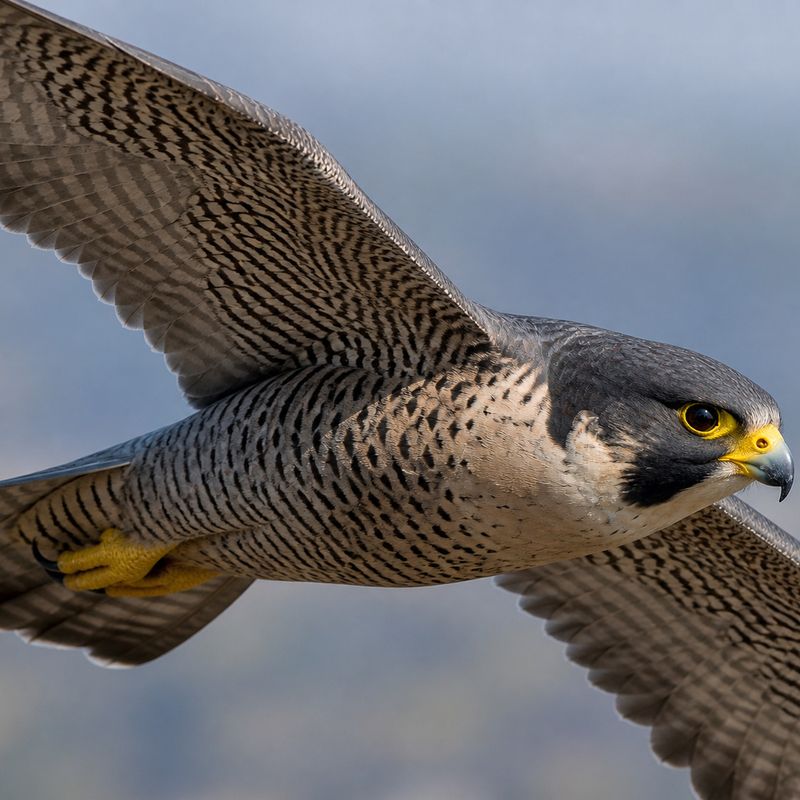
To narrow down what you saw, look beyond the dive itself. A peregrine is a medium-to-large falcon with a dark bluish-gray back, a cream or buff chest heavily barred with black, and a distinctive dark hood or helmet pattern on its head.
Its wings are long and pointed, and its tail is relatively short compared to an accipiter like a Cooper’s hawk. Arizona Game and Fish guidance on living with raptors notes that multiple raptor species share urban and suburban habitat across the state, so plumage, size, and flight pattern all matter for a reliable ID.
Once you’ve made a confident identification, the next question – what is it hunting? – has a fairly clear answer. A confirmed peregrine over an urban Arizona yard is almost certainly pursuing another bird, not a scorpion, a rodent, or an insect.
The sections ahead explain what that prey is, how the falcon catches it, and what, if anything, your yard has to do with the visit.
Pigeons and Doves Make Likely Targets
Peregrines are obligate hunters of other birds. Their talons, speed, and aerial agility evolved specifically to catch flying prey, and their diet reflects that almost exclusively.
Across the globe, researchers have documented peregrines taking more than 450 bird species, but in Arizona cities, a narrower group dominates the menu.
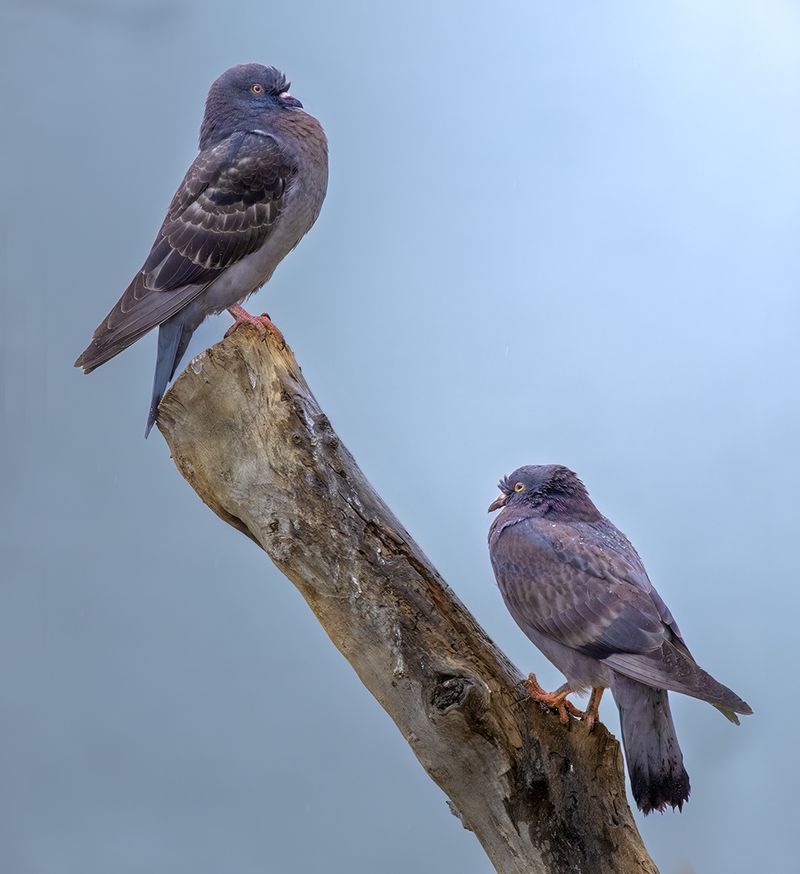
An Arizona diet study using capture-recapture modeling found that columbiforms – the family that includes pigeons and doves – formed the single largest dietary component in both central and southeastern Arizona. Rock pigeons and mourning doves are abundant in Phoenix and Tucson metro areas precisely because human development provides them with food, water, and perching sites.
A peregrine hunting near a residential block is, in most cases, following that reliable food source.
Other prey does appear in documented Arizona peregrine diets. Swifts, songbirds, shorebirds, and waterfowl can all be taken when available, and bats are occasionally recorded as prey, particularly during twilight hours.
Still, for a homeowner watching a fast falcon work the neighborhood, the most probable target is a pigeon or dove. Understanding that keeps the situation in proportion: the falcon is not a threat to your garden, your scorpion problem, or your lawn ornaments.
Your Arizona Garden Changes Every Week. Your Plan Should Too.
Gardening in Arizona changes quickly throughout the season. Every Friday you’ll receive a simple weekly plan showing exactly what to plant, prune, fertilize, harvest, and protect so you never miss the right timing.
It is a bird hunting birds.
Gravity Powers the Hunting Stoop
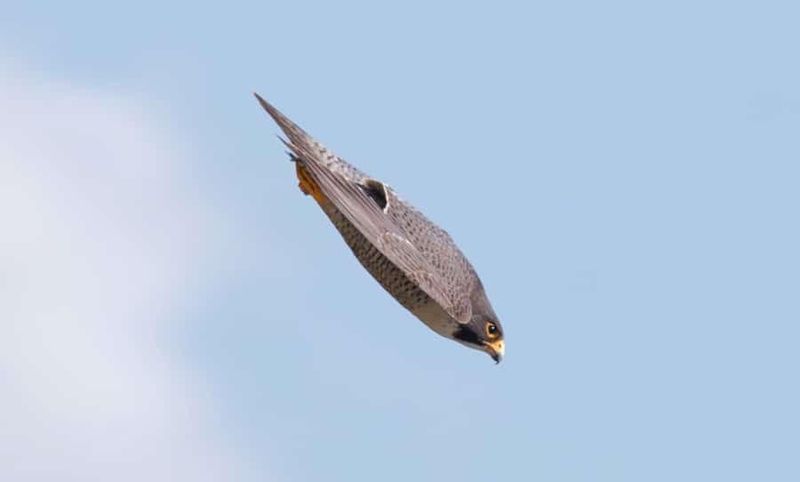
The peregrine’s signature move is called the stoop – a steep, controlled plunge from altitude that uses gravity as the primary engine. The bird climbs high above its target, then tucks its wings close to its body, reducing drag and creating a streamlined profile that aerodynamicists describe as roughly teardrop-shaped during the fastest phase of the descent.
That configuration is not permanent. As the falcon approaches its prey and begins to maneuver, it adjusts its wing position to steer and control the pullout.
Peer-reviewed aerodynamic research documents dive speeds exceeding 320 km/h – roughly 200 mph – under measured conditions, with the folded-wing posture central to achieving those figures. Studies published in peer-reviewed journals on peregrine falcon flight mechanics confirm that the body shape and feather alignment during a stoop are genuinely optimized for high-speed descent in a way that few other birds can match.
The 240-mph figure that appears widely online and in agency materials, including National Park Service publications, represents a reported maximum associated with high-altitude dives under particular conditions, not a number you should expect to see replicated over a typical residential neighborhood in Scottsdale or Marana. Cornell Lab’s species account puts ordinary peregrine travel speed at roughly 25 to 34 mph and direct pursuit at up to about 69 mph.
The extreme dive speed is real as a ceiling, but it describes an exceptional circumstance, not the standard over your backyard fence.
A Feeder Can Concentrate the Prey
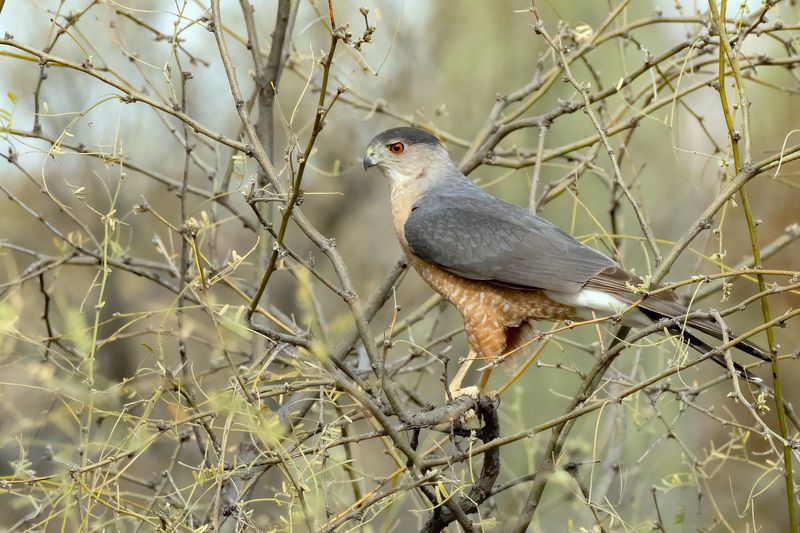
Your yard probably did not send out an invitation to a peregrine falcon, but it may have done something nearly as effective: gathered the birds that a peregrine wants to eat. Feeders, spilled seed on the ground, birdbaths, and food scraps left outdoors draw mourning doves, Eurasian collared-doves, white-winged doves, and house sparrows in numbers that can make a suburban lot look like a reliable hunting ground from a hundred feet up.
Arizona Game and Fish makes this connection explicit in its guidance on living alongside raptors, noting that feeders attract raptor prey and can therefore make a yard more attractive to a hunting bird of prey. The indirect chain matters: the feeder is not pulling the peregrine in directly the way a hummingbird feeder pulls in a hummingbird.
The feeder concentrates small and medium-sized birds, and the peregrine follows them.
A peregrine may also simply be working a broader territory that includes your block as one stop among many. Removing attractants may reduce local prey density and, over time, make your yard a less frequent hunting location.
However, no yard modification guarantees that a particular falcon will redirect its route. Prey availability across the wider neighborhood, the bird’s established territory, and seasonal movement patterns all play a role that a single homeowner cannot fully control.
Treating attractant reduction as one reasonable step, rather than a guaranteed fix, keeps expectations grounded.
The Strike Can Be Sudden, but Hunts Vary
From a homeowner’s vantage point on a patio or near a window, a peregrine attack can look almost instantaneous. The falcon appears, the prey bird scatters or falls, and the whole event seems to be over before you can process what happened.
That impression is accurate for the moment of impact, but it does not capture the full picture of how a hunt unfolds.
According to species accounts from sources including the Cornell Lab and National Park Service documentation, peregrines typically strike prey in the air. The falcon may hit a bird with its feet at high speed, knocking it out of the sky, or grab it directly and then deliver a killing bite to the back of the neck using a notched upper beak called the tomial tooth.
The contact phase of an attack can be extremely brief.
Radar-based field observations have recorded stoops lasting anywhere from 40 to 110 seconds, and published accounts document repeated stoops when the first attempt misses. A Western Birds journal study of peregrine hunting behavior similarly describes multiple-attempt sequences and longer sorties.
The takeaway for anyone watching from a yard is that a single dramatic plunge is one part of a hunting sequence that may include repositioning, repeated attempts, and pursuit at lower speeds. Some hunts conclude quickly; others require several passes.
Treating every peregrine attack as a guaranteed one-second kill undersells the skill and persistence the bird actually brings to each outing.
Reduce Conflict Without Removing the Raptor

Most Arizona homeowners who spot a peregrine over their yard do not need to do anything at all. The bird is a native predator doing exactly what it evolved to do, and watching it work is a rare experience.
For those who want to reduce the chance of losing backyard birds or worrying about small pets, a few practical steps make sense.
Start with the attractants. Temporarily stopping bird feeding, sweeping up spilled seed, and removing standing water or food scraps from outdoor surfaces can reduce the number of prey birds gathering in your yard.
Arizona Game and Fish and its broader keep-wildlife-wild guidance both recommend eliminating attractants as the first practical response when a raptor is visiting more than you’d like. Understand, though, that reducing prey concentration in your specific yard may simply shift where a peregrine hunts on a given day, not whether it hunts in your general neighborhood.
Small pets and backyard chickens warrant extra thought during any period when a raptor is actively working nearby. A sturdy enclosure with a solid or heavy-gauge wire roof is the most reliable protection.
Supervision during outdoor time is a reasonable backup for dogs and cats that are too large for a coop-style setup.
Window collisions are a separate but related concern. Phoenix’s Bird Friendly PHX program identifies reflective and transparent glass as a leading cause of bird injury and death in urban areas.
External screens, tape patterns, or other visual markers placed on the outside of glass can reduce collision risk for all birds moving through your yard, not just prey species.
One boundary is non-negotiable: do not approach an active peregrine nest, remove eggs or young, attempt to trap or relocate the bird, or handle an injured falcon. Peregrines are protected under both Arizona state law and the federal Migratory Bird Treaty Act, which prohibits taking or disturbing protected native migratory birds without authorization.
If you find an injured, trapped, or entangled bird, keep people and pets away and contact Arizona Game and Fish or a permitted wildlife rehabilitator for guidance.
Watch the Food Web, Not Just the Speedometer
A fast falcon over your yard is worth slowing down to understand. If the bird is a confirmed peregrine, it is almost certainly pursuing a pigeon or dove, not clearing your property of scorpions or providing guaranteed pest control.
The exceptional dive speeds that make peregrines famous describe a ceiling achieved under specific high-altitude conditions, not a number stamped on every pass over a Tucson or Phoenix neighborhood.
Feeders and other yard attractants can raise local prey density and make a hunting visit more likely, but they are one contributing factor among several, including the bird’s established territory, seasonal patterns, and what prey is available across a wider area. Adjusting attractants is a reasonable first response if visits concern you, paired with covered enclosures for vulnerable animals and bird-safe window treatments for your glass.
The most useful shift for any Arizona homeowner is moving from alarm to informed observation. Learn to identify what you’re actually seeing – size, plumage, flight pattern, and context matter far more than speed alone.
A peregrine hunting your neighborhood is a sign that the local food web is functioning, and watching it work, from a respectful distance, is one of the more extraordinary things a desert yard can offer.