8 Desert Birds of Prey You Can Spot Over Arizona This Winter If You Know Where to Look
A hawk nearly the size of an eagle summers on Canadian prairies, then winters on desert power poles. Some of these big visitors start arriving across southern Arizona as early as October each year.
Our desert sky gets busier once the heat breaks, because northern raptors follow their prey toward milder ground. Local residents stay put too, so the cooler months stack newcomers right on top of familiar faces.
I love how a single drive past farm fields can turn up several different hunters along one fence line. You need little more than patient eyes and a cheap pair of binoculars to start noticing them.
Personally, I think these birds are the best rodent patrol any Arizona homeowner could ask for. So which winged neighbors deserve your attention first, and where should you point those binoculars this season?
1. Red-tailed Hawk
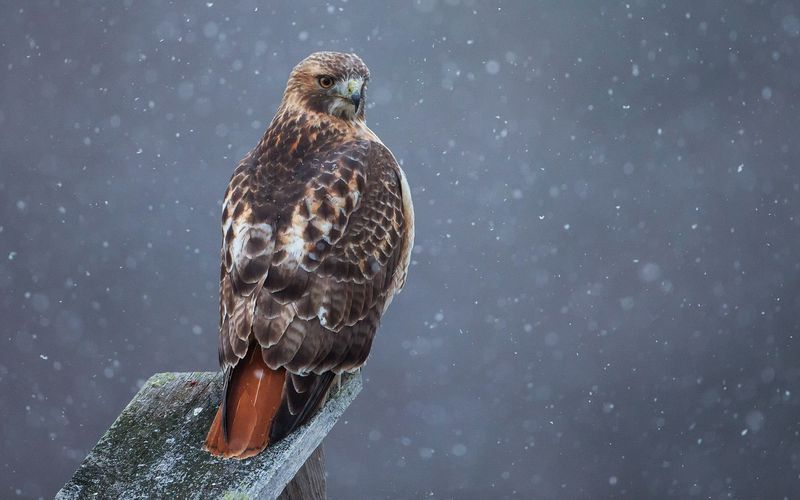
That raspy scream you hear behind nearly every movie eagle actually belongs to the Red-tailed Hawk instead. Hollywood borrowed it because the real eagle call sounds more like a squeaky giggle than a mighty cry.
Plenty of red-tails live here all year, yet their numbers climb in winter as northern birds drift south. Starting in October, you might notice two or more perched along a single stretch of highway.
Look for a chunky, broad-winged hawk with a pale chest and a dark band across its belly. Adults flash a brick-red tail when they bank, which makes identification pleasantly easy for beginners.
I love watching them hunt from telephone poles, staring at the ground like patient anglers waiting for a bite. Rabbits and rodents make up most of their diet, though snakes and lizards also land on the menu.
If pack rats raid your shed or garden, a tall snag or open view nearby gives these hawks a handy lookout. Skip rodent poisons, since hawks that eat poisoned prey can get sick and struggle afterward.
2. Ferruginous Hawk
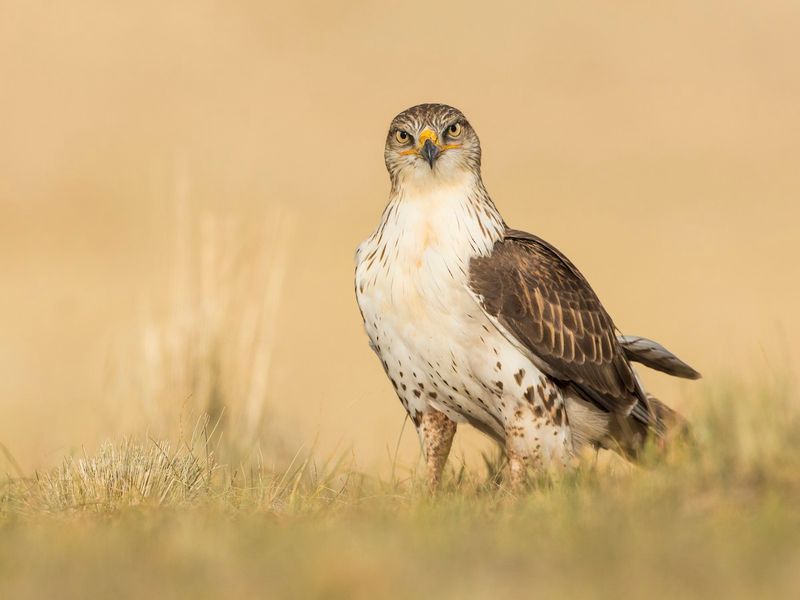
North America’s largest hawk spends its summers on northern prairies, then treats our desert valleys like a winter vacation home. Ferruginous Hawks usually arrive in October and linger until early March before heading back north.
Size alone makes them memorable, but the colors seal the deal once you get a clear look through binoculars. Light-morph adults wear rusty shoulders and rusty leggings over bright white underparts, topped with a pale grayish head.
In flight, they hold their long wings in a shallow V, which helps separate them from the flatter-winged red-tail. I have to admit that seeing one tilt in the wind feels like spotting royalty on a quiet back road.
Ferruginous Hawks favor wide grasslands and open desert scrub rather than busy suburbs or thick woodland. Watch lone trees and power poles across agricultural valleys, especially near colonies of ground squirrels or prairie dogs.
These hawks often wait beside burrow entrances and ambush animals as they pop up for a look. That patient habit makes them welcome allies for ranchers and farmers dealing with hungry ground squirrels each season.
3. Harris’s Hawk
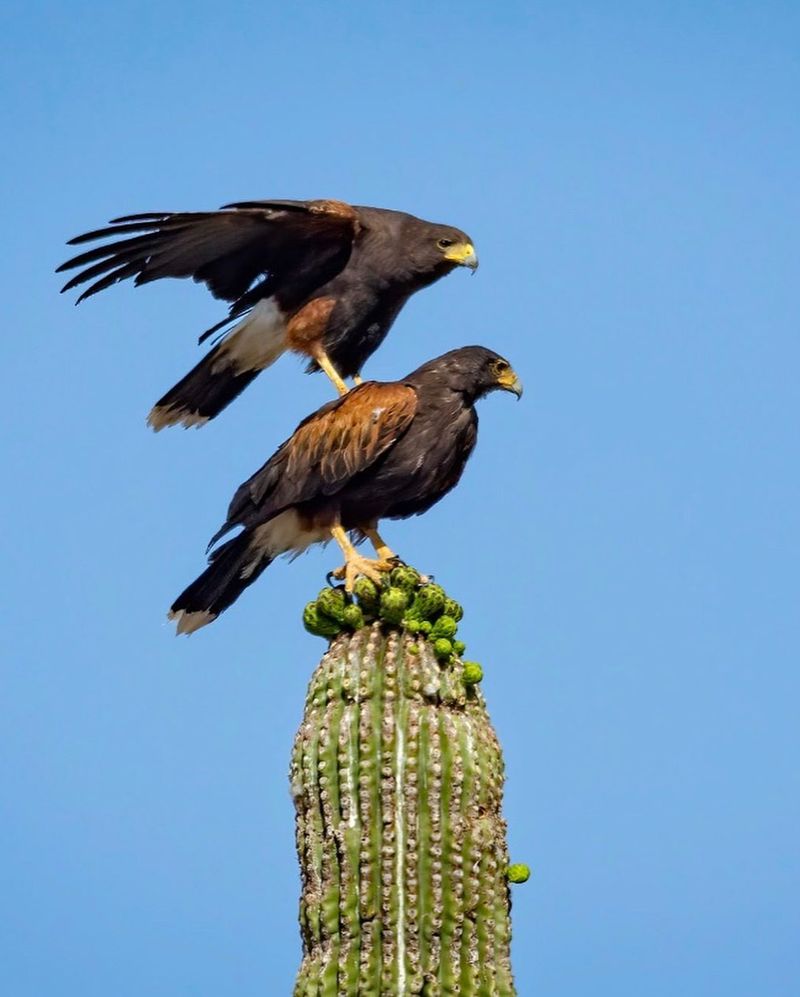
Most hawks hunt alone, yet Harris’s Hawks work in family teams that birders sometimes call the wolves of the sky. One member may flush a jackrabbit from a bush while another waits nearby to grab it.
These hawks live in the Sonoran Desert year-round and seem custom-built for saguaro country and mesquite thickets. Dark chocolate feathers set off chestnut shoulders, and a bright white band tips the long tail.
What surprises me most is stacking, where one hawk perches right on top of another on a single pole. Experts think the tower gives the group a better lookout across flat ground, though nobody knows for sure.
Harris’s Hawks tolerate people surprisingly well, so neighborhoods near open desert around Tucson and Phoenix often host families. You might spot several sitting together on utility poles at the edge of a new subdivision.
Packrats and ground squirrels rank high on their menu, which makes them excellent neighbors for anyone guarding a garden. Leaving native trees like palo verde and mesquite standing gives them safe places to rest and nest.
4. Bald Eagle
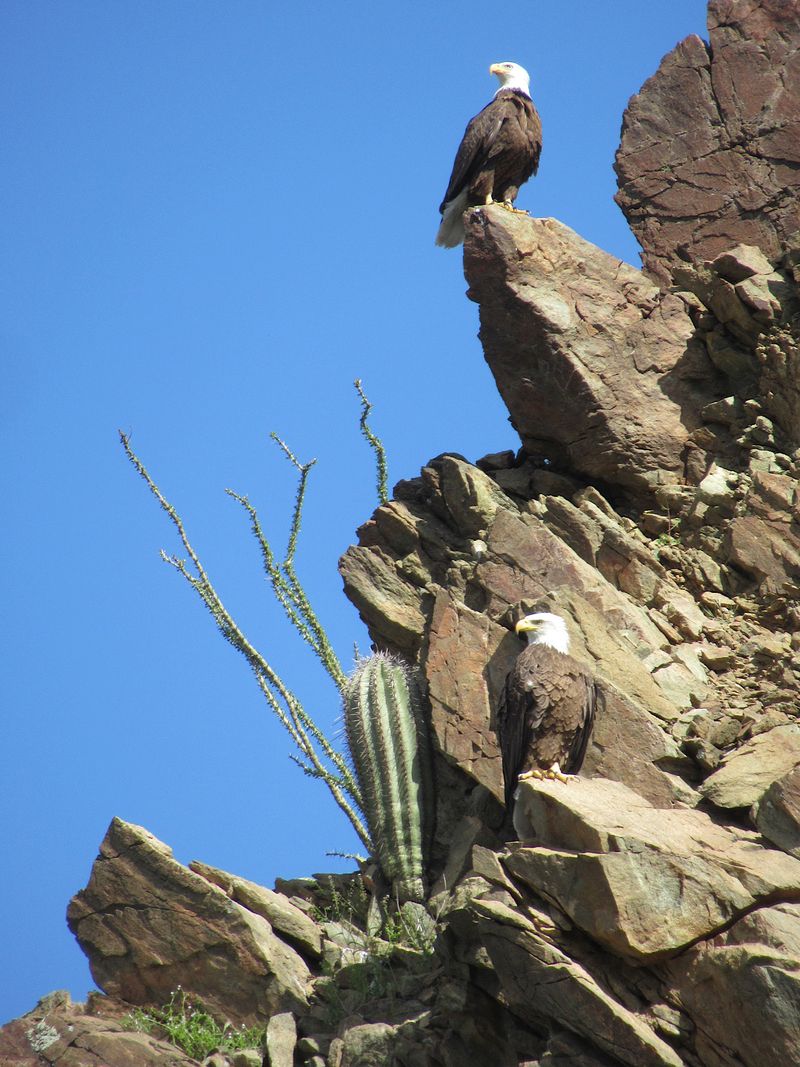
Arizona hosts two separate groups of Bald Eagles, and one of them nests in the middle of the desert. That resident population raises chicks along the Salt and Verde Rivers, building nests on cliffs and in cottonwoods.
The second group arrives from the north starting around October, following the freeze line south toward open water. Their numbers usually peak in February, so the coming months offer a long and rewarding window for sightings.
Adults are hard to mistake, with gleaming white heads and tails and a wingspan that can stretch about seven feet. Younger eagles look mottled brown for several years, which fools plenty of new birders into guessing golden eagle.
I like how patient they are, sitting for long stretches on snags above lakes before dropping down for a fish. They also scavenge carcasses and grab waterfowl, showing a practical streak that balances all that famous elegance.
Lakes in the northern pine country, like Mormon Lake and Lake Mary near Flagstaff, are popular wintering spots. Some riverside nesting areas close seasonally to protect the birds, so check posted closures before you hike.
5. Great Horned Owl
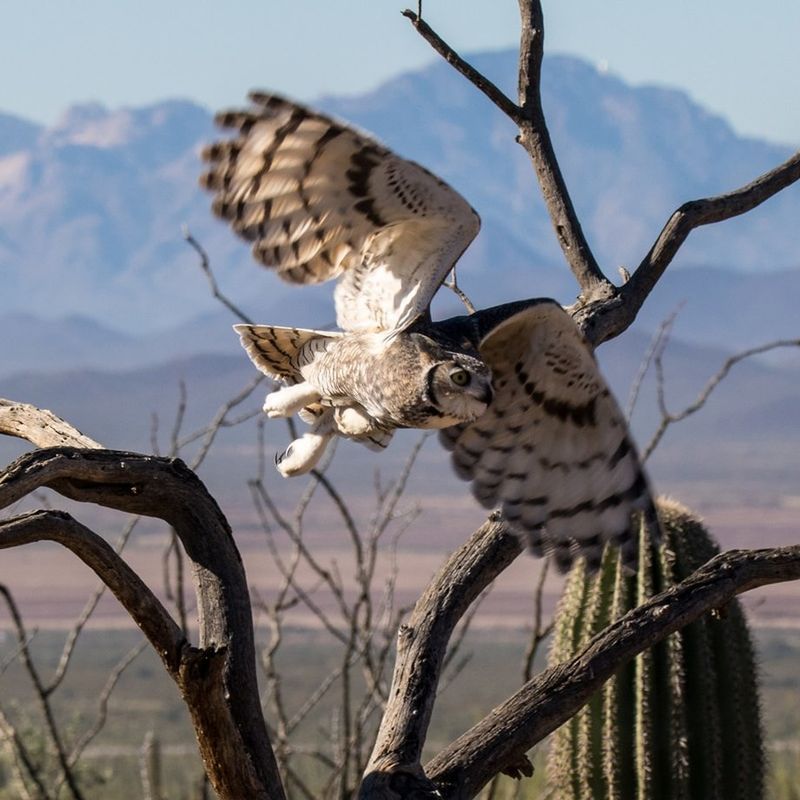
Those deep, soft hoots drifting across your neighborhood on a cool evening probably come from a Great Horned Owl. Winter is courtship season, so pairs often call back and forth in duets shortly after sunset.
Look for a bulky owl with feathery tufts that resemble ears, though they are only feathers and not hearing organs. Big yellow eyes and mottled gray-brown plumage help them blend into palo verde branches and saguaro arms.
They hunt mostly at night, yet you might catch one perched on a rooftop or chimney at dawn or dusk. Silent flight feathers and sharp hearing let them find prey in darkness that would leave us stumbling.
Their menu is impressively broad, covering rodents, rabbits, snakes, and even skunks, which most predators wisely avoid. I believe that flexible appetite makes them one of the most useful backyard allies in desert suburbs.
To find one this fall, listen at twilight, then scan tall pines and old hawk nests in your area. Great Horned Owls often borrow abandoned nests rather than building their own, which saves them plenty of effort.
6. Burrowing Owl
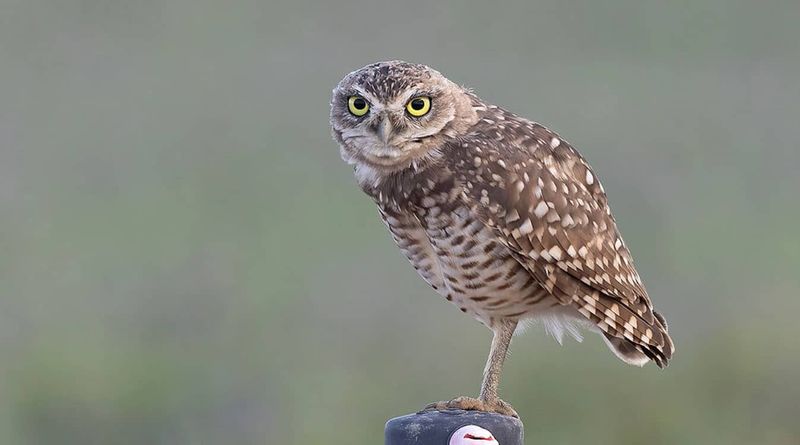
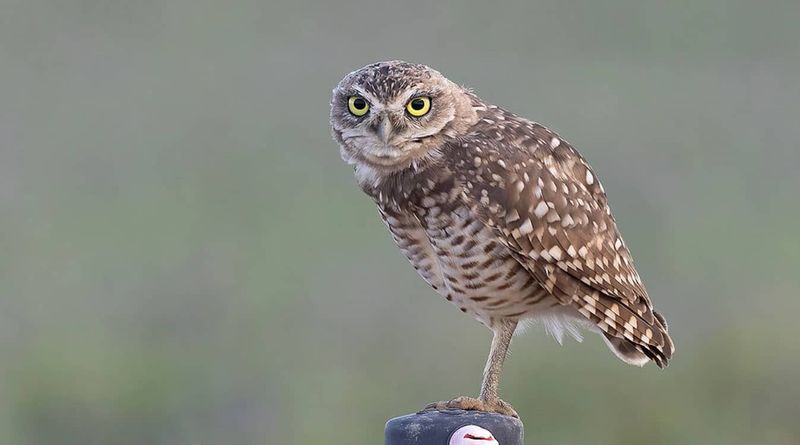
Owls that live underground sound like a tall tale, yet Burrowing Owls really do raise their families in holes. Most move into burrows dug by ground squirrels or badgers rather than doing the digging themselves.
Unlike most owls, they are often active in daylight, standing upright on long legs beside the burrow entrance. Bright yellow eyes and white eyebrows give them a permanently surprised look that I find hard to resist.
Young owls have a clever trick, producing a hiss that sounds remarkably like an agitated rattlesnake inside the burrow. That buzzy imitation is convincing enough to make curious predators think twice about reaching inside.
Burrowing Owls favor open, sparse ground, so canal banks and vacant lots near farm fields are good places to scan. In the Phoenix area, conservation groups have installed artificial burrows to give displaced owls safe new homes.
They feed heavily on insects and other small critters, including beetles, scorpions, and the occasional rodent. Please watch from a respectful distance, because these owls are protected and disturbing burrows can stress the whole family.
7. Peregrine Falcon
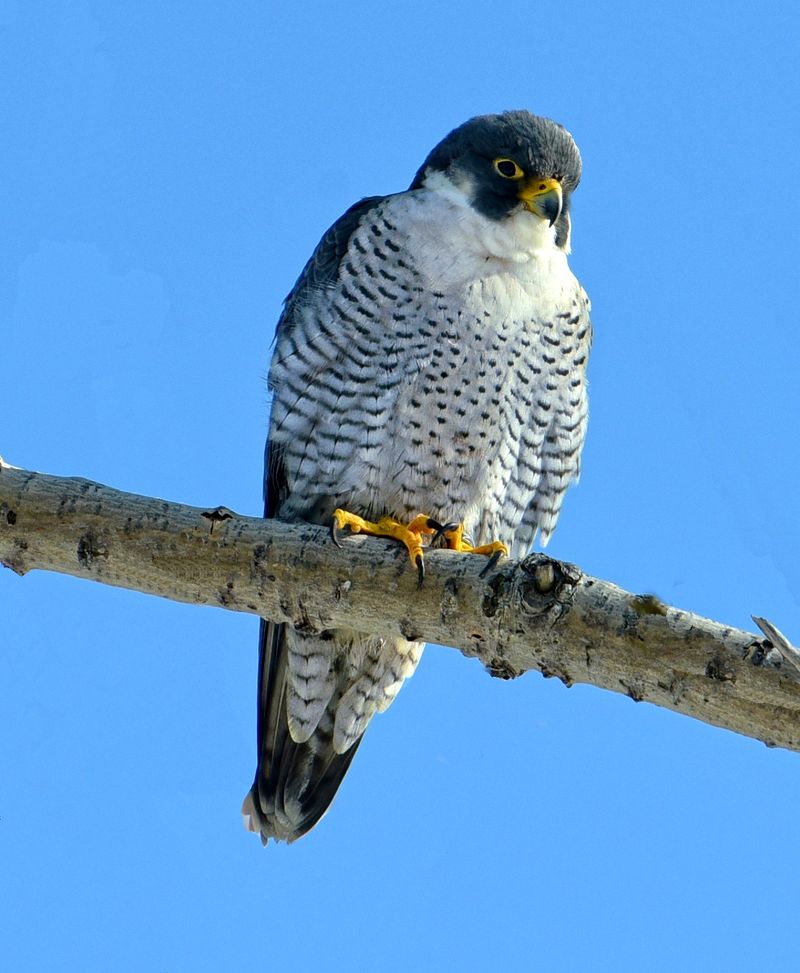
No animal on Earth moves faster than a Peregrine Falcon in a hunting stoop, which can top 200 miles per hour. Watching one fold its wings and plunge feels like seeing a dropped stone suddenly change its mind.
Special bony structures inside the nostrils seem to help manage airflow during those dives, protecting the lungs from harsh pressure. That clever anatomy lets the falcon keep breathing at speeds that would overwhelm most other birds.
Look for slate-blue wings and a bold black mustache mark beneath each eye, like a tidy chin strap. The pale chest carries fine dark barring, which shows up nicely when the bird perches in good light.
Some peregrines nest on high desert cliffs, while others claim ledges on tall buildings in Phoenix and Tucson. Winter brings extra migrants, so lakes and marshes packed with ducks become worth a careful look.
Peregrines eat birds almost exclusively, snatching pigeons and ducks right out of the air with startling precision. I can’t imagine a better reason to keep binoculars in the car when driving past a busy reservoir.
8. Prairie Falcon
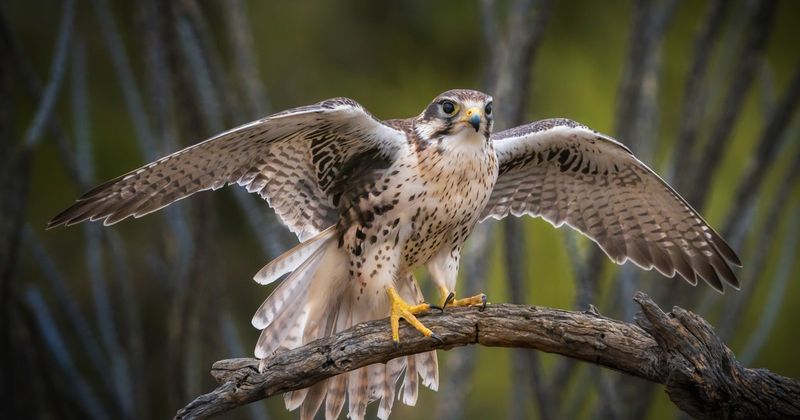
Observers have watched Prairie Falcons drop dried cow manure in midair, then swoop down and catch it again. Researchers think this odd game may help the falcons practice the timing they need for real hunting.
Prairie Falcons live in the state year-round, but many slide down to lower elevations once winter settles in. That shift puts them over farm fields and open desert, and sometimes even above Southwestern cities.
Their sandy brown backs and creamy undersides blend beautifully with dusty bluffs and dry grass in late afternoon light. In flight, look under the wings for dark armpit patches, the easiest clue that separates them from peregrines.
They lack the peregrine’s dark hooded look, showing only a thin mustache stripe against a fairly pale face. I like how understated they appear until they accelerate low over the ground like a thrown dart.
Ground squirrels and small birds such as horned larks make up much of their winter diet across open country. Scan fence posts and power lines in agricultural valleys, especially where flocks of small birds gather to feed.