8 Venomous Creatures Arizona Residents Should Watch for This Fall
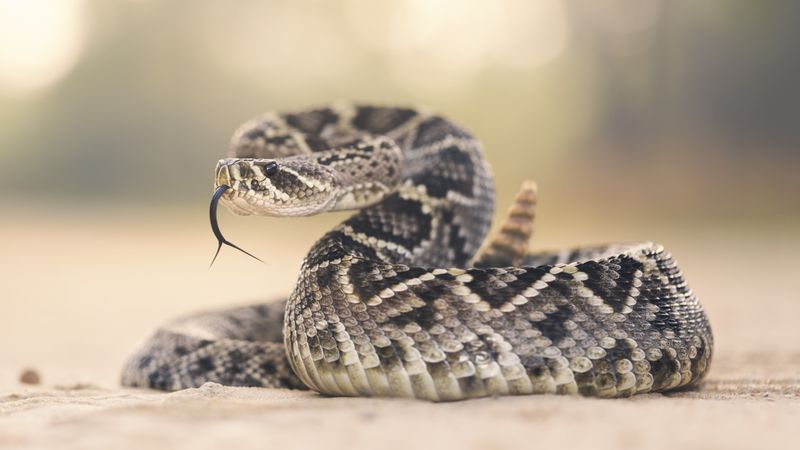
Fall in Arizona feels like a reward after a long, scorching summer. Cooler mornings pull us outside to garden, hike, and open the windows again.
The trouble is that many of the desert’s venomous neighbors enjoy the milder weather just as much as we do. Knowing who might be hiding in your yard, garage, or woodpile can help you stay safe and still enjoy the best season of the year.
1. Arizona Bark Scorpion
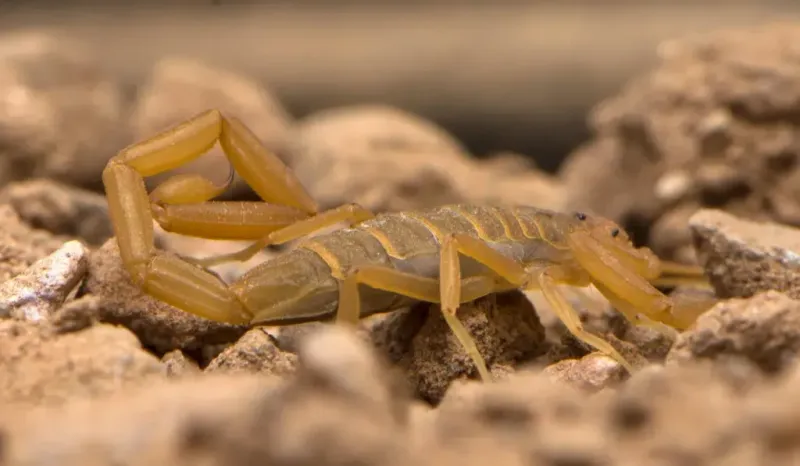
Picture flipping back your bedsheets on a cool October night and spotting a slender, straw-colored visitor. For many Phoenix and Tucson families, that moment is a rite of passage.
The Arizona bark scorpion is the only scorpion in North America considered dangerously venomous, and it calls the low desert home.
Fall is a busy stretch for these climbers. As nights cool, they often gather in groups, tucking into tree bark, rock crevices, and gaps inside walls.
They tend to stay active as long as nighttime temperatures hover above about 70 degrees, which can stretch well into October and November.
Unlike most scorpions, bark scorpions scale walls and ceilings with ease. That skill explains why people find them in sinks, bathtubs, and even beds after they drop from above.
A sting can bring intense pain, tingling, numbness, and muscle twitching.
Children, older adults, and pets are most at risk, so severe symptoms call for prompt medical care. To make your home less inviting, seal gaps around doors and pipes, trim branches touching the roof, and keep palm skirts and rock piles away from the foundation.
A UV flashlight makes them glow at night, which is oddly satisfying.
2. Western Black Widow Spider
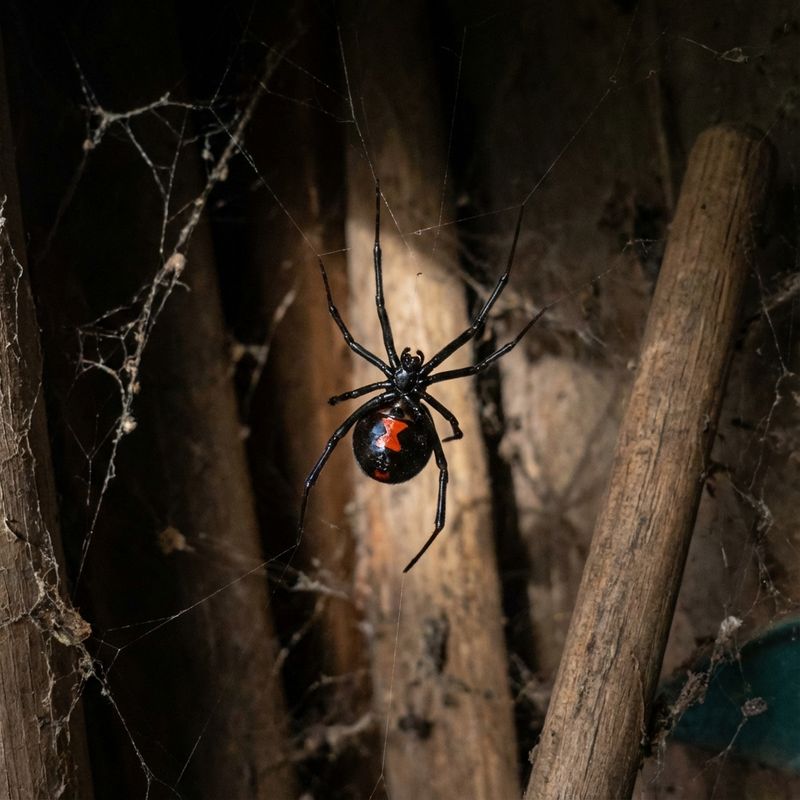
Garages in Arizona hold more than holiday decorations and dusty bikes. Tucked behind storage boxes and along door tracks, the western black widow quietly waits in her tangled web.
She is common across the state and active all year.
When autumn nights turn crisp, these spiders look for sheltered spots with steady temperatures. Garages, sheds, and cluttered corners become prime real estate.
Their webs are messy, irregular, and usually built close to the ground, unlike the neat spirals of garden spiders.
Spotting a female is fairly easy once you know the look. She has a shiny black body and a bright red hourglass on her underside.
Males and young spiders are smaller and paler, so they often go unnoticed.
Her neurotoxic venom can cause strong muscle pain and cramping, so any bite deserves quick medical attention. The good news is that she would rather hide than fight.
Most bites happen when someone reaches blindly into a box or slips on an old pair of gloves.
A simple fall habit helps a lot: wear gloves when sorting storage, shake out shoes, and clear clutter. Fewer hiding spots generally means fewer surprise roommates.
3. Rattlesnakes
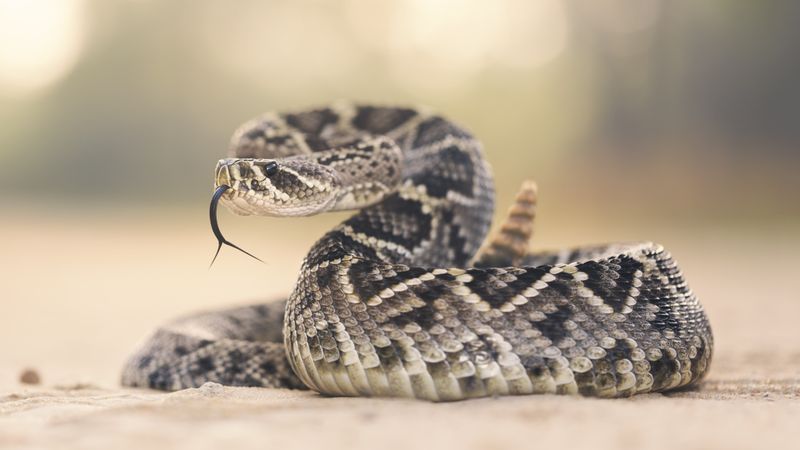
Here is a fun bit of trivia that might make you watch your step: Arizona has 13 rattlesnake species, more than any other state. Every single one is venomous.
And October happens to be one of the top months for running into them.
Your Arizona Garden Changes Every Week. Your Plan Should Too.
Gardening in Arizona changes quickly throughout the season. Every Friday you’ll receive a simple weekly plan showing exactly what to plant, prune, fertilize, harvest, and protect so you never miss the right timing.
Why fall? During summer, rattlesnakes mostly move at night to avoid the brutal heat.
Once temperatures ease, they shift to daytime activity, hunting for one last meal before heading to shared winter dens. That timing lines up perfectly with the weekends when hikers flood local trails.
Homes that back up to washes, rocky slopes, or open desert may see more visitors. Snakes often rest in shady spots under shrubs, along block walls, or beneath patio furniture.
Keep an eye out before you reach into ground cover or step over logs.
If you hear that famous buzz, freeze for a second, find the snake, and calmly back away. Giving it space is the smartest move, since most bites happen when people try to handle or move one.
Around the yard, trimming low brush and cutting back on rodent-friendly clutter can make the property less appealing. Wear sturdy shoes outdoors and use a flashlight at dusk.
4. Arizona Coral Snake
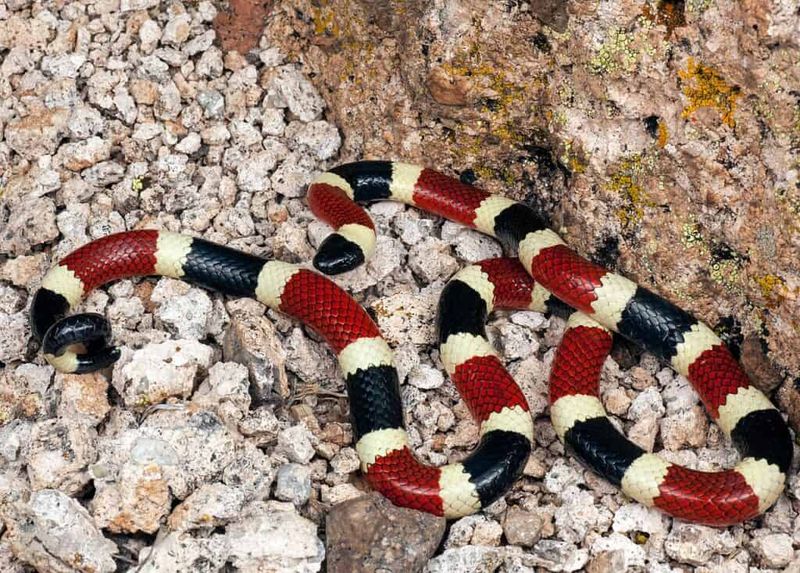
“Red touches yellow” is the start of an old rhyme that desert kids still learn. It points to one of Arizona’s most colorful and secretive residents, the Arizona coral snake.
Small and slim, it rarely grows longer than a pencil and a half.
You will find this snake across much of southern Arizona below 6,000 feet. It spends most of its life underground or hidden under rocks and leaf litter.
When it does come out, it tends to move at night or around dawn and dusk.
Mild fall evenings keep it moving until colder weather sends it deeper below ground for winter. Look for bands of red, yellow, and black that wrap completely around the body, with red bands touching yellow ones and a black snout.
The venom is neurotoxic, which means it may disrupt how nerves and muscles work. Bites are rare because this snake is shy and has a tiny mouth.
Most cases involve someone picking it up.
So admire it from a distance and never handle it, no matter how pretty those stripes look. Teaching children to leave all banded snakes alone is a simple rule that keeps everyone safe.
5. Gila Monster
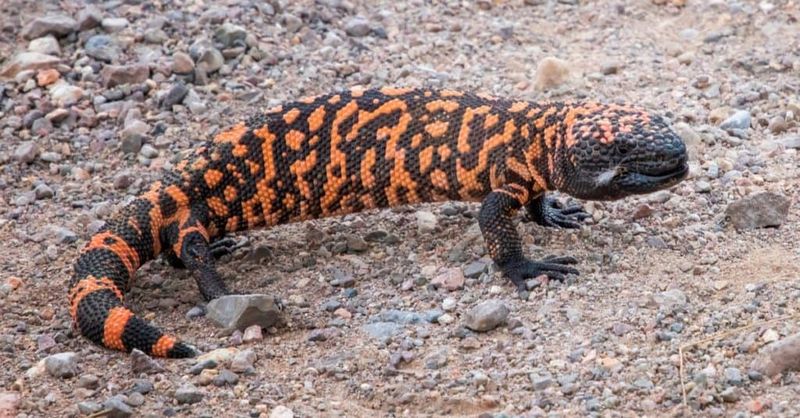
Few creatures look as much like a living beaded handbag as the Gila monster. Its chunky body is covered in bumpy scales patterned in black with orange, pink, or yellow.
It is Arizona’s biggest native lizard and the only venomous lizard in the United States.
Spotting one is a real treat, because these reptiles spend most of their lives underground. In fall, they usually come out during mid-morning and late afternoon.
As October winds down, surface activity drops off, and many settle into burrows by early November.
Gila monsters are slow and calm unless someone bothers them. Instead of striking like a snake, they grip and chew, working venom into the wound.
The result is intense burning pain and swelling that needs medical attention.
Did you know? These lizards are protected by state law, so harming or collecting one is not allowed.
They also store fat in their thick tails, letting them go months between meals.
If one wanders through your yard, keep pets and kids back and let it amble on its way. Snap a photo from a safe distance, and enjoy the bragging rights of seeing a true desert celebrity.
6. Tarantula Hawk Wasp
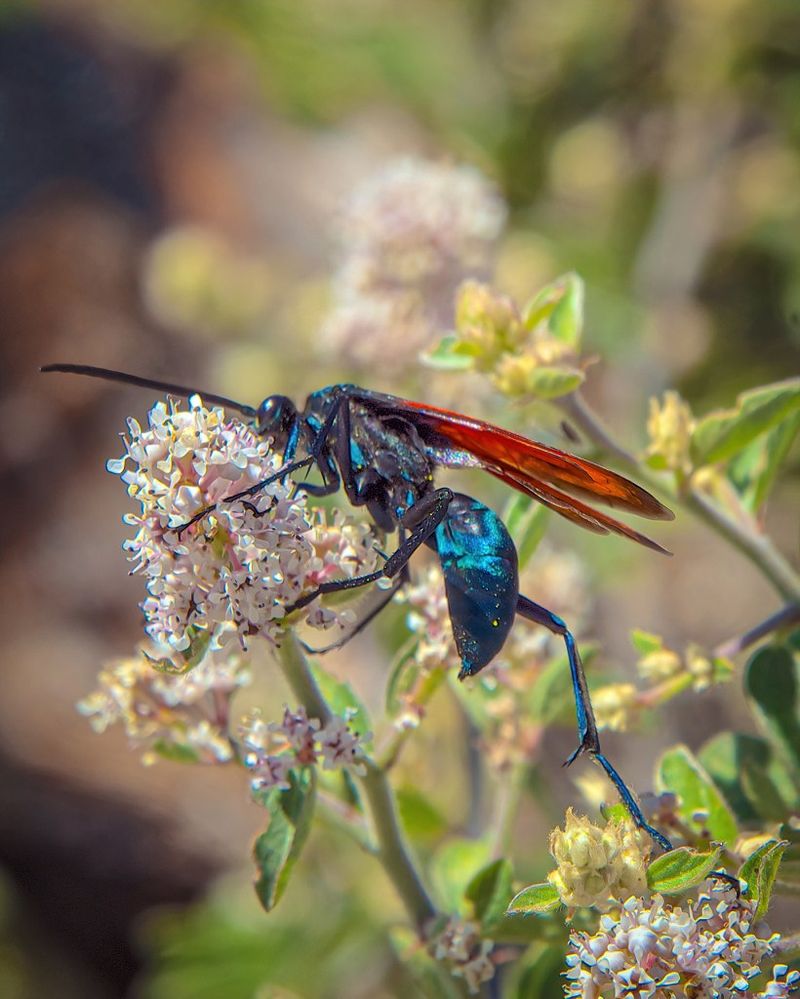
Imagine a wasp nearly two inches long, flashing metallic blue-black and bright orange wings. That is the tarantula hawk, and once you see one, you will not forget it.
It looks like something straight out of a sci-fi movie.
Summer is peak season, especially July through September, but September and October still bring plenty of sightings. During this time, females are busy hunting tarantulas, which also roam more in fall.
Their life cycle is wild and a little creepy.
A female stings a tarantula to paralyze it, then drags the spider into a burrow. She lays a single egg on it, giving her future larva a ready-made meal.
Meanwhile, adults sip nectar, so you may see them on milkweed, mesquite blooms, and other desert flowers.
Here is the reassuring part. Tarantula hawks are not aggressive toward people and usually sting only when grabbed or stepped on.
Still, their sting ranks among the most painful insect stings anywhere, often compared to an electric jolt.
Give them room, avoid swatting, and wear shoes in flower beds. Pain from a sting tends to fade fairly fast, but seek care if you notice signs of an allergic reaction.
7. Arizona Stripetail Scorpion
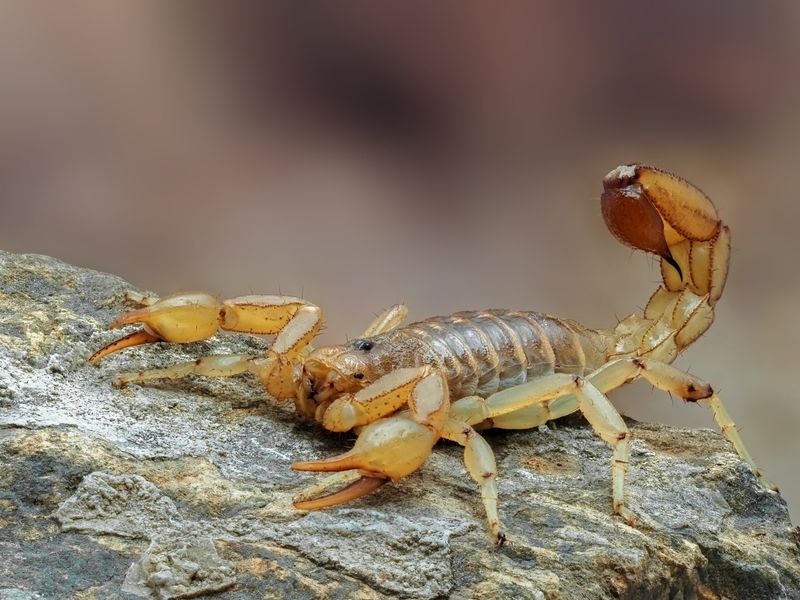
Not every scorpion deserves a panic attack. Most of the ones Arizona homeowners find under rocks and patio pavers are actually stripetail scorpions.
They are the most common scorpion around homes in the state.
You can tell them apart from bark scorpions with a closer look. Stripetails have tan bodies and thicker, sturdier tails marked with dark stripes underneath.
Their build is stockier, and they tend to stay on the ground rather than climbing walls.
All scorpions carry venom, but a stripetail sting is usually mild. Many people compare it to a bee sting, with short-lived pain and some swelling.
It does not typically pose a serious medical risk, though anyone with allergies should still watch for unusual reactions.
These scorpions hunt at night and spend daylight hours hiding under rocks, woodpiles, and yard debris. Warm fall evenings keep them active, so October gardening can turn up a few surprises.
Learning to identify them can save you a lot of worry and help you react calmly. To keep numbers down, move firewood away from the house, rake up leaf piles, and avoid stacking rocks against walls.
Gloves are your best friend when tidying the yard.
8. Desert Centipede
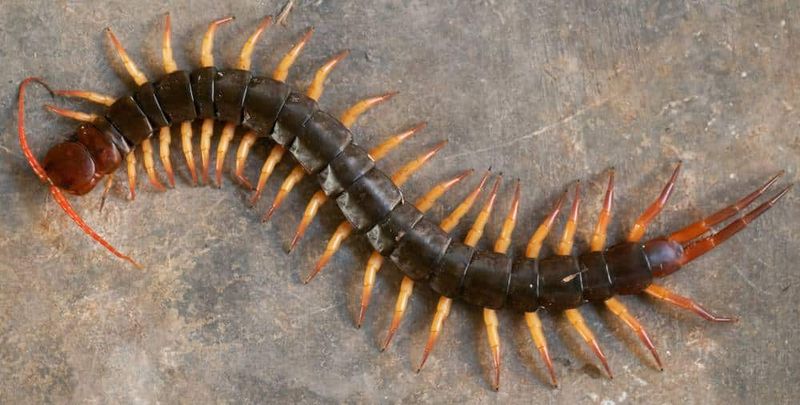
Lift a damp flowerpot in an Arizona yard and you might meet a creature that seems to have too many legs. The giant desert centipede can reach up to 8 inches long.
Its bold colors and speed make it one of the most startling finds around the house.
Each body segment carries a pair of legs, and the front pair works like tiny fangs. Those structures deliver venom that helps the centipede overpower insects, small lizards, and other prey.
For people, a bite usually means sharp pain and swelling.
Centipedes love dark, moist hideouts. Think under pots, irrigation boxes, stones, mulch, and leaf litter.
After a wet fall evening or a heavy watering session, they may roam more freely.
Campers and hikers run into them often, especially when sleeping bags or shoes sit out overnight. At home, they sometimes sneak indoors through gaps under doors.
Fixing leaky drip lines and keeping mulch a few inches from your foundation can make the yard less attractive to them. Shake out shoes, gear, and gloves before use.
If a bite causes strong swelling or lasting pain, check in with a medical professional to be safe.