8 Native California Plants That Add Winter Color To Front Yards
While much of the country waits out winter under gray skies and snow, California’s native plants are just getting started.
Winter rains wake up hillsides across the state, and many local shrubs answer with flowers, berries, and fresh green leaves right when you’d least expect it.
Hummingbirds know this better than anyone. Some even nest here in midwinter, timing their families around blooms that open when the days are shortest.
Your front yard can join the show, too. Instead of bare dirt and a tired lawn, picture scarlet berries, pink bells, blue blossoms, and silvery tassels swaying by the front walk, all from plants that need little water once they settle in.
A few of these picks might surprise even seasoned gardeners. Which one deserves a spot by your front door before the next storm rolls in?
1. Toyon
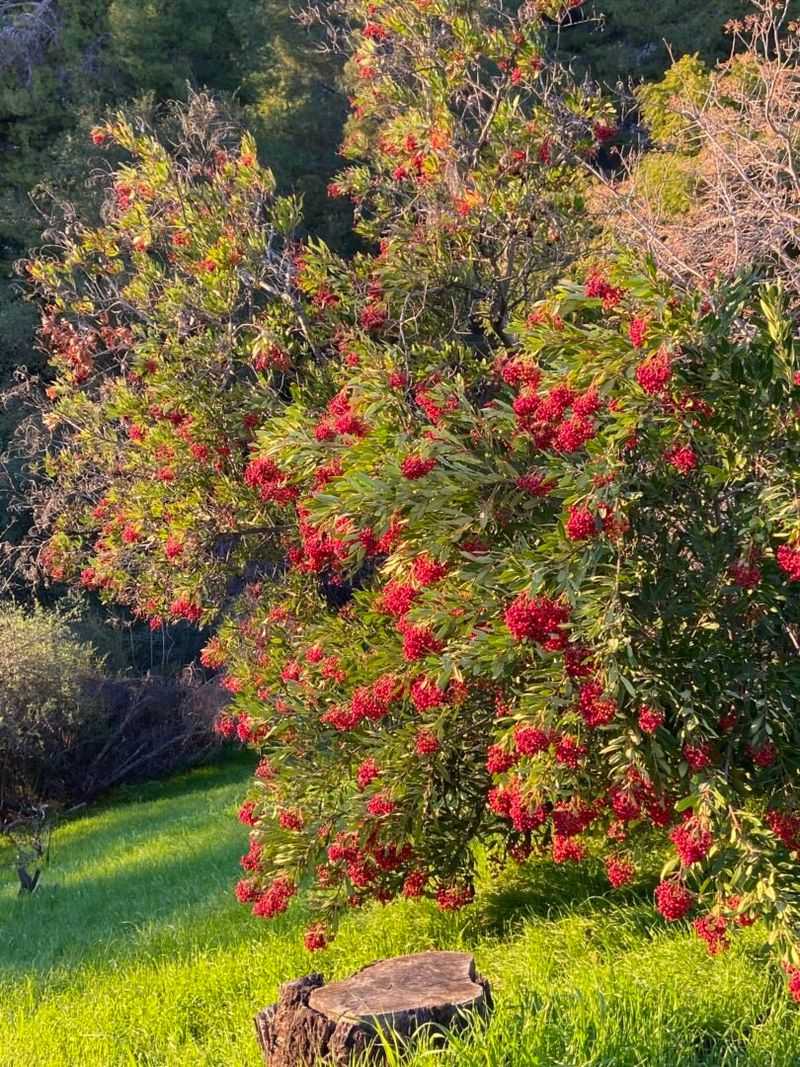
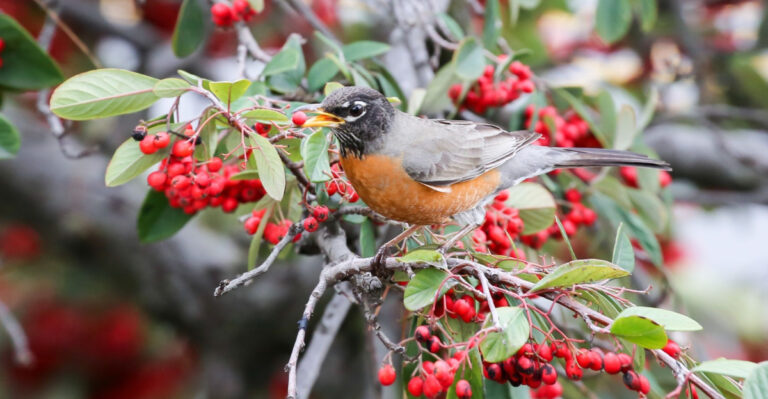
Cedar waxwings and robins can strip a loaded toyon in an afternoon, and honestly I can’t blame them. Those scarlet clusters glow against glossy leaves like someone strung tiny holiday lights across a shrub.
Also called Christmas berry or California holly, Heteromeles arbutifolia is an evergreen shrub or small tree. Plants usually reach 8 to 15 feet tall, though older ones in good spots can climb past 20 feet.
Small white flowers appear in early summer, and bees swarm them happily for several busy weeks. The berries ripen through fall and often hang on from November into January if hungry birds allow it.
Toyon handles full sun or part shade, and it tolerates clay as long as water drains away eventually. Once established after two or three years, it needs little summer water beyond an occasional deep soak.
Winter is a smart planting window, since seasonal rains help new roots settle in before the dry months. Dig a hole as deep as the root ball, water well, then mulch lightly without burying the stem.
One caution matters for families with curious kids, because raw berries contain compounds that can make people sick. Native peoples traditionally cooked them first, but I simply leave the fruit for the birds to enjoy.
Toyon makes a handsome informal hedge along a sidewalk, and it also screens a busy street nicely. Prune lightly in late winter after the birds finish, shaping branches without shearing the plant into a box.
2. Manzanita
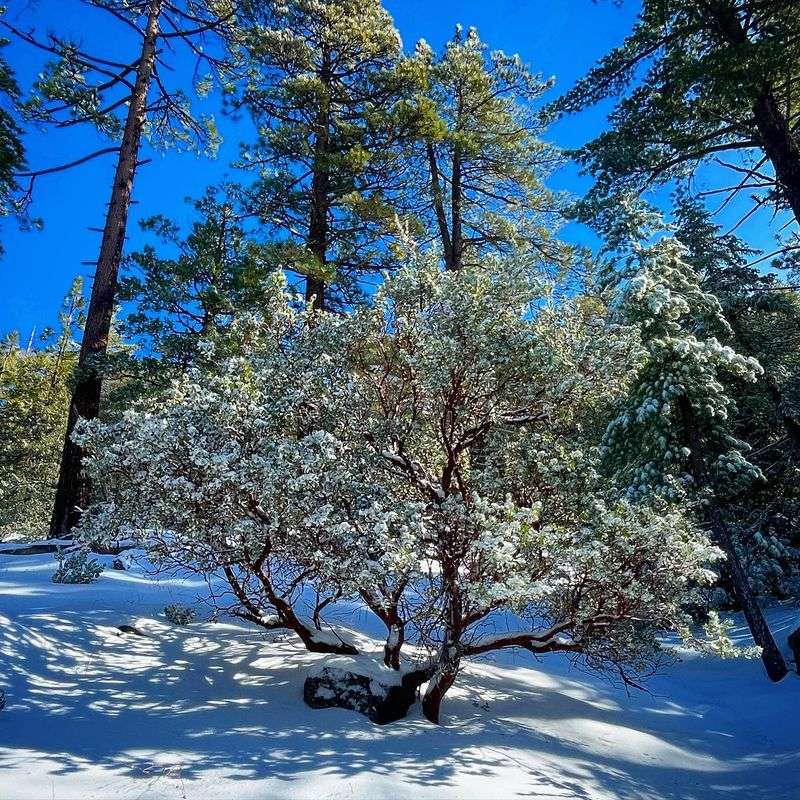
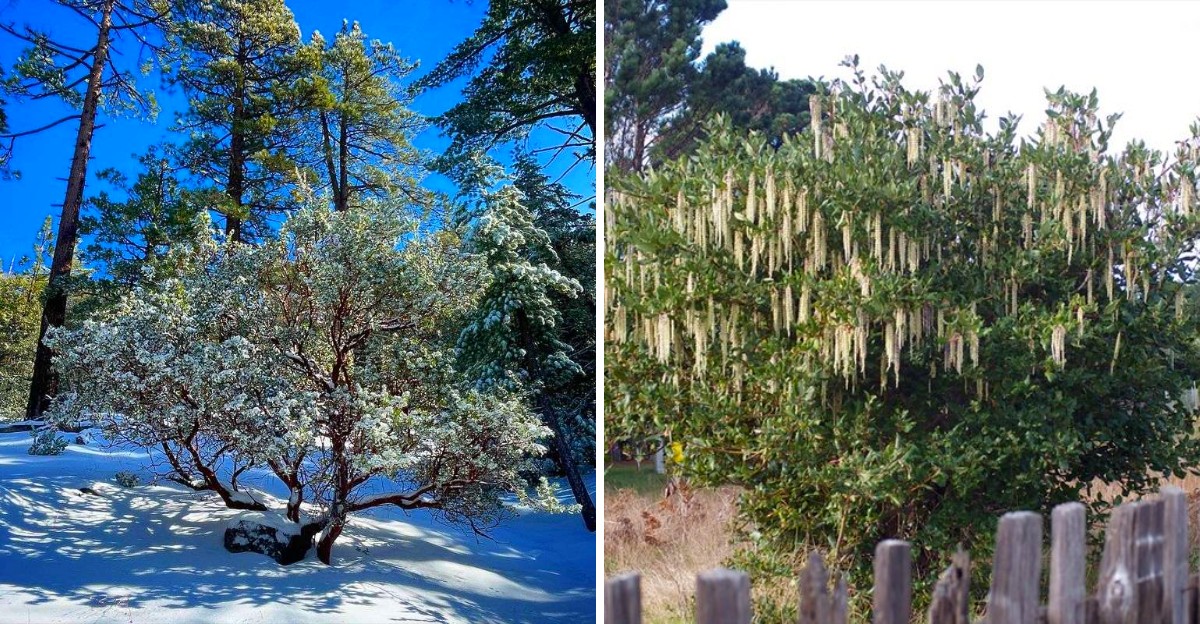
Run your fingers along a manzanita trunk and you’ll feel bark as smooth and cool as polished wood. That twisting mahogany frame looks sculpted, and in winter it wears clusters of tiny dangling bells.
Manzanita means little apple in Spanish, a nod to the small reddish fruits that follow the flowers. Roughly 100 species and subspecies of Arctostaphylos grow in the wild, and most are found nowhere else on Earth.
Blooms usually open between December and March, in shades running from snowy white to soft blush pink. Anna’s hummingbirds and early native bees visit them eagerly when few other flowers are open nearby.
Sizes vary wildly, so read the tag carefully before you choose a spot near your walkway. Low forms like ‘Emerald Carpet’ hug the ground, while ‘Howard McMinn’ grows into a rounded shrub around six feet.
Full sun and fast drainage keep manzanitas happy, and heavy clay can cause trouble without some extra care. Plant them on a slight mound if your soil stays soggy after winter storms roll through.
Summer water is the most common mistake, since warm wet soil invites root rot in these dry-loving shrubs. After the first year or two, many established plants need only occasional deep watering during long heat waves.
I wouldn’t necessarily say manzanitas are fussy, but they do resent being moved once they settle in. Choose a permanent home and let fallen leaves serve as natural mulch underneath the spreading branches.
3. Hummingbird Sage
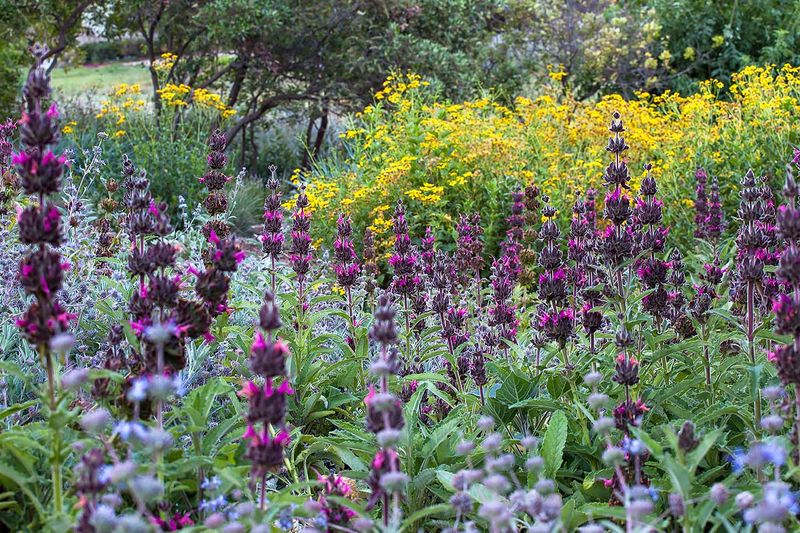
Brush past a patch of hummingbird sage and a fruity, spicy scent rises from the sticky leaves. Late winter brings stalks of magenta flowers stacked in tidy whorls, and hummingbirds claim them fast.
Salvia spathacea is a low perennial that spreads slowly by underground stems to form a leafy carpet. Its wrinkled, arrow-shaped leaves stay green most of the year, especially with a little shade and occasional water.
Flower spikes typically stand one to three feet tall, starting in late winter and continuing into late spring. Each bloom sits inside a reddish bract, so the color lingers even after individual flowers fade away.
I can see why gardeners love this plant for tricky spots under trees where grass sulks. It naturally grows beneath oaks in the wild, so dappled shade suits it better than baking afternoon sun.
Water deeply every few weeks during dry months for the first year, then cut back once roots settle. Mature patches handle drought well, though they look fresher with an occasional summer drink in hotter inland areas.
After flowering, snip the brown stalks down to the leaves to keep the planting neat and tidy. Leave a few if you like, because small birds sometimes pick at the seeds later in the season.
Give each plant about three feet of space, since colonies widen gradually over several growing seasons. Pair it with ferns or coral bells for a soft woodland look near a shady front porch.
4. Ceanothus
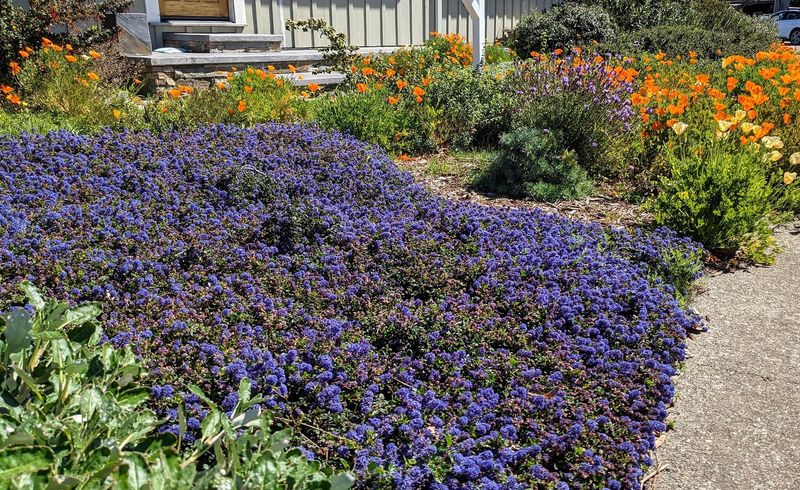
Few sights stop traffic quite like a ceanothus smothered in blue flowers on a gray February morning. Bees hum so loudly around those fluffy clusters that you can hear the shrub before you see it.
Often called California lilac, ceanothus is not related to true lilacs at all but belongs to the buckthorn family. Dozens of native species exist, ranging from low groundcovers to tall shrubs that resemble small trees.
Bloom time depends on the variety, though many start opening in late winter and peak in early spring. Colors range from pale powder blue to deep indigo, and a few selections bloom pure white instead.
‘Concha’ is a popular choice with dark blue flowers, and it tolerates heavier soils better than many relatives. ‘Yankee Point’ stays low and wide, making it handy for covering a sunny slope near the street.
Full sun and good drainage are the main requests, along with a firm hands-off attitude about summer watering. Frequent irrigation in hot weather shortens their lifespan, so group them with other drought-tolerant natives nearby.
I find it fascinating that some species have roots that host bacteria able to capture nitrogen from the air. Lean soil suits them fine, so skip the fertilizer bag and let those tiny partners handle feeding.
Some ceanothus live only ten years or so, which feels short but delivers plenty of spectacular springs. Prune lightly right after flowering ends, cutting only green growth instead of thick, older woody stems.
5. California Coffeeberry
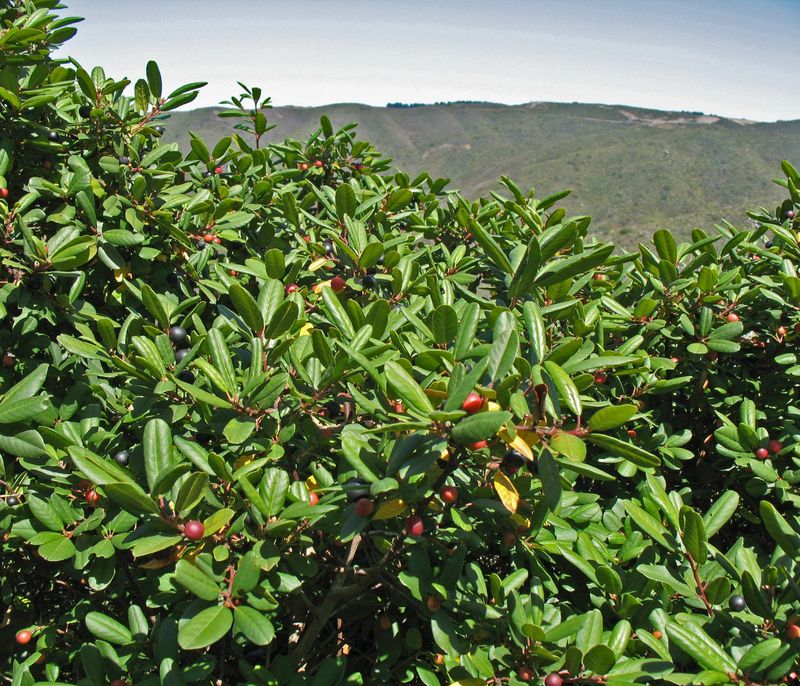
Coffeeberry got its name from fruits that ripen to a glossy black, looking a lot like roasted coffee beans. No, you can’t brew them, but the birds treat each ripe cluster like a breakfast buffet.
Frangula californica was once listed as Rhamnus californica, so older plant tags may still use that name. This evergreen shrub usually grows 4 to 10 feet tall with dense, leathery leaves that stay green all winter.
Berries start green, blush red, then darken to black from late summer into fall, often showing several colors at once. In milder areas, a few clusters may linger into early winter, alongside the steady deep green foliage.
Honestly, I value coffeeberry most as a dependable evergreen backdrop that makes brighter winter bloomers really pop. Plant it behind manzanita or currant, and those pink flowers suddenly look twice as vivid against the dark leaves.
Coffeeberry adapts to sun or part shade, and it handles clay or sandy soil better than many native shrubs. Inland gardeners should give it some afternoon shade, which keeps the leaves looking lush through hot summers.
Compact selections like ‘Mound San Bruno’ and ‘Eve Case’ fit small front yards without swallowing the walkway. ‘Eve Case’ stays around 4 to 8 feet, and it responds well to light shaping in late winter.
Deer usually nibble only lightly on coffeeberry, which makes it a smart pick for yards near open hillsides. Water occasionally during its first two summers, then let winter rains do most of the heavy lifting.
6. Chaparral Currant
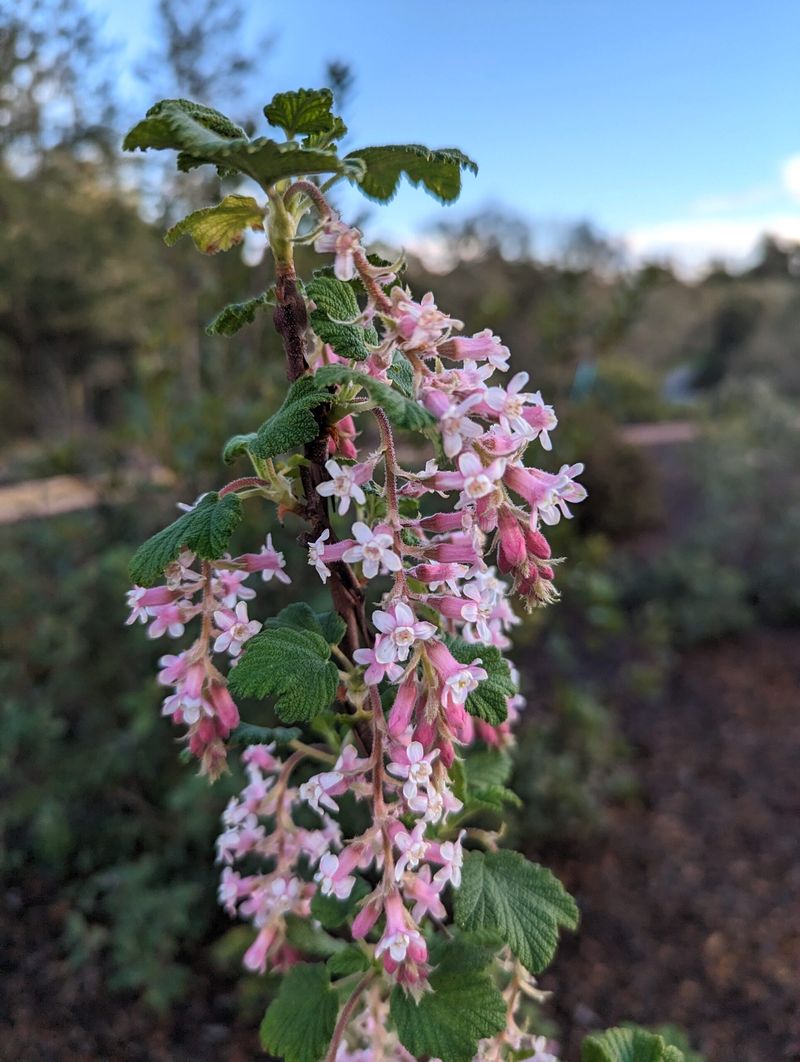
Chaparral currant often blooms as early as November, sometimes opening pink flowers before the first real rain arrives. For a hungry hummingbird in late fall, finding those dangling clusters must feel like winning a prize.
Ribes malvaceum is a deciduous shrub that usually grows four to six feet tall with fuzzy, scented leaves. Crush one between your fingers and you’ll catch a sharp, resinous smell that some people find surprisingly pleasant.
Leaves often drop in the summer heat, then return with autumn rains just before the flowers appear. That timing seems odd at first, but it matches the natural rhythm of our dry summers perfectly.
Flowers hang in drooping clusters of rosy pink, and they keep coming through winter into early spring. Small bluish berries follow later, covered in a light bloom, and songbirds happily gobble them up.
Plant it in full sun along the coast or partial shade inland, where afternoon heat can stress it. Well-drained soil matters most, because soggy roots in warm weather can lead to rot problems.
Skip summer irrigation once it’s established, since this tough shrub expects a long dry season every year. Its summer leaf drop is normal, so please resist the urge to rescue it with a hose.
Mix it with evergreen neighbors so the yard still looks full while the currant takes its summer break. Prune right after flowering, removing a few of the oldest stems to encourage fresh, vigorous growth.
7. Coast Silktassel
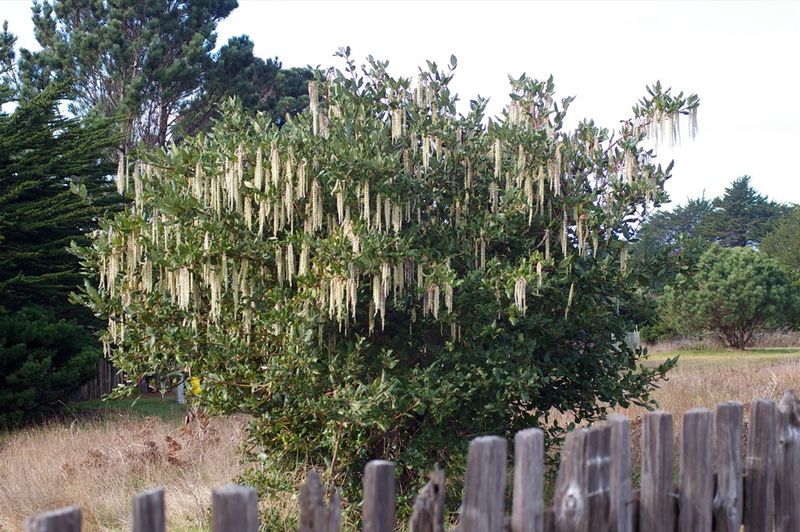
Long silvery tassels drip from coast silktassel in midwinter, swaying in the breeze like strings of frosted beads. Neighbors often stop to ask what it is, because nothing else on the block looks quite like it.
Garrya elliptica is an evergreen shrub native to coastal areas from Oregon down through central parts of the state. Its wavy, leathery leaves are dark green on top and fuzzy gray underneath, which adds a nice soft texture.
Male and female flowers grow on separate plants, and the males produce the longest, showiest catkins by far. The selection ‘James Roof’ is famous for tassels that can stretch close to a foot long.
Catkins usually appear from December through February, turning a plain hedge into a real winter conversation piece. Female plants make clusters of purple-gray berries afterward, though you’ll need a male nearby for fruit to form.
Most plants reach eight to twenty feet tall, so give them room or use them as a tall screen. Light pruning after the catkins fade keeps the shape tidy without sacrificing next winter’s tassel show.
Near the coast, full sun works well, but inland gardens should offer afternoon shade and some summer water. Good drainage is important, and established plants handle dry spells better once their roots spread wide.
I’m often struck by how this shrub looks best just when the rest of the garden takes a rest. Plant one near a window, and you’ll enjoy those shimmering tassels from a warm spot indoors.
8. Fuchsia Flowered Gooseberry
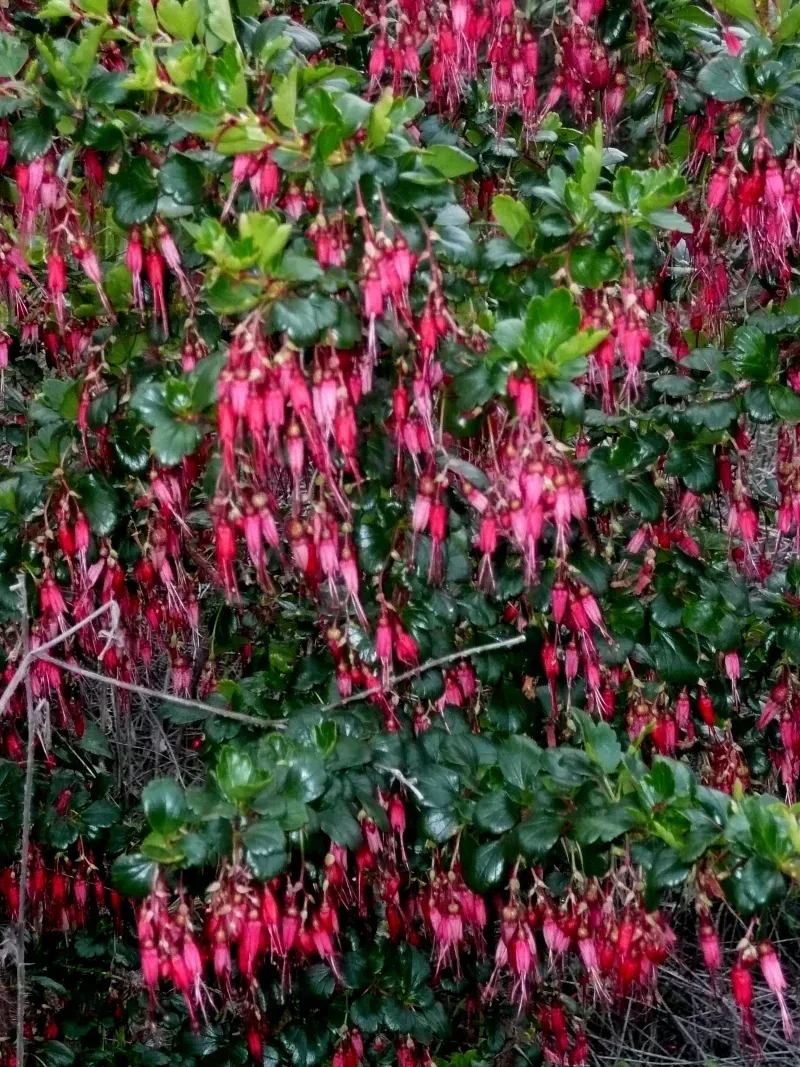
Fuchsia-flowered gooseberry hangs crimson flowers from its arching branches, each one shaped like a tiny dangling lantern. Hummingbirds treat those blooms like a private snack bar, and they’ll chase rivals away all winter.
Ribes speciosum grows naturally along the central and southern coast, often in shady canyons and coastal scrub. Long red stamens poke out from each blossom, giving the flowers a delicate, almost fringed look up close.
Blooms usually begin in January and can continue into spring, right when Anna’s hummingbirds are raising their young. Glossy leaves emerge with the winter rains, making the shrub look lush during the coolest months of the year.
Watch your hands, because the stems carry sharp spines and the small red berries are bristly too. Place it a few feet back from paths, or use it as a natural barrier along a fence.
Partial shade suits this plant best, especially inland, though coastal gardeners can grow it in brighter sun. Well-drained soil keeps roots healthy, and it adapts to clay if water doesn’t pool for long.
Like many native currants, it often drops leaves in late summer and rests until cooler weather returns. Skip regular summer watering once established, because extra moisture during dormancy can invite serious root trouble.
You might find it hard to believe, but this spiny shrub becomes one of the most charming winter bloomers around. Plant one where you can watch hummingbirds from your doorstep, and winter mornings get a lot more fun.