Illegal Plants Minnesota Gardeners Keep Growing By Accident Could Bring Fines Before The First Bloom
A county inspector can order weeds removed from your yard, then add the cleanup bill to your property taxes. That rule comes straight from the Minnesota Noxious Weed Law, and it applies to quiet backyard gardens too.
Some listed plants were once sold as pretty ornamentals, and a few still sneak in through seed swaps. Birds and summer wind carry plenty more, dropping seeds quietly beside your tomatoes and bean rows.
I spent one July admiring a tall yellow beauty near my fence before learning it was on the list. You might notice a similar stranger in your own beds, looking innocent and acting like an invited guest.
Inspectors care most about stopping seeds, so trouble can arrive long before a single flower opens up. So which familiar faces in your Minnesota garden might be breaking state law without you knowing it?
1. Giant Hogweed
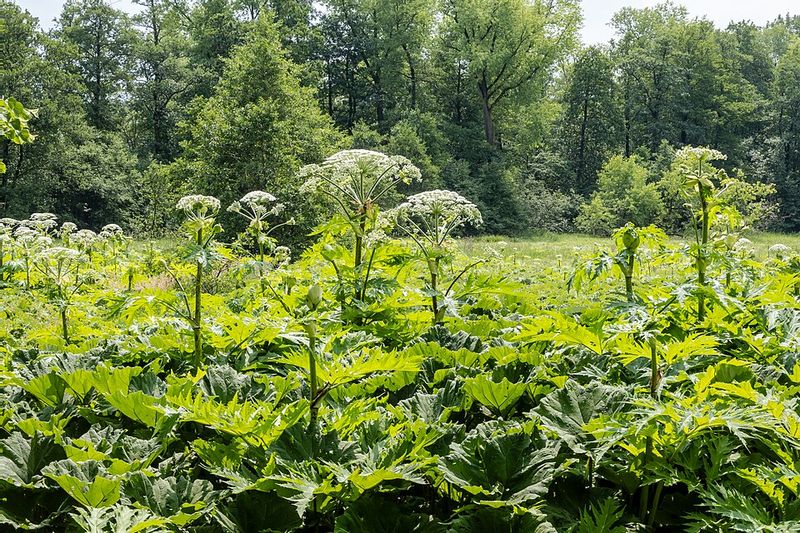
Few plants look as dramatic as a twelve-foot weed wearing white umbrella flowers up to two and a half feet wide.
Sadly, the sap of this giant can burn skin badly once sunlight hits the spot it touched.
Giant hogweed sits on the Minnesota Prohibited Eradicate list, so every root and stem must be removed by law.
Selling or planting it is banned, which matters if a friend ever offers you seeds as a curiosity.
It first came to North America as a showy ornamental, and that history explains plenty of garden escapes.
Seeds travel by water and wildlife too, so a plant can pop up where nobody planted anything. Native cow parsnip looks similar, which causes most of the confusion I hear about from fellow Minnesota gardeners.
Hogweed grows much larger, often reaching ten to fifteen feet, with leaves spreading up to five feet across.
Check the stems for purple blotches and coarse white hairs, since those clues separate it from lookalikes. Thick hollow stems measuring two to four inches wide are another strong hint you have found the real thing.
Please skip the hand pulling here, because sap on bare skin can cause blisters and lasting scars. Sap in the eyes may even harm vision, so goggles matter as much as gloves and long sleeves.
When you spot a suspect plant, photograph it from a distance and report it to Minnesota agriculture officials. Experts would much rather check a native cow parsnip than miss a real hogweed growing along your fence.
2. Grecian Foxglove
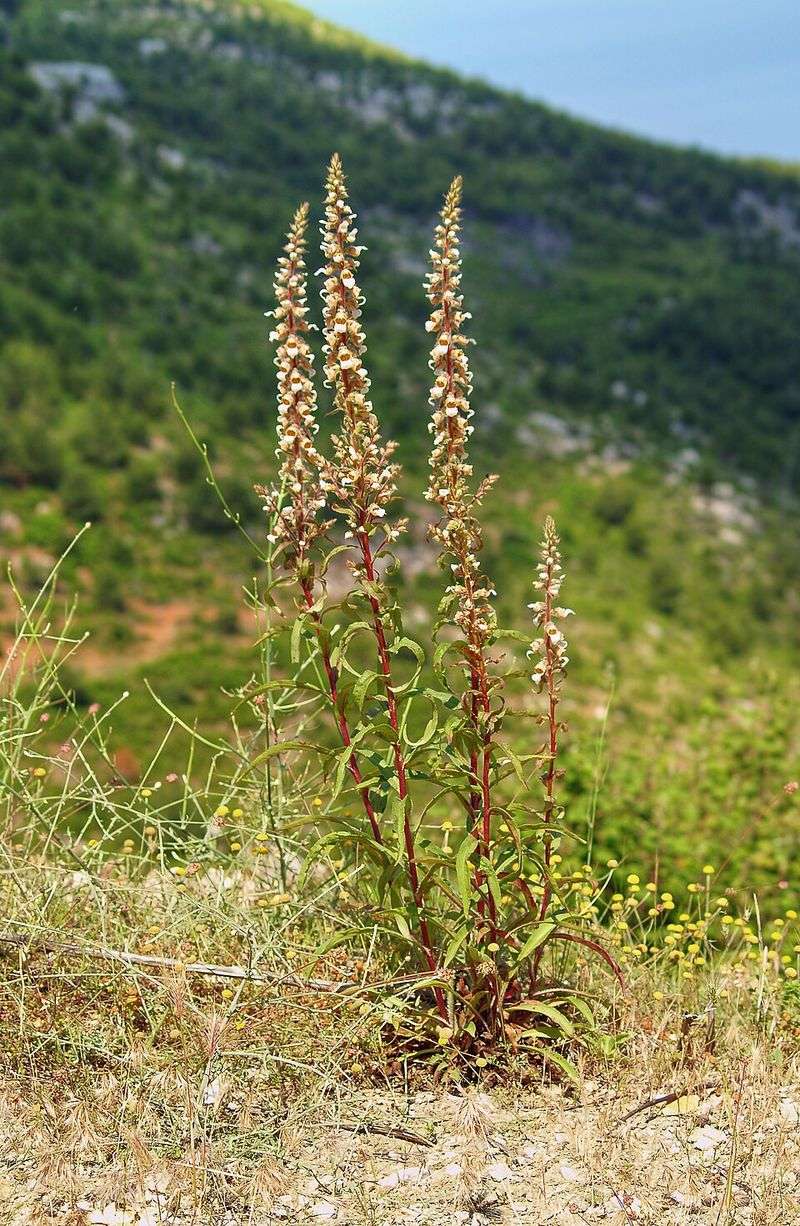
Creamy bells with brown-purple veins look like something from a cottage garden catalog, and that charm fools people. Grecian foxglove is a European ornamental that escaped gardens and now spreads along roadsides and field edges.
It holds a spot on the Prohibited Eradicate list, which means every part must go, roots included. Trading seeds or selling plants is also forbidden, even at a friendly neighborhood plant sale in spring.
I understand the mix-ups, because common garden foxglove is legal here and looks quite similar from afar. Look closely at the flower stalk, since the Grecian type has woolly hairs on its stems and calyxes.
During its first year, the plant sits low as a quiet rosette of pointed, oblong leaves. Later it sends up a single unbranched stalk two to five feet tall, crowded with pale tubular flowers.
Every part of this plant is poisonous to people and livestock, whether the leaves are fresh or dried. Its heart-affecting compounds make it dangerous if eaten, so wear gloves and long sleeves when handling it.
Rosettes are the easiest stage to handle, so dig them out before that tall flower stalk appears. Bag the plants for the trash instead of burning, since smoke from the pile can carry toxins.
If you are unsure about the pale foxglove by your mailbox, ask a county agricultural inspector for help. A quick identification today costs far less than chasing seedlings across your yard for several seasons.
3. Oriental Bittersweet
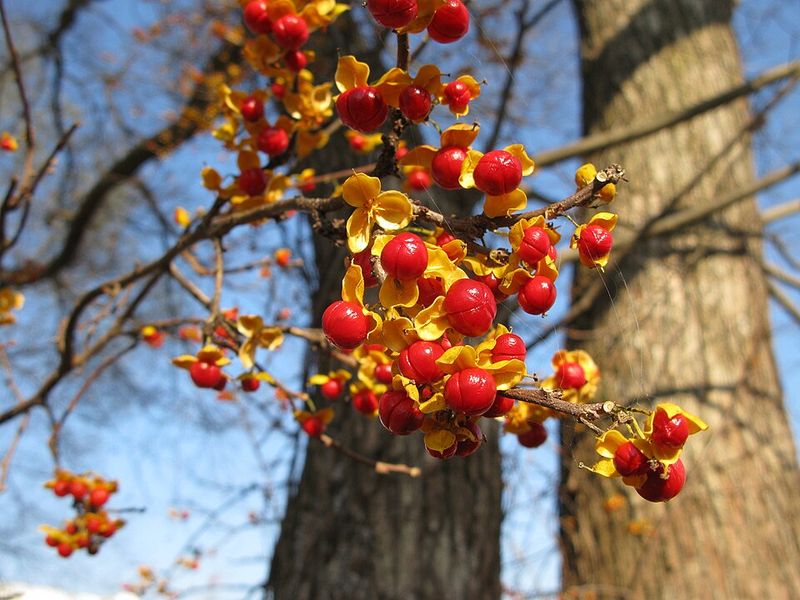
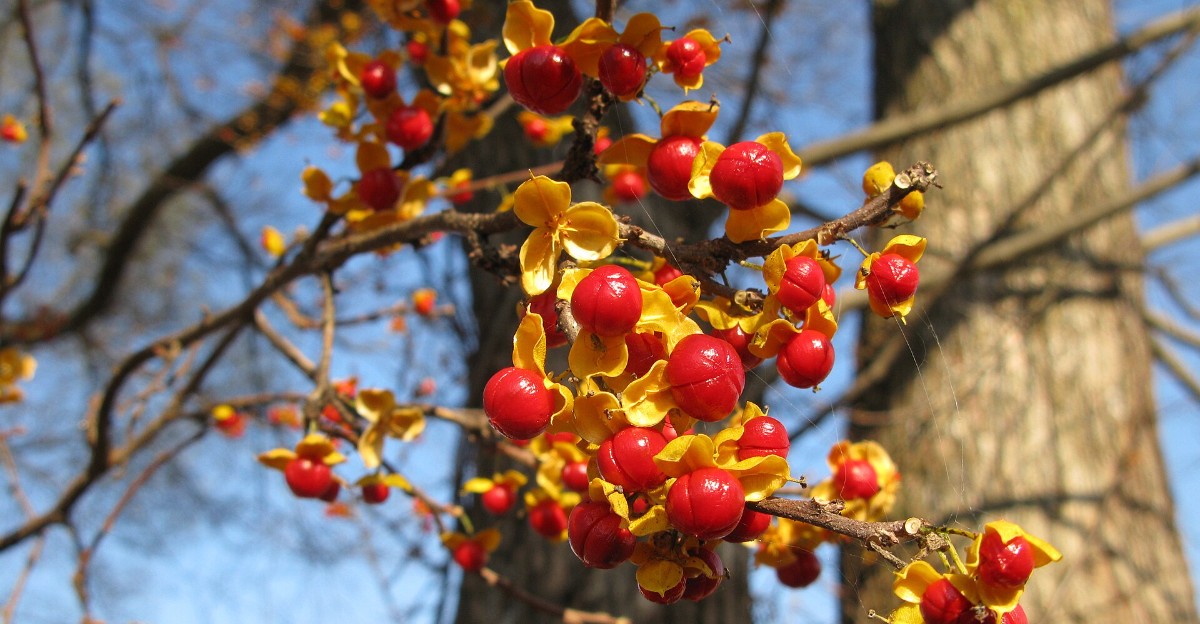
Those orange and scarlet berries look fantastic on a holiday wreath, which is exactly how this vine charmed decorators. Oriental bittersweet, now officially called round leaf bittersweet, was planted on purpose for years before anyone worried.
Today it sits on the Prohibited Control list, so owners must stop berries from ripening and spreading. Selling or moving the vine is banned too, and yes, that includes those pretty bundles of berry-covered branches.
Birds love the fruit and scatter seeds widely, which explains surprise vines appearing along shady back fences. Once established, the twining stems wrap around trees and can girdle trunks while shading out native plants.
Native American bittersweet looks similar, and I confess I mixed them up during my very first season. The trick is watching where fruit forms, because the invader carries berries along the stem at leaf joints.
American bittersweet bunches its fruit only at the branch tips, which makes a simple field test. Capsule color helps too, since the invader shows yellow husks while the native type leans orange.
Young seedlings pull up easily, especially after a soaking rain loosens the soil around their stubborn roots. Larger vines usually need cutting near the ground, followed right away by an herbicide on the stump.
Skip the store-bought bittersweet garlands unless you know the source, since berries can sprout wherever they fall. A native vine on a sturdy trellis gives you the same fall color with far less legal worry.
4. Tree Of Heaven
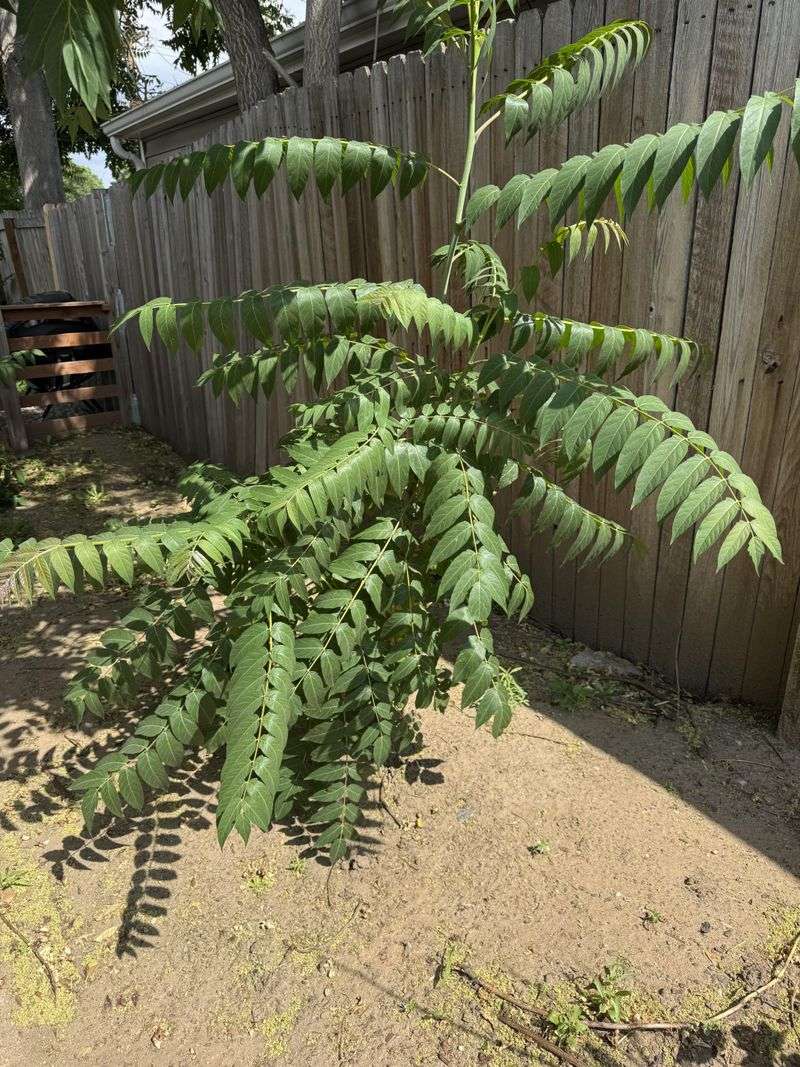
Crush one leaf from this fast-growing tree and you may smell rancid peanut butter drifting through the yard. That odd scent belongs to tree of heaven, a Chinese import with a lovely name and rude habits.
State officials list it as Prohibited Eradicate, so landowners must remove every single part, stubborn roots included. Selling or planting one is banned, which surprises folks who remember it as a tough city shade tree.
Root suckers can pop up as far as ninety feet from the parent, so it often arrives uninvited. A single female tree can also release hundreds of thousands of winged seeds that ride the wind.
Young saplings resemble native sumac or ash, and I have watched friends happily water one for months. Check the leaflets for small lobes near the base, plus smooth edges instead of the toothed sumac margins.
Leaves can stretch one to four feet long, carrying anywhere from ten to forty leaflets on each stalk. Roots also release chemicals that hold back nearby plants, which helps the tree form crowded stands.
Spotted lanternfly, a serious invasive insect, favors this tree as a host, which worries experts across the region. Removing the tree now means fewer welcome mats if that pest ever expands its range farther west.
Cutting alone usually triggers a flush of new suckers, so pair cuts with a labeled herbicide treatment. Wear gloves while working, since the sap bothers some people’s skin and the pollen can trigger allergies.
5. Japanese Honeysuckle
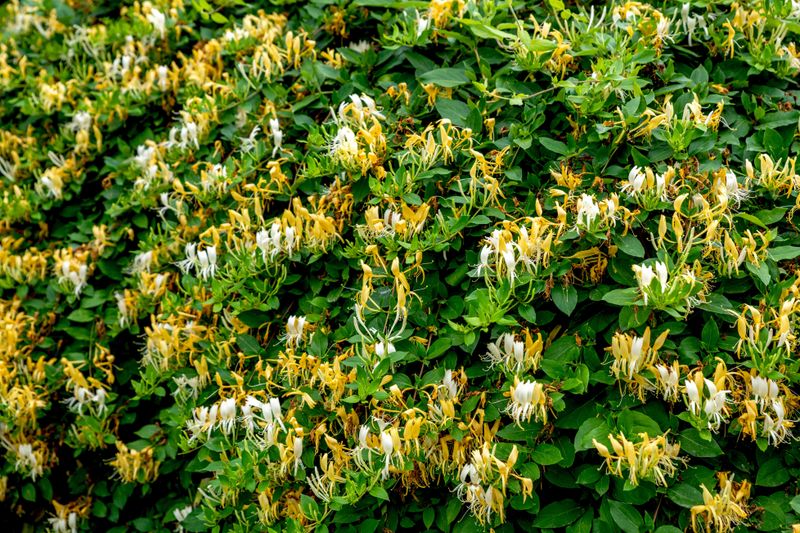
Sweet perfume on a June evening can make you forgive a vine almost anything, and Japanese honeysuckle knows it. Its paired flowers open white and fade to creamy yellow, so both colors often bloom side by side.
Minnesota placed this vine on its Prohibited Eradicate list, which means roots and stems must be removed. Planting or selling it is off limits, even if an old catalog still praises it for erosion control.
Years ago, the vine was sold widely for fragrance and quick cover, so older yards may still host it. Birds eat the glossy black berries in fall, then drop seeds into fresh beds and woodland edges.
Stems climb fifteen to thirty feet or sprawl into thick mats that smother low shrubs growing underneath. Heavy snow on those tangled vines can snap branches, a lesson many gardeners learn the hard way.
Look for oval leaves one to three inches long, arranged in opposite pairs along twining stems. Young leaves sometimes show lobed edges, which can make early identification a bit tricky for beginners in spring.
Native honeysuckles exist too, and many have flowers sitting above a pair of fused leaves at stem tips. Japanese honeysuckle carries its blooms in pairs along the stem instead, a handy clue for quick checks.
Pull small plants by hand, making sure the roots and runners come out along with the vine. Bigger tangles respond best when you cut stems near the base and treat each stump with herbicide.
6. Common Tansy
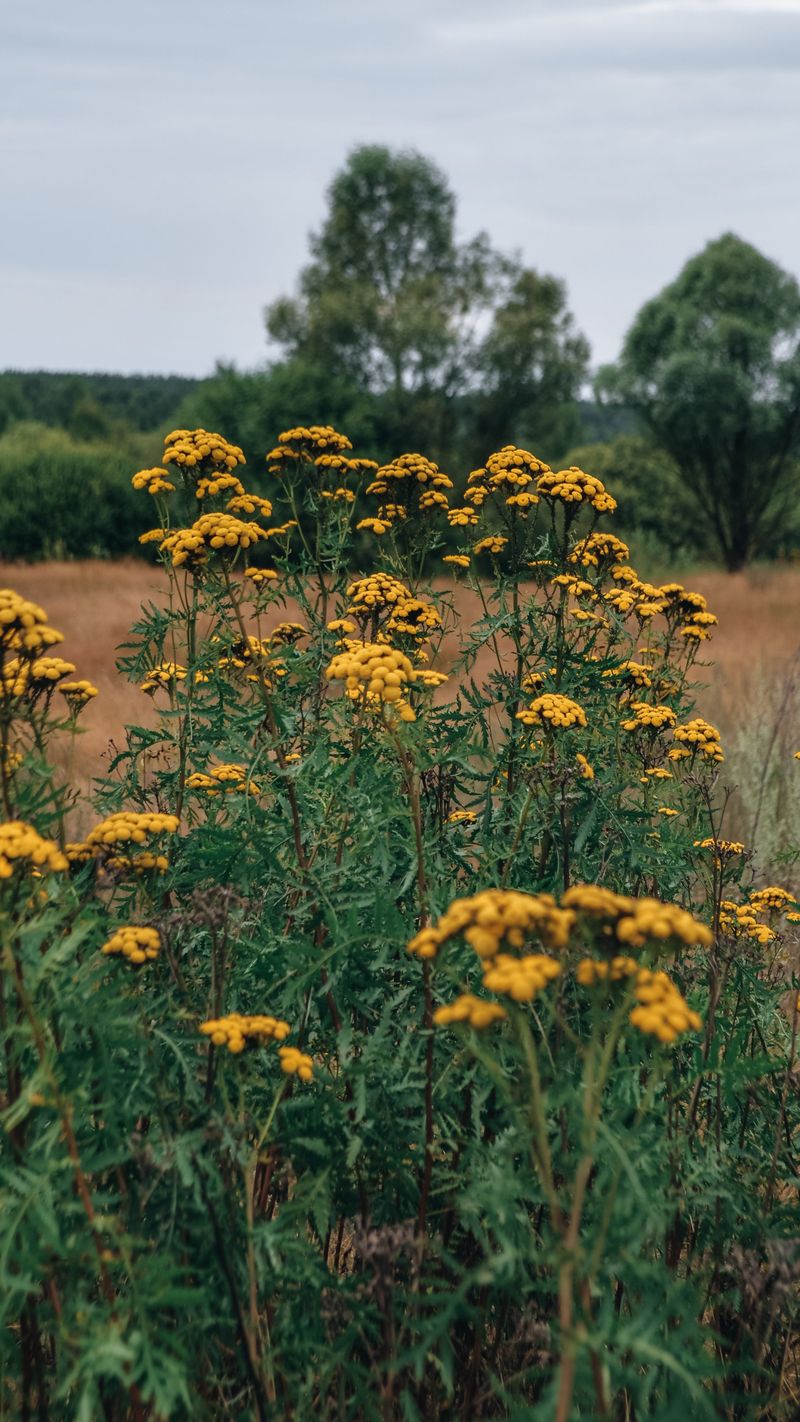
Bright yellow buttons with no petals look cheerful along a ditch, and that is how tansy wins hearts. Common tansy was the tall yellow beauty I once admired by my fence, until a county flyer corrected me.
It sits on the Prohibited Control list, so you must stop seeds from ripening and spreading. Moving or selling plants is banned too, which includes sharing divisions from an old herb garden.
Settlers brought tansy over in the 1600s as a medicinal and ornamental herb, and it stuck around for good. Old farmsteads and roadsides still hold thick patches that creep quietly into nearby flower beds each year.
Plants reach three to six feet tall, with reddish stems and fernlike leaves that look surprisingly elegant. Crush a leaf and you get a sharp medicinal smell, which makes identification fairly easy even for beginners.
Flowers appear from mid-July into September in flat-topped clusters, and brown seed heads hang on through winter. Those lingering heads keep dropping seeds, so leaving them up for winter interest is a costly mistake.
Tansy also spreads through underground rhizomes, so a small clump can widen faster than you expect. The plant is toxic if eaten by people or livestock, so keep curious kids and goats well away.
Wear gloves, then dig out small patches with as much root as possible before flowers form. For larger stands, clip flower heads in July and bag them, then plant native goldenrod or yarrow nearby.
7. Canada Thistle
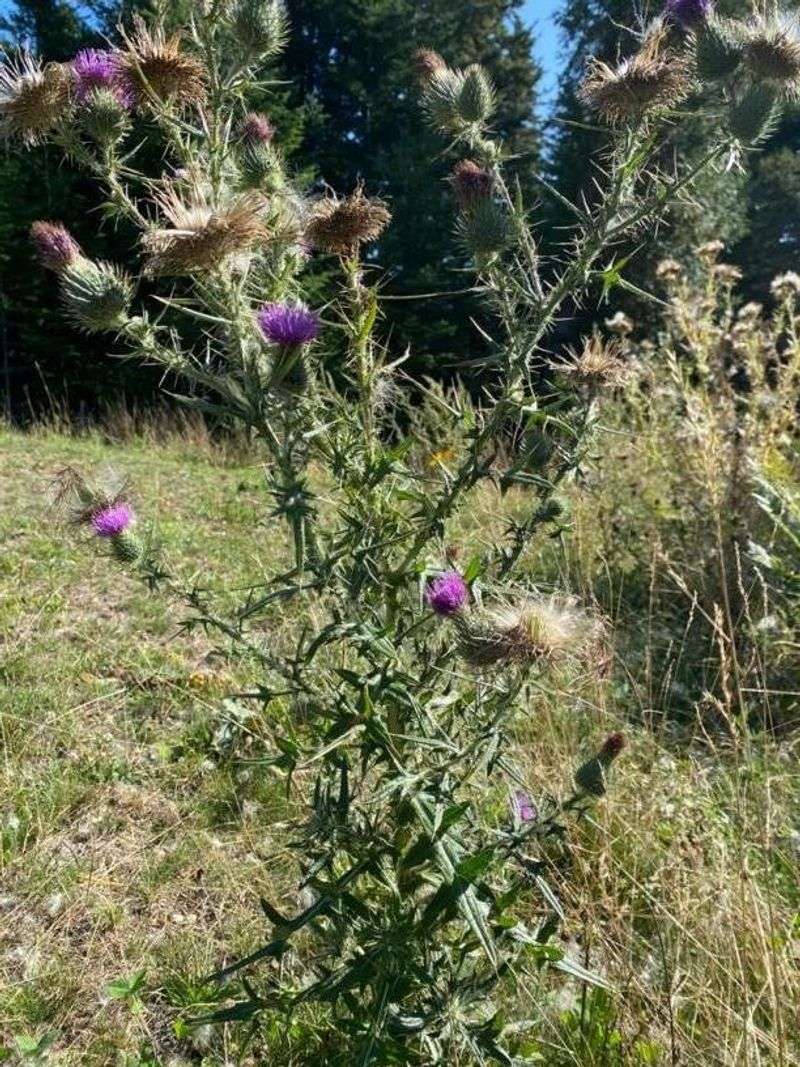
One prickly purple flower in the vegetable patch seems harmless, yet its roots may already stretch across the yard. Canada thistle roots can run eighteen feet sideways and fifteen feet down, which still amazes me.
Despite the name, this weed came from Europe and Asia, likely arriving in crop seed during the 1600s. Minnesota lists it as Prohibited Control, so landowners must keep it from setting and spreading seed.
Plenty of gardeners tolerate a small patch, figuring a few thistles cannot hurt anything very much at all. Trouble starts when those patches merge into dense stands that crowd out flowers and vegetables alike.
Look for lance-shaped leaves with spiny wavy edges, plus fairly smooth stems two to five feet tall. Small purple or pink flowers cluster at the top from July into August, then turn fluffy white.
A single shoot can produce up to 1,500 seeds, and some stay viable in soil for twenty years. That long memory explains why a cleared bed can suddenly sprout thistles after you till it.
Yanking stems often backfires, because broken root pieces can send up fresh shoots within just a few weeks. Instead, mow or cut plants repeatedly before flowers open, which slowly starves the roots of stored energy.
Many extension experts suggest targeted herbicide in spring and again in fall for heavy, stubborn infestations around the yard. Patience pays off here, since steady pressure over a couple of seasons usually wears this tough customer down.
8. Wild Parsnip
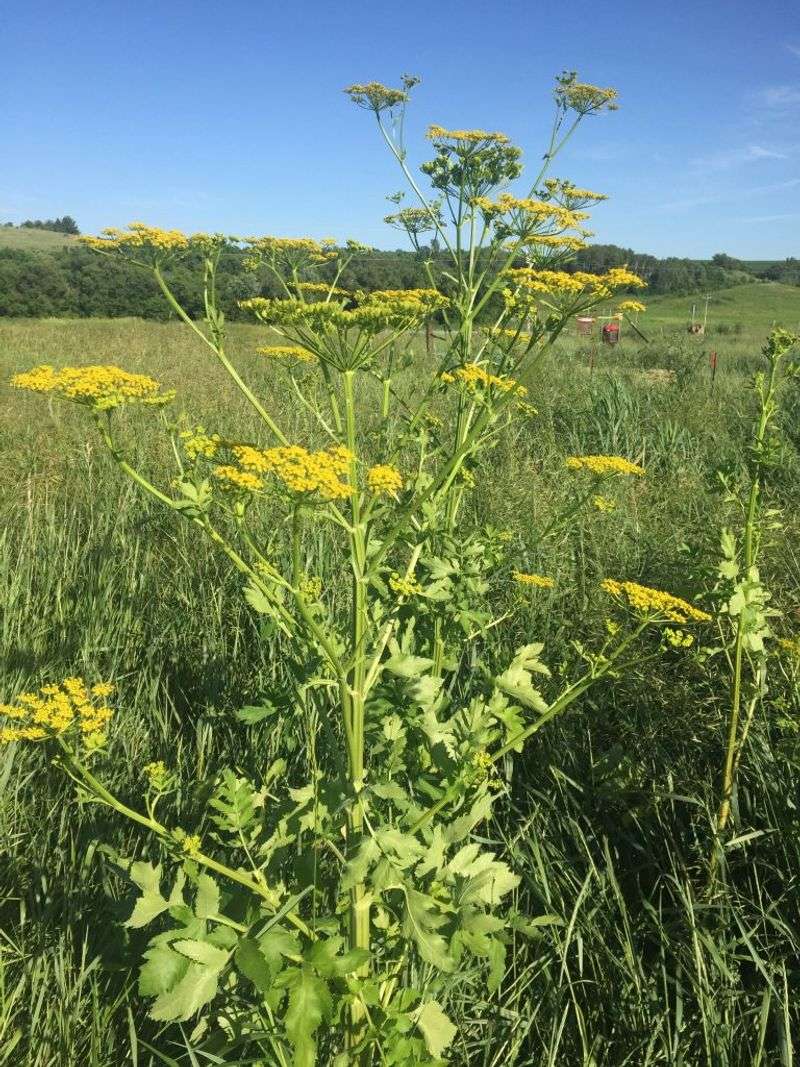
Lacy yellow flowers along the roadside look friendly, yet brushing past them on sunny days can hurt. Wild parsnip sap reacts with sunlight on skin, leaving painful blisters and dark marks that can linger for months.
This plant is the same species as the garden parsnip, gone wild after settlers carried it from Eurasia. Its long taproot even smells like the vegetable, which is a fun fact and a strange warning.
State rules list wild parsnip as Prohibited Control, so you must keep seeds from maturing and spreading. Seeds hop from ditches into gardens easily, and they can stay viable in soil for about four years.
During the first year it forms a low rosette, which is easy to miss among other leafy weeds. The next season it sends up a grooved hollow stalk reaching four to six feet, topped with flat yellow umbels.
People often confuse it with Queen Anne’s lace, but that lookalike carries white flowers rather than yellow ones. Leaves on wild parsnip are compound with toothed, egg-shaped leaflets, and blooms run from June through late summer.
Before tackling a patch, cover up with gloves and long sleeves, even on warm and sticky afternoons. If sap touches skin, wash it off quickly with soap and water, then keep that spot out of sunlight.
Cutting the root a couple of inches below ground with a sharp spade works well on rosettes. Try working on cloudy days or in the evening, and seek medical care if blisters ever appear.