8 Native Plants Georgia Law Says You Can’t Remove Without A Permit
Georgia passed a wildflower protection law back in 1973, and it still guards rare plants across the state today. Digging up the wrong blossom on public land without a permit can earn you a fine instead of a souvenir.
Some of these protected treasures hide in granite pools, while others hunt bugs in soggy coastal bogs for supper.
A few look so modest that most hikers stroll right past them without a second glance or a photo.
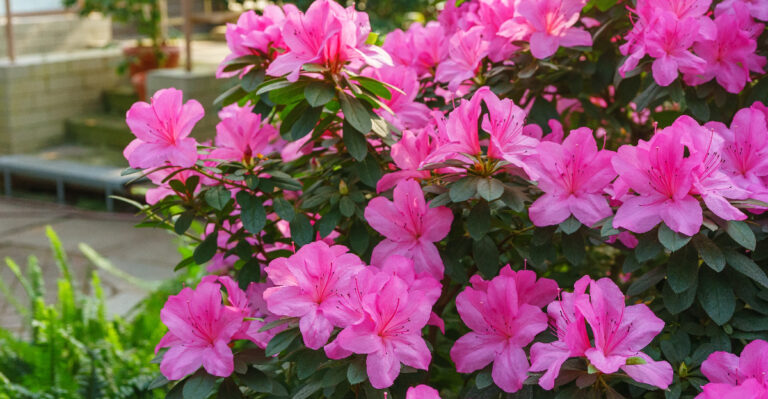
I have to admit, I once eyed a pink woodland bloom and wondered how it would look by my porch. You need to know the rules before your trowel ever touches a wild plant on someone else’s land.
Private landowners can usually decide what happens on their own property, though federal rules add extra wrinkles sometimes.
Some of the state’s rarest plants have special legal protection, and your own garden could play a part in helping them thrive.
1. Pink Lady’s Slipper
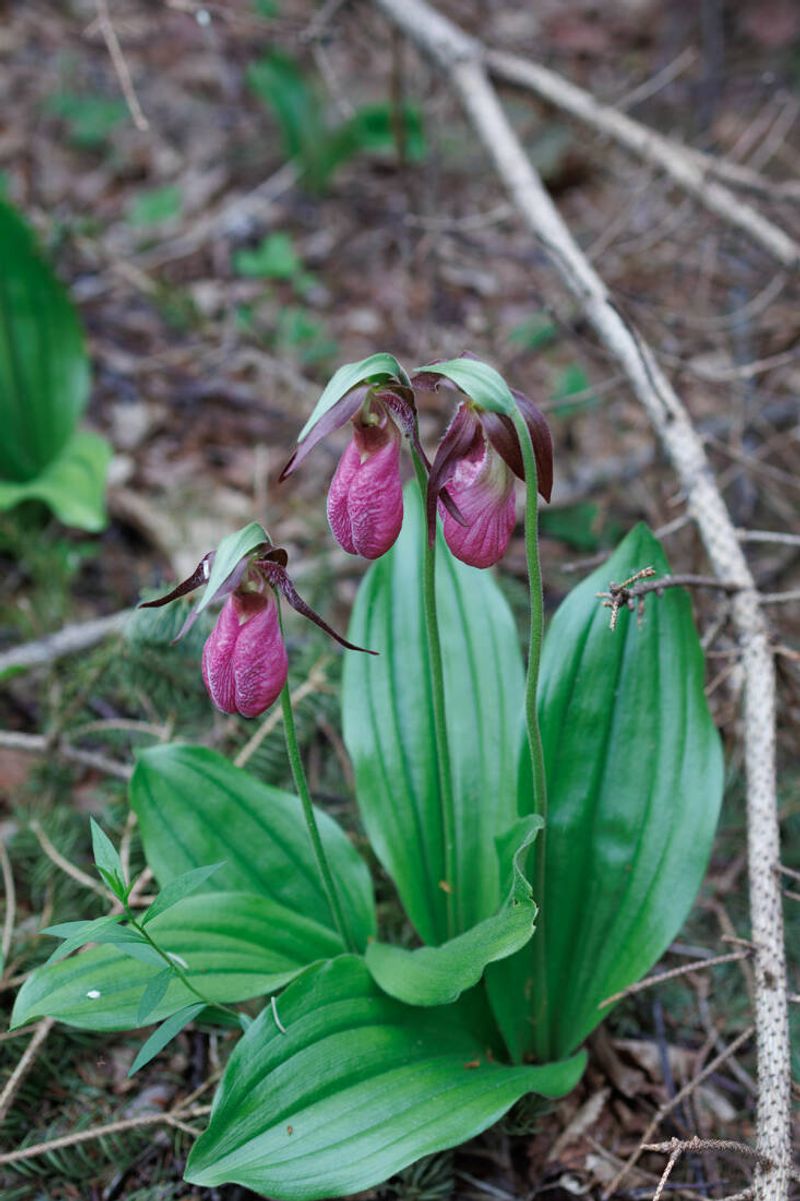
A puffy pink pouch dangling above two pleated leaves looks almost too fancy for a pine forest floor. I love how this orchid seems to blush in the dappled spring shade of oaks and pines.
Cypripedium acaule is classified as Unusual in Georgia, but that designation does not provide the same legal protection as the state’s Endangered, Threatened, or Rare classifications.
The Wildflower Preservation Act forbids taking protected plants from public land without a permit from state officials.
Its seeds are tiny as dust and need a special soil fungus to sprout and gain early nutrition. That partnership explains why dug-up plants usually fade within a year or two in ordinary garden beds.
Bees push into the pouch hunting nectar, but the flower offers none and simply tricks them into pollinating. Personally, I find that sneaky strategy hilarious, and it works well enough to keep colonies going for decades.
You will spot blooms from about April into May, mostly in dry, acidic woods with plenty of pine needles. Look but resist picking, since a single plant can take many years to reach flowering size in the wild.
If you crave one at home, seek nursery plants grown from lab-raised seed, though they remain tricky growers. Acidic, well-drained soil and light shade give them a fighting chance, along with patience and careful watering.
Better yet, protect the pine duff and leaf litter on your property where wild ones already pop up.
2. Pool Sprite
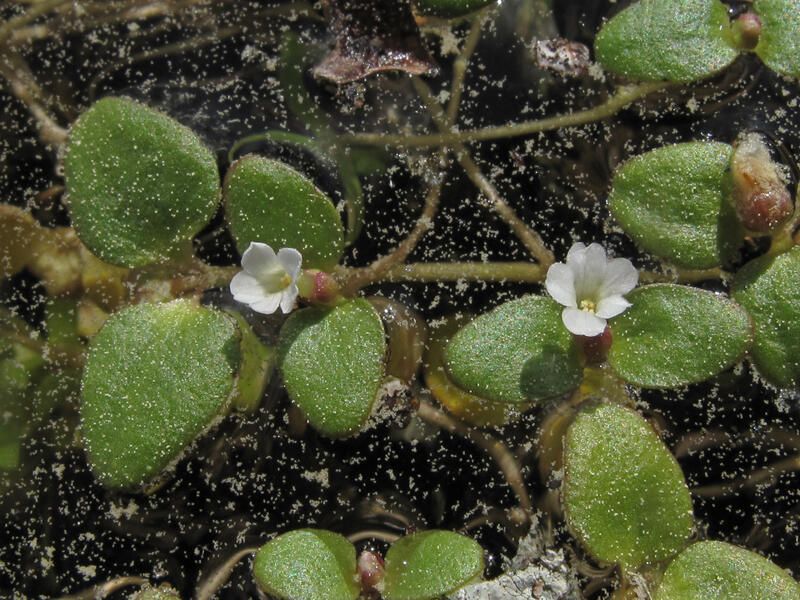
Blink and you could miss it, because this aquatic wildflower rarely grows taller than a couple of inches. Amphianthus pusillus lives in shallow rainwater pools carved into granite outcrops across the rolling Piedmont region.
Both state and federal agencies list it as Threatened, so its rocky homes receive serious legal attention.
Tiny white flowers open underwater and on floating stems, creating a sparkly show only botanists usually notice.
The whole life cycle races by in late winter and spring before the pools dry under summer heat. Seeds then rest in the thin soil, waiting patiently for cool rains to refill their little stone bowls.
I can’t imagine a pickier address, since these pools hold only a few inches of soil and water. A single stray footprint or bike tire can crush a whole colony in one careless afternoon outdoors.
Places like Arabia Mountain near Atlanta protect granite outcrop pools, and trails help visitors admire them safely.
Stay on marked paths and step around any dark, damp depressions holding water or green moss mats.
You cannot grow this one at home, and you should not try collecting it for an aquarium. Instead, your garden can borrow ideas from outcrops with native sedums and small grasses in gravelly, sunny spots.
Volunteer cleanup days on granite domes offer a hands-on way to help these tiny plants hang on. Honestly, I find picking up litter more rewarding once I know which tiny wonders live in those puddles.
3. Hairy Rattleweed
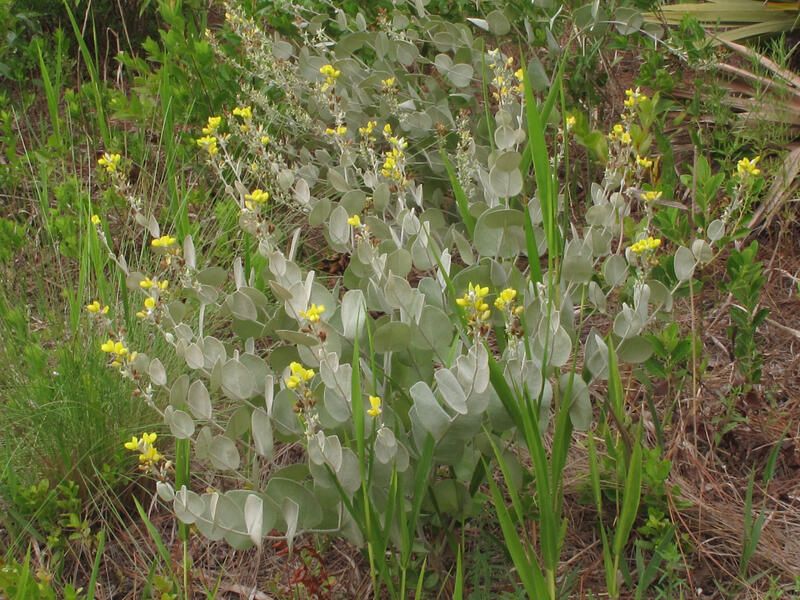
Silvery, fuzzy leaves make this rare wild indigo look like it wears a soft wool sweater year round. Baptisia arachnifera grows wild in just two southeast counties, Wayne and Brantley, and nowhere else on Earth.
Federal and state agencies list it as Endangered, giving it some of the strongest legal protection around.
Its species name means cobweb-bearing, a nod to the tangled hairs covering young stems and round leaves.
Bright yellow pea-shaped flowers appear in summer, and the dried seed pods truly rattle when the wind shakes them. I love how a plant this rare still has such a playful, noisy personality out in the flatwoods.
You will find it in sandy pine flatwoods where fire once swept through regularly every few years. Without burning or careful mowing, shrubs crowd in and shade the rattleweed until it slowly declines.
Much of its habitat sits on managed timber land, so foresters and conservation groups work together on protection. Prescribed fire and gentle site preparation help these clumps keep popping up between planted pine rows.
Gardeners elsewhere can enjoy its cousins, like blue wild indigo or yellow Baptisia tinctoria, from native nurseries. Both love sun and well-drained soil, and their deep roots shrug off dry spells once they settle in.
Please leave any wild rattleweed you spot right where it stands, even if seed pods look tempting.
Snapping a photo and sharing the location with state botanists helps scientists track this incredibly rare plant.
4. Georgia Rockcress
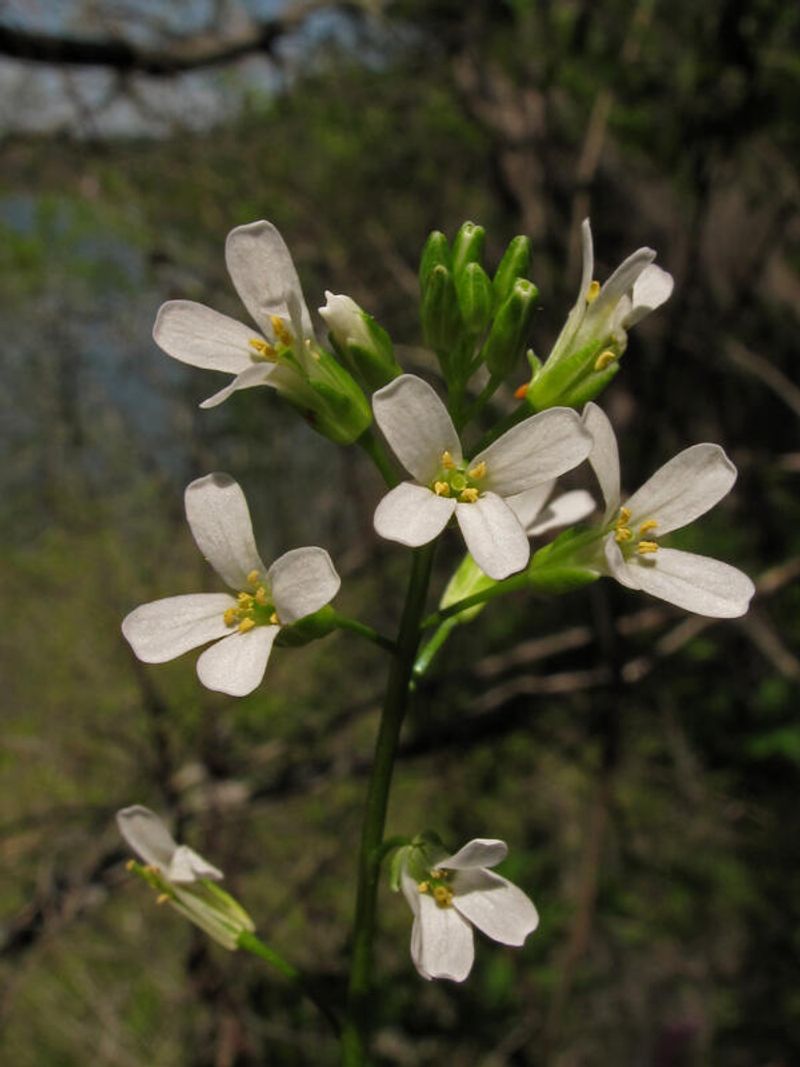
Clinging to steep river bluffs, this slender mustard family member waves small white flowers in early spring.
Georgia rockcress, now often called Boechera georgiana, earned federal Threatened status in 2014 after years of steady decline.
State law also protects it, so pulling it from public bluffs without a permit could land you in trouble. Plants form a low rosette of toothed leaves before sending up a wiry stalk with tiny four-petaled blooms.
It favors thin, rocky soil along rivers like the Coosa and Chattahoochee, often where limestone or marl peeks through. I like how it chooses the edgiest real estate, perched where few competitors can handle the slope.
Erosion and spreading invasive shrubs have squeezed it into a handful of scattered populations across the Southeast. Japanese honeysuckle and privet are major troublemakers, smothering open spots this plant needs for filtered sunlight.
You might notice blooms around March and April if you paddle or hike near protected river bluffs. Watch your footing, because trampling on loose slopes can knock rosettes loose and speed up erosion.
Home gardeners can help by pulling invasive privet and honeysuckle along creek banks on their own land.
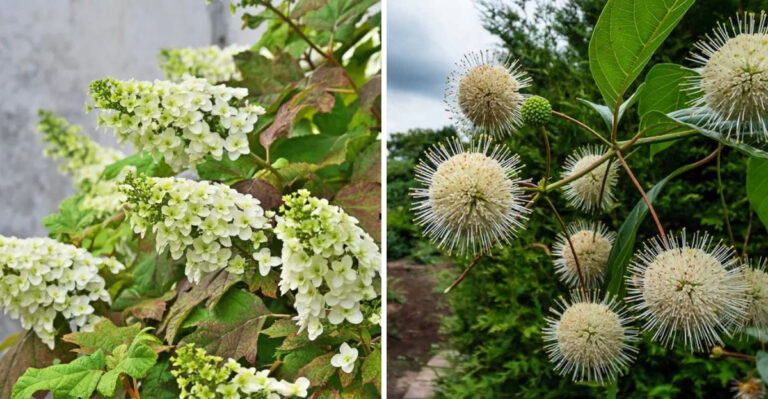
Replace them with native shrubs like oakleaf hydrangea, which hold soil well and welcome pollinators all season.
Nurseries do not sell this rare rockcress, so admire it in the wild and leave every seed alone. Reporting new sightings to state natural heritage staff gives researchers helpful clues about where it still hangs on.
5. Small Whorled Pogonia
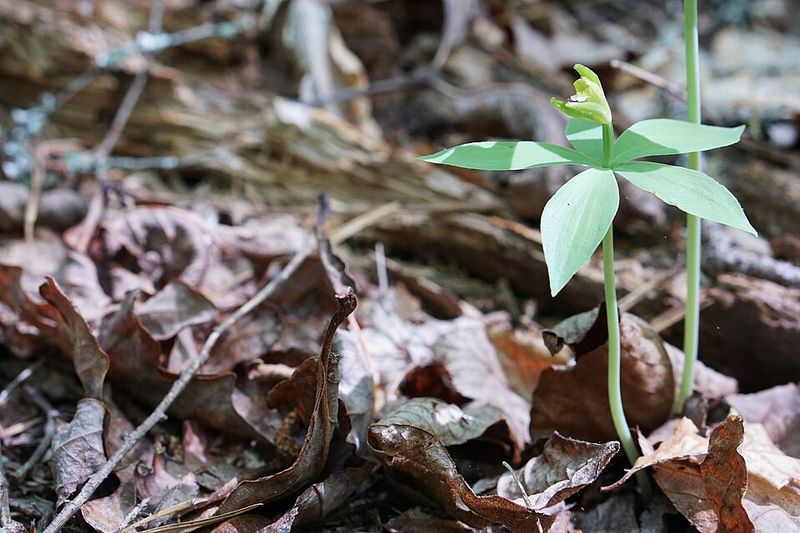
Botanists sometimes call this orchid a ghost, because it can vanish underground for years and then reappear. Isotria medeoloides is considered one of the rarest orchids east of the Mississippi River, and sightings thrill experts.
It is federally listed as Threatened, and the state lists it as Threatened as well under protected plant rules.
That double layer means collecting it on public land without permits carries real legal consequences for anyone.
Look for a single stem topped by five or six leaves arranged in a neat, umbrella-like whorl. A small greenish-yellow flower rises above them in late spring, so subtle it blends right into the foliage.
Its look-alike, the large whorled pogonia, is more common and has a purplish stem with a longer flower. I suspect plenty of hikers get excited over a patch that turns out to be the common cousin.
In the north Georgia mountains it prefers open, acidic hardwood forests with light leaf litter and gentle slopes. Some sites sit near old logging roads, where a bit of extra light seems to suit the plant.
Since it cannot be grown commercially, any plant offered for sale is likely poached, so steer clear of it.
Supporting land trusts that protect mature mountain woods does far more good than any backyard attempt could.
Stay on established trails during spring hikes, because foot traffic can crush emerging shoots before anyone notices them. If you suspect a find, take photos from a distance and contact the state wildlife resources division.
6. Parrot Pitcherplant
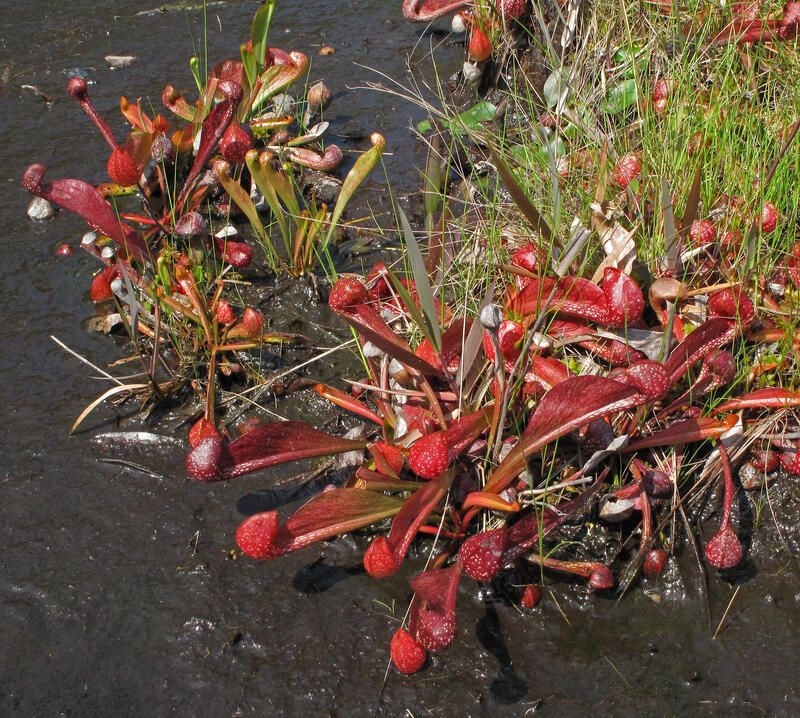
Lying flat on wet ground like a ring of red-veined parrot heads, these pitchers look delightfully strange. Sarracenia psittacina is a carnivorous plant that traps insects inside curved tubes lined with stiff downward-pointing hairs.
Its state ranking is Threatened, so wild plants in bogs on public land need a permit before anyone disturbs them.
Collecting from the wild has hurt many pitcherplant populations, which makes legal protection especially valuable for this one.
Each hooded pitcher has see-through patches that act like fake windows, confusing trapped bugs as they try escaping. When bogs flood, the leaves can even catch tiny aquatic critters like tadpoles, which surprises nearly everyone I tell.
Deep red flowers nod on tall stalks in spring, held well above the traps so pollinators stay safe. I love how the plant seems to separate its dinner table from its pollination crew so politely.
Look for it in sunny bogs and wet pine savannas across the southern Coastal Plain, especially near Florida. Ditching and fire suppression have shrunk these soggy habitats dramatically over the last century across the region.
You can grow nursery-propagated plants in a bog garden filled with peat and sand under full sun. Water only with rainwater or distilled water, since minerals in tap water can harm the sensitive roots.
Skip fertilizer altogether, because the plant gets its nutrients from captured prey instead of the soil.
Buy only from sellers who state their plants are seed-grown or tissue-cultured rather than dug from wild bogs.
7. Persistent Trillium
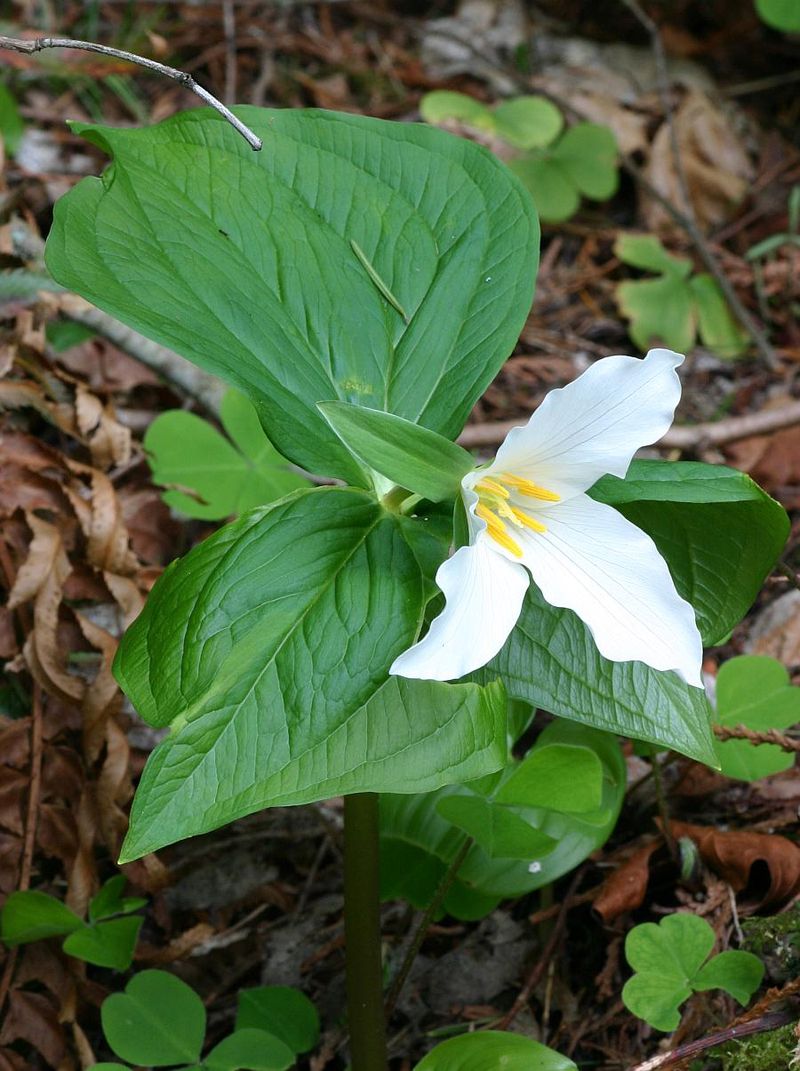
White petals that slowly blush pink make this small trillium look like it changes outfits during its bloom. Trillium persistens grows mainly in the Tallulah Gorge area and a nearby slice of South Carolina, nowhere else.
Federal officials listed it as Endangered in 1978, and state law protects it with the same Endangered ranking.
Its name comes from leaves that persist into late summer, long after many trillium cousins fade back underground.
Unlike most trilliums, it loves shady ravines under rhododendron and mountain laurel in very acidic soil. Personally, I find that choice fascinating, since evergreen shrub thickets usually crowd out other spring wildflowers.
Flowers open as early as March, sitting on short stalks above three narrow, gently mottled leaves. Visitors to Tallulah Gorge State Park may spot it, but rangers ask everyone to stay on designated trails.
Development and careless off-trail hiking threaten these colonies, which already cover only a small stretch of land. Even picking one flower can set a plant back for years, because trilliums store energy in their rhizomes.
Garden centers do not offer this species, but other native trilliums are sometimes available as nursery-propagated stock. Ask sellers directly whether plants were grown from seed, since wild collection still happens with many trillium species.
If you live nearby, keeping streamside rhododendron thickets intact helps protect the shady conditions this plant prefers.
I believe small choices like that matter more than most people realize for such a narrowly ranging species.
8. Relict Trillium
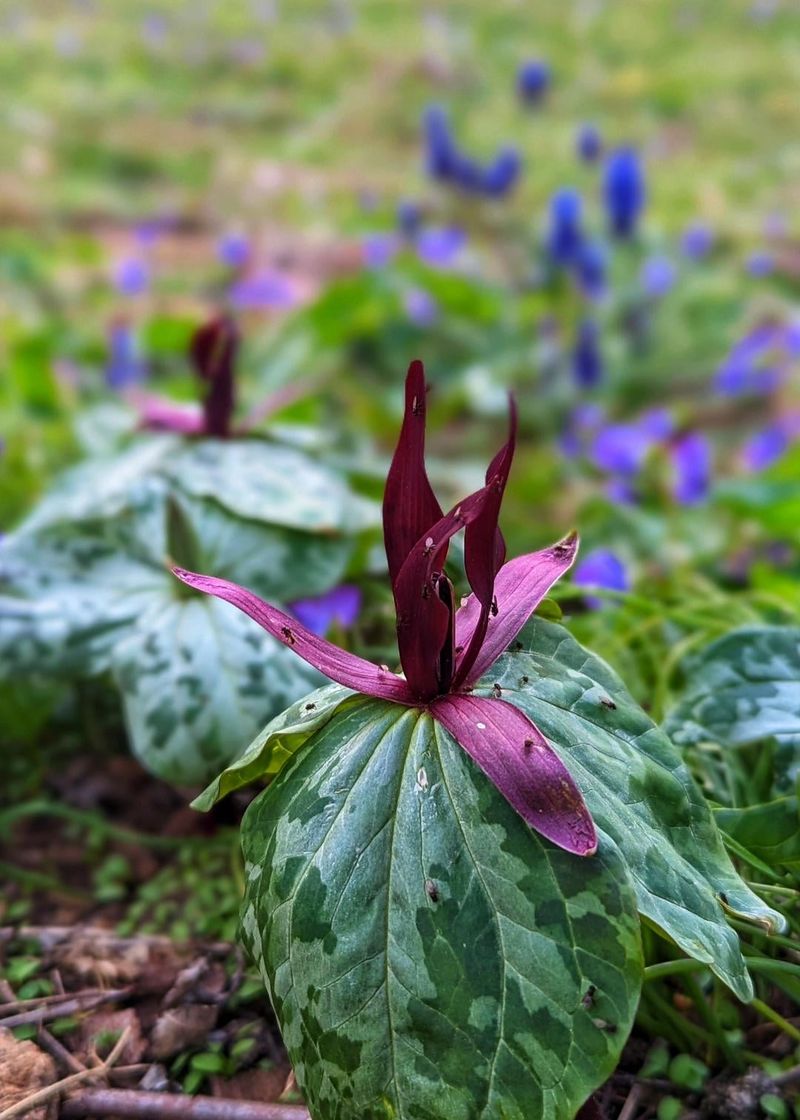
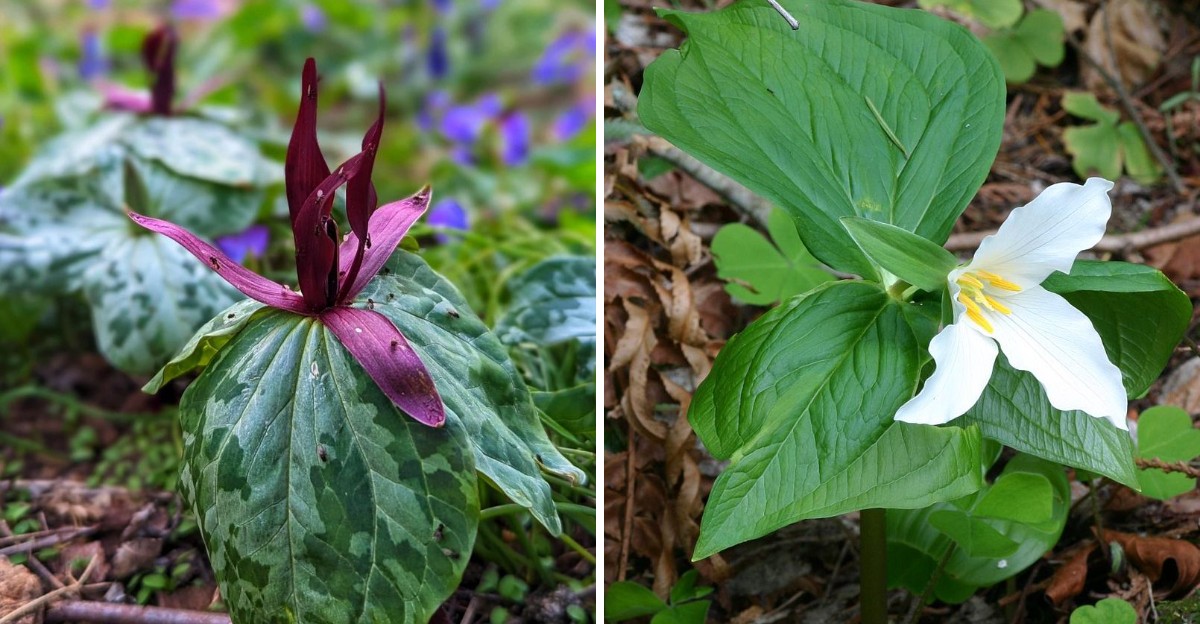
Mottled leaves splashed with silver and green make this trillium look like it was painted with camouflage. Its scientific name, Trillium reliquum, hints that botanists see it as a relic of older climate patterns.
Federal officials listed it as Endangered in 1988, and the state protects it under the same Endangered status.
Collecting it from public land without permits is illegal, and federal rules add extra protection for many sites.
Its stalkless flower sits right on the leaves, usually deep maroon, though some plants produce yellowish blooms instead. I love how the curved stems lean sideways, almost like the plant is taking a lazy afternoon nap.
It grows in rich, mature hardwood forests across parts of the Piedmont and upper Coastal Plain. Many populations sit along streams and bluffs near the Savannah and Chattahoochee river drainages in neighboring states too.
Spring blooms appear around March, before the tree canopy fully leafs out and shades the forest floor. Japanese honeysuckle and other invasive vines are serious threats, smothering these low plants under thick green blankets.
Landowners with rich hardwood slopes can help by pulling invasive vines and leaving old trees standing.
Logging mature forests or clearing understory brush heavily can expose these shade lovers to harsh sunlight and drying.
You will not find this species at garden centers, so enjoy it during guided spring wildflower walks. Honestly, spotting one in the wild feels like meeting a living piece of history hidden in the leaves.