8 Shrubs That Handle Georgia Clay Soil Better Than Most Plants
Georgia clay is not for the faint of heart, and honestly, neither are the gardeners who deal with it every season. One good rain and your beds are waterlogged.
A few weeks of summer heat and that same soil turns into something you could probably build a brick with. It’s a frustrating cycle, and a lot of shrubs simply can’t keep up with it.
But here’s what experienced Georgia gardeners already know: the right shrub doesn’t just tolerate clay, it can genuinely settle in and perform well once established.
Choosing plants that are actually suited to your soil conditions makes a bigger difference than any amount of amending, fertilizing, or crossing your fingers.
These seven shrubs are a solid place to start building a landscape that works with Georgia clay instead of against it.
1. Oakleaf Hydrangea Adds Bold Leaves In Clay Soil
Sticky clay after a summer rain is not something most flowering shrubs enjoy, but oakleaf hydrangea tends to take it in stride better than many ornamental plants in Georgia landscapes.
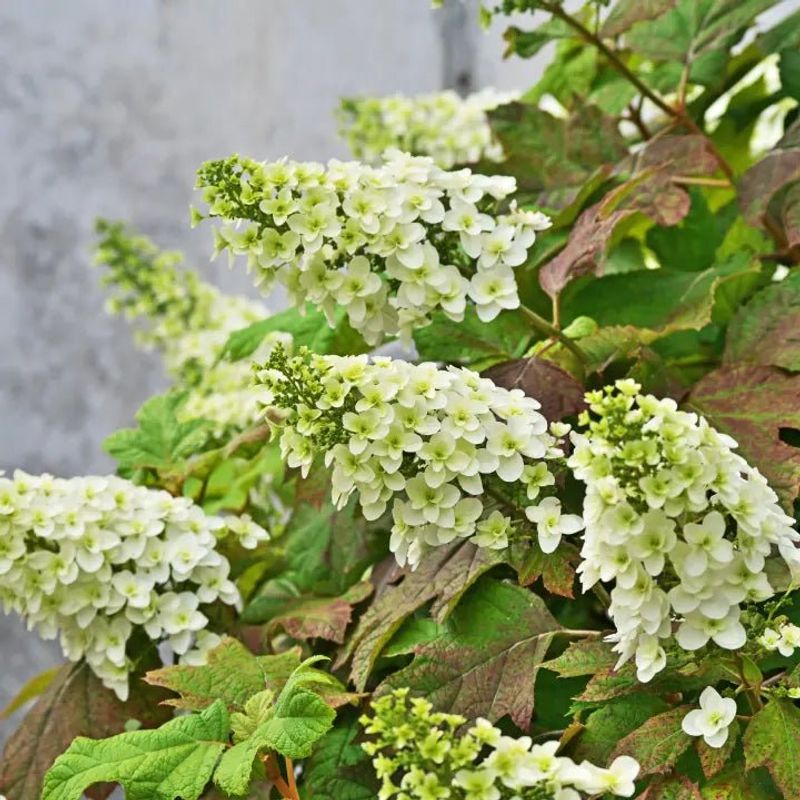
Its oversized, deeply lobed leaves give it a dramatic look that stands out in shrub borders and foundation beds alike.
The large white flower clusters, which appear in late spring and early summer, slowly shift to a papery tan color as the season moves along.
Oakleaf hydrangea grows well in part shade, making it a solid choice for spots under trees where clay soil tends to stay wetter longer.
In Georgia, it often reaches six to eight feet tall and wide, so leaving enough space between plants helps with airflow and prevents crowding.
Grouping several together along a fence line or woodland edge can create a bold, layered look that works through multiple seasons.
The fall foliage shifts to deep burgundy and orange, adding late-season color that few shrubs can match. Peeling cinnamon-colored bark adds winter interest once the leaves drop.
New plants benefit from consistent watering during the first growing season while roots spread into the surrounding clay.
Mulching around the base helps moderate soil temperature and retain some moisture during dry Georgia summers, giving roots a better chance to settle in comfortably over time.
2. Virginia Sweetspire Handles Damp Clay Borders
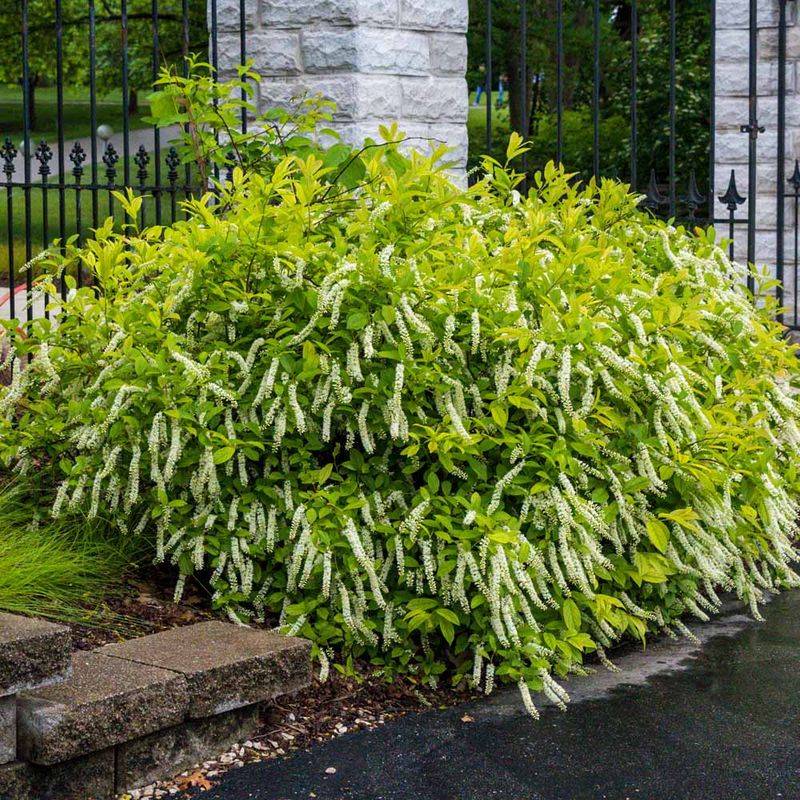
Few shrubs handle the damp, low-lying spots in a Georgia garden as gracefully as Virginia sweetspire. Along clay-heavy borders where water tends to pool after rain, many shrubs show signs of stress within a season or two.
Virginia sweetspire, on the other hand, tends to settle in and spread gradually, filling out a garden edge with arching branches and glossy green foliage.
The small white flower spikes appear in late spring and carry a light, pleasant fragrance that attracts pollinators. Even after the blooms fade, the foliage stays attractive through summer and then turns brilliant shades of red, orange, and burgundy in fall.
In Georgia, this fall color can last several weeks, which makes sweetspire a reliable choice for gardeners who want multi-season interest without a lot of fuss.
Your Georgia Garden Changes Every Week. Your Plan Should Too.
Gardening in Georgia changes quickly throughout the season. Every Friday you’ll receive a simple weekly plan showing exactly what to plant, prune, fertilize, harvest, and protect so you never miss the right timing.
Virginia sweetspire spreads slowly by suckers, gradually forming a colony that works well along damp stream banks, rain garden edges, or low spots in the backyard.
Spacing plants about four to five feet apart gives them room to fill in naturally without overcrowding.
Part shade to full sun both work, though some afternoon shade during the hottest Georgia months can help foliage stay looking its best.
Watering regularly during the first season helps roots push through clay and establish a strong base for years of low-maintenance growth ahead.
3. American Beautyberry Brings Berries To Tough Soil
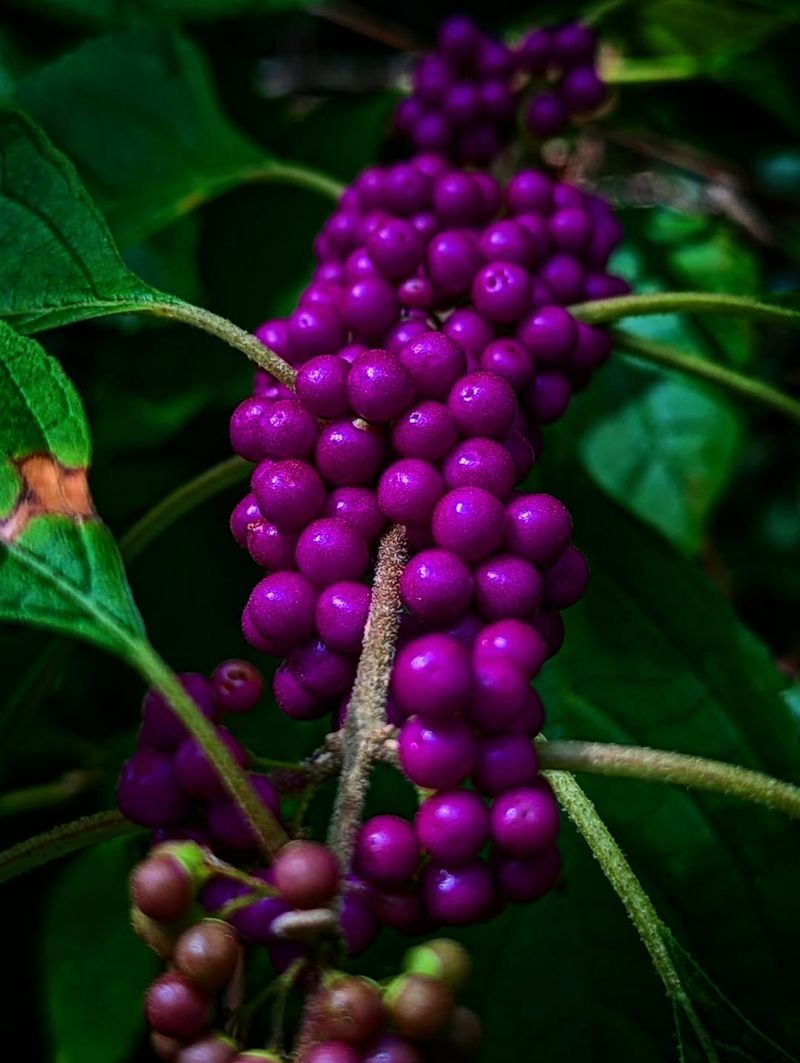
Walking past an American beautyberry in late summer is hard to do without stopping for a second look. The clusters of vivid magenta-purple berries wrap tightly around the arching stems in a way that looks almost too bold to be real.
This native Georgia shrub earns its place in tough clay soil sites where other ornamentals might struggle to produce much visual impact at all.
American beautyberry grows vigorously in a range of soil conditions, including the heavy clay found across much of Georgia. It tolerates part shade well, which makes it a natural fit beneath taller trees where clay soil tends to stay compacted and slow-draining.
The shrub can reach six to eight feet tall in a single season if conditions are favorable, so cutting it back hard in late winter keeps it at a more manageable size for most home landscapes.
Wildlife value is a genuine strength here. Birds, including mockingbirds and robins, are drawn to the berries in fall and winter, making beautyberry a useful addition to wildlife-friendly plantings across Georgia.
White-tailed deer also browse the foliage, so placement near the back of a border or in a less-trafficked area of the yard may help reduce browsing pressure.
Grouping three or more plants together creates a fuller effect and tends to produce a more generous berry display compared to planting a single shrub on its own.
4. Buttonbush Thrives In Wet Clay Areas
Wet clay areas that stay soggy for extended periods after Georgia rainstorms can be genuinely hard to plant.
Most shrubs need at least reasonable drainage to stay healthy, but buttonbush is one of the few that actually tolerates standing water for stretches of time without much visible stress.
That alone makes it worth considering for low spots, rain gardens, and damp edges along Georgia property lines.
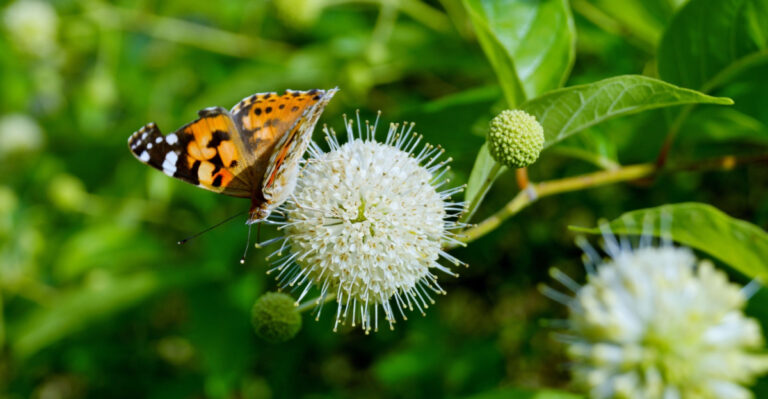
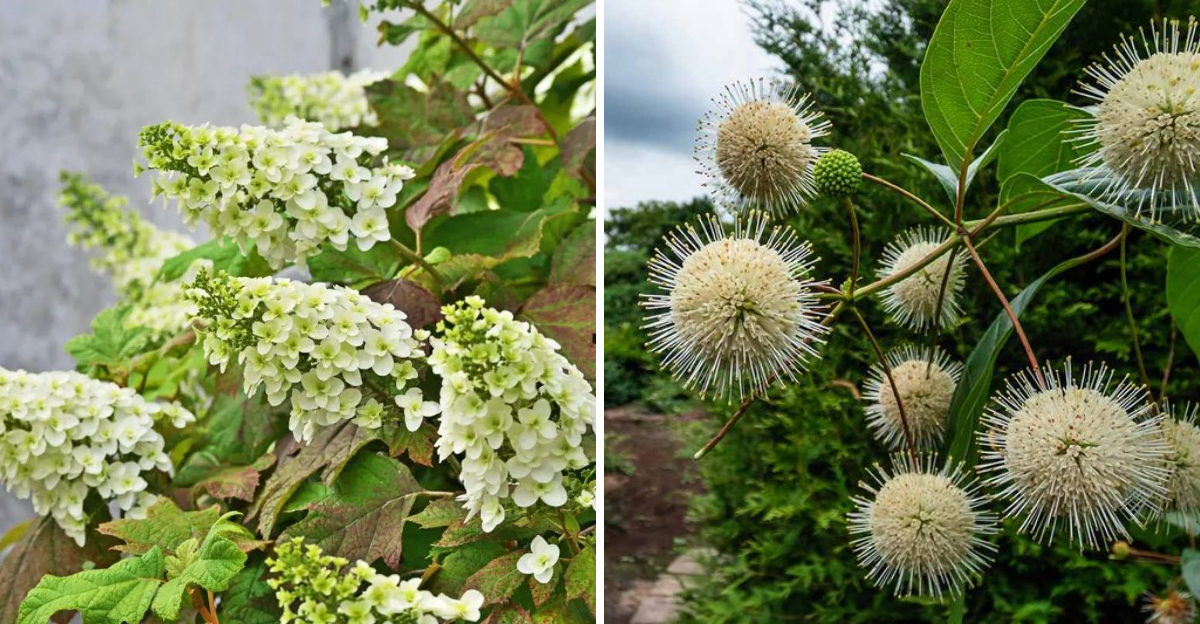
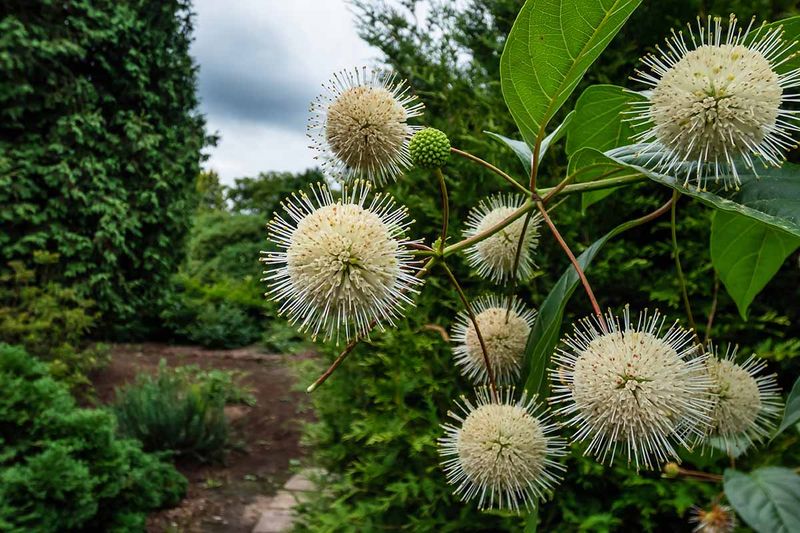
The flowers are one of buttonbush’s most distinctive features. Round, globe-shaped white blooms appear in summer and attract a wide range of pollinators, including bees and butterflies.
The unusual texture of the flower heads gives the shrub a quirky, eye-catching quality that stands out compared to more common flowering shrubs. After blooming, small round seed clusters form and persist into fall, adding a bit of texture to the late-season garden.
Buttonbush can reach six to twelve feet tall in moist conditions, so it tends to work best at the back of a border or along a naturalized edge rather than in a tightly managed foundation planting. Full sun to part shade both suit it reasonably well.
In Georgia, it pairs nicely with other moisture-tolerant natives like Virginia sweetspire and swamp rose along wet garden edges.
Giving new plants consistent moisture during their first growing season helps roots push into surrounding clay and establish a dependable framework for future growth.
5. Wax Myrtle Adds Evergreen Texture In Heavy Soil
Not every Georgia landscape needs a shrub that puts on a big floral show. Sometimes what a heavy clay border really needs is a tough, reliable evergreen that holds its structure and color through every season without demanding much attention.
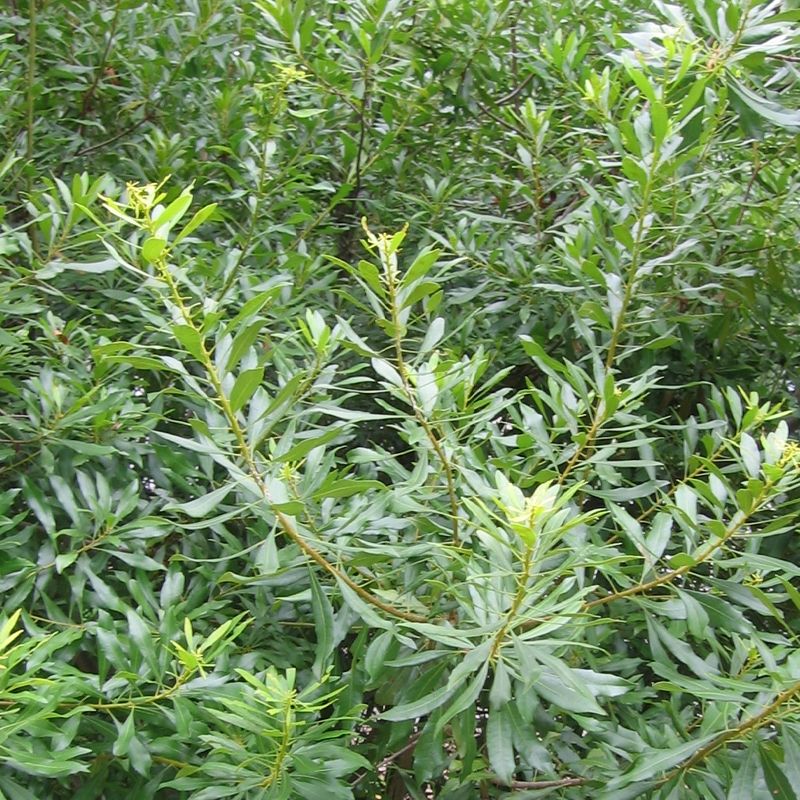
Wax myrtle fits that role well, offering dense aromatic foliage and a fast growth rate that helps it fill in clay-heavy spots quickly compared to slower-growing alternatives.
The gray-green leaves carry a pleasant fragrance when brushed against, and the small waxy blue-gray berries that appear in fall attract a variety of birds, particularly yellow-rumped warblers during their Georgia migration.
Wax myrtle can be grown as a large shrub or pruned into a multi-stem small tree, giving homeowners flexibility depending on how much space is available and how formal or informal the planting needs to look.
Full sun to light shade both work, and wax myrtle handles the wet-to-dry cycle of Georgia clay reasonably well once established.
It tends to grow quickly, sometimes reaching ten feet or more if left unpruned, so placing it where its size fits naturally makes maintenance much easier over time.
Using wax myrtle as a privacy screen, windbreak, or backdrop for lower-growing shrubs and perennials are all practical options in Georgia home landscapes.
Watering during the first season supports root development in clay, after which established plants tend to manage with less supplemental irrigation.
6. Possumhaw Brings Winter Color To Clay Sites
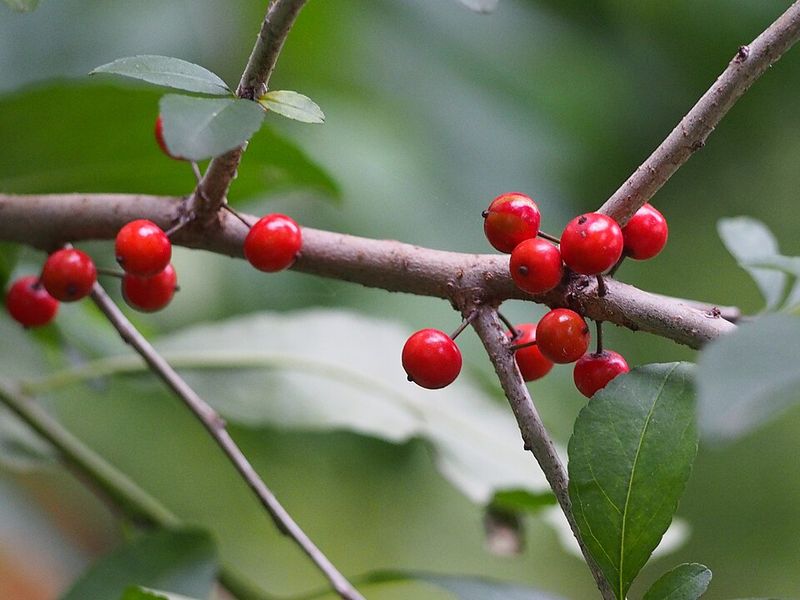
Once the leaves drop in late fall, possumhaw reveals one of its best features: dense clusters of bright red, orange, or yellow berries that cling to bare branches well into winter.
In Georgia, where mild winters mean the landscape can look thin and colorless for months, this native deciduous holly brings a welcome burst of color to clay-heavy garden sites that might otherwise offer little visual interest during the colder months.
Possumhaw grows well in moist to wet clay soils, making it a practical choice for low spots and damp edges where drainage is slow.
It tolerates occasional flooding better than many ornamental shrubs, which gives it an edge in Georgia yards with poorly drained clay that tends to hold water after heavy winter rains.
Full sun to part shade both suit it, though berry production tends to be stronger in sunnier locations.
The shrub typically reaches six to ten feet tall and wide, so it works well toward the back of a mixed border or along a property line where its size can develop naturally.
Possumhaw is dioecious, meaning male and female plants are separate, so planting at least one male nearby helps female plants produce a fuller berry crop.
Birds find the berries especially attractive in late winter when other food sources run low, making possumhaw a genuinely useful addition to wildlife-friendly Georgia landscapes. Consistent moisture during the first season supports strong establishment in clay.
7. Inkberry Holds Structure In Moist Clay Beds
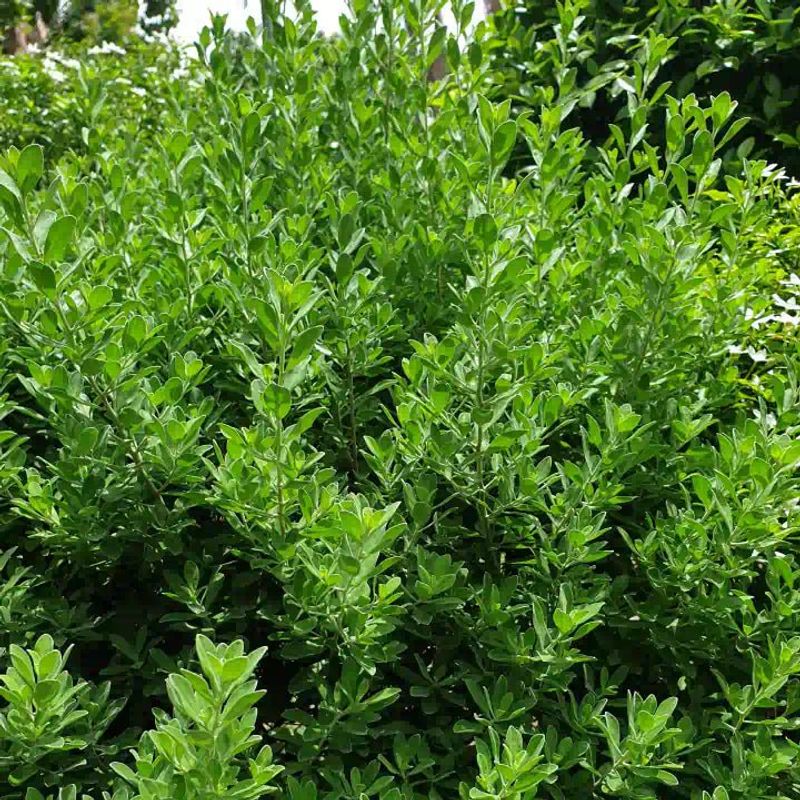
Compact, tidy, and reliably evergreen, inkberry is a native holly that brings year-round structure to moist clay beds across Georgia without needing much fussing.
While many evergreen shrubs struggle in heavy, slow-draining soil, inkberry actually prefers moist to wet conditions, which makes it a natural fit for the kind of low-lying clay spots that cause problems for less adaptable plants.
The small, dark green glossy leaves stay clean-looking through most of the year, and the tiny black berries that form in late summer and fall provide food for birds well into winter.
Inkberry has a naturally rounded form that suits foundation plantings, shrub borders, and rain garden edges equally well.
Compact cultivars stay in the three-to-four-foot range, while straight species plants can reach six to eight feet if left to grow freely.
Full sun to part shade both work in Georgia, though inkberry tends to hold a denser form in sunnier spots. Like possumhaw, it is dioecious, so having both male and female plants nearby encourages better berry production on female shrubs.
Spacing plants four to five feet apart allows for good airflow and a natural-looking grouping rather than a crowded, stressed planting.
New inkberry plants respond well to consistent watering during their first Georgia growing season, which helps roots penetrate clay and develop the stability needed for years of low-maintenance performance in challenging soil conditions.
8. Winterberry Adds Bright Berries In Damp Soil
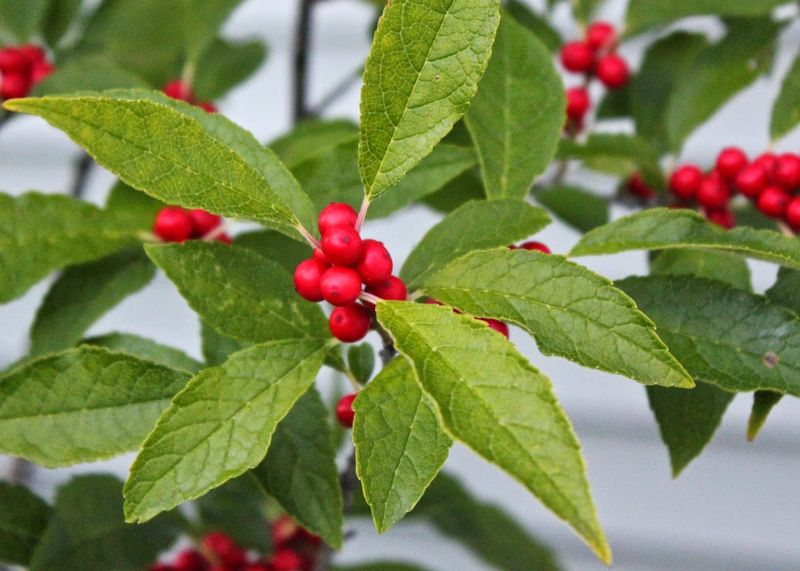
Masses of bright red berries covering bare stems from fall through late winter make winterberry one of the most visually striking native shrubs available to Georgia gardeners working with damp, clay-heavy soil.
The berry display can be genuinely breathtaking on a well-established plant, and it tends to look even more impressive when several shrubs are planted together in a loose grouping along a damp garden edge or low-lying border.
Winterberry is a deciduous holly that thrives in moist to wet clay soils, which sets it apart from many ornamental shrubs that need better drainage to perform well.
In Georgia, it fits naturally into rain gardens, wet woodland edges, and low spots in the backyard where water tends to collect after heavy rainfall.
Full sun to part shade both suit it, with the strongest berry production typically coming from plants growing in more open, sunny conditions.
Like other hollies, winterberry is dioecious, so planting a male pollinator variety nearby is important for female plants to set a generous crop of berries. A single male plant can support several females within a reasonable distance.
Shrubs typically reach six to ten feet tall, so they work well at the back of a border or in a naturalized area.
Birds rely heavily on the berries through late winter in Georgia, making winterberry a rewarding choice for gardeners who want to support local wildlife while adding genuine seasonal color to a clay-soil landscape.