8 Things You Should and Shouldn’t Do to Arizona Palm Trees Before Winter
Tucked inside a narrow canyon in the Kofa Mountains, a small wild grove of fan-topped trees clings to rocky Arizona cliffs. Those rugged natives shrug off chilly desert nights with surprising grace, unlike many fancy cousins growing in our yards.
What surprises me most is how many popular landscape varieties originally came from warmer places like Mexico and Brazil. A single clear night in the low twenties can scorch their tender crowns before anyone even wakes up.
I have to admit that I once treated my own yard trees like cactus and simply ignored them each fall. You might notice results like that months later, as brown leaves and stalled growth that linger well into spring.
October in Arizona feels like a gift after summer, with cooler mornings and softer light across the gravel. So which chores truly help before winter, and which popular habits quietly cause more trouble than they solve?
1. Water Your Palms Deeply But Less Often This Fall
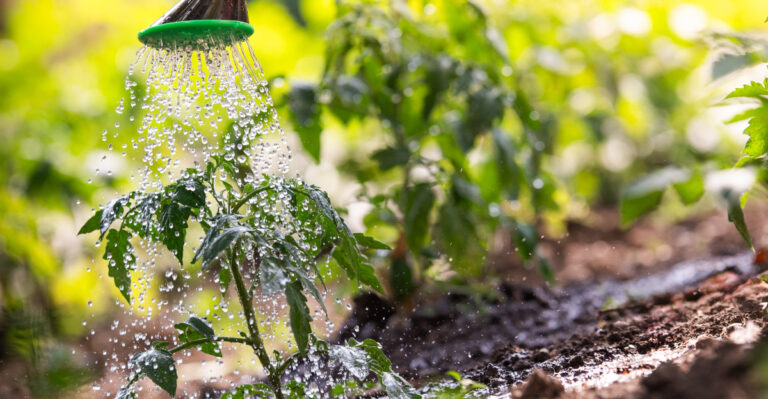
Cooler October mornings mean your palm is drinking far less than it did during those brutal July afternoons. I like to think of fall watering as a slow conversation with the roots rather than a daily splash.
Overwatering in cool weather is one of the most common reasons landscape palms decline in desert yards. Soggy soil holds less oxygen, and stressed roots become easy targets for rot once temperatures drop at night.
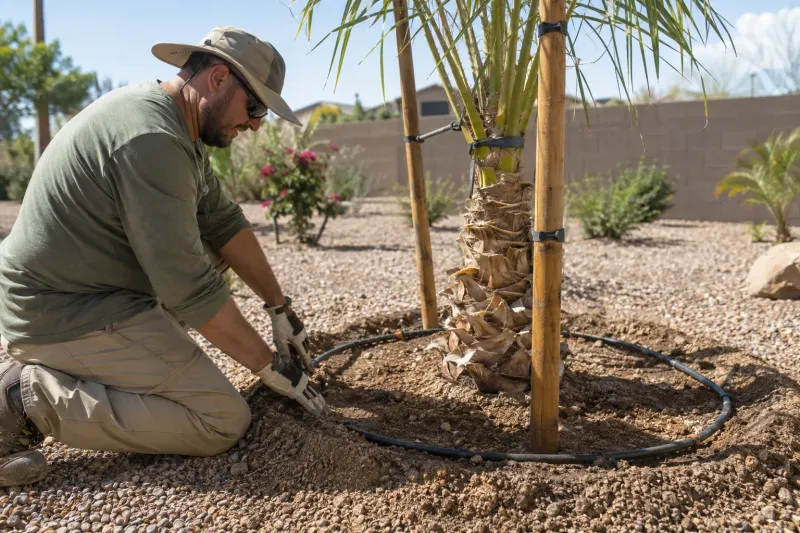
You want water to soak about two to three feet down, which usually means running drip lines for several hours. Then let the top few inches dry before the next session, so roots keep growing downward toward steady moisture.
Established desert palms often need a deep drink only every few weeks in winter, while younger trees want more frequent attention. A simple soil probe or long screwdriver tells you more about moisture than any calendar on the fridge.
One more handy trick comes before a forecast freeze, when a deep watering a day ahead can help. Moist soil holds and releases heat better than dry soil, giving roots a little extra comfort overnight.
2. Skip The Hurricane Cut On Your Green Palm Fronds
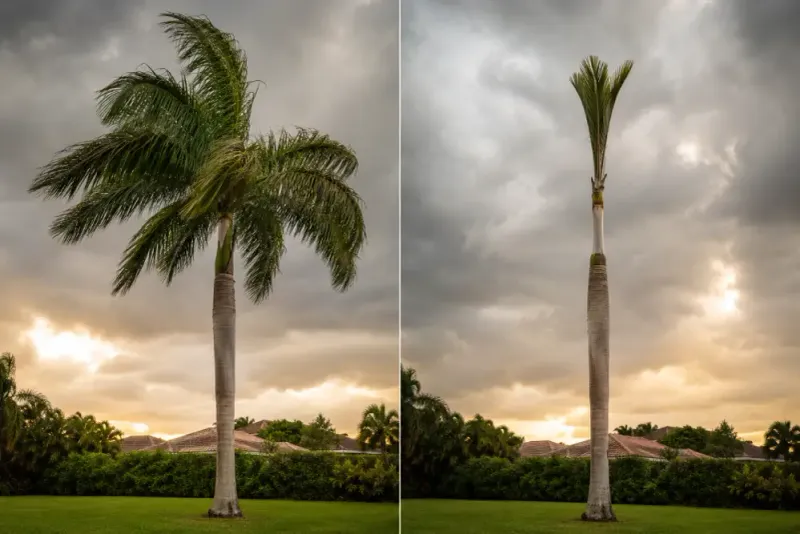
Few sights make me wince faster than a palm stripped down to a skinny feather duster in late fall. Those so-called hurricane cuts remove the green fronds that feed the tree through the coming cool season.
Green fronds are the palm’s food factories, and older leaves also pass stored potassium to newer growth as they age. University of Florida palm experts warn that heavy green pruning can worsen potassium deficiency and weaken trunk growth.
A full canopy also wraps around the bud at the top of the trunk, which is the palm’s only growing point. Unlike many trees, a palm cannot sprout a new top if that single bud gets badly damaged by cold.
Personally, I save any real trimming for late spring or early summer, when warm weather supports quick recovery. A palm trimmed then also heads into monsoon season looking tidy without losing its winter shelter months too early.
For now, a light touch works best, with only broken or hazardous fronds coming down before winter arrives. Ask your trimmer to keep every frond that sits above an imaginary horizontal line across the canopy.
3. Check Shaggy Palm Skirts For Roof Rats And Scorpions
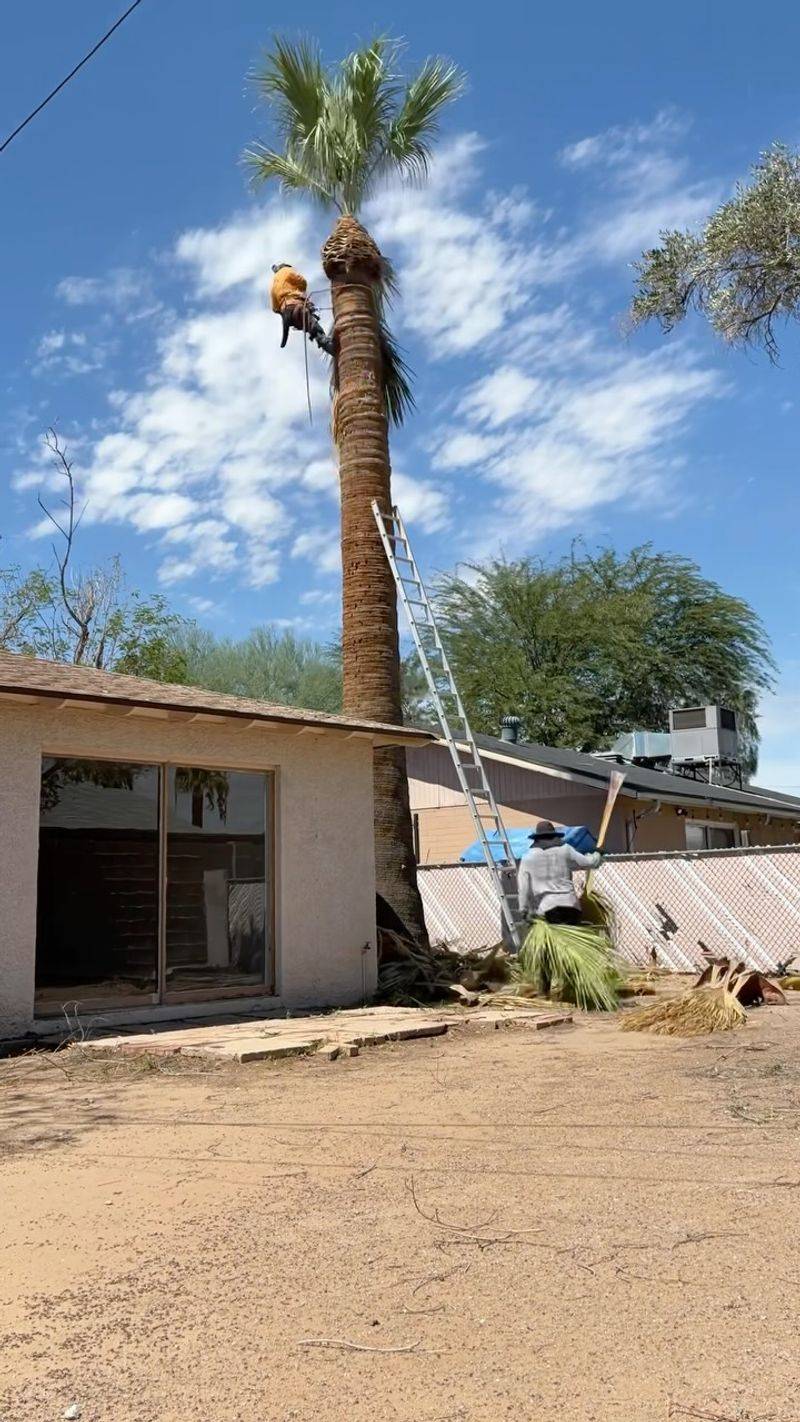
That thick brown skirt hanging down a fan palm trunk looks cozy, and plenty of critters agree with that opinion. Maricopa County officials have long pointed to dense palm skirts as favorite nesting spots for roof rats.
Bark scorpions also tuck themselves into those dry, layered fronds during the day, hunting crickets and roaches after sunset. You might notice more scorpions on your patio when a shaggy palm stands just a few feet from the walls.
Before winter, I like to grab a flashlight and inspect the skirt along with the spot where fronds touch the roof. Long fronds brushing gutters or eaves give rats an easy bridge from your yard straight into the attic.
Removing old, fully dried fronds is different from cutting green ones, and it often makes a yard less inviting to pests. Tall palms need a licensed, insured trimmer, because climbing with spikes or saws carries real risks for homeowners.
Keep the green canopy above intact, and simply ask the crew to clear dangling dry material from the trunk. Your palm still keeps its winter protection, while scorpions and rats lose a comfortable hideout right beside your home.
4. Feed Palms With A Slow Release Palm Fertilizer Early
Yellow-banded older fronds are often the palm’s way of quietly asking for a better meal before the cool season. Desert soils run alkaline, which locks up nutrients like manganese and iron even when they are technically present.
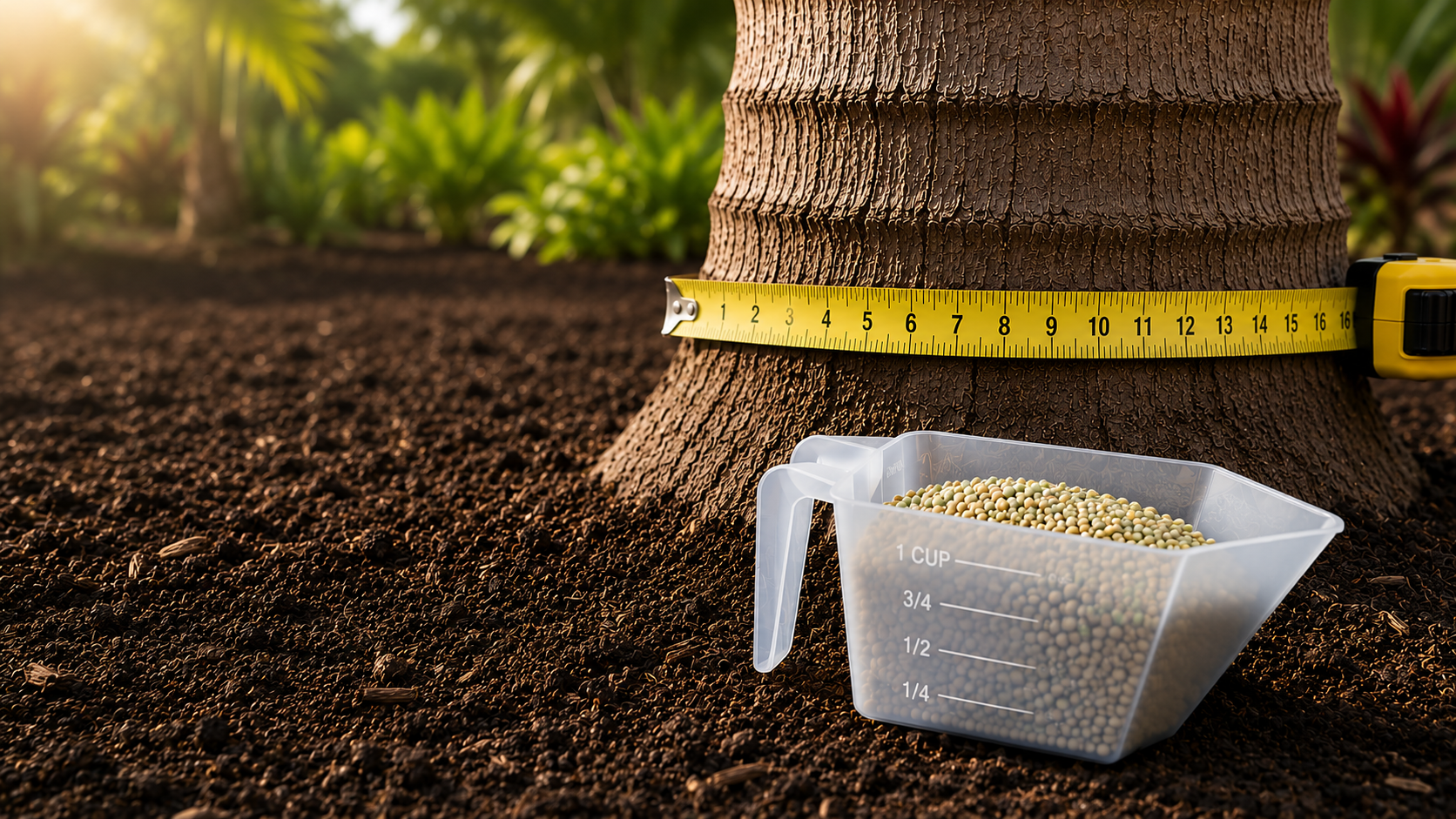
Palm specialists at the University of Florida recommend a slow-release formula close to 8-2-12 with added magnesium. That higher potassium number matters, because potassium shortages show up as speckled, frizzled older leaves on many landscape palms.
Timing makes a big difference here, so aim for one final feeding in early fall while soil still feels warm. Roots absorb nutrients slowly once temperatures cool, and late feeding can push soft new growth right before frosty nights.
I like scattering granules evenly under the whole canopy instead of dumping a pile against the trunk itself. Water the area deeply afterward, so the nutrients move down toward the feeder roots where they can actually help.
Healthy, well-fed palms usually handle chilly spells better than hungry ones struggling with old deficiencies from summer. Think of this feeding as packing a lunch box for your tree before a long, quiet winter nap.
5. Keep High Nitrogen Lawn Fertilizer Away From Palm Roots
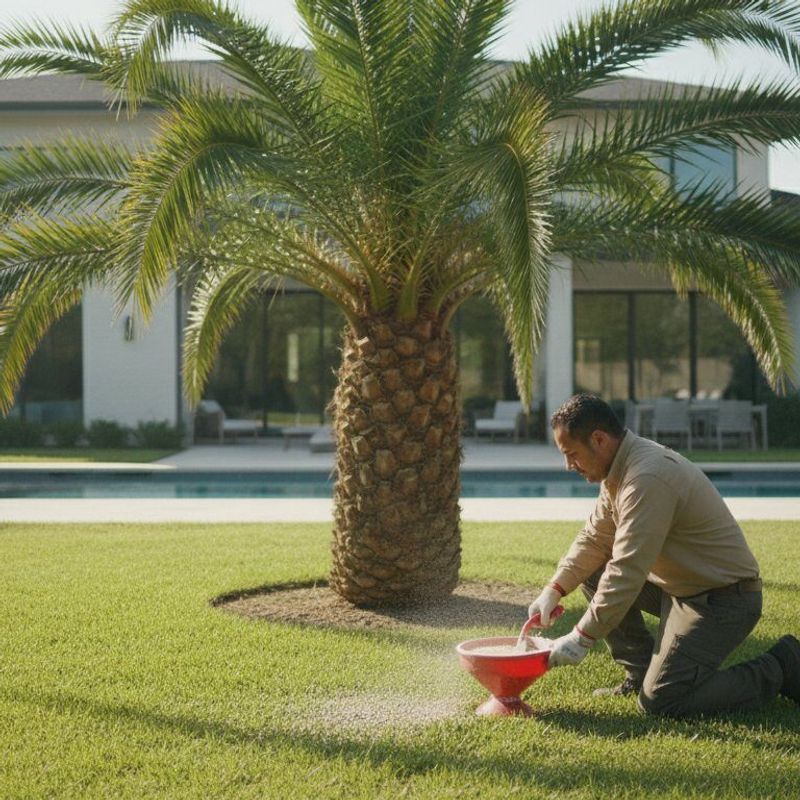
Overseeding the lawn with winter rye is an October ritual in many desert neighborhoods, and the fertilizer bag follows close behind. Palm roots spread surprisingly far, so your grass feeding often lands right on top of them.
Research from Florida palm scientists shows heavy nitrogen without matching potassium can make potassium deficiency noticeably worse. The palm grows more new leaves than it can properly supply, and older fronds start looking speckled and tired.
I believe most homeowners never realize their healthy lawn routine might be the reason a nearby palm looks frazzled. Many standard lawn blends are built for grass blades, not for the tropical appetite of a large palm.
A simple fix is keeping a fertilizer-free circle under the palm canopy whenever you feed the lawn this season. Some experts suggest using a palm-friendly blend across the entire area when lawns and palms share the same ground.
If a landscape crew handles your yard, take a minute to read the label on whatever they spread. A quick question now can save your palm from months of slow decline and patchy, discolored fronds next spring.
6. Wrap Queen Palm Crowns Before Frosty Desert Nights
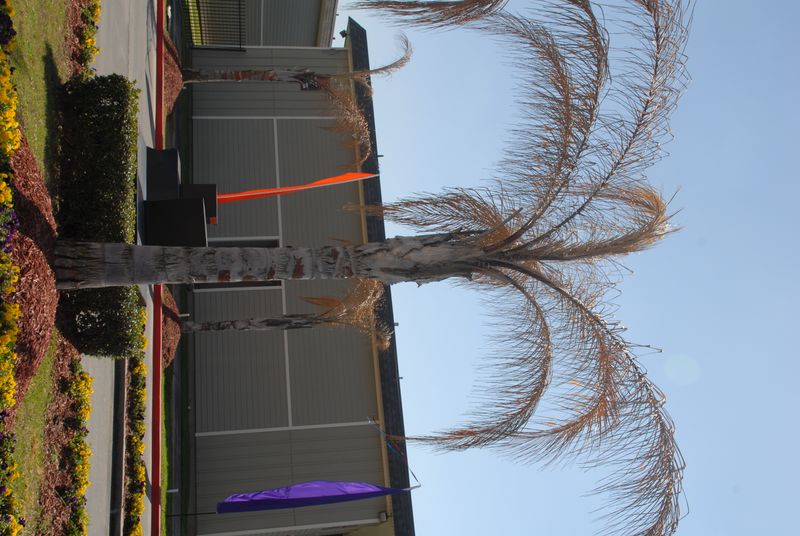
Queen palms look elegant with their arching feathery leaves, but their Brazilian roots leave them sulking when temperatures slip below freezing. Pygmy date palms and young Mexican fan palms can also take frost damage during an unusually cold night.
Tucson and higher-elevation towns often see more frost than central Phoenix, so your local forecast matters more than general advice. I keep frost cloth folded in the garage starting in late fall, ready for that first chilly warning.
Focus on protecting the crown and the central spear, where new leaves emerge from the palm’s single growing bud. Wrap breathable frost cloth or burlap snugly around that area, avoiding plastic that can trap moisture against tissue.
Small palms can sit under a cardboard box or frost blanket that reaches the ground, holding in warmth rising from the soil. Remove covers once mornings warm up, because trapped humidity under wraps can encourage fungus on tender leaves.
Sago palms often get grouped with these trees, though they are actually cycads, not true palms at all. Their new flushes still deserve the same blanket treatment when a hard freeze heads your way this winter.
7. Spread Mulch Around Palm Bases Without Touching Trunks

Bare gravel heats up fast in summer and chills quickly on clear winter nights, swinging soil temperatures around the roots. A ring of organic mulch acts like a soft blanket that steadies those swings for younger palms.
Aim for about two to three inches of shredded bark or wood chips spread wide under the canopy. Mulch also holds moisture longer between waterings, which fits nicely with the slower fall watering schedule you started.
What surprises me most is how often mulch gets piled high against trunks like a fluffy volcano. Moisture trapped against the trunk base can invite rot and insects, so leave a few inches of open space.
Over time, organic mulch breaks down and feeds soil life, slowly improving the tough desert ground around your palm. Earthworms and beneficial fungi move in, and you might notice softer soil when you dig nearby next spring.
Arborist chip drops are often free, and they make a great budget option for covering a large palm ring. Just refresh the layer each fall, keeping that clear gap near the trunk every time you top it off.
8. Wait Until Warm Weather To Plant New Palm Trees
Fall feels like perfect planting weather for shrubs and wildflowers, so palms seem like a natural addition to the list. Palms play by different rules, though, and their roots grow best when soil feels truly warm.
Extension experts generally recommend planting palms during late spring and summer, when warm soil encourages fast root growth. A palm planted in late fall sits in cool ground for months, struggling to anchor before winter frosts.
I can’t imagine a more frustrating start than watching a pricey new palm brown out before it ever settles. Use October to plan instead, choosing a sunny spot with good drainage and plenty of overhead room.
When the time comes, set the root ball level with the surrounding soil rather than burying the trunk deeper. Dig the hole wider than the root ball, and build a shallow basin that keeps water from pooling.
Consider the native California fan palm if you want a tough, frost-tolerant tree suited to desert yards. It handles cold better than many imported favorites and fits nicely into water-wise Arizona landscapes for decades.