9 Ohio Native Shrubs That Feed Birds All Winter
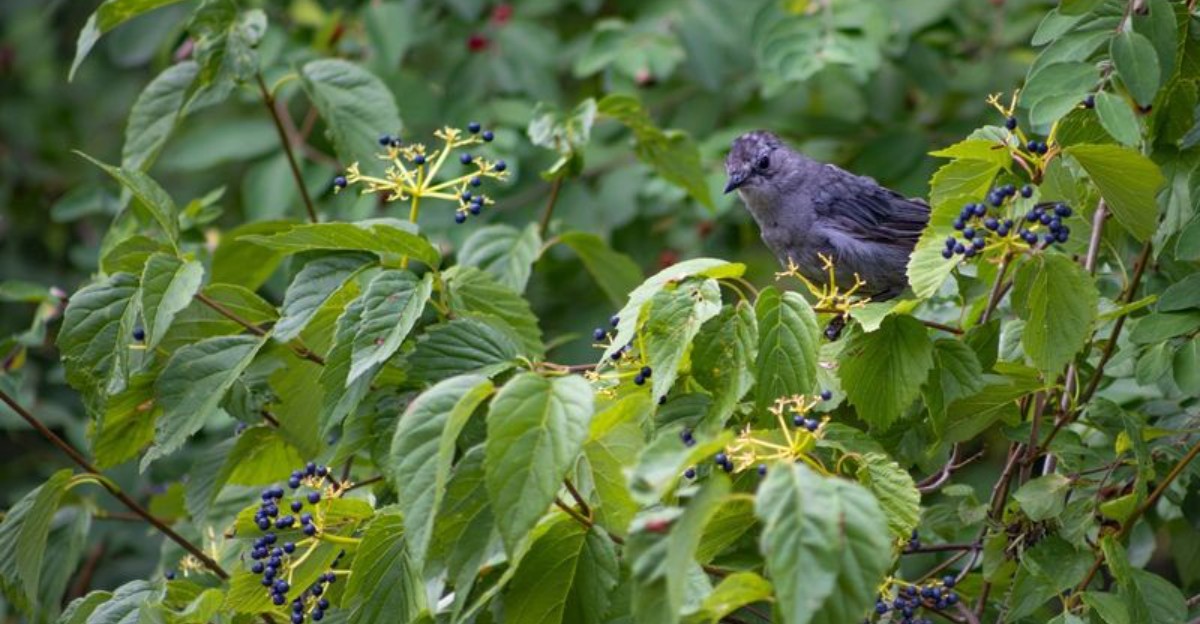
Plenty of American robins skip the southern trip and spend the whole winter right here in Ohio. Instead of tugging worms from frozen lawns, they switch to a winter diet built mostly on fruit and berries.
Bluebirds and cedar waxwings follow a similar plan, hunting for berries that cling to bare branches long after the leaves drop. Some of those fruits even soften and sweeten after a few hard freezes, which birds seem to appreciate.
I love how one well-placed shrub can turn a quiet January yard into a busy bird cafeteria. You might notice that crowded feeders draw the noisy crowd while native fruit waits patiently for hungrier days.
The smartest bird garden in Ohio, in my book, starts with plants that already belong in our soil. Pick the right local shrubs, and your yard can keep serving lunch from the first frost to the last snowy week.
1. Winterberry Holly
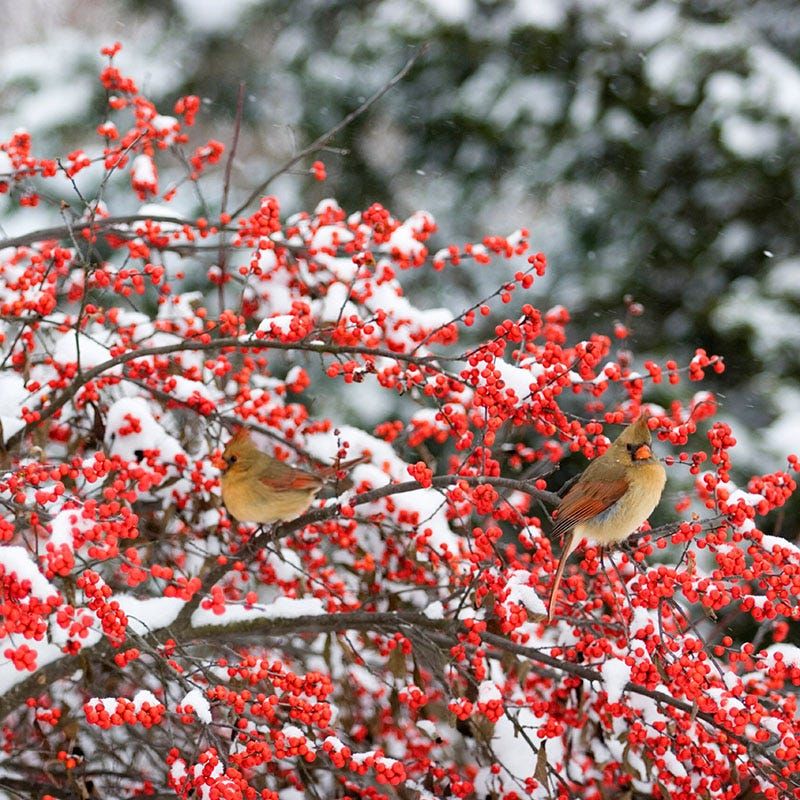
Bare gray twigs studded with glowing red berries make winterberry look like it got dressed up for a holiday party. Unlike most hollies, Ilex verticillata drops its leaves in fall, so every single berry shows off.
I have to admit, a snowy morning with robins tugging at those red clusters is my favorite winter view. Bluebirds and cedar waxwings join in, often waiting until late winter when other fruit gets scarce.
Winterberry usually grows six to ten feet tall, though some wild plants in wet woods reach fifteen feet. It spreads slowly into a dense clump, which gives small birds a handy hiding spot from hawks.
Plants are either male or female, and only females produce berries. You need one male planted within about fifty feet of several females, and nurseries usually label which compatible pollinator to buy.
Moist, acidic soil suits winterberry best, and it handles soggy spots where many shrubs struggle to grow. Full sun gives you the heaviest berry crop, while part shade still produces a respectable show for the birds.
Choose a straight native type or a compact cultivar if space is tight in your yard. If you need to prune, do it lightly in late winter or early spring, since the shrub flowers on new growth and heavy cuts can still shrink the berry crop.
Keep curious kids and pets from snacking, since the berries can upset human stomachs. Birds handle them just fine, and you get a cheerful splash of red when the garden looks mostly brown.
2. Coralberry
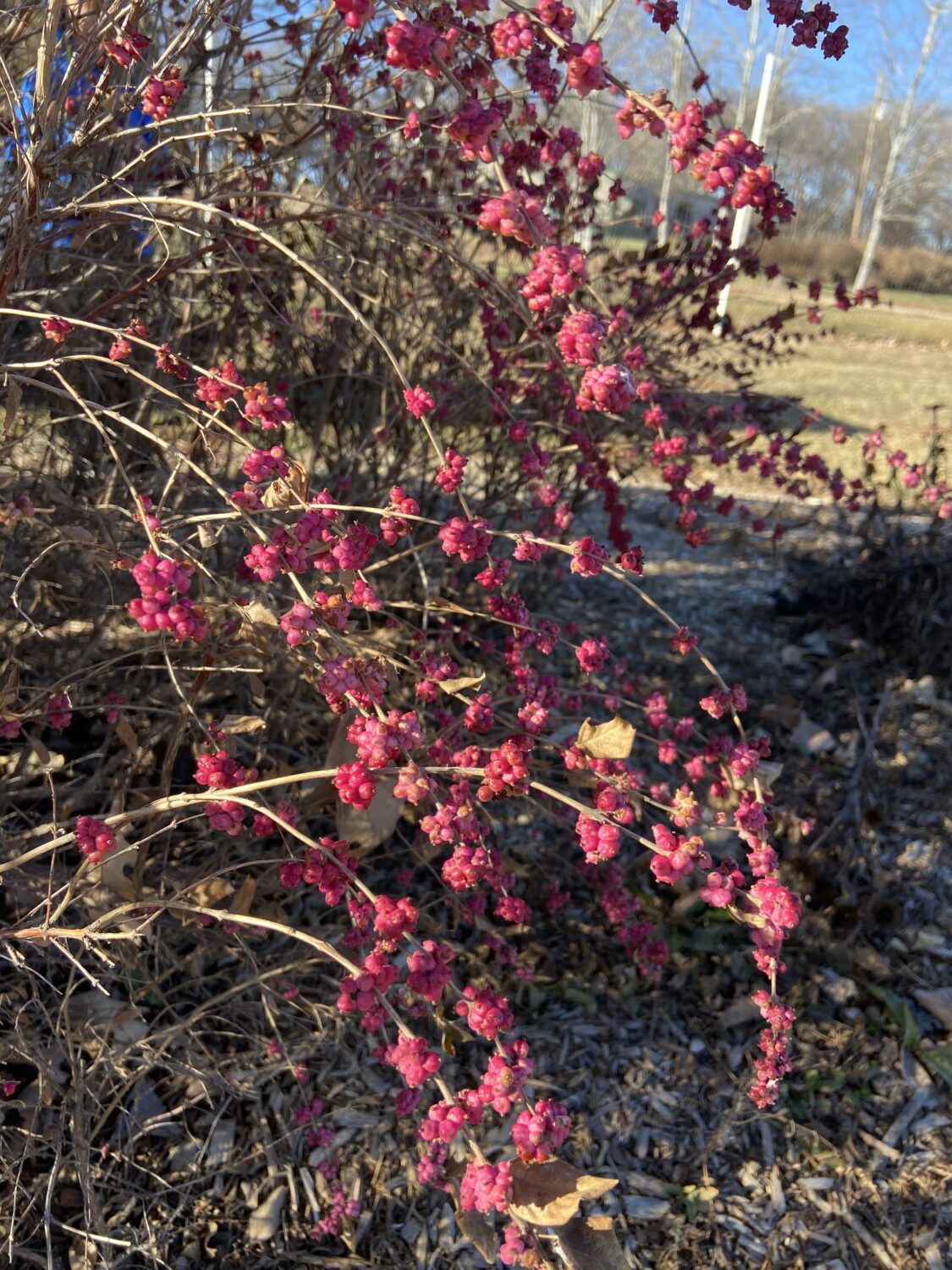
Tiny pink-purple berries hug the stems of coralberry like strings of beads that someone forgot to put away. Symphoricarpos orbiculatus keeps those clusters hanging on through most of winter, long after flashier fruits disappear.
What surprises me most is how birds often ignore these berries in fall, then return for them later. Robins and other fruit eaters seem to treat coralberry as a backup pantry for the hungry weeks.
This low Ohio shrub usually stays two to five feet tall, with thin arching stems that bend toward the ground. Those stems root where they touch soil, so a single plant slowly fills in a patch.
That thicket habit makes coralberry a smart pick for a slope or a shady corner that resists lawn grass. Ground-feeding birds like sparrows and towhees love scratching around under its tangled branches for cover.
Shade does not bother coralberry much, though more sun brings a heavier crop of colorful fruit. It tolerates clay and dry spells well, making it one of the easier natives for beginning gardeners.
You can trim older stems in late winter if the patch spreads farther than you planned. A quick cut near the ground encourages fresh growth without harming next season’s flowers and berries.
The berries are not meant for people and can cause stomach trouble if someone eats them. Keep that in mind near play areas, and simply enjoy watching the birds clean them up instead.
3. Gray Dogwood
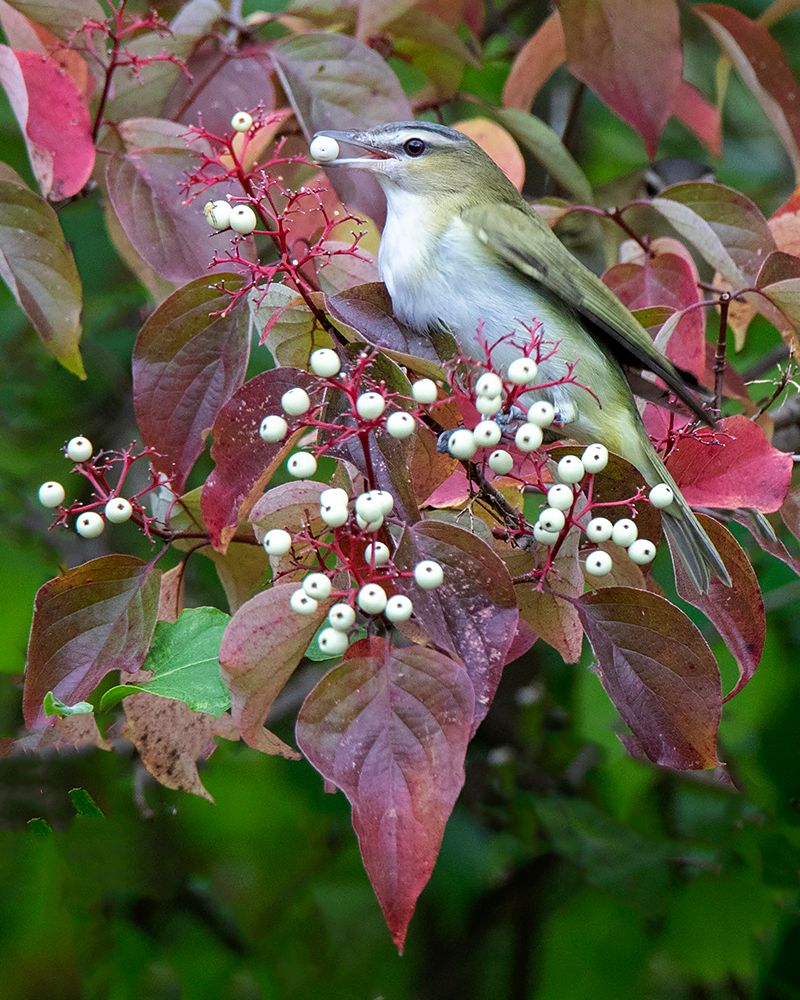
Bright red fruit stalks hold up little white berries on gray dogwood, and the combination looks almost like candy. Even after birds strip the fruit, those red stalks stay behind and add color to the shrub.
Honestly, gray dogwood is the workhorse of the Ohio bird garden rather than the showpiece. More than a hundred bird species are reported to eat dogwood fruits, and this one feeds plenty of them.
Cornus racemosa ripens its berries from late summer into fall, so the feast happens before deep winter. Migrating thrushes and resident robins gobble them fast, which gives them fuel right when they need it most.
The real winter gift comes from its dense thickets, which spread by suckers into a crowded cluster of stems. Cardinals and sparrows tuck themselves inside on windy nights, safe from cold gusts and passing predators.
Plants often reach ten to fifteen feet tall, though you can keep them shorter with occasional pruning. Remove a few of the oldest stems each late winter to keep the clump fresh and tidy.
Gray dogwood handles poor soil, clay, and dry patches better than many fussy ornamental shrubs. Full sun to part shade works fine, and it grows wild along fence rows across much of the region.
Give it room to roam, or plant it where a wild hedge would look natural. I like using it as a living screen that birds treat like their own private apartment building.
4. Red Osier Dogwood
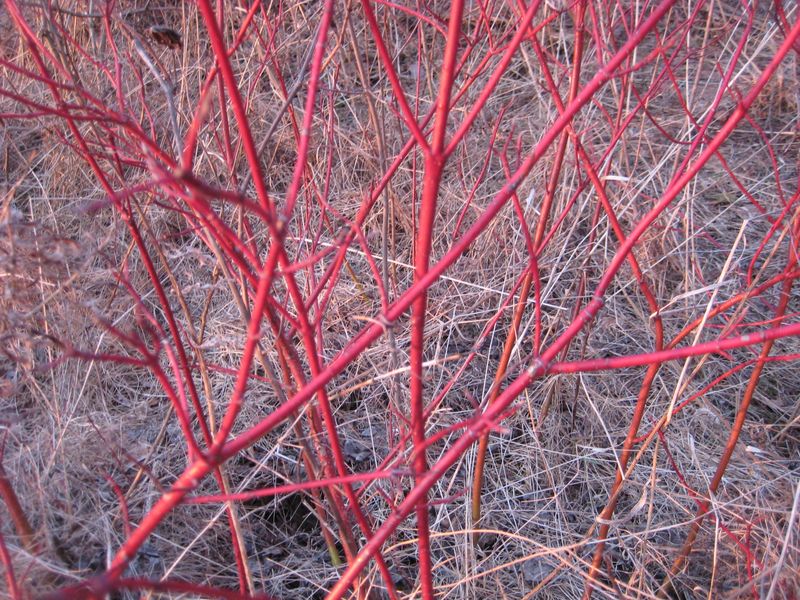
Bright scarlet stems rising out of fresh snow make red osier dogwood one of winter’s boldest sights. You can spot a patch from across a frozen field, and the color only deepens as temperatures drop.
Cornus sericea produces white to bluish berries in late summer, and birds snap them up quickly. Bluebirds, robins, and vireos often finish the crop by late fall, so think of it as autumn fuel.
So why does it belong on a winter list for birds at all? Its thick tangle of stems offers shelter from wind, and buds along those stems feed grouse and other browsing wildlife.
I love planting it beside a winterberry, because the red twigs and red fruit look fantastic together. Birds visiting the berries can duck into the dogwood thicket whenever a hawk circles overhead.
This shrub thrives in moist to wet soil and grows happily along ponds, ditches, and rain gardens. Full sun brings the richest stem color, though it tolerates some shade with slightly duller twigs.
Expect plants around six to nine feet tall that spread outward by stems that root along the ground. Older stems fade toward brown, so cut about a third of them each late winter for brighter color.
Watch for leaf spot in crowded, damp spots, and leave space for air to move between plants. With a little pruning, you get a cheerful winter display that doubles as a cozy bird shelter.
5. Nannyberry
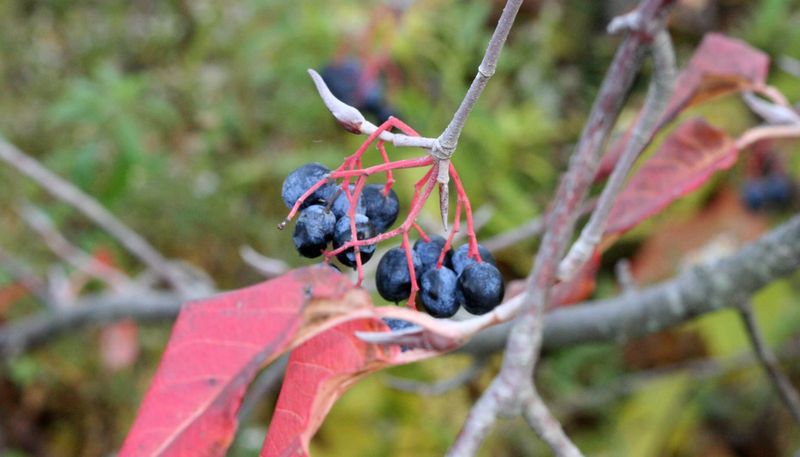
Sweet, raisin-like fruit that people can actually taste makes nannyberry a fun shrub to grow. Viburnum lentago produces blue-black berries that often wrinkle on the branch and hang around into winter.
Personally, I think nannyberry fruit tastes a little like dates once it softens after cold weather. Birds seem to agree, and cedar waxwings, robins, and bluebirds visit the drooping clusters for a meal.
Squirrels and other mammals also help themselves, so some years the fruit disappears faster than expected. Planting a few shrubs together usually leaves enough berries for the birds to enjoy during the coldest stretch.
Nannyberry grows into a large shrub or small tree, often reaching twelve to eighteen feet tall. Its glossy leaves turn reddish purple in fall, giving you a nice show before the berries take center stage.
Creamy white flower clusters appear in spring and attract a busy crowd of bees and small pollinators. Planting two different nannyberry shrubs improves cross pollination, which helps the plants set a much heavier fruit crop.
Moist, rich soil suits it best, but it tolerates clay and drier ground once roots settle in. Full sun to part shade works, and plants are hardy across every growing zone in the region.
Nannyberry can sucker at the base, so pull unwanted shoots if you prefer a single trunk. Left alone, it forms a dense thicket that songbirds happily use for shelter and summer nesting sites.
6. Arrowwood Viburnum
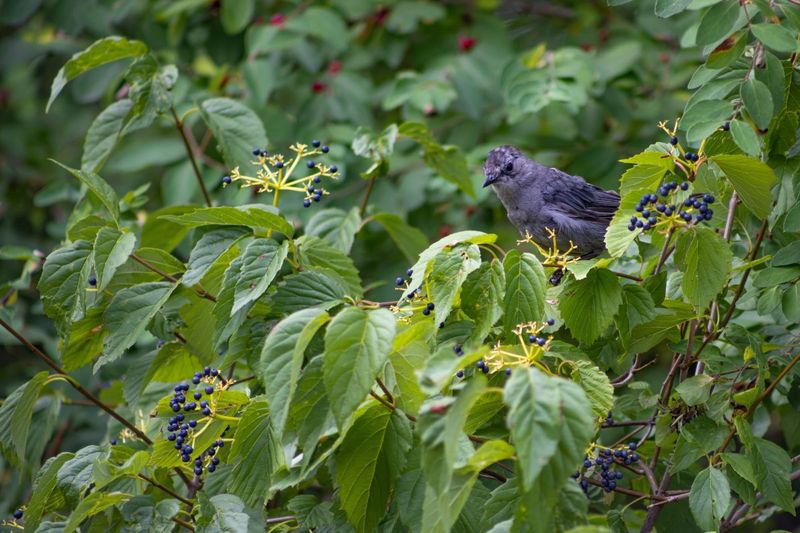
Native people once used the straight young stems of this shrub to make arrow shafts, which explains its name. Today, Viburnum dentatum earns its keep by feeding birds with clusters of shiny dark blue fruit.
Arrowwood berries ripen in late summer and fall, and some clusters hang on into early winter. Bluebirds, catbirds, and robins visit often, so the crop usually fades well before spring arrives.
You might notice that the fruit holds plenty of fat, which makes it valuable for migrating songbirds. That energy helps birds build reserves before cold nights arrive and food becomes harder to find.
Plants usually grow six to ten feet tall and wide, forming a rounded clump of upright stems. Flat clusters of white flowers appear in late spring and attract many bees, butterflies, and helpful beetles.
Planting at least two different arrowwood shrubs nearby greatly improves fruit set in most gardens. A single plant often produces a disappointing crop, so buy a pair or ask about compatible partners.
Arrowwood adapts to clay, sandy soil, and occasional wet spots without much fuss at all. Full sun to part shade works, though sunnier sites give heavier berry loads and richer red fall color.
Keep an eye out for viburnum leaf beetle, which chews leaves into lace during spring and summer. Pruning out twigs with egg sites during winter is a simple way to manage this pest naturally.
7. American Cranberrybush
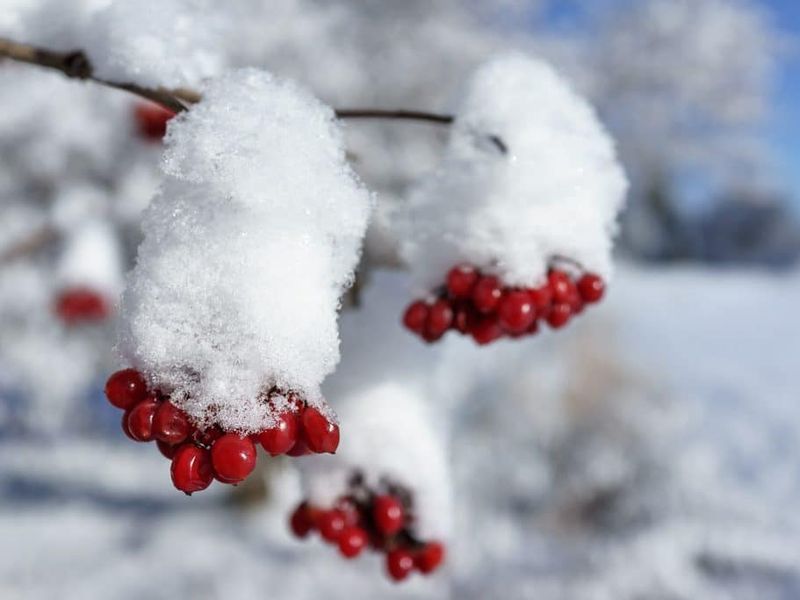
Shiny red clusters that look exactly like cranberries dangle from this shrub well into the snowy season. Viburnum trilobum is not a true cranberry, but the resemblance fools almost everyone who walks past it.
Birds often skip these tart berries in fall and wait until late winter to eat them. That delay makes American cranberrybush a reliable emergency pantry when fresher fruit has mostly disappeared from the landscape.
Cedar waxwings and robins are frequent visitors, and grouse sometimes feed on the fruit in wilder areas. I love seeing those red clusters glow against snow during a gray February afternoon.
Plants generally reach eight to twelve feet tall with leaves shaped a bit like small maple leaves. Lacy white flower clusters appear in spring, and the foliage turns warm red to purple before dropping.
Be sure to buy the native American type rather than the European guelder rose, which looks very similar. The European plant is considered invasive in some areas, so check plant tags carefully before purchasing.
Moist, well-drained soil suits this viburnum, and it handles damp spots near ponds or low ground. Full sun brings heavier fruit, though part shade still yields a pleasing crop for hungry birds.
The berries are edible for people when cooked, and some gardeners turn them into tart jelly. Personally, I leave them for the birds, because watching their late winter visits feels like the better reward.
8. Black Chokeberry
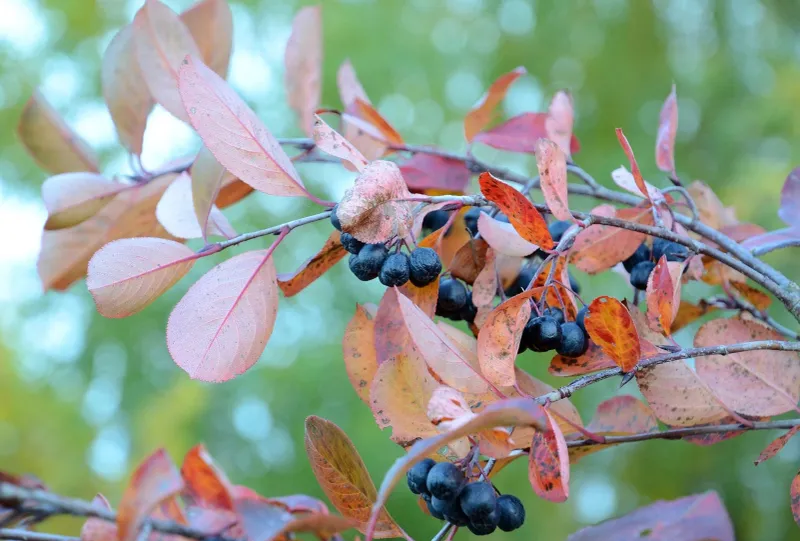
One bite of a fresh chokeberry will make your whole mouth pucker, which explains the funny name. Birds also find the fruit sour at first, so the shiny black berries often linger for months.
Aronia melanocarpa ripens its fruit in late summer, but many clusters stay on the branches into winter. After a few hard freezes, the berries seem to become more appealing to hungry robins and other songbirds.
I like thinking of chokeberry as a slow-release snack bar for the backyard bird crowd. When showier fruits are gone, these patient little berries are still hanging there waiting for visitors.
Plants usually stay three to six feet tall, making them easy to fit into smaller yards. Clusters of white spring flowers feed early bees, and the leaves turn brilliant red and orange in fall.
Chokeberry tolerates wet soil, dry soil, and even sandy spots where other shrubs often sulk. Full sun gives the best fruit and fall color, though plants still perform reasonably well in partial shade.
The shrub spreads by suckers, which helps it form a tidy mass planting over time. Pull unwanted shoots in spring if you want a single clump instead of a spreading colony.
People can eat the berries cooked into jam, juice, or baked goods with plenty of added sugar. Grow a few extra plants, and you can share the harvest with birds without anyone going hungry.
9. Smooth Sumac
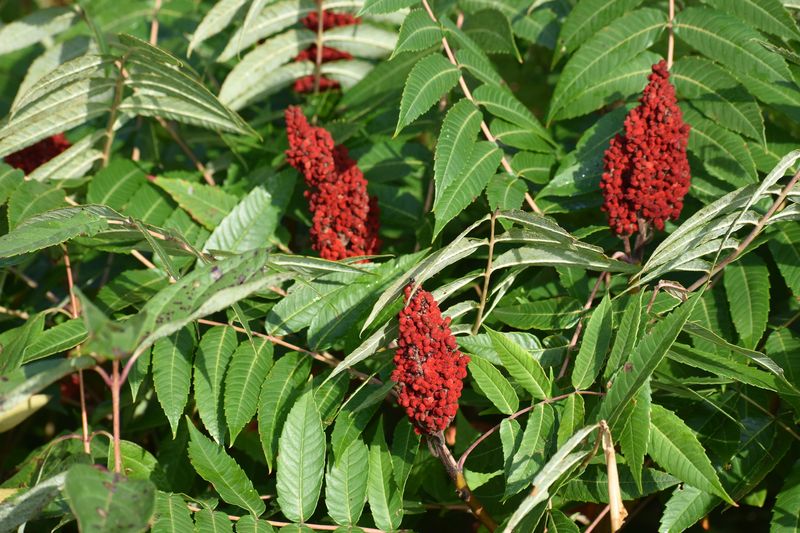
Fuzzy red cones standing upright on bare branches give smooth sumac a look straight out of a storybook. Those velvety clusters stay put through most of winter, poking above snowdrifts along roadsides and fields.
Here is a surprising detail about the fruit, which birds treat as food for tough times. Sumac berries are not especially rich, so birds often turn to them only after better options run out.
That makes sumac a lifesaver in late winter, when bluebirds, robins, and woodpeckers search for anything edible. I have watched bluebirds perch right on top of a cone and pick it clean.
Rhus glabra grows about eight to fifteen feet tall and spreads by roots into large colonies. Give it a hillside, a wild corner, or a sunny edge where wandering stems will not cause trouble.
Only female plants produce the red fruit clusters, so choose a patch that includes female shrubs. The compound leaves turn blazing orange and scarlet in fall, creating one of the best displays around.
Smooth sumac loves full sun and well-drained soil, and it shrugs off drought once it settles in. Poor, rocky ground suits it surprisingly well, which makes it handy for tough spots across Ohio.
Do not confuse it with poison sumac, which has white berries and grows in swampy wetlands. The red fruit of smooth sumac is harmless, and some people even steep it into a tangy lemon-flavored drink.