Texas Gardeners Should Watch Out For This Parasitic Vine
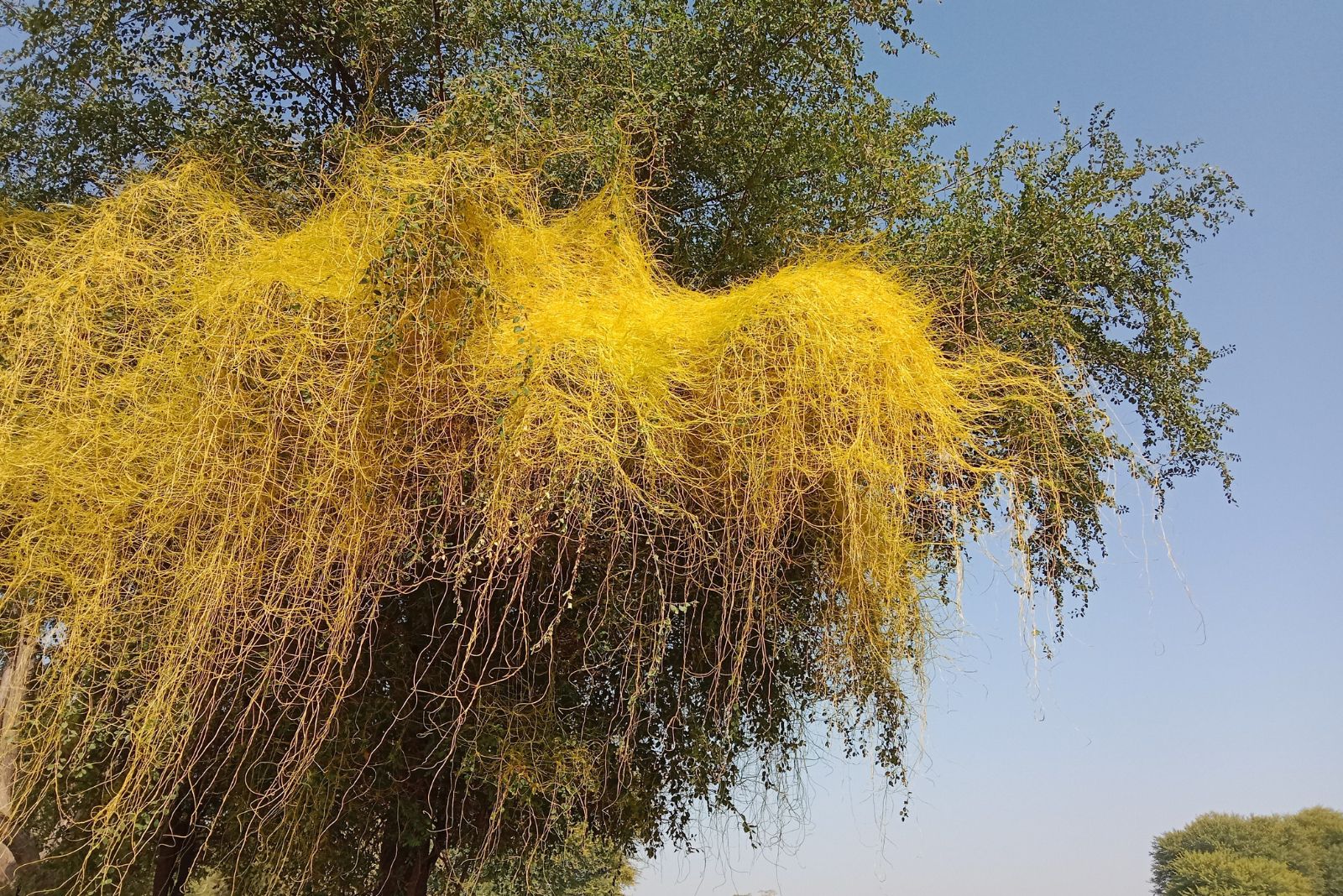
One week your garden looks healthy and full. The next, strange golden threads begin wrapping around stems and leaves, almost like fine string tossed across your plants.
It spreads quietly, and many gardeners do not notice the danger until their plants start to weaken for no clear reason.
This unwelcome visitor is Japanese dodder, a parasitic vine that does not behave like a normal plant. Instead of relying on its own roots, it latches onto nearby plants and pulls nutrients directly from them.
As it spreads, it can smother flowers, shrubs, and vegetables, slowly draining their strength and stopping healthy growth.
Warm Texas conditions help this vine grow fast, which is why early action matters. Spotting it quickly and removing it before it spreads can save your garden from serious damage and keep your plants growing strong, vibrant, and productive through the season.
1. What Is Japanese Dodder?
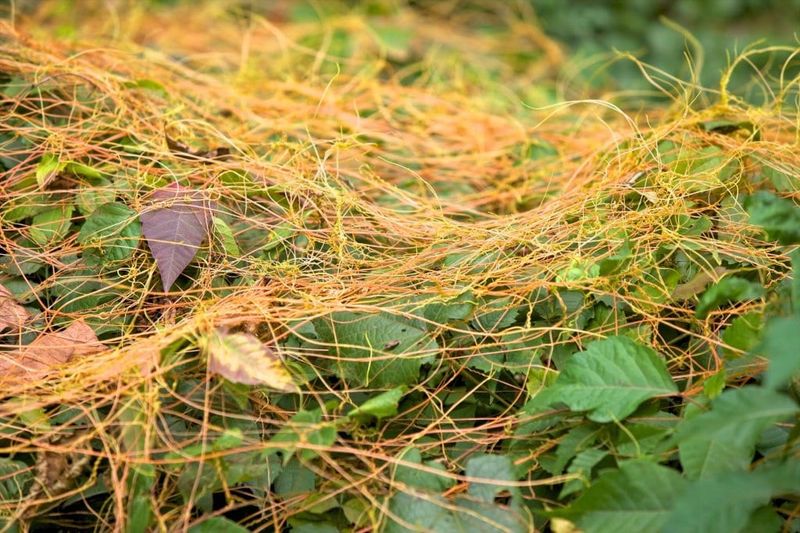
Japanese dodder goes by the scientific name Cuscuta japonica, and it is unlike most plants you will find in a Texas garden. Instead of standing upright with leaves and stems, this parasitic vine grows as a tangle of thin, thread-like strands.
The strands are usually yellow, orange, or pale gold, and they look almost like fishing line or yarn draped over bushes.
Because dodder has very little chlorophyll, it cannot make its own food through photosynthesis like normal plants do. It has no true leaves to speak of, just smooth, wiry stems that twist and coil.
Once a dodder seedling sprouts from the soil, it quickly searches for a host plant to attach to. If it does not find one within a few days, it will wither away.
But if it does find a suitable host, it wraps around the stem and forms small bumps called haustoria. These are feeding structures that pierce the host plant’s tissue and tap directly into its water and nutrient supply.
From that point on, the dodder vine relies entirely on the host for survival. Japanese dodder is a fast grower, especially in warm climates like Texas. Once it establishes a connection, it can spread several feet in just a week or two.
New vines branch out and search for additional plants to latch onto. This makes it a serious concern for anyone growing ornamental shrubs, perennials, or even small vegetable crops in Texas gardens.
2. Why It’s A Growing Concern In Texas Gardens?
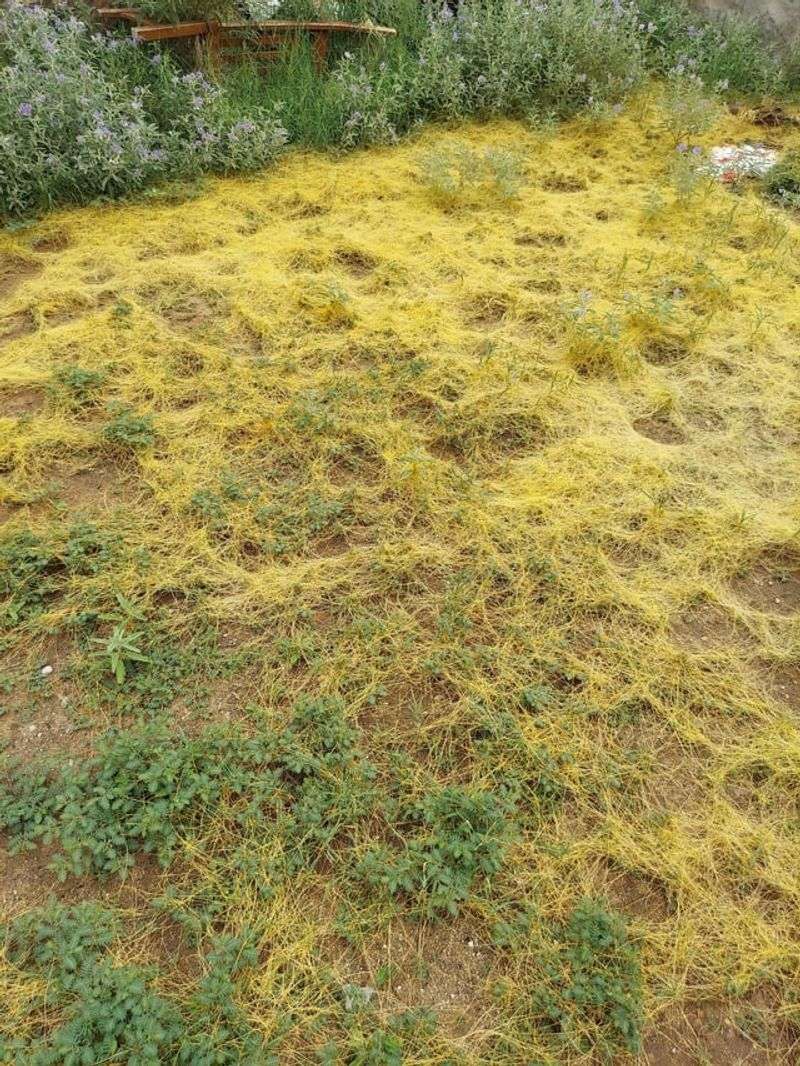
Texas offers ideal conditions for Japanese dodder to thrive. The state’s long, hot growing season gives this parasitic vine plenty of time to establish itself and spread.
Dodder loves warmth, and Texas summers provide exactly that. Combined with regular watering in landscaped areas, dodder finds everything it needs to grow aggressively.
Moist garden beds, ornamental plantings, and hedges are prime targets. Shrubs planted close together make it easy for dodder to jump from one host to another.
Once it wraps around a branch, it sends out new shoots that reach toward neighboring plants. Before long, an entire hedge or flower bed can become infested.
Your Texas Garden Changes Every Week. Your Plan Should Too.
Gardening in Texas changes quickly throughout the season. Every Friday you’ll receive a simple weekly plan showing exactly what to plant, prune, fertilize, harvest, and protect so you never miss the right timing.
Another reason dodder is becoming more common in Texas is the movement of nursery stock. Plants shipped from other states or regions may carry dodder seeds in the soil or even small vine fragments on the stems.
Gardeners who buy new plants and add them to existing beds may unknowingly introduce this pest. Once it is in the garden, it can be very difficult to control.
Dodder does not just affect ornamental plants. It can also invade vegetable gardens, berry patches, and small fruit trees.
In Texas, where many homeowners grow tomatoes, peppers, and herbs, dodder can become a real problem. It weakens plants, reduces yields, and spreads quickly if not addressed.
The more gardeners know about this vine, the better they can protect their Texas landscapes from serious damage.
3. How Japanese Dodder Damages Plants?
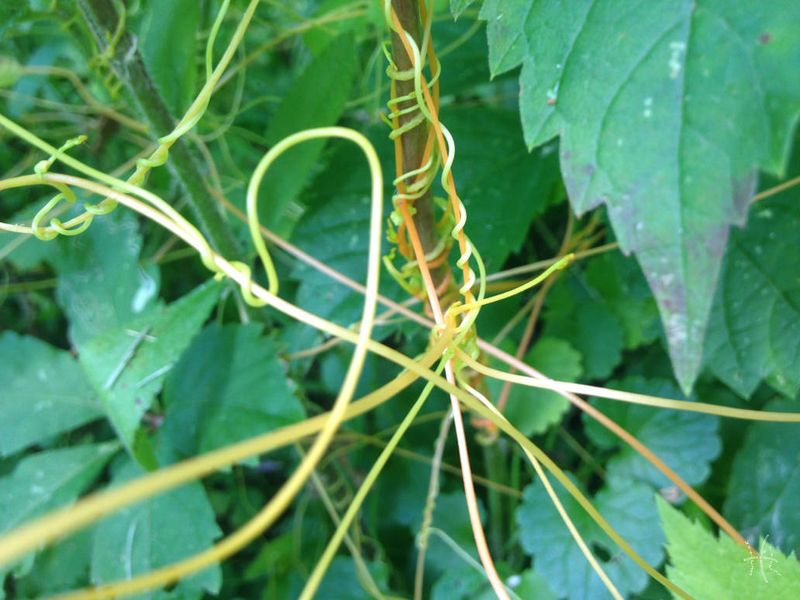
Japanese dodder does not simply rest on top of plants. It actively harms them by stealing the resources they need to grow.
The vine twines tightly around stems and branches, wrapping in spirals that can cover large sections of a plant. As it coils, it forms small, root-like structures called haustoria that penetrate the outer layer of the host plant.
Haustoria work like tiny straws. They pierce through the plant’s vascular tissue and begin drawing out water, sugars, and nutrients.
The host plant loses access to the energy it produces and the moisture it absorbs from the soil. Over time, this causes the plant to weaken.
Growth slows down, leaves may yellow or wilt, and flowering is often reduced or stops altogether.
In cases of heavy infestation, the host plant may not survive. Smaller shrubs, annuals, and young perennials are especially vulnerable.
Even larger plants can suffer significant damage if dodder is allowed to spread unchecked. The vine can cover entire branches, blocking sunlight and adding weight that causes stems to bend or break.
What makes dodder particularly dangerous in Texas gardens is how quickly it can move between plants. A single infected shrub can become a launching point for new vines that reach out to nearby hosts.
In a matter of weeks, an entire section of a garden bed can be overtaken. The longer dodder is left in place, the more damage it does and the harder it becomes to remove without harming the plants underneath.
4. How To Identify It Early?
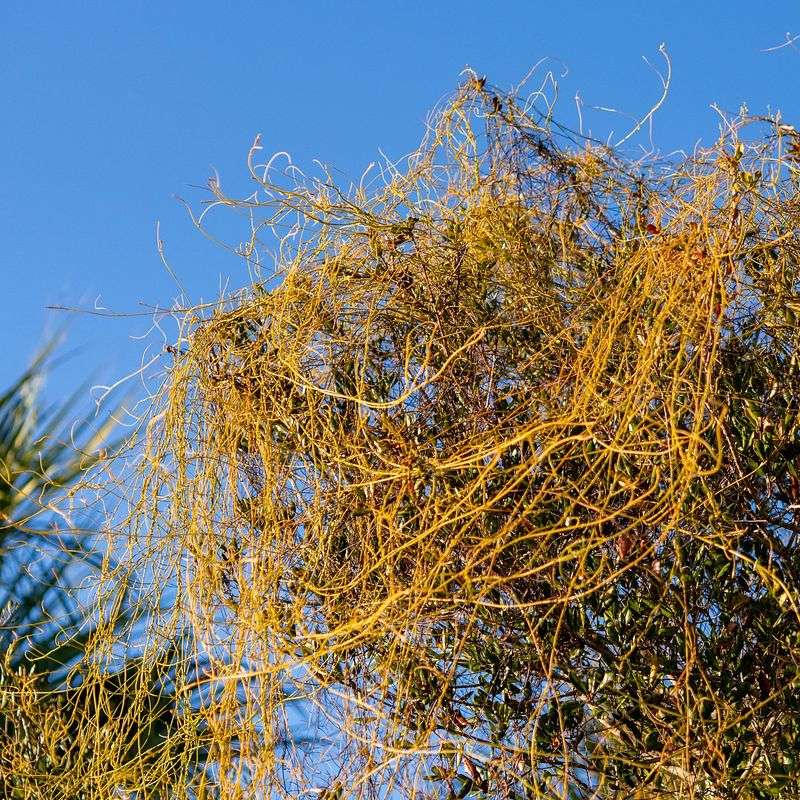
Catching Japanese dodder early is the key to preventing serious damage. The vine is easiest to spot during the mid-to-late growing season, when it is actively spreading.
Look for bright yellow, orange, or pale gold strands that appear to be draped over plants like tangled thread. The color stands out against the green foliage of most garden plants, making it fairly easy to notice if you know what to look for.
Dodder has no visible leaves, which is one of its most distinctive features. If you see a vine with smooth, thread-like stems and no leafy growth, it is likely dodder.
The stems are thin, almost like string or fine wire, and they twist and coil tightly around host plants. They do not root in the soil once attached, so they appear to float or hang in the air between branches.
Another clue is the pattern of spread. Dodder usually starts on one plant and then extends outward to nearby plants.
If you notice a cluster of vines on a single shrub that seems to be reaching toward other plants, inspect closely. The vines may form dense tangles that look like a web or nest.
In Texas gardens, dodder often shows up after the soil has warmed and plants are actively growing. It can appear suddenly, especially after rain or regular watering.
Regular garden inspections are important. Walk through your beds and hedges every week or two, and look for anything unusual.
Early detection gives you the best chance to remove dodder before it spreads and causes lasting harm to your plants.
5. How It Spreads So Fast?
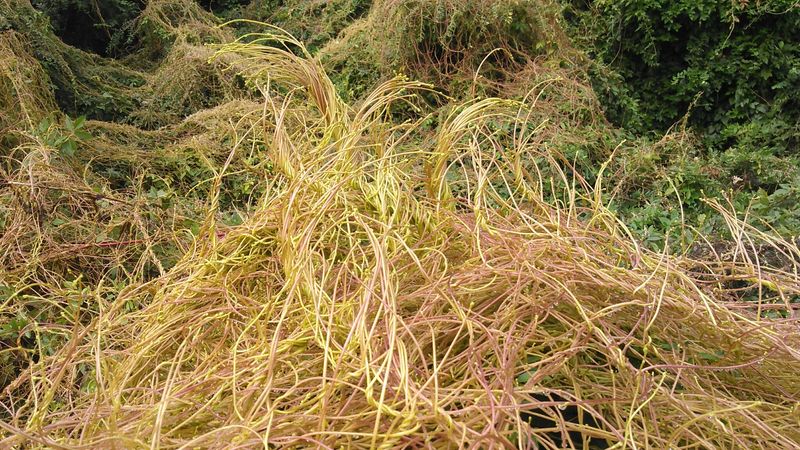
Japanese dodder spreads in several ways, and understanding these methods can help Texas gardeners prevent new infestations. One of the most common ways dodder spreads is through seeds.
The vine produces small, round seeds that can remain dormant in the soil for several years. When conditions are right, they germinate and begin searching for a host.
Even if you remove all visible dodder, seeds left in the soil can sprout again the following season.
Contaminated soil and plant material are another major source of spread. If you bring in new plants from a nursery or garden center, they may carry dodder seeds in the root ball or soil mix.
Small fragments of dodder vine can also cling to plant stems or pots. Once introduced to your garden, these fragments can quickly establish and begin spreading.
Garden tools are often overlooked as a source of contamination. Pruners, shovels, and even gloves can pick up tiny pieces of dodder vine.
If you use the same tools on multiple plants without cleaning them, you can transfer the vine from one area to another. This is especially common in Texas gardens where shrubs and beds are closely planted.
Dodder can also spread naturally by growing from plant to plant. Once it attaches to a host, it sends out new shoots that reach toward neighboring plants.
In densely planted areas, this happens very quickly. A single infected shrub can become a source of infestation for an entire hedge or flower bed in just a few weeks.
6. What Texas Gardeners Should Do Immediately?
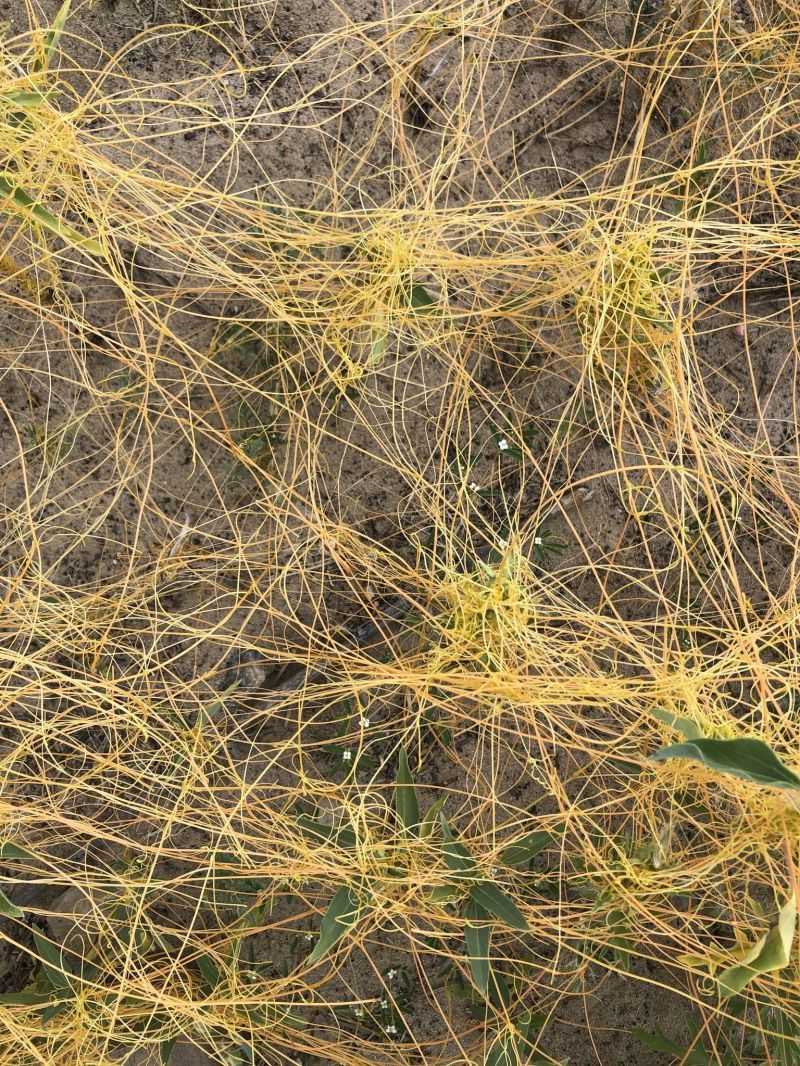
Speed is everything when it comes to controlling Japanese dodder. As soon as you spot the vine in your Texas garden, take action.
Do not wait to see if it will go away on its own, because it will not. The longer dodder remains on a plant, the more damage it does and the farther it spreads.
Start by pruning the infected plant material. Use clean, sharp pruners and cut below the point where the dodder is attached.
Remove all visible vines, even if it means cutting back healthy growth. It is better to lose a few inches of plant than to let the dodder continue feeding. Be thorough, and check the entire plant for any remaining strands.
After you remove the dodder, do not compost it. Dodder seeds and fragments can survive in compost piles and reinfest your garden later.
Instead, seal the plant debris in a plastic bag and throw it away with your household trash. This ensures the vine cannot spread to other areas.
Once you have removed the visible dodder, monitor the area closely. Check the plants every few days for signs of regrowth.
Dodder seeds in the soil may sprout again, and small fragments you missed can start spreading. If you see new vines, remove them immediately.
In severe cases, where dodder has overtaken large sections of a garden or hedge, you may need professional help. Contact your local Texas A&M AgriLife Extension office for advice.
They can provide guidance on control methods and help you develop a long-term management plan to keep dodder out of your Texas garden for good.