8 Invasive Plants Are Quietly Destroying South Florida Landscapes
South Florida’s lush landscapes hide a growing threat that spreads faster than most homeowners realize. Certain invasive plants slip into yards, preserves, and waterways, then quietly take over, choking out natives and reshaping entire ecosystems.
At first glance they look harmless, even beautiful. Beneath the surface, roots, vines, and dense canopies smother local species, disrupt wildlife habitats, and strain already fragile environments.
Neighborhoods lose biodiversity. Maintenance costs rise.
Natural areas shrink year after year. What begins as a single ornamental planting can spiral into widespread ecological damage across communities.
Gardeners, landscapers, and property owners now face a critical choice: protect South Florida’s unique landscape heritage or allow aggressive invaders to dominate it. Recognizing the worst offenders marks the first step toward reclaiming balance and preserving the vibrant, diverse scenery that defines this region.
1. Air Potato Smothers Everything In Its Path
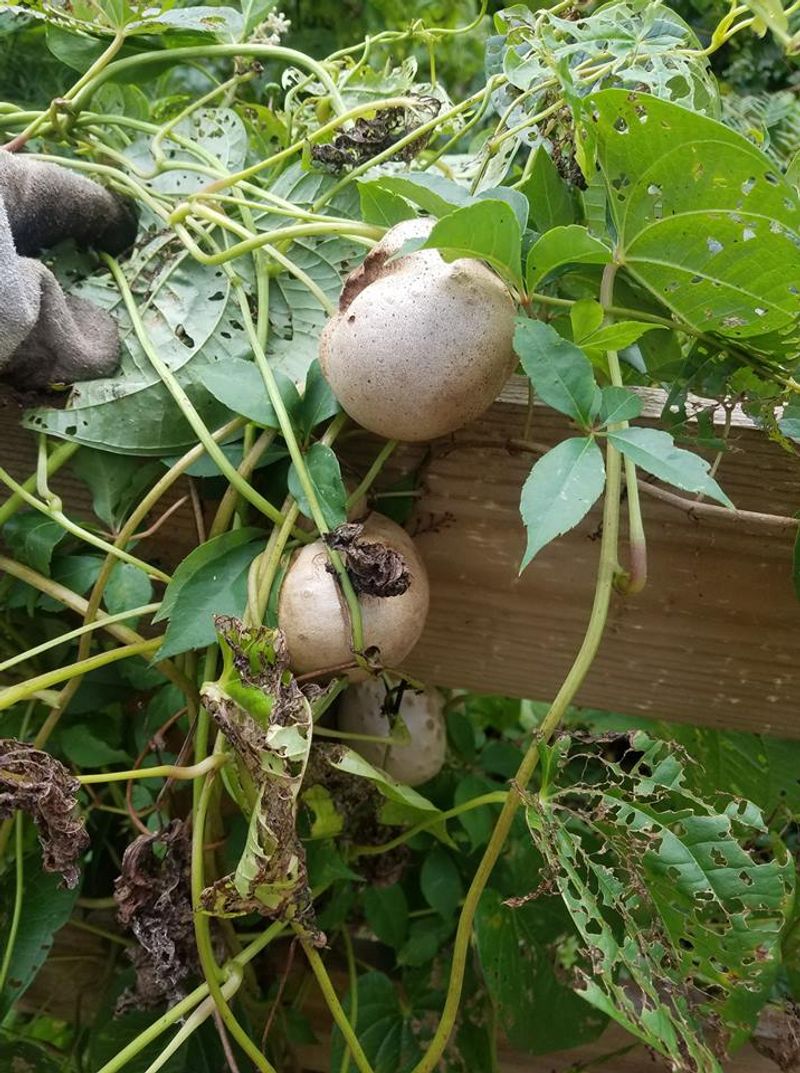
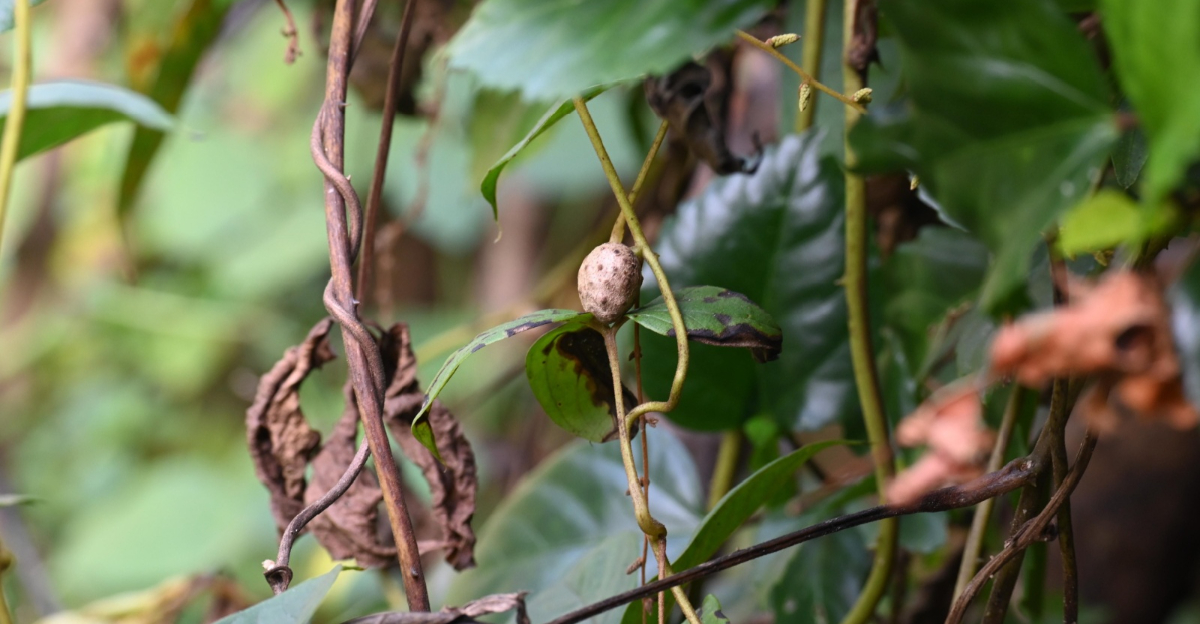
Walk through almost any South Florida neighborhood near a natural area and you will likely spot a fast-moving vine draped over trees, fences, and shrubs like a heavy green blanket. That vine is almost certainly air potato, known scientifically as Dioscorea bulbifera, and it is one of the most aggressive invaders in Florida.
It spreads primarily through small potato-like bulbils that form along its stems, drop to the ground, and sprout into new plants with very little encouragement.
A single vine can grow up to eight inches per day during warm months, which in South Florida means nearly year-round growth. As it climbs into tree canopies, it blocks sunlight from reaching the plants below, gradually weakening and sometimes displacing native shrubs and understory trees.
Natural areas, conservation lands, and even well-maintained yards near green spaces are all vulnerable.
University of Florida IFAS Extension notes that physical removal is labor-intensive because bulbils left on the ground will sprout again. A biological control agent, the air potato leaf beetle, has shown promising results in Florida and is being used in managed areas.
Homeowners should remove vines before bulbils form and dispose of all plant material carefully to avoid spreading them further.
2. Brazilian Peppertree Takes Over Native Landscapes
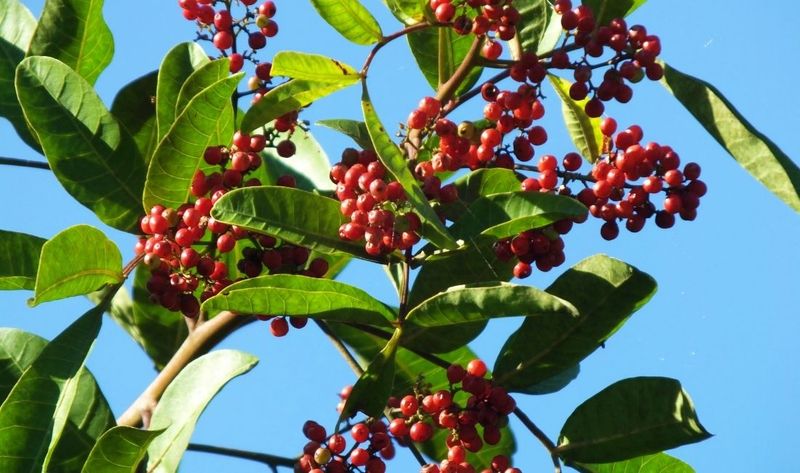
Few invasive plants in South Florida have reshaped the natural landscape as dramatically as Brazilian peppertree, Schinus terebinthifolia. Introduced as an ornamental plant in the 1800s, it quickly escaped cultivation and now covers an estimated 700,000 acres across Florida, according to the Florida Invasive Species Council.
Its dense canopy and allelopathic properties, meaning it releases chemicals that suppress competing plants, make it extremely effective at pushing out native species.
Brazilian peppertree thrives in disturbed areas, roadsides, wetland edges, and uplands throughout South Florida. Birds consume its bright red berries and spread seeds widely, which accelerates its reach into natural preserves and conservation areas.
Once established, it forms nearly impenetrable thickets that eliminate the diverse native understory that wildlife depends on for food and shelter.
Florida law prohibits the sale and intentional planting of Brazilian peppertree, making it one of the few invasive plants with legal restrictions in the state. Removal requires cutting and treating stumps promptly because the plant resprouts aggressively from the root system.
Your Florida Garden Changes Every Week. Your Plan Should Too.
Gardening in Florida changes quickly throughout the season. Every Friday you’ll receive a simple weekly plan showing exactly what to plant, prune, fertilize, harvest, and protect so you never miss the right timing.
For large infestations, professional removal followed by replanting with native species is the most effective long-term management strategy recommended by IFAS Extension.
3. Old World Climbing Fern Swallows Forests Whole
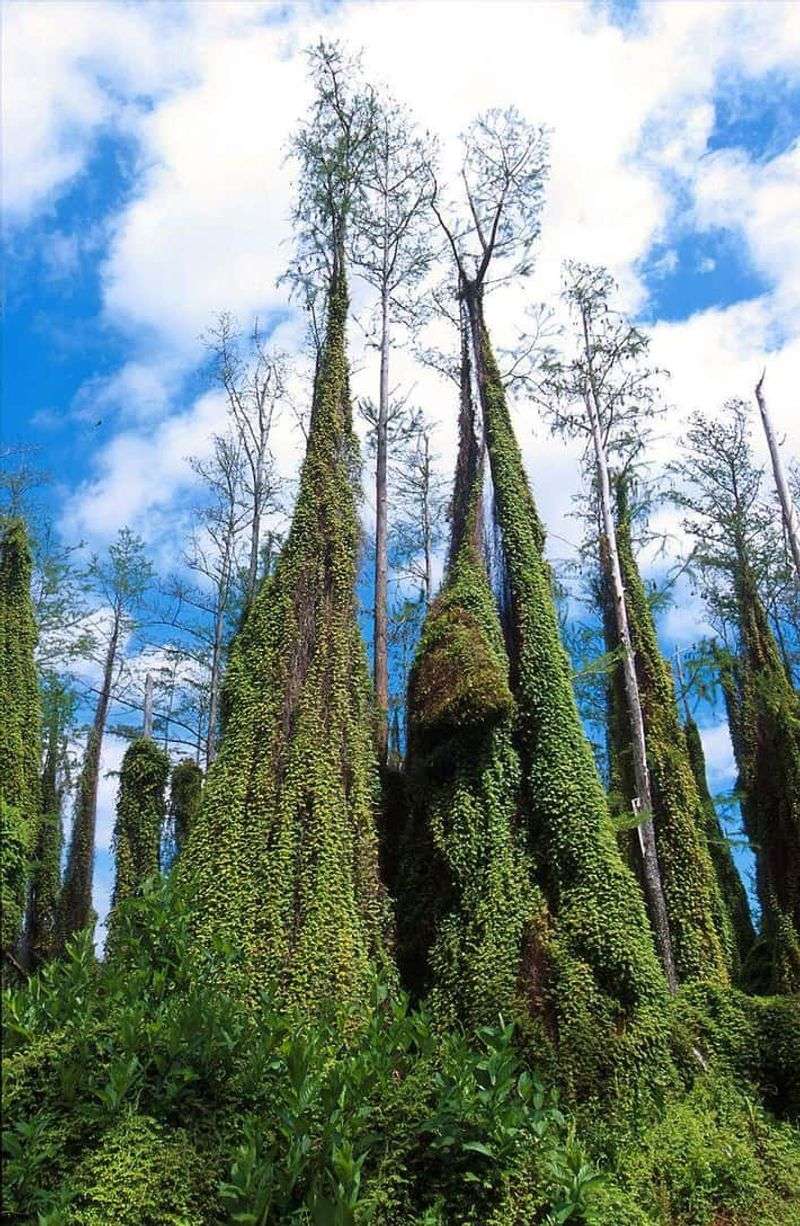
Standing at the edge of a South Florida cypress swamp or pine flatwood and looking up into the canopy, you might notice something that looks like a lacy green curtain draped over the treetops. That is Old World climbing fern, Lygodium microphyllum, and what looks delicate from a distance is actually one of the most ecologically destructive invasive plants in the state.
Unlike most ferns that stay low to the ground, this species climbs using twining fronds that can reach heights of 90 feet or more.
It spreads through microscopic spores carried by wind and water, allowing it to colonize new areas rapidly across South Florida. The fern forms continuous mats from the ground through the mid-story and into the canopy, creating a ladder of flammable material that allows ground fires to climb into the treetops.
In fire-dependent ecosystems like pine flatwoods, this dramatically increases fire intensity and causes severe damage to mature trees.
The University of Florida IFAS Extension and South Florida Water Management District have been working on management strategies for years. Herbicide treatment is currently the most effective control method, but treating large infestations is expensive and requires repeated applications.
Early detection on private property is critical to preventing spread into neighboring conservation areas.
4. Water Hyacinth Chokes Lakes And Canals
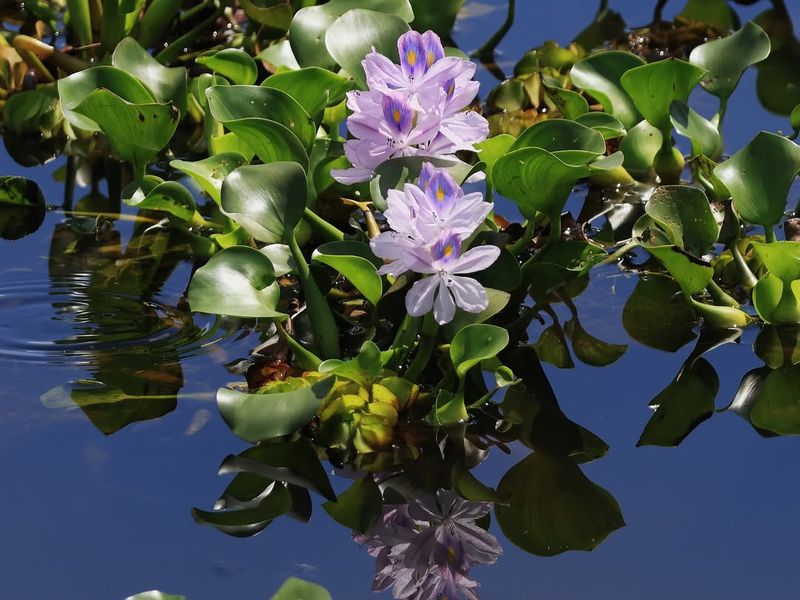
South Florida canals and lakes are among the most important water management features in the region, and water hyacinth, Pontederia crassipes, threatens their function in a very direct way. This floating aquatic plant reproduces so rapidly that a small cluster can double in size within a few weeks under ideal conditions.
South Florida’s warm water temperatures and nutrient-rich waterways provide exactly the environment this species needs to reach explosive population levels.
As mats of water hyacinth spread across a water surface, they block sunlight from reaching submerged aquatic vegetation and reduce oxygen levels in the water below. Fish, native aquatic plants, and invertebrates all suffer when water hyacinth coverage becomes dense.
Boat navigation, flood control operations, and water intake structures can also be impaired when infestations grow large enough.
The Florida Fish and Wildlife Conservation Commission and local water management districts actively manage water hyacinth using mechanical harvesting and approved aquatic herbicides. Homeowners with waterfront properties should report new infestations promptly rather than attempting removal without guidance, as improper removal can actually spread plant fragments and worsen the problem.
Preventing nutrient runoff from yards into waterways reduces the fertilization effect that helps this plant spread so aggressively.
5. Cogongrass Spreads Fast And Burns Hot
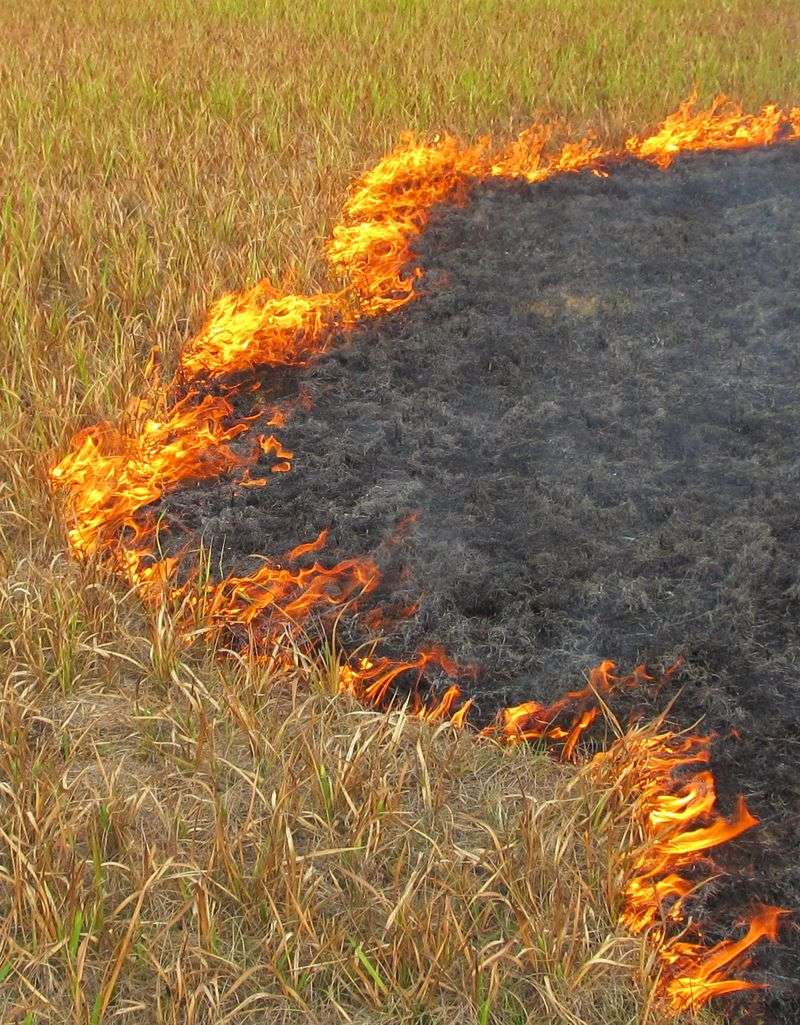
Ranked among the ten worst weeds in the world by agricultural researchers, cogongrass, Imperata cylindrica, has established a significant foothold in Florida and continues to expand its range. It was introduced into the southeastern United States in the early 1900s, partly through contaminated soil and packing materials, and partly through intentional planting for erosion control before its invasive nature was recognized.
In South Florida, it thrives in disturbed areas, roadsides, pastures, and the edges of natural areas.
Underground rhizomes, which are horizontal root-like stems, allow cogongrass to spread laterally even when the above-ground portions are removed. These rhizomes can extend several feet in all directions and make complete eradication extremely difficult.
It spreads mainly through underground rhizomes and also produces wind-dispersed seeds, giving it two pathways for colonization.
From a fire management standpoint, cogongrass is especially concerning. It burns at higher temperatures and with greater intensity than native grasses, which disrupts natural fire cycles in Florida’s fire-dependent ecosystems.
According to University of Florida IFAS Extension, repeated herbicide applications over multiple years are typically required to achieve meaningful control. Preventing new introductions by cleaning equipment and vehicles before moving between sites is one of the most practical steps landowners can take.
6. Mexican Petunia Escapes And Crowds Out Natives
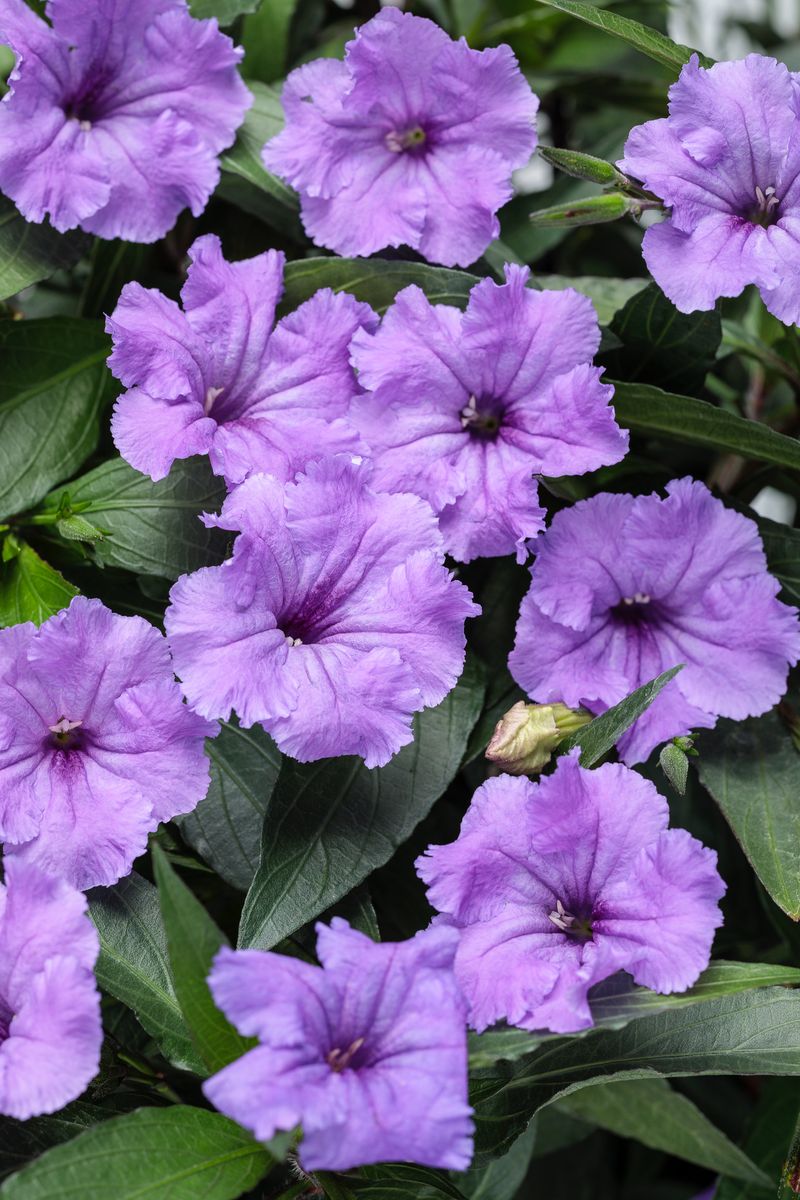
For years, Mexican petunia, Ruellia simplex, was a popular choice in South Florida landscaping because of its attractive purple flowers, drought tolerance, and low maintenance requirements. Nurseries sold it widely and homeowners planted it along borders, in medians, and around ponds without much concern.
The problem became clear as plants began showing up far beyond garden boundaries, spreading into wetlands, roadsides, and natural areas throughout South Florida.
Mexican petunia spreads through both seeds and underground rhizomes, giving it a powerful dual strategy for colonization. A single plant can produce hundreds of seeds that are forcefully ejected from the seed capsule and carried by water and foot traffic into new areas.
Once established in a wetland or disturbed natural area, it forms dense stands that crowd out native wetland plants that provide critical habitat for Florida wildlife.
University of Florida IFAS Extension recommends avoiding Mexican petunia in home landscapes and replacing existing plants with native alternatives such as Ruellia caroliniensis, the native wild petunia, which provides similar visual appeal without the invasive behavior. Non-spreading sterile cultivars are available but should be verified carefully at purchase to ensure they are truly sterile.
Removing plants before they set seed and treating regrowth from rhizomes consistently over time is the recommended approach for managing existing infestations in yards and natural areas.
7. Water Lettuce Covers Waterways In Thick Mats
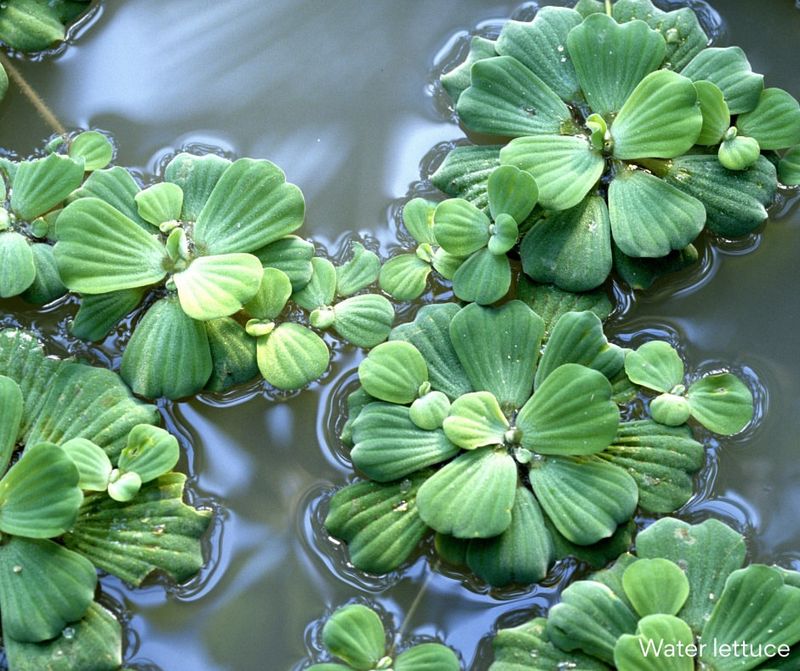
Anyone who has paddled through a South Florida freshwater system has probably encountered water lettuce, Pistia stratiotes, at some point. Its soft, velvety rosette of pale green leaves sits directly on the water surface and looks almost harmless at first glance.
But when conditions favor its growth, water lettuce forms mats so thick and continuous that open water disappears entirely beneath a carpet of floating vegetation.
Water lettuce reproduces both by seed and through offshoots called stolons, which connect parent plants to daughter plants and allow colonies to expand outward in every direction. South Florida’s warm temperatures, high humidity, and nutrient-enriched waterways from agricultural and residential runoff create near-ideal conditions for rapid growth throughout much of the year.
Dense coverage reduces light penetration, lowers dissolved oxygen, and creates conditions that stress fish and native aquatic species.
Although water lettuce may be native to Florida, its aggressive growth in nutrient-enriched waterways can cause impacts similar to invasive species, and state agencies manage problem infestations using mechanical and chemical methods. Homeowners can help by reducing fertilizer use near waterways and reporting unusually dense infestations to local water management districts for assessment and potential treatment.
8. Alligatorweed Invades Land And Water Alike
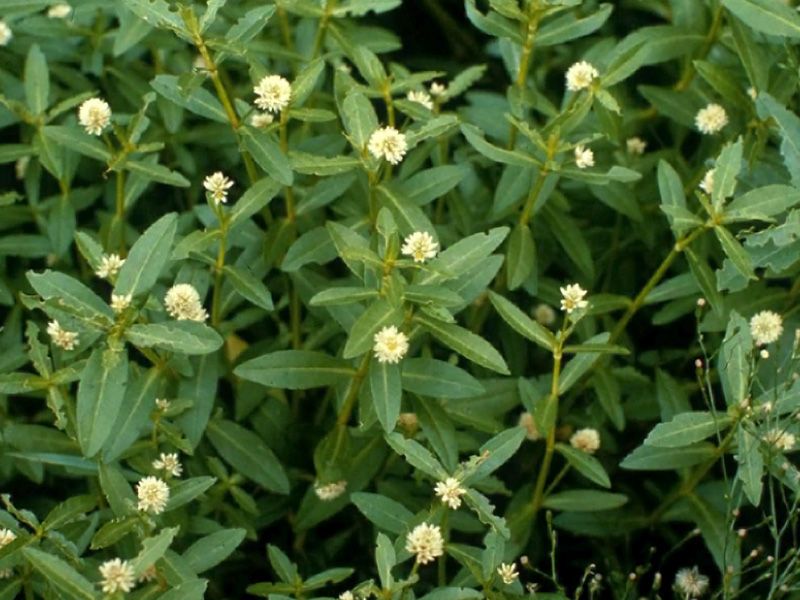
Most invasive plants choose either land or water as their primary habitat. Alligatorweed, Alternanthera philoxeroides, does not follow that rule.
Native to South America, it grows aggressively in both aquatic and terrestrial environments, forming dense mats along canal banks, in shallow water, on moist soil, and even in upland areas during wet periods. That environmental flexibility is precisely what makes it so challenging to manage across South Florida.
In water, alligatorweed forms floating mats anchored by roots that reach into the sediment, restricting water flow through canals and drainage ditches. On land, it spreads through stem fragments and underground runners, quickly establishing new colonies wherever moisture is available.
Stem fragments carried by water or on equipment can root and establish new infestations downstream or in entirely new locations.
Biological control using the alligatorweed flea beetle, Agasicles hygrophila, has provided some suppression in aquatic environments but is less effective against terrestrial populations. According to University of Florida IFAS Extension, no single management method eliminates alligatorweed completely, and a combination of mechanical removal, herbicide treatment, and biological control is typically needed for long-term management.
Preventing the movement of plant material on boats, trailers, and landscaping equipment remains one of the most effective ways to stop its continued spread through South Florida waterways.