How To Grow Avocados In Southern California Backyards The Right Way
Dreaming of stepping into your backyard and picking a buttery, homegrown avocado straight from the tree? In Southern California, that dream is completely within reach.
With warm sunshine, mild winters, and long growing seasons, this region offers ideal conditions for thriving avocado trees. Still, success is not just about planting and hoping for the best.
The right variety, proper soil preparation, smart watering habits, and a little patience make all the difference between a struggling sapling and a generous, fruit loaded tree.
Avocados can be surprisingly particular, yet once you understand what they love, they reward you with glossy green foliage and harvests that taste far better than anything from the store.
If you are ready to grow your own creamy, crowd pleasing fruit at home, a few thoughtful steps will set you up for years of backyard abundance.
1. Choose The Right Variety
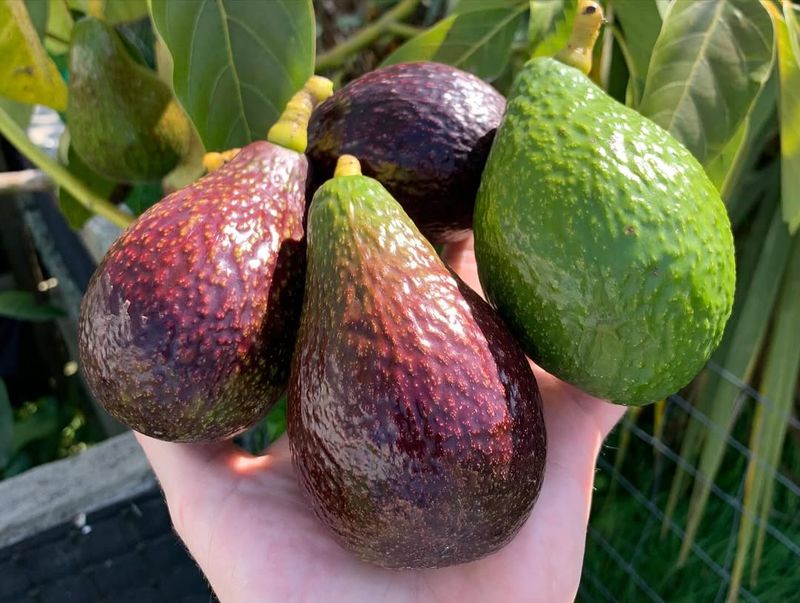
Not all avocados are built the same, and picking the wrong variety for your backyard can make everything harder than it needs to be. In Southern California, the Hass avocado is the most popular choice for home growers.
It produces rich, creamy fruit, handles the heat well, and thrives in the warm coastal and inland climates found across the region.
Fuerte is another solid pick, especially if you live closer to the coast where temperatures stay milder. It grows well in San Diego and Los Angeles counties and tends to produce earlier in the season than Hass.
Reed is a great option if space is limited, since it grows more upright and compact than other varieties.
Most avocados are self-fruiting to some degree, but planting two trees of different flower types nearby can boost your harvest significantly. Avocados have Type A and Type B flowers, and pairing one of each helps with pollination.
Before you buy a tree, check with a local Southern California nursery to find out which varieties do best in your specific zip code or microclimate. Getting this first step right sets you up for success from day one.
2. Give It Full Sun
Avocado trees are sun lovers through and through. To grow well and produce fruit, they need at least six to eight hours of direct sunlight every single day.
In Southern California, that kind of sunshine is easy to come by for most of the year, which is one big reason this region is so ideal for growing avocados at home.
When choosing where to plant your tree, look for the sunniest spot in your yard. Avoid areas that are shaded by buildings, fences, or larger trees for most of the day.
Even partial shade can slow growth and reduce how much fruit your tree produces over time.
South-facing and west-facing spots tend to get the most sun exposure in Southern California yards. If you are in an inland area like Riverside or the San Fernando Valley, your tree will soak up plenty of heat during the summer months.
Just make sure it also has some protection from intense afternoon wind, which can dry out young trees quickly.
Your California Garden Changes Every Week. Your Plan Should Too.
Gardening in California changes quickly throughout the season. Every Friday you’ll receive a simple weekly plan showing exactly what to plant, prune, fertilize, harvest, and protect so you never miss the right timing.
Planting near a wall or fence that reflects warmth can actually help the tree thrive, especially during cooler winter months. Sunlight truly is the fuel that powers healthy avocado growth.
3. Plant High, Not Deep
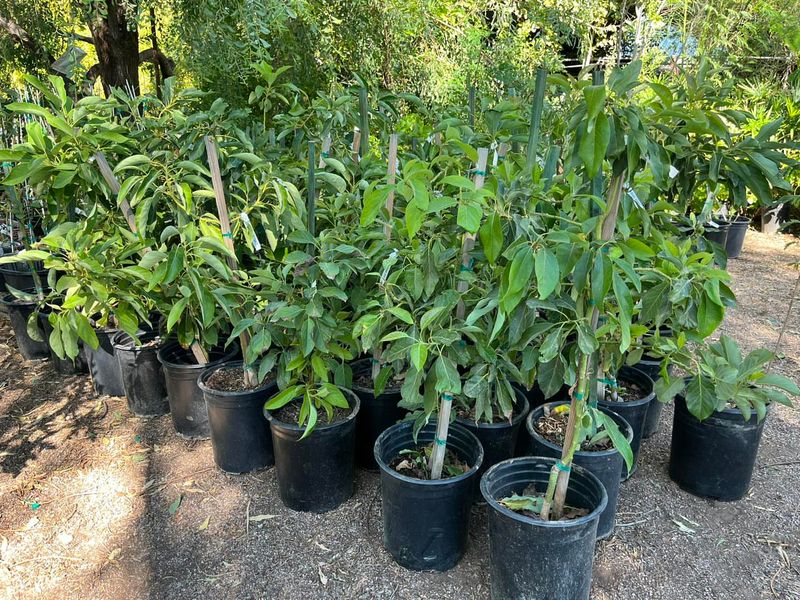
Here is something that surprises a lot of new avocado growers: planting too deep is one of the most common mistakes people make. Avocado roots need oxygen just as much as they need water.
When the root crown gets buried under soil, it can suffocate and lead to serious root problems that are very hard to fix later.
The right way to plant an avocado tree is to set it slightly above the surrounding soil level. Create a small mound and place the root ball on top so the base of the trunk sits about an inch or two above the ground.
This keeps water from pooling around the crown after irrigation or rain.
In Southern California, many yards have heavy clay soils that drain poorly, especially in older neighborhoods. Planting high helps protect your tree from sitting in waterlogged soil after those rare but heavy winter rainstorms.
You can also build a small raised bed or berm around the tree to improve drainage even further.
Before you plant, loosen the soil in a wide area around the hole to encourage roots to spread outward. Wide and shallow is how avocado roots like to grow, so give them room to do exactly that.
4. Water Deep, Not Often
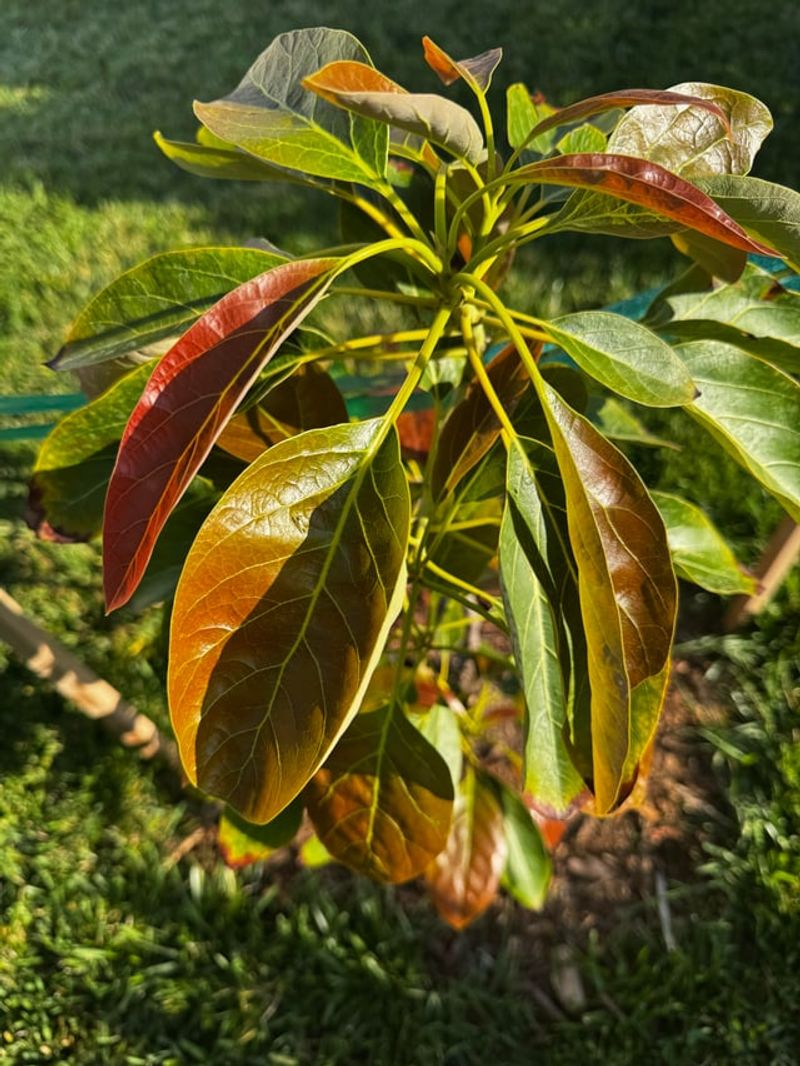
Watering an avocado tree correctly might be the single most important skill to learn. These trees do not like to sit in wet soil, but they also cannot handle long periods of drought once they are established.
The trick is to water deeply and then let the soil dry out a bit before watering again.
Deep watering means soaking the soil slowly so moisture reaches down twelve to eighteen inches into the ground. This encourages roots to grow deeper, which makes the tree more stable and more drought-tolerant over time.
Shallow, frequent watering does the opposite and creates weak, surface-level roots that stress out during hot Southern California summers.
A good rule of thumb for most Southern California backyards is to water once or twice a week during summer and cut back significantly during the cooler, wetter months of winter. Always check the soil before watering.
Stick your finger a few inches into the ground near the tree. If it still feels moist, wait another day or two.
Overwatering is far more common than underwatering with avocados and causes root rot, which is very difficult to recover from. Getting your watering schedule dialed in will make a noticeable difference in how your tree grows and produces fruit.
5. Feed Regularly
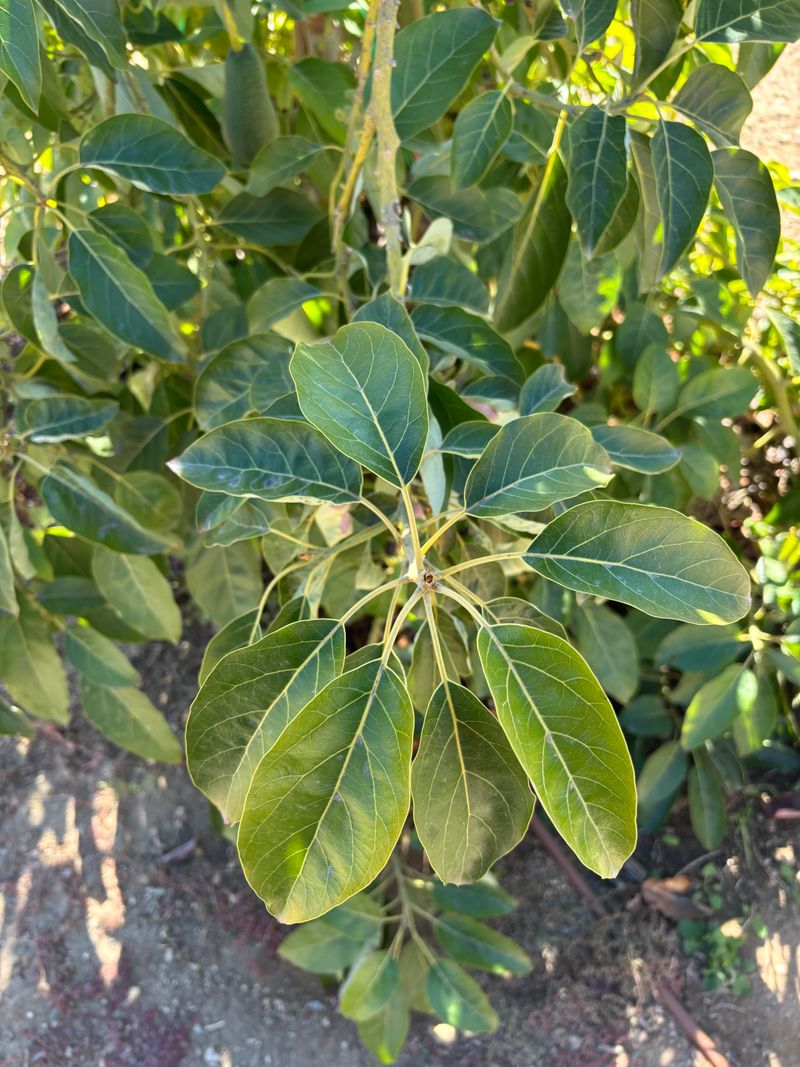
Avocado trees are heavy feeders, meaning they pull a lot of nutrients from the soil to fuel their growth and fruit production. Without regular fertilizing, your tree may grow slowly, produce fewer avocados, or start showing yellowing leaves.
Feeding your tree on a consistent schedule keeps it healthy and productive year after year.
Look for a fertilizer made specifically for avocados or citrus trees at your local Southern California nursery. These blends typically include nitrogen, phosphorus, potassium, and zinc, which are all nutrients avocados need in good amounts.
Apply fertilizer three to four times a year, spacing out the feedings evenly from spring through early fall.
Always follow the label directions and avoid over-fertilizing, especially with nitrogen. Too much nitrogen pushes leafy green growth at the expense of fruit.
Water the tree well before and after applying fertilizer to help the roots absorb the nutrients without burning. Young trees need lighter doses than mature ones, so adjust accordingly as your tree grows.
If your leaves start looking pale or yellowish between the veins, your tree might need a dose of iron or magnesium, both of which are sometimes lacking in Southern California soils. A simple soil test can help you figure out exactly what your tree needs.
6. Protect From Heat And Frost
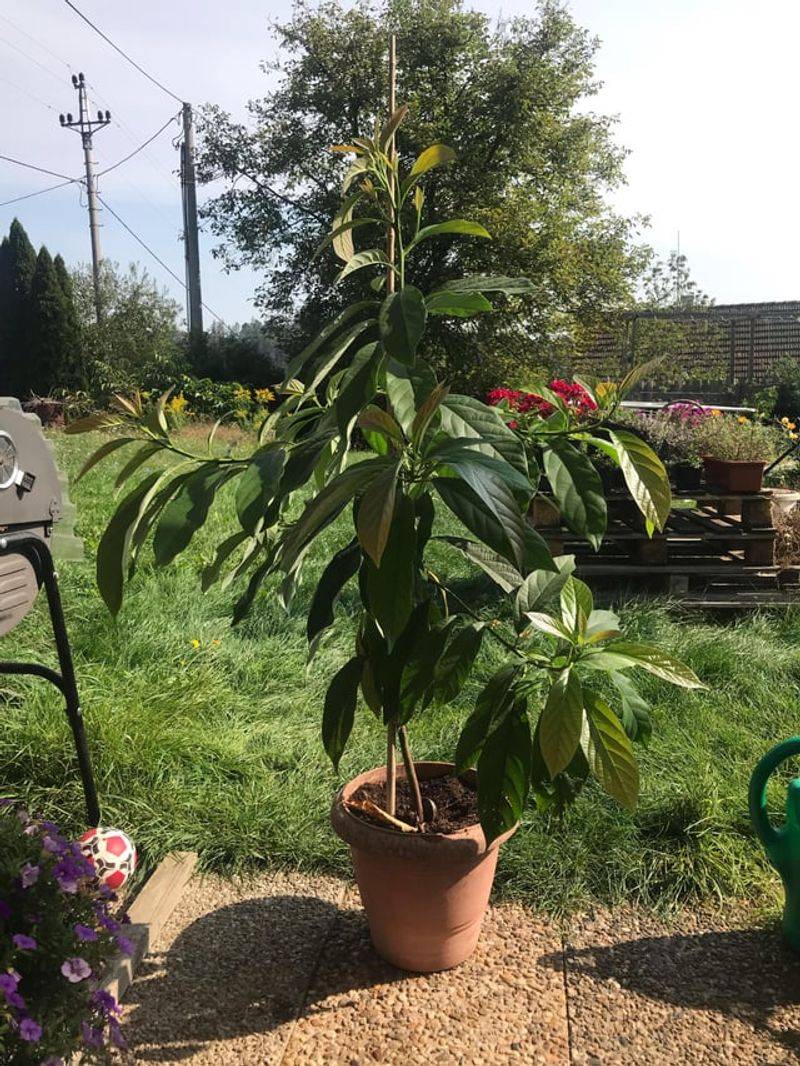
Southern California is mostly warm and sunny, but that does not mean avocado trees never face weather challenges. Inland areas like the Inland Empire, Temecula, and parts of the San Fernando Valley can dip below freezing on winter nights.
Even a short frost can damage young avocado trees and set back their growth by an entire season.
When temperatures are expected to drop below 30 degrees Fahrenheit, cover young trees with frost cloth or an old bedsheet overnight. Remove the covering during the day so the tree can breathe and soak up sunlight.
Mature trees are more cold-tolerant, but it is still smart to protect them during unexpected cold snaps.
On the flip side, extreme summer heat can also stress avocado trees, especially in inland Southern California where temperatures can climb past 100 degrees for days at a time. During heat waves, water more frequently to keep the roots cool and moist.
You can also apply a thin coat of diluted white latex paint to the trunk to prevent sunburn on younger trees. Sunburn on bark looks like brown, cracked patches and can weaken the tree over time.
A little extra care during weather extremes goes a long way toward keeping your tree strong and productive through every season.
7. Mulch The Right Way
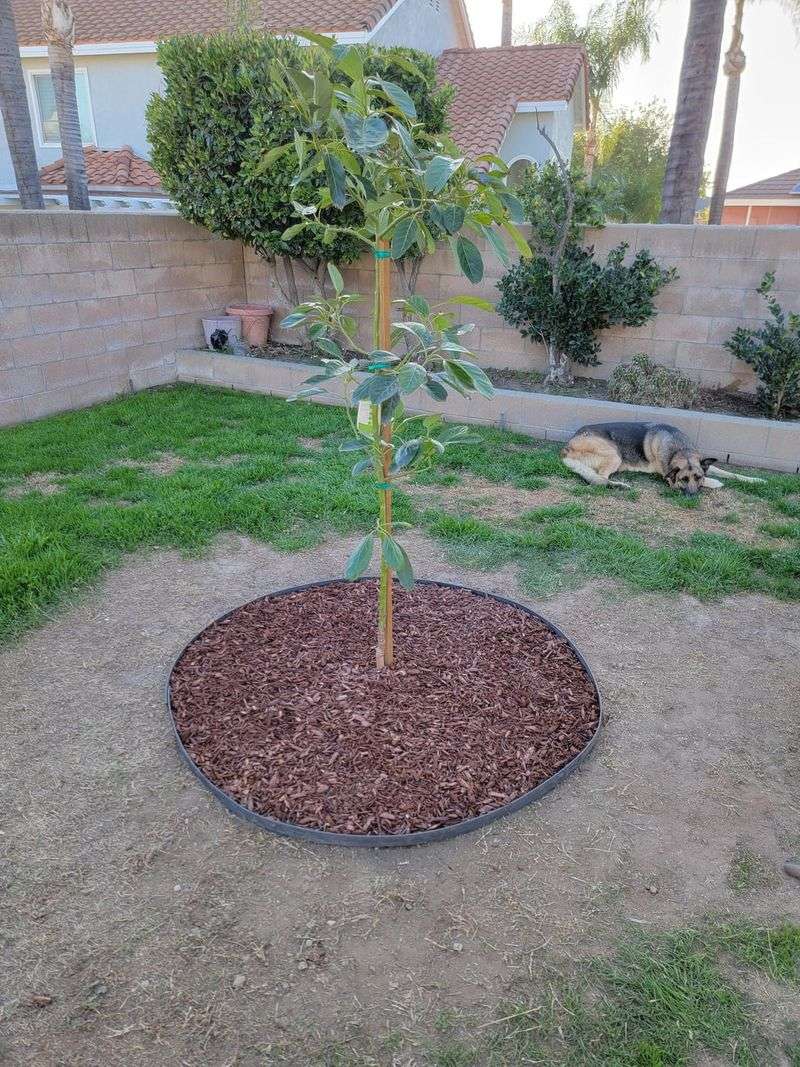
Mulching is one of the easiest and most rewarding things you can do for your avocado tree. A good layer of mulch holds moisture in the soil, keeps roots cool during hot Southern California summers, and slowly breaks down to add organic matter back into the ground.
It also helps prevent weeds from competing with your tree for water and nutrients.
Spread a three to four inch layer of coarse wood chips or bark mulch in a wide ring around your tree. The ring should extend out at least three feet from the trunk, and ideally as far as the drip line of the branches.
The wider the mulch ring, the better protected the roots will be.
One critical detail: never pile mulch directly against the trunk of the tree. Keep at least six inches of clear space between the mulch and the base of the trunk.
When mulch touches the bark, it traps moisture and creates the perfect environment for fungal problems and pests to take hold. This mistake is surprisingly common in Southern California home gardens and can cause serious damage over time.
Refresh your mulch layer every six to twelve months as it breaks down. Avocado trees grown with consistent mulching tend to be noticeably healthier and more productive than those grown without it.
8. Prune With Purpose
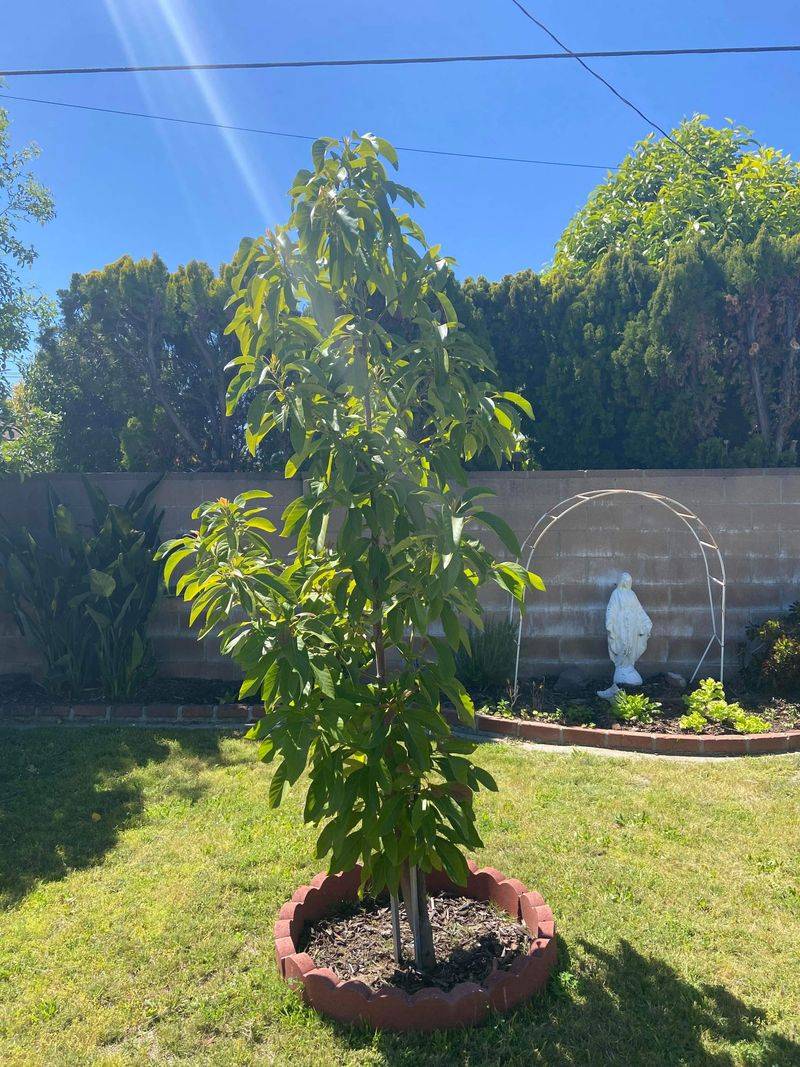
Avocado trees do not need a ton of pruning, but a little thoughtful trimming goes a long way. Left completely unpruned, avocado trees can grow very tall very fast, sometimes reaching thirty feet or more.
In a typical Southern California backyard, that kind of height makes harvesting fruit nearly impossible and can cause issues with neighbors or utility lines.
The goal of pruning is to keep the tree at a manageable height, usually between ten and fifteen feet for home growers, while also opening up the canopy to allow sunlight and airflow to reach the inner branches.
More sunlight inside the canopy means more fruiting wood and a healthier overall tree. Prune in late winter or early spring before the new growth flush begins. Remove any dead, crossing, or downward-growing branches first.
Then step back and look at the overall shape before making any more cuts. Avoid removing more than twenty percent of the canopy in a single season, as heavy pruning can stress the tree and reduce that year’s fruit crop.
Always use clean, sharp tools to make smooth cuts that heal quickly. In Southern California, where trees grow year-round due to the mild climate, staying on top of pruning every one to two years keeps everything manageable and productive.
9. Harvest At The Right Time
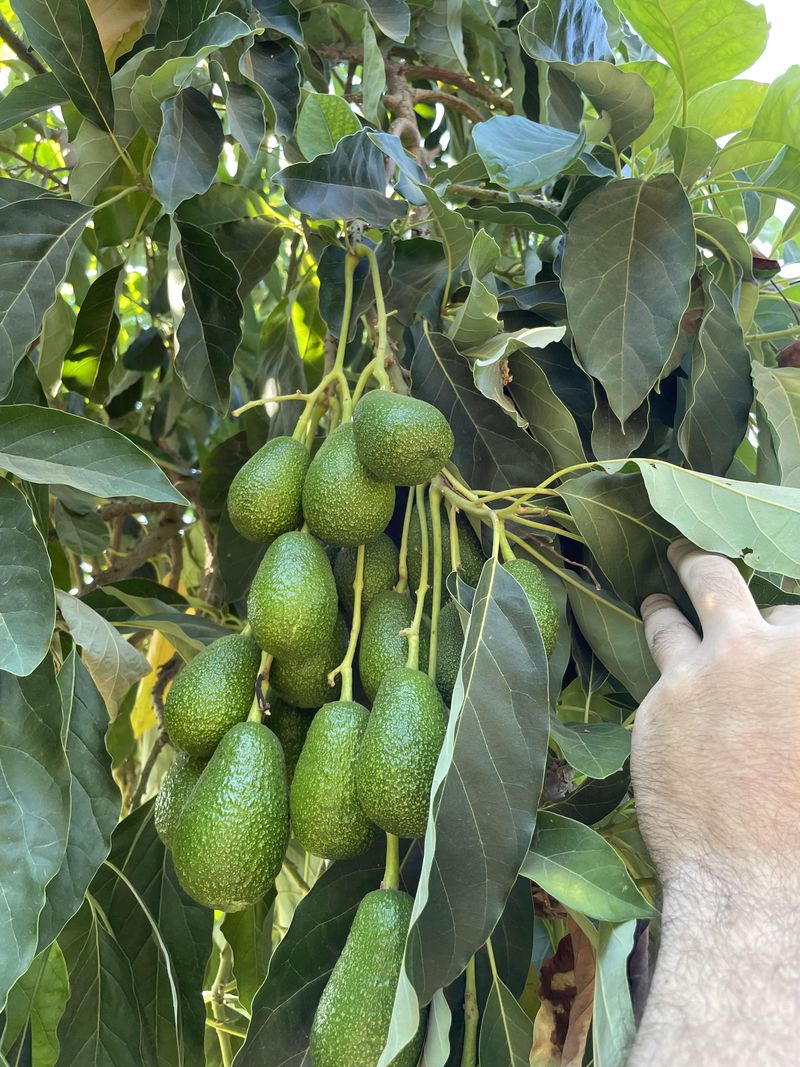
One of the most confusing things about growing avocados is knowing when to pick them. Unlike most fruits, avocados do not ripen on the tree.
They only soften and ripen after they have been picked, which makes timing the harvest a little tricky for first-time growers in Southern California backyards.
The good news is that avocados can actually stay on the tree for several months past maturity without going bad. Hass avocados are typically ready to harvest from late winter through early summer in most parts of Southern California, though timing varies by location and elevation.
A simple test is to pick one avocado and leave it at room temperature for five to seven days. If it softens evenly and tastes rich and buttery, the rest of the crop is ready to harvest.
To pick avocados, twist and pull gently or use a fruit picker pole for higher branches. Leave about an inch of stem attached to each fruit to extend shelf life.
Store unripe avocados at room temperature and move them to the refrigerator once they soften to slow down the ripening process.
There is nothing quite like walking into your own Southern California backyard and picking fresh avocados straight from your tree. That first homegrown guacamole makes every bit of effort completely worth it.