What A Florida Freeze Really Does To Bird Of Paradise Plants
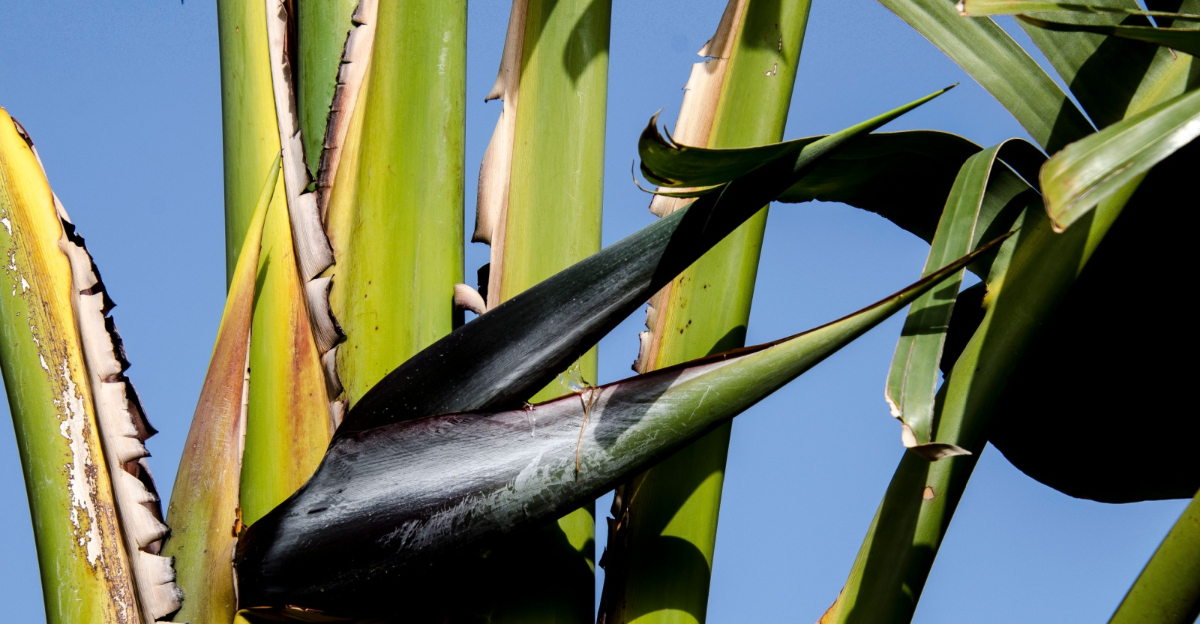
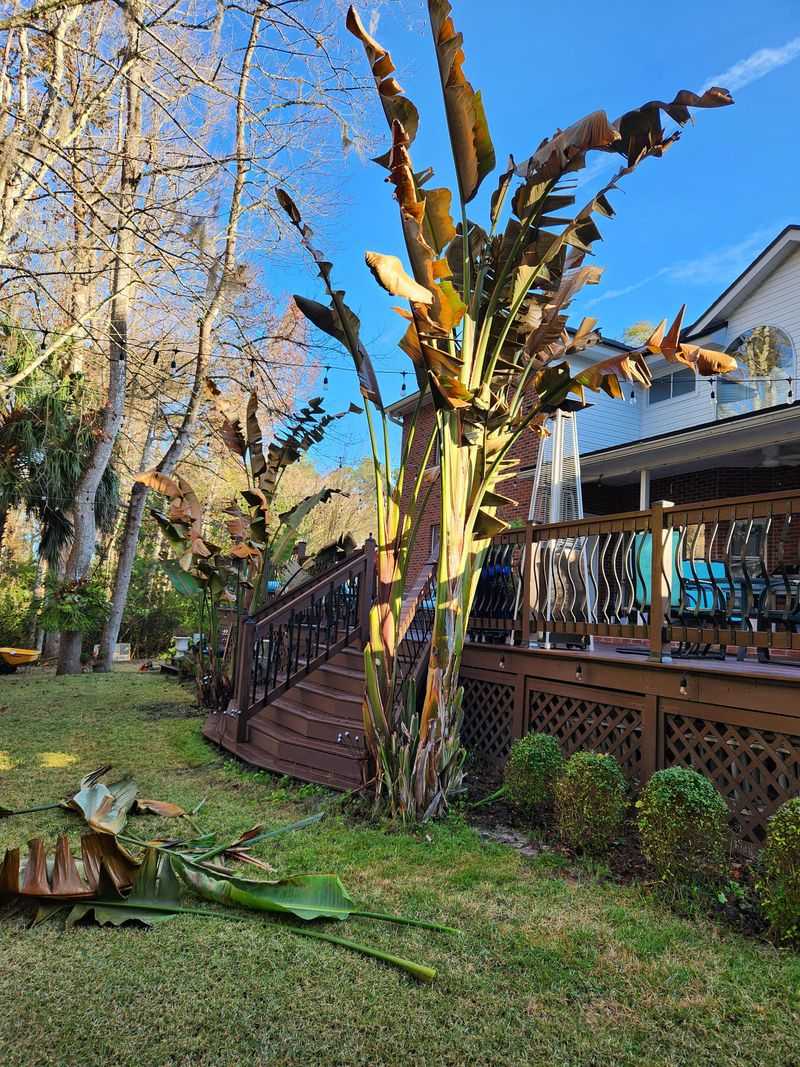
Just one bitter night can shatter a once thriving tropical display. After a Florida freeze, Bird of Paradise plants that once stood tall and vibrant often look shredded, collapsed, and shockingly lifeless by morning.
The bold leaves split. Stalks droop.
That dramatic, architectural presence suddenly feels fragile. Many gardeners assume the worst and reach for pruners too quickly, while others wait in confusion, unsure what damage truly runs deep.
Florida’s freezes may be brief, but their impact can be intense, especially on plants that thrive in warmth and steady sun. The visible damage tells only part of the story.
Beneath the surface, the real effects of cold exposure unfold over days and even weeks.
Before you cut, dig, or give up on your plant, it helps to understand what a Florida freeze actually does to Bird of Paradise and what that damage really means for its recovery.
1. Cold Damage Shows Up Within Hours
Freezing air moves fast, and Bird of Paradise plants feel it almost immediately. Within just a few hours of temperatures dropping below 32 degrees Fahrenheit, the moisture inside leaf cells begins to freeze and expand, rupturing the delicate cell walls.
Gardeners who step outside the morning after a cold snap often notice the foliage looking darker, almost translucent, with a water-soaked appearance that was not there the night before.
The damage spreads from the leaf tips and edges inward, which is why outer leaves usually look worse than younger inner growth. In North Florida, where hard freezes happen more regularly, this kind of injury is familiar territory for seasoned gardeners.
Central Florida growers may only see it once or twice a decade, making the sight feel more alarming than it actually is.
Younger, softer tissue is always the first to show stress because it holds more moisture and has less structural protection. Recognizing this early damage for what it is, a surface-level injury rather than a total loss, helps gardeners stay calm and make smarter decisions in the days ahead.
Do not rush to prune or water heavily right away. Give the plant time to show you the full picture first.
2. Leaves Burn, Soften, And Collapse Fast
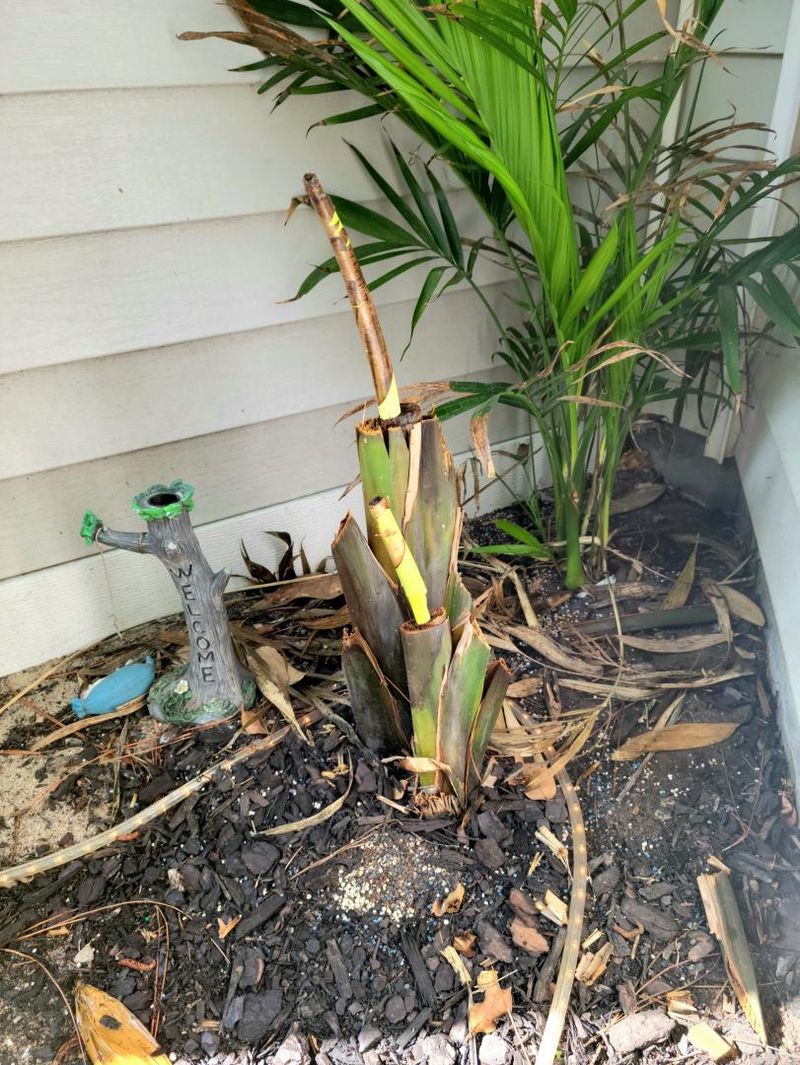
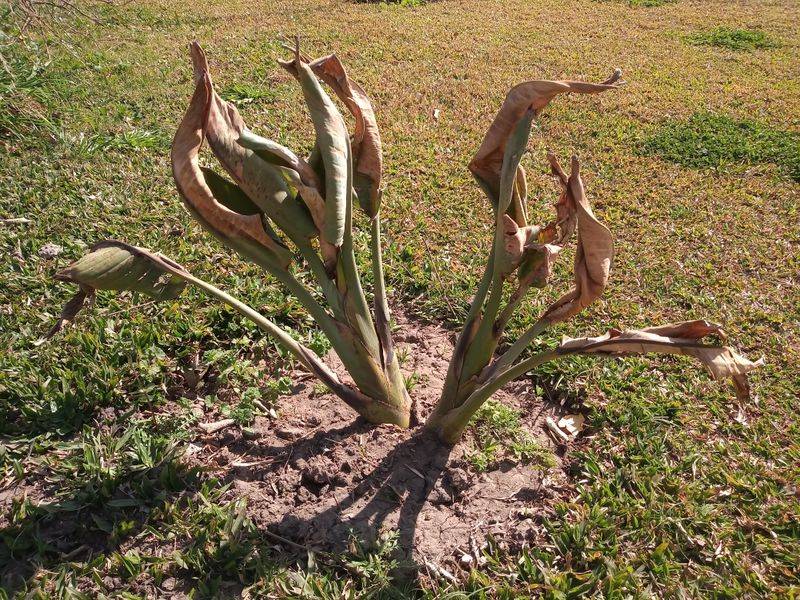
Few sights are more discouraging than walking outside to find your Bird of Paradise looking like it melted overnight. The broad, paddle-shaped leaves that once stood tall and proud now hang limp, their surfaces darkened to shades of brown, gray, or nearly black.
This collapse happens because frozen cell walls can no longer hold the plant’s structure upright once they thaw out in the morning warmth.
The foliage may feel soft and almost mushy to the touch, especially along the midrib and near the base of each leaf. Water-soaked streaks often run lengthwise down the blade, marking exactly where ice crystals formed and caused internal rupturing.
In South Florida, where temperatures rarely dip this low, even a brief 34-degree night can produce surprising browning on the leaf margins, though full collapse is less common that far south.
Your Florida Garden Changes Every Week. Your Plan Should Too.
Gardening in Florida changes quickly throughout the season. Every Friday you’ll receive a simple weekly plan showing exactly what to plant, prune, fertilize, harvest, and protect so you never miss the right timing.
What you are seeing is called desiccation injury combined with cellular freeze damage, and while it looks alarming, it does not always signal permanent harm to the whole plant. The leaves themselves are often the sacrificial layer, absorbing the brunt of the cold so that the crown and root system below have a better chance of pulling through.
Patience is genuinely your best tool right now.
3. The Pseudostem Reveals True Survival
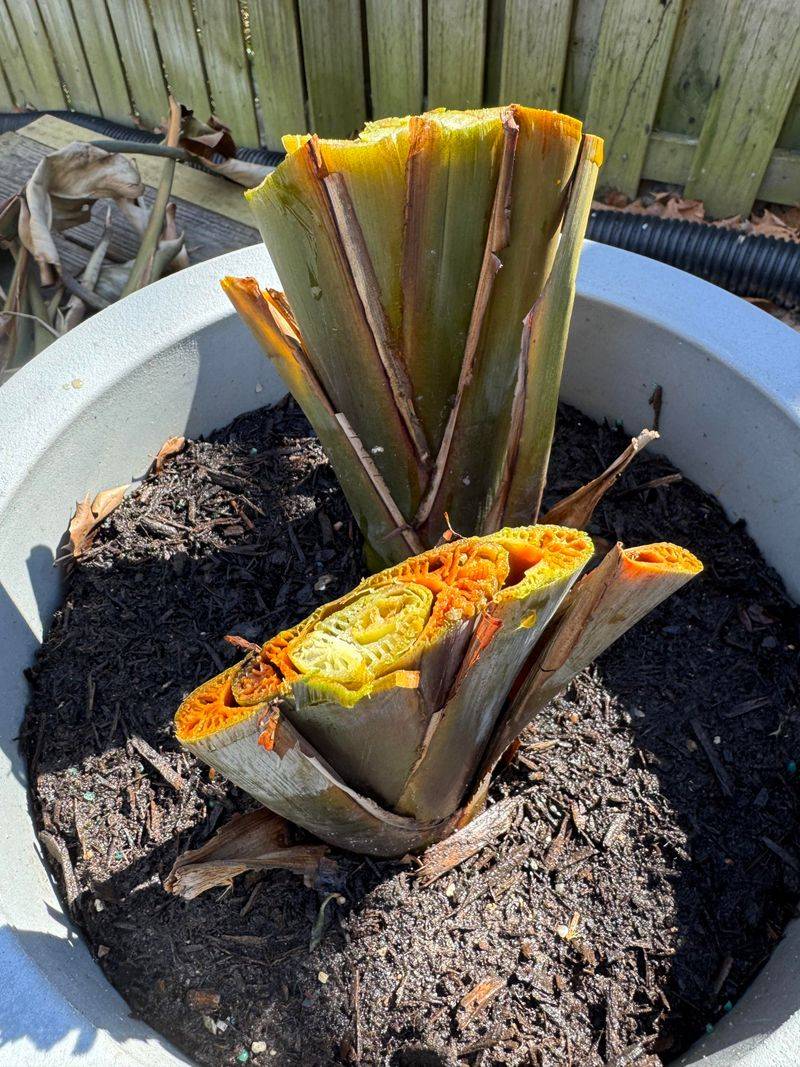
Once the initial shock of seeing frost-burned foliage settles, the most important question becomes whether the plant’s core is still healthy. For Bird of Paradise, that answer lives in the pseudostem, the thick, fleshy upright structure that forms the base of each leaf cluster.
Gently pressing or lightly cutting into the outer layer reveals a lot about what survived the freeze and what did not.
Firm, pale green, or cream-colored tissue inside the pseudostem is a very encouraging sign. It means the plant retained enough warmth and moisture internally to protect its most vital growing structures.
Soft, brown, or foul-smelling tissue, on the other hand, suggests that cold penetrated deeper and caused more significant cellular breakdown throughout that section of the plant.
University of Florida IFAS extension guidance consistently points to the pseudostem check as one of the most reliable ways to assess freeze survival in tropical and subtropical plants. In North Florida, where temperatures can stay below freezing for multiple nights in a row, more pseudostem damage is possible.
In Central and South Florida, the inner tissue usually stays healthy because freezes tend to be shorter and less severe. Checking before you prune prevents removing growth that might still recover on its own.
4. Roots Usually Survive Below The Soil
Soil is one of nature’s best insulators, and that works heavily in favor of Bird of Paradise plants during a Florida freeze. While the leaves and stems above ground take the full force of cold air, the root system nestled several inches below the surface often stays at a much more stable temperature.
Even when air temperatures drop below freezing, soil temperatures at root depth frequently stay above 40 degrees Fahrenheit, especially in sandy Florida soils that drain quickly but also warm back up fast.
The fleshy rhizomes and thick roots of Bird of Paradise store energy and water, giving the plant a biological reserve to draw from when it begins recovering. As long as those roots remain viable, the plant has a strong foundation for pushing out new growth once warmer weather returns.
Gardeners who apply a thick layer of mulch around the base before a freeze give those roots even more protection from temperature swings.
In North Florida, a prolonged hard freeze can eventually affect soil temperatures at shallow root zones, so mulching is especially valuable there. In Central and South Florida, root survival is almost a given after a typical brief freeze event.
Checking soil moisture after a freeze matters too, since cold, dry conditions can stress roots even when temperatures alone would not have caused major harm.
5. New Growth Comes From The Crown
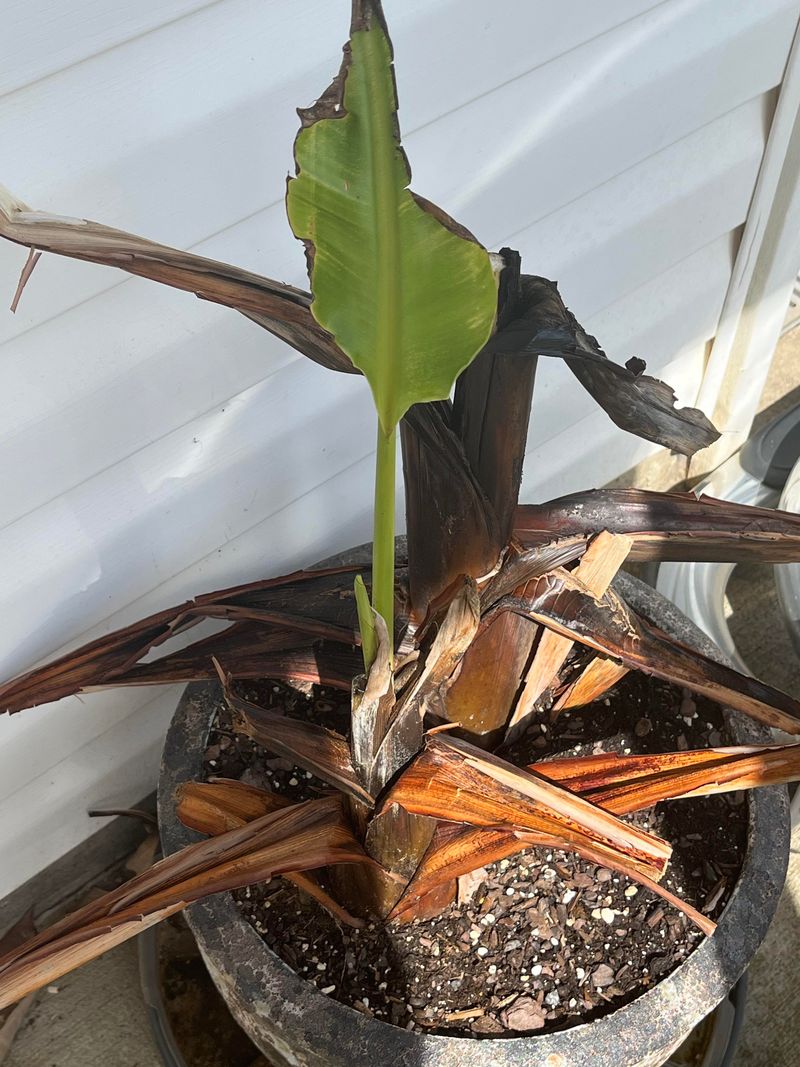
Spotting that first curl of new green growth pushing up from the crown of a freeze-damaged Bird of Paradise feels like finding a treasure. Recovery almost always starts from the growing point located at the base of the plant, right at or just below the soil surface.
This crown region is the command center for new leaf production, and as long as it stayed warm enough during the freeze, it gets back to work as soon as temperatures rise consistently above 50 degrees Fahrenheit.
New leaves emerge tightly rolled, often a brighter, more vivid green than the mature foliage around them. They unfurl slowly over days and weeks, and their appearance is one of the clearest signals that the plant is on a solid recovery path.
In South Florida, this new growth can begin emerging within two to three weeks after a brief freeze event. In North Florida, gardeners may wait until late February or even March before seeing meaningful regrowth, depending on how cold and prolonged the winter season was.
Avoid the temptation to fertilize heavily the moment you see new leaves. Light feeding with a balanced slow-release fertilizer is a better approach, giving the plant steady nutrition without overwhelming a root system that is still stabilizing after cold stress.
6. Pruning Too Early Can Make Things Worse
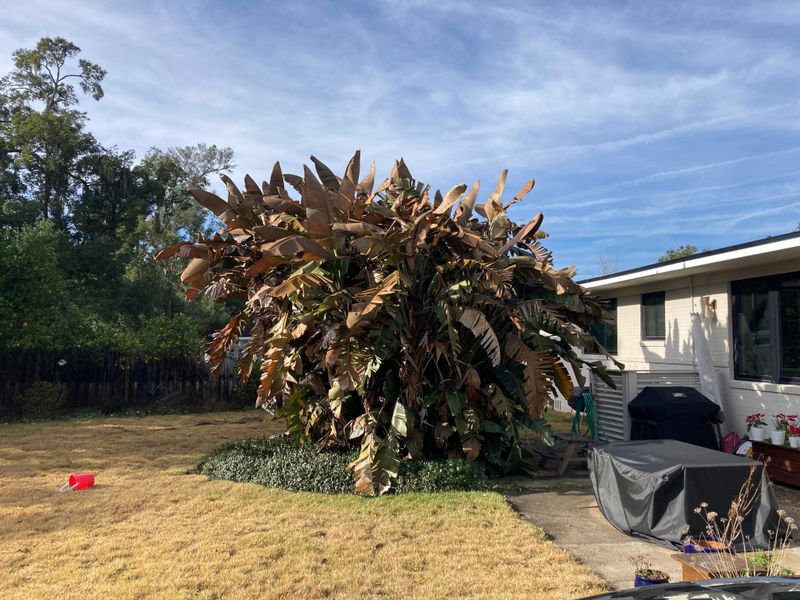
Reaching for the pruning shears right after a freeze is one of the most common mistakes Florida gardeners make with Bird of Paradise plants. The instinct to tidy things up immediately is understandable, but cutting damaged foliage too soon can actually expose the crown and inner tissue to additional cold injury if another freeze follows within days or weeks.
Those brown, drooping leaves serve a purpose: they act as a protective buffer around the more vulnerable growing structures underneath.
University of Florida IFAS extension horticulture recommendations consistently advise waiting until the threat of frost has fully passed before removing freeze-damaged growth from tropical plants. For most of North and Central Florida, that means holding off until late February or March at the earliest.
In South Florida, the window is shorter, and light cleanup can sometimes begin sooner, but patience still pays off.
When the time is right, use clean, sharp pruning tools and cut damaged leaves back to healthy tissue. Sterilizing your blades between cuts reduces the risk of spreading any secondary fungal or bacterial issues that sometimes take advantage of freeze-stressed plant tissue.
Removing only what is clearly beyond recovery, while leaving anything still firm and green, gives the plant the best possible head start on a full, healthy season ahead.
7. Protection Makes A Big Difference Next Time
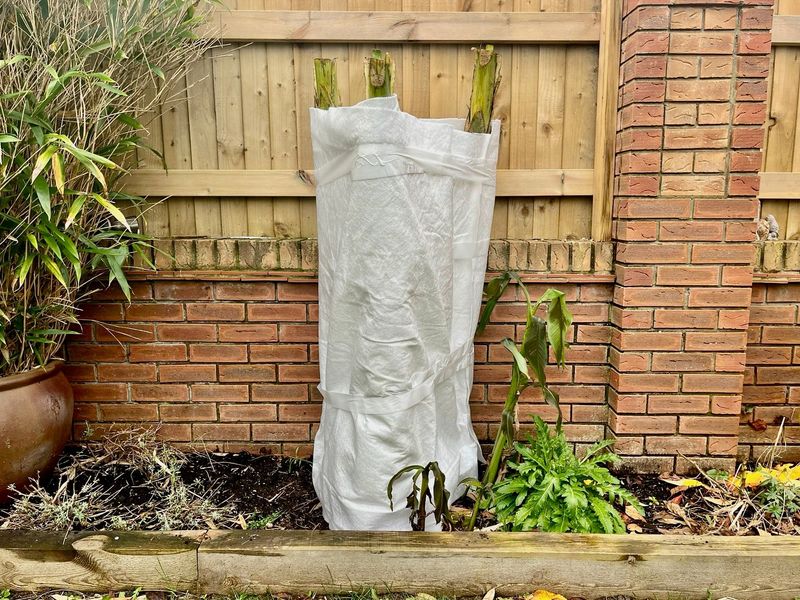
Preparing for a freeze before it arrives is always easier than recovering from one after the fact. Bird of Paradise plants benefit enormously from a few simple protective measures that any Florida gardener can put in place with minimal effort and expense.
Mulching is probably the most accessible and consistently effective strategy, and a 3-to-4-inch layer of wood chip or pine bark mulch applied around the root zone before cold weather arrives helps buffer soil temperatures significantly.
Covering plants with frost cloth or old bedsheets on nights when temperatures are expected to drop below 32 degrees traps ground heat around the foliage and slows the rate of tissue freezing. Plastic sheeting is less ideal because it can concentrate cold and moisture against the leaves if left on too long after sunrise.
Frost cloth breathes better and can stay on for extended cold periods with less risk of secondary damage.
Planting location matters more than many gardeners realize. South-facing walls and fences absorb heat during the day and radiate it back at night, creating a microclimate that can keep temperatures several degrees warmer than open yard locations.
In North Florida especially, choosing a sheltered planting spot near a structure can mean the difference between a plant that sails through a freeze and one that spends months recovering.