Here Is What To Expect When Daffodils Push Through Snow In Michigan
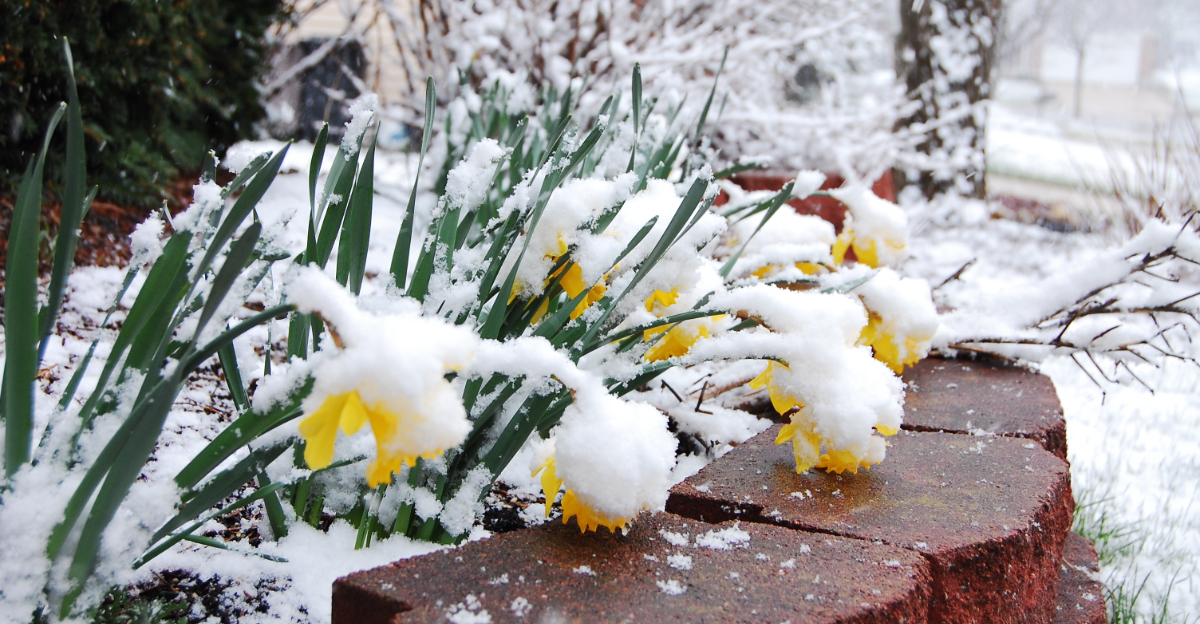
A dusting of snow across the garden may seem like a setback, yet bright green shoots pushing through the white surface tell a very different story.
In Michigan, daffodils often emerge while winter still lingers, creating a striking contrast that surprises many gardeners each spring.
These early bloomers are built for resilience, with natural adaptations that allow them to tolerate cold soil and brief returns of wintry weather.
Beneath the surface, strong roots and stored energy from the previous season help protect developing growth, allowing plants to continue their slow progress even in chilly conditions.
Snow can actually provide a light insulating layer that shields tender shoots from harsher temperature swings. For Michigan gardeners, this familiar sight signals the steady transition toward warmer days ahead.
Understanding how daffodils respond to late season snow helps replace concern with confidence, showing that these determined flowers are simply following their natural rhythm toward spring.
Snow Usually Protects Rather Than Harms Emerging Daffodils
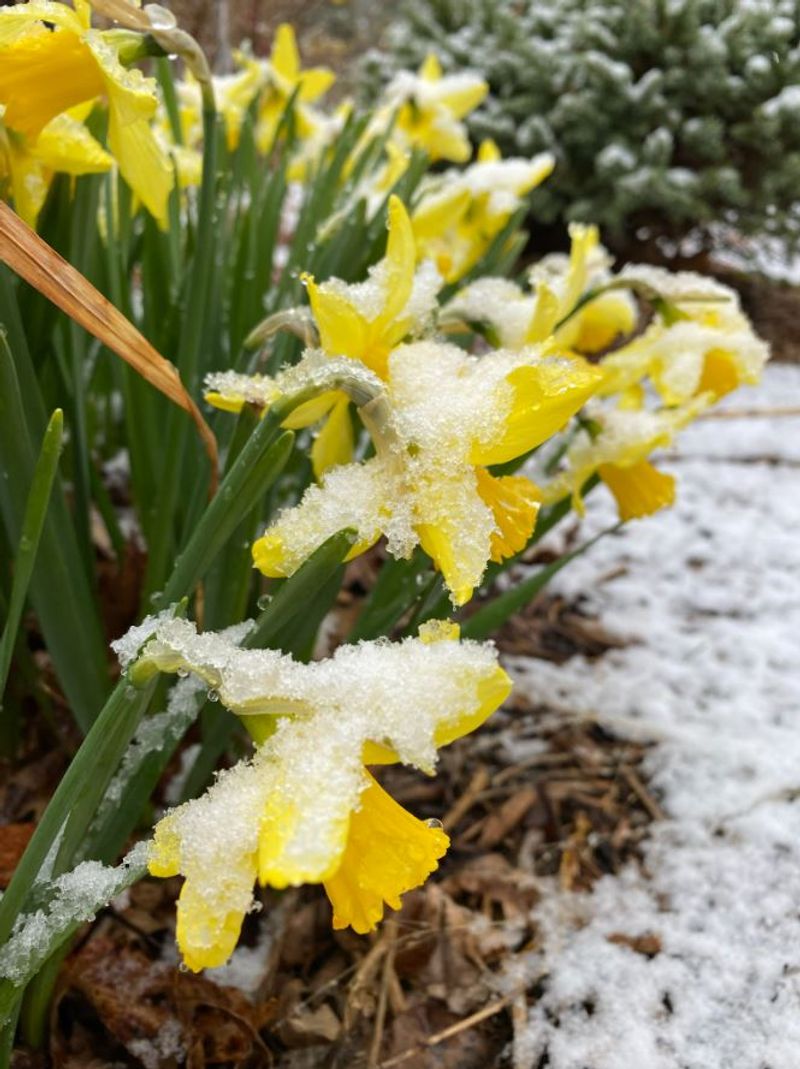
Snow covering your garden might look like bad news, but for daffodils it often works the opposite way. A layer of snow acts almost like a cozy blanket, trapping warmth from the soil underneath and shielding tender shoots from harsh, dry winds.
Horticulturists call this the insulating effect, and it is one of nature’s quieter miracles happening right in your backyard.
When temperatures plunge overnight in Michigan, bare soil and exposed plants can suffer from rapid freeze-thaw cycles. Snow slows that process down considerably, keeping the ground temperature more stable than open air would allow.
Daffodil shoots nestled under even a few inches of snow can stay several degrees warmer than the surrounding air temperature.
Gardeners often rush outside after a snowfall worried about their plants, only to find the daffodils perfectly intact once the snow melts away. The real danger for early spring bulbs is not snow itself but prolonged exposure to severe, dry cold without any protective cover.
Snow-covered daffodils in Michigan are, more often than not, safe and quietly continuing their journey upward. So next time a spring snowstorm rolls through, resist the urge to panic and let the snow do its natural job of protecting what is growing below.
Daffodils Are Naturally Cold Hardy Spring Bulbs
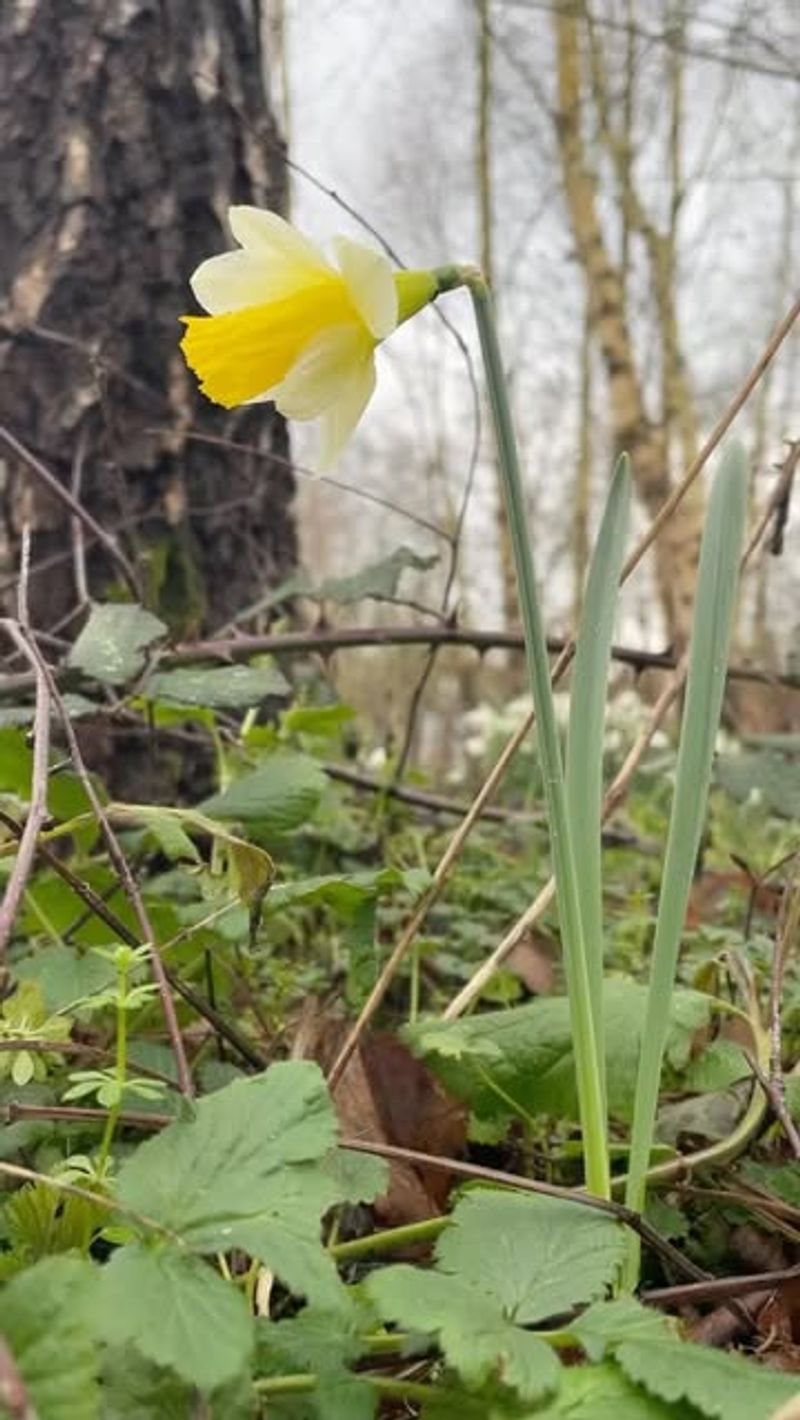
Few spring flowers can match the toughness of a daffodil. These plants evolved in the mountainous regions of Europe and North Africa, where cold snaps, frost, and unpredictable weather were simply part of life.
That wild ancestry gave daffodils a built-in resilience that makes them exceptionally well-suited for Michigan’s famously moody spring weather.
Daffodil bulbs are rated hardy to USDA zones 3 through 8, and most of Michigan falls comfortably within that range. The bulbs store energy and nutrients through winter, building up the strength needed to push through cold ground as soon as conditions begin to shift.
Their cells contain natural compounds that lower the freezing point of their internal fluids, giving them a biological edge against frost damage.
What makes daffodils even more remarkable is that they do not just survive cold conditions, they actually need a period of cold to bloom properly.
Your Michigan Garden Changes Every Week. Your Plan Should Too.
Gardening in Michigan changes quickly throughout the season. Every Friday you’ll receive a simple weekly plan showing exactly what to plant, prune, fertilize, harvest, and protect so you never miss the right timing.
This process, called vernalization, is what triggers the chemical signals inside the bulb to begin the flowering cycle.
Without a cold winter, daffodils would not bloom as reliably or as vigorously. Michigan winters, as tough as they are, essentially do the gardener a favor by giving daffodil bulbs exactly the chilling period they need to produce those cheerful, golden blooms every spring.
Leaves May Bend Under Snow But Usually Recover
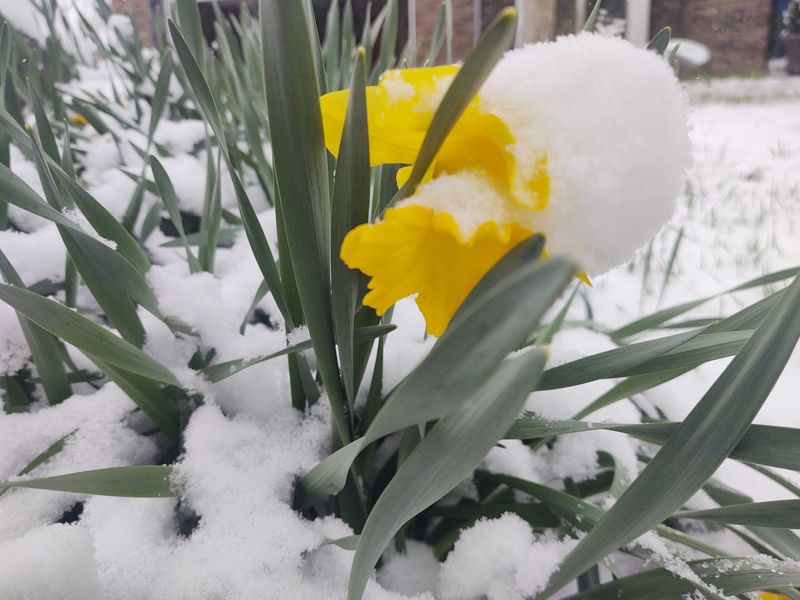
Seeing daffodil leaves flattened under a heavy snowfall can feel like watching something fragile get crushed. The good news is that those leaves are a lot tougher than they look.
Daffodil foliage has a flexible, fibrous structure that allows it to bend dramatically without snapping, much like a young tree branch that bends in the wind but springs back once the pressure is gone.
When snow piles up on top of daffodil leaves, the weight pushes the stems outward and downward, sometimes laying them nearly flat against the ground. This looks dramatic, but the plant is not actually damaged in most cases.
Once the snow melts and the pressure lifts, the leaves gradually straighten themselves back up, often within just a day or two of warmer weather.
The key factor here is the temperature of the snow event. Wet, heavy snow causes more physical bending than light, fluffy snow, but even in heavy snow situations, recovery is the norm rather than the exception.
Gardeners who try to manually brush snow off daffodil leaves sometimes cause more harm than good by accidentally snapping brittle cold stems. The safest approach is patience.
Let the snow melt naturally, and watch those leaves quietly rise back up as if nothing happened. Michigan daffodils have been doing this for generations without any help.
Flower Buds Are More Sensitive Than Leaves
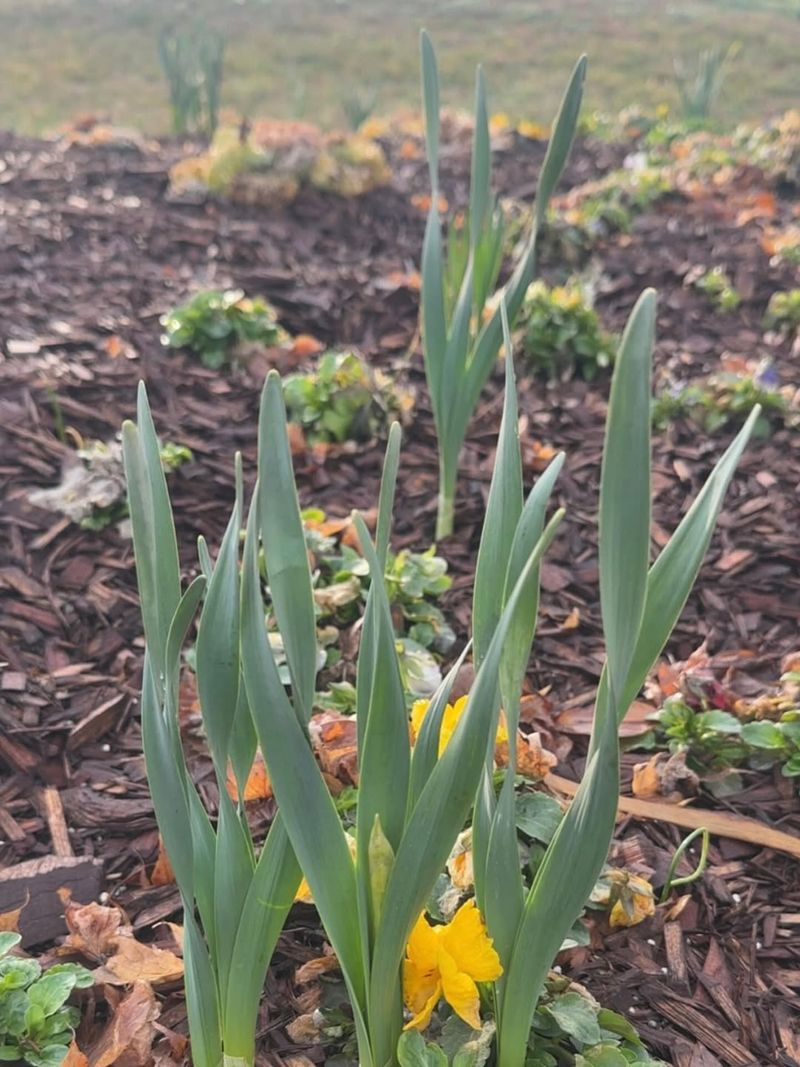
Not every part of a daffodil handles cold equally well. While the leaves can take quite a beating from frost and snow, the flower buds are another story.
Buds contain the most actively developing tissue in the plant, and that rapid cell division makes them more vulnerable to hard freezes than the tougher, more established leaf tissue.
When temperatures drop below about 28 degrees Fahrenheit for several hours, open or partially open daffodil buds can suffer frost injury. The damage usually shows up as discolored, mushy, or deformed petals once the bloom finally opens.
In some cases, a severely frosted bud may not open at all, staying closed and eventually withering without ever showing its full flower.
Tight, closed buds that have not yet begun to open tend to handle cold better than buds that are already showing color or beginning to unfurl. The more exposed the inner flower tissue is, the more susceptible it becomes to freezing injury.
Michigan gardeners who notice a hard freeze in the forecast while buds are forming can loosely cover plants overnight with a frost cloth or old bedsheet for extra protection. It takes only a few degrees of difference to protect a bud from damage.
The leaves will likely be fine on their own, but giving those precious buds a little extra shelter during a cold snap is always a smart move.
Brief Snow Events Rarely Stop Blooming
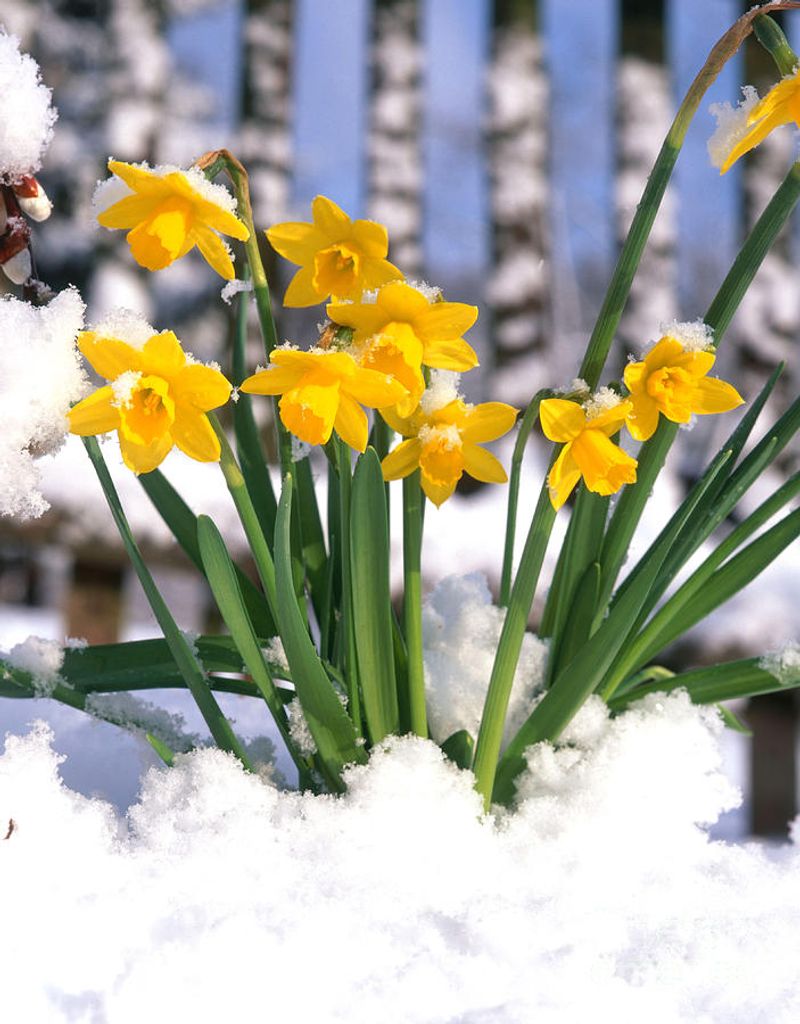
A quick spring snowstorm rolling through Michigan might look threatening to your garden, but short cold events rarely have the power to stop daffodils from blooming.
These plants are built with a kind of biological momentum that keeps pushing them forward even when the weather tries to pump the brakes.
Once a daffodil has started its growth cycle, it takes more than a brief cold snap to shut things down.
Short snow events, meaning those that last only a day or two before temperatures climb back above freezing, typically cause nothing more than a temporary pause in visible growth.
The plant essentially waits out the cold, conserving energy until conditions improve. Once warmer air returns and the snow melts, growth picks right back up, sometimes at a noticeably faster pace as the plant makes up for lost time.
Experienced Michigan gardeners often say that daffodils seem almost impatient, always eager to get back to blooming the moment the sun returns.
Research in plant physiology supports this observation, showing that daffodil growth rates accelerate significantly once temperatures rise back above 40 degrees Fahrenheit.
A two-day snowstorm followed by a warm, sunny stretch can actually result in a more dramatic and showy bloom display as multiple buds open all at once. Brief snow events are really just small detours on the road to a beautiful spring garden, not roadblocks.
Frozen Soil Does Not Harm Established Bulbs
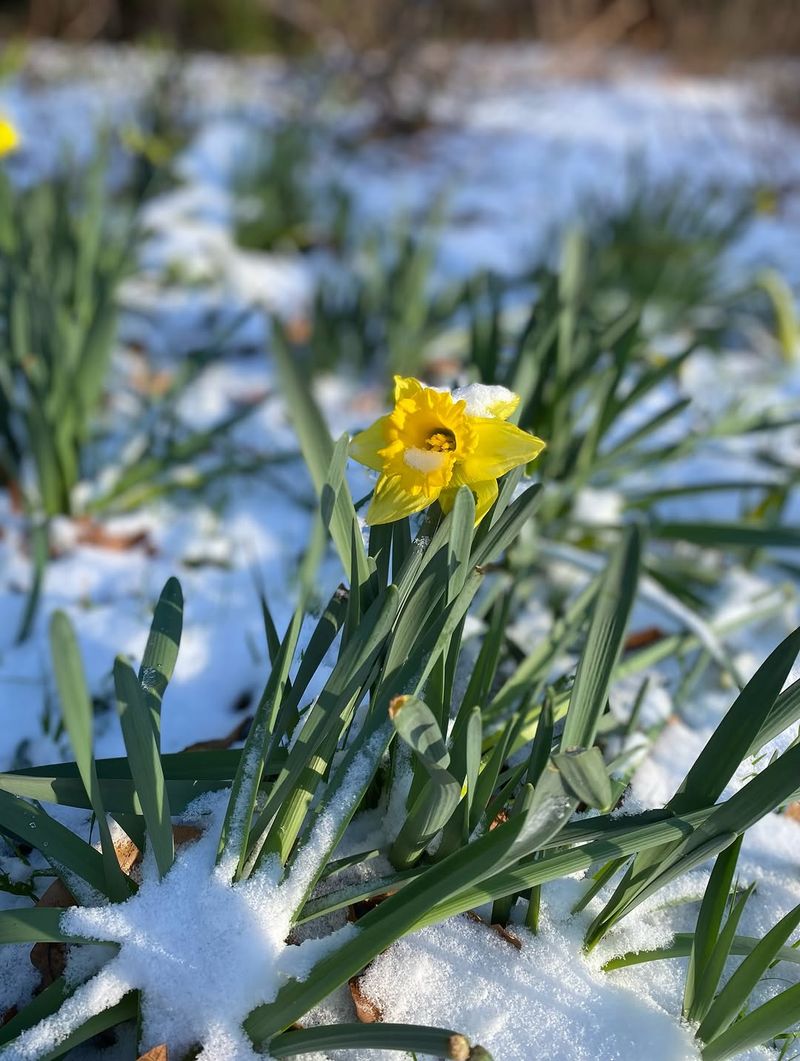
One of the most reassuring things a Michigan gardener can know is that frozen soil poses very little threat to established daffodil bulbs.
Bulbs planted in the ground are naturally insulated by several inches of earth, which acts as a buffer between the bulb and whatever is happening at the surface.
Even when the top layer of soil freezes hard, the temperature just a few inches deeper stays much more stable.
Daffodil bulbs store all the energy they need to survive winter in their own tissues. The starchy interior of a healthy bulb contains the carbohydrates and moisture needed to sustain the plant through months of cold dormancy.
Freezing and thawing of the upper soil layer is a completely normal part of Michigan’s spring pattern, and bulbs that have been in the ground for a full growing season are well-adapted to handle it.
New bulbs planted in fall are also surprisingly resilient once they have had time to establish even a few roots before the ground freezes.
Problems are more likely to arise from poorly drained soil that holds standing water around bulbs, which can cause rot during freeze-thaw cycles, than from the cold itself.
Making sure your garden bed has good drainage is the single best thing you can do to protect bulbs over winter and into spring. Frozen soil on its own is simply not the villain many gardeners fear it to be.
Cold Weather May Slow But Not Stop Growth
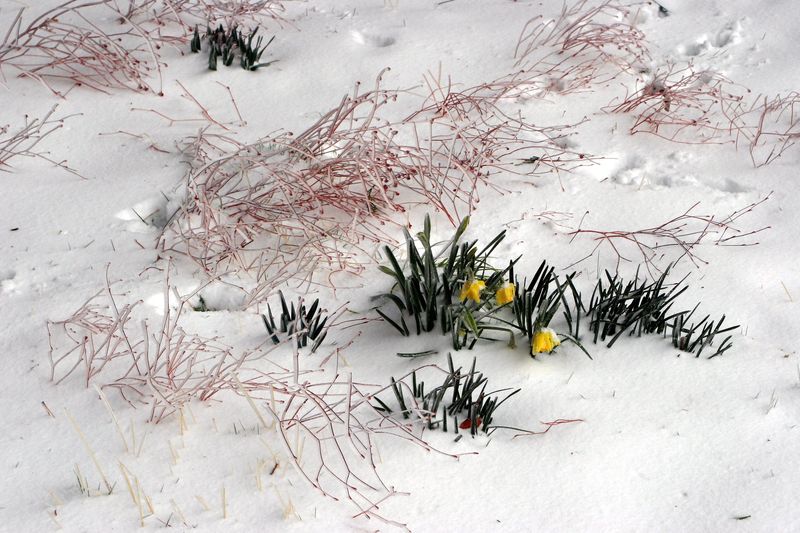
There is something stubborn and inspiring about watching daffodil shoots inch upward even on the coldest spring days. Cold weather genuinely does slow down plant growth, but slowing down and stopping are two very different things.
Daffodils continue their biological processes at temperatures well below what most other spring plants can tolerate, making them one of the earliest reliable signs of the season changing.
Plant physiologists have found that daffodils can continue root and shoot growth at temperatures as low as 35 to 40 degrees Fahrenheit. The metabolic processes inside the plant run more slowly in the cold, but they keep running.
Photosynthesis slows, cell division takes longer, and visible above-ground growth may seem to stall for days at a time, but underground the roots are still actively working.
For Michigan gardeners, this means that even a stretch of cold, gray days in March or early April is not going to wipe out a season’s worth of daffodil progress.
The plants are simply running on a slower setting, conserving energy and waiting for the next warm spell to kick growth back into higher gear.
Patience is genuinely rewarded here. What looks like a stalled garden during a cold week often bursts into visible activity the moment temperatures climb back up.
Growth was always happening, just at a quieter, slower, underground pace that the eye could not easily see.
Heavy Wet Snow Can Cause Temporary Physical Damage
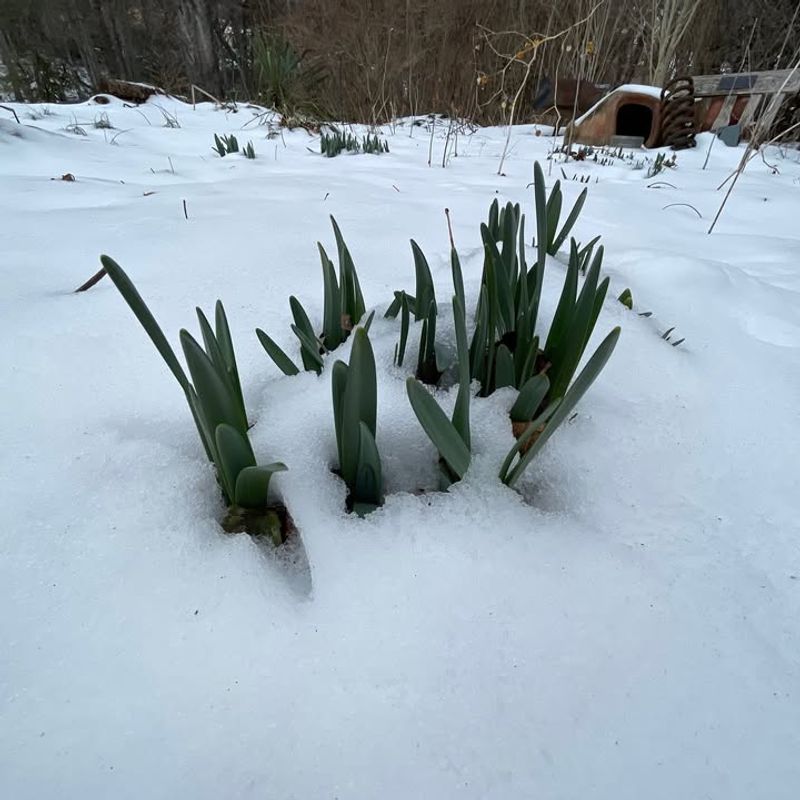
Not all snow is created equal, and any Michigan gardener knows the difference between a light, fluffy dusting and the heavy, soaking wet snow that sometimes falls in March or April.
That wet, dense snow carries real physical weight, and when it piles up on daffodil stems and leaves, the mechanical stress can cause visible damage that looks alarming at first glance.
Heavy wet snow can snap weaker stems, split leaves along their length, or pin entire clumps of daffodils flat to the ground. This kind of damage is purely mechanical, meaning it comes from physical force rather than cold temperature injury.
The two types of damage look different and behave differently as the season progresses. Mechanically damaged stems may stay bent or show bruising, while cold-injured tissue tends to turn mushy or discolored.
The encouraging part is that most mechanically damaged daffodil plants recover better than you would expect. Bent stems often straighten over several days as the plant regains its natural structure.
Leaves that split or tear at the edges continue to photosynthesize and support the plant through the rest of the growing season. Only stems that snap completely at the base are truly lost for that season.
Removing any completely broken stems cleanly with scissors helps the plant redirect its energy to healthy growth. Heavy wet snow is more of a temporary inconvenience for daffodils than a genuine threat to the plant’s long-term health.
Sun And Warm Soil Trigger Rapid Recovery After Snow Melt
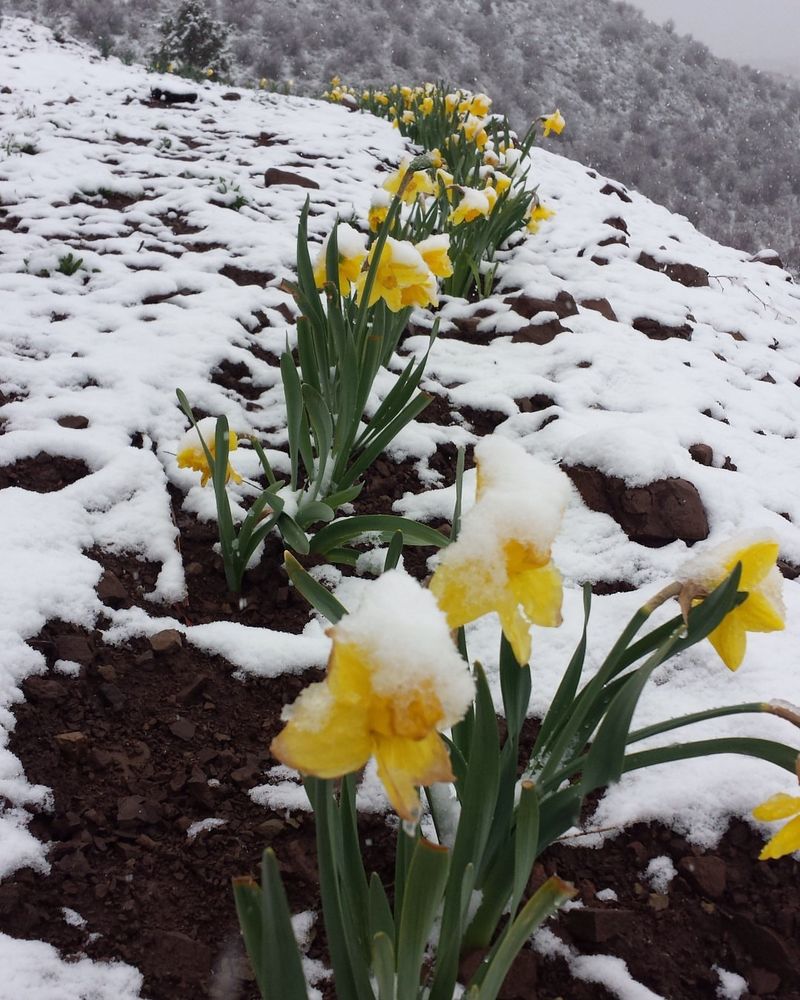
Watch what happens to your daffodils the morning after a snowmelt, and you might be genuinely amazed by how quickly they bounce back. Sunshine is like a starting pistol for spring plants.
The moment warm light hits the soil and air temperatures begin to climb, daffodils respond with a burst of visible energy that can transform a flattened, snow-covered garden into a cheerful display of color within just a few days.
Soil temperature plays a huge role in this rapid recovery. When the sun warms the dark earth, root activity accelerates quickly, pushing water and nutrients up into the stems and leaves with renewed force.
This surge of internal pressure is part of what helps bent stems straighten and buds resume their development so visibly fast after a cold event passes.
Michigan’s spring sun, even when it arrives between cold spells, has enough intensity to warm soil surfaces significantly during daylight hours.
South-facing garden beds and spots near brick walls or pavement warm up especially fast, and daffodils planted in those locations tend to recover from snow events faster than those in shadier spots.
Gardeners who choose planting locations with good sun exposure give their daffodils a real advantage during the unpredictable weeks of early spring.
The combination of warming soil, returning sunshine, and the daffodil’s natural toughness makes post-snow recovery one of the most satisfying sights in a Michigan spring garden.
Bloom Timing May Shift Slightly But Flowers Still Appear
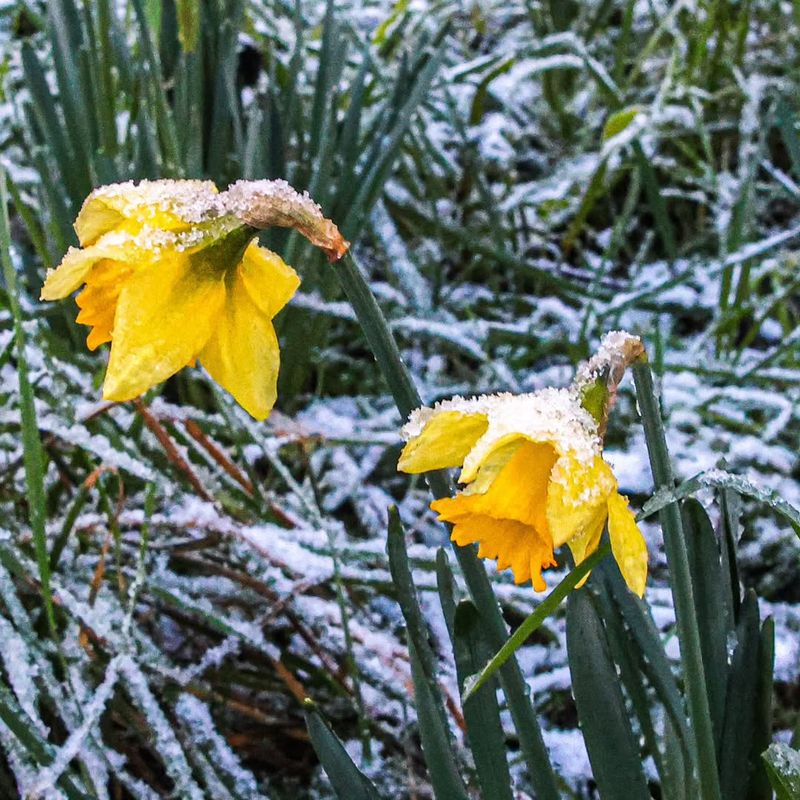
After a late snowstorm hits Michigan, the most common question gardeners ask is whether their daffodils will still bloom that year. The answer, reassuringly, is almost always yes.
Snow and cold may push the bloom timeline back by a few days or even a week or two, but they rarely prevent flowering altogether in healthy, well-established plants.
The delay happens because cold temperatures slow the hormonal processes inside the plant that trigger bud opening. Think of it as the plant pressing pause on its internal clock until conditions are more favorable.
Once warmer weather arrives, those processes resume right where they left off, and blooming follows close behind. The flowers may arrive a little later than usual, but they arrive.
Interestingly, a slight delay in bloom timing can sometimes work in a gardener’s favor. Flowers that open during a warm, stable stretch of weather often last longer on the plant than those that open during unpredictable early spring swings.
A bloom that appears a week late but enjoys ten days of mild sunshine can be more spectacular and longer-lasting than one that rushes out early into freezing nights.
Michigan gardeners who plant a mix of early, mid-season, and late daffodil varieties create a natural buffer against weather disruptions, ensuring that no single snowstorm can wipe out the entire season’s display. The flowers will come, snow or not.