These 9 Perennial Ground Covers Return Year After Year In Arizona
Ground cover in a desert climate cannot be temporary. It has to handle heat, dry soil, and intense sun, then return just as strong the next year.
That is exactly what the right perennial ground covers do in Arizona landscapes.
These plants settle in, spread steadily, and come back season after season without needing to be replaced. They protect exposed soil, help reduce weeds, and create a more finished look that lasts through extreme summers.
Some grow low and dense, forming a tight green layer. Others trail gently between stones or along borders, adding texture and subtle color.
Selecting proven perennial varieties makes the difference between constant replanting and reliable coverage that improves each year. Plant them once, and they keep showing up strong.
1. Trailing Lantana Spreads Quickly And Handles Extreme Heat
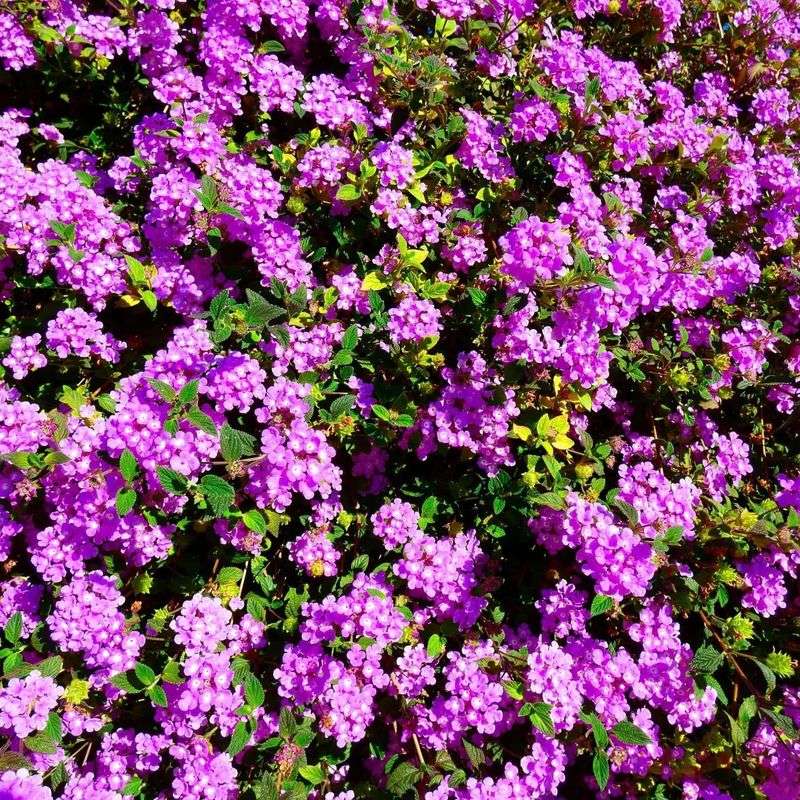
Lantana montevidensis laughs at Arizona heat. While other plants wilt when summer arrives, this vigorous spreader keeps pushing out new growth and flowers.
Expect it to cover several feet in all directions during a single growing season.
Clusters of tiny tubular flowers appear in shades of purple, yellow, white, or lavender depending on the variety you choose. Butterflies mob these blooms from spring through fall.
The foliage smells slightly minty when you brush against it, though not everyone enjoys the scent.
Plant trailing lantana where it has room to roam. It works beautifully cascading over retaining walls or filling in around boulders in xeriscapes.
The stems root wherever they touch soil, which helps it spread but also means you might need to trim it back occasionally.
Full sun brings out the best flowering. Lantana tolerates reflected heat from walls and pavement better than most ground covers.
Water deeply but infrequently during establishment, then back off to every couple weeks in summer. Freezes can damage the foliage in winter, but roots survive and new growth appears quickly in spring across most of Arizona.
A light pruning in early spring keeps the plant dense and encourages an even heavier flush of blooms once temperatures rise. Avoid overwatering, especially in clay soil, because lantana performs best when roots dry slightly between deep soakings.
2. Prostrate Rosemary Cascades Over Edges And Slopes
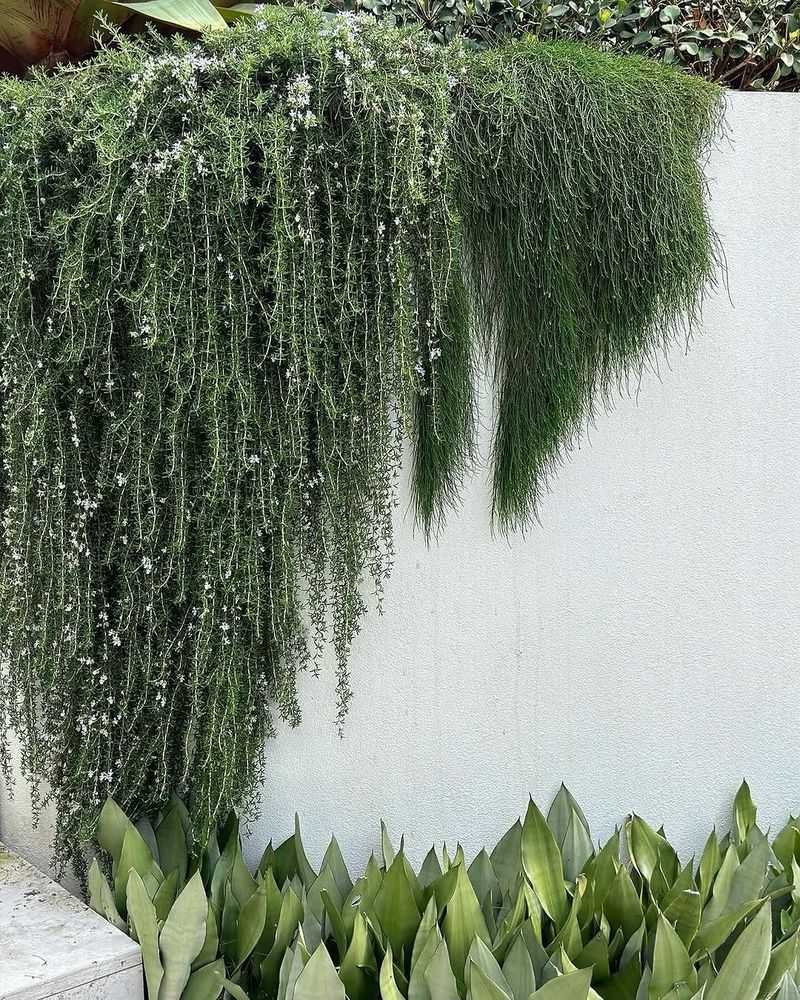
Rosmarinus officinalis ‘Prostratus’ brings both beauty and function to Arizona landscapes. The needle-like leaves release that familiar rosemary scent when touched, and you can snip sprigs for cooking throughout the year.
Blue flowers dot the foliage in late winter and early spring.
This variety stays under a foot tall but spreads three to six feet wide. Branches arch gracefully downward, creating a cascading effect perfect for slopes, berms, or the tops of walls.
Excellent drainage matters more than anything else with prostrate rosemary. Heavy clay or spots that stay wet will cause problems quickly.
Rocky or sandy soil suits it perfectly, which describes much of Arizona. Once roots establish, it survives on rainfall alone in some areas, though occasional deep watering during extreme heat helps maintain appearance.
Full sun produces the densest growth and most flowers. Partial shade works but creates a looser, more open plant.
Your Arizona Garden Changes Every Week. Your Plan Should Too.
Gardening in Arizona changes quickly throughout the season. Every Friday you’ll receive a simple weekly plan showing exactly what to plant, prune, fertilize, harvest, and protect so you never miss the right timing.
Deer and rabbits typically avoid rosemary because of the strong oils in the foliage. Trim back any upright shoots that appear to maintain the low, spreading form.
Avoid heavy pruning into old woody stems, since rosemary does not always resprout from bare wood. A light trim after flowering keeps the plant compact and encourages fresh, fragrant growth without stressing it in Arizona’s intense sun.
3. Pink Ice Plant Forms A Dense, Low Succulent Mat
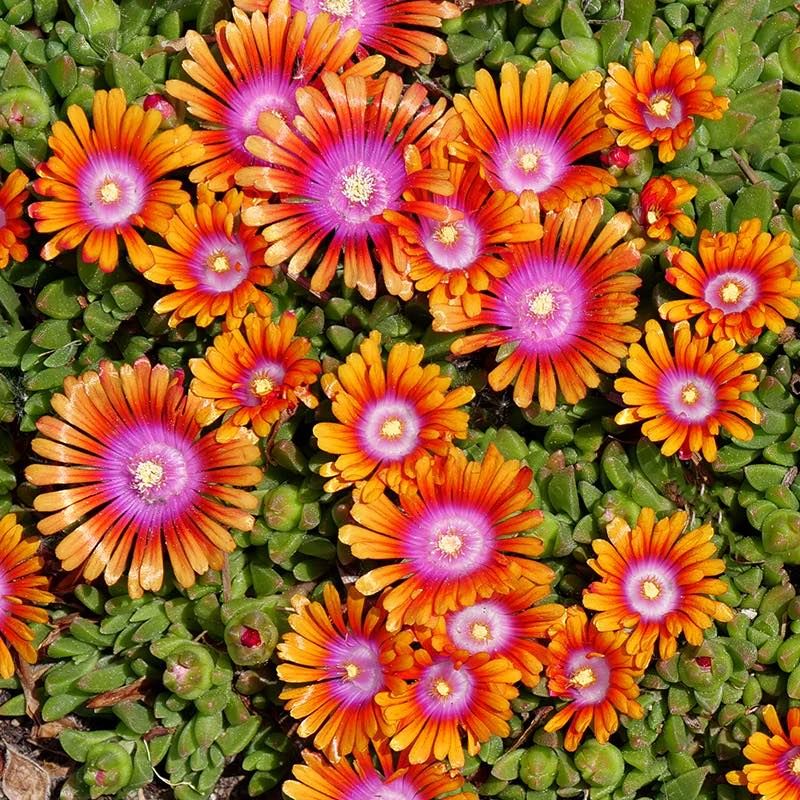
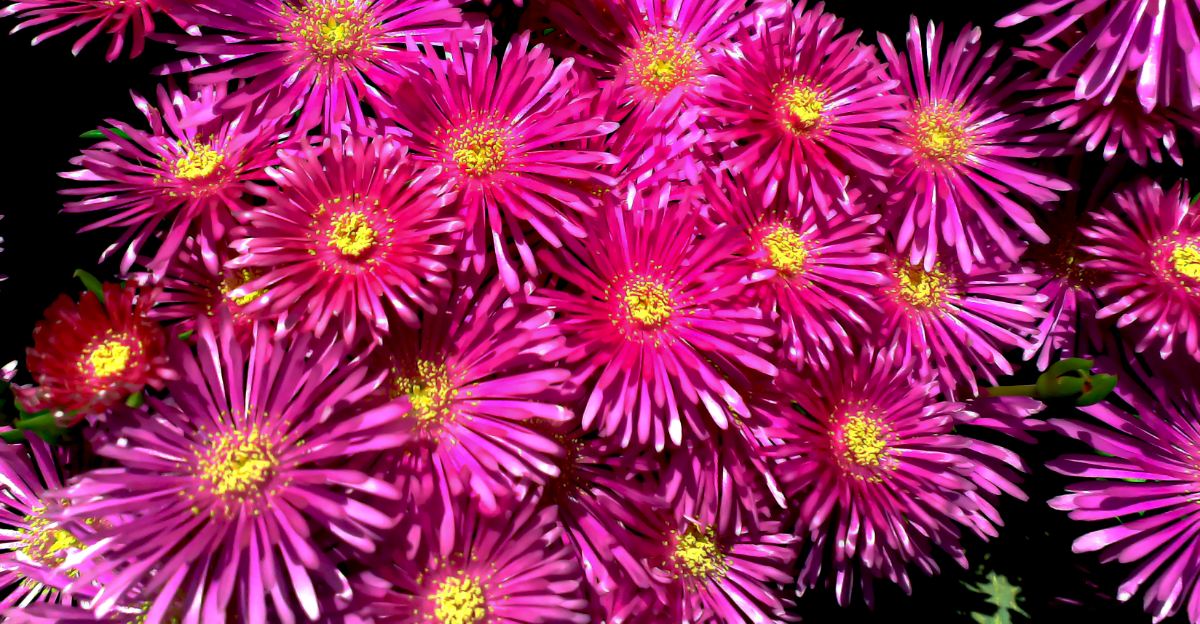
Drosanthemum floribundum creates a thick carpet of fleshy leaves that hugs the ground tightly. Bright pink flowers nearly cover the foliage in spring, creating a stunning show that lasts for weeks.
Each bloom looks like a small daisy with dozens of narrow petals.
The succulent leaves store water, which explains why ice plant handles drought so well. Growth stays under six inches tall but spreads several feet wide over time.
The fine-textured foliage feels slightly crispy and changes to bronze or purple tones during winter cold.
Plant ice plant in the hottest, driest spots in your yard. It thrives in areas where other ground covers struggle, including slopes too steep to irrigate easily and spaces with reflected heat from south-facing walls.
Sandy or gravelly soil works better than heavy clay. Poor soil actually encourages better flowering than rich, amended ground.
Water sparingly even during establishment. Too much irrigation causes leggy growth and fewer blooms.
Ice plant tolerates foot traffic better than many ground covers, though repeated walking will eventually wear paths.
It spreads by rooting at stem nodes, gradually filling in gaps without becoming invasive across Arizona landscapes.
4. Trailing Gazania Stays Low And Thrives In Full Sun
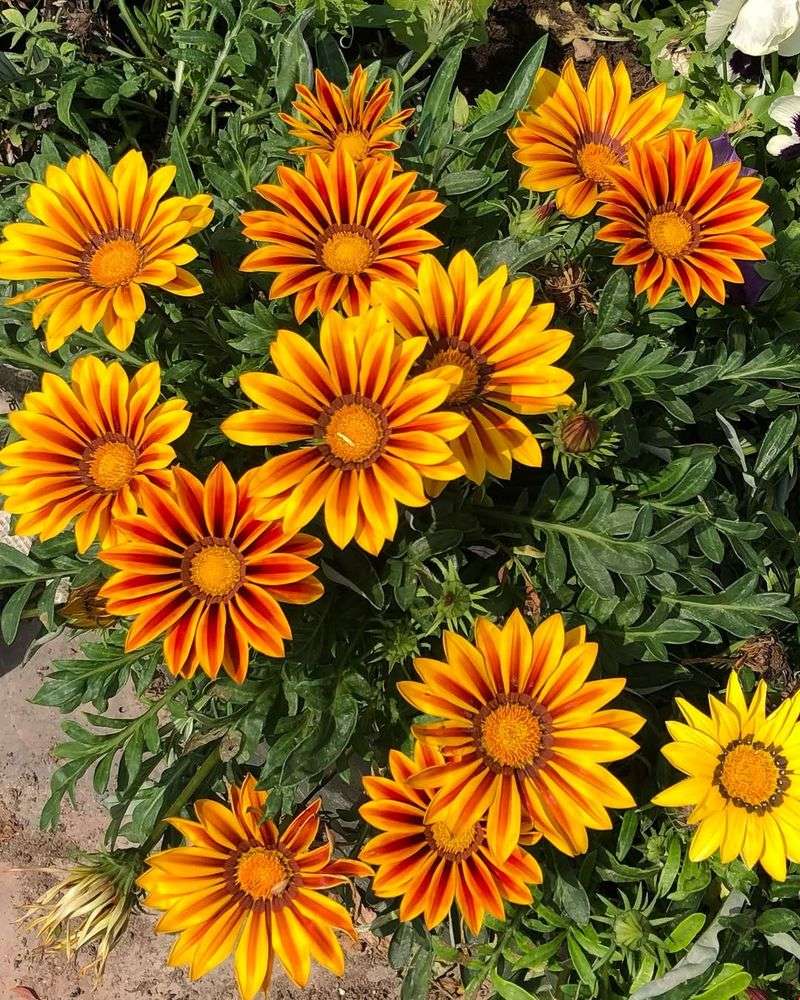
Gazania rigens leucolaena puts on a flower show that rivals any annual. Large daisy-like blooms in shades of yellow, orange, bronze, or white open each morning and close at night.
Dark centers create striking contrasts against the bright petals. Flowers appear heaviest in spring and fall but continue sporadically through summer.
Silvery-green foliage forms a mat that stays under eight inches tall. The leaves have a fuzzy texture that helps reflect heat and reduce water loss.
Trailing stems spread outward to cover two to three feet, filling in spaces between rocks or pavers.
Gazania needs full sun to perform well. Shady spots result in poor flowering and weak growth.
It handles Arizona heat without complaint and actually prefers hot, dry conditions. Water moderately during the growing season, then reduce frequency in winter when growth slows.
Deadheading spent blooms encourages more flowers, though plants will continue blooming without this extra attention. Occasional light trimming keeps the mat tight and prevents it from getting woody in the center.
Gazania works well in parkway strips, between stepping stones, or anywhere you want low, colorful coverage that returns reliably each year throughout Arizona.
5. Creeping Germander Creates A Tight Evergreen Carpet
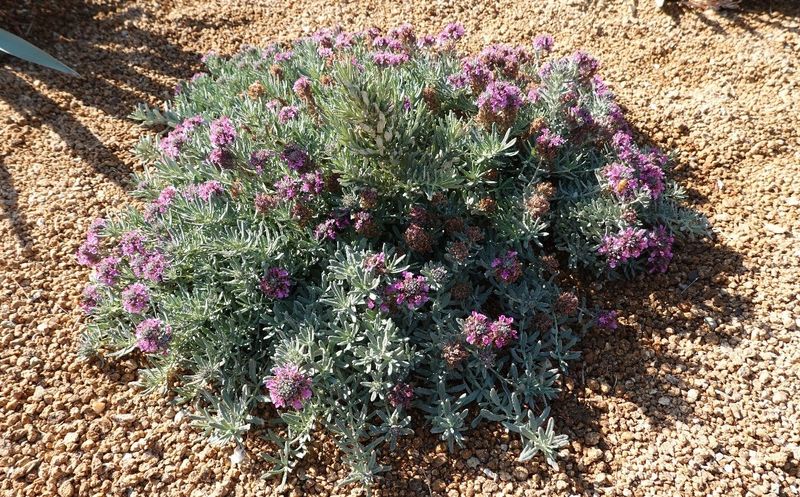
Teucrium chamaedrys ‘Prostratum’ offers something different from flowering ground covers. Small, glossy leaves with scalloped edges create a fine-textured carpet that stays green year-round.
The foliage has a slightly aromatic quality when crushed. Tiny purple flowers appear in summer but remain secondary to the attractive leaves.
Growth stays remarkably low, rarely exceeding four inches in height. Stems interweave tightly, forming a dense mat that resists weeds better than looser ground covers.
Spread reaches about two feet wide per plant, so spacing matters when calculating coverage.
Creeping germander adapts to various Arizona microclimates. It tolerates more shade than most drought-tolerant ground covers, though full sun produces the densest growth.
Reflected heat from walls or paving doesn’t bother it. Well-draining soil prevents root problems during monsoon season.
This ground cover tolerates light foot traffic, making it useful between pavers or along path edges. The tight growth habit means less maintenance than faster-spreading alternatives.
Water regularly during the first summer, then transition to deep watering every week or two.
Germander stays attractive without constant trimming, though you can shear it lightly in spring to remove any winter-damaged foliage and encourage fresh growth across Arizona gardens.
6. Damianita Forms A Compact, Spreading Mound
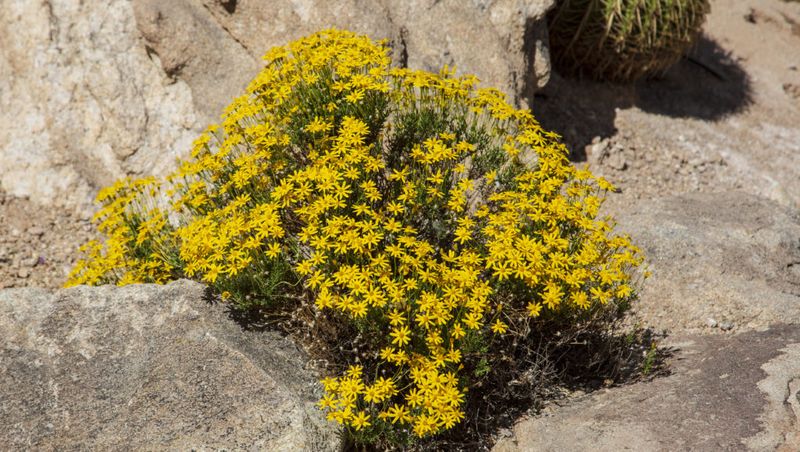
Chrysactinia mexicana brings authentic Southwest character to Arizona landscapes. Native to the Chihuahuan Desert, this compact shrublet forms neat mounds of fine, needle-like foliage that smells strongly resinous.
Bright yellow flowers cover the plant in spring and often reappear after summer rains. Each bloom resembles a tiny golden daisy.
Individual plants stay under a foot tall and spread to about eighteen inches wide. The silvery-green foliage provides year-round interest even when flowers fade.
Multiple plants spaced closely create an undulating carpet effect rather than a completely flat mat.
Damianita handles extreme conditions without flinching. It survives temperatures well above 110 degrees and tolerates cold snaps that damage less hardy ground covers.
Rocky, alkaline soil suits it perfectly. Avoid overwatering, which causes root problems and reduces flowering.
Once roots establish, natural rainfall often provides sufficient moisture in many Arizona locations.
Full sun produces the most flowers and tightest growth. Damianita works well in xeriscapes, rock gardens, or as edging along pathways.
The aromatic foliage deters deer and rabbits. Pruning isn’t necessary, though you can lightly shape plants after flowering.
This native ground cover requires minimal input while delivering reliable performance year after year.
7. Silver Ponyfoot Trails Easily Across Dry Soil
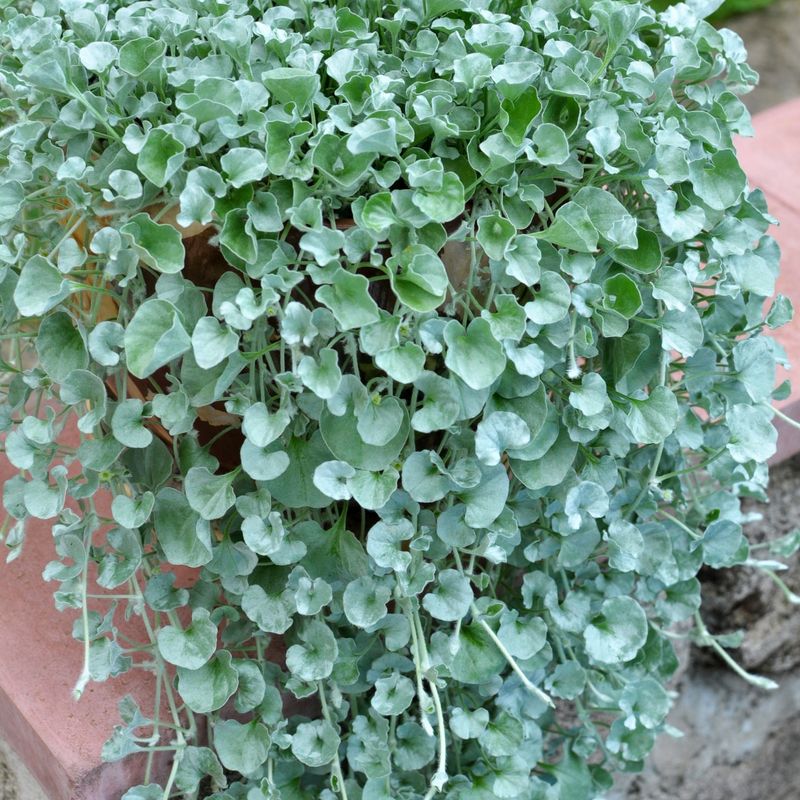
Dichondra argentea ‘Silver Falls’ creates a shimmering effect across Arizona landscapes. Small, kidney-shaped leaves covered in fine silver hairs catch sunlight and seem to glow.
The foliage cascades beautifully over edges or spreads flat across open ground. Tiny, inconspicuous flowers appear but add little to the overall display.
Stems trail several feet in all directions, rooting at nodes to form a solid mat. Growth stays under three inches tall, creating one of the lowest ground covers available.
The silver color provides striking contrast against darker foliage or red rock.
Despite its delicate appearance, silver ponyfoot handles Arizona conditions remarkably well. It tolerates heat, drought, and poor soil once roots establish.
Water moderately during the first growing season, then reduce frequency. Too much water actually reduces the silvery coloration and promotes leggier growth.
Full sun intensifies the silver color, though plants tolerate partial shade in hotter areas of Arizona. Silver ponyfoot works exceptionally well in containers where it can spill over edges, but it also succeeds as a ground cover in rock gardens or between pavers.
Foot traffic damages the delicate foliage, so avoid planting it in high-traffic areas.
Light frost may nip foliage, but plants recover quickly in spring.
8. Myoporum Parvifolium Covers Large Areas With Minimal Water
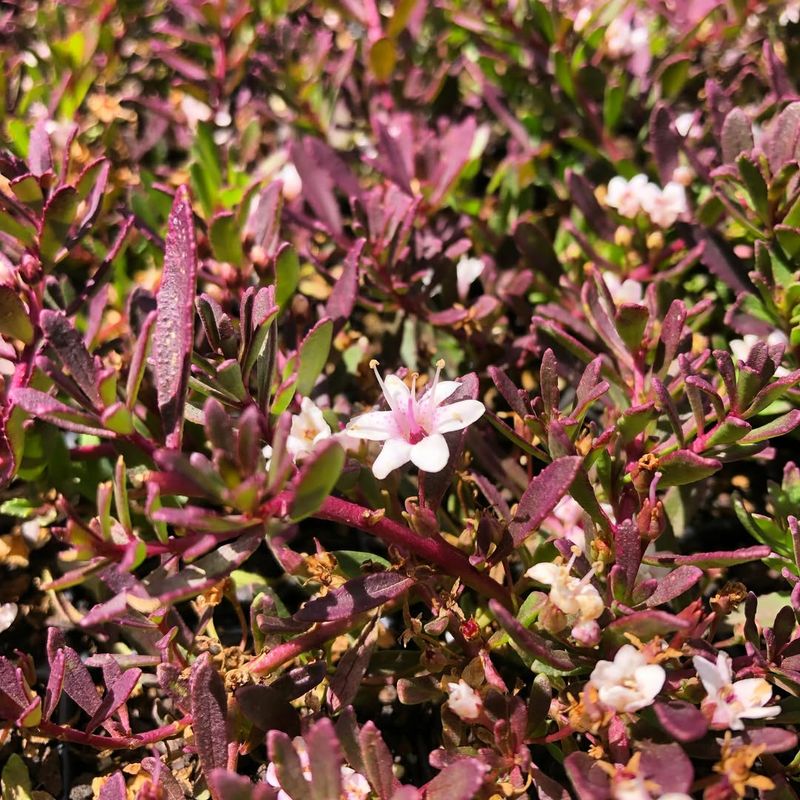
Myoporum parvifolium ranks among the fastest-spreading ground covers for Arizona. A single plant can cover fifteen feet or more in diameter within a few years.
The bright green, succulent-like leaves create a dense mat that smothers weeds effectively. Small white flowers with purple spots appear in summer but remain subtle against the foliage.
Height stays between three and six inches depending on growing conditions. The prostrate branches root wherever they contact soil, enabling rapid spread.
This aggressive growth makes myoporum ideal for covering large slopes or filling expansive areas quickly.
Drought tolerance improves significantly after the first year. Water deeply during establishment, then transition to infrequent deep watering.
Myoporum survives on surprisingly little irrigation once mature, though it looks better with occasional summer water in the hottest parts of Arizona. It tolerates various soil types as long as drainage remains adequate.
Plant myoporum where you want fast coverage and have space for it to spread. It can overwhelm smaller plants if not contained.
Full sun produces the densest growth. The foliage stays evergreen through Arizona winters.
Deer generally avoid it. Prune back edges as needed to control spread.
This workhorse ground cover delivers reliable, low-maintenance coverage year after year.
9. Trailing Verbena Spreads Fast And Blooms Repeatedly
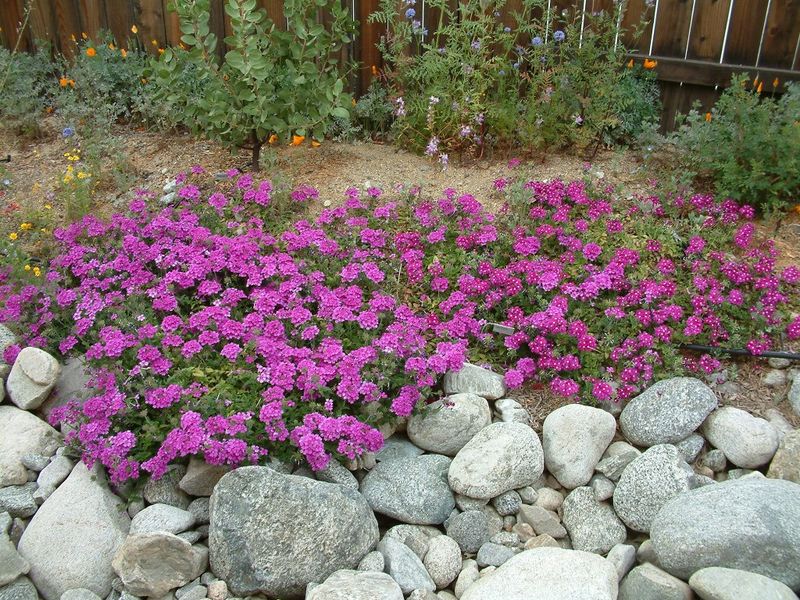
Verbena peruviana produces more flowers than almost any other perennial ground cover. Clusters of small blooms in shades of purple, red, pink, or white appear continuously from spring through fall.
Deadheading isn’t necessary because new flowers keep emerging regardless. The display attracts butterflies and hummingbirds throughout the growing season.
Trailing stems spread rapidly to cover three feet or more in a single season. Growth stays under eight inches tall, creating a colorful carpet that works in beds, along paths, or cascading over walls.
The slightly fuzzy foliage provides a soft texture even when flowers slow during peak summer heat.
Full sun brings out the best flowering performance. Verbena tolerates Arizona heat well but appreciates moderate water during the hottest months.
It needs more irrigation than true desert plants but far less than traditional garden flowers. Well-draining soil prevents root problems during monsoon season.
Trailing verbena may look tired by late summer in the hottest areas of Arizona. Shearing plants back by half in midsummer encourages fresh growth and renewed flowering in fall.
Light frost damages foliage, but plants usually recover quickly. This reliable bloomer returns faithfully each spring, providing months of color with relatively minimal care across Arizona landscapes.
A light application of balanced fertilizer in early spring can boost initial growth without making plants overly lush. Avoid overcrowding, since good air circulation helps reduce fungal issues during humid monsoon stretches.