The 7 Best Native Groundcovers To Plant In Arizona Gardens
Bare spots in an Arizona yard can stay visible no matter how much effort goes into the rest of the space, and over time they start to pull attention away from everything else.
You notice those areas more as the season moves forward, especially when nothing fills in low enough to cover the ground.
Not every plant will solve that problem for you. Some struggle to spread, others fail to handle the heat, and the gaps stay exactly where they started.
Native groundcovers work differently. You get plants that settle in, spread across the soil, and hold their place without constant attention.
Once you choose the right ones, your yard starts to look more complete, and those empty patches stop feeling like something you need to fix over and over again.
1. Frog Fruit Forms A Dense Low Growing Groundcover
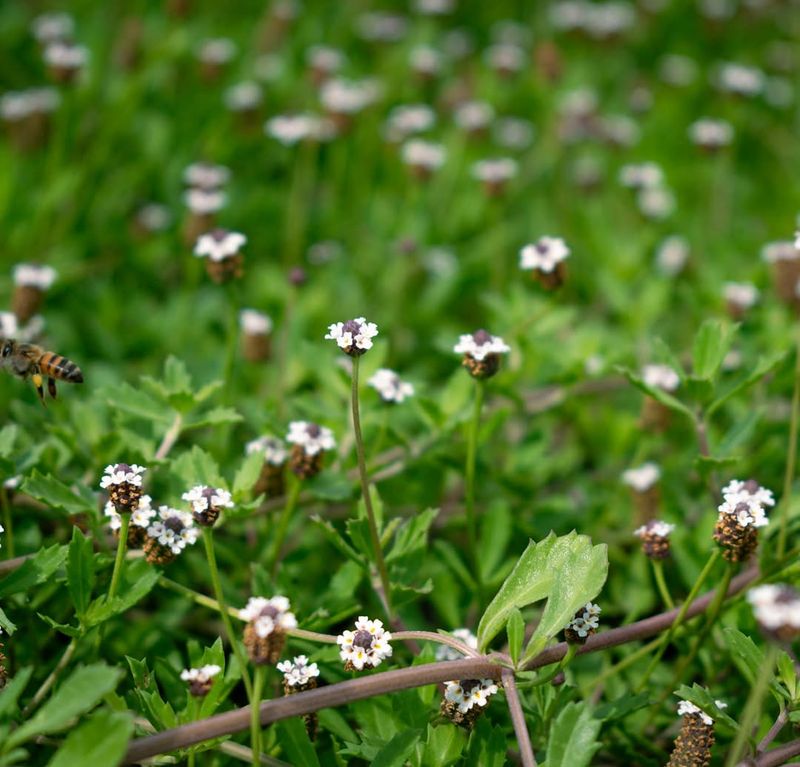
Frog fruit is one of those plants that quietly takes over bare ground and makes you glad it did. Phyla nodiflora grows flat against the soil, rarely getting taller than a few inches, and spreads outward in a thick mat that chokes out weeds without any chemical help.
In Arizona gardens, especially in the low desert zones around Phoenix and Tucson, it handles heat that would wilt most other groundcovers.
What makes frog fruit stand out is its relationship with pollinators. Tiny clusters of white and pale lavender flowers appear throughout the warm season, and native bees and butterflies show up fast.
Painted lady butterflies actually use it as a larval host plant, so planting it adds real ecological value to your yard beyond just looks.
Water needs are moderate compared to lawn grass, and frog fruit can handle periodic flooding as well as dry spells, which is useful in areas where monsoon rains dump water fast.
It does go dormant and turn brown in cold winters, but it comes back reliably when temperatures climb again in spring.
Planting it in full sun gives the best coverage and flower production. Partial shade works, but growth slows down noticeably.
Sandy or loamy soil drains well and suits it fine, though it can adapt to heavier soils too. Space transplants about 18 inches apart and expect them to fill in within one growing season under decent conditions.
Foot traffic tolerance is surprisingly decent for such a small plant.
Once established, frog fruit needs very little attention beyond occasional watering during extended dry periods.
2. Trailing Indigo Bush Spreads Wide In Dry Soil
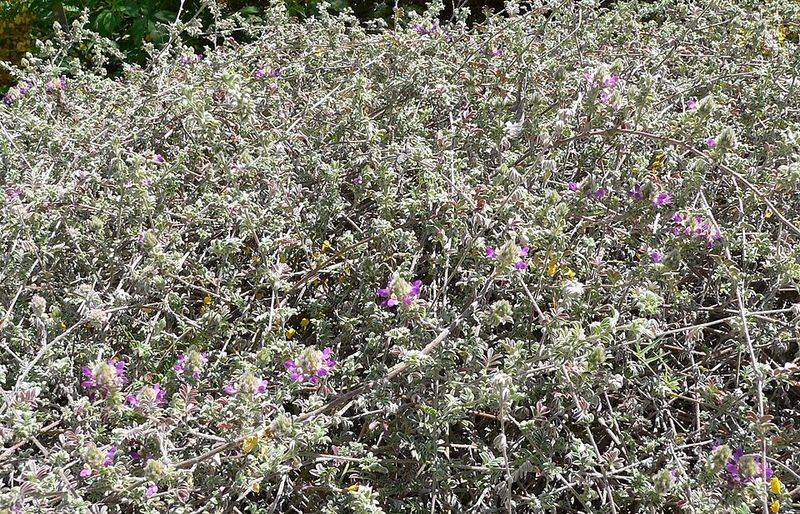
Dalea greggii does not need much encouragement to spread. Give it dry, well-drained soil and a sunny spot, and trailing indigo bush will creep outward steadily, building a silvery green mat that can reach six feet or more across over several years.
Along roadsides in southern Arizona and in desert restoration projects, you see it covering ground that most plants would not attempt.
Small purple flowers appear in spring and sometimes again after monsoon rains, attracting native bees that are easy to watch foraging through the low canopy.
Your Arizona Garden Changes Every Week. Your Plan Should Too.
Gardening in Arizona changes quickly throughout the season. Every Friday you’ll receive a simple weekly plan showing exactly what to plant, prune, fertilize, harvest, and protect so you never miss the right timing.
Between bloom times, the fine-textured silver foliage still looks attractive and reflects heat rather than absorbing it, which helps the plant survive temperatures that regularly top 110 degrees Fahrenheit in the Phoenix metro area.
Watering needs drop sharply after the first year or two. During establishment, deep watering every week or so helps roots go deep.
After that, supplemental irrigation during extended dry stretches is usually enough, and many plants in the ground five or more years get by on rainfall alone in lower elevation Arizona gardens.
Rocky or gravelly soil actually suits it better than rich amended beds. Overly fertile soil can push soft, floppy growth that looks less tidy.
Avoid planting in areas with poor drainage, since standing water after monsoons can cause root problems.
Trailing indigo bush works well on slopes where erosion is a concern, holding soil with its spreading root system while keeping the surface covered and visually clean.
It continues spreading slowly over time while staying low and manageable in typical Arizona garden conditions.
3. Southwestern Mock Vervain Spreads Easily In Sun
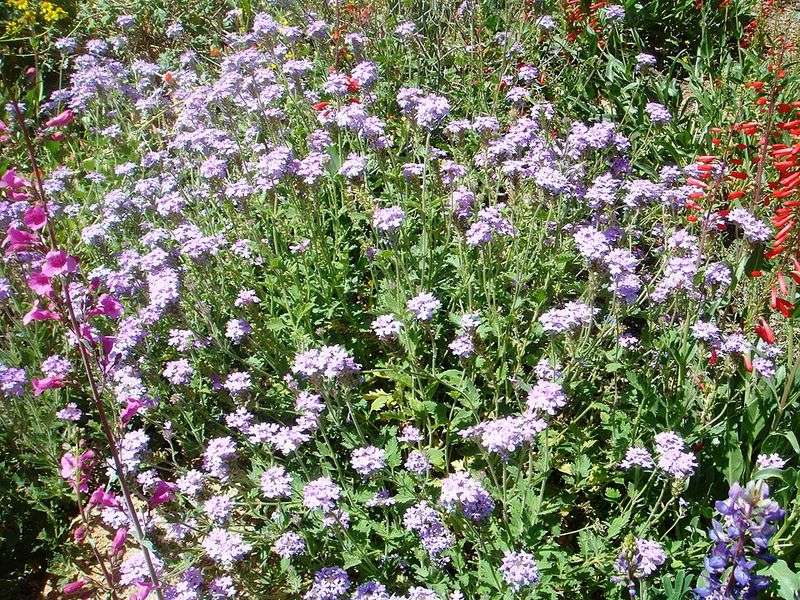
Few native groundcovers in Arizona bloom as cheerfully as Glandularia gooddingii. Southwestern mock vervain stays low, usually under eight inches tall, while its stems creep outward and root as they go.
Clusters of bright pink to lavender flowers open from late winter through early summer, and in mild Arizona winters the bloom season can stretch longer than expected.
Butterflies and native bees find it quickly once flowers open. In a Phoenix or Tucson yard, you might notice queen butterflies and various bee species working the blooms within days of the plant setting flower.
That kind of fast pollinator response is something you cannot buy with ornamental non-native plants, no matter how showy they look.
Sandy, well-drained soil is where this plant really performs. Caliche-heavy ground or poorly draining clay can slow it down considerably, so amending the planting area or choosing a naturally sandy spot gives better results.
Full sun is a firm requirement. Plants in shade get leggy and produce far fewer flowers, which defeats the purpose of growing this species.
Watering during the first season helps establish a solid root system. After that, mock vervain can handle Arizona’s dry stretches reasonably well, though an occasional deep soak during the hottest months keeps it looking better than complete neglect would.
Cutting back stems after the main bloom flush encourages fresh growth and sometimes triggers a second round of flowers. It self-seeds lightly, so expect a few seedlings to pop up in neighboring spots over time.
It also handles reflected heat well, which makes it especially useful near gravel paths, rock mulch, and other hot spots where many low growers start to fade.
4. Whitemargin Sandmat Stays Flat And Spreads Fast
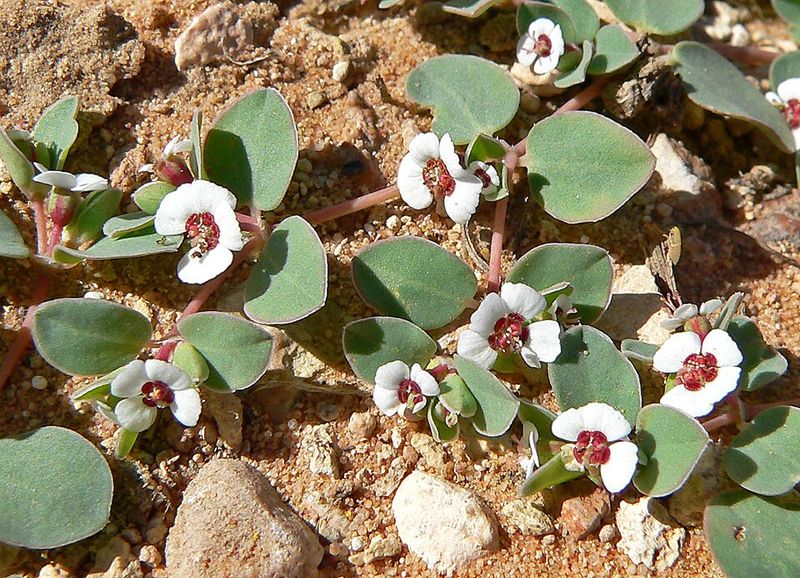
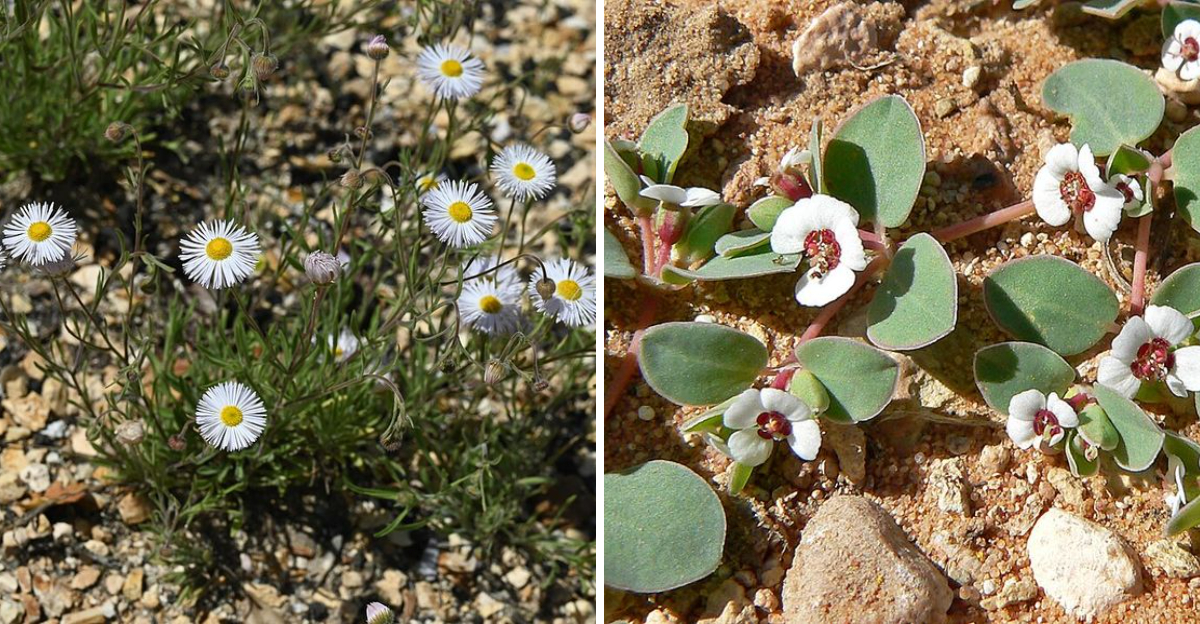
Whitemargin sandmat is a plant most Arizona gardeners walk right past without recognizing it, even though it grows wild in disturbed soil and sandy washes across the state.
Euphorbia albomarginata hugs the ground completely, with stems radiating outward from a central taproot and tiny white-margined leaves forming a dense, coin-flat mat.
It is one of the flattest-growing native groundcovers you will find anywhere in the Sonoran Desert region.
Speed is one of its real strengths. Under warm conditions with adequate moisture, sandmat covers bare ground noticeably faster than many other low-growing natives.
In Arizona’s spring and early summer, when soil temperatures rise and monsoon moisture has not yet arrived, it fills gaps between rocks and pavers in a way that feels almost spontaneous. That rapid spread makes it useful for stabilizing bare soil quickly.
Plants stay green through most of the warm season and can handle extended dry periods once their taproot is established in the ground. Full sun is preferred, and the plant naturally grows in exposed, open spots rather than shaded areas.
Soil quality matters less than drainage, since sandmat is commonly found in gravel, caliche rubble, and sandy desert flats throughout Arizona.
One thing worth knowing is that like other euphorbias, the milky sap can irritate skin on contact, so wearing gloves when handling or transplanting is a smart habit.
Deer tend to leave it alone, which is a practical bonus in areas around Prescott or Sedona where deer pressure on gardens can be significant.
5. Blackfoot Daisy Spreads Wide In Sandy Arizona Soil
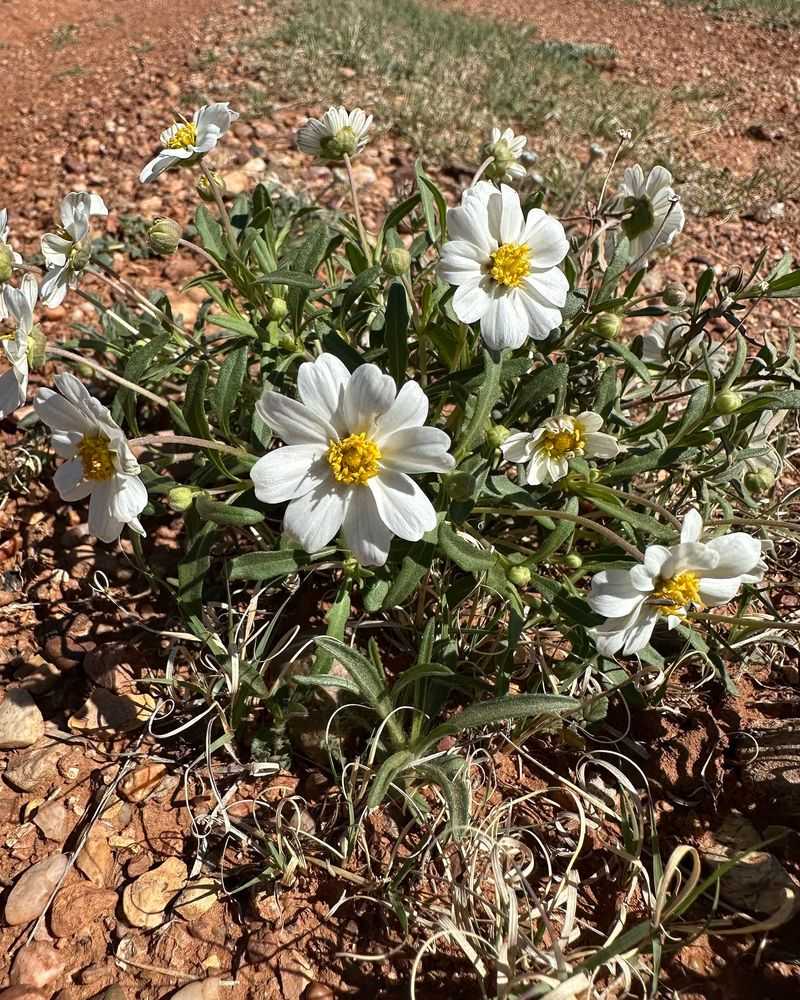
Blackfoot daisy has a cheerful, no-nonsense look that fits right into an Arizona garden without trying too hard.
Melampodium leucanthum grows in a low, rounded mound covered in white flowers with bright yellow centers, blooming heavily in spring and fall and continuing sporadically through summer heat.
Plants typically stay under a foot tall but spread two feet or more across, giving decent ground coverage per plant.
Sandy, gravelly, or rocky soil is where blackfoot daisy thrives most reliably. In the Sonoran Desert and across central Arizona’s grassland zones, it naturally grows in well-drained, lean soils.
Adding too much organic matter or planting in heavy clay can actually cause problems, leading to root rot and shorter-lived plants. Lean soil and sharp drainage are the real keys to keeping it happy long-term.
Watering every week or two during the hottest stretch of summer is usually enough for established plants. Overwatering is a more common mistake than underwatering with this species.
If leaves start yellowing or stems look mushy at the base, that is usually a sign of too much moisture rather than too little. Letting soil dry completely between waterings keeps the plant healthier through Arizona’s intense summer heat.
Pruning back by about a third after each main bloom cycle encourages fresh growth and better flower production. Without occasional trimming, plants can get a bit woody and open in the center over time.
Blackfoot daisy self-seeds modestly, so you may find new plants showing up in nearby gravel or sandy patches without any effort on your part.
6. Creeping Mahonia Works As A Shade Groundcover
Shade is a challenge in Arizona gardens. Most native groundcovers want full sun, which makes finding something that genuinely performs under trees or along north-facing walls harder than it sounds.
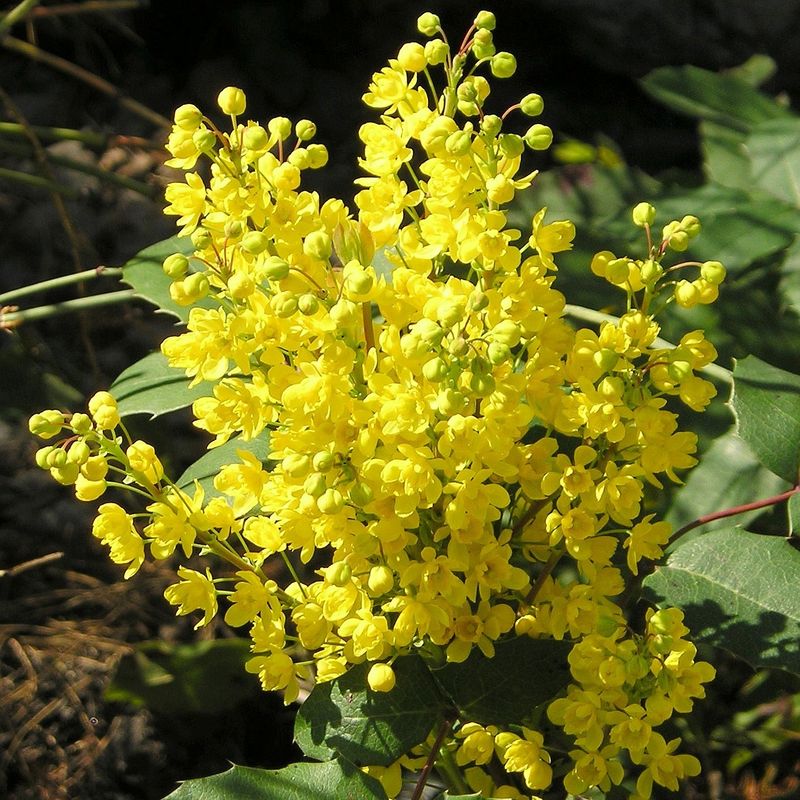
Creeping mahonia, Mahonia repens, is one of the few native options that actually prefers some shade and handles the reduced light under mesquites, oaks, or pines without struggling.
Leaves are glossy, holly-like, and stay on the plant through winter, which is a real advantage in higher elevation Arizona gardens around Prescott, Flagstaff, or the White Mountains where winters are cold enough to take down less hardy plants.
Small yellow flower clusters appear in spring, followed by dark blue berries that birds find attractive.
Cedar waxwings and robins are among the species that visit for the fruit.
Height stays low, usually between six and twelve inches, with a slow but steady spread through underground stems called rhizomes. Do not expect it to cover ground as quickly as frog fruit or sandmat.
Patience is necessary, but the result is a durable, year-round groundcover that handles cold, shade, and dry conditions better than most alternatives in its category.
Soil with decent organic content and good drainage suits it better than pure sand or caliche. Supplemental water during the first couple of growing seasons helps roots establish, especially in areas with hot summers.
After that, plants in shaded spots often get by on natural rainfall in central and northern Arizona. Avoid heavy clay soils that stay wet after rain, as prolonged saturation can stress the root system.
7. Spreading Fleabane Forms A Loose Low Cover
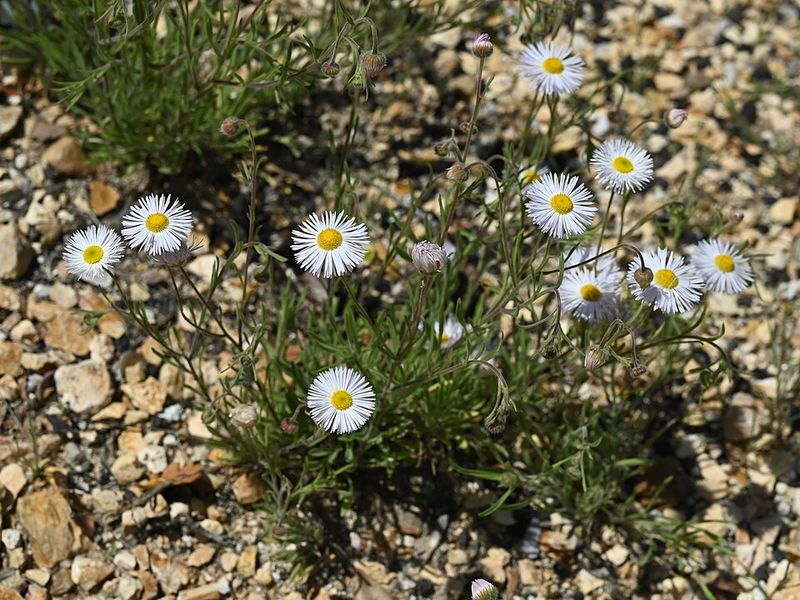
Spreading fleabane is not the tidiest groundcover in Arizona, and that is actually part of its appeal.
Erigeron divergens grows in a loose, airy way with slender stems spreading outward and upward, reaching anywhere from six to eighteen inches depending on conditions.
Small daisy-like flowers with white to pale lavender petals and yellow centers appear over a long season, starting in spring and continuing through summer in many Arizona locations.
You find it naturally in rocky hillsides, roadsides, and open grasslands across a wide elevation range in Arizona, from the Sonoran Desert foothills up into ponderosa pine country.
That elevation flexibility means it adapts to gardens in Phoenix, Tucson, Sedona, and Flagstaff, though its appearance and growth rate will vary depending on how much heat and moisture it receives at each location.
Native bees, small butterflies, and hoverflies work the flowers consistently. Planting it in combination with bunchgrasses or other low natives creates a naturalistic patch that supports a range of beneficial insects without requiring much management.
Fleabane does self-seed freely, which some gardeners appreciate and others find a bit much. Deadheading spent flowers before seed sets keeps it from spreading into areas where you do not want it.
Full sun to partial shade works fine, and soil quality is fairly forgiving as long as drainage is reasonable.
Watering once a week or so during the driest months keeps plants looking good, though plants growing in cooler, higher elevation Arizona gardens need less supplemental water than those in the low desert.
Cutting plants back by half in midsummer can refresh growth and encourage a second bloom push in fall.