The Most Vibrant Hummingbirds You Can Spot In California
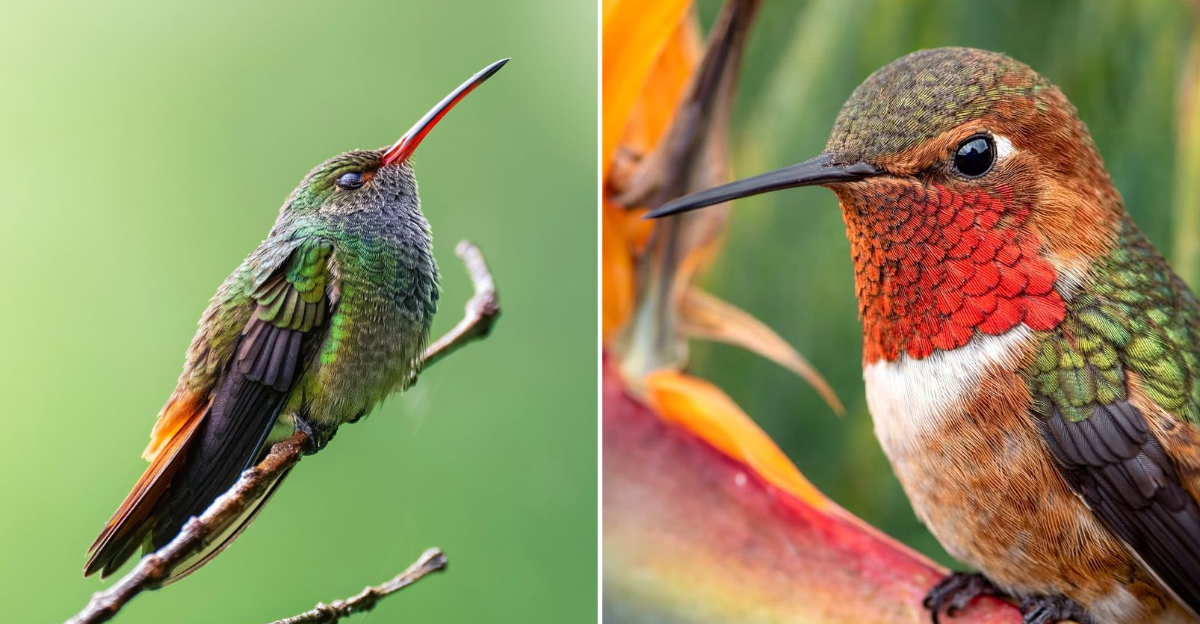
California is one of the most exciting places in North America to watch hummingbirds. These tiny, colorful birds zip through gardens, parks, and wild landscapes with breathtaking speed and brilliant iridescent feathers that catch the light in dazzling ways.
For people who love birds and backyard visitors, spotting these lively little travelers can be a real thrill.
Some hummingbirds have glittering throats, shimmering backs, and flashes of jewel‑like colors that make them stand out against just about any backdrop.
Spring and summer are peak times to see these feathered gems, but with the right flowers and feeders, you can attract them throughout most of the year.
If you enjoy watching nature up close or want to learn which hummingbirds may visit your outdoor space, California offers some of the most spectacular species you can see with your own eyes. Get ready to fall in love with these incredible little birds.
1. Costa’s Hummingbird
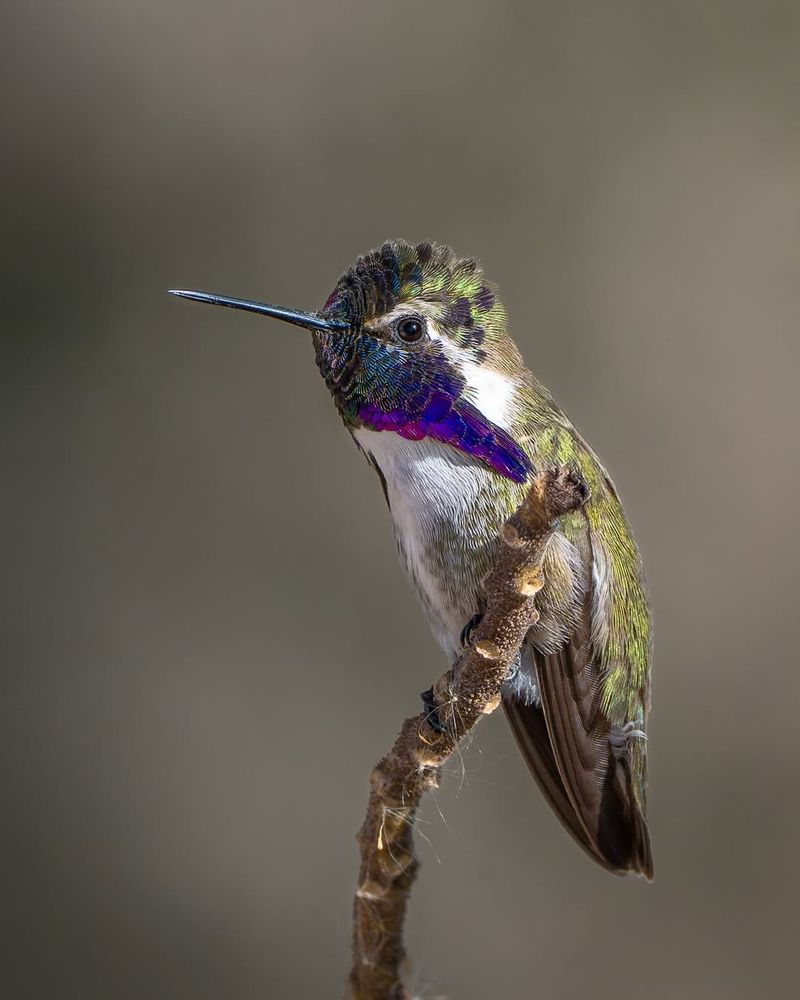
Imagine spotting a tiny bird that looks like it is wearing a royal purple crown. That is exactly what you get with the Costa’s Hummingbird, one of California’s most eye-catching desert residents.
Males sport a brilliant purple head and throat that flare outward like a regal collar, making them look almost too colorful to be real.
Found mostly in the dry, scrubby desert regions of southern California, these birds are perfectly built for hot, arid environments. They love blooming desert plants like ocotillo and chuparosa, which provide the nectar they need to stay energized.
Spotting one near a flowering desert shrub is a real treat.
Costa’s Hummingbirds are smaller than most other California hummingbirds, which makes their bold colors even more impressive.
Males perform wild, looping courtship dives to impress females, swooping in wide U-shaped arcs while making a high-pitched whistle.
If you visit the Anza-Borrego Desert or Joshua Tree area in early spring, you have a great chance of seeing one of these purple gems up close.
2. Calliope Hummingbird
Do not let its small size fool you. The Calliope Hummingbird is actually the smallest bird found in the United States and Canada, yet it travels thousands of miles during migration.
What it lacks in size, it more than makes up for with personality and color.
Male Calliope Hummingbirds have a throat pattern unlike anything else in California. Instead of a solid-colored patch, they display streaks of magenta-pink that fan out like tiny rays of light.
This streaked gorget is one of the most distinctive markings among all North American hummingbirds, and it makes them incredibly easy to identify once you know what to look for.
In California, you are most likely to spot Calliope Hummingbirds during spring and fall migration, especially in mountain meadows and along flower-rich trails in the Sierra Nevada. They tend to favor areas with willows, alders, and wildflowers.
Watching one hover while feeding is a reminder of just how remarkable nature can be. Setting up a feeder during migration season in central or northern California can bring one right to your backyard.
Your California Garden Changes Every Week. Your Plan Should Too.
Gardening in California changes quickly throughout the season. Every Friday you’ll receive a simple weekly plan showing exactly what to plant, prune, fertilize, harvest, and protect so you never miss the right timing.
3. Anna’s Hummingbird (Male)
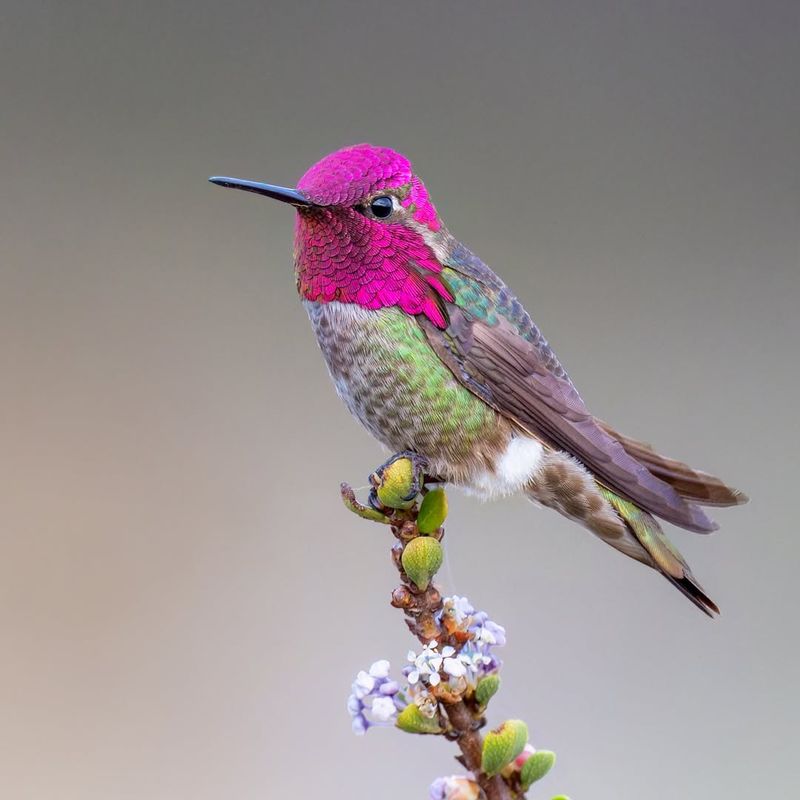
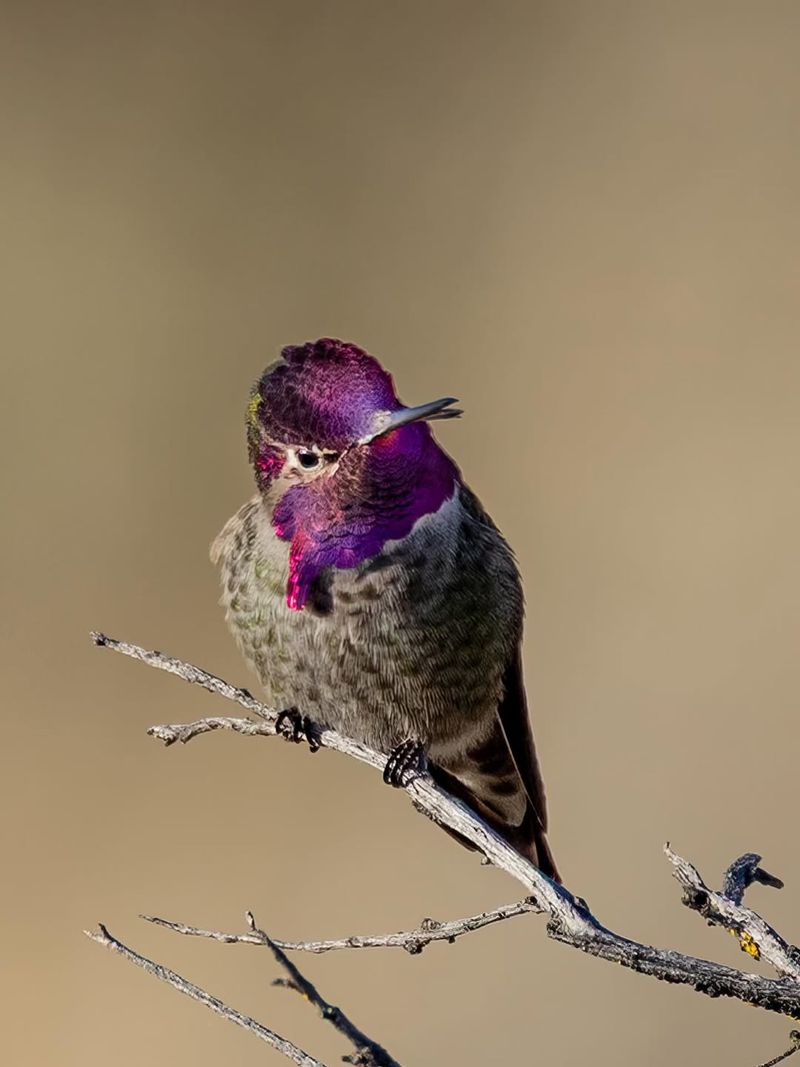
When sunlight hits a male Anna’s Hummingbird at just the right angle, the result is something truly spectacular. His entire head and throat burst into a glowing rose-pink that seems almost electric.
One second he looks dull and brown, and the next he is a flash of neon magenta. It is one of nature’s best magic tricks.
Unlike many other hummingbirds that only pass through California during migration, male Anna’s Hummingbirds are year-round residents. You can find them in gardens, parks, and neighborhoods across the entire state.
They are bold and territorial, often chasing away birds much larger than themselves to protect their favorite feeding spots.
Male Anna’s Hummingbirds are also known for their surprisingly complex songs. Most hummingbirds do not truly sing, but the Anna’s produces a buzzy, scratchy series of notes that birders find charming.
During breeding season, males perform dramatic dive displays, plunging from great heights and producing a sharp popping sound with their tail feathers.
Planting red tubular flowers like salvia or penstemon in your California yard is one of the easiest ways to attract this stunning species.
4. Rufous-tailed Hummingbird
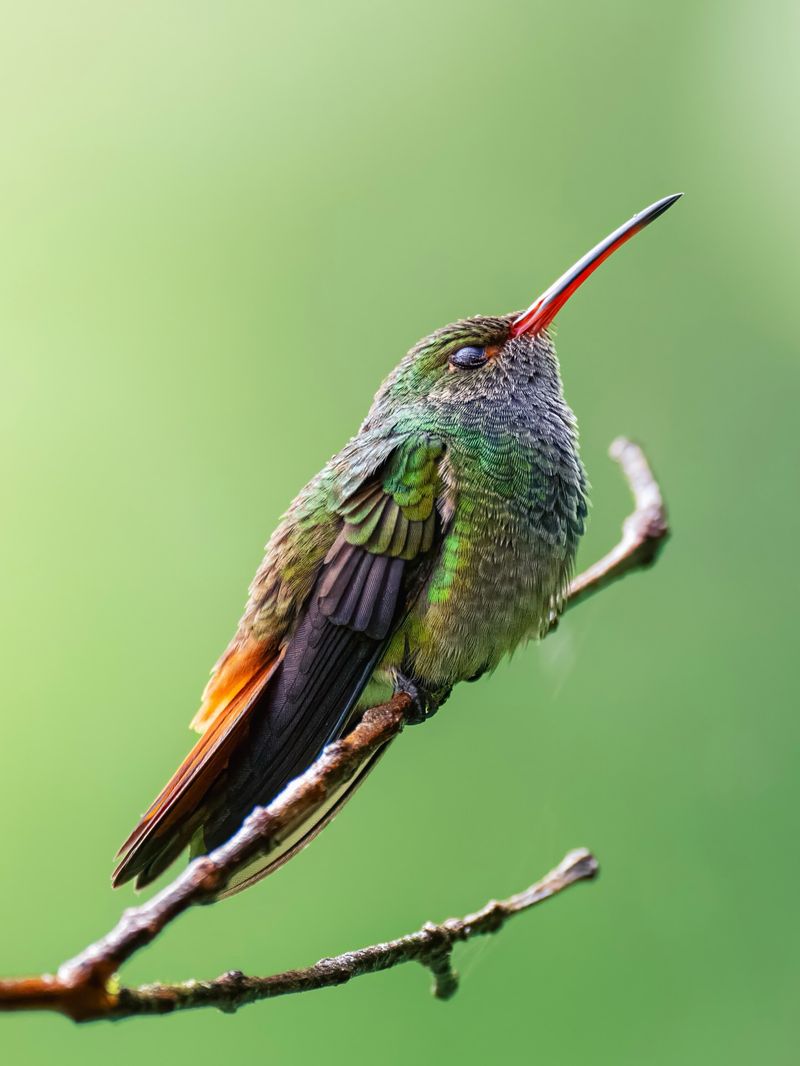
The Rufous-tailed Hummingbird is a rare but exciting find for California birdwatchers. Normally a Central American and Mexican species, occasional individuals have been spotted in California, making every sighting a special event.
If you ever come across one, count yourself very lucky.
Males display a rich emerald green on their body with a striking rusty-orange tail that gives the species its name. Their bill is reddish at the base and slightly curved, perfect for reaching deep into tubular flowers.
They are medium-sized compared to other hummingbirds, which makes them a bit easier to spot when they perch on an open branch.
Because this species is not a regular California resident, sightings are often reported through birding apps and local wildlife groups. Birdwatching communities in southern California tend to be very active about sharing rare sightings quickly.
If you want a chance at seeing one, it helps to stay connected with local birding clubs and keep an eye on sighting reports.
Having a well-stocked nectar feeder and native flowering plants in your yard also increases the chances of attracting unusual visitors to your California garden.
5. Anna’s Hummingbird (Female)
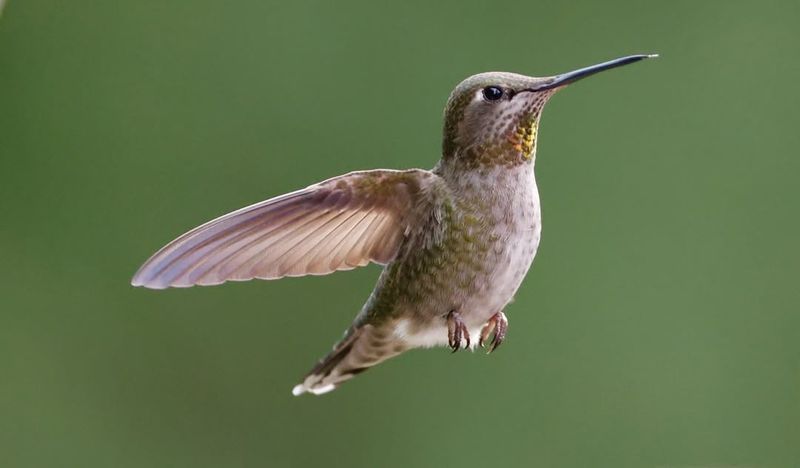
While the male Anna’s Hummingbird gets a lot of attention for his flashy colors, the female is no less fascinating. She wears a more subtle coat of shimmering green with a small but noticeable pink or red spot on her throat.
She may not glow as brightly, but she is every bit as capable and impressive as her male counterpart.
Female Anna’s Hummingbirds handle all nesting duties on their own. They build tiny cup-shaped nests using plant fibers and spider silk, which allows the nest to stretch as the chicks grow.
The nest is often camouflaged with lichen and placed on a small branch, making it nearly invisible to predators and casual observers alike.
Anna’s Hummingbirds are among the most adaptable birds in California. They thrive in coastal chaparral, mountain foothills, urban parks, and suburban neighborhoods.
Females are often seen visiting feeders and flowers right alongside males, though they tend to be slightly less aggressive about defending territory.
If you want to attract Anna’s Hummingbirds to your California home, a clean hummingbird feeder filled with plain sugar water is one of the most reliable methods available.
6. Rufous Hummingbird
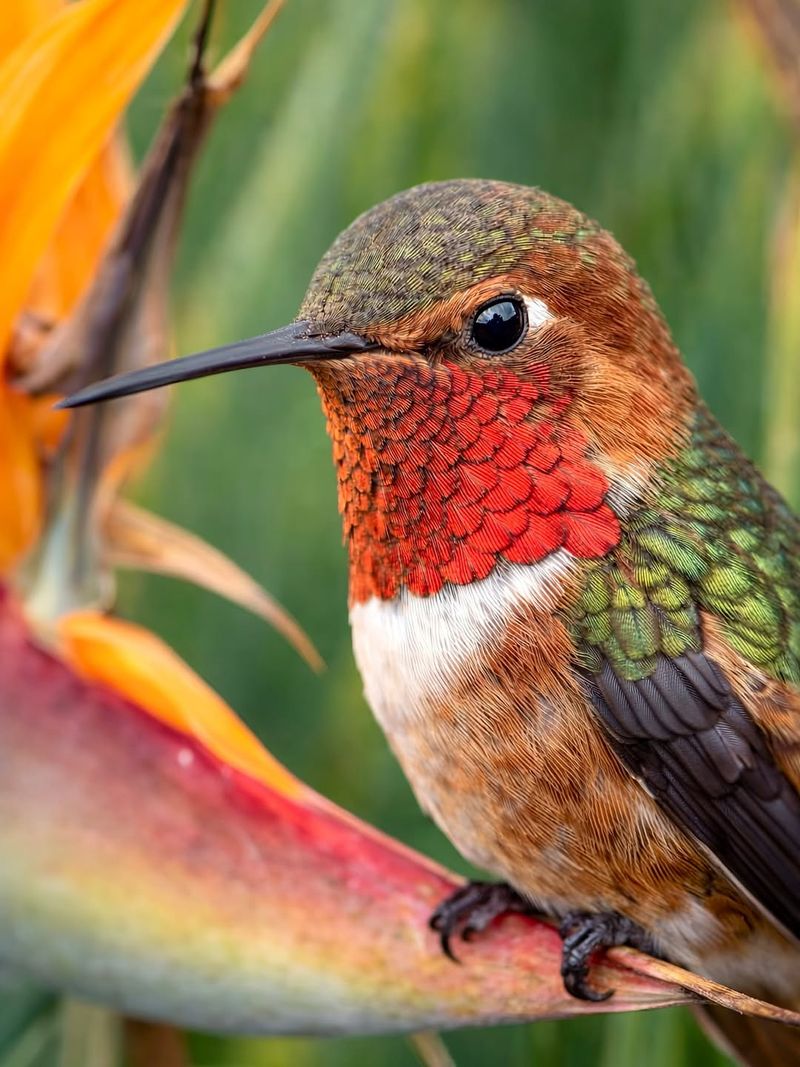
Few birds in California pack as much fire into such a small package as the Rufous Hummingbird.
Males are wrapped in a blazing coat of orange and rust, with a throat that shimmers between copper and flame-red depending on the light.
Seeing one for the first time feels like watching a tiny ember float through the air.
Rufous Hummingbirds are famous for being feisty. They are highly aggressive and will chase off other hummingbirds, even larger species, without hesitation.
Despite their small size, they are one of the most dominant birds at any feeder they decide to claim. Watching their territorial behavior is genuinely entertaining.
In California, Rufous Hummingbirds appear mainly during spring and fall migration. They travel an incredibly long route, moving from wintering grounds in Mexico all the way up to breeding areas in the Pacific Northwest and Alaska.
During their California stopovers, they fuel up on nectar from flowers and feeders along the coast and in mountain foothills. Spring migration typically brings them through in February and March, while fall migration runs from July through October.
Keeping your feeders clean and full during these windows gives you a great chance of a close encounter.
7. Black-chinned Hummingbird
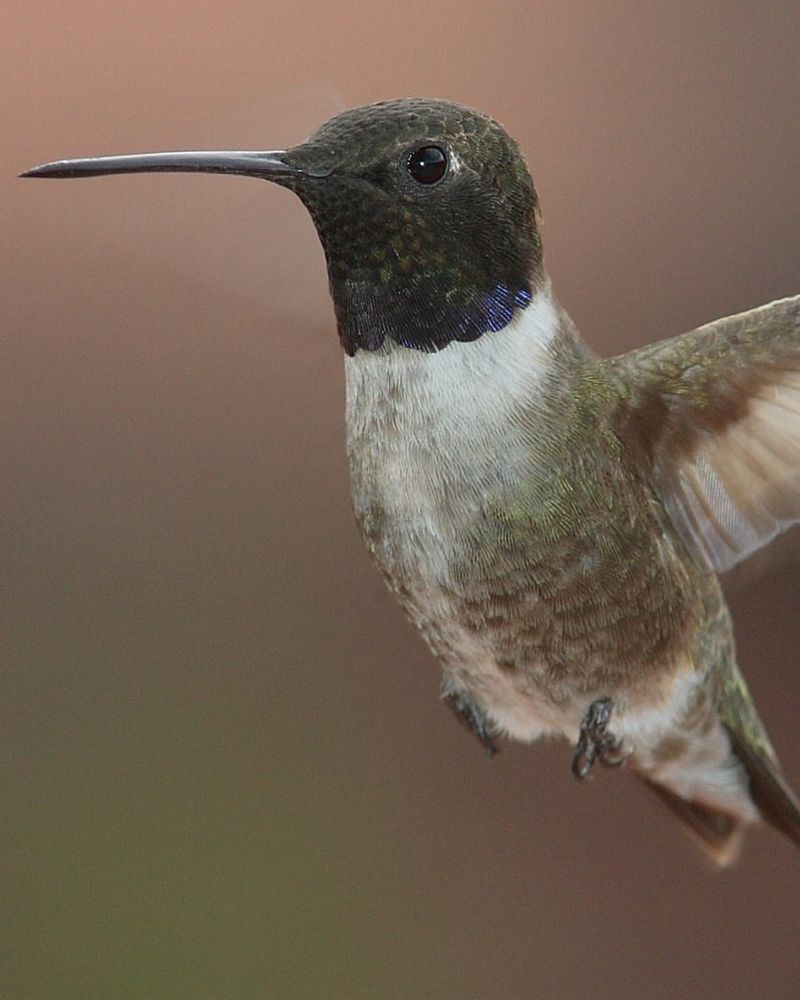
At first glance, the Black-chinned Hummingbird might seem plain compared to California’s more colorful species.
But tilt the light just right, and that black chin reveals a hidden band of shimmering violet-purple underneath.
It is a subtle but stunning surprise that rewards patient observers.
Black-chinned Hummingbirds are summer visitors to California, arriving in spring and heading south before winter. They are most commonly found in southern and central parts of the state, often near rivers, canyons, and desert-edge habitats.
They tend to prefer areas with tall trees and shrubby undergrowth, which gives them both feeding spots and safe nesting sites.
Females look very similar to female Anna’s Hummingbirds, which can make identification tricky. One helpful clue is the pumping motion of the tail while hovering, which Black-chinned Hummingbirds do more noticeably than most other species.
Their preference for open, arid landscapes makes places like the Owens Valley and inland valleys of southern California great spots to look for them.
Planting native California flowers like sage, monkeyflower, and desert willow near your home can help attract these understated but beautiful birds during the warmer months.
8. Allen’s Hummingbird
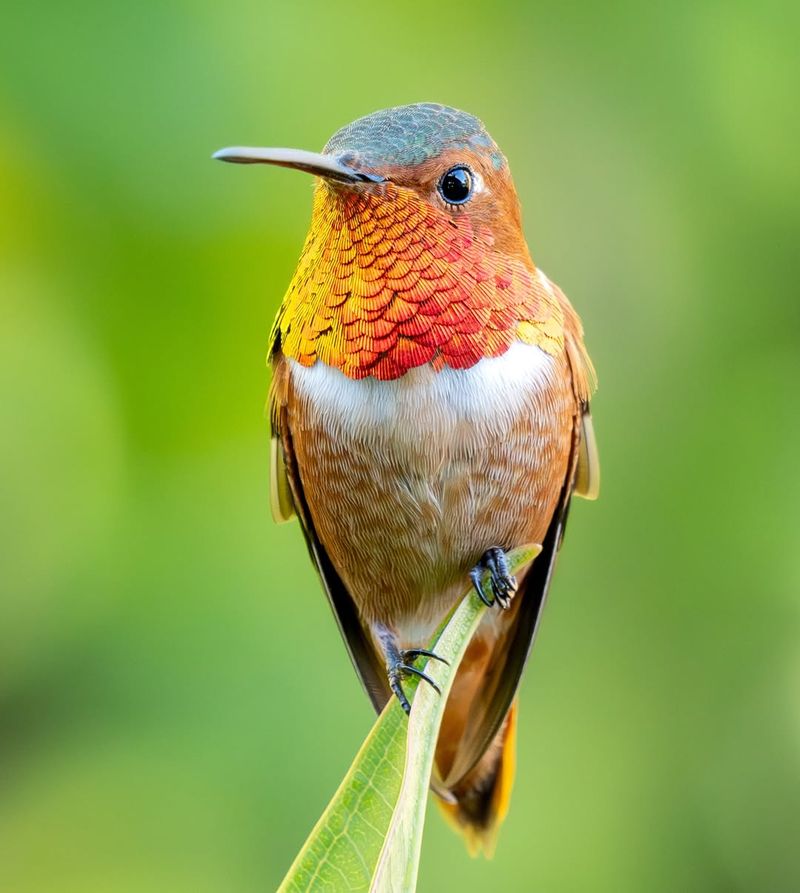
There is something wonderfully Californian about the Allen’s Hummingbird. This species breeds almost exclusively along the California coast, making it one of the most regionally unique birds in the entire country.
If you live near the coast or visit in spring, you have a real home-field advantage when it comes to spotting this gem.
Males are dressed in a rich combination of glittering orange-red throats, coppery-orange bellies, and bright green backs. Their colors are bold and warm, almost like a tiny sunset tucked into feathers.
During courtship, males perform a spectacular pendulum-like flight display, swinging back and forth in a wide arc before diving steeply to impress a nearby female.
Allen’s Hummingbirds are early migrants, often arriving along the California coast as early as January. Coastal scrub, gardens, and parks from San Francisco down to Los Angeles are prime locations to find them.
A small, non-migratory population even lives year-round on the Palos Verdes Peninsula and nearby areas of southern California.
Planting native coastal plants like sticky monkeyflower and California fuchsia near your home is a proven way to invite these brilliant little birds into your outdoor space throughout the season.
9. Broad-tailed Hummingbird
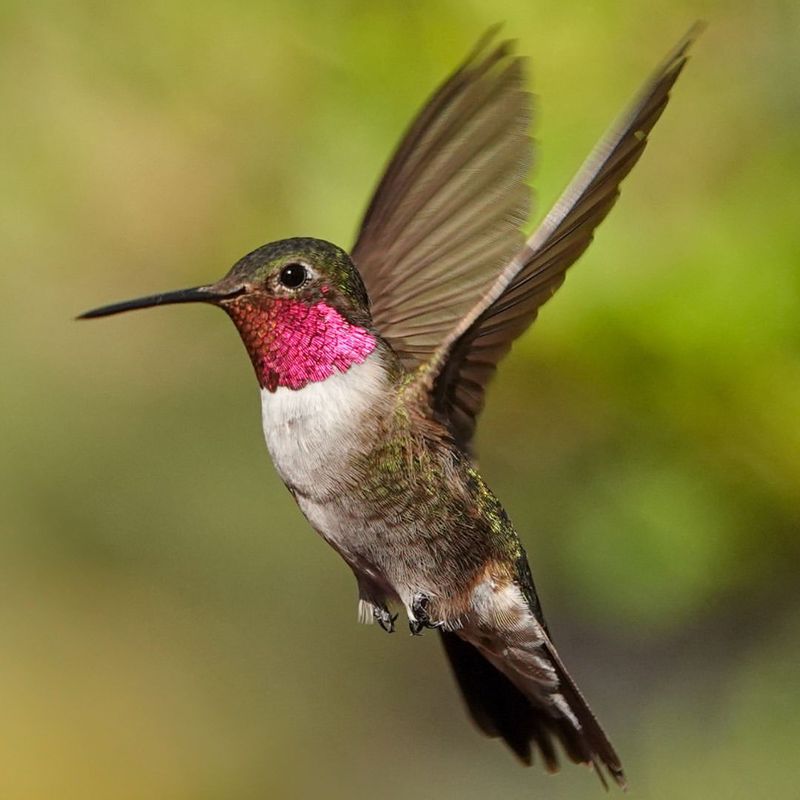
High up in California’s mountain ranges, where the air is crisp and wildflowers bloom in short but brilliant bursts, the Broad-tailed Hummingbird finds its perfect home.
Males produce a distinctive metallic trilling sound with their wings as they fly, which means you often hear one before you ever see it.
That wing trill is one of the easiest ways to identify this species in the field.
Male Broad-tailed Hummingbirds have a vivid rose-red throat that glows against their green body. Females are green above with buffy-orange sides and a speckled throat.
Both male and female have noticeably broad tails compared to other hummingbirds, which is how the species got its name.
In California, Broad-tailed Hummingbirds are found mainly in the eastern Sierra Nevada and other higher-elevation mountain habitats during the summer breeding season.
They tend to favor meadows, open forests, and areas with abundant wildflowers like columbine and scarlet gilia.
Birdwatchers who enjoy hiking will find that mountain trails in the eastern Sierra are some of the best places in California to encounter this species. Visiting in June or July gives you the highest chance of spotting both males and females actively feeding and nesting.