Why Sandhill Cranes Are Appearing More Often In Michigan Yards
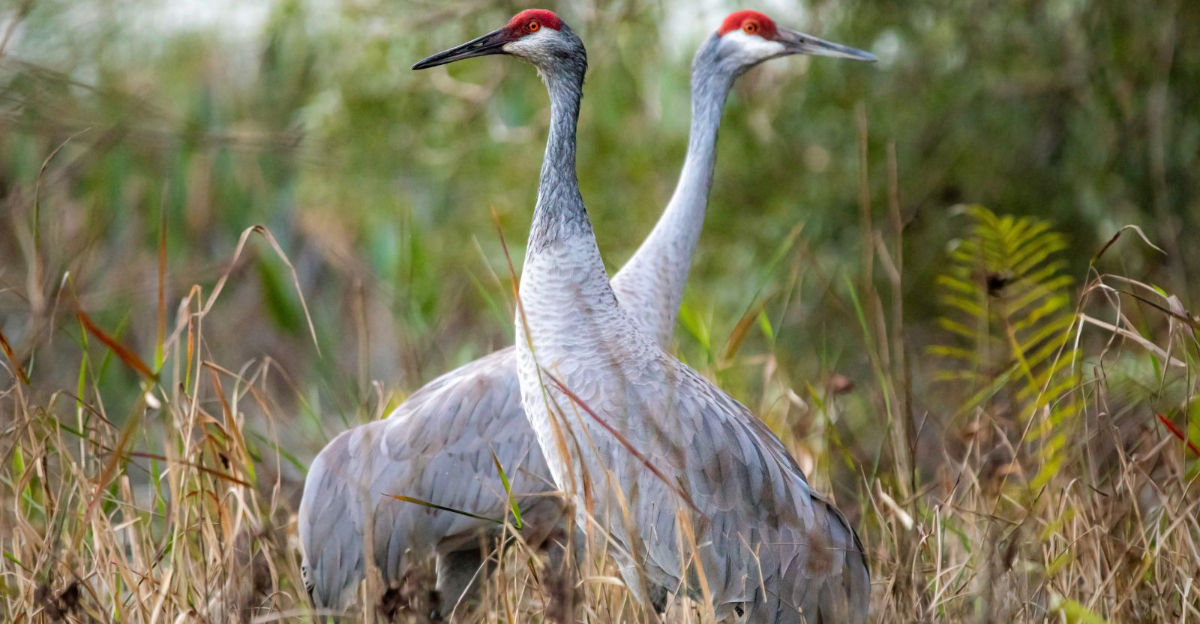
Sandhill cranes are becoming a more common sight in Michigan yards, and homeowners across the state are taking notice. These tall, elegant birds, with their striking red foreheads, are hard to miss as they stroll through lawns or wade near backyard ponds.
But why are they showing up more frequently in residential areas? A combination of factors is behind this increase.
Habitat changes, shifting weather patterns, and a growing crane population are all playing a role in bringing these remarkable birds closer to human spaces.
Understanding why Sandhill cranes are drawn to Michigan’s neighborhoods can shed light on larger environmental trends and offer fascinating insights into how wildlife is adapting to a changing world.
1. Loss Of Habitat Is Driving Sandhill Cranes Into Urban Areas
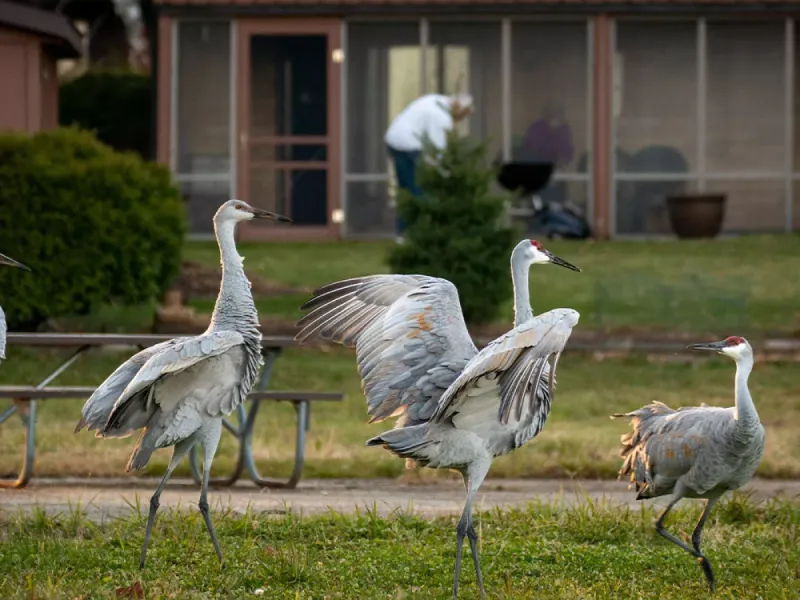
Wetlands across Michigan have been shrinking for decades, and sandhill cranes are feeling the squeeze. As human development expands into rural and marshy areas, cranes are losing the natural spaces they have relied on for generations.
When their habitat disappears, they simply move to wherever they can find open ground and food, which increasingly means suburban yards and neighborhood green spaces.
Michigan has lost more than 50 percent of its original wetlands since European settlement, according to the Michigan Department of Natural Resources. That is an enormous amount of habitat gone, forcing wildlife like sandhill cranes to adapt quickly.
Residential areas with open lawns, gardens, and small water features have become surprisingly attractive substitutes for the wetland edges cranes once called home.
It is not unusual now to spot a pair of cranes casually walking through a Michigan subdivision or foraging near a retention pond. They are not lost or confused.
They are resourceful birds making the best of a changing landscape. Understanding this connection between habitat loss and crane behavior helps residents appreciate why these visits are happening more frequently.
Respecting their presence while being mindful of boundaries creates a healthier relationship between Michigan homeowners and these remarkable birds.
2. Availability Of Food Sources In Lawns And Gardens
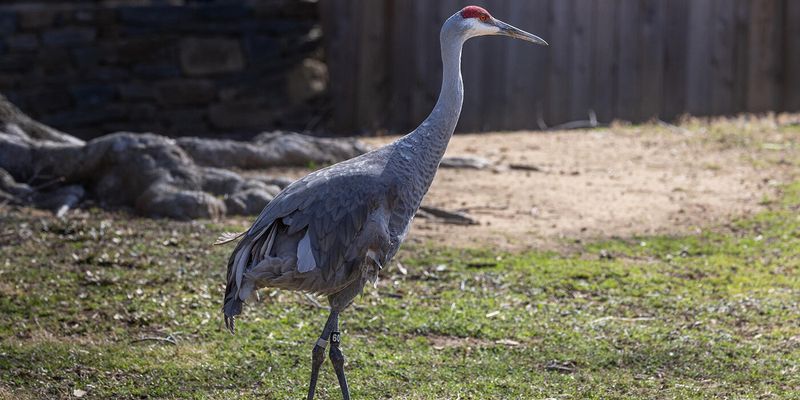
Few birds are as opportunistic when it comes to finding a meal as the sandhill crane. Michigan lawns and gardens happen to offer a surprisingly rich buffet, packed with exactly the kinds of foods cranes love.
Earthworms, beetles, grasshoppers, seeds, berries, and even small frogs are all fair game for a hungry crane on the move.
Cranes are omnivores with a broad appetite, which makes suburban yards especially appealing. A freshly mowed lawn exposes insects and grubs that are easy pickings.
Gardens with loose soil are perfect for probing beaks searching for worms and roots. Birdfeeders that spill seeds onto the ground can also attract cranes, even though the feeders are meant for smaller birds.
Michigan homeowners have noticed cranes spending long stretches of time methodically working through garden beds and grassy areas, sometimes returning to the same yard day after day.
Once a crane figures out that a particular yard is a reliable food source, it tends to come back.
If you want to discourage frequent visits, removing accessible food sources and keeping gardens covered with netting can help.
Your Michigan Garden Changes Every Week. Your Plan Should Too.
Gardening in Michigan changes quickly throughout the season. Every Friday you’ll receive a simple weekly plan showing exactly what to plant, prune, fertilize, harvest, and protect so you never miss the right timing.
However, watching a sandhill crane forage up close in a Michigan yard is genuinely one of the more memorable wildlife encounters a backyard can offer.
3. Increased Crane Populations In Michigan
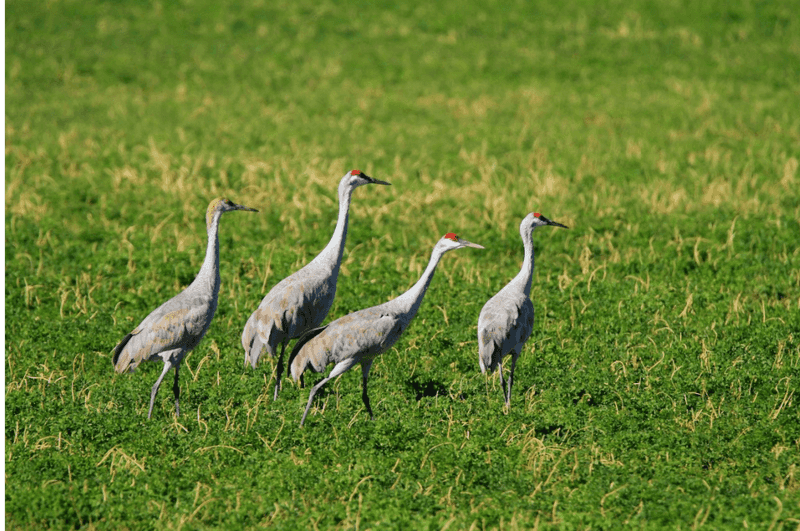
Not long ago, sandhill cranes were a rare sight in Michigan. Hunting pressure and widespread wetland destruction had pushed their numbers dangerously low by the early twentieth century.
Thanks to strong conservation efforts and legal protections, the Michigan sandhill crane population has made a remarkable recovery over the past several decades.
Today, Michigan supports one of the largest sandhill crane breeding populations in the eastern United States. Estimates suggest that tens of thousands of cranes now use Michigan as a breeding and staging ground each year.
With more cranes in the state than at any point in recent history, it naturally follows that sightings in residential areas have increased significantly.
More birds means more competition for traditional habitat, which pushes cranes into new areas including suburban neighborhoods. The Greater Sandhill Crane, the subspecies found in Michigan, has proven to be incredibly resilient when given the chance to recover.
Conservation programs, hunting regulations, and wetland protections have all played a role in bringing these birds back. For Michigan residents, this population boom is a genuine success story worth celebrating.
Seeing cranes in your yard is actually a sign that conservation efforts in the state are working exactly as intended, which makes every sighting a little more special.
4. Changes In Migration Patterns

Sandhill cranes have historically followed well-established migration routes, but those patterns are shifting in noticeable ways.
Some cranes that once reliably moved south for winter are now lingering in Michigan well into late fall or even overwintering in the southern parts of the state.
This extended presence naturally increases how often Michigan residents encounter them in yards and open spaces.
Biologists have observed that cranes are adjusting their departure and arrival times in response to changing environmental conditions. Warmer autumns mean food remains available longer, reducing the urgency to migrate south.
Some crane pairs now arrive back in Michigan earlier in spring than they did just twenty years ago, extending the window when they are visible in residential areas by several weeks on each end of the season.
This shift in timing means Michigan homeowners are seeing cranes in their yards during months when sightings were once uncommon.
Early spring arrivals in March and late fall departures in November or December are becoming increasingly normal across the state. Birdwatchers and casual observers alike have taken note of these changes.
Keeping a simple journal of crane sightings in your yard can actually contribute valuable citizen science data to ongoing migration research efforts, helping scientists track how these patterns continue to evolve across Michigan and beyond.
5. Wetland Restoration Projects Encouraging Nearby Foraging
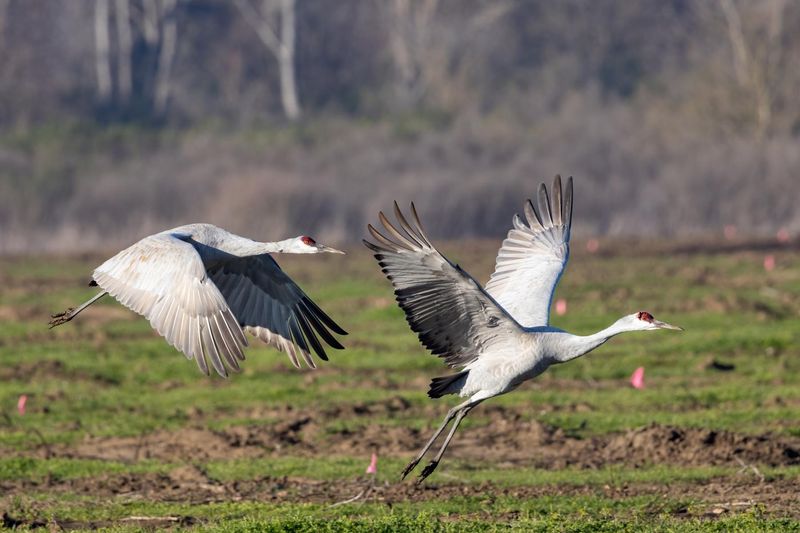
Michigan has invested significantly in wetland restoration over recent years, and those efforts are paying off in ways that go beyond just water quality.
Restored wetlands create new habitat patches near communities, and sandhill cranes are among the first large birds to move into these areas.
Once cranes establish themselves near a restored wetland, they naturally begin exploring the surrounding landscape, including nearby yards and open lots.
Organizations like the Michigan Department of Environment, Great Lakes, and Energy have partnered with land trusts and local governments to restore thousands of acres of wetland habitat across the state.
These restored areas provide cranes with safe roosting spots, nesting cover, and water access. The proximity of these new habitats to suburban areas means cranes are regularly crossing into residential zones during their daily foraging routines.
Homeowners living near restored wetlands in Michigan are among the most likely to see frequent crane activity in their yards.
Rather than viewing this as a problem, many residents have come to appreciate the ecological health these sightings represent. A crane in your yard often signals that a healthy, functioning wetland is nearby.
Supporting local wetland restoration initiatives not only benefits cranes but also improves stormwater management, water quality, and overall biodiversity in Michigan communities, creating a richer natural environment for everyone who lives there.
6. Cranes Are Searching For Safe Nesting Sites
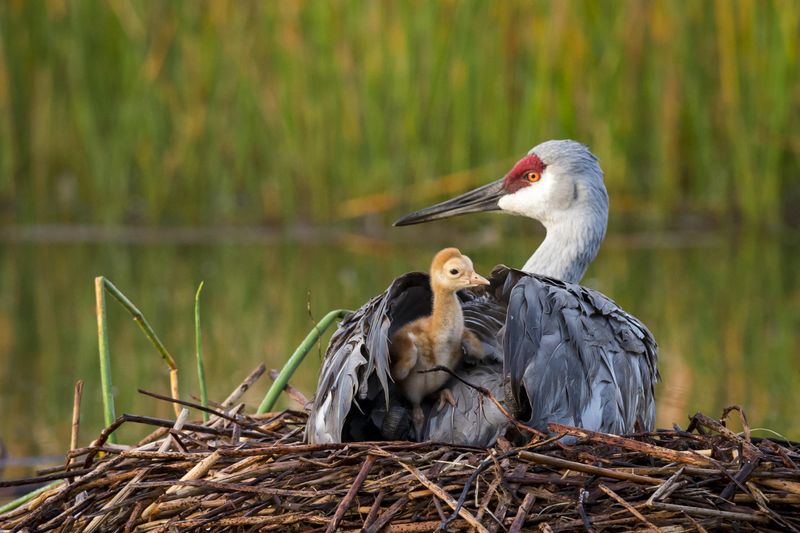
Finding a safe place to raise chicks is one of the most important tasks a sandhill crane pair faces each spring.
As natural nesting sites in remote wetlands become harder to find, cranes are increasingly scouting suburban Michigan properties for spots that offer the cover, water access, and low disturbance they need.
Yards near ponds, drainage ditches, or marshy areas have become prime candidates. Sandhill cranes build large, flat nests from grasses, reeds, and other plant material, usually placed in shallow water or on elevated ground near water.
A quiet corner of a large yard, especially one with ornamental grasses or dense plantings near a water feature, can look ideal to a nesting pair.
Once cranes choose a nesting site, they defend it actively and will return to the same general area in following years if nesting was successful.
Michigan homeowners who discover a crane nest on their property should give the birds plenty of space and avoid disturbing the area. Sandhill cranes are protected under the federal Migratory Bird Treaty Act, meaning nests and eggs cannot legally be disturbed.
Nesting pairs typically incubate eggs for about 30 days, and the chicks are mobile within hours of hatching. Watching a Michigan crane family raise their young in a backyard setting is an extraordinary and genuinely rare experience worth cherishing.
7. Warmer Winters Are Causing Earlier Arrivals
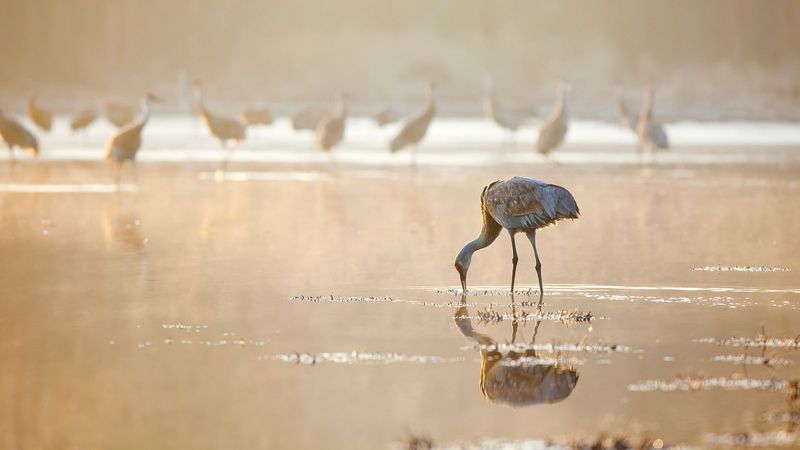
Michigan winters are not as harsh as they used to be, and sandhill cranes have noticed. Milder temperatures and shorter periods of deep snow cover mean that cranes can return to Michigan earlier in the spring and find food much sooner than in past decades.
This shift is adding weeks to the period when cranes are active and visible across the state.
Data from the National Audubon Society and various bird banding studies confirm that many migratory bird species, including sandhill cranes, are arriving at northern breeding grounds earlier than historical averages.
In Michigan, some crane pairs are now arriving in late February or early March, when just a generation ago the typical arrival was mid to late March.
Earlier arrivals mean more weeks of crane activity in residential areas before nesting season fully begins.
Warmer winters also reduce the urgency for cranes to fly as far south, meaning some birds that once wintered in Florida or Georgia are now stopping in Tennessee or Kentucky and returning to Michigan sooner.
The result is a longer crane season for Michigan residents, with more opportunities to spot these birds in yards, fields, and open spaces.
Paying attention to early spring crane arrivals has become an informal seasonal tradition for many Michigan birdwatchers who eagerly watch for that first pair of the year.
8. Increase In Open, Grass-Like Habitat In Suburbs
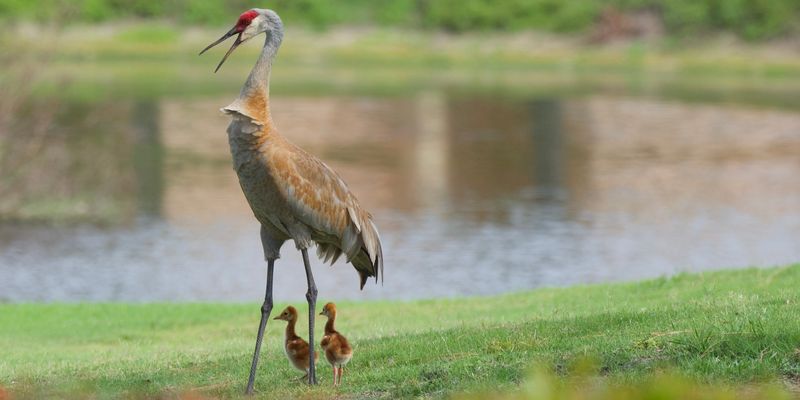
Suburban Michigan has unintentionally created some of the most crane-friendly landscapes in the state. Wide open lawns, golf courses, athletic fields, and park spaces mimic the open grassy habitats that sandhill cranes naturally prefer.
These areas offer clear sightlines for spotting potential threats, easy access to food, and enough space for large birds to move around comfortably.
Cranes are not forest birds. They thrive in open environments where they can see what is coming from a distance, which is a key survival strategy for a bird that stands nearly four feet tall.
Suburban developments across Michigan have essentially created vast stretches of manicured open ground that suits cranes perfectly. Add a nearby water source like a retention pond or drainage swale, and the habitat becomes almost irresistible.
Communities that have expanded their green spaces, added walking trails, or developed parks near wetland edges have seen noticeable increases in crane activity over the past decade.
Homeowners with larger lots, especially those bordering open fields or community green spaces, are particularly likely to receive crane visitors.
While some residents love the sightings, others find cranes can be hard on garden beds and newly seeded lawns.
Simple deterrents like reflective tape, motion-activated sprinklers, or temporary garden fencing can help manage crane activity without causing any harm to the birds.
9. Cranes Are Becoming Less Fearful Of Humans
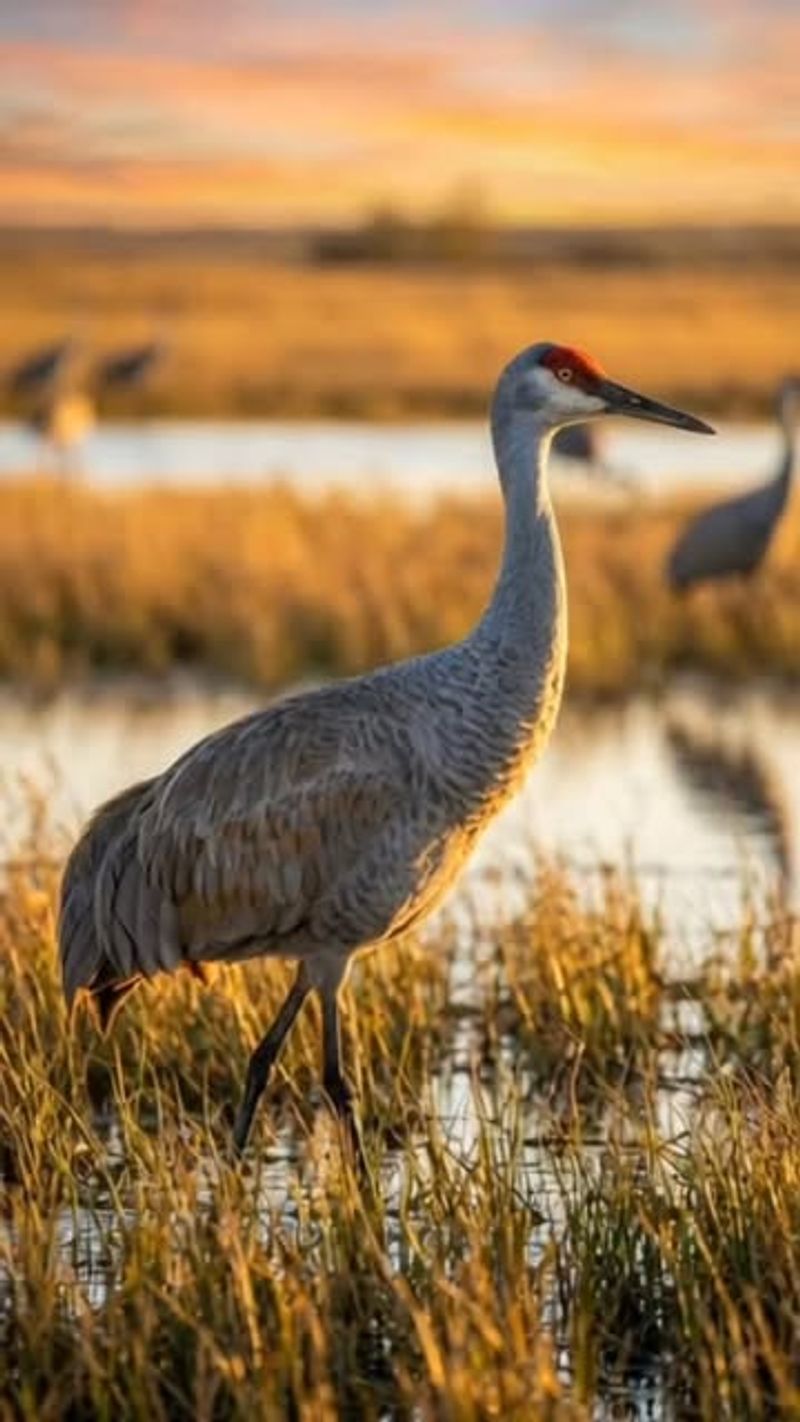
Spend enough time around people and eventually you stop being scared of them. Sandhill cranes in Michigan are proving this point in a very visible way.
Cranes that have grown up near suburban areas or have repeatedly encountered humans without negative outcomes are showing noticeably reduced wariness around people.
This behavioral shift is making them bolder about entering yards, driveways, and even busy neighborhood streets.
Wildlife biologists call this process habituation, and it is well documented in sandhill crane populations near residential areas. Cranes that are regularly exposed to people, dogs, cars, and lawn equipment without being harassed gradually lower their alert threshold.
Over time, they treat humans more like background noise than potential threats, which leads to the kind of up-close encounters that Michigan residents increasingly report on social media and neighborhood apps.
While habituated cranes make for amazing viewing, this closeness comes with a few cautions.
Cranes that lose their natural wariness around humans can become territorial, especially during nesting season, and may bluff-charge people who get too close to a nest or a chick.
Feeding cranes intentionally speeds up habituation and is strongly discouraged by Michigan wildlife officials.
Enjoying cranes from a respectful distance keeps both the birds and the people around them comfortable, safe, and living in the kind of easy coexistence that makes Michigan such a special place for wildlife.