These Native Texas Vines Grow Quickly And Attract Pollinators
Warm sunshine, open skies, and long growing seasons make Texas a dream for gardeners who love bold, fast-growing plants. If your yard could use a little more life, native vines might be exactly what it needs.
These energetic climbers don’t just grow quickly. They also bring movement, color, and a steady stream of butterflies, bees, and hummingbirds right to your garden.
Native Texas vines are built for the local climate, which means they handle the heat, the soil, and those unpredictable weather swings far better than many imported plants.
Give them a fence, trellis, or arbor and they’ll happily stretch upward, filling empty spaces with lush leaves and eye-catching blooms.
Even better, pollinators rely on many of these plants for nectar and shelter, turning your yard into a lively stop along nature’s highway.
From bright trumpet-shaped flowers to delicate twining stems, these fast-growing Texas natives can transform a quiet corner of the garden into a buzzing, colorful retreat.
1. Coral Honeysuckle (Lonicera Sempervirens)
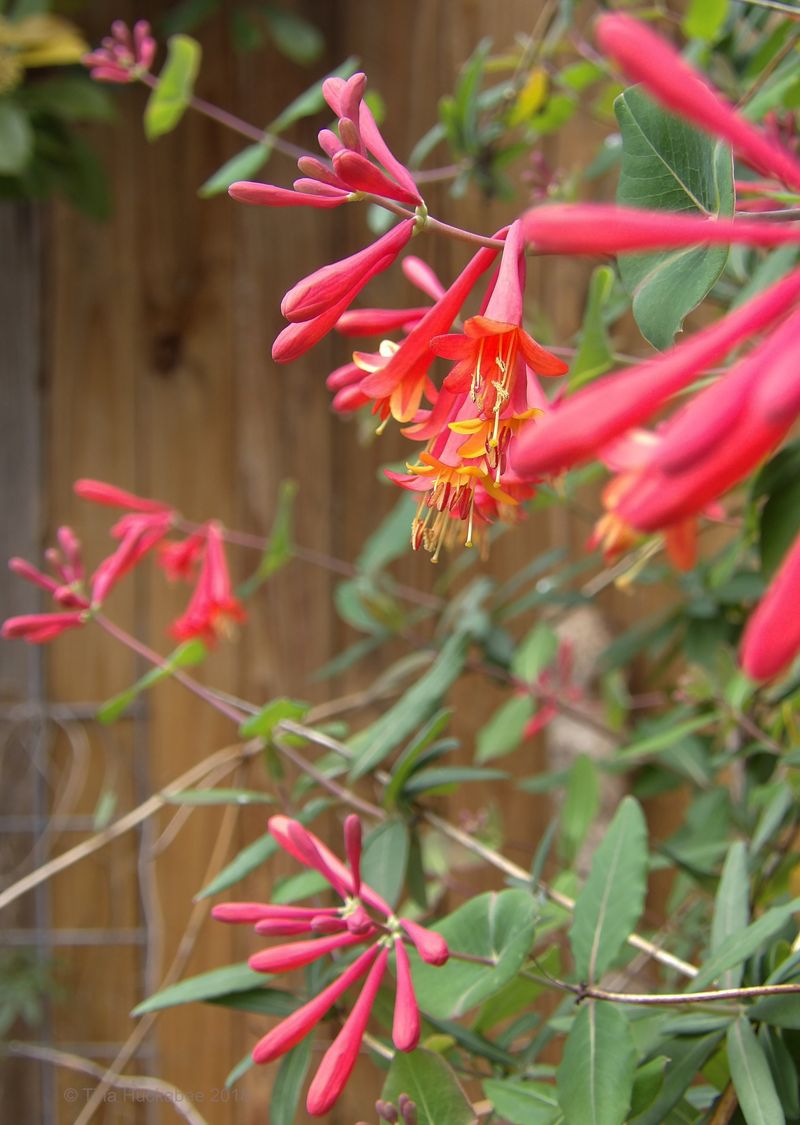
Few native plants steal the show quite like Coral Honeysuckle. Its bold, tubular red flowers seem to glow against the green foliage, and hummingbirds absolutely cannot resist them.
Bees and butterflies flock to this vine too, making it one of the most pollinator-friendly plants you can grow in Texas.
Unlike its invasive cousin, Japanese honeysuckle, this native species plays nicely in the garden. It grows quickly on trellises, fences, and arbors without taking over your yard.
You can expect it to reach 10 to 20 feet in length, providing great coverage and visual interest throughout the growing season.
Coral Honeysuckle blooms from spring all the way through summer, and sometimes even into fall. That long bloom time means pollinators have a reliable food source for months.
In Texas, where summers are hot and dry, this vine holds up remarkably well with minimal watering once established.
Planting it in full sun to partial shade gives you the best results. It prefers well-drained soil but adapts to a variety of soil types found across Texas.
If you want a vine that looks stunning, supports wildlife, and does not demand constant attention, Coral Honeysuckle is the one to plant first. Gardeners across the Lone Star State have fallen in love with this reliable, beautiful native climber for good reason.
2. Crossvine (Bignonia Capreolata)
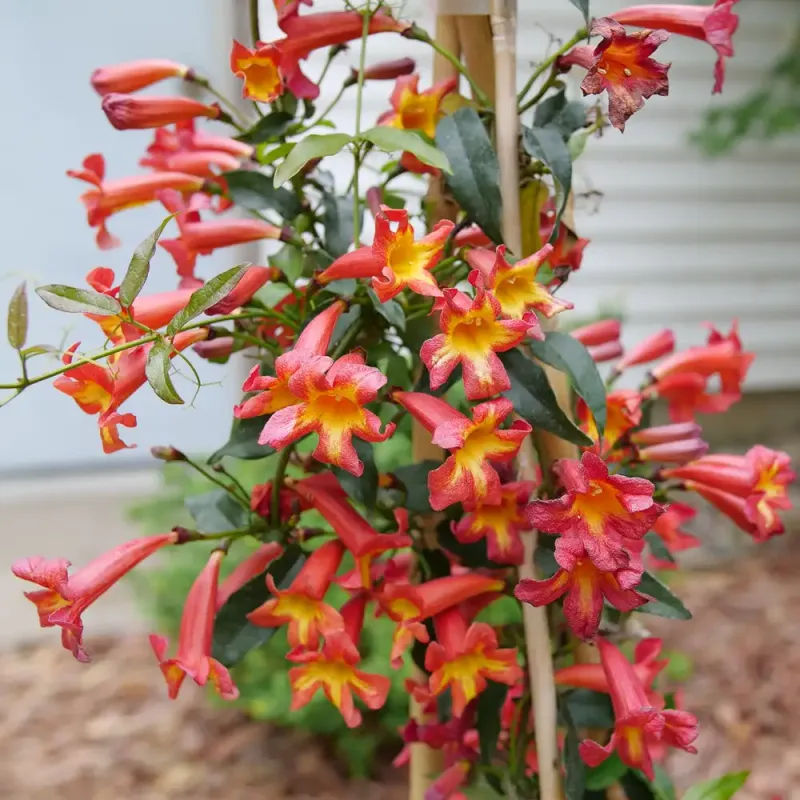
Spring in Texas gets a whole lot more colorful when Crossvine starts blooming. This vigorous native climber bursts open with stunning trumpet-shaped flowers in shades of orange, red, and yellow.
Hummingbirds are especially drawn to these blooms, and you will often spot them hovering near the vine before the morning dew has even dried.
Crossvine is semi-evergreen, which means it keeps some of its leaves through winter in most parts of Texas. That makes it a smart choice if you want year-round coverage on a fence or wall.
Come spring, the fresh flowers arrive in full force, creating a spectacular seasonal display that never gets old.
This vine grows fast and can climb up to 50 feet in ideal conditions. It uses tendrils with adhesive pads to grip onto surfaces, so it clings tightly to walls, trellises, and fences without needing much help.
Your Texas Garden Changes Every Week. Your Plan Should Too.
Gardening in Texas changes quickly throughout the season. Every Friday you’ll receive a simple weekly plan showing exactly what to plant, prune, fertilize, harvest, and protect so you never miss the right timing.
Gardeners in Central Texas and North Texas especially love this vine because it handles both heat and occasional cold snaps with ease.
Did you know the vine gets its name from the cross-shaped pattern visible when you cut through its stem? That little detail makes it a fun plant to share with kids who are just learning about native plants.
Crossvine thrives in full sun to partial shade and tolerates a range of soils. For a fast-growing, low-maintenance native vine that wows every spring, Crossvine is a top pick across the Lone Star State.
3. Passionflower (Passiflora Incarnata)
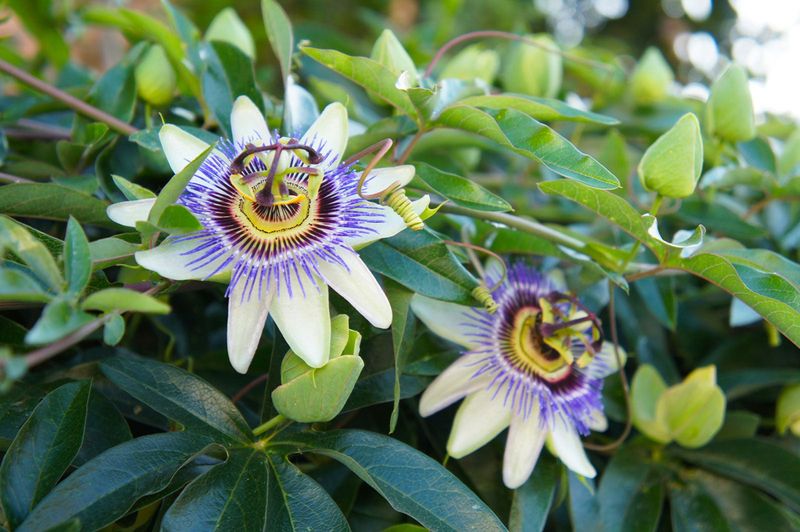
Walk past a Passionflower vine in full bloom and you will stop in your tracks. The flowers are unlike anything else in the native plant world.
Each one is an intricate, almost alien-looking burst of purple, white, and lavender that looks like it belongs in a tropical rainforest, not a Texas backyard. Yet this vine is completely at home across the state.
Also known as Maypop, Passiflora incarnata grows fast and spreads enthusiastically once it gets going. Bees love the nectar-rich blooms, and butterflies are absolutely wild about this plant.
Gulf Fritillary butterflies use it as a host plant, laying their eggs on the leaves so their caterpillars have plenty to eat as they grow.
Beyond the flowers, this vine also produces edible fruits that ripen in late summer. The yellow-green fruits taste sweet and can be eaten fresh or used to make jelly.
That makes Passionflower a double bonus for Texas gardeners who want beauty and a little something extra from their plants.
Passionflower grows best in full sun and well-drained soil. It spreads through underground roots, so giving it a defined space or a sturdy trellis helps keep it manageable.
In South Texas and Central Texas, it thrives with very little extra water after the first growing season. If you want a vine with jaw-dropping flowers, wildlife value, and a bonus harvest, Passionflower earns every inch of garden space it occupies.
4. Virginia Creeper (Parthenocissus Quinquefolia)
Not every great garden vine needs flashy flowers to earn its place. Virginia Creeper is proof of that.
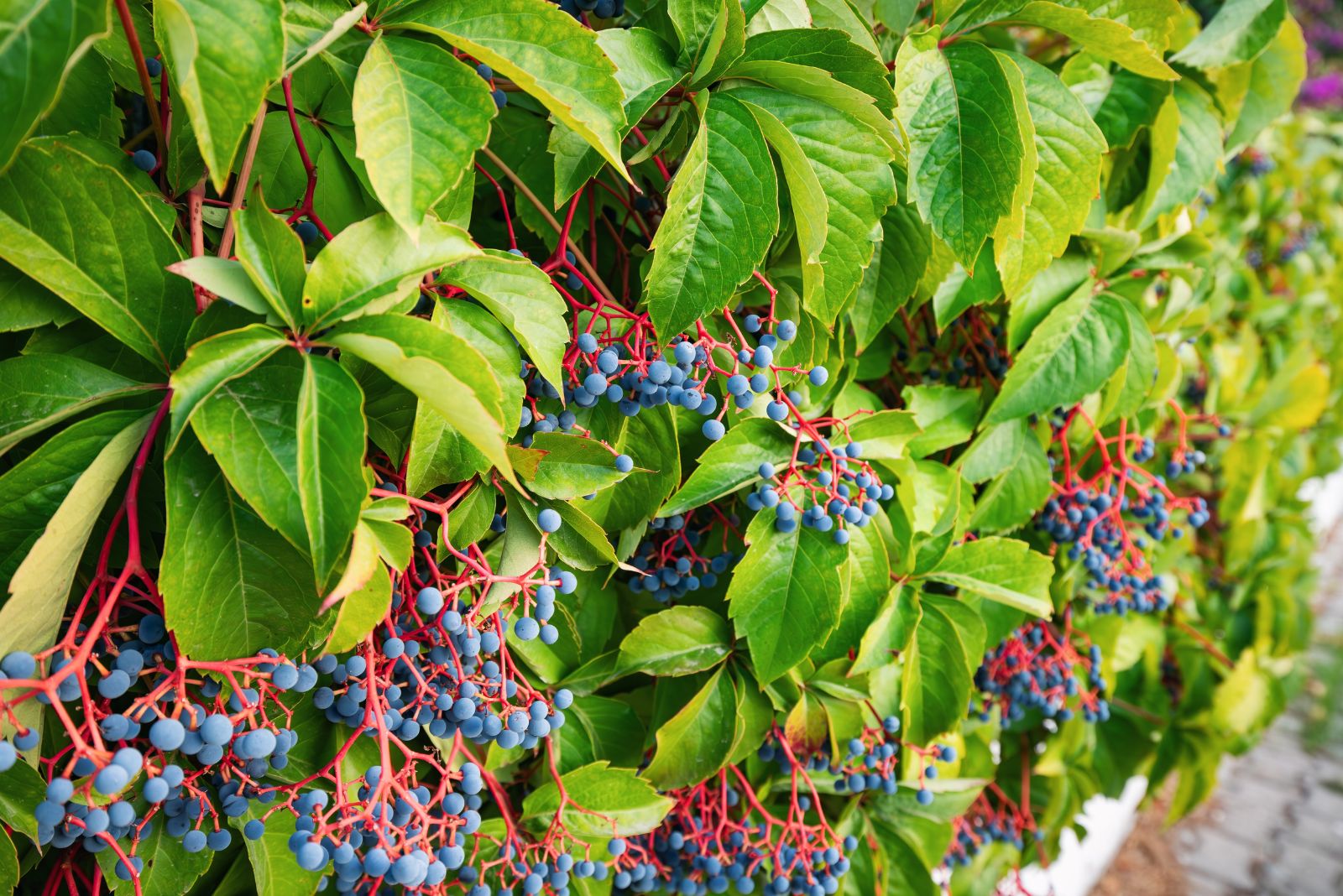
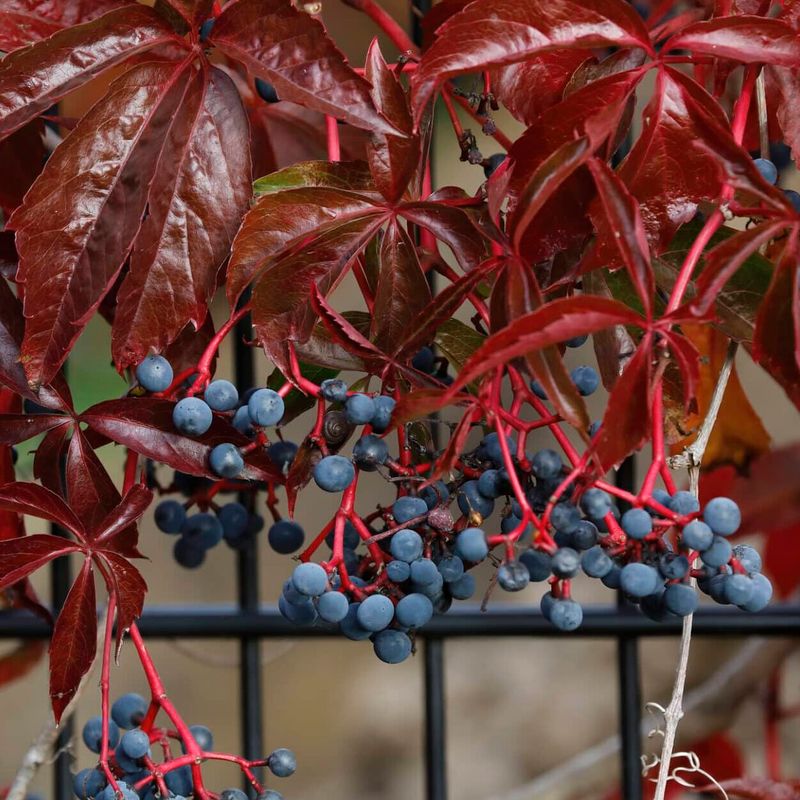
This hardy native vine is one of the fastest-growing climbers in Texas, and it earns serious admiration for its bold fall foliage. When temperatures cool down, the five-lobed leaves turn a fiery red and orange that can stop traffic.
During the growing season, Virginia Creeper produces small, inconspicuous flowers that may not grab your attention, but pollinators notice them right away. Bees visit the blooms regularly, collecting pollen and nectar.
Later in the season, the vine produces clusters of dark blue-black berries that songbirds eagerly devour. In Texas, birds like mockingbirds and woodpeckers rely on these berries as an important food source during fall and winter.
Virginia Creeper grows aggressively, which makes it ideal for covering large fences, walls, and bare structures quickly. It uses adhesive tendrils to grip almost any surface without needing ties or extra support.
Gardeners across East Texas and North Texas often use it to cover unsightly structures or create a natural privacy screen.
This vine tolerates shade better than most native climbers, making it a great option for spots that do not get full sun all day. It also handles poor soils and drought conditions like a champ.
If you need a tough, fast-growing native vine that supports wildlife and delivers stunning fall color across your Texas garden, Virginia Creeper is ready to get to work.
5. Trumpet Creeper (Campsis Radicans)
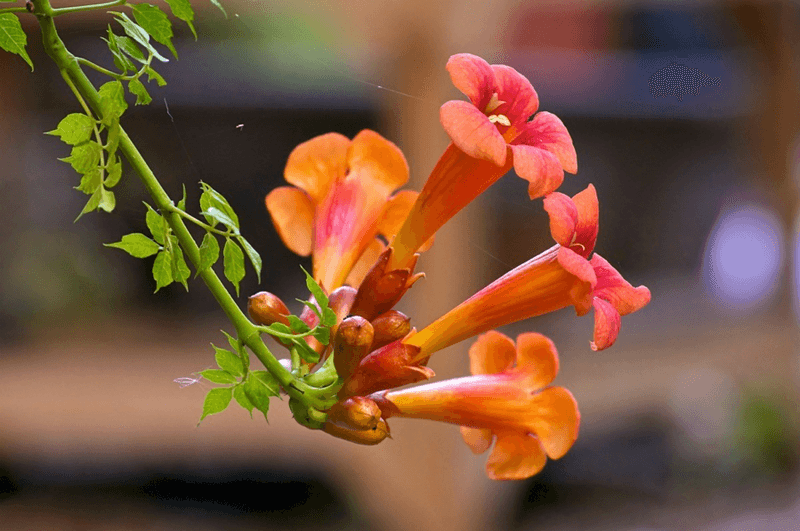
When summer heat is at its peak and other plants are struggling, Trumpet Creeper is just hitting its stride. This bold native vine bursts out with large, flaming orange trumpet flowers right when hummingbirds need nectar the most.
Watching a hummingbird hover at a cluster of Trumpet Creeper blooms is one of those magical Texas garden moments you never forget.
Campsis radicans is a powerhouse grower. It can reach 30 to 40 feet and will quickly cover a fence, arbor, or old tree stump with dense, lush foliage.
The vine attaches itself to surfaces using aerial rootlets, so it clings tightly and climbs with very little help from the gardener. Across Texas, it is widely used to cover large structures where fast coverage is the goal.
Beyond hummingbirds, Trumpet Creeper also attracts bumblebees and other large pollinating insects that are strong enough to push into the wide blooms. Butterflies visit the flowers too, adding even more wildlife activity to your yard during the hottest months of the year.
One thing to keep in mind is that Trumpet Creeper spreads through underground runners and can pop up in new spots if not managed. Planting it in a contained area or pruning it back each year keeps it under control.
It thrives in full sun and tolerates poor, dry soils extremely well, which makes it perfectly suited to the tough growing conditions found throughout Texas. For sheer summer drama and hummingbird appeal, this vine delivers every time.
6. Climbing Prairie Rose (Rosa Setigera)
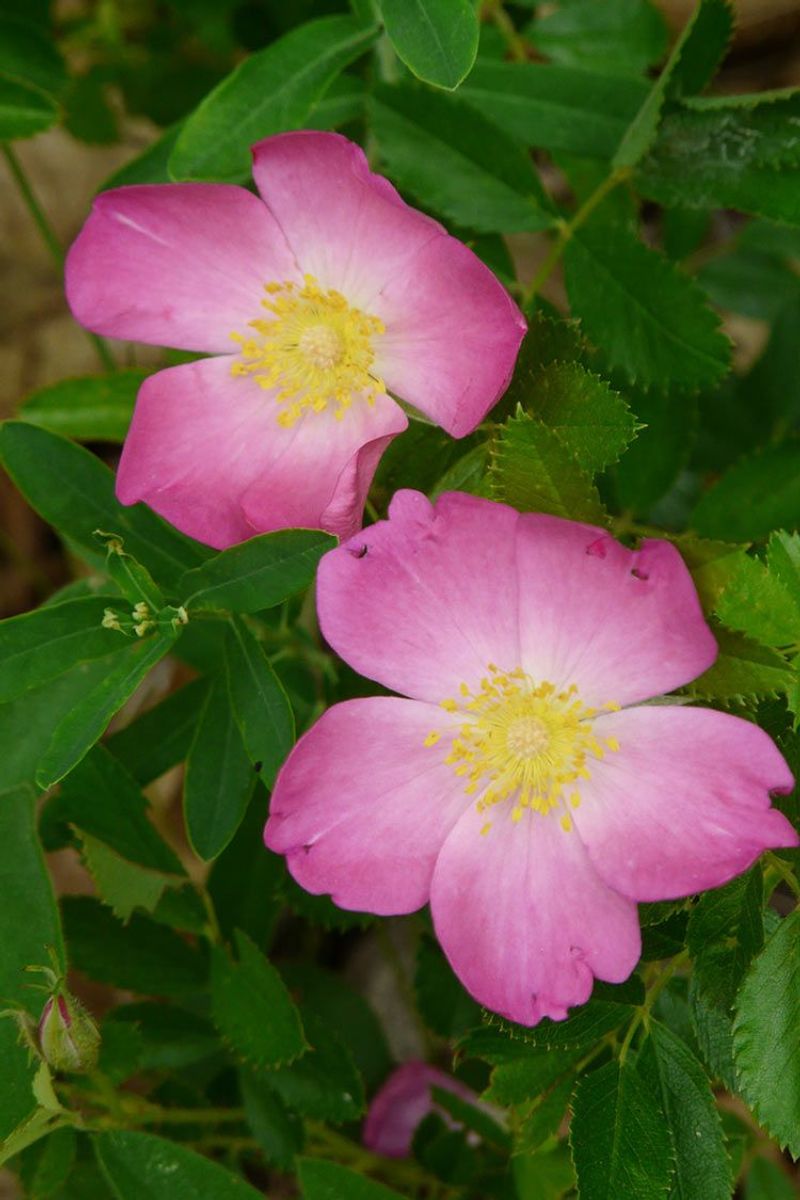
There is something undeniably romantic about a rose climbing through a garden fence, and the Climbing Prairie Rose brings that charm with a native Texas twist.
Unlike hybrid roses that demand constant care, this tough native bloomer takes care of itself once it gets settled in.
It produces clusters of soft, fragrant pink flowers in early summer that fill the air with a gentle sweetness.
Rosa setigera is the only truly climbing rose native to North America, which makes it a genuinely special addition to any Texas garden. Bees are the primary visitors to these blooms, buzzing from flower to flower and carrying pollen as they go.
Other pollinators stop by as well, making this vine a valuable resource in any pollinator-friendly landscape.
After the flowers fade, the vine produces small red rose hips that persist into winter. Birds love these fruits and will visit the vine throughout the colder months to snack on them.
That extended wildlife value makes the Climbing Prairie Rose a year-round asset in Texas gardens, not just a pretty summer showpiece.
This vine grows best in full sun and well-drained soil. It can reach 10 to 15 feet and works beautifully on fences, trellises, and garden arbors across Central and East Texas.
Pruning after flowering keeps it tidy and encourages healthy new growth. For gardeners who want the classic beauty of a climbing rose without the fuss of high-maintenance hybrids, this native gem is a wonderful, rewarding choice.
7. American Wisteria (Wisteria Frutescens)
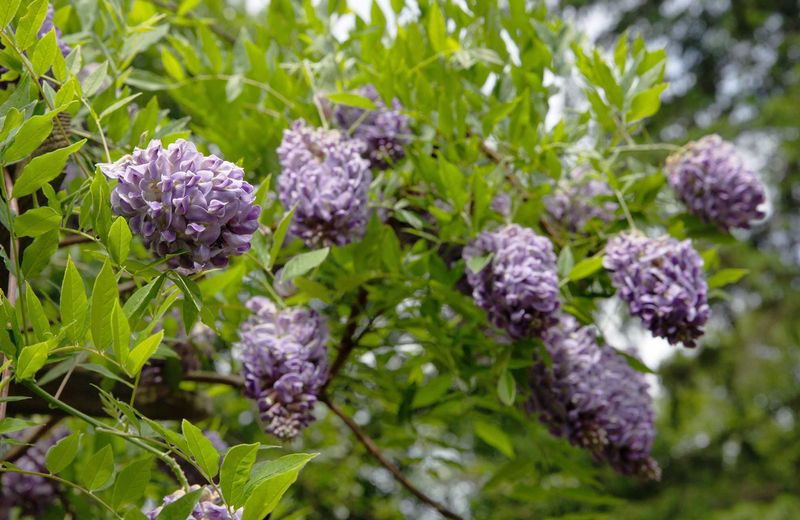
If you have ever admired the gorgeous purple flower clusters of wisteria but worried about planting something invasive, American Wisteria is the answer you have been looking for.
Wisteria frutescens is a native alternative to the aggressive Asian species, offering all the same visual drama without the headache of runaway spreading. Texas gardeners can finally enjoy those dreamy hanging blooms with a clear conscience.
The flowers appear in spring and sometimes rebloom in late summer, dangling in long clusters of soft purple and lavender. Bees go absolutely wild for the nectar-rich blooms, and butterflies flutter around them throughout the flowering period.
The sweet fragrance drifts through the garden on warm days, making any outdoor space feel like a peaceful retreat.
American Wisteria grows vigorously but stays much more manageable than its Asian relatives. It can reach 15 to 30 feet with support and works beautifully on sturdy pergolas, trellises, and fences.
Because it is a native plant, it is well adapted to the heat and humidity found across much of Texas, especially in the eastern and central parts of the state.
Give it full sun for the best flower production and make sure the support structure is strong, since a mature vine can get heavy over time. Regular pruning after flowering keeps it looking neat and encourages fresh growth.
For anyone wanting a showstopping native vine that brings bees, butterflies, and breathtaking beauty to a Texas garden, American Wisteria is a truly spectacular choice that rewards patient gardeners generously.