The Meaning Behind Praying Mantis Visiting Your Texas Garden
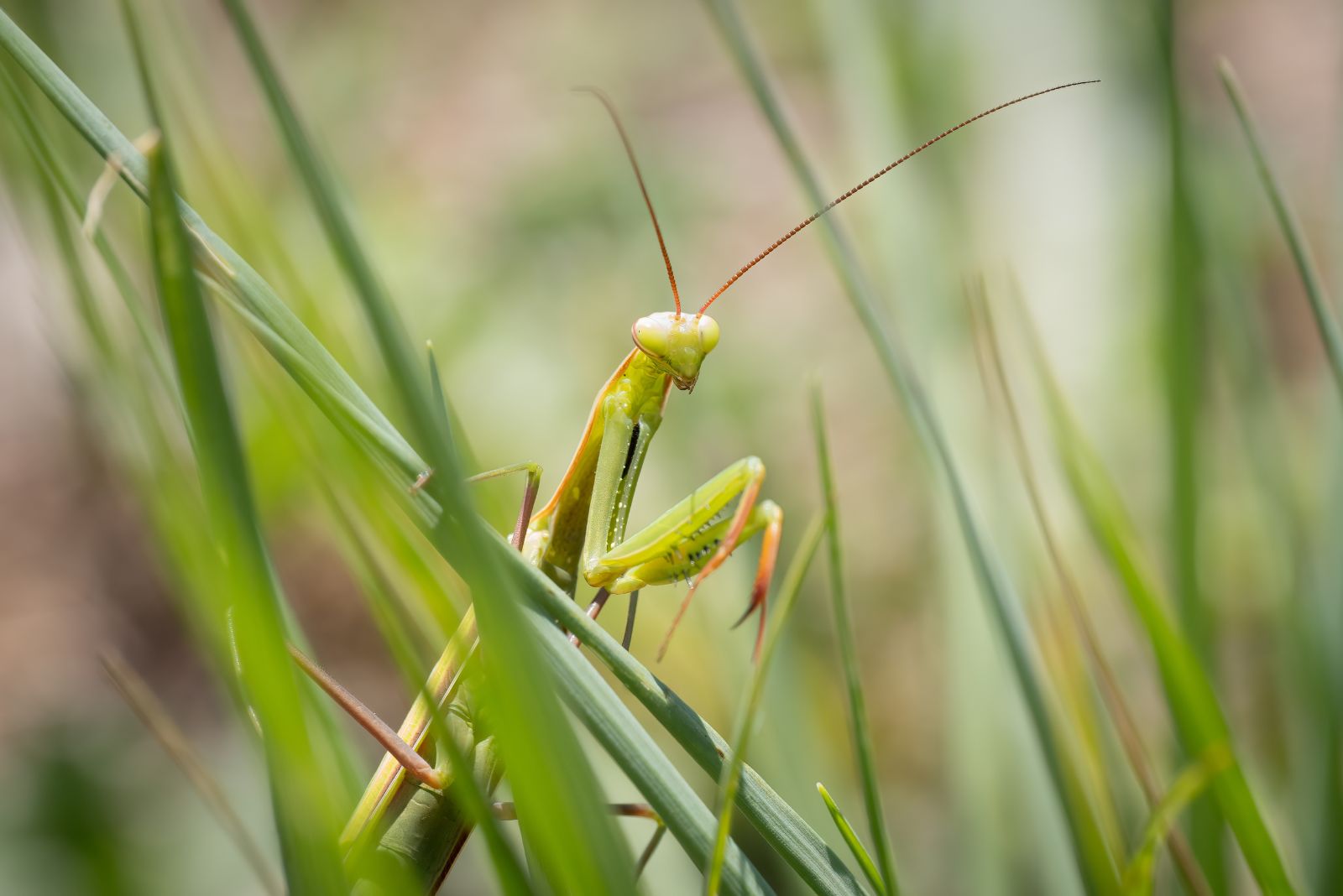
Finding a praying mantis in your garden has a way of stopping you completely in your tracks.
There’s something almost otherworldly about them – the way they hold perfectly still, turn their triangular heads to look directly at you, and carry themselves with what can only be described as an unsettling amount of confidence for an insect.
Most people instinctively grab their phone for a photo before they even think about anything else. Beyond the cool factor though, a praying mantis showing up in your Texas garden actually means something.
Gardeners, spiritual traditions, and naturalists all have their own take on what these fascinating creatures represent, and the answers are more interesting than you might expect.
Whether you’re curious about the ecological signal a mantis sends about your garden’s health, or you’re drawn to the deeper symbolism people have attached to them for centuries, there’s a lot more to this visit than you’d think.
Your Garden Has A Healthy Ecosystem
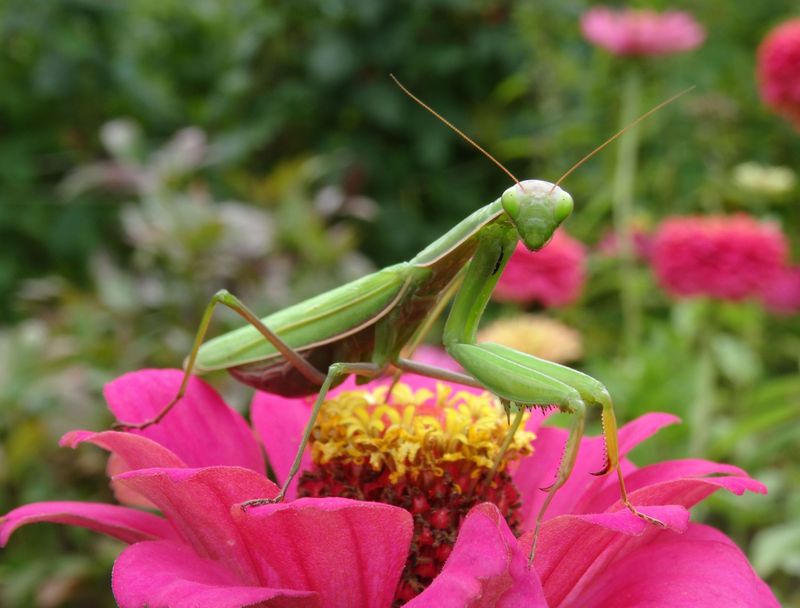
Not every garden earns a visit from a praying mantis. These incredible insects are extremely sensitive to pesticides and chemical disturbances in the environment.
Finding one in your Texas garden is basically nature handing you a gold star. Praying mantises thrive only where the environment is clean, balanced, and rich with life. A garden that uses heavy chemical sprays will drive them away fast.
So if one has settled into your space, you can feel proud knowing your garden is low-chemical or completely chemical-free.
Biodiversity also plays a huge role in attracting them. A garden full of variety, including different plants, flowers, shrubs, and ground cover, gives a mantis everything it needs.
Texas gardens that support multiple plant species tend to host a wider range of insect life, which in turn draws predators like the mantis.
Think of a praying mantis as a living indicator of garden health. Scientists actually use insect diversity as one of the best ways to measure how healthy a natural space is.
When a mantis shows up, it signals that your garden has reached a level of ecological balance that supports complex food webs.
Many Texas gardeners work hard to build this kind of environment without even realizing what they have created. Planting natives, reducing lawn chemicals, and leaving some wild patches all contribute to this balance.
Seeing a mantis means those efforts are working. Your garden is not just growing plants. It is growing an entire living system that supports wildlife in a meaningful and measurable way.
Natural Pest Control Is Already At Work
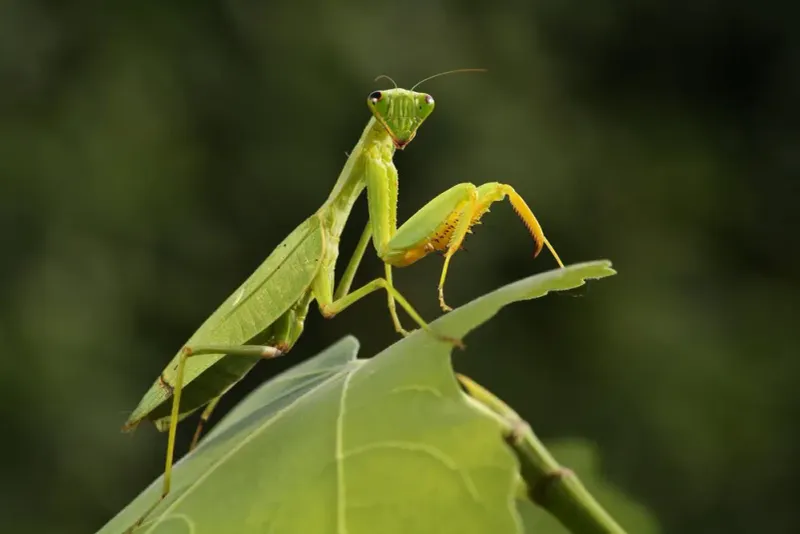
Praying mantises are some of the most efficient hunters in the entire insect world. They move with precision, strike with speed, and almost never miss their target.
Having one in your Texas garden means you have a built-in pest management system working around the clock.
These insects feed on aphids, beetles, grasshoppers, crickets, and a wide range of other bugs that love to munch on garden plants. Their appetite is impressive.
Your Texas Garden Changes Every Week. Your Plan Should Too.
Gardening in Texas changes quickly throughout the season. Every Friday you’ll receive a simple weekly plan showing exactly what to plant, prune, fertilize, harvest, and protect so you never miss the right timing.
A single mantis can consume dozens of harmful insects in just one week without any help from you.
What makes this even better is that it costs you absolutely nothing. No sprays, no traps, no weekly treatments.
The mantis handles it all quietly from its perch between your leaves and stems. Many Texas gardeners who notice fewer damaged plants over time are often surprised to later discover a mantis has been living nearby.
Fun fact: Praying mantises have been used in agricultural pest control research for decades. Scientists have long admired their hunting efficiency and studied ways to encourage their presence in crop fields.
Your garden is benefiting from the same natural process on a smaller scale. The presence of a mantis also tells you something important about your pest levels. A mantis will only stick around if there is enough prey to keep it fed.
So while it may sound odd, having some pest insects in your garden is actually a sign of ecological balance. The mantis keeps those populations in check naturally, making your Texas garden a self-regulating, thriving space you can genuinely feel good about.
Your Garden Offers Shelter And Safety
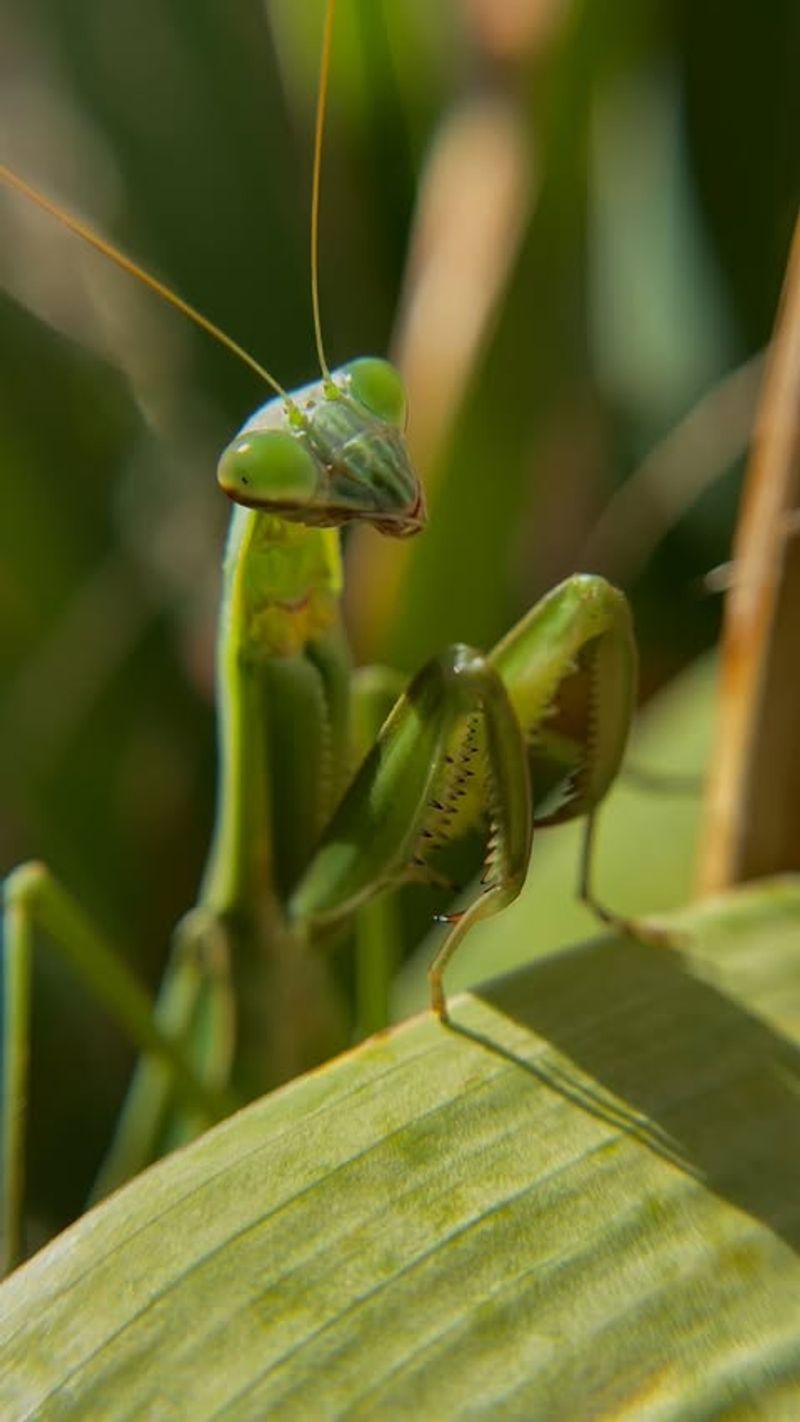
Praying mantises are incredibly picky about where they choose to live. They do not just land anywhere and call it home.
When one settles into your Texas garden, it means your space has something special to offer in terms of structure and safety.
These insects prefer gardens with dense foliage, layered plantings, tall grasses, and shrubs where they can blend in perfectly.
Their ability to camouflage is one of their greatest strengths, and they rely on plant variety to pull it off. A garden with only a few plant types simply does not give them enough cover.
Layered gardens, where plants grow at different heights from ground level all the way up to tall shrubs or small trees, are especially attractive to mantises. This kind of structure mimics the natural environments where they evolved.
Texas native plant gardens often create this layering naturally, which is one reason mantis sightings are so common in well-planted Hill Country and Central Texas yards.
Shelter also means protection from wind, extreme heat, and predators like birds. A garden with thick planting zones gives a mantis multiple retreat options throughout the day.
Texas summers are intense, and a mantis needs shade and moisture to stay comfortable and active.
Creating this kind of habitat does not require a massive garden overhaul. Simply adding a few native shrubs, letting some grasses grow tall in corners, or planting in clusters rather than rows can make a real difference.
When a mantis chooses your space, it is a quiet but clear signal that your garden has genuinely become a refuge for wildlife.
The Surrounding Environment Is Still Connected To Nature
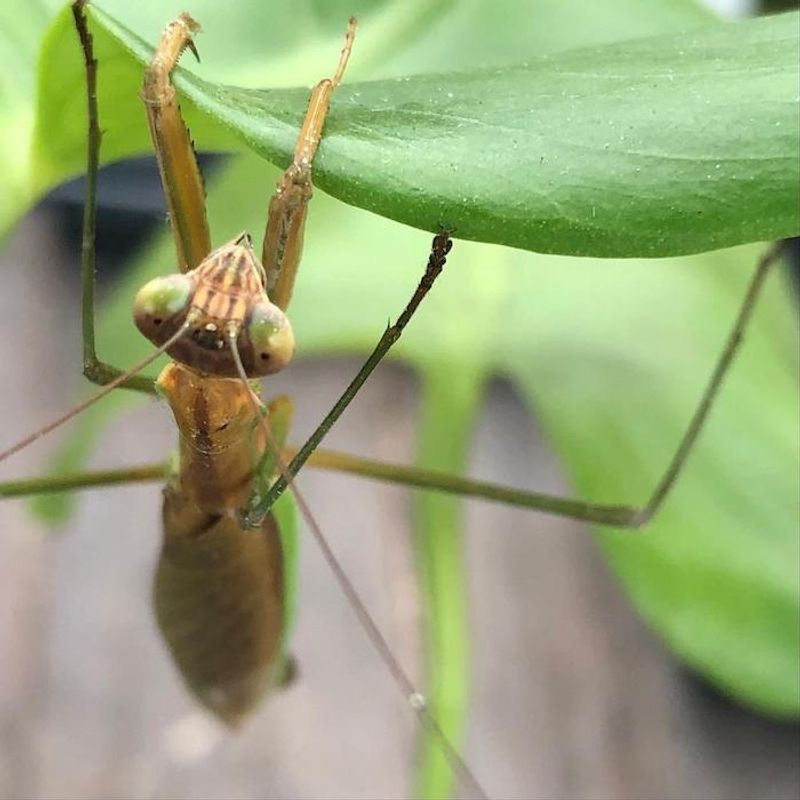
Spotting a praying mantis in your Texas garden often means more than just what is happening inside your fence line. It can say a lot about the bigger picture of the landscape surrounding you.
Mantises tend to appear in spaces that are connected to larger natural areas like wooded patches, meadows, native plant corridors, or unmowed green zones.
They travel along these natural corridors to find food and shelter. If your garden sits near a greenbelt, a creek, a field of native grasses, or even a neighbor’s wilder yard, you are likely benefiting from that connection.
The mantis is essentially a traveler moving through a living network of green spaces. This matters a great deal in Texas right now. Across the state, natural green spaces are shrinking fast as development spreads through cities like Austin, San Antonio, Dallas, and Houston.
Gardens that maintain a connection to nature are becoming increasingly rare and increasingly valuable to wildlife.
Your garden being part of that connected landscape is something worth celebrating. It means you are not just growing plants in an isolated patch surrounded by pavement.
You are contributing to a living corridor that supports insects, birds, and other wildlife moving through the region.
Many Texas conservation groups actively encourage homeowners to plant native species and reduce lawn size specifically to preserve these natural connections. A praying mantis showing up in your yard is real-world evidence that your garden is doing exactly that.
It is plugged into a larger ecological system, and that connection is genuinely helping local wildlife survive and move through an increasingly developed landscape.
A Symbol Of Patience, Stillness, And Mindfulness
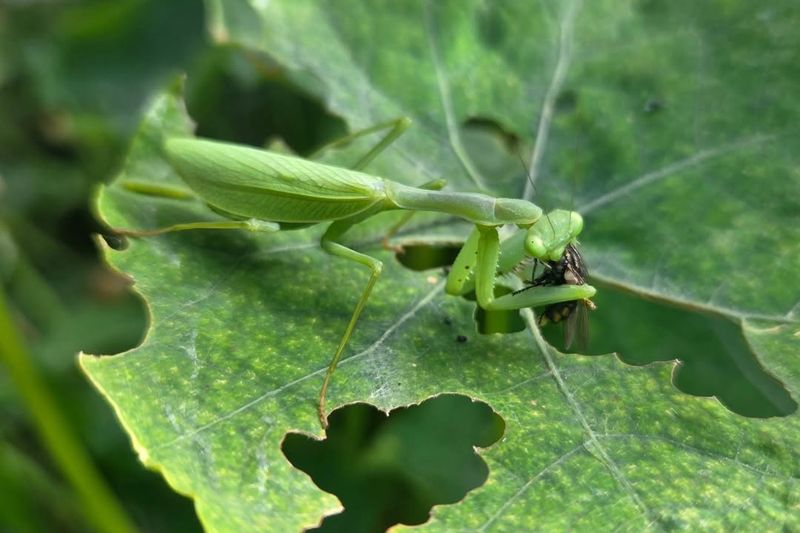
Watch a praying mantis for just five minutes and you will learn something powerful. It barely moves.
It waits with complete calm, scanning its surroundings with sharp, focused eyes. There is a reason so many cultures around the world have looked at this insect and seen something deeply spiritual in its stillness.
Across Native American traditions, the praying mantis is often regarded as a messenger of patience and mindfulness. Its posture, which looks like folded hands in prayer, gave it its name and added to its symbolic weight across many belief systems.
Encountering one is sometimes seen as a gentle nudge to slow down and be present. For Texas gardeners who spend time outdoors, a mantis sighting can feel surprisingly personal. Gardening itself is an act of patience.
You plant, you water, you wait. The mantis mirrors that energy perfectly. It does not rush. It does not waste movement. It acts only when the moment is exactly right.
Many people who garden regularly talk about how the hobby helps them manage stress and stay grounded. Seeing a mantis reinforces that feeling in a very direct way. It is a living example of focused calm in a world that rarely slows down.
If you find yourself rushing through your garden tasks or feeling overwhelmed, a praying mantis perched quietly on a nearby branch might be the simplest reminder you need. Pause. Breathe. Look around at what you have grown.
The mantis has already mastered the art of being fully present, and your Texas garden is the perfect place to practice that same mindset yourself.
Good Luck And Positive Energy Are On The Way
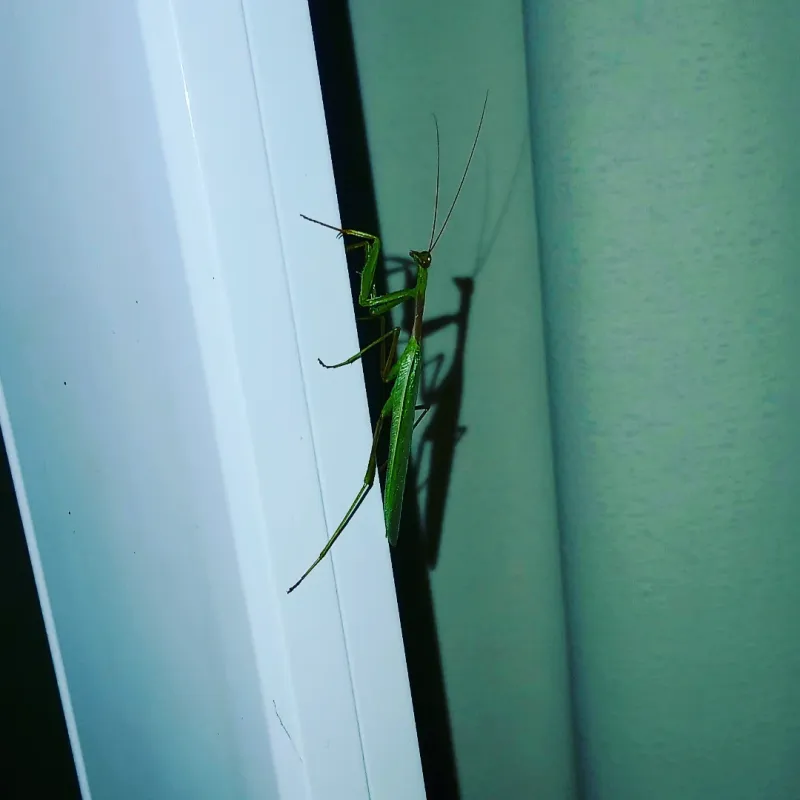
Across cultures and centuries, the praying mantis has carried a reputation as a bringer of good things. In Chinese tradition, the mantis is associated with courage, good fortune, and positive energy.
In parts of Southern American folk belief, spotting one near your home is considered a very lucky sign.
For many Texas gardeners, finding a mantis perched on a favorite plant feels less like a random encounter and more like a small, meaningful gift. There is something about its calm, deliberate presence that feels intentional. Like it chose your garden for a reason.
Whether or not you subscribe to superstition, the feeling a mantis brings is hard to deny. It creates a moment of wonder and connection with the natural world that many people carry with them long after the insect has moved on.
That kind of positive feeling has real value, especially in busy daily life. In some African traditions, a praying mantis landing on a person is seen as an exceptionally powerful omen of incoming blessings.
Even in modern Western culture, many people report feeling uplifted and lucky after a mantis encounter. It is one of those rare insects that inspires awe rather than fear.
For Texas gardeners specifically, a mantis visit can serve as a motivating reminder that your hard work is paying off. You have built something worth visiting.
Your garden is alive, healthy, and attracting remarkable creatures. That alone is something to feel genuinely good about.
So the next time a praying mantis shows up in your Texas garden, smile. Something wonderful might just be coming your way.