8 Drought-Tolerant Vines That Love Texas Sun
Ever looked at a sunny fence or bare trellis and wondered what could grow there without constant watering?
In Texas, where the sun can be intense and dry spells are common, finding plants that thrive in heat is a big win for any gardener. That is where drought-tolerant vines come in.
These hardy climbers know how to handle strong sunlight and long stretches without rain. Once established, many of them grow quickly, cover empty spaces, and add vibrant color without demanding much attention.
It is the kind of low-maintenance beauty that works perfectly for busy homeowners and anyone tired of watching thirsty plants struggle through summer.
Another bonus is how these vines can transform a space. A plain fence can turn into a wall of greenery, while a simple arbor can become a shaded garden feature filled with flowers.
With the right drought-tolerant vines, even the hottest Texas yard can feel lively, colorful, and full of life.
1. Coral Honeysuckle (Lonicera Sempervirens)
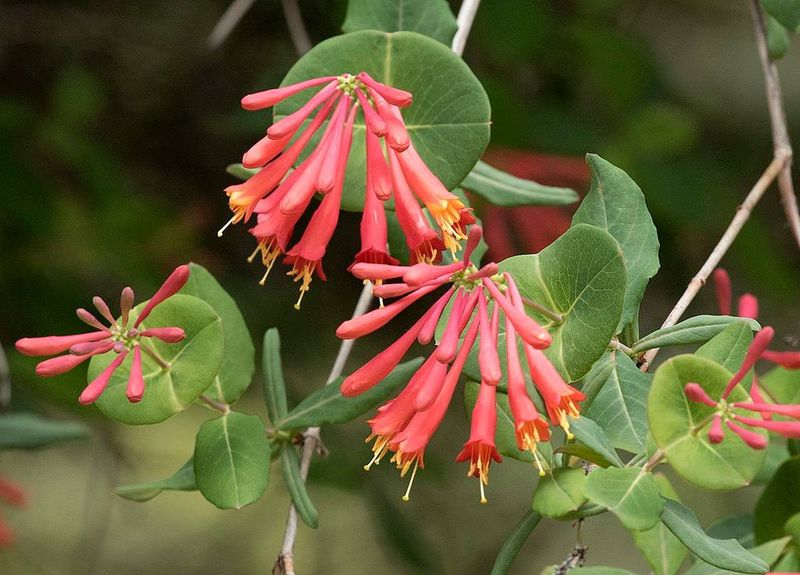
Few plants bring as much life to a Texas garden as Coral Honeysuckle. Those bright red tubular flowers are practically a dinner bell for hummingbirds, and once you spot one hovering at the blooms, you will never want to stop growing this vine.
Native to the eastern and central parts of the United States, it is perfectly suited for Texas conditions.
Coral Honeysuckle grows best in full sun, though it can handle a bit of shade too. Once it gets established in the ground, usually after its first season, it becomes remarkably tough.
It handles heat, dry spells, and poor soil without too much fuss. That makes it a fantastic low-maintenance choice for Texas homeowners who want beauty without the work.
Butterflies also love this plant, so you are essentially creating a mini wildlife garden just by planting it. It climbs fences, trellises, and arbors with ease, reaching up to 15 feet in length.
Spring and summer are peak bloom times, but in warmer parts of Texas, it can flower almost year-round.
Plant it in well-drained soil, water it regularly for the first few months, and then let Texas nature do the rest. It is one of the most rewarding native vines you can add to your yard.
2. Passionflower (Passiflora Incarnata)
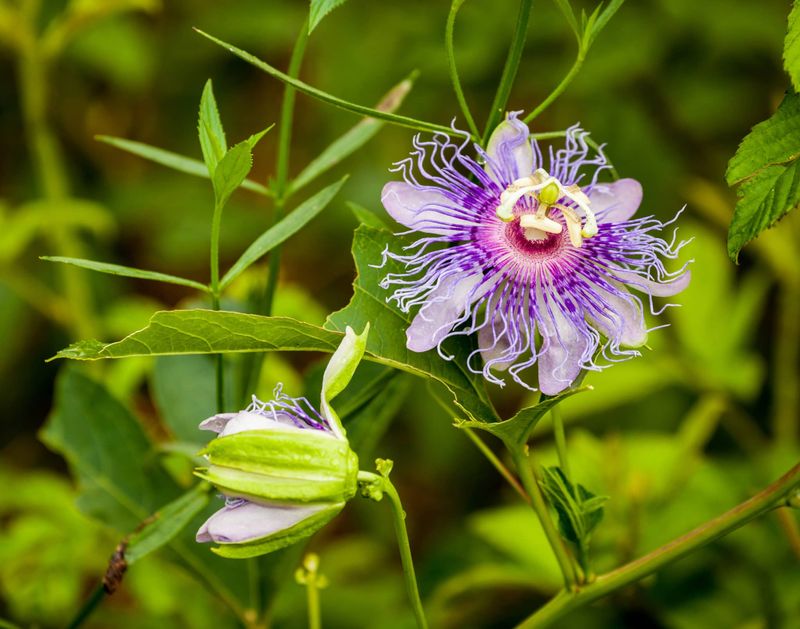
Walk past a Passionflower vine in full bloom and you will stop in your tracks. The flowers look almost alien, with layered purple petals, a fringed crown, and a detailed center that seems too intricate to be real.
Also called maypop, this native Texas vine is one of the most visually striking plants you can grow in the Lone Star State.
Passionflower is a fast grower that loves full sun and warm temperatures. It spreads through underground roots, so it can pop up in new spots around your yard over time.
Some gardeners see this as a bonus since it fills in bare areas quickly. Others prefer to keep it contained to a specific trellis or fence. Either way, it brings serious beauty to any Texas landscape.
Your Texas Garden Changes Every Week. Your Plan Should Too.
Gardening in Texas changes quickly throughout the season. Every Friday you’ll receive a simple weekly plan showing exactly what to plant, prune, fertilize, harvest, and protect so you never miss the right timing.
Bees and butterflies absolutely love this vine. It is actually the host plant for the Gulf Fritillary butterfly, meaning butterflies lay their eggs on it and the caterpillars feed on the leaves.
That makes it a wonderful choice for anyone interested in supporting local wildlife in Texas. After flowering, it produces egg-shaped fruits called maypops that are edible and have a sweet tropical flavor.
Hot, dry summers do not slow this vine down at all. Give it sun, a little water while getting started, and it will thrive beautifully.
3. Crossvine (Bignonia Capreolata)
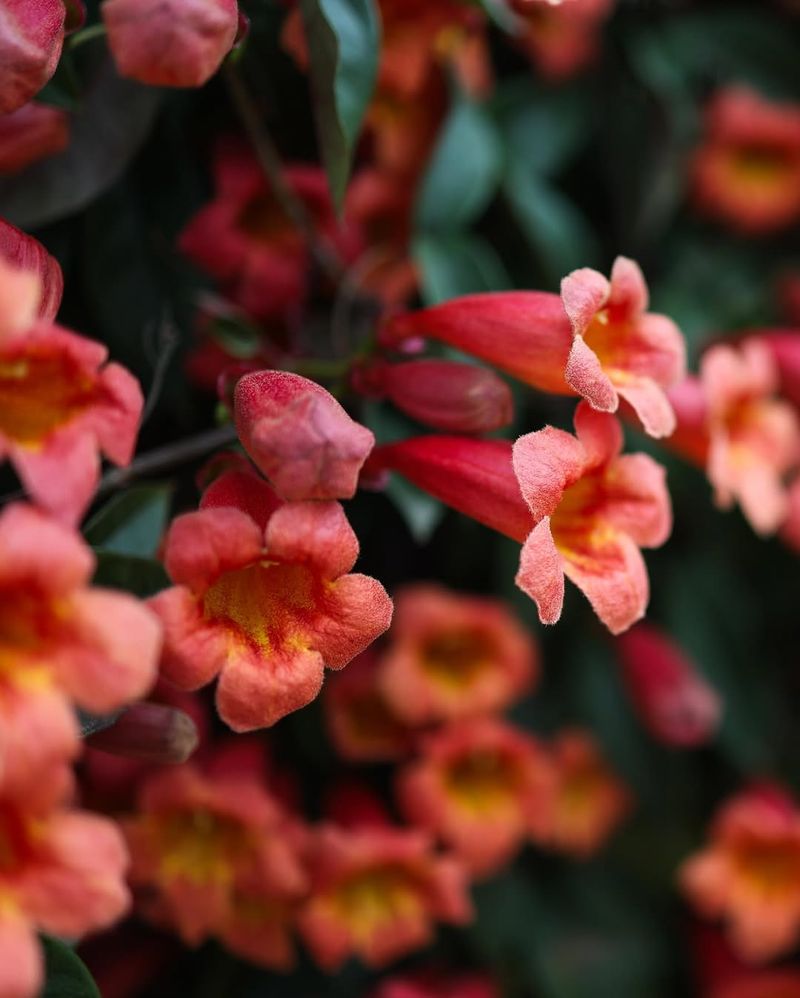
Crossvine gets its quirky name from the cross-shaped pattern you see when you cut through its stem. Pretty cool, right?
But what really makes this vine stand out is its spectacular spring flower show. Those orange-red trumpet blooms are bold, showy, and hard to miss, lighting up fences and trellises across Texas yards every year.
This is a fast grower, which is great news if you need to cover a bare wall or ugly fence quickly. Crossvine can climb up to 50 feet, clinging to surfaces with small tendrils that grip tightly without causing damage.
It grows well in full sun and handles the intense Texas heat like a champ, especially once it gets settled in during its first year.
Drought tolerance is one of Crossvine’s biggest selling points for Texas gardeners. Once mature, it rarely needs extra watering beyond what nature provides.
It is also semi-evergreen in many parts of Texas, meaning it keeps some of its leaves through the winter, giving your garden year-round visual interest. Hummingbirds are drawn to the tubular flowers, making this vine a double win for wildlife lovers.
Plant it near a sturdy support structure, give it a good start with regular watering, and watch it reward you with years of colorful, carefree growth.
4. Trumpet Vine (Campsis Radicans)
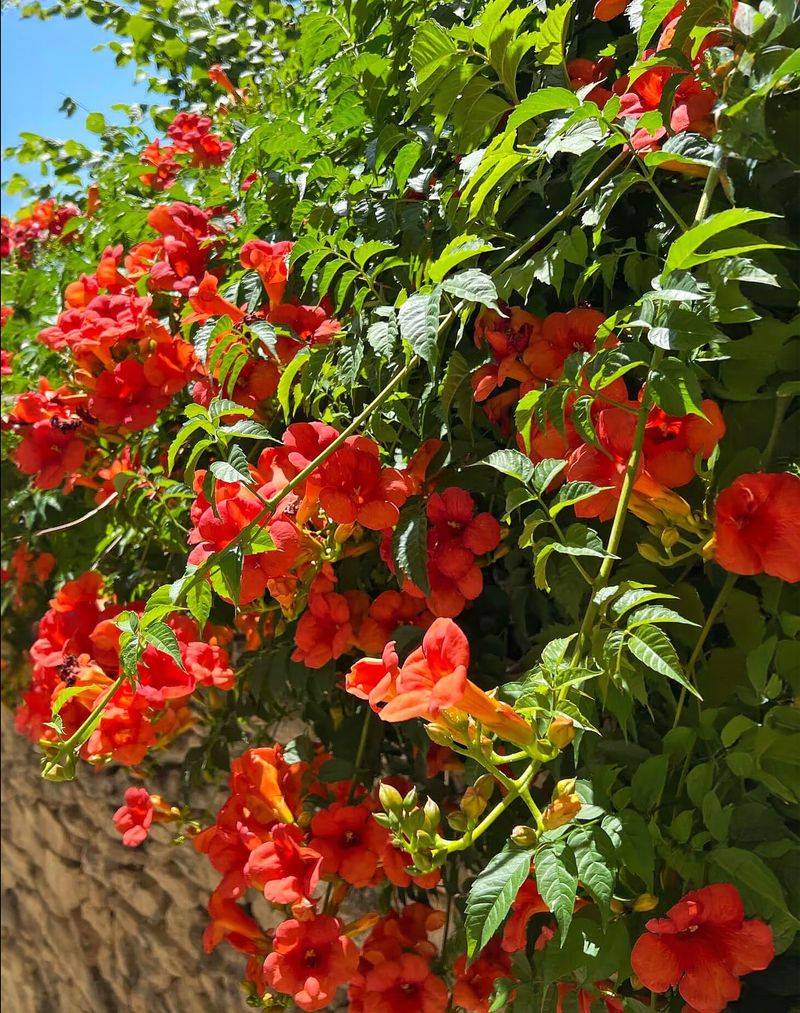
If you want a vine that makes a big statement, Trumpet Vine is hard to beat. Those large, flaring orange flowers look like something out of a tropical garden, yet this plant is tough as nails in Texas conditions.
It has been a favorite in Southern gardens for generations, and it is easy to see why once you see it in full bloom.
Trumpet Vine is a vigorous climber that can reach 30 to 40 feet if left unchecked. It attaches itself to walls, fences, and structures using aerial rootlets, so it needs a sturdy support.
In Texas, it thrives in full sun and handles poor, rocky, or clay soil without complaint. Once established, it is one of the most drought-tolerant vines you can grow in the state.
Hummingbirds are obsessed with this plant. The tube-shaped flowers are perfectly designed for hummingbird feeding, and you will likely see them visiting your garden all summer long.
One thing to keep in mind is that Trumpet Vine spreads enthusiastically through runners and seeds, so you may need to trim it back regularly to keep it in bounds. Prune it hard in late winter or early spring to control its size and encourage fresh, healthy growth.
Despite its vigorous nature, it is one of the most rewarding and low-water vines for Texas gardens.
5. Carolina Jessamine (Gelsemium Sempervirens)
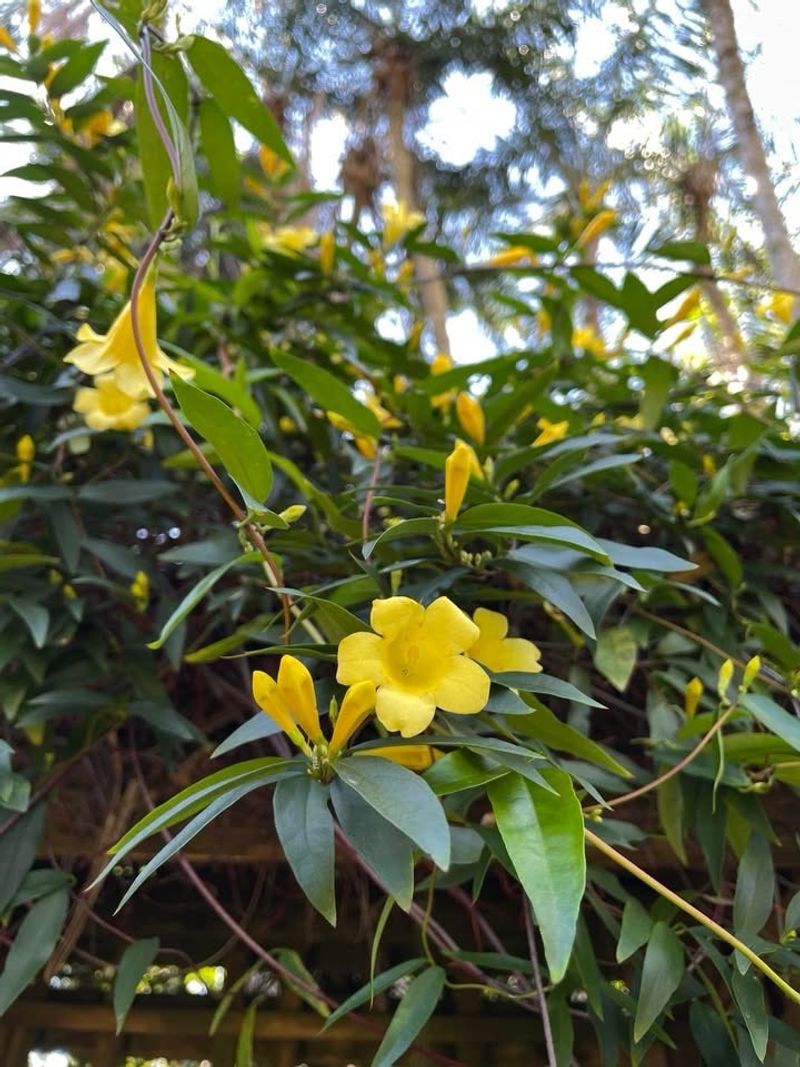
Early spring in Texas gets a whole lot prettier when Carolina Jessamine starts to bloom. Those cheerful yellow flowers seem to appear almost overnight, covering fences and trellises in a wave of golden color before most other plants have woken up from winter.
The sweet fragrance is an added bonus that makes spending time outdoors even more enjoyable.
Carolina Jessamine is an evergreen vine, which means it keeps its glossy green leaves all year long. That is a big advantage for Texas gardeners who want their outdoor spaces to look attractive even in winter.
It grows well in full sun and can also handle partial shade, making it more flexible than many other drought-tolerant options. Once established, it handles Texas heat and dry periods with ease.
This vine is a moderate grower, typically reaching 10 to 20 feet, which makes it easier to manage than some of the more aggressive climbers on this list. It works beautifully on mailbox posts, fences, pergolas, and garden walls.
One important note: all parts of Carolina Jessamine are toxic if eaten, so keep that in mind if you have young children or pets who spend time in your Texas garden.
Plant it in well-drained soil, water it through its first summer, and it will reward you with reliable blooms and year-round greenery for many years ahead.
6. Virginia Creeper (Parthenocissus Quinquefolia)
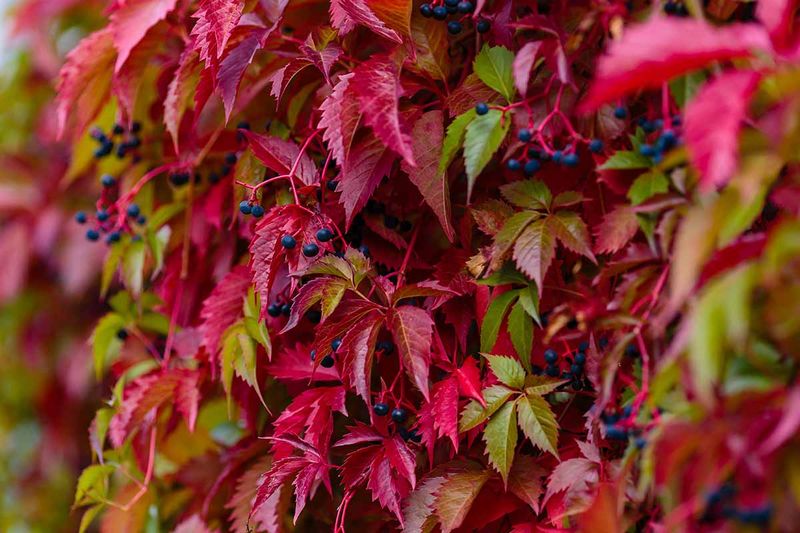
Come fall, Virginia Creeper puts on one of the most spectacular color shows in the Texas plant world. Those five-pointed leaflets shift from deep green to blazing shades of red, orange, and crimson as temperatures cool down.
It is the kind of transformation that makes neighbors stop and stare, and it happens reliably every single year without any special care.
Virginia Creeper is a native vine that grows naturally across much of Texas, which tells you right away that it is well-suited for local conditions. It climbs quickly using small adhesive discs that stick to walls, fences, and even tree bark.
This makes it perfect for covering large surfaces fast. It handles full sun, partial shade, drought, heat, and poor soil without skipping a beat.
Birds love Virginia Creeper too. The small blue-black berries that appear in late summer attract mockingbirds, bluebirds, and other native Texas species.
While the berries are not safe for humans to eat, they are an important food source for wildlife heading into winter. Virginia Creeper can grow quite aggressively, sometimes reaching 50 feet or more, so occasional trimming helps keep it looking tidy.
It is an excellent choice for covering unsightly fences, bare walls, or steep slopes where other plants might struggle. For low-effort, high-impact landscaping in Texas, Virginia Creeper is a top-tier option.
7. American Wisteria (Wisteria Frutescens)
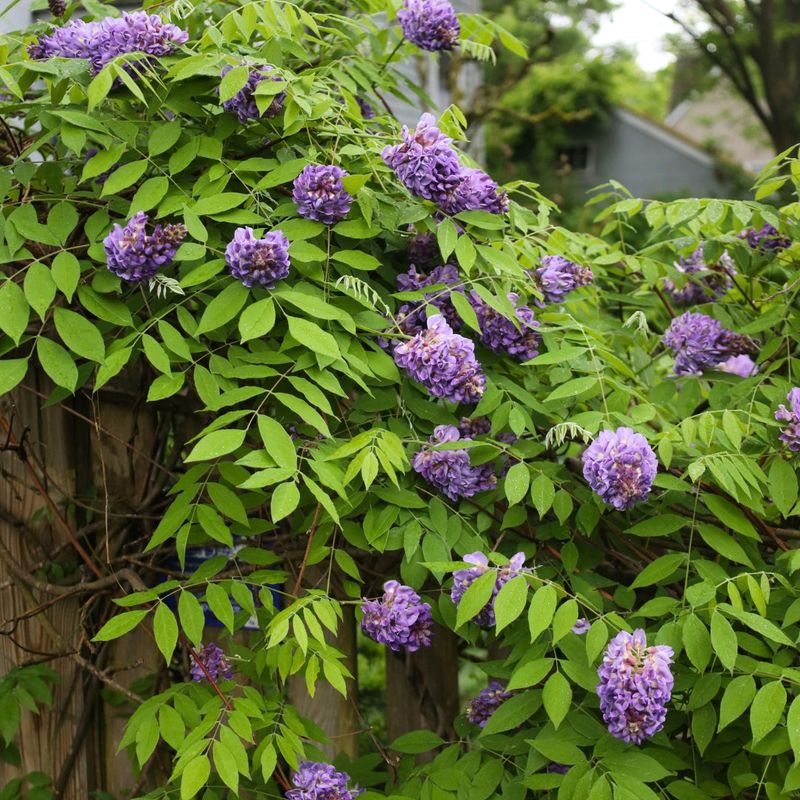
Wisteria has a reputation for being one of the most beautiful flowering vines in the world, and American Wisteria earns that title without any of the headaches that come with its Asian cousins.
Unlike Chinese or Japanese wisteria, which can take over entire landscapes and cause real problems for native plants, American Wisteria is a well-behaved, manageable native option that still delivers stunning floral displays.
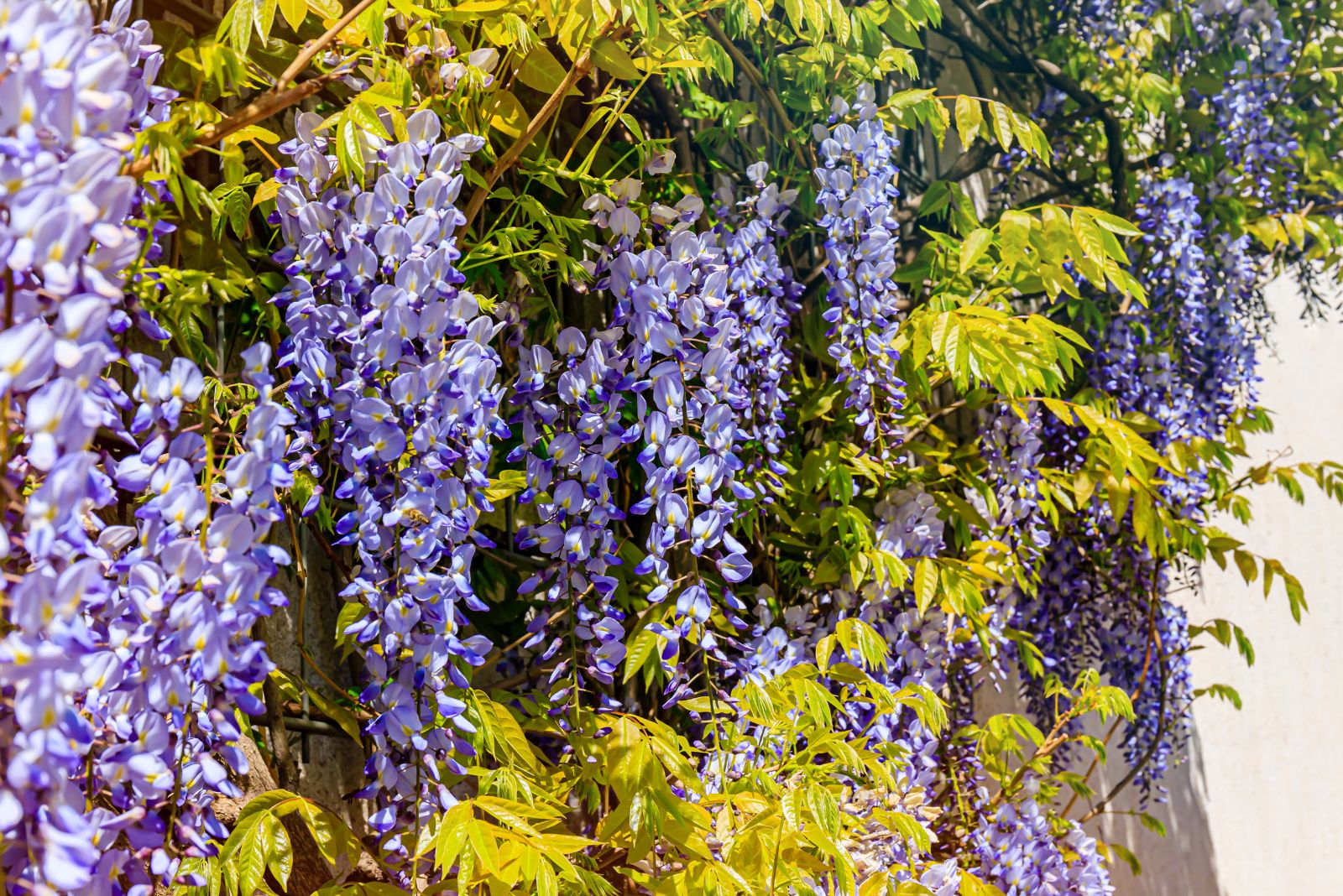
The flower clusters are a gorgeous mix of purple and lavender, hanging down from the vine in graceful, fragrant bunches. They typically appear in spring and sometimes again in late summer.
American Wisteria grows well in full sun and thrives in the warm Texas climate. Once established, it handles drought conditions without needing constant irrigation, making it a smart water-wise choice for Texas homeowners.
This vine grows to about 15 to 30 feet, which is much more manageable than invasive Asian varieties. It works beautifully on pergolas, arbors, and sturdy fences where its weight can be properly supported.
Pollinators, especially bees, absolutely love the flowers, making it a great plant for supporting local Texas ecosystems. Prune it after flowering to keep it shapely and encourage healthy new growth.
If you have ever dreamed of having a wisteria-covered porch in Texas, the American variety is the smart, responsible, and equally beautiful way to make that dream come true.
8. Butterfly Vine (Mascagnia Macroptera)
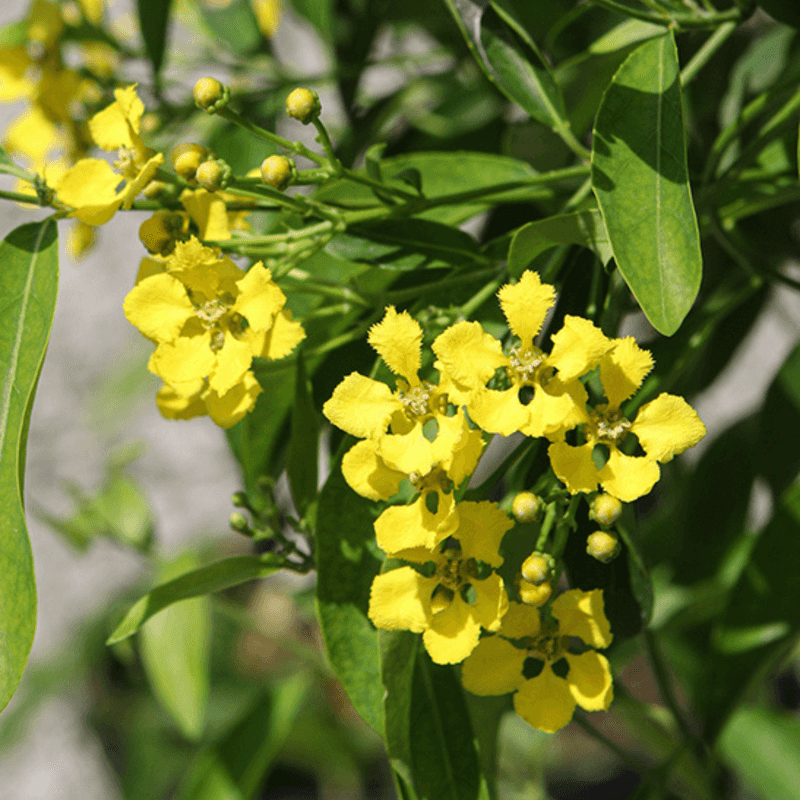
Imagine a vine that grows beautiful yellow flowers and then produces seed pods shaped like tiny butterflies. That is exactly what Mascagnia macroptera does, and it is one of the most charming and unique plants you can grow in a Texas landscape.
The seed pods are papery, green, and shaped so much like butterfly wings that people often do a double take when they first see them.
Butterfly Vine is native to Texas and Mexico, which means it is perfectly adapted to hot, dry, sunny conditions. It thrives in full sun and actually performs better with less water once it gets established.
Overwatering is more of a concern than drought with this plant, so it truly fits the low-water gardening lifestyle that makes so much sense in Texas.
The bright yellow blooms appear in summer, right when many other plants are struggling with the heat. That makes Butterfly Vine an especially valuable addition to a Texas garden since it adds color exactly when you need it most.
It grows to about 10 to 15 feet, making it easy to train along fences, walls, and trellises. The unusual seed pods also make wonderful natural decorations and conversation starters.
If you are looking for something a little different, something that surprises and delights visitors while handling Texas summers with ease, Butterfly Vine might just be your new favorite plant.