These Beautiful Vines Bloom All Summer In Texas Gardens
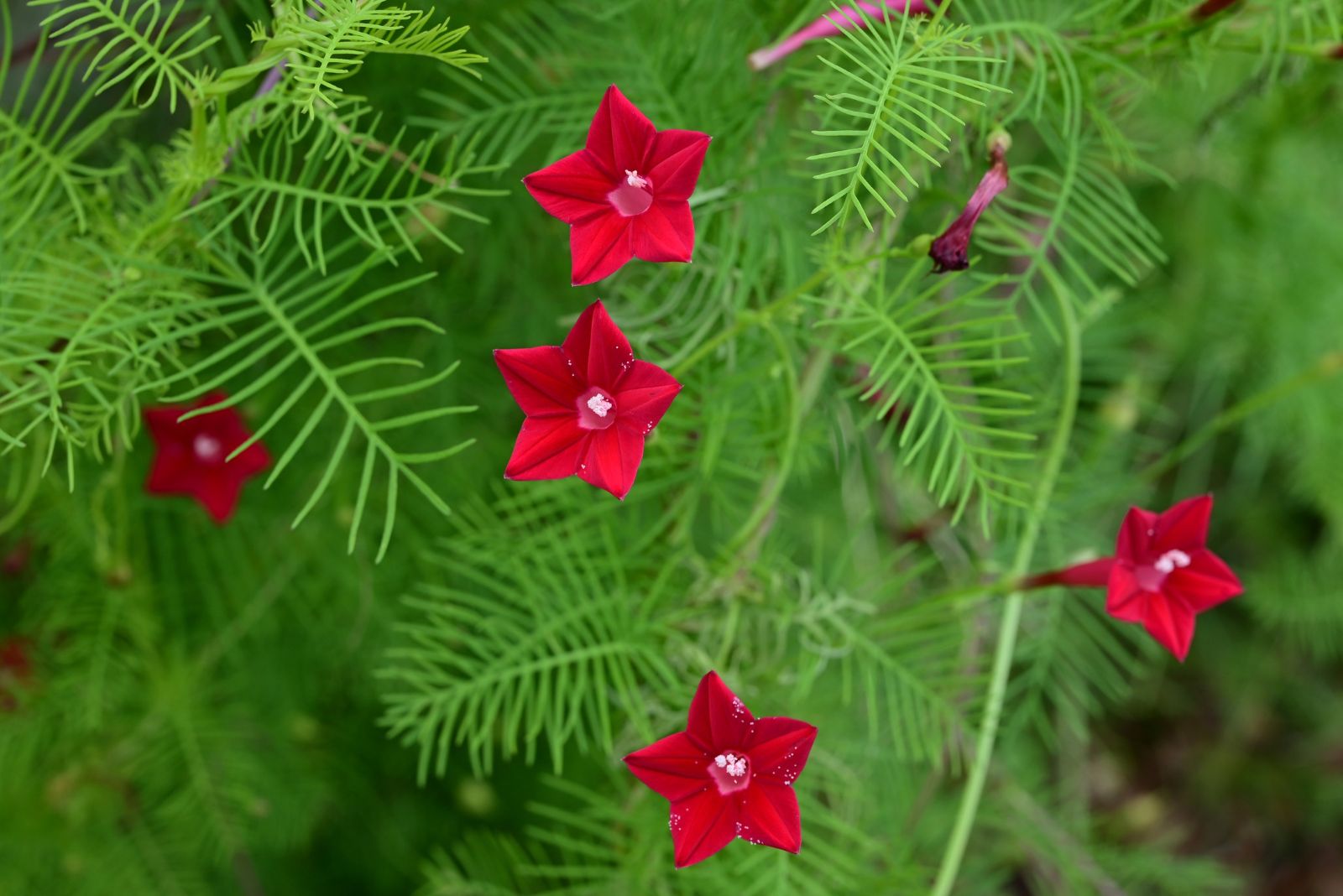
Have you ever wished your Texas garden could stay colorful all summer instead of fading once the heat arrives? Many flowers struggle when temperatures climb, but some vines seem to thrive in those long, sunny days.
These climbing plants bring steady color to fences, trellises, and pergolas while adding a sense of movement and life to the garden.
Vines have a special way of transforming outdoor spaces. A simple structure can quickly become covered in lush leaves and vibrant blooms that catch the eye from across the yard.
In Texas, where the growing season stretches for months, the right vines can continue flowering well into the hottest part of summer.
Gardeners often love these plants because they make a big visual impact without taking up much ground space. As they climb and spread, they create living walls of color that brighten the landscape.
With the right selections, your garden can stay lively and full of blooms throughout the summer.
1. Trumpet Vine (Campsis Radicans)
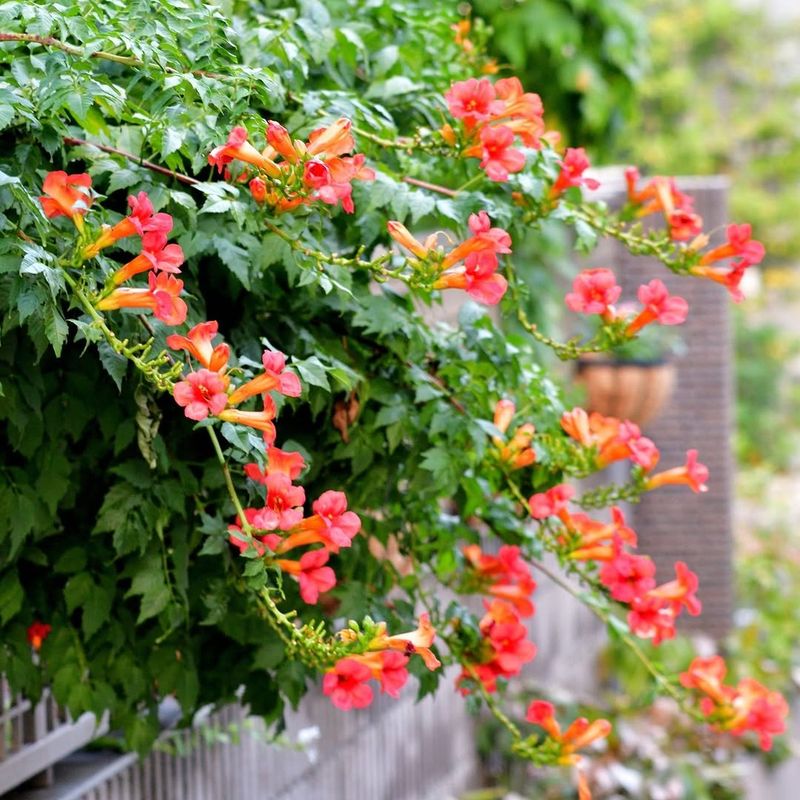
If hummingbirds had a favorite vine, Trumpet Vine would probably win the vote every single time.
Those bold, orange trumpet-shaped flowers are practically irresistible to hummingbirds, and once you plant one in your Texas garden, you will likely see these tiny fliers visiting every single day throughout the summer.
Campsis radicans is a native powerhouse that blooms from early summer well into late summer.
It is one of the most vigorous vines you can grow in Texas, which means it needs a strong support structure like a sturdy fence, a brick wall, or a heavy-duty trellis. Give it room to grow and it will reward you generously.
A quick word of advice: Trumpet Vine spreads aggressively through suckers and seeds, so it is smart to plant it somewhere you can manage it.
Some Texas gardeners grow it in areas where they want quick coverage, like along a back fence or over an old shed. Regular trimming keeps it looking tidy and actually encourages more blooms.
Even with its bold personality, Trumpet Vine earns its place in any Texas garden. It tolerates heat, drought, and poor soil like a champion.
Once established, it practically takes care of itself while putting on a spectacular summer show that keeps hummingbirds and gardeners alike coming back for more.
2. Scarlet Runner Bean (Phaseolus Coccineus)
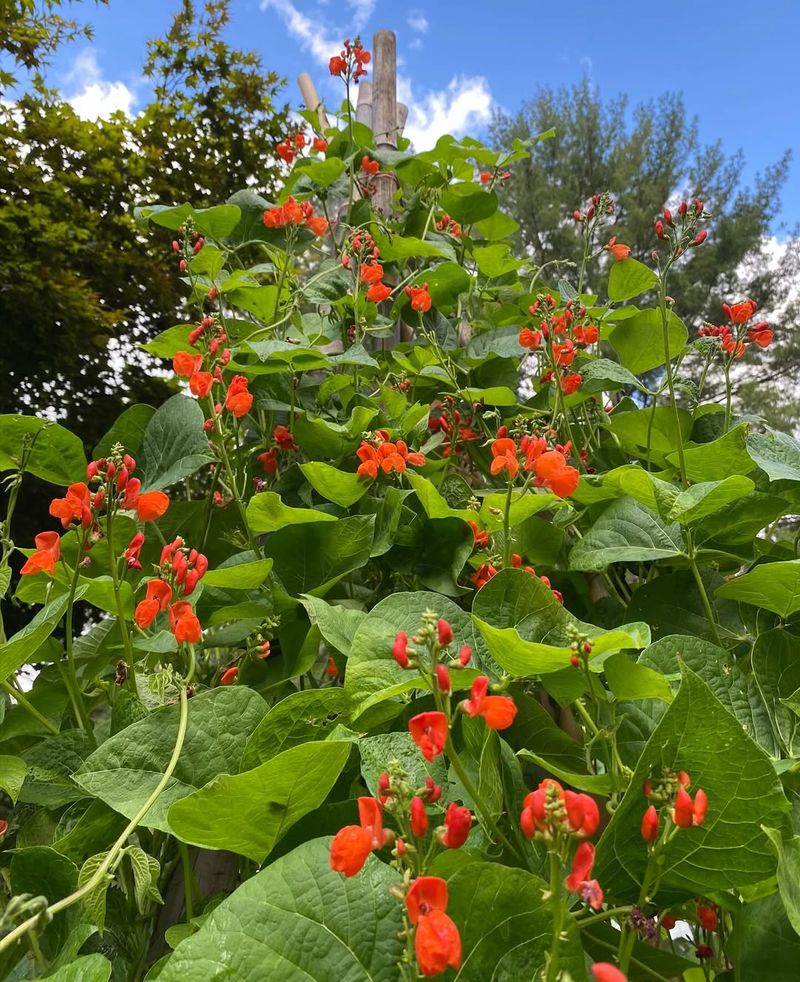
Practical and pretty at the same time, Scarlet Runner Bean is a vine that earns its keep in a Texas garden twice over. Those vivid red flowers that cover the vine all summer are genuinely beautiful, and hummingbirds cannot seem to get enough of them.
On top of that, the vine produces large beans that are fully edible, so you get a food crop and a flower show in one plant.
Phaseolus coccineus is a vigorous climber that can reach ten to fifteen feet in a Texas summer. It prefers full sun and consistently moist soil, so plan to water it regularly during hot spells.
The striking red flowers bloom in clusters along the vine, creating a wall of color that looks fantastic on a garden arch or fence.
Your Texas Garden Changes Every Week. Your Plan Should Too.
Gardening in Texas changes quickly throughout the season. Every Friday you’ll receive a simple weekly plan showing exactly what to plant, prune, fertilize, harvest, and protect so you never miss the right timing.
One thing to keep in mind is that Scarlet Runner Bean actually prefers slightly cooler growing conditions, so in the hottest parts of Texas it may slow down during peak summer heat. However, it rebounds nicely once temperatures ease in late summer and fall.
Planting it where it gets some afternoon shade can help it perform better through the hottest weeks.
Harvest the beans when they are young and tender for the best flavor. If you let some pods mature fully and dry on the vine, you can save those beautiful speckled seeds to plant again next year. It is a fun, productive vine that brings real charm to any Texas garden space.
3. Cypress Vine (Ipomoea Quamoclit)
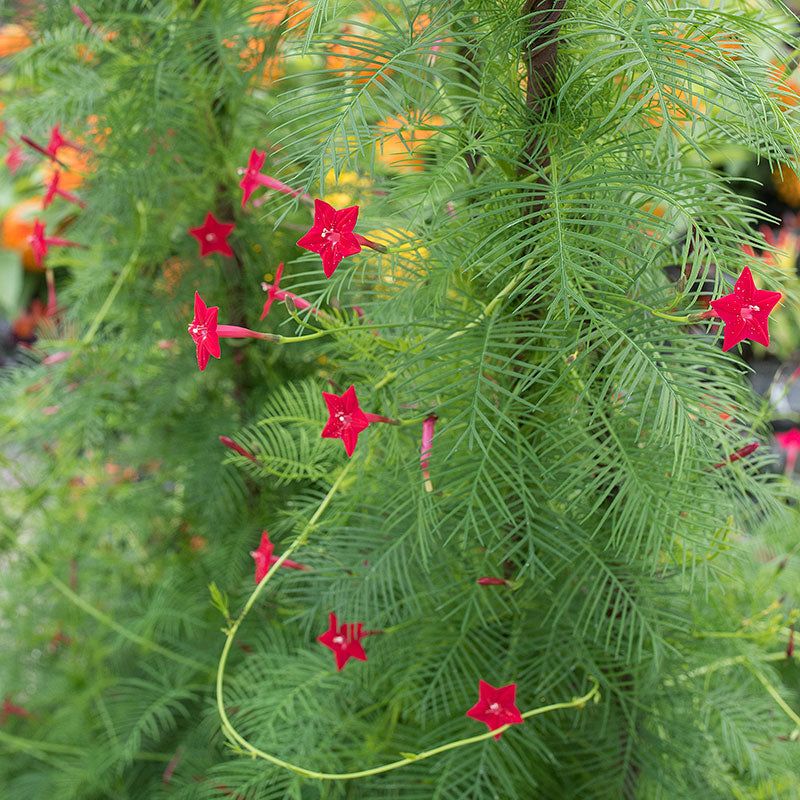
Delicate in appearance but tough in performance, Cypress Vine is one of the most charming annual vines you can grow in Texas.
Its feathery, fern-like leaves give it an airy, elegant look, and those tiny red star-shaped flowers that bloom all summer long are absolutely irresistible to hummingbirds. Once you grow it, you will want to plant it every year.
Ipomoea quamoclit is a relative of the Morning Glory and shares that family’s love of warm weather and full sun. It grows quickly in Texas heat, easily reaching ten to twenty feet in a single season.
The vine twines naturally around fences, trellises, and other plants, creating a lacy curtain of green with sparkling red blooms scattered throughout.
Planting Cypress Vine in Texas is simple. Sow seeds directly in the ground after the last frost date, in a sunny spot with well-drained soil.
It self-seeds freely, so once you grow it one year, you may find it popping up on its own the following season. That said, it is easy to manage and does not become a nuisance the way some self-seeders can.
Beyond hummingbirds, the flowers also attract butterflies and other pollinators, making your Texas garden a lively, buzzing, fluttering space all summer. Plant it along a fence near a seating area and enjoy watching the wildlife activity it brings.
Few plants offer this much beauty and wildlife value with so little effort required from the gardener.
4. Coral Honeysuckle (Lonicera Sempervirens)
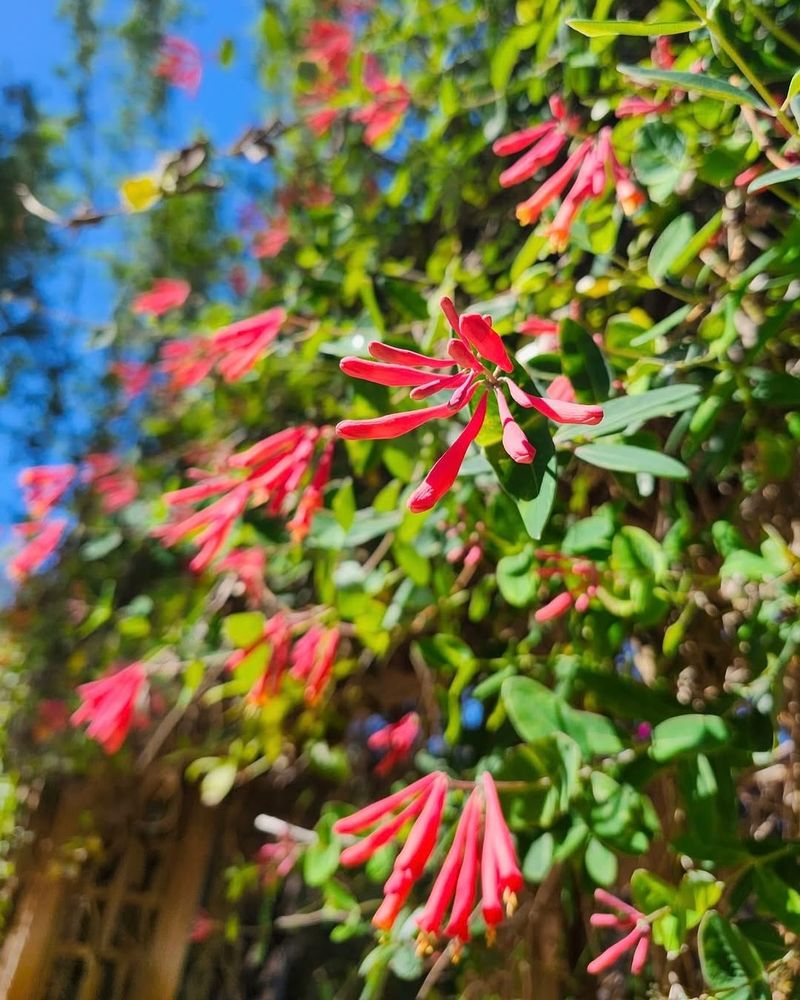
Few vines can match the eye-catching charm of Coral Honeysuckle when it is in full bloom. Native to the eastern and central United States, this vine feels right at home in Texas gardens.
Its bright red tubular flowers are like little beacons for hummingbirds and butterflies, making your yard feel alive all summer long.
One of the best things about Coral Honeysuckle is how easy it is to grow. It thrives in full sun to partial shade and handles Texas heat without much fuss.
Give it a sturdy trellis, a fence, or a pergola, and it will happily climb and spread throughout the warm months.
Unlike its invasive cousin Japanese Honeysuckle, this native species is well-behaved and will not take over your garden.
It blooms heavily from late spring and continues producing flowers through summer, especially when given good sunlight and regular watering. Birds also love the small red berries that follow the flowers in fall.
For Texas gardeners who want a low-maintenance vine with serious visual impact, Coral Honeysuckle delivers every season.
Plant it near a porch or window so you can enjoy watching hummingbirds feed up close. It is truly one of the most rewarding native vines you can add to any Texas landscape.
5. Black-Eyed Susan Vine (Thunbergia Alata)
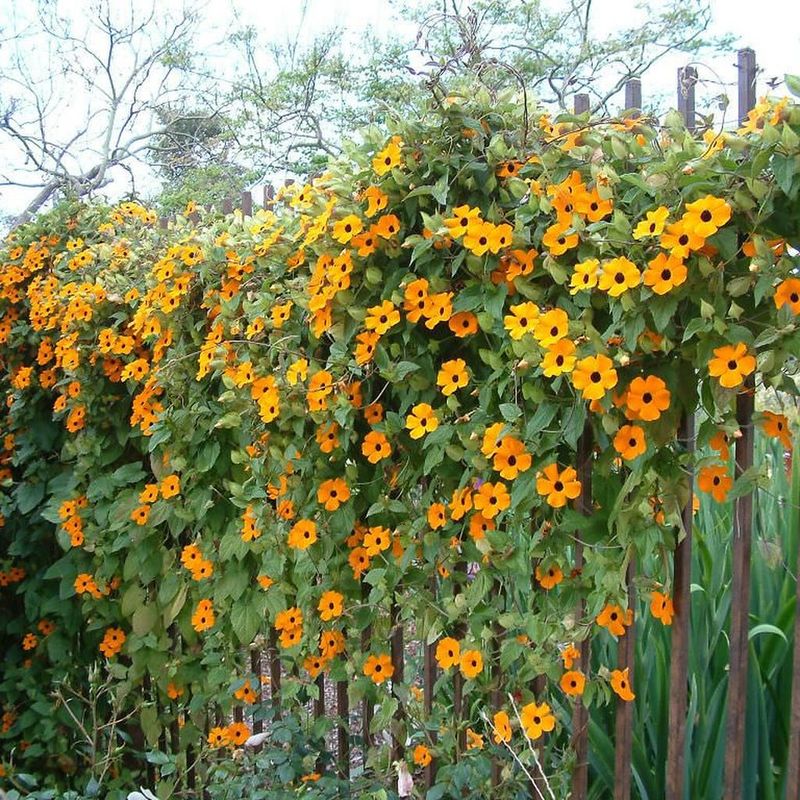
Bright, cheerful, and practically unstoppable, Black-Eyed Susan Vine is one of the most popular annual vines grown across Texas.
Those sunny yellow and orange flowers with their distinctive dark centers bloom nonstop from late spring all the way through fall, filling trellises, hanging baskets, and garden fences with continuous color.
Thunbergia alata grows fast, which is great news for Texas gardeners who want quick results. It can reach six to eight feet in a single season, easily covering a small trellis or cascading beautifully from a container.
The flowers come in yellow, orange, and white varieties, so you have options to match any garden color scheme you prefer.
Growing Black-Eyed Susan Vine in Texas is straightforward. It loves full sun and warm temperatures, both of which Texas has in abundance.
Water it consistently, especially during the hottest weeks of summer, and it will reward you with an almost endless parade of blooms. It also works wonderfully in hanging baskets on a porch or patio.
Since it is an annual, you will need to replant it each year, but the effort is absolutely worth it. Seeds are inexpensive and widely available at Texas garden centers.
Start seeds indoors a few weeks before the last frost date, then transplant outdoors once the weather warms up. The flowers will keep coming until the first cool snap of fall.
6. Hyacinth Bean Vine (Lablab Purpureus)
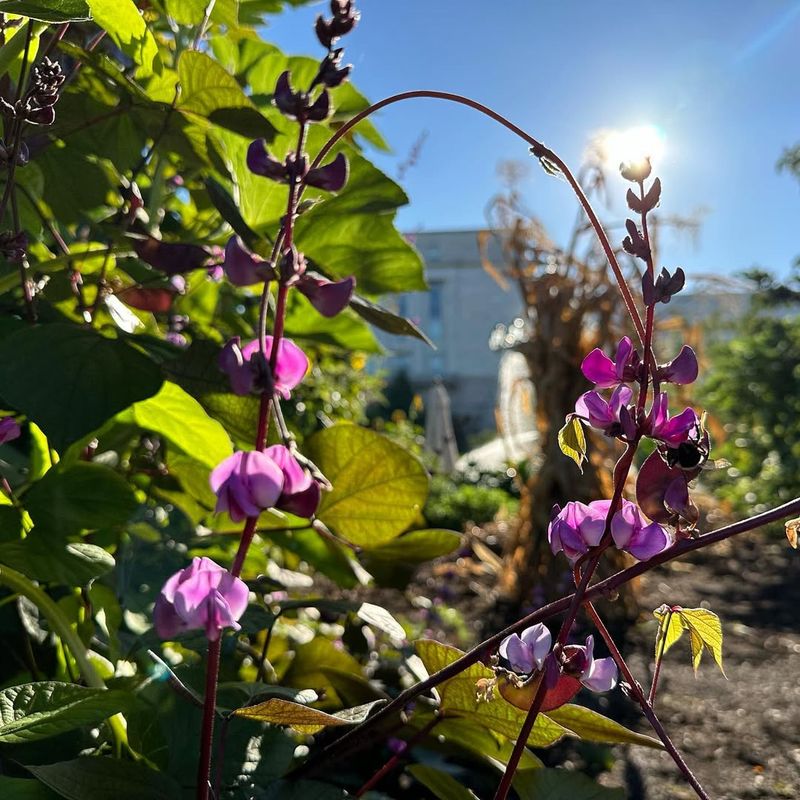
There is something almost theatrical about Hyacinth Bean Vine. From its purple flowers to its glossy, deep-purple seed pods, every part of this plant looks like it was designed to impress.
It is one of the most ornamentally striking annual vines you can grow in a Texas garden, and it blooms generously from summer through early fall.
Lablab purpureus grows quickly and vigorously in the Texas heat, often reaching ten feet or more in a single season.
The pea-like purple flowers appear in clusters throughout summer, followed by those eye-catching purple pods that add another layer of visual interest. The dark-tinged leaves also look beautiful against a white fence or light-colored wall.
Plant Hyacinth Bean Vine in a spot with full sun and give it a sturdy trellis or fence to climb. It handles Texas summer heat well and needs moderate watering to keep blooming at its best.
Pollinators love the flowers, so expect to see bees and butterflies visiting regularly throughout the season.
A fun detail worth knowing: Hyacinth Bean Vine has been grown ornamentally for centuries, and Thomas Jefferson reportedly grew it at Monticello. While the beans are edible when cooked properly, most Texas gardeners grow it purely for its stunning looks.
It is one of those plants that makes neighbors stop and ask what on earth you are growing in your yard.
7. Passionflower (Passiflora Incarnata)
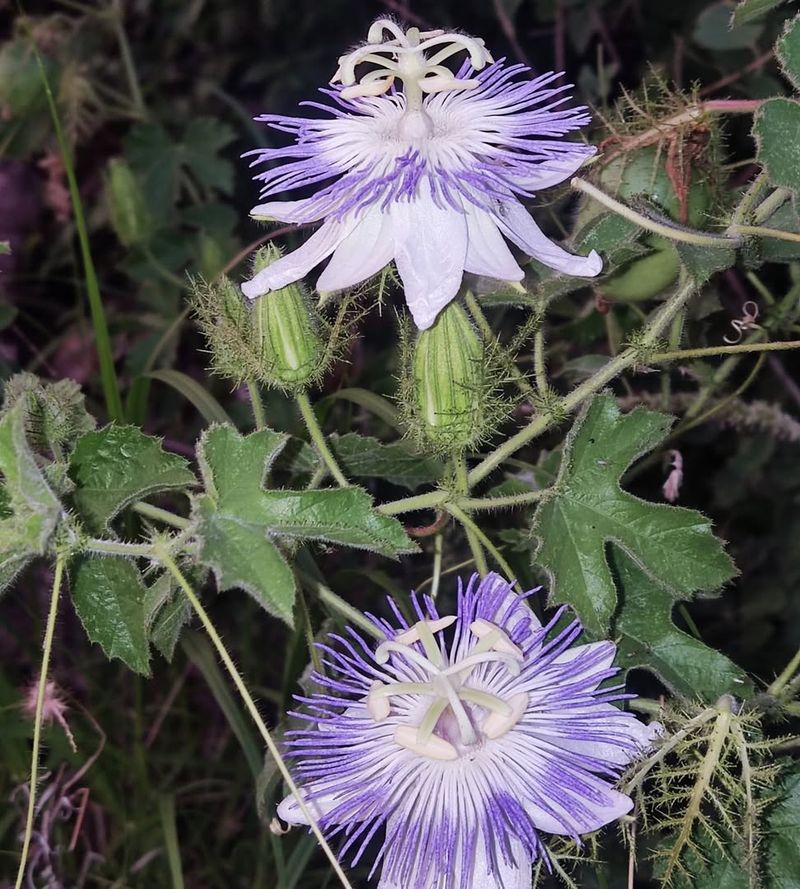
Walk past a Passionflower vine in full bloom and you might stop in your tracks. The flowers look almost too exotic to be real, with their purple fringed coronas and elaborate structure that seems like something out of a tropical rainforest.
Yet this stunning vine is actually native to Texas and thrives here beautifully. Also called Maypop, Passiflora incarnata is a fast grower that can cover a fence or trellis in just one season.
It blooms repeatedly throughout summer and into early fall, giving you months of those jaw-dropping purple flowers.
Butterflies absolutely love it, and it serves as a host plant for Gulf Fritillary and Zebra Longwing butterflies.
Passionflower prefers full sun and well-drained soil, which makes it a natural fit for most Texas garden conditions. It is drought-tolerant once established, so it handles those long, dry Texas summers with ease.
The vine also produces small, egg-shaped fruits called maypops that are edible and have a sweet, tropical flavor.
Gardeners in Texas who want a conversation starter in their yard should absolutely try Passionflower. Plant it along a back fence or let it ramble over a garden arch.
Each bloom only lasts a day or two, but new ones keep opening all summer, so the show never really stops.
8. Crossvine (Bignonia Capreolata)
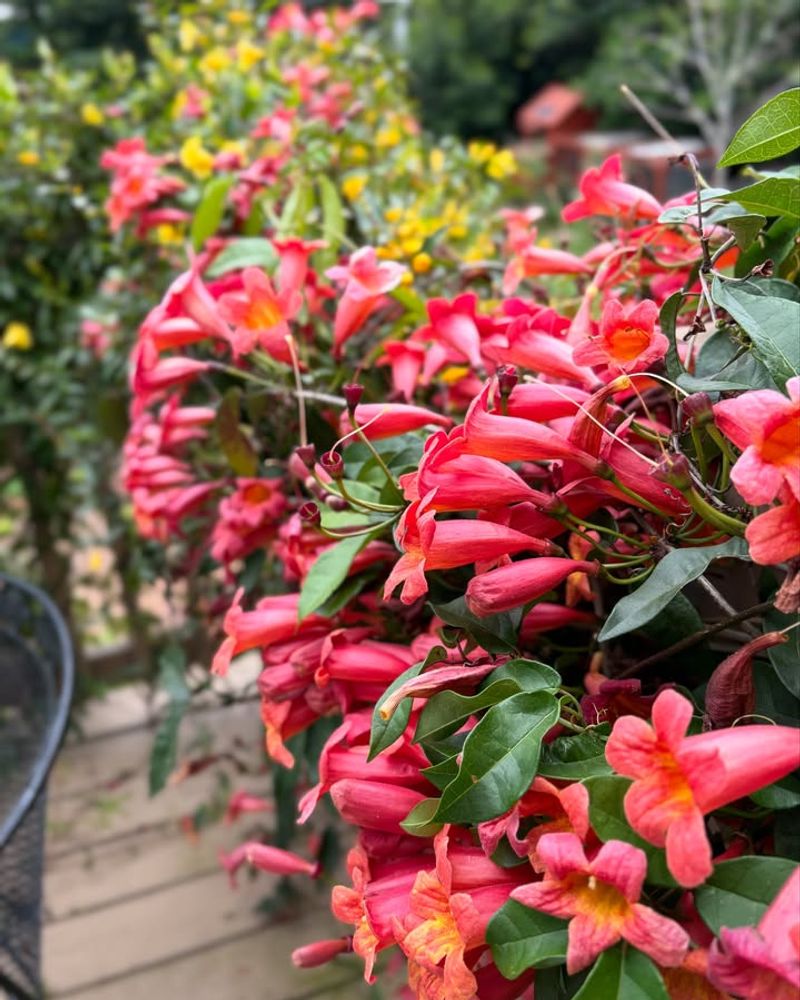
Named for the cross-shaped pattern you see when you cut through its stem, Crossvine is one of Texas’s most dependable native climbers.
It greets the season with a spectacular burst of orange-red, trumpet-shaped flowers that cover the vine in spring. In warm Texas climates, it keeps producing sporadic blooms well into the summer months.
Crossvine is evergreen in most parts of Texas, meaning it holds onto its attractive foliage year-round. That alone makes it worth growing, but the flowers are the real bonus.
Hummingbirds and bees are drawn to those tubular blooms, so your garden becomes a little wildlife haven whenever this vine is in flower.
One popular variety called Tangerine Beauty produces especially vibrant tangerine-colored flowers that practically glow in the Texas sun.
Crossvine climbs by using tendrils with adhesive discs, so it can grip brick walls, wooden fences, and trellises with ease. It handles both full sun and partial shade, making it versatile for different garden spots.
For Texas gardeners who want year-round greenery with seasonal bursts of color, Crossvine is an excellent pick. It is low maintenance once established and handles drought reasonably well.
Plant it where it can climb freely, and enjoy the colorful display it brings from spring through summer with very little effort on your part.