8 Beautiful Shade And Flowering Trees That Thrive In Georgia Lawns
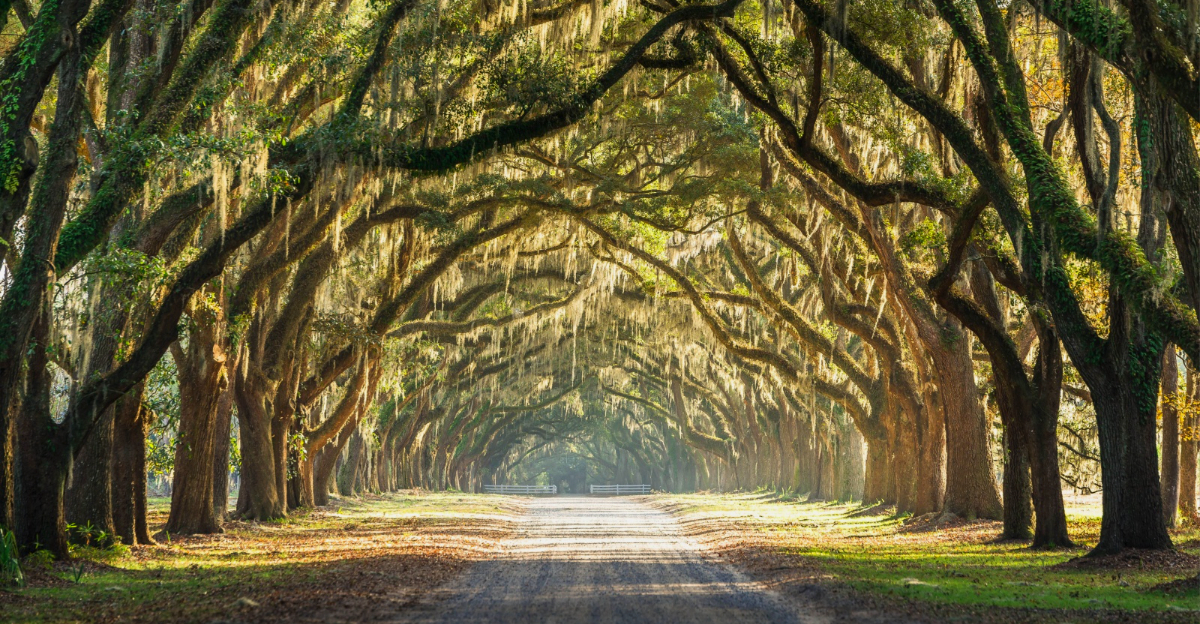
A Georgia lawn can feel totally different once a great tree is in the mix.
Summer shade turns a patio into a place you actually want to sit, spring blooms make the yard look awake before the grass even hits its stride, and fall color gives you one last show before winter settles in.
The trick is picking trees that match real Georgia conditions, not wishful thinking.
Humidity, heavy rain bursts, and clay-heavy soil can be tough on the wrong pick, and tight planting spots near driveways, fences, and power lines can turn a “pretty tree” into a long-term headache.
The right choice brings cooling canopy, seasonal beauty, and a healthier yard ecosystem without demanding constant babysitting.
From North Georgia’s cooler pockets to the Piedmont and the Coastal Plain, these shade and flowering trees can fit lawns in a way that looks intentional and feels livable.
1. Oak Brings Big Shade And Classic Georgia Canopy
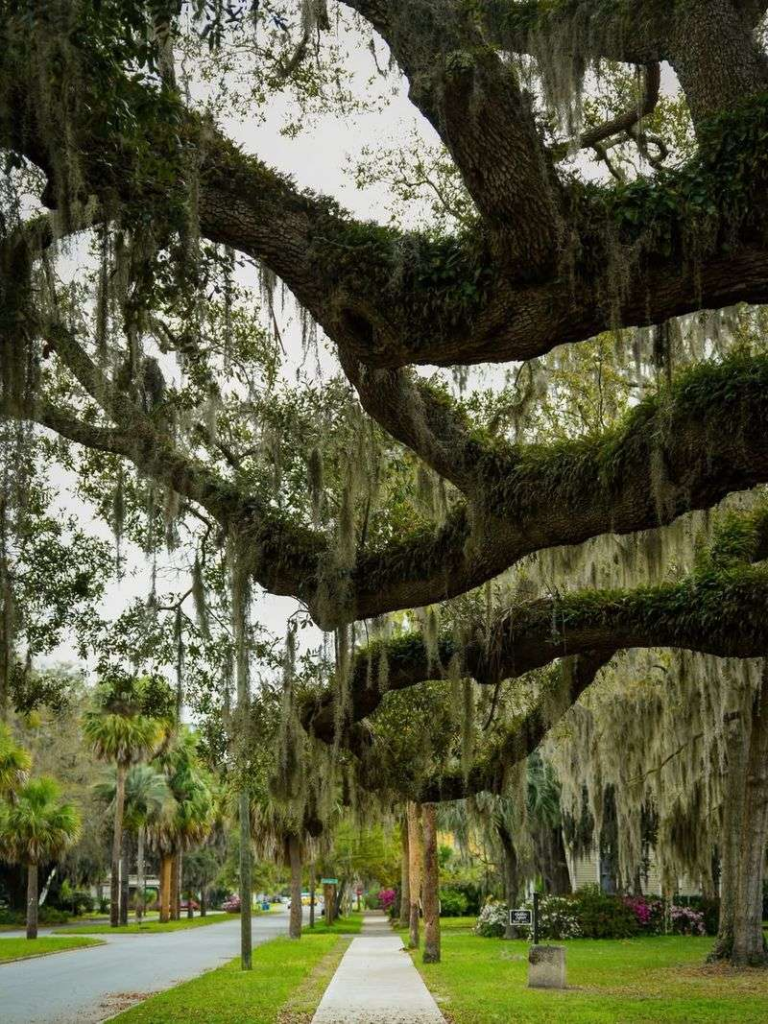
Few sights feel more at home in the Southern landscape than a mature oak casting broad shade across a lawn. Several oak species can fit Georgia yards well, with different options better suited to different soils and regions.
Willow oak and water oak are common choices in many Piedmont and Coastal Plain landscapes, while Shumard oak is often used where a sturdy shade tree is desired and soil drains reasonably well.
Mature sizes vary by species and site, but many landscape oaks land in the 60–80 foot range with wide canopies that can shade a large portion of a yard.
Plant oaks with long-term spacing in mind. Canopies expand, roots spread, and future conflicts with houses, driveways, and overhead lines can become expensive.
A mulch ring helps retain moisture and reduces turf competition near the trunk, especially during the first few years.
Oaks also offer serious wildlife value. They serve as host plants for a large number of moth and butterfly species, and acorns feed many birds and mammals.
2. Tupelo Adds Glossy Leaves And A Wildlife Friendly Fruit Crop
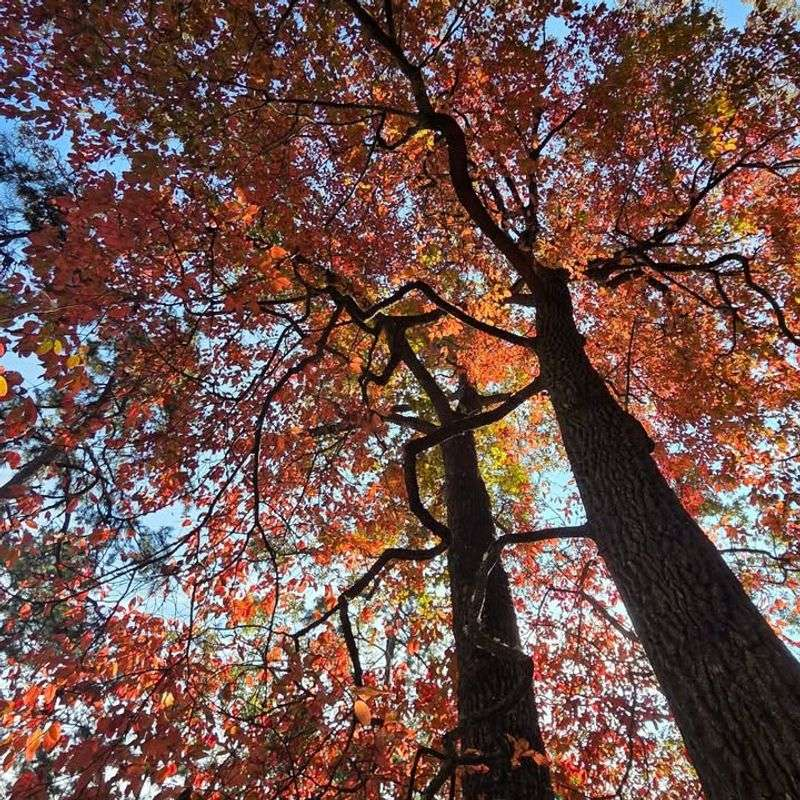
Fall color can be the moment that sells this tree. Black tupelo, also called black gum (Nyssa sylvatica), is native in Georgia and is prized for glossy summer foliage and strong red to orange fall color.
Mature size varies with conditions, but it’s often described in the 30–60 foot range, with some trees growing larger over time.
This tree can handle a wide range of sites, from moist areas to upland locations with decent drainage. It’s often happiest where soil stays evenly moist in spring, but it can adapt once established.
Give it room, since it tends to develop a strong root system and can resent heavy compaction.
Wildlife use is a big part of the appeal. Female trees produce dark fruits that many birds take advantage of, especially as summer shifts into fall.
If fruit is a priority, that usually means having a female tree nearby, since black tupelo is typically dioecious.
One quick clarification: the famous “tupelo honey” label is most strongly associated with swamp and river tupelos like Ogeechee tupelo (Nyssa ogeche), not black tupelo.
Your Georgia Garden Changes Every Week. Your Plan Should Too.
Gardening in Georgia changes quickly throughout the season. Every Friday you’ll receive a simple weekly plan showing exactly what to plant, prune, fertilize, harvest, and protect so you never miss the right timing.
Black tupelo can still contribute nectar, but it’s better to keep the honey story tied to the right species and habitat.
3. Chinese Pistache Delivers Cooling Shade And Bright Fall Color
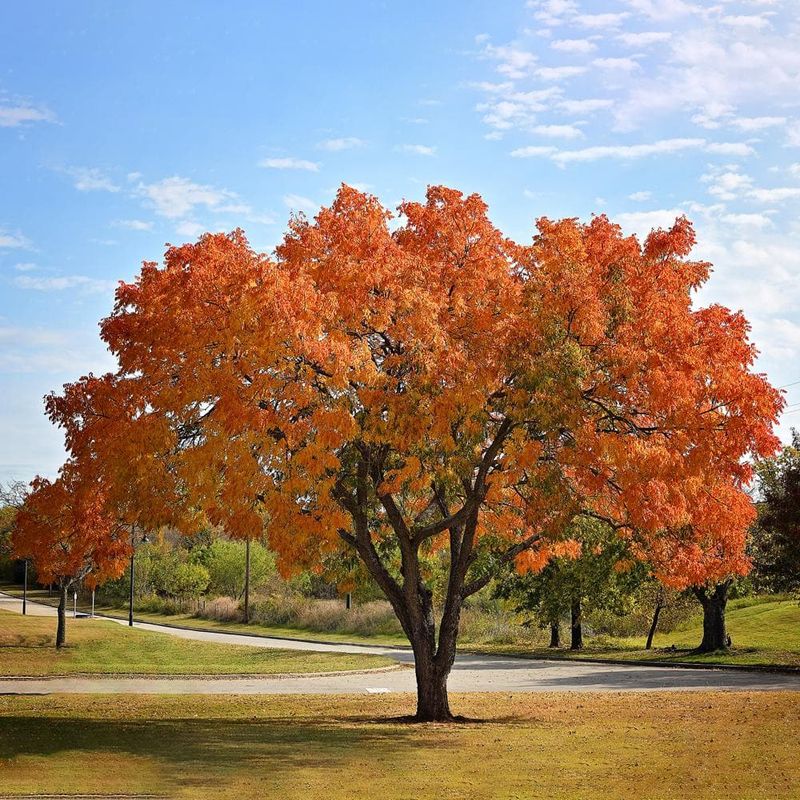
A shade tree that also brings dependable fall color can be a smart pick for Georgia lawns. Chinese pistache (Pistacia chinensis) is widely planted for its rounded canopy and orange-to-red fall display, especially when it gets full sun.
In many yards, it reads as a clean, tidy shade tree that does not overwhelm the space.
It tolerates heat well and can handle a range of soils once established, including many clay-heavy sites that drain reasonably.
Mature height is often described around the 25–35 foot range, sometimes larger depending on cultivar and conditions.
Like most trees, it tends to establish better with consistent watering through the first couple of growing seasons.
One important caveat in the Southeast: Chinese pistache is considered a potential weed tree because birds can spread seed from female trees. If you like this tree, choosing a male selection helps reduce fruit and unwanted seedlings.
Good placement away from natural areas can also help limit stray seedlings.
Placed with good spacing from patios and driveways, it can be a practical lawn specimen that adds shade in summer and strong color when temperatures cool. A mulch ring instead of turf right up to the trunk can also reduce stress and make watering easier.
4. Ginkgo Offers Fan Shaped Leaves And A Golden Fall Finale
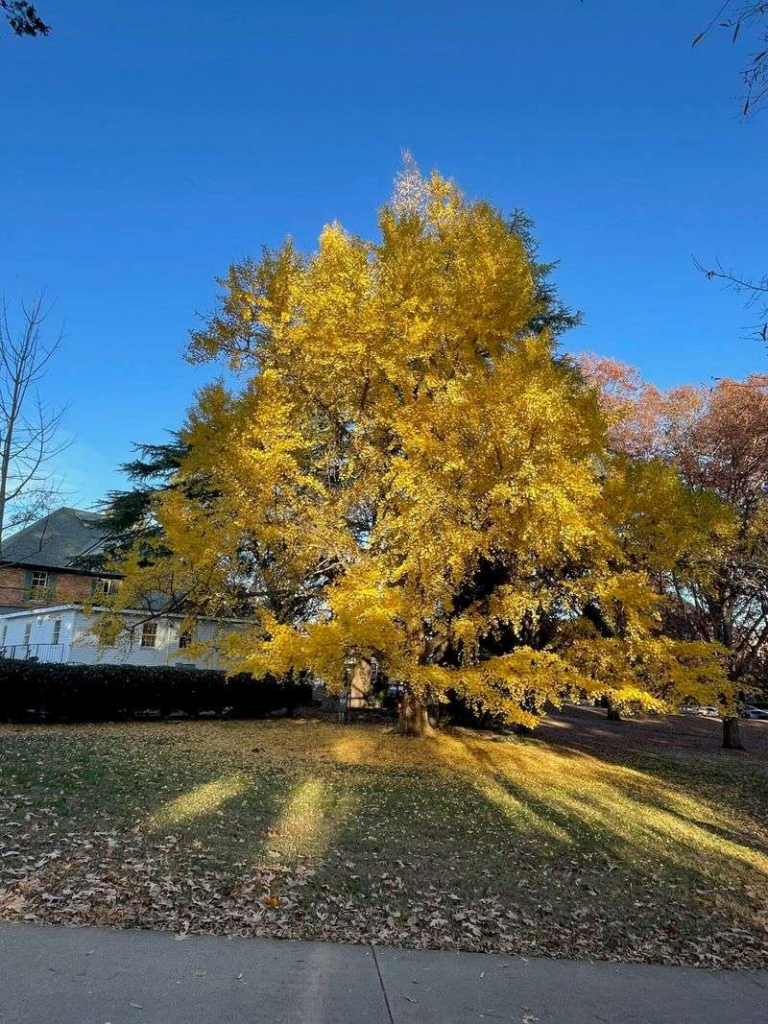
Ginkgo brings a completely different leaf texture to a Georgia yard. The fan-shaped leaves look distinct all season, then turn a clear golden yellow in fall, especially in full sun.
The drop can happen over a short span, which turns the lawn into a bright yellow carpet for a few days.
This tree is often described as a living fossil, with an ancient lineage and fossils similar to the modern genus extending back roughly 170 million years.
Ginkgo also tends to tolerate heat, urban conditions, and periodic drought once established, which is part of why it’s used as a street and lawn tree.
It usually performs best with steady moisture while it is getting established, even though older trees handle dry stretches better.
Size depends on cultivar and time, but many ginkgos eventually become medium to large trees in the landscape. Plan for long-term spacing from structures and overhead lines.
A little patience helps here, since growth is often slower in the early years.
Select a male tree. Female ginkgo trees drop fleshy seeds with a strong odor when they fall, which can become a real nuisance in lawns and near patios.
Buying a named male cultivar is the simplest way to avoid that issue.
5. Sweetbay Magnolia Brings Creamy Blooms And A Fresh Spring Scent
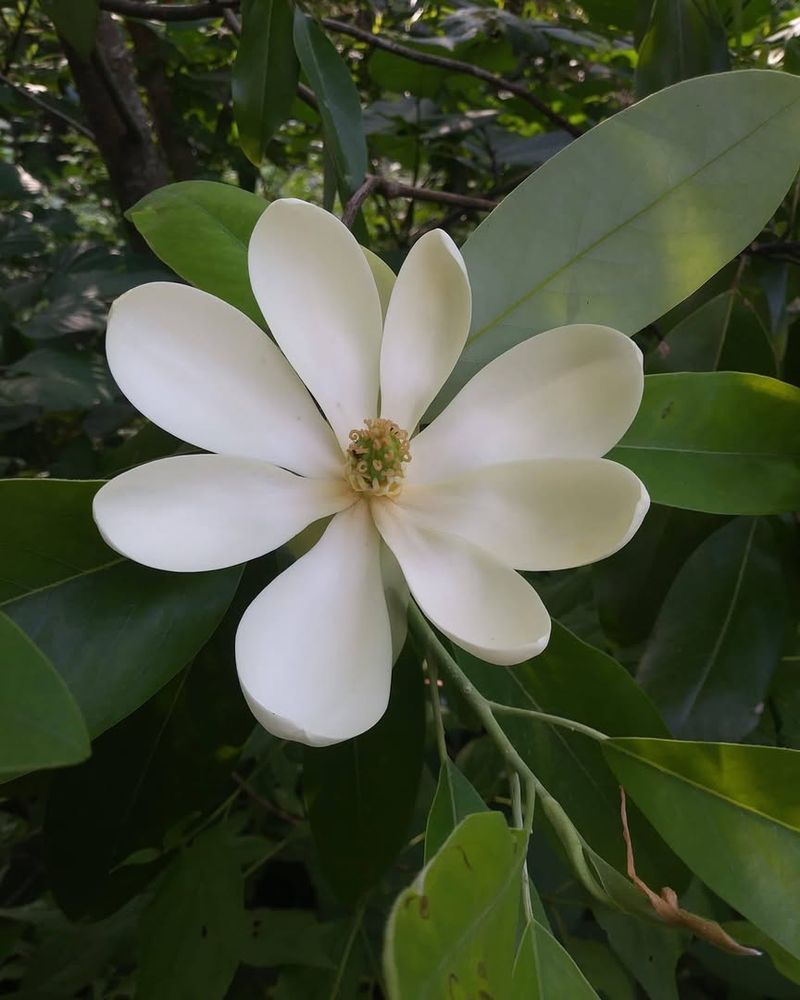
Sweetbay magnolia (Magnolia virginiana) is a strong fit for Georgia landscapes where soil stays on the moist side.
The flowers are creamy white, fragrant, and often appear in late spring with intermittent bloom continuing into summer in good conditions.
The bloom timing can stretch out, so you may see flowers pop up in waves instead of all at once.
In cultivation, sweetbay is commonly described as a small tree or large shrub around 10–35 feet tall, with the potential to grow larger in the Deep South when moisture and site conditions are favorable.
The leaves are glossy on top with paler undersides that add movement on breezy days.
In winter, some forms hold foliage longer than others, especially in milder parts of the state.
Sweetbay is more tolerant of wetter soils than many flowering trees, which makes it useful in low-lying areas that stay damp after rain.
It still benefits from avoiding constant standing water around the trunk, so a slightly raised planting position can help in stubborn spots.
Mulching the root zone helps conserve moisture and keeps mower damage away from the trunk.
The red seeds that appear as pods open can add seasonal interest and can attract birds. Giving it a little room from sidewalks and driveways helps you enjoy the flowers and fragrance without crowding.
6. Saucer Magnolia Adds Big Early Flowers And Front Yard Drama
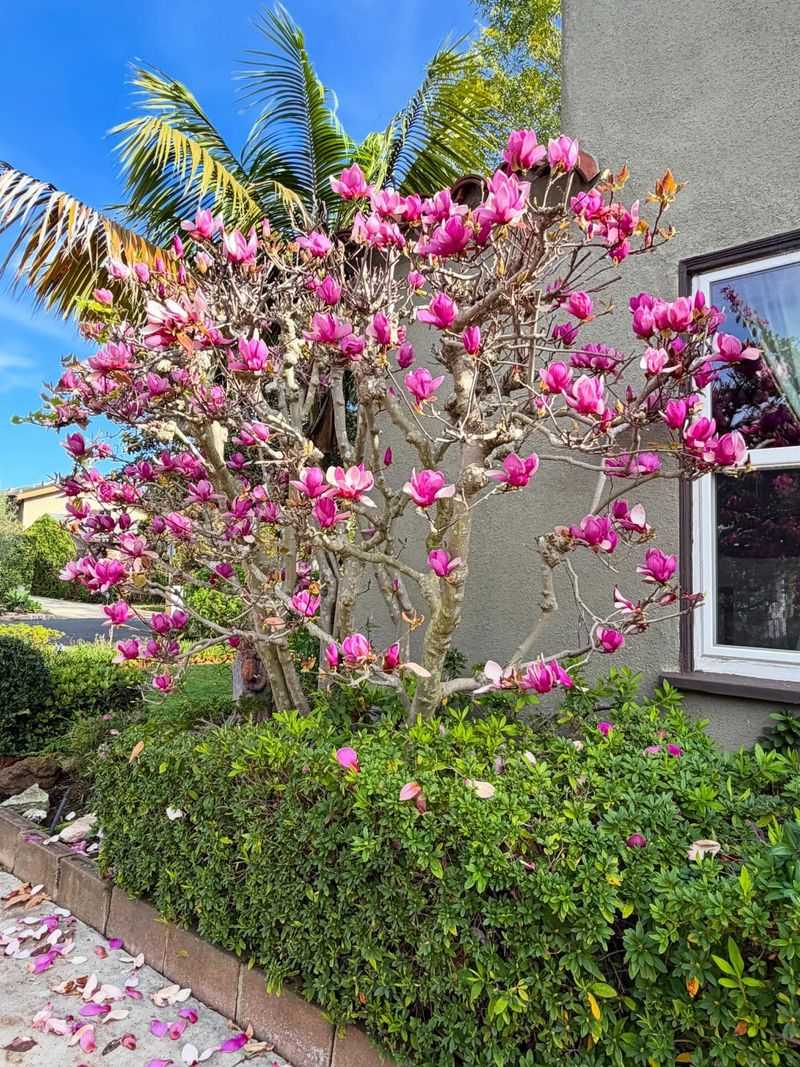
Saucer magnolia (Magnolia × soulangeana) puts on one of the earliest big flower shows of the year, often blooming before leaves fully emerge. The flowers can be large, cup-shaped, and showy in pinks, purples, and white tones.
In a front yard, it often looks best where you can see it from a window during that early spring bloom burst.
This tree typically grows as a small to medium ornamental, often 20–30 feet tall with a rounded, multi-stemmed form. It performs best with good drainage and soil that isn’t chronically waterlogged.
A mulch ring and consistent moisture during dry spells can help reduce stress during Georgia’s hotter stretches.
Late frosts can still damage flowers in years when buds open early, especially in North Georgia. Site choice can influence timing a bit, since warm southern exposures near structures can encourage earlier budbreak.
Planting out of harsh wind can also help protect blooms and tender buds.
Pruning needs are usually light, with most cuts focused on crossing branches or shape after bloom. Heavy pruning in winter can remove flower buds and reduce the display.
7. White Dogwood Brings Spring Color And Four Season Interest
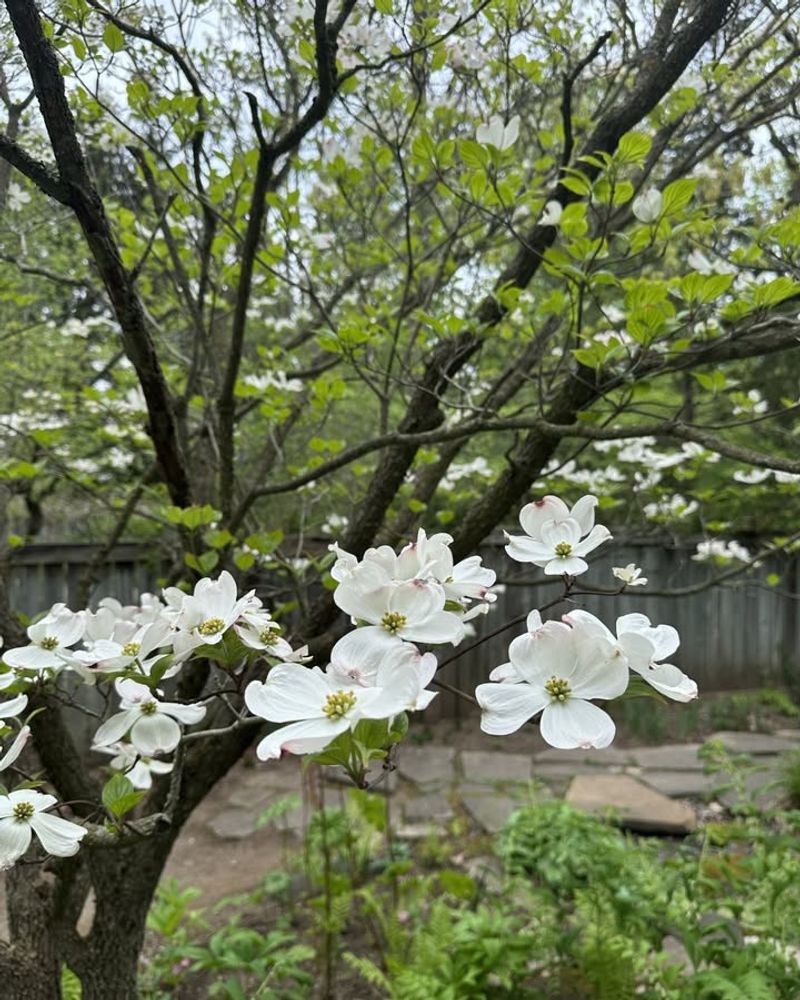
Flowering dogwood (Cornus florida) is a classic Georgia understory tree known for bright spring bracts and graceful branching.
It typically matures around 15–25 feet and often looks best where it gets morning sun and some afternoon shade, similar to the woodland edges it naturally favors.
In full, hot afternoon sun, leaves can look stressed in dry spells, especially in shallow soils.
Dogwood prefers well-drained soil with organic matter, and it benefits from mulch and steady moisture during dry stretches. Beyond spring, it brings green summer foliage, red fall color in many sites, and red fruits that a wide range of wildlife eats.
The horizontal branching structure also gives it a nice winter silhouette once leaves drop.
Disease pressure depends heavily on site. Dogwood anthracnose is more associated with cooler, moist regions and can be a concern in higher-elevation areas, including parts of northern Georgia.
Good airflow, avoiding overhead irrigation, and planting in well-drained soil can help reduce risk. Giving the tree space from dense evergreen screens can also help leaves dry faster after rain.
8. Redbud Starts The Season With Pink Blooms And Heart Shaped Leaves
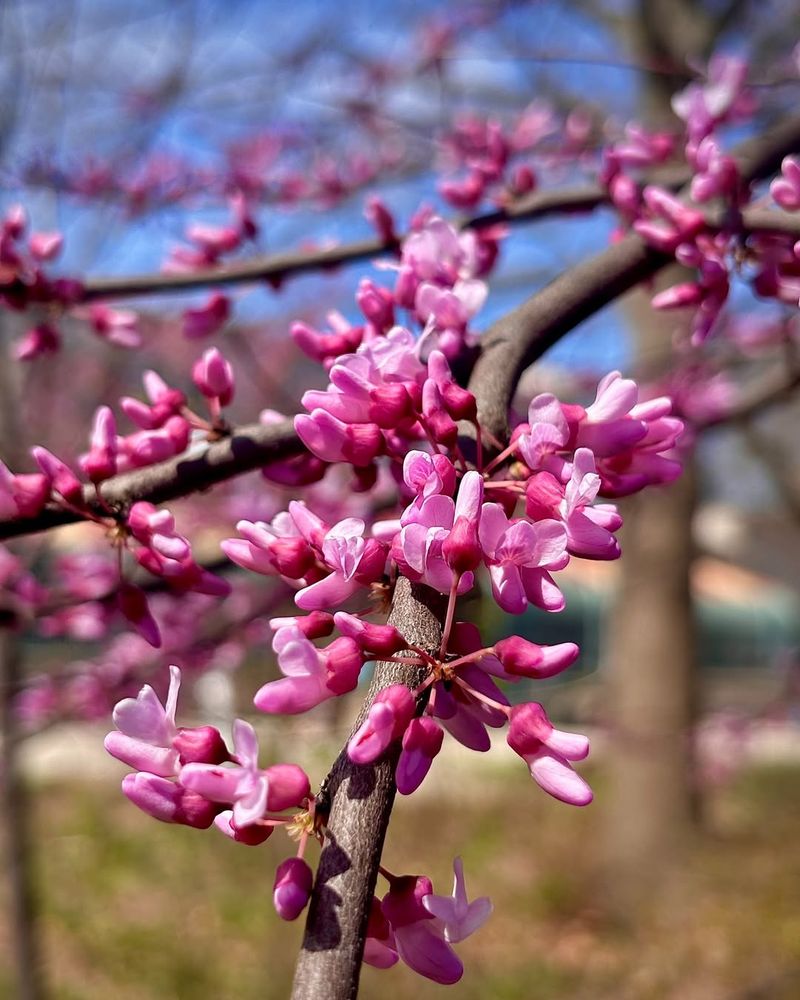
Eastern redbud (Cercis canadensis) brings an early burst of pink flowers on bare branches, often before leaves fully appear. It typically grows 20–30 feet tall with a rounded to vase-shaped habit, making it a friendly size for many Georgia lawns.
The flowers often show up along the trunk and older branches, which makes the display feel extra bold up close.
Redbud handles a range of soils, including clay-heavy sites, as long as drainage is decent. Full sun can boost bloom, while partial shade can help in hotter exposures, especially in tight yards.
Avoiding chronically soggy spots helps reduce stress and supports stronger long-term growth.
After flowering, heart-shaped leaves fill in for summer, then shift toward yellow in fall. Flat seed pods often hang on into winter and add texture, and the flowers can provide early-season value for pollinators when bloom options are limited.
In a lawn setting, a mulch ring around the base helps reduce mower damage and keeps roots cooler during hot weather.