Plant These Now For A Better Spring Garden In California
Want your California garden to look amazing in spring? The secret might surprise you. It actually starts right now.
Yep, while some gardeners are waiting for spring to show up, the savvy ones are already sneaking a few plants into the ground and setting the stage for a serious flower show.
Think of it like planting future compliments. The kind where neighbors walk by and say, “Wow, how did your garden get so full already?” Meanwhile you’re just smiling because you planned ahead.
California’s mild climate makes this trick especially easy. A few plants settled into the soil now can spend the cooler months getting comfortable, building strong roots, and preparing for a big spring debut.
And when spring finally arrives? Boom. Color everywhere, happy plants, and a garden that looks like it woke up ready to party.
Ready to give your future garden a head start? These plants are perfect to put in the ground right now.
1. Marigolds
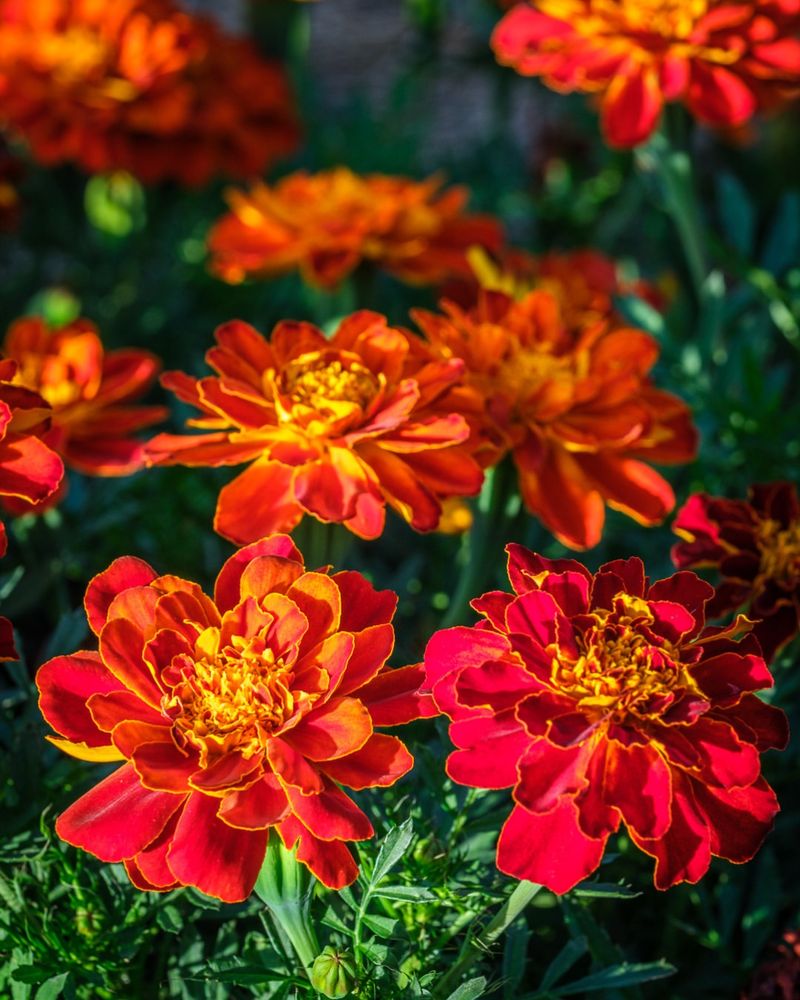
Few flowers punch above their weight quite like marigolds. These bold, cheerful blooms are one of the best things you can plant right now if you want a spring garden that looks lively and well-cared-for.
Marigolds come in shades of orange, yellow, and deep gold, and they create a warm, welcoming look in any yard.
One of the biggest reasons California gardeners love marigolds is how tough they are. They handle heat well, they are not picky about soil, and they do not need a lot of water once they get established.
That makes them a smart choice for much of California, where dry spells can sneak up on you.
Marigolds also do double duty in the garden. Their strong scent naturally keeps certain pests away from nearby vegetables and herbs.
If you have a raised bed or a kitchen garden, planting marigolds along the border is one of the smartest moves you can make.
Plant them in a spot that gets full sun for at least six hours a day. They grow fast and will reward you with blooms that last from spring all the way through fall.
Deadhead the spent flowers regularly to keep new blooms coming strong all season long.
2. Zinnias
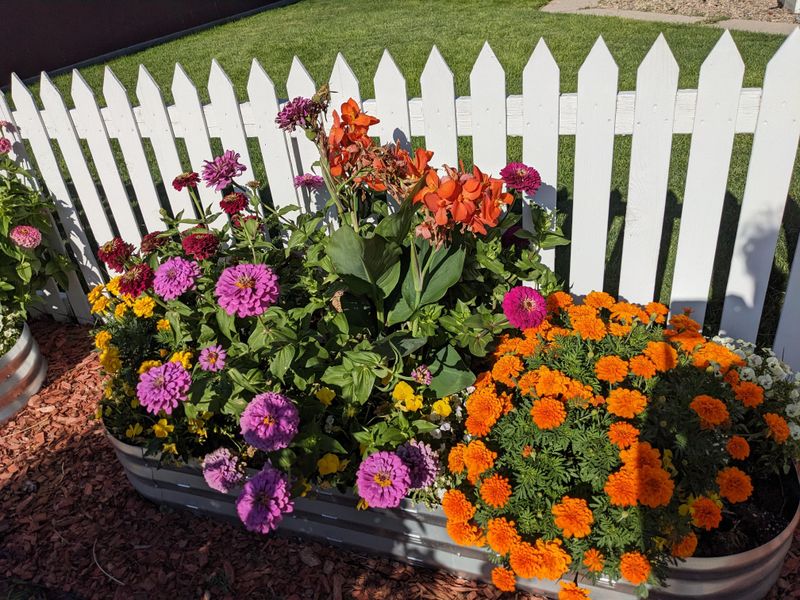
Walk through any California neighborhood in late spring and you will almost always spot a patch of zinnias showing off near a front porch or garden bed. These flowers are hard to miss.
They come in just about every color you can imagine, from deep red to soft lavender, and they bloom like they mean it.
Zinnias love warm weather, which makes them a natural fit for California’s sunny climate. You can direct sow the seeds right into the ground after the last frost, or start them indoors a few weeks early for a head start on the season.
Either way, they grow quickly and do not demand much attention.
Butterflies absolutely love zinnias. If attracting pollinators is one of your garden goals, a row of zinnias will bring them in reliably all season long.
Your California Garden Changes Every Week. Your Plan Should Too.
Gardening in California changes quickly throughout the season. Every Friday you’ll receive a simple weekly plan showing exactly what to plant, prune, fertilize, harvest, and protect so you never miss the right timing.
That is great news for the rest of your garden too, since pollinators help other plants thrive.
For best results, plant zinnias in full sun with well-draining soil. Water them at the base of the plant rather than overhead to prevent powdery mildew.
Keep picking the blooms for fresh bouquets and the plant will just keep producing more. They are truly one of the most generous flowers in the garden.
3. Cosmos
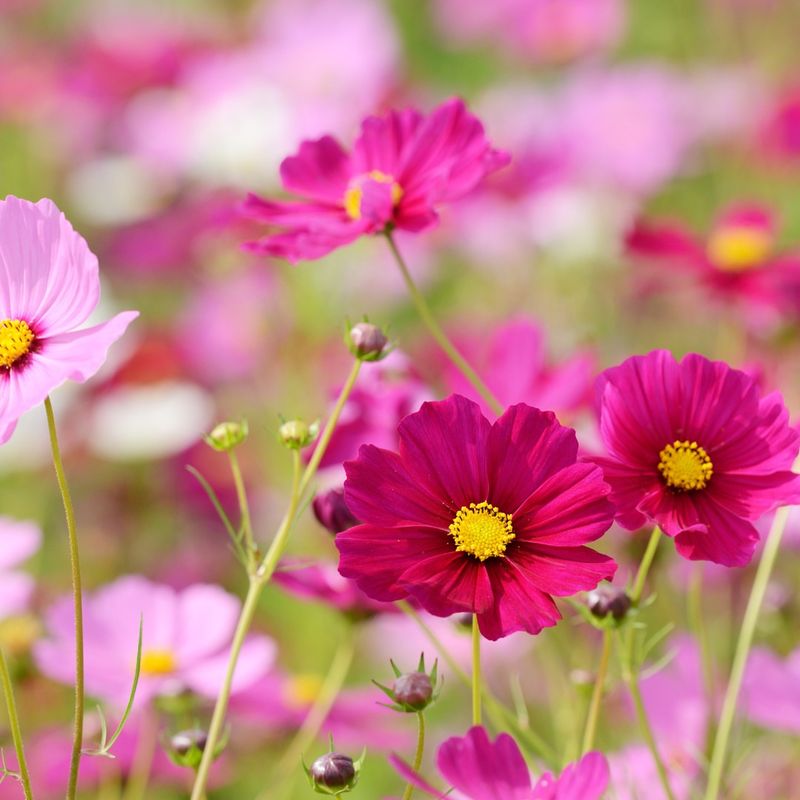
There is something almost dreamy about cosmos flowers. Their thin, feathery leaves and wide, open blooms give them a light and airy look that feels like a warm California afternoon.
They sway gently in the breeze and look stunning when planted in large groups or mixed borders.
Cosmos are incredibly easy to grow from seed, which makes them a favorite for beginner gardeners across California. You can scatter the seeds directly in the garden bed, barely cover them with soil, and watch them take off.
They actually prefer lean soil, meaning you do not need to add a lot of fertilizer or compost to get good results.
These flowers come in shades of pink, white, magenta, and burgundy. They bloom from late spring through fall, giving you months of color with very little effort.
Cosmos also attract bees and butterflies, making your garden a lively and healthy ecosystem.
One fun fact about cosmos is that they were brought to Europe from Mexico in the 1700s and quickly became popular garden flowers worldwide. Today, they are a staple in California cottage gardens for good reason.
Plant them in full sun and give them room to grow tall. Some varieties reach three to four feet in height, creating a beautiful, naturalistic backdrop in any garden space.
4. Sunflowers
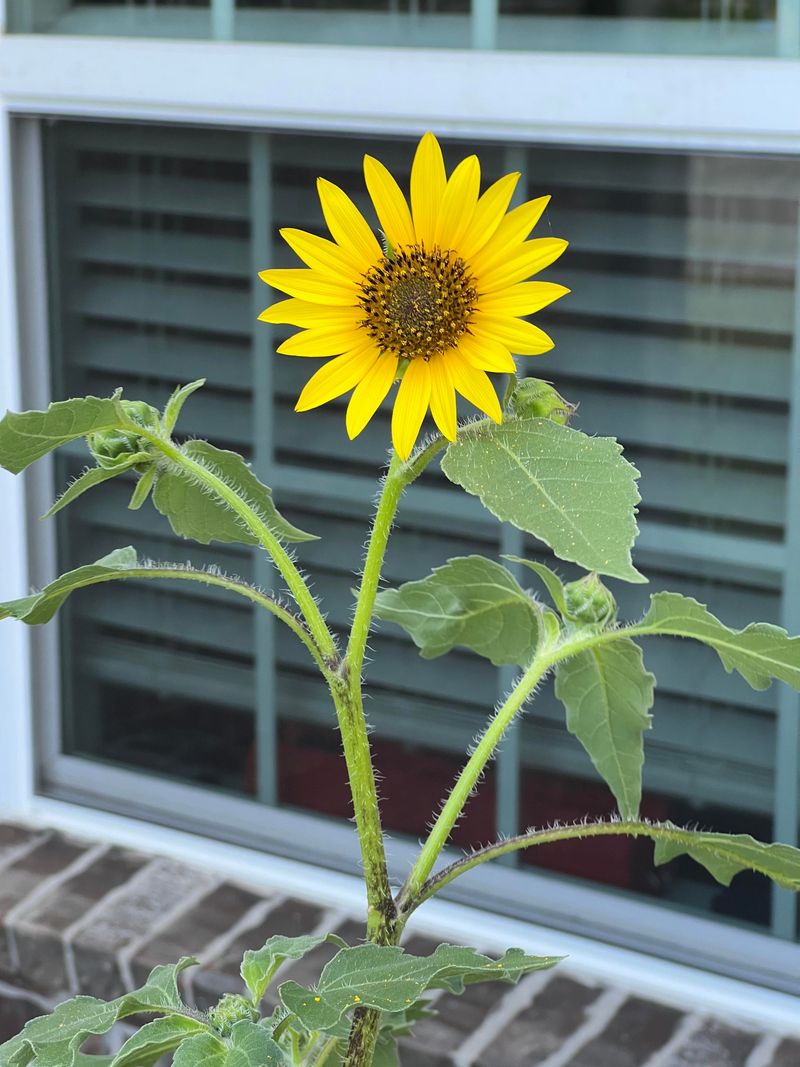
Nothing says summer is almost here quite like a row of sunflowers standing tall in the garden. These iconic flowers are one of the most satisfying plants to grow, especially for kids and first-time gardeners.
You plant a small seed, and weeks later you are looking up at a flower that can tower over your head.
California’s long, sunny days are basically perfect for sunflowers. They need full sun and warm soil to thrive, and most parts of the state deliver exactly that from spring through summer.
Plant the seeds directly in the ground now and they will be blooming beautifully by late spring or early summer depending on your location.
Sunflowers are not just pretty. They are also incredibly useful.
Birds love the seeds, so leaving a few spent flower heads in place at the end of the season gives local wildlife a natural food source. The tall stalks also provide a bit of shade for lower-growing plants nearby.
Choose a spot with good drainage and plenty of space, since some varieties spread out as they grow. There are also smaller, multi-branching varieties if you want more blooms in a compact space.
Water deeply but infrequently once established. Sunflowers are surprisingly drought-tolerant once their roots get going, which is a real bonus in water-conscious California gardens.
5. Nasturtiums
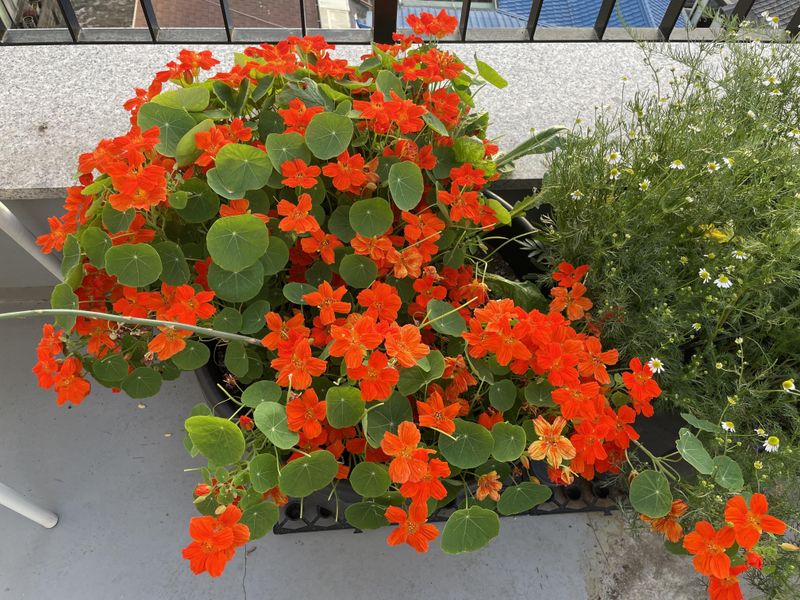
Nasturtiums are one of those plants that make you wonder why more people do not grow them. They are fast, colorful, easy, and completely edible.
Yes, you can eat the flowers and the leaves. They have a peppery, slightly tangy flavor that works great in salads and as a garnish on all kinds of dishes.
In California, nasturtiums thrive in spring when the temperatures are mild and pleasant. They actually prefer poorer soil, which means you do not need to do much prep work before planting.
Too much fertilizer and they will grow lots of leaves but fewer flowers, so less really is more with this plant.
The flowers come in warm shades of orange, red, and yellow, and they have a trailing habit that looks gorgeous spilling over the edges of raised beds, containers, or garden walls. They also attract aphids away from other plants, acting as a kind of natural trap crop to protect your more sensitive flowers and veggies.
Nasturtiums are great for gardeners who want quick results. They germinate fast, often within a week, and start blooming not long after.
Plant them in a sunny spot, water them occasionally, and step back. They practically take care of themselves, which is exactly the kind of plant a busy California gardener needs in their corner.
6. California Poppies
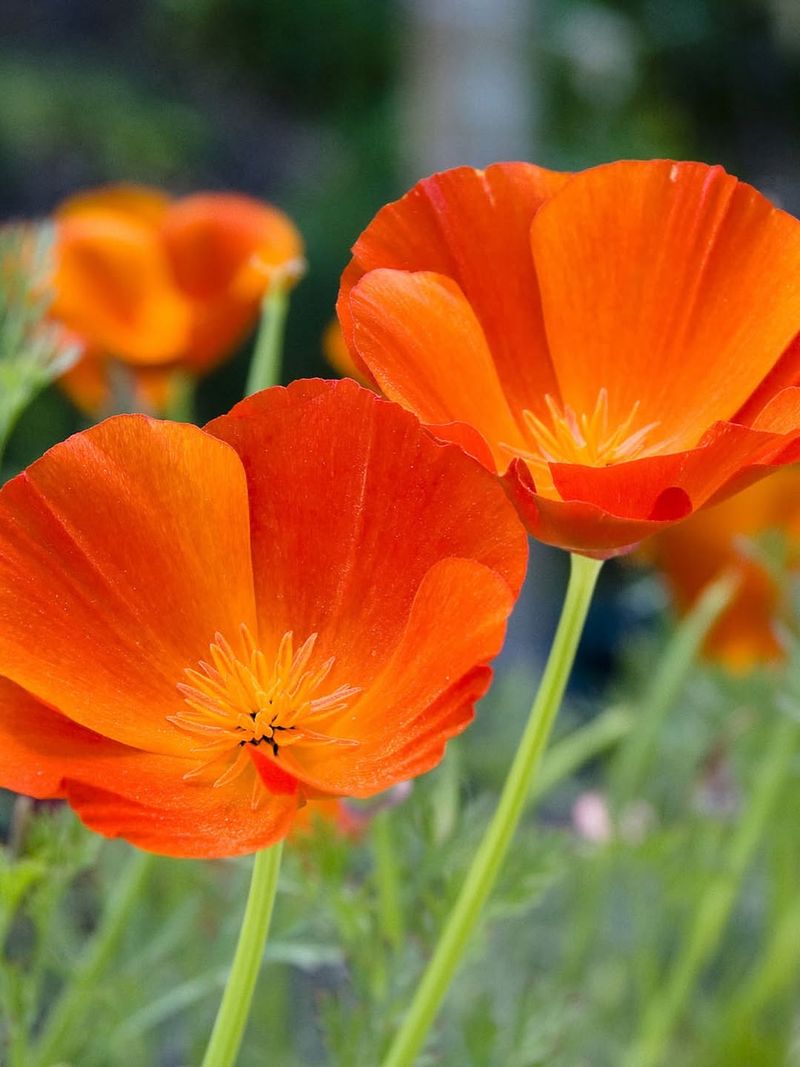
As the official state flower of California, the California poppy holds a special place in every local garden. Those vivid orange blooms are practically a symbol of the state itself.
You have probably seen them carpeting hillsides along California highways in spring, putting on a show that stops traffic in the best possible way.
Growing California poppies is almost foolproof. They are native to the state, which means they are perfectly adapted to the local soil, rainfall patterns, and sunshine.
They are drought-tolerant, deer-resistant, and they reseed themselves year after year once established. That means more flowers with less work every single spring.
Scatter the seeds directly on the soil surface in a sunny spot and lightly press them down. Do not cover them too deeply since they need light to germinate.
They prefer well-draining, even sandy soil and do not like being overwatered. The drier conditions of California actually suit them perfectly.
Beyond their beauty, California poppies attract bees and other beneficial insects that help your whole garden stay healthy and productive. They also close up at night and on cloudy days, which is a fun little quirk that kids love to observe.
Plant them in masses for the biggest visual impact, and enjoy the wild, natural look they bring to any outdoor space in spring.
7. Lavender
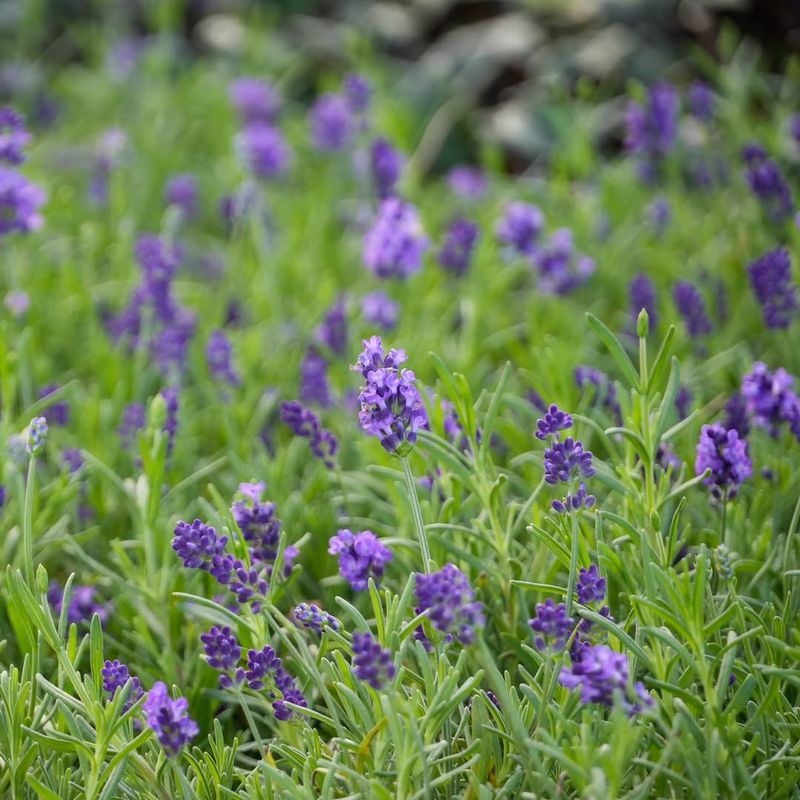
The moment lavender blooms, your whole garden smells incredible. This fragrant, purple-spiked plant is one of the most beloved choices for California gardens, and for good reason.
It loves the warm, dry climate that much of the state provides and looks stunning whether planted in rows, borders, or large containers on a sunny patio.
Lavender is a Mediterranean plant by origin, which means it was practically made for California’s climate. It thrives in full sun, prefers well-draining soil, and handles dry spells with ease once it is established.
In fact, overwatering is one of the few things that can cause problems for this plant, so a light touch with the hose goes a long way.
Beyond the visual appeal, lavender is a powerhouse for pollinators. Bees go absolutely wild for it, and having lavender in your garden helps support local pollinator populations throughout the spring and summer months.
It also keeps certain pests away, making it a smart companion plant near vegetables and herbs.
Harvest the flower spikes when they are just starting to open and hang them upside down to dry. Dried lavender is wonderful in sachets, homemade soaps, or simply displayed in a vase.
There are several varieties that do especially well in California, including Spanish lavender and English lavender, so ask your local nursery which one suits your specific region best.
8. Salvia
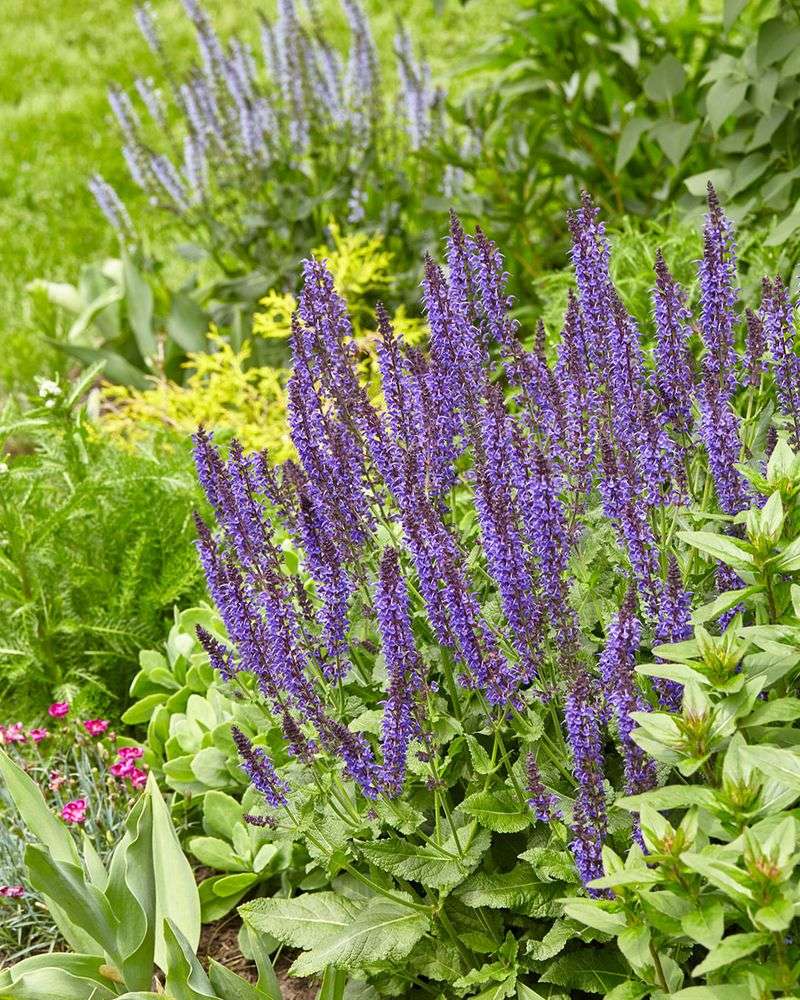
Salvia is one of those plants that garden designers reach for again and again, and once you grow it yourself you will understand why. The upright flower spikes come in rich shades of red, purple, blue, and pink, and they create a bold, structured look that works beautifully in both formal and casual garden styles.
California gardeners have a lot of salvia options to choose from. There are native California salvias like Salvia clevelandii, which is perfectly adapted to dry, sunny conditions, as well as ornamental varieties that bring a splash of tropical color to the spring garden.
Many varieties are perennials in California’s mild climate, meaning they come back year after year without replanting.
Hummingbirds are absolutely drawn to salvia, particularly the red-flowering varieties. If you have ever wanted to attract these tiny, fascinating birds to your yard, planting a few clumps of salvia near a window or seating area is one of the most effective strategies around.
Salvia is low-maintenance once established. It handles heat and drought well, which makes it ideal for water-conscious gardeners throughout California.
Plant it in full sun with good drainage and give it room to spread. Trim it back lightly after the first bloom flush and it will reward you with a second round of flowers later in the season, keeping your garden looking fresh and full of life.
9. Petunias
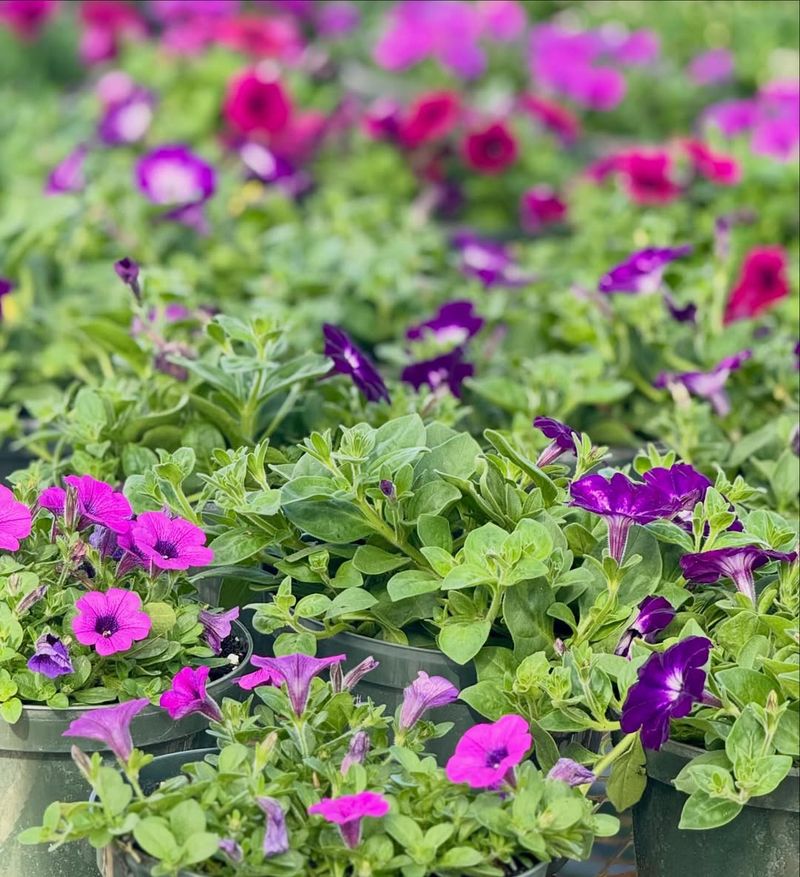
Petunias are a classic for a reason. They are cheerful, long-blooming, and incredibly versatile.
You can plant them in the ground, in raised beds, in window boxes, or in hanging baskets, and they will look great in every single situation. Their trumpet-shaped flowers come in practically every color, including bi-colors and ruffled varieties that look almost too pretty to be real.
Spring is the ideal time to get petunias going in California. They love warm days and mild nights, which is exactly what the California spring delivers across most of the state.
They do well in full sun and appreciate regular watering, though the soil should drain well so roots do not sit in standing water.
One thing many gardeners overlook is fertilizing petunias. These plants are heavy feeders, meaning they use up nutrients quickly as they grow and bloom.
A balanced liquid fertilizer every couple of weeks will keep them producing flowers generously throughout the season. Without it, they can start to look a bit tired and sparse by midsummer.
Petunias also respond really well to pinching. When a stem gets long and leggy, pinch it back to a leaf node and new branching will follow within a week or two.
This simple habit keeps the plant bushy, full, and covered in blooms all spring and summer long. They are genuinely one of the most rewarding flowers you can grow in a California garden.
10. Sweet Alyssum
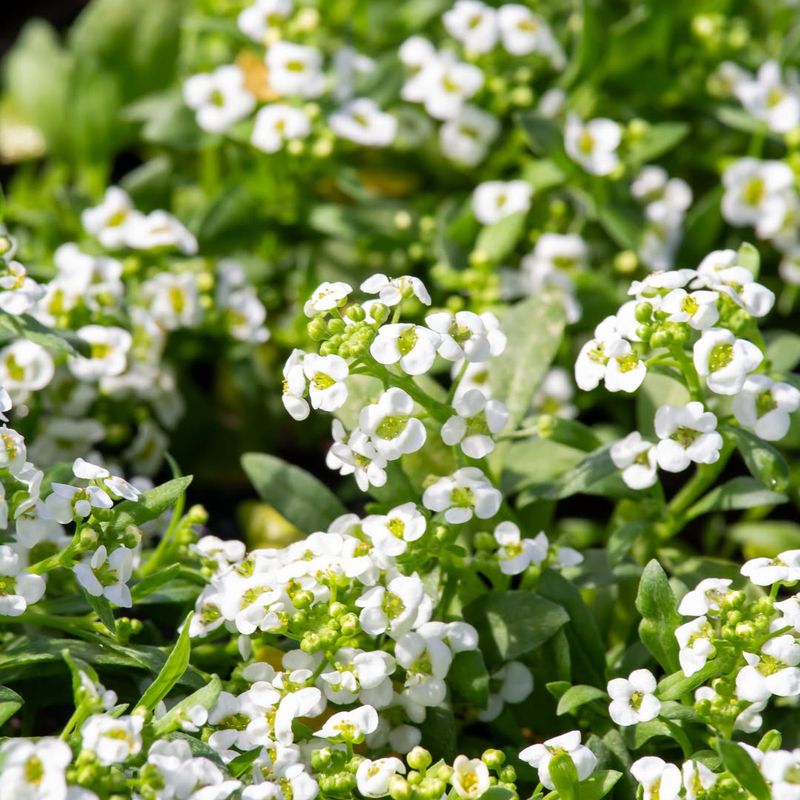
Sweet alyssum is one of those quiet overachievers in the garden world. It does not demand attention, but once it starts blooming you will notice it immediately.
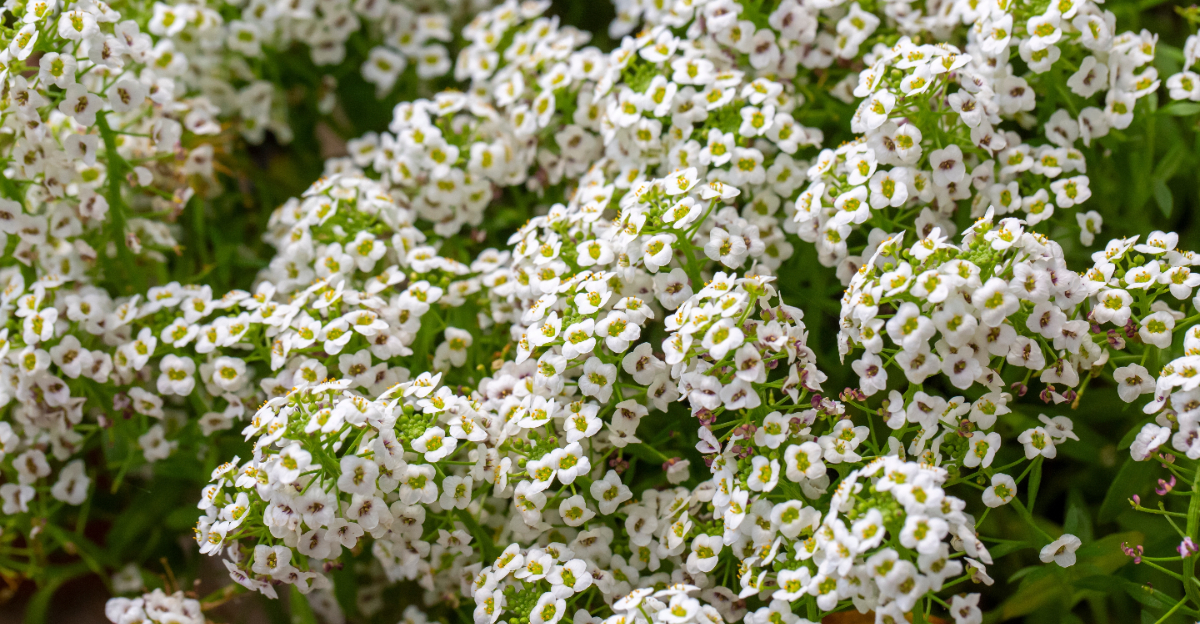
The tiny clusters of white, pink, or purple flowers hug the ground and release a soft, honey-like fragrance that is especially noticeable on warm California afternoons.
This low-growing plant is perfect for filling in the edges of garden beds, covering bare soil between taller plants, or spilling over the sides of containers. It creates a soft, cottage-garden look that pairs beautifully with bolder flowers like zinnias, marigolds, and salvia.
Think of it as the finishing touch that pulls a garden design together.
Sweet alyssum is also a magnet for beneficial insects. Hoverflies and parasitic wasps, which are natural predators of common garden pests, are especially attracted to its small, open flowers.
Having alyssum in your California garden is like having a built-in pest control system that also smells amazing.
It grows quickly from seed and can handle light frost, making it one of the earliest flowers you can plant in spring. Sow seeds directly in the garden or start them indoors a few weeks before your last frost date.
Once established, sweet alyssum often reseeds itself, coming back on its own each spring. That kind of effortless reliability is something every California gardener can appreciate.