Ohio Plants That Don’t Actually Help Cardinals (Even Though Many People Think They Do)

You might have a yard overflowing with vibrant blooms, buzzing pollinator magnets, and bird-friendly shrubs, yet still find your local cardinals are nowhere to be found.
It is a common frustration for Ohio gardeners, and the reason is simpler than you think: you are designing for the wrong guests.
A plant that is a five-star resort for hummingbirds or bees might be completely invisible to the bold red birds you are actually hoping to see near your patio.
Northern Cardinals have specific tastes that don’t always align with the typical “pollinator garden” aesthetic.
In Ohio, they prioritize dense thickets for safety, reliable seeds for winter, and insect-rich foliage for raising their young.
That means a flower bed packed with showy nectar blooms might look like a wildlife paradise while offering absolutely nothing the cardinals actually need.
If you want to turn your backyard into a cardinal sanctuary, it is time to rethink your planting strategy and swap out those “miss-the-mark” favorites for the habitat these birds truly crave.
1. Cardinal Flower Helps Hummingbirds More Than Cardinals
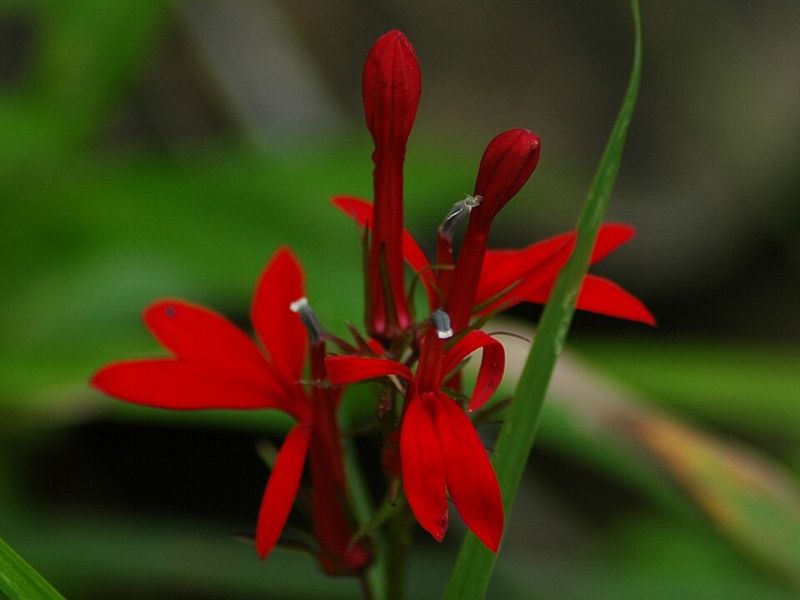
Few plants cause more confusion at Ohio garden centers than this one. The name alone makes people assume it was made for Northern Cardinals, but the tubular shape of each bright red bloom tells a different story.
Those long, narrow flowers are perfectly designed for hummingbirds, whose slender bills can reach the nectar deep inside.
Northern Cardinals have short, thick, cone-shaped bills built for cracking open seeds, not for probing narrow tubes. A cardinal visiting a cardinal flower would find almost nothing to eat.
The plant produces very little seed that cardinals can access, and it does not offer the dense, shrubby cover that cardinals prefer for nesting or shelter.
In Ohio, this native plant grows beautifully along stream edges and in rain gardens, and it genuinely supports hummingbirds and certain long-tongued bees. Keeping it in a pollinator garden makes good sense.
Just do not expect it to draw cardinals to your yard in any meaningful way.
If supporting cardinals is the goal, pairing this plant with native shrubs like viburnums or serviceberries nearby would do far more for the birds with the bright red plumage Ohio gardeners love to see at their feeders.
2. Cardinal Climber Helps Pollinators More Than Cardinals
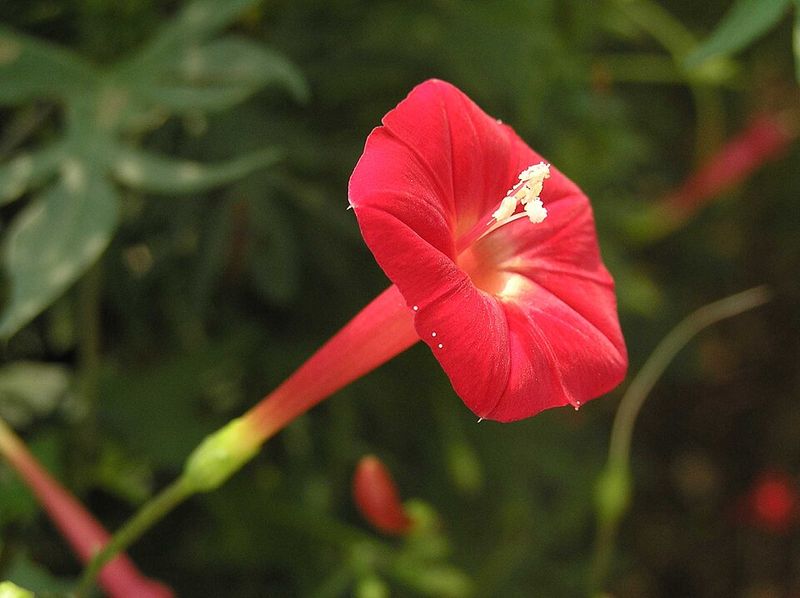
Gardeners who spot this vine at a nursery and read its name on the label often toss it into the cart thinking they have found a cardinal magnet.
Cardinal climber is a fast-growing annual vine with striking star-shaped red flowers, and it looks like something a backyard bird enthusiast would plant on purpose.
The reality is a bit more complicated.
Much like cardinal flower, the blooms on cardinal climber are tubular and nectar-rich, making them far better suited to hummingbirds and certain butterflies than to Northern Cardinals.
Cardinals are seed eaters at heart, and a vine covered in small tubular flowers offers very little in the way of accessible seeds or dense protective cover.
Your Ohio Garden Changes Every Week. Your Plan Should Too.
Gardening in Ohio changes quickly throughout the season. Every Friday you’ll receive a simple weekly plan showing exactly what to plant, prune, fertilize, harvest, and protect so you never miss the right timing.
Cardinal climber does have genuine garden value. It grows quickly, covers fences and trellises with color, and supports pollinators during Ohio’s warm summer months.
But if a gardener is specifically trying to help cardinals, this vine will not move the needle much. Cardinals need plants that produce seeds they can crack open, berries they can swallow whole, or dense branching structure where they can hide and nest safely.
A vine draped over a fence, while beautiful, simply does not check those boxes for Ohio’s most recognizable backyard bird.
3. Bee Balm Helps Pollinators More Than Cardinals
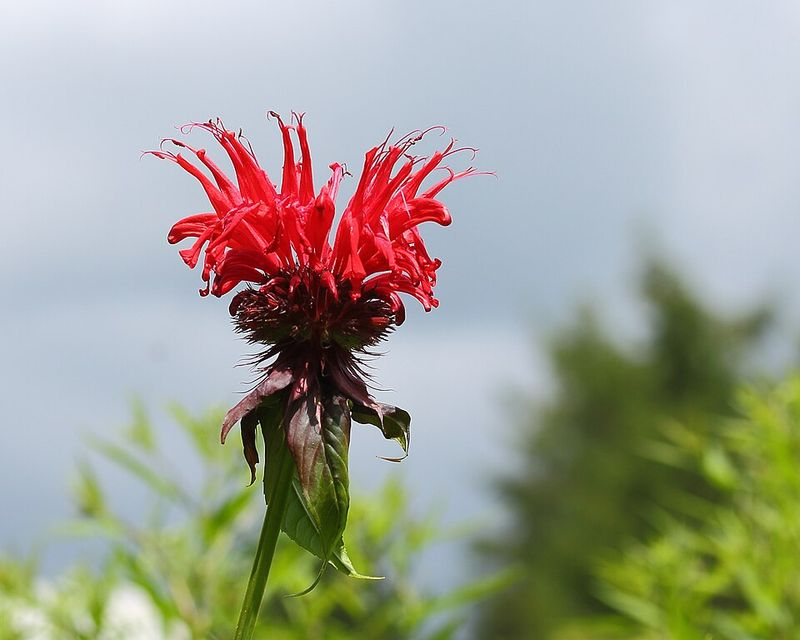
Bee balm has earned a well-deserved spot in Ohio native plant gardens, and it is genuinely one of the better choices for supporting pollinators and hummingbirds.
The shaggy, colorful blooms attract bumblebees, native bees, and ruby-throated hummingbirds in impressive numbers throughout summer.
Many Ohio gardeners assume that because it draws so much wildlife activity, it must be helping cardinals too.
Cardinals, though, are not especially drawn to bee balm. The plant’s flowers do not produce seeds that cardinals can easily access, and the plant’s open, herbaceous structure does not offer the dense cover or sheltered perching spots that cardinals seek.
Cardinals are more cautious birds than many people realize, and they tend to favor thick shrubs and tree edges over open garden beds.
Bee balm also spreads aggressively in Ohio gardens, which can crowd out other plants that might otherwise provide better cardinal habitat. For pollinators and general biodiversity, it earns high marks.
For gardeners focused on cardinals, large patches of bee balm may not be the best use of space. Native berry-producing shrubs and denser plantings offer the layered cover cardinals use more often in Ohio.
4. Ornamental Salvia Helps Hummingbirds More Than Cardinals

Walk through almost any Ohio garden center in late spring and you will find flats of ornamental salvia stacked high near the entrance.
These plants are popular for good reason: they are colorful, easy to grow, and absolutely beloved by hummingbirds.
The long tubular flower spikes are practically a landing strip for ruby-throated hummingbirds passing through Ohio.
For Northern Cardinals, though, ornamental salvia offers very little. The tubular flowers do not produce seeds in quantities that cardinals can use, and many hybrid varieties are bred to be sterile or near-sterile, meaning seed production is minimal by design.
Cardinals need calorie-dense seeds with hard shells they can crack open using their powerful bills, not nectar tucked inside narrow floral tubes.
Some gardeners plant large swaths of ornamental salvia hoping to create a lively backyard scene, and they do get activity, mostly from hummingbirds, bees, and butterflies.
Cardinals may perch nearby, but they are likely responding to other features in the landscape rather than the salvia itself.
In Ohio, choosing native plants like purple coneflower varieties that retain their seed heads, or planting native grasses that produce accessible seeds, would do considerably more to support cardinals than even the most impressive salvia display.
5. Butterfly Bush Does Little For Cardinals
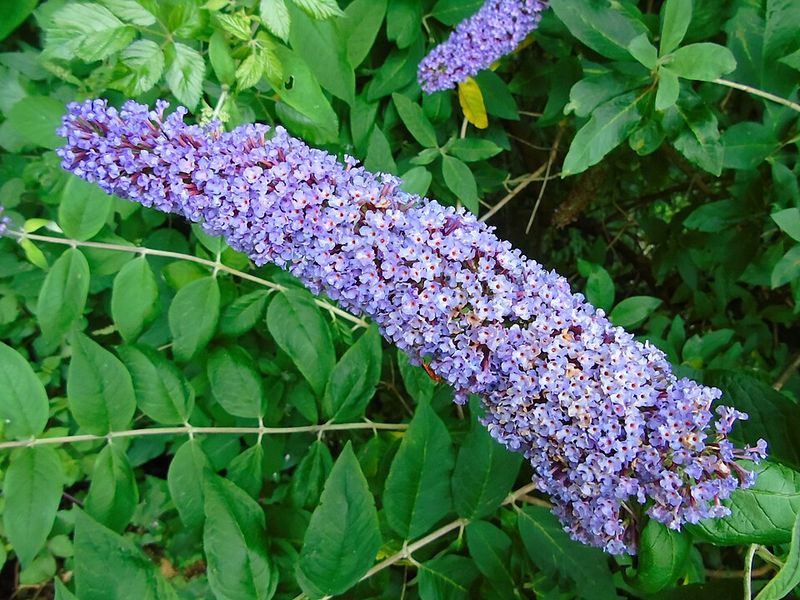
Butterfly bush is one of the most commonly sold shrubs at Ohio garden centers, and its ability to attract butterflies is genuinely impressive on warm summer afternoons.
The long, fragrant flower clusters draw painted ladies, monarchs, and swallowtails in numbers that can feel almost magical.
Many gardeners assume that any plant pulling in that much wildlife must be helping cardinals as well.
The reality is a little different. Butterfly bush can attract adult butterflies with nectar, but it still falls short as a strong cardinal plant.
Northern Cardinals rely heavily on seeds, fruits, insects, and dense woody cover, and butterfly bush does not offer the same kind of food and shelter value as berry-producing native shrubs or layered thickets.
Its branching habit may look shrubby from a distance, but it is not one of the better choices for the dense, protected cover cardinals often use for nesting and retreat.
There is another reason to be cautious with it in Ohio. Extension guidance notes that butterfly bush is potentially invasive in Ohio, and older varieties can seed prolifically.
That means it can spread in ways that compete with native plants that do far more for birds and insects over time. For butterfly watching, it can still be showy and busy.
For cardinals, though, native viburnums, dogwoods, hawthorns, and other fruiting shrubs are much more useful long-term choices.
6. Lavender Offers Little For Cardinals
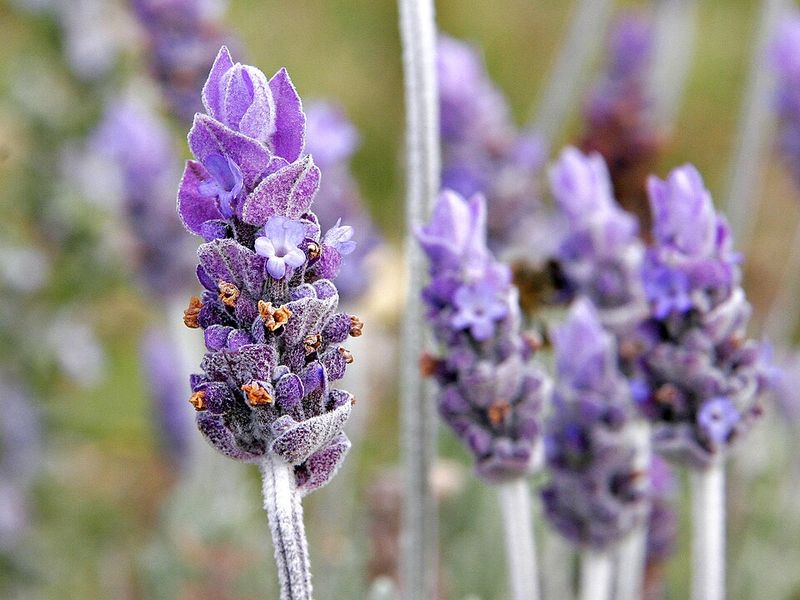
Lavender has a devoted following among Ohio gardeners who love its fragrance, its tidy appearance, and its ability to attract bees and butterflies during the growing season. It photographs beautifully, it dries well for indoor use, and it genuinely supports pollinators.
But for Northern Cardinals, lavender is essentially a non-event.
Cardinals are not nectar feeders, so the fragrant flowers that bees find so irresistible hold no food value for them.
Lavender also produces very little in the way of accessible seeds, and the plant’s low, mounded form does not provide the kind of tall, dense, branching shelter that cardinals look for when choosing where to spend time in a yard.
Cardinals tend to approach feeders and garden spaces from elevated perches in shrubs or trees, and lavender simply does not fill that role.
In Ohio’s climate, lavender can also be finicky, struggling through harsh winters and requiring well-drained soil that many Ohio yards do not naturally provide.
The effort involved in keeping it healthy might be better directed toward native plants that cardinals genuinely use.
Spicebush, native hawthorns, or native viburnums all offer food and shelter value that lavender cannot match. Lavender is a fine plant for a sensory garden or a pollinator bed, but it is not a tool for supporting Ohio’s Northern Cardinals.
7. Pollenless Sunflowers Offer Fewer Seeds For Birds
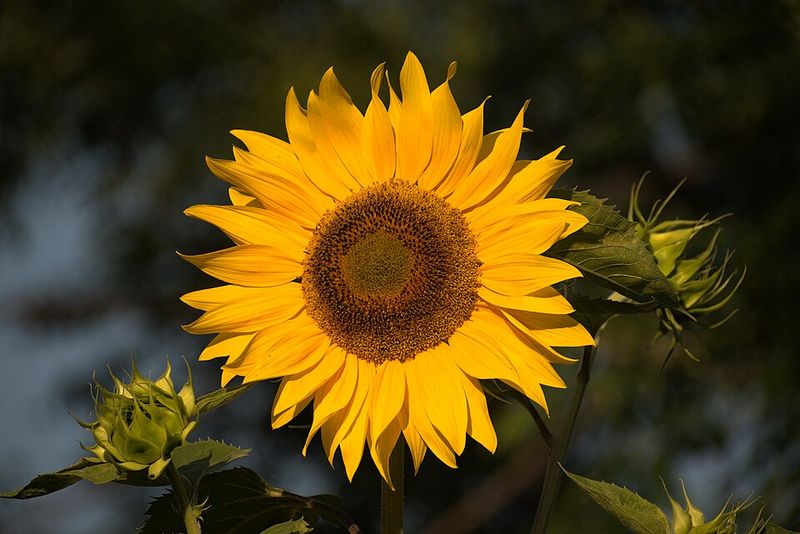
Sunflowers have a long and well-earned reputation as one of the best plants for attracting seed-eating birds, and Northern Cardinals genuinely love sunflower seeds. Standard sunflowers are a strong choice for Ohio wildlife gardens.
The confusion begins when gardeners reach for pollenless sunflower varieties, which have become popular because they keep patios, cut flowers, and table settings cleaner.
That convenience comes with a tradeoff. Pollenless sunflowers are bred not to shed pollen, and Extension-based guidance notes that some are not likely to produce seeds or feed pollinators.
Another Extension response makes the point more carefully: pollenless sunflowers are still capable of producing seeds, but if you grow only pollenless varieties, seed set is less likely because there is no nearby pollen source.
In other words, they are not truly seedless, but they are a less dependable way to feed seed-eating birds than standard pollen-shedding sunflowers.
That matters for cardinals. If your goal is to grow flowers that leave behind a solid supply of seeds, standard or open-pollinated sunflowers are the better bet.
They also do more for pollinators while the flowers are in bloom.
Pollenless types still have a place in the garden, especially for bouquets and tidy floral displays, but they are not the strongest sunflower choice if you want the planting to pull double duty for Ohio cardinals and the broader backyard food web.
8. Double Coneflowers Offer Less Seed For Cardinals
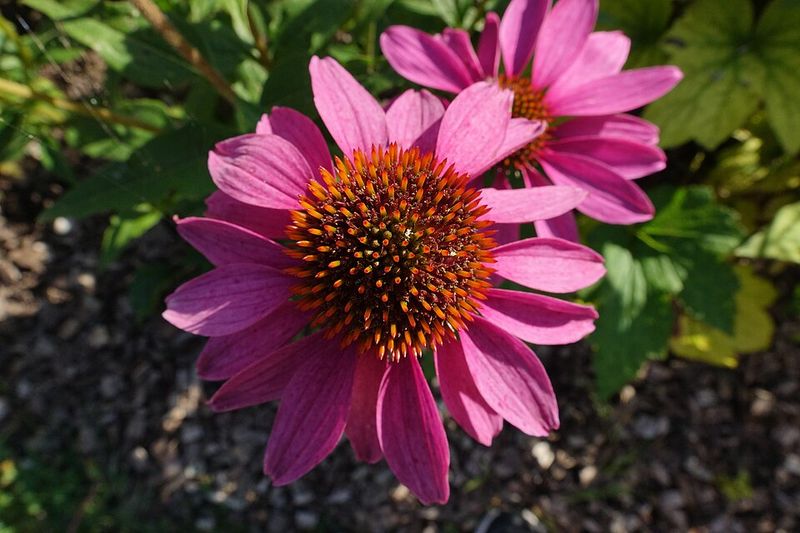
Standard purple coneflower is one of the most recommended native plants for Ohio wildlife gardens, and for good reason.
When the petals drop in late summer and fall, the spiky seed heads become a reliable food source for goldfinches, chickadees, and yes, Northern Cardinals.
Watching a cardinal work over a dried coneflower head on a cold Ohio morning is a genuinely satisfying backyard moment.
Double coneflower varieties, however, change the equation. These cultivars have been bred for extra layers of petals, giving the blooms a full, showy appearance that many gardeners find appealing.
The problem is that all those extra petals come at a cost: the central seed-producing cone is often reduced, deformed, or nearly absent in heavily doubled varieties.
A coneflower that cannot produce a proper seed head is not doing much for seed-eating birds like cardinals.
Double coneflowers may still attract some pollinators, though even that benefit is reduced compared to straight species plants.
For Ohio gardeners who want coneflowers that actually feed cardinals, choosing straight-species purple coneflower or minimally modified cultivars that retain a healthy central cone is the smarter move.
Letting the seed heads stand through winter rather than cutting them back in fall gives cardinals and other birds access to food during the months when natural resources in Ohio landscapes are at their lowest.