Why Is My Florida Star Jasmine Turning Brown? 7 Culprits And Easy Fixes
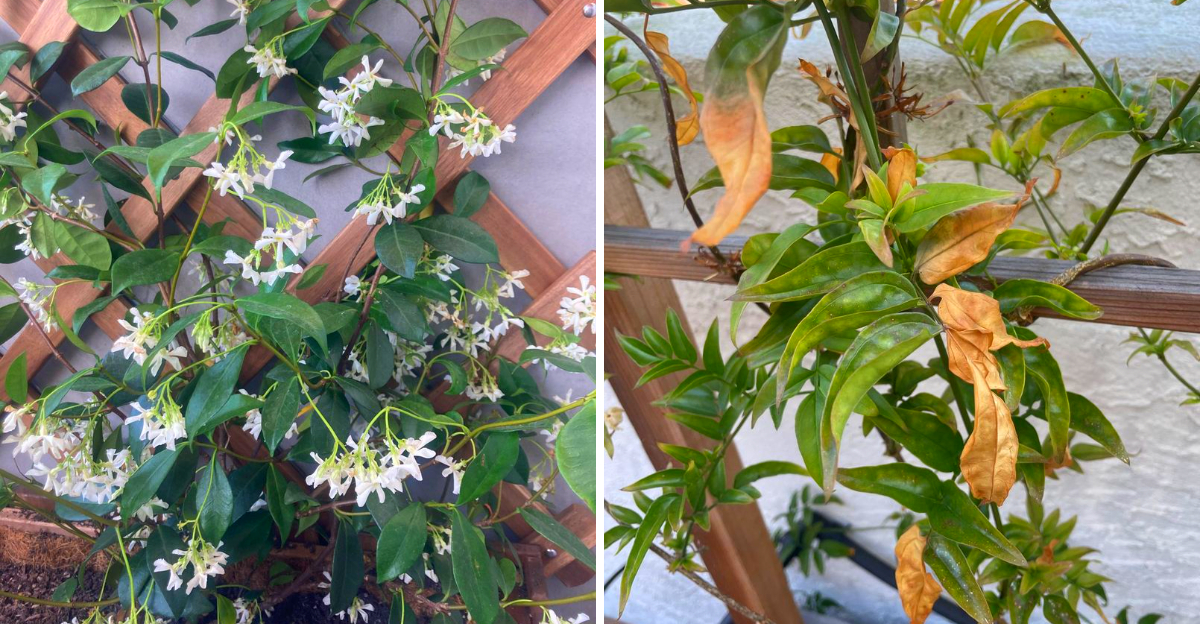
Is your prized star jasmine losing its glossy glow and starting to look crispy? It is a sight that hits any Florida gardener right in the gut.
You rely on that iconic, sweet fragrance to anchor your outdoor space, so when the leaves start turning brown, it is more than just an eyesore – it is a cry for help. Even the toughest jasmine vines can get pushed to their limit in our unique climate.
Between the relentless tropical sun, fast-draining sandy soil, and surprise cool snaps, these vines are constantly navigating a gauntlet of stressors.
Whether it is heat fatigue, a hidden nutrient gap, or a watering mistake, those brown leaves are just a symptom.
Let’s decode what your plant is really trying to tell you and how to restore that lush, green beauty.
1. Sun And Heat Stress Causes Leaves To Scorch
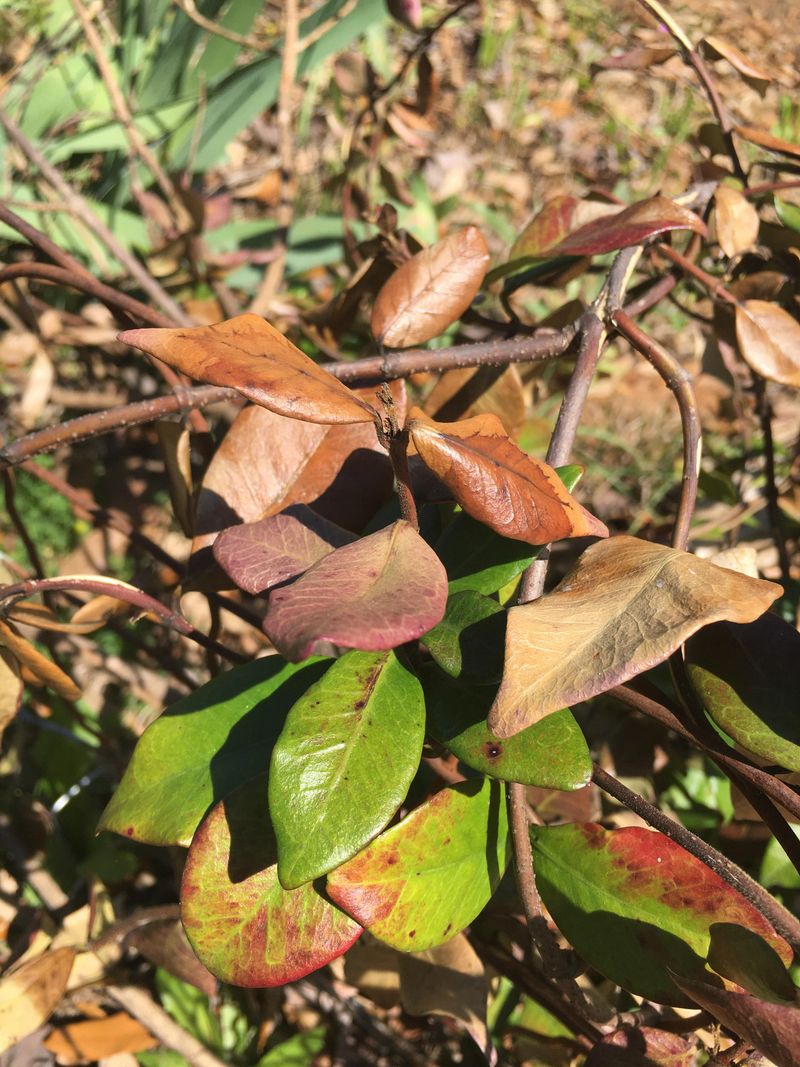
Florida summers are intense, and jasmine feels every bit of the heat. Leaves exposed to full sun, particularly on south-facing walls or near concrete patios, can develop scorched tips and edges.
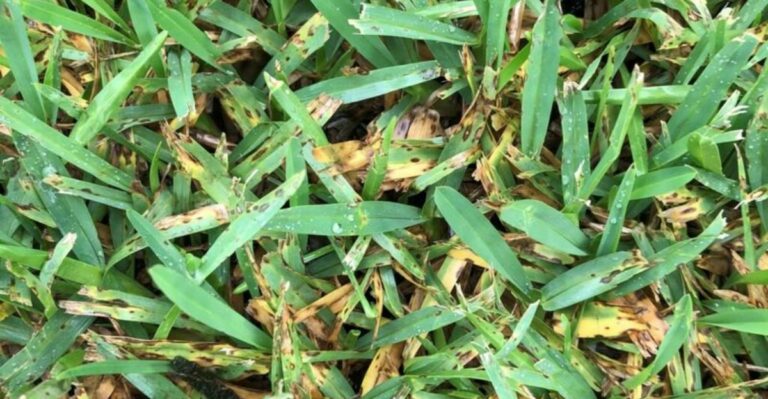
This happens when water loss from the leaves exceeds what the roots can supply, leading to browning that typically starts at leaf margins and can spread inward if stress persists.
Trachelospermum jasminoides, or star jasmine tolerates sun reasonably well, but sustained mid-day heat above 90°F can still stress the plant.
Container-grown jasmine can be moved to a partially shaded location, while in-ground plants benefit from nearby taller shrubs or temporary shade cloth during the hottest hours.
Mulching two to three inches around the base stabilizes soil temperatures, reduces moisture loss, and encourages healthier root function.
Watering deeply in the early morning helps roots absorb moisture before the heat peaks, while frequent soil checks ensure hydration is adequate.
Using light shade or creating filtered sunlight with other plants can prevent repeated scorching, which may otherwise lead to leaf drop or long-term stress.
Over time, protective measures – like consistent watering, strategic placement, and organic mulch – allow jasmine to thrive even in Florida’s bright subtropical climate.
Healthy roots and shaded areas contribute to glossy, vibrant foliage that can tolerate heat while still producing the vine’s signature fragrant blooms.
With attentive care, sun-stressed jasmine can recover quickly and maintain its beauty throughout the summer months.
2. Irregular Watering Leaves Jasmine Thirsty And Browning
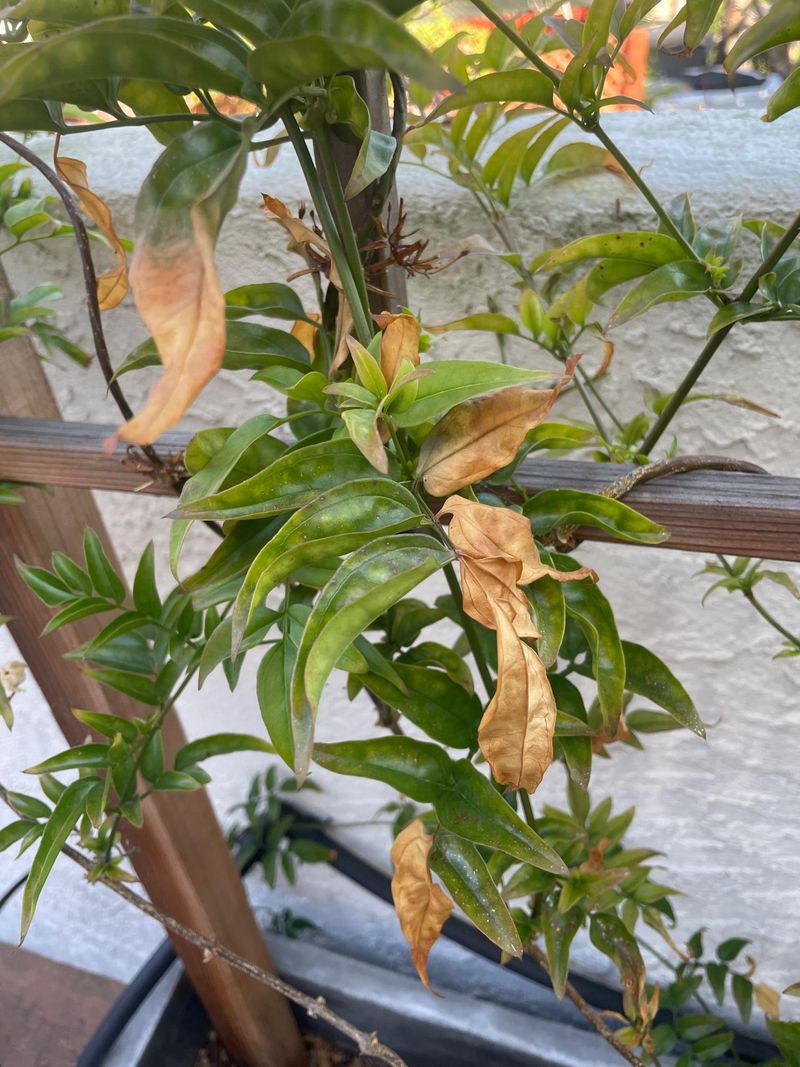
Florida’s summer rainfall is notoriously unpredictable, and jasmine roots can dry out even when it looks like the garden has received adequate moisture.
Sandy soils drain quickly, meaning water may not reach the deeper roots, leaving older leaves to brown while new growth survives.
Browning typically begins at leaf tips and spreads inward if the plant continues to experience moisture stress.
A consistent watering schedule is essential. Established jasmine benefits from deep watering once or twice weekly during dry spells, allowing water to reach the root zone rather than just moistening the surface.
Mulching two to three inches around the base slows moisture loss, moderates soil temperature, and improves overall root health.
Soil checks – pressing a finger one inch into the ground near the plant – provide a more reliable indicator than a calendar alone. Adjust irrigation frequency depending on rainfall and heat.
Your Florida Garden Changes Every Week. Your Plan Should Too.
Gardening in Florida changes quickly throughout the season. Every Friday you’ll receive a simple weekly plan showing exactly what to plant, prune, fertilize, harvest, and protect so you never miss the right timing.
Proper hydration also supports flowering and overall plant vigor, preventing browning that occurs when the vine is left thirsty.
By maintaining even moisture levels, Florida gardeners can prevent one of the most common causes of brown jasmine leaves.
Healthy roots and consistent watering encourage glossy foliage, vibrant blooms, and stronger resistance to heat and pests, helping the plant thrive in Florida’s subtropical climate.
3. Overwatering Or Poor Drainage Can Suffocate Roots
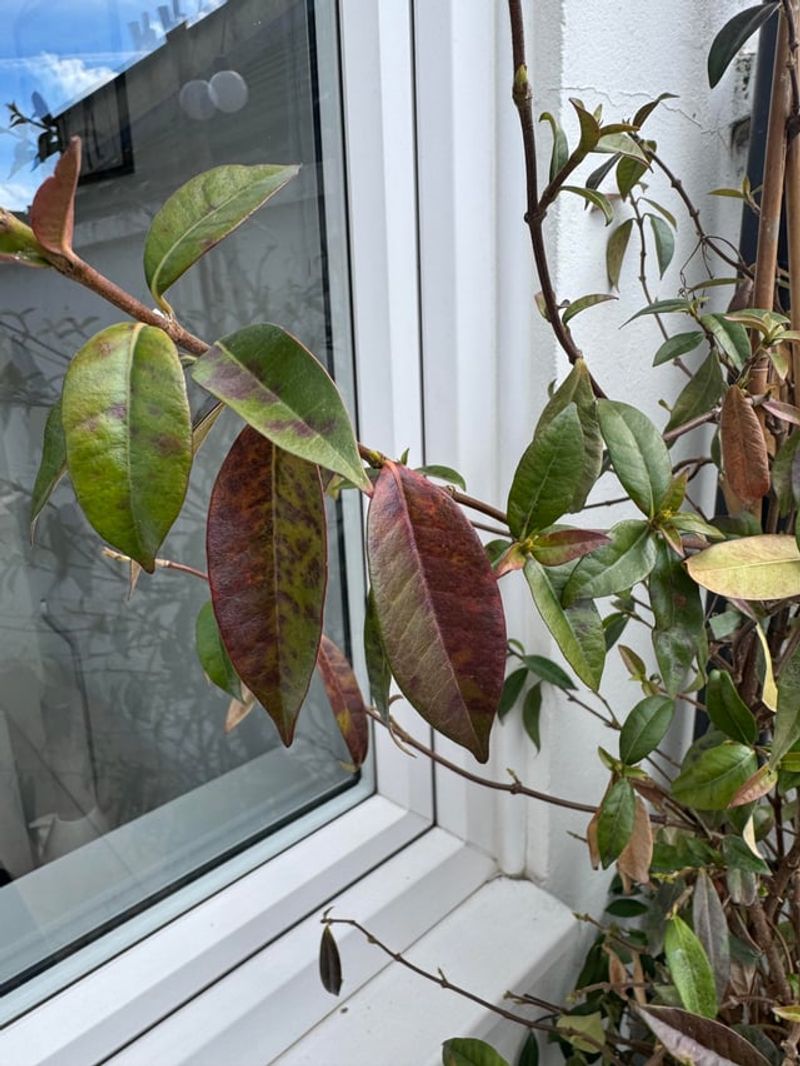
Too much water can be just as damaging as too little, especially in Florida’s sandy soils. Jasmine (Trachelospermum jasminoides) roots need oxygen to function properly, and standing water or poorly drained areas can quickly lead to root rot.
Symptoms above ground – yellowing, browning, or dropping leaves – can look like drought stress, which can confuse gardeners.
Florida’s heavy summer rains, coupled with low-lying planting areas or beds amended with organic material, can trap water unexpectedly. Jasmine planted in these spots is vulnerable because waterlogged roots cannot absorb oxygen or nutrients efficiently.
Over time, this stresses the plant and leads to browning leaves, stunted growth, and reduced flowering.
To prevent problems, raise the planting area slightly, mix coarse sand or perlite into the soil, and ensure the soil drains within an hour after a test watering.
Adjust irrigation frequency during Florida’s wet season and allow the top inch of soil to dry between waterings.
Monitoring soil moisture regularly and maintaining moderate, consistent hydration helps jasmine roots stay healthy and resilient.
With proper drainage and careful watering, jasmine can produce glossy leaves and vibrant, fragrant blooms even during Florida’s humid, subtropical summers.
Maintaining balance – avoiding both drought and waterlogged conditions – is key to preventing brown leaves caused by root stress and ensuring a lush, thriving vine.
4. Cold Or Frost Damage Turns Leaves Brown Overnight
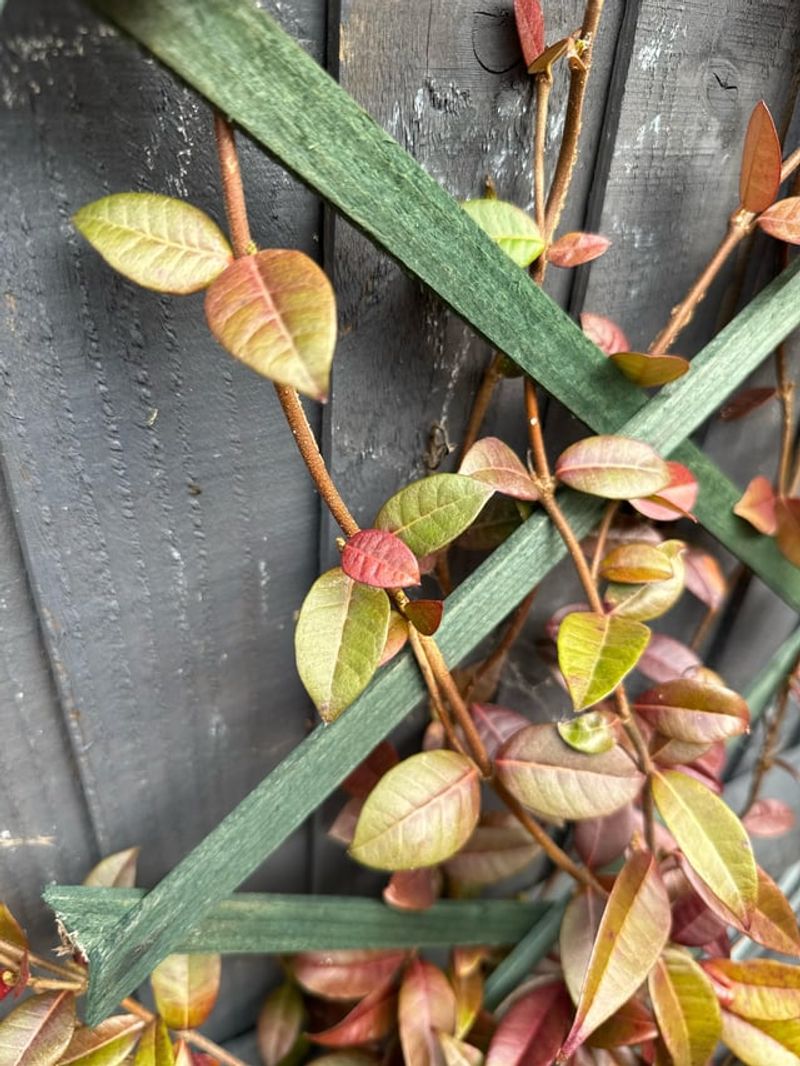
Although Florida is famous for its warmth, occasional cold snaps can stress jasmine vines.
Trachelospermum jasminoides is fairly hardy for a subtropical vine, but sudden temperature drops – especially in North and Central Florida – can damage tender new growth.
Even in South Florida, nights near 32–35°F occasionally occur in inland areas, which can cause leaf browning.
Cold injury often affects the newest leaves first, showing as limp, waterlogged, or papery brown foliage. Older, mature leaves may remain intact, providing some insulation to stems.
Protective measures like covering plants with frost cloth and adding a thick mulch layer at the base can minimize damage during brief freezes.
After the cold passes, resist pruning immediately. Damaged leaves help shield lower stems while the plant recovers.
Wait until nighttime temperatures are consistently above 45°F before trimming to encourage healthy regrowth. Jasmine typically responds quickly in Florida’s subtropical climate, pushing out new shoots and leaves within weeks.
By understanding the timing and impact of cold events, gardeners can avoid unnecessary pruning and preserve as much healthy foliage as possible.
With proper care and patience, jasmine will bounce back, producing vigorous new growth and resuming its characteristic glossy leaves and fragrant blooms.
5. Nutrient Deficiencies Leave Older Leaves Fading
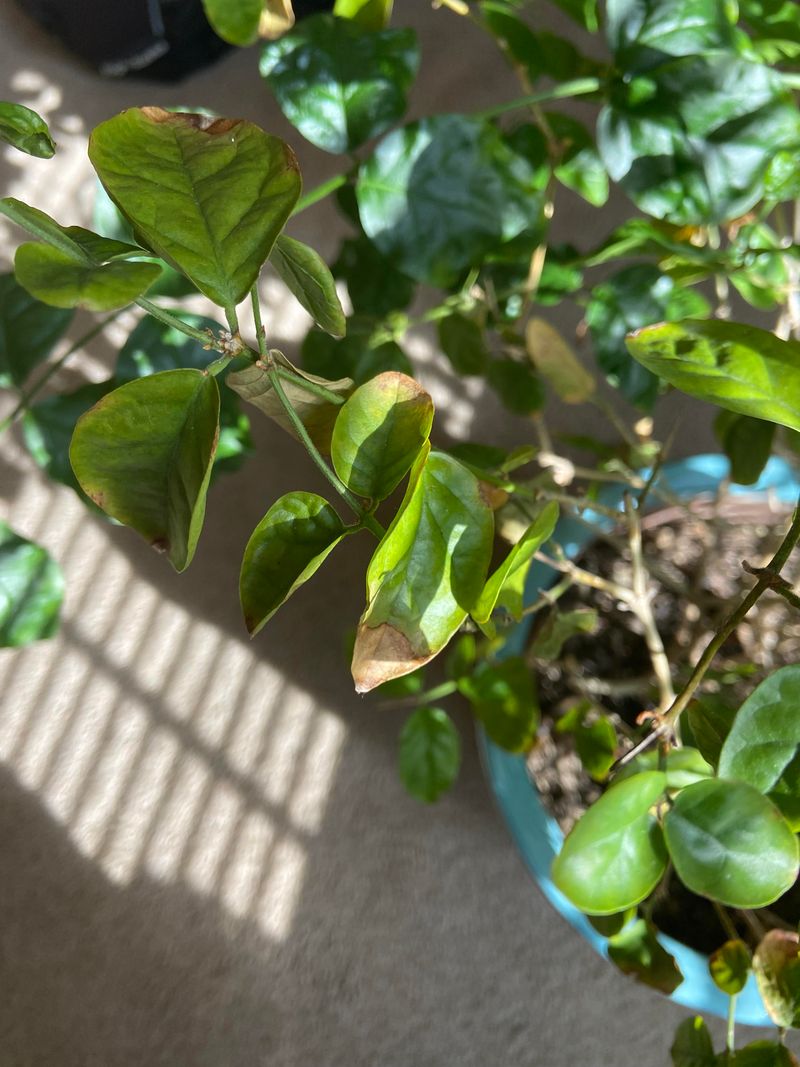
Florida’s sandy soils are naturally low in organic matter and nutrients, which can stress jasmine (Trachelospermum jasminoides) and cause browning leaves. Older foliage often shows symptoms first, as the plant prioritizes newer growth.
Potassium deficiency is a common culprit, causing scorched leaf edges, while magnesium shortages produce yellowing between veins before browning occurs. Iron deficiencies occasionally appear in alkaline soils, creating pale leaves with dark veins.
Using a balanced slow-release fertilizer formulated for flowering vines or broadleaf evergreens provides essential nutrients.
Including minor nutrients like magnesium, manganese, and iron addresses deficiencies common in Florida soils.
Avoid over-fertilizing, as excess nitrogen can trigger leaf burn or excessive leafy growth at the expense of flowering.
Performing a soil test through your local Florida Extension office helps identify exact nutrient needs for your garden.
Regular feeding combined with consistent watering encourages lush, glossy leaves and vigorous growth, reducing the likelihood of brown edges.
Proper nutrition also supports healthy flowering, allowing jasmine to maintain its fragrance and dense foliage throughout the subtropical growing season.
Monitoring soil nutrient levels and adjusting fertilization accordingly ensures jasmine thrives in Florida’s unique sandy soils, keeping leaves green and preventing browning caused by nutrient stress.
6. Pests And Diseases Attack Foliage And Tips
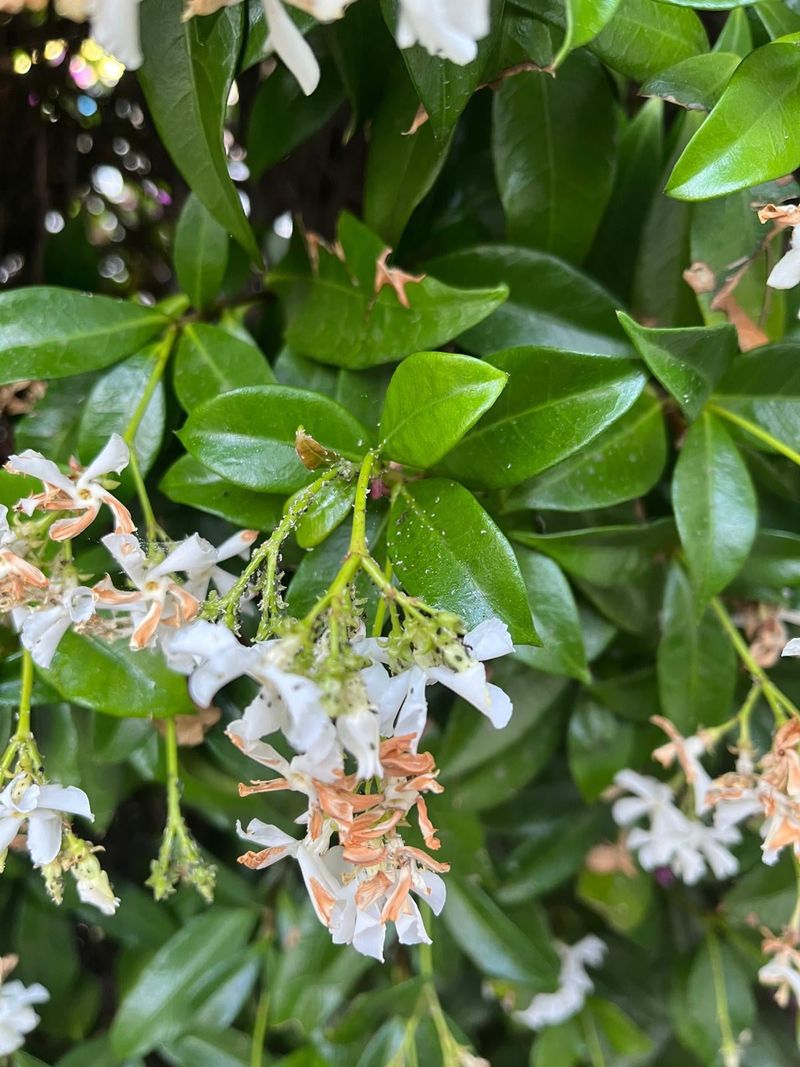
Florida’s warm, humid climate is ideal for insects and fungal pathogens that target jasmine. Common pests include spider mites, aphids, and scale insects, which feed on leaves and stems, leaving brown, stippled, or curled foliage.
These pests often attack tender new growth, leading to visible damage if not addressed promptly.
Fungal issues such as leaf blight and sooty mold also develop easily in Florida’s humid conditions. Sooty mold grows on the honeydew secreted by sap-feeding pests, blocking sunlight and stressing leaves further.
Early detection is essential – inspecting plants weekly, especially the undersides of leaves, helps prevent infestations from spreading.
Management includes strong water sprays to dislodge pests and applying insecticidal soap or neem oil in the cooler morning hours to reduce stress on the plant.
Thinning dense growth improves airflow, lowers humidity within the canopy, and reduces fungal risk.
Maintaining a clean, healthy environment also discourages recurring infestations.
With regular monitoring, proper pest management, and careful pruning practices, jasmine leaves stay glossy and healthy.
Protecting against pest and disease pressure in Florida’s subtropical climate is crucial for preventing browning leaves and ensuring consistent growth and flowering.
7. Natural Aging And Pruning Stress Affect Leaf Color
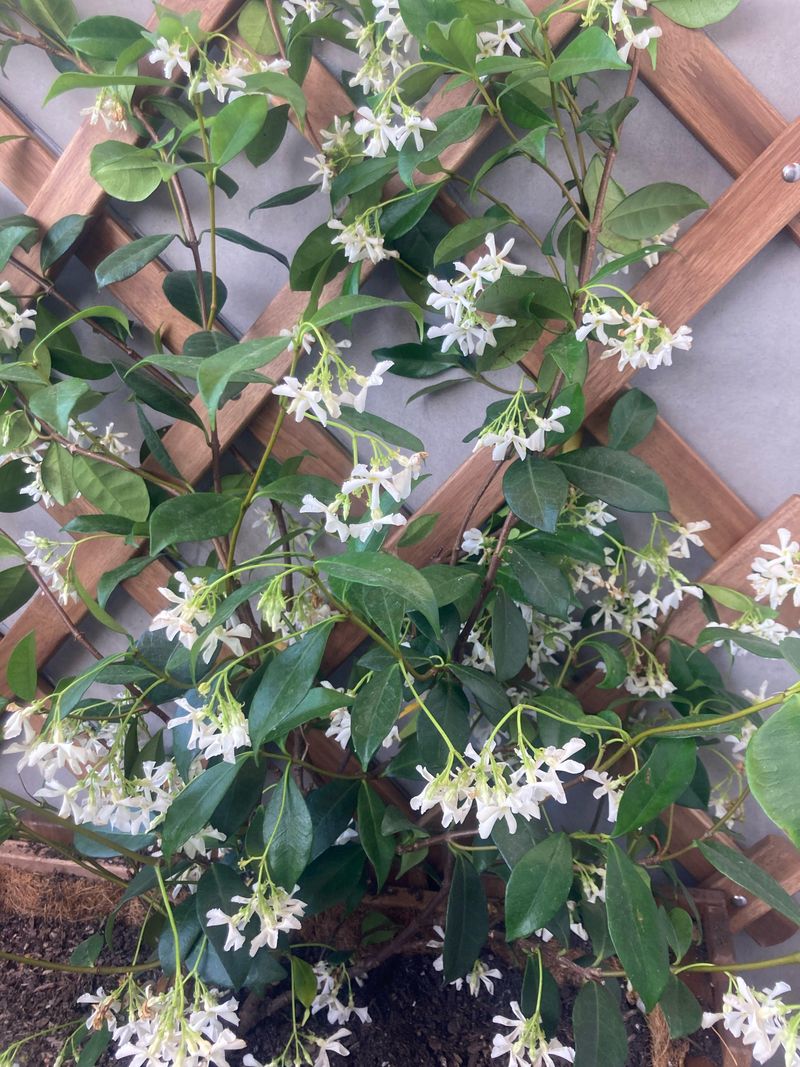
Not every brown leaf signals a problem. Jasmine naturally sheds older interior foliage as it redirects energy to new shoots.
During spring or early fall growth flushes, older leaves may yellow and brown before dropping. This is a normal renewal process and should not alarm gardeners.
Pruning can also temporarily stress the plant if done too aggressively or at the wrong time. Cutting too many leaves at once removes vital photosynthetic surfaces, leaving remaining foliage vulnerable to browning while the plant recovers.
In Florida, heavy pruning during hot, humid months exacerbates stress.
The best time to prune jasmine is after the main spring bloom fades, typically late spring, giving the plant a full growing season to push out new, healthy leaves.
Light shaping can be done at other times without causing significant stress, but careful attention to timing ensures new growth remains vigorous.
Observing leaf turnover and performing light clean-up of older brown leaves keeps jasmine tidy and encourages strong, glossy foliage. With patience and proper pruning, jasmine remains healthy, lush, and flowering throughout Florida’s subtropical year.