8 Best Native Florida Vines To Grow Along A Fence
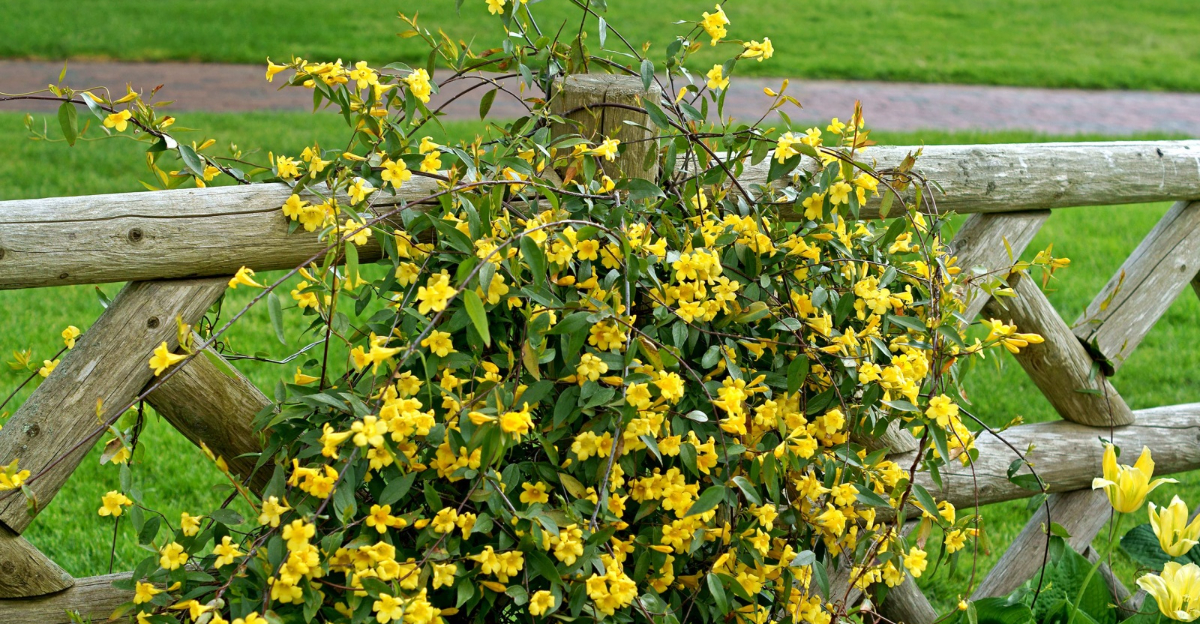
Let’s be honest. Most fences in Florida yards are not exactly exciting.
They do the job, mark the property line, and that is about it. A long stretch of plain wood or wire can feel a little dull in an otherwise vibrant landscape.
But that same fence can become one of the most beautiful parts of your yard with the right vines. Instead of staring at a flat barrier, imagine a living wall covered in lush leaves, twisting stems, and bursts of natural color.
Birds stop by, butterflies drift through, and suddenly the fence feels like part of the garden instead of something that divides it. Florida’s native vines are especially good at this.
Once they start climbing, an ordinary fence can quickly turn into something far more alive and interesting.
1. Coral Honeysuckle (Lonicera Sempervirens)
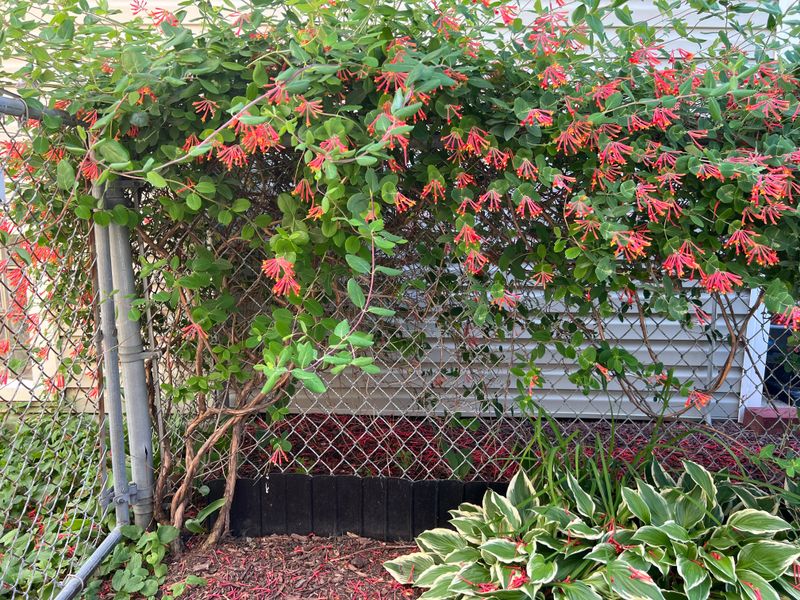
Bright tubular flowers in shades of red, orange, and sometimes yellow make this vine a magnet for hummingbirds throughout spring and summer. Unlike its invasive cousins, coral honeysuckle behaves beautifully in Florida landscapes, climbing gracefully without strangling everything in sight.
The blooms appear in clusters at the tips of the stems, creating bursts of color that stand out against dark green foliage.
This vine climbs by twining around supports, making it perfect for chain-link, wood picket, or wire fencing. It reaches about 10 to 15 feet in most settings, providing excellent coverage without overwhelming smaller structures.
The semi-evergreen leaves stay attractive most of the year in warmer parts of Florida, offering visual interest even between bloom cycles.
Full sun to partial shade works well, though more sun typically means more flowers. Hummingbirds visit constantly during peak bloom, and butterflies appreciate the nectar too.
Small red berries follow the flowers, providing food for songbirds in fall.
When planting along a fence, space plants about 5 feet apart and train the initial stems horizontally along the bottom rail to encourage fuller coverage. Once established, coral honeysuckle tolerates dry spells remarkably well, a valuable trait in Florida’s variable rainfall patterns.
Prune lightly after the main bloom period to shape growth and encourage fresh flowering stems for the next season.
2. Crossvine (Bignonia Capreolata)
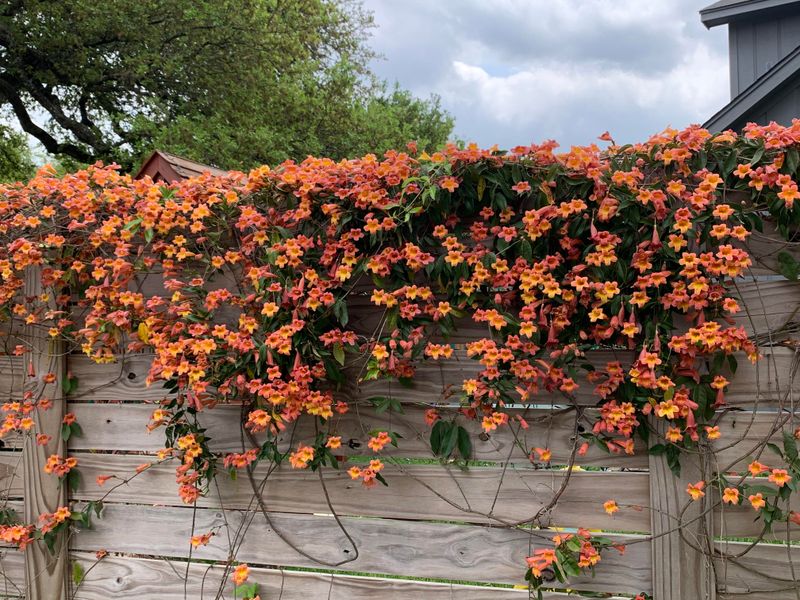
Few vines cover a fence faster or more spectacularly than crossvine when spring arrives in Florida. The clusters of orange-red tubular flowers appear in such abundance that they nearly hide the foliage, creating a stunning display that lasts for weeks.
Each bloom measures about two inches long, perfectly sized to attract hummingbirds that zip between flowers all day.
Vigorous growth is this vine’s signature trait, with stems that can extend 30 to 50 feet if given enough space and support. It climbs using tendrils that grip tightly to fences, arbors, and other structures without needing ties or training.
The evergreen to semi-evergreen leaves develop attractive burgundy tints during cooler months, adding winter interest to your fence line.
Full sun produces the most impressive flower show, though crossvine tolerates partial shade reasonably well. The rapid growth makes it ideal for quickly screening an unsightly fence or filling a bare vertical space.
Your Florida Garden Changes Every Week. Your Plan Should Too.
Gardening in Florida changes quickly throughout the season. Every Friday you’ll receive a simple weekly plan showing exactly what to plant, prune, fertilize, harvest, and protect so you never miss the right timing.
Wildlife benefits include nectar for hummingbirds and shelter for small birds within the dense foliage.
Plant crossvine at least 6 feet apart along your fence to allow room for its enthusiastic spread. Train young stems horizontally during the first year to build a framework that encourages even coverage from top to bottom.
In Florida’s warm climate, this vine may need occasional pruning to keep it within bounds, but that vigorous growth also means any mistakes recover quickly.
3. Carolina Jessamine (Gelsemium Sempervirens)
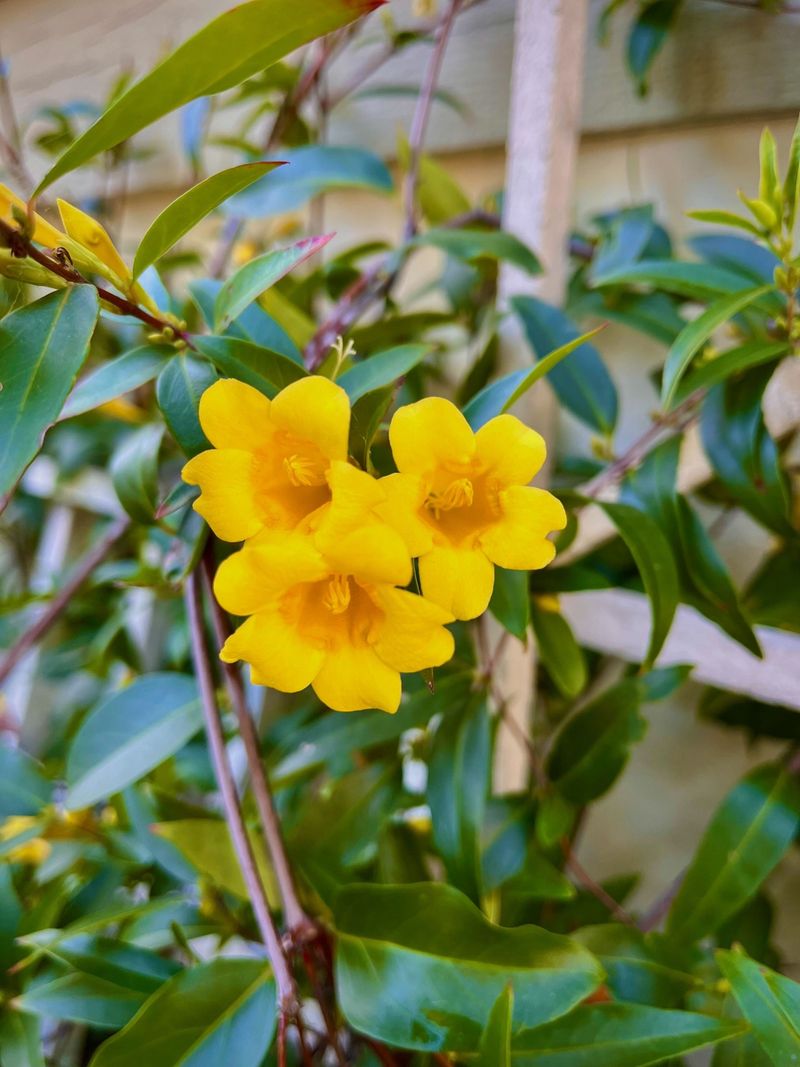
When late winter still feels cool and most gardens look tired, Carolina jessamine bursts into bloom with masses of cheerful yellow flowers. The fragrant trumpet-shaped blossoms cover the vine in such profusion that they create a golden curtain along fence lines.
This early flowering habit makes it especially valuable for bringing color to Florida landscapes when little else is blooming.
Twining stems wrap around fence posts, rails, and wires, climbing steadily to heights of 10 to 20 feet depending on growing conditions. The glossy evergreen leaves stay attractive year-round, providing a neat backdrop even when flowers are absent.
Growth is moderate to fast, filling in a fence section within a couple of growing seasons.
Full sun to light shade suits this adaptable vine, though more sun typically means heavier flowering. The fragrant blooms attract early-season pollinators including native bees.
Birds sometimes nest within the dense foliage, appreciating the sheltered environment it creates along fences.
Space plants about 5 to 8 feet apart when establishing a fence planting, and provide initial support by weaving young stems through fence openings. Carolina jessamine tolerates Florida’s sandy soils well once roots establish, and it handles drought better than many flowering vines.
Prune immediately after flowering finishes if shaping is needed, since next year’s flower buds form on current season’s growth during summer and fall.
4. Passionflower (Passiflora Incarnata)
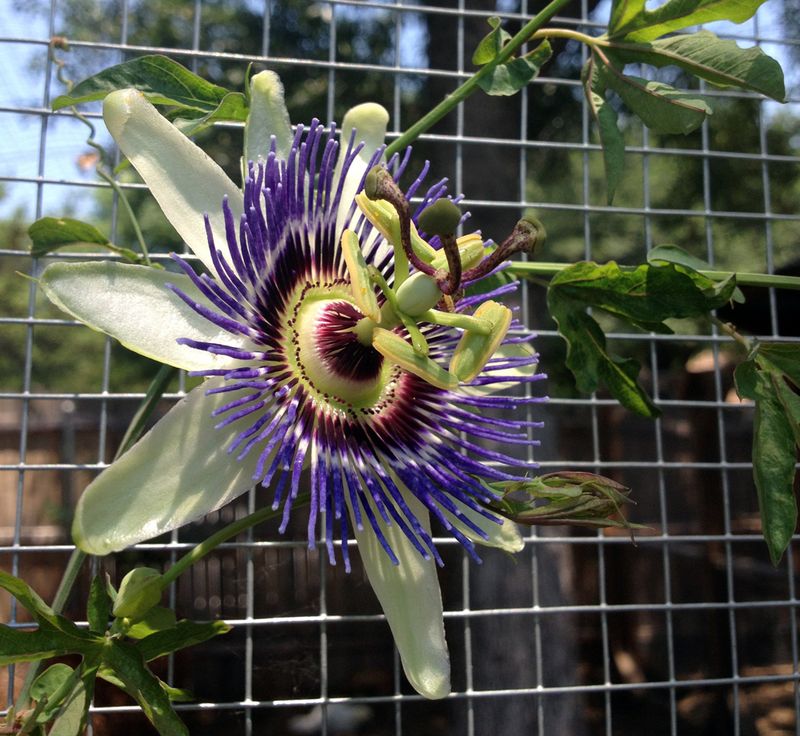
Nothing quite matches the exotic beauty of passionflower blooms, with their intricate arrangement of purple, white, and lavender parts forming a flower unlike anything else in the garden. Each blossom looks almost tropical, yet this vine is genuinely native to Florida and perfectly adapted to local conditions.
The flowers measure up to three inches across, creating conversation-starting focal points wherever they appear along your fence.
Climbing by tendrils, passionflower attaches readily to wire, wood, or chain-link fencing and can reach 15 to 20 feet in a single growing season. The three-lobed leaves create an attractive texture, and the vine often spreads by underground runners to form a thick colony.
Edible fruits called maypops follow the flowers, ripening to yellow when ready to harvest in late summer.
Full sun to partial shade works well, with more sun producing more flowers. This vine serves as the primary host plant for Gulf Fritillary and Zebra Longwing butterflies, meaning you’ll see caterpillars munching the leaves regularly.
That’s a good thing for butterfly lovers, though the vine grows vigorously enough to handle the feeding pressure.
When planting along a fence, remember that passionflower can spread aggressively through runners in rich, moist soil. Plant it where this trait is welcome, or install root barriers to contain the spread.
The vine often goes dormant in winter in northern Florida, returning from the roots each spring with renewed vigor.
5. American Wisteria (Wisteria Frutescens)
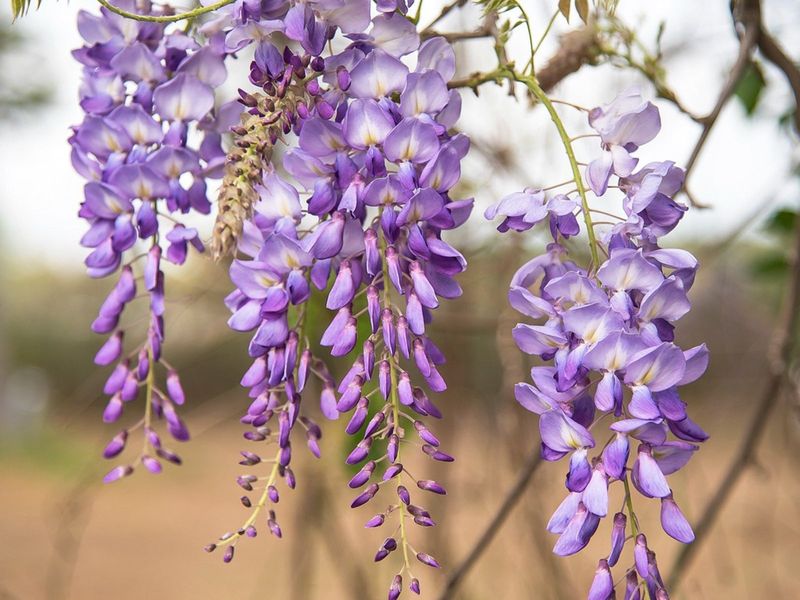
Elegant drooping clusters of purple flowers give American wisteria all the romantic beauty of Asian wisteria without the aggressive invasiveness that makes those species problematic. The flower clusters measure 4 to 6 inches long, appearing in spring and often reblooming lightly in summer.
Each bloom cluster contains dozens of small pea-like flowers in shades of purple, lavender, or occasionally white.
Twining stems climb counterclockwise around fence posts and rails, eventually forming woody trunks with age. Growth is moderate compared to invasive wisteria species, typically reaching 15 to 30 feet over several years.
The compound leaves create a fine-textured appearance, and the vine goes dormant in winter, revealing interesting twisted stems along the fence structure.
Full sun produces the heaviest flowering, though partial shade is tolerated in Florida’s intense summer heat. Hummingbirds and butterflies visit the flowers regularly, and the dense summer foliage provides excellent screening and privacy.
The seed pods that follow flowering add textural interest but aren’t as showy as the blooms.
Install sturdy support when planting American wisteria along a fence, as mature vines develop substantial weight. Space plants 8 to 10 feet apart and train young stems horizontally to build a framework before allowing vertical growth.
Prune after flowering to control size and shape, removing any unwanted shoots promptly. In Florida’s climate, this vine benefits from occasional deep watering during extended dry periods to support healthy flowering.
6. Trumpet Creeper (Campsis Radicans)
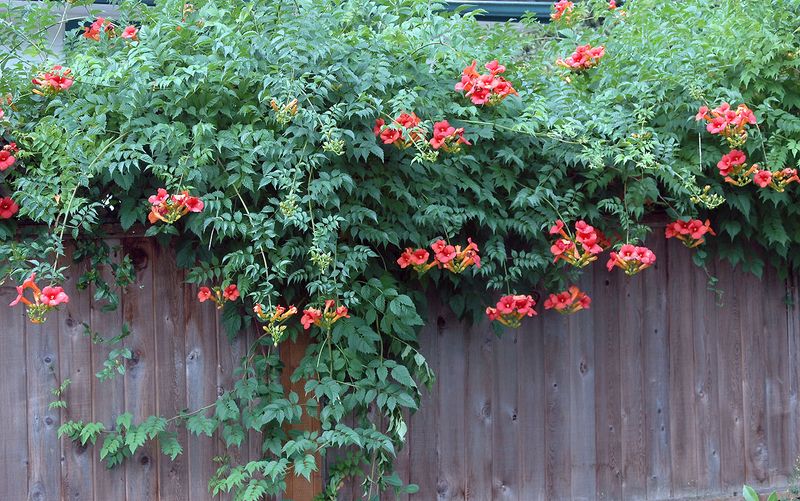
Bold orange trumpets up to three inches long make this vine impossible to ignore when it blooms throughout summer. The flowers appear in clusters at the stem tips, creating splashes of intense color that stand out from considerable distances.
Hummingbirds become regular visitors, often returning multiple times daily to feed from the abundant nectar.
Climbing by aerial rootlets, trumpet creeper attaches firmly to wood, brick, or rough surfaces without needing ties or support wires. Growth is extremely vigorous, with stems capable of reaching 30 to 40 feet if left unpruned.
The compound leaves create dense coverage that provides excellent privacy screening along fence lines.
Full sun brings out the best flowering performance, though partial shade is tolerated. The long bloom period from late spring through summer ensures months of hummingbird activity.
Some people experience skin irritation from contact with the sap, so wearing gloves during pruning is wise.
Plant trumpet creeper only where its vigorous growth is welcome, as it can spread aggressively through root suckers. Space plants 10 feet apart minimum and install root barriers if needed to prevent unwanted spread.
Regular pruning keeps the vine within bounds and encourages fresh flowering wood. In Florida, this vine tolerates heat, humidity, and drought exceptionally well once established, making it nearly maintenance-free except for occasional pruning.
The dramatic visual impact and hummingbird attraction make any extra effort worthwhile for wildlife gardeners.
7. Muscadine Grape (Vitis Rotundifolia)
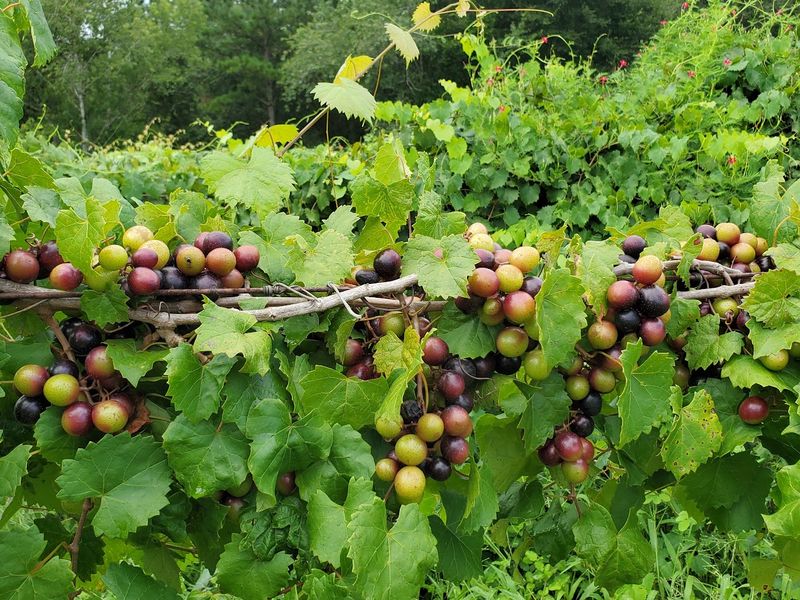
Dense foliage and edible fruit make muscadine grape a uniquely productive choice for fence plantings in Florida. The large, rounded leaves create a lush green curtain throughout the growing season, providing excellent privacy and shade.
Purple or bronze grapes ripen in late summer, offering delicious fruit for fresh eating, juice, or wildlife.
Climbing by tendrils, muscadine attaches readily to wire, wood, or chain-link fencing and can extend 30 to 50 feet or more with proper support. The vines develop thick, woody trunks over time, creating substantial presence along fence lines.
Growth is vigorous once established, quickly covering bare structures with productive greenery.
Full sun is essential for good fruit production, though the vine tolerates partial shade with reduced fruiting. Birds, especially mockingbirds and robins, feast on ripe grapes if you don’t harvest them first.
The flowers attract bees and other pollinators in spring.
When planting muscadine along a fence for fruit production, space vines 15 to 20 feet apart and establish a training system with horizontal wires or rails. Prune annually in late winter to remove old wood and encourage fresh fruiting canes.
Choose disease-resistant varieties bred for Florida conditions, as some muscadine cultivars perform better than others in high humidity. The combination of ornamental value, edible harvest, and wildlife benefits makes this vine a hardworking addition to any Florida fence line.
8. Butterfly Pea (Centrosema Virginianum)
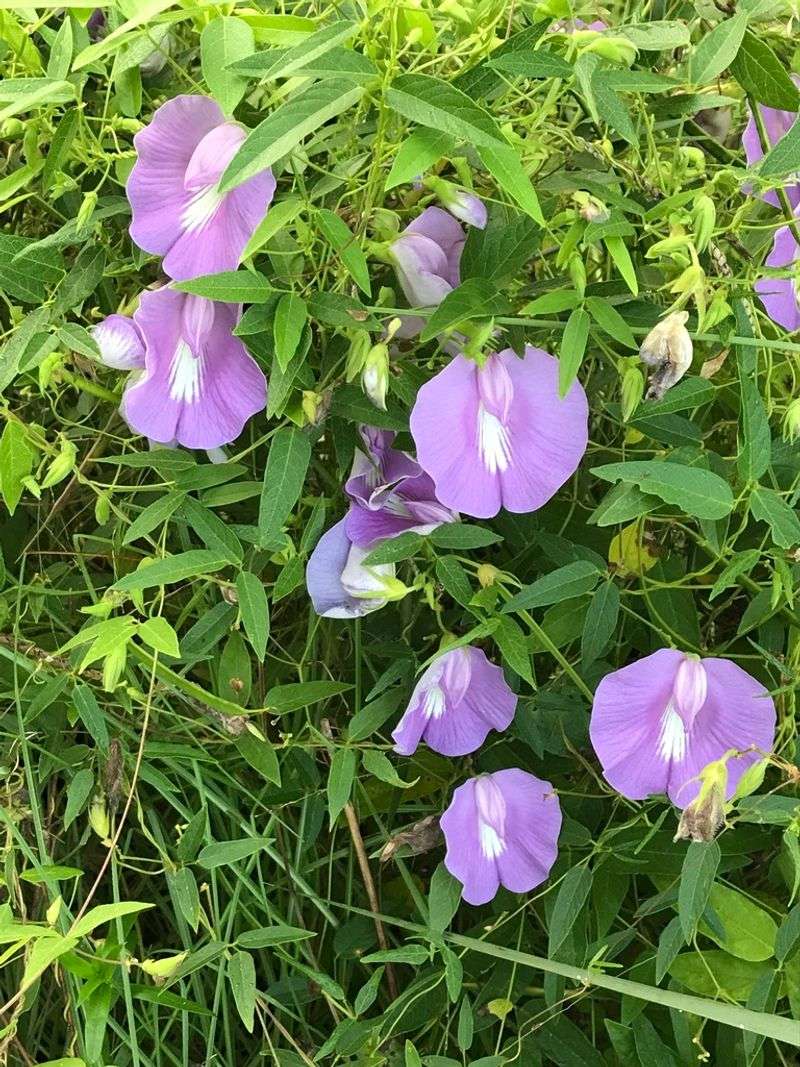
Delicate purple flowers shaped like tiny butterflies give this vine a charming, understated beauty perfect for naturalistic garden settings. The blooms measure about an inch across, appearing sporadically throughout the warm season rather than in one massive flush.
Each flower features the distinctive pea-family shape with a large upper petal and smaller lower petals.
Twining stems wrap around wire, thin branches, or fence mesh, climbing to heights of 3 to 6 feet in most situations. Growth is moderate and well-behaved, never becoming aggressive or overwhelming.
The compound leaves with three leaflets create a fine, airy texture that looks attractive even without flowers.
Full sun to light shade suits this adaptable vine, with more sun producing more blooms. As a legume, butterfly pea fixes nitrogen in the soil, actually improving fertility around its roots.
The flowers attract small native bees and butterflies, adding pollinator value to fence plantings.
Plant butterfly pea along wire fences, chain-link, or other open structures where its delicate growth habit shows to advantage. Space plants 3 to 4 feet apart for moderate coverage.
This vine works beautifully in meadow-style gardens or mixed native borders where a lighter touch is desired rather than dense screening. In Florida’s sandy soils, butterfly pea establishes readily and tolerates drought well once rooted.
The vine may self-seed in favorable locations, creating additional plants that fill gaps naturally along your fence line over time.