11 Plants That Cool Florida Yards Naturally In Hot Weather
Step outside into a Florida yard in midsummer and the heat hits instantly. The sun reflects off patios, dry soil radiates warmth, and suddenly the entire space feels hotter than the air itself.
Many homeowners try shade sails, fans, or endless watering just to make their yards comfortable again. But nature already offers a smarter solution.
Certain plants work like living air conditioners. Their leaves cast cooling shade, their roots protect the soil from scorching sun, and their presence can actually lower the temperature around patios, walkways, and outdoor seating areas.
The right greenery can turn a blazing yard into a far more comfortable place to relax. Florida landscapes thrive when plants do more than look good.
Some of them quietly help your yard stay cooler even during the hottest days of the year.
1. Live Oak Shades Lawns And Patios
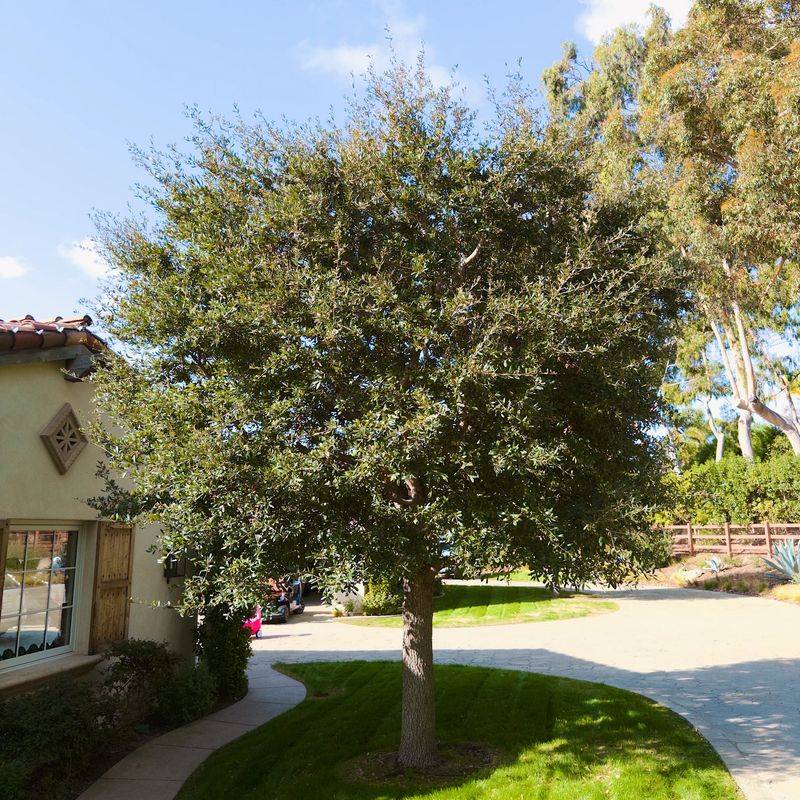
Few trees in Florida command a yard the way a live oak does. With a broad, sweeping canopy that can stretch 60 to 100 feet wide, it creates a massive umbrella of shade that noticeably lowers temperatures over lawns, patios, driveways, and even parts of the home itself.
On a hot afternoon, the area beneath a mature live oak can feel 10 to 15 degrees cooler than an unshaded spot nearby.
Live oaks are evergreen, so shade coverage stays consistent year-round, which matters a lot in Florida where summer heat stretches well beyond what most of the country experiences. Their dense canopy blocks intense solar radiation before it hits the ground or hard surfaces, which means less heat gets absorbed and radiated back upward.
Patios and outdoor sitting areas positioned under a live oak become genuinely usable even in July and August.
UF/IFAS lists the live oak as one of Florida’s most recommended landscape trees for exactly these reasons. Plant it with enough room for the canopy to spread, and keep it away from overhead utility lines.
Mulch around the base to protect roots and hold soil moisture during dry spells.
2. Southern Magnolia Keeps Sunny Walls And Sitting Areas Cooler
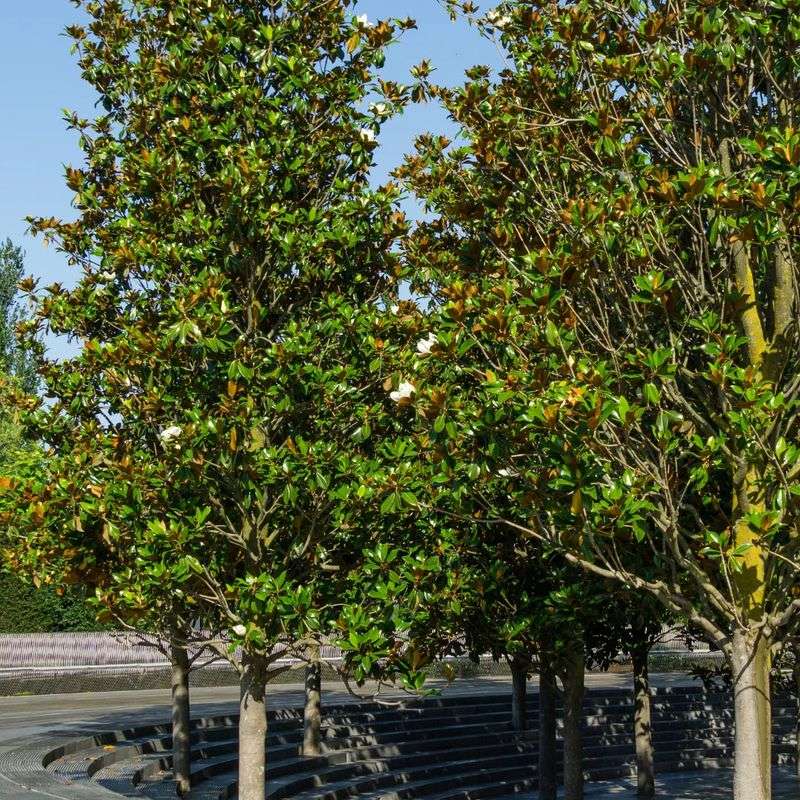
Standing near a Southern magnolia on a blazing Florida afternoon, you notice something right away: the air feels different. Cooler, softer, more sheltered.
That effect comes from the tree’s thick, evergreen canopy and large, glossy leaves that block sunlight and release moisture through evapotranspiration, helping buffer the heat that radiates off walls, windows, and hard outdoor surfaces.
Southern magnolia is a Florida classic, growing throughout the state and performing reliably in the region’s intense summer heat. Its dense foliage stays on the tree all year, which means walls and sitting areas get consistent protection from direct sun exposure in every season.
Planted on the south or west side of a home, it can help reduce the amount of solar heat absorbed by exterior walls and cut down on indoor cooling costs as well.
UF/IFAS recommends Southern magnolia as a large shade tree well-suited to Florida landscapes. It grows best in full sun with well-drained soil and can handle a range of soil types found across the state.
Your Florida Garden Changes Every Week. Your Plan Should Too.
Gardening in Florida changes quickly throughout the season. Every Friday you’ll receive a simple weekly plan showing exactly what to plant, prune, fertilize, harvest, and protect so you never miss the right timing.
One important note: the fallen leaves break down slowly, so plan for some cleanup around paved areas. Give it plenty of vertical and horizontal space to reach its full form.
3. Sweetbay Magnolia Freshens Damp Corners And Bright Backyard Edges
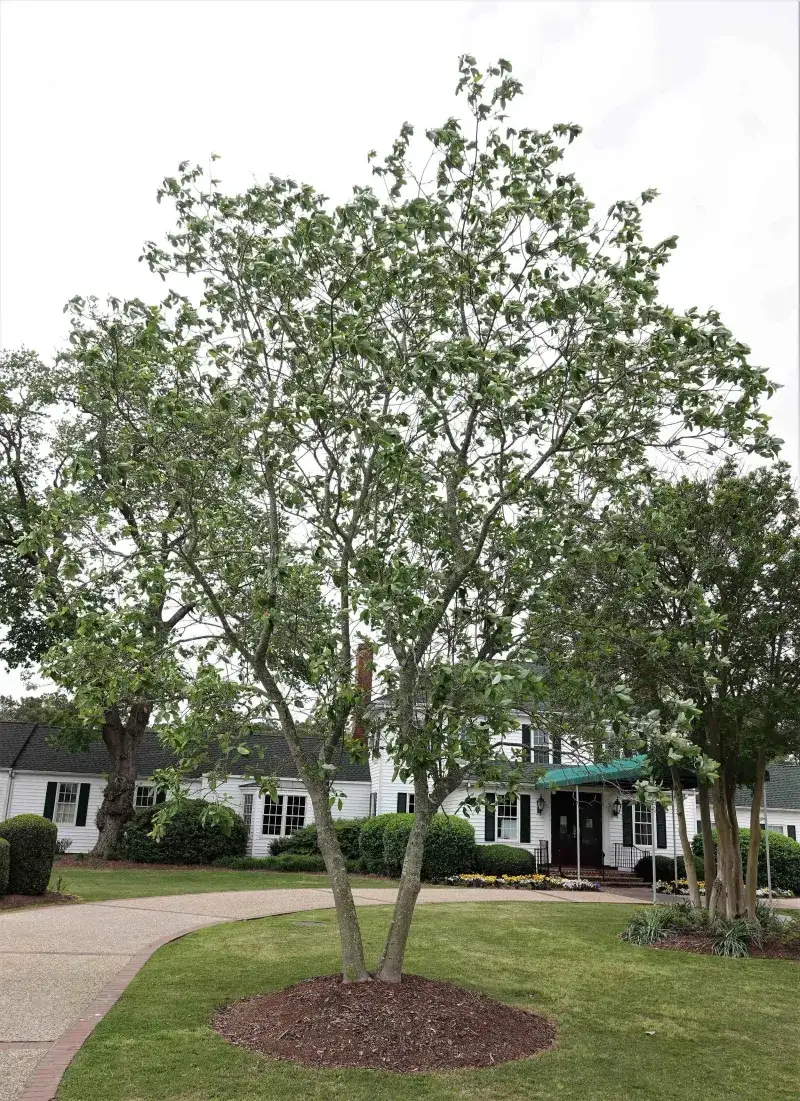
Not every Florida yard is dry and sun-drenched from edge to edge. Some spots stay a little wetter, sit in partial shade, or catch runoff from the roof or nearby beds.
Sweetbay magnolia is perfectly built for those in-between spaces, bringing soft, filtered shade and a fresh, almost spa-like fragrance to corners and backyard edges that other trees might struggle in.
Unlike its larger cousin the Southern magnolia, sweetbay stays more modest in size, typically reaching 10 to 20 feet in Florida landscapes, and it often grows with multiple trunks that create a graceful, layered look. Its semi-evergreen leaves are silvery-green underneath, catching light in a way that makes shaded areas feel brighter without being harsh.
The canopy filters sunlight rather than blocking it completely, which creates a comfortable, cooler environment without making a spot feel dark or closed in.
UF/IFAS notes that sweetbay magnolia tolerates wet or moist soils particularly well, making it a smart choice for low spots, rain garden edges, or areas that stay damp after heavy summer storms. Plant it where afternoon sun hits hardest and let it soften the brightness naturally.
Avoid heavy pruning, since the natural multi-stemmed form is part of what makes it so visually effective.
4. Dahoon Holly Brings Relief To Entryways Courtyards And Smaller Yards
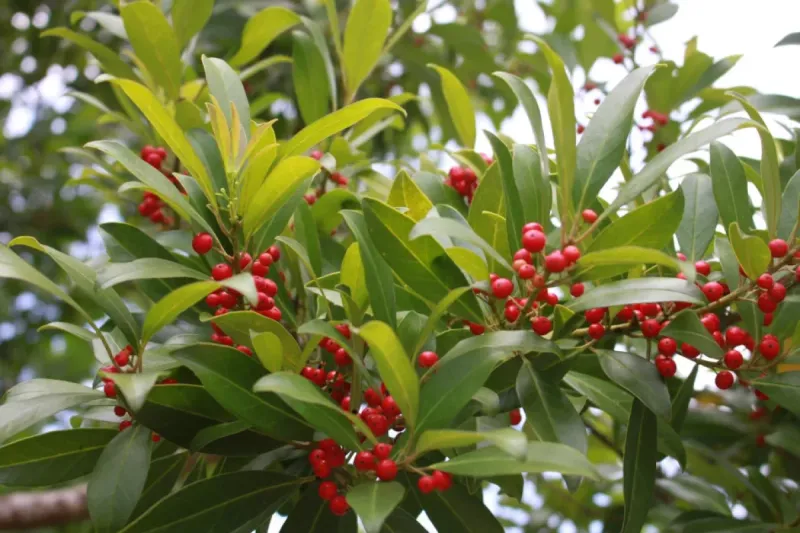
Smaller yards and tight entryways often get overlooked when people talk about shade trees, mostly because the big names like live oak or Southern magnolia simply take up too much space. Dahoon holly fills that gap beautifully.
Growing to around 20 to 30 feet tall with a relatively narrow, upright form, it delivers real shade without overwhelming a compact yard, courtyard, or front entryway.
In Florida, Dahoon holly thrives across a wide range of conditions, including wet or poorly drained soils where many other trees struggle. Its dense, evergreen canopy provides consistent shade over smaller hardscape areas, reducing heat that radiates off brick, concrete, or stone surfaces near entryways and courtyards.
Positioned near a front door or along a narrow side yard, it creates a noticeably cooler, more welcoming approach to the home.
UF/IFAS recognizes Dahoon holly as a Florida native with strong landscape value, noting its adaptability to both wet and moderately dry conditions across the state. The bright red berries that appear in fall and winter are a bonus, attracting birds and adding color.
Female trees produce the berries, so if berry production matters to you, confirm you are purchasing a female plant. Water regularly during the first year to help it get established.
5. Simpson’s Stopper Shelters Patios Paths And Tucked Away Seating Spots
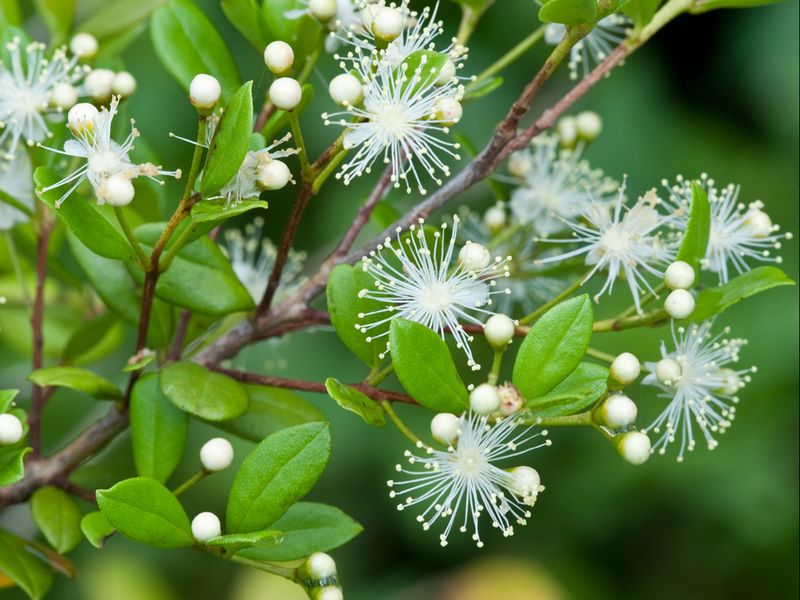
Tucked behind a patio, lining a garden path, or framing a private seating nook, Simpson’s stopper does something that bigger trees simply cannot: it creates intimate, filtered shade at a human scale. The foliage is dense and glossy, the small white flowers smell faintly sweet, and the overall effect is of a cool, sheltered pocket that feels genuinely removed from the Florida heat pressing in from outside.
Growing 10 to 15 feet tall and nearly as wide, Simpson’s stopper works beautifully as a large shrub or small tree, and its evergreen canopy provides consistent cooling coverage over outdoor areas throughout the year. The thick leaf cover filters sunlight rather than eliminating it, creating the kind of dappled shade that keeps a patio or seating area comfortable without making it feel enclosed or dark.
Paths lined with Simpson’s stopper feel shaded and cooler underfoot, even on bright summer afternoons.
UF/IFAS highlights Simpson’s stopper as a Florida native that handles heat, salt, and wind with ease, making it a particularly strong performer in coastal and central Florida landscapes. It grows well in full sun or partial shade and tolerates a variety of soil types.
Minimal pruning is needed to maintain its natural shape, which is part of what makes it so low-effort for busy homeowners.
6. Walter’s Viburnum Softens Heat Along Fence Lines Walkways And Outdoor Rooms
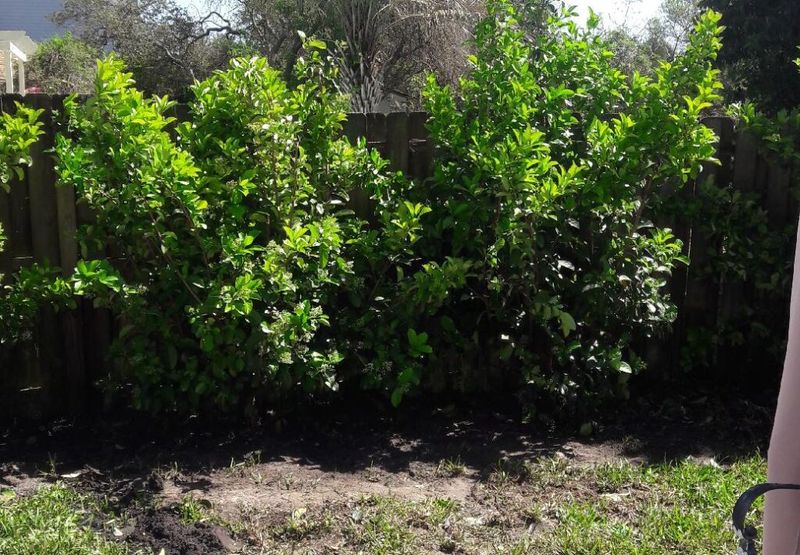
Fence lines and the edges of outdoor living spaces are some of the hottest spots in a Florida yard. Hard surfaces like concrete block walls, wooden fences, and paved walkways absorb heat all day and radiate it back well into the evening.
Walter’s viburnum addresses that problem directly, growing into a tall, dense green screen that shades those hard edges and buffers heat before it reaches seating areas and outdoor rooms.
Walter’s viburnum can reach 15 to 20 feet tall when left to grow naturally, forming a thick, multi-stemmed wall of evergreen foliage that blocks both sun and wind. Clusters of small white flowers in spring add a seasonal display, and the dark berries that follow attract birds throughout the year.
Along a fence line or at the perimeter of an outdoor living space, a row of Walter’s viburnum transforms a hot, exposed edge into a cool, green boundary.
According to UF/IFAS, Walter’s viburnum is a Florida native that performs reliably across a wide range of conditions, tolerating both wet and dry soils and adapting to full sun or partial shade. It responds well to pruning if a more formal hedge shape is desired, but the natural, loose form works just as well for creating a cooling green buffer.
Space plants about 6 to 8 feet apart for a full hedge effect.
7. Beautyberry Refreshes Bed Edges And Shaded Garden Pockets
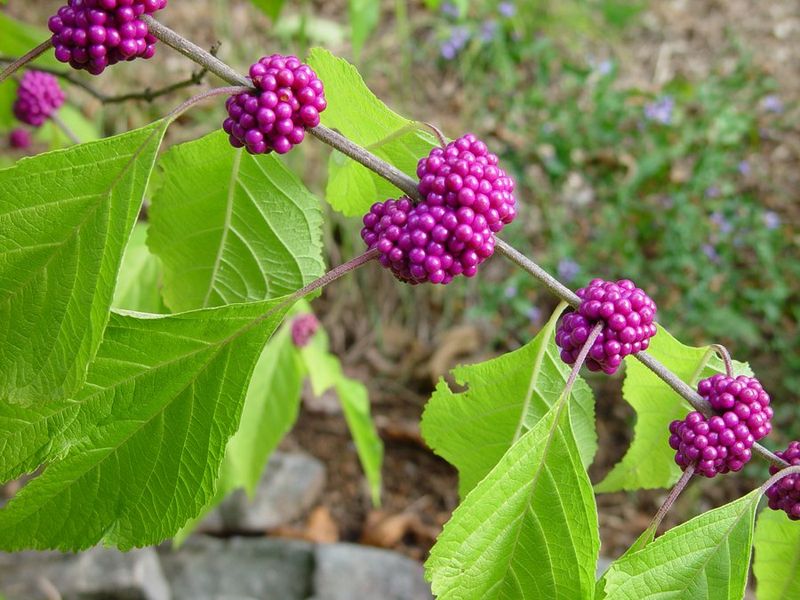
American beautyberry brings something genuinely eye-catching to the layered Florida garden: those clusters of vivid, almost electric purple berries that line the arching stems in late summer and fall. But beyond the visual drama, this native shrub plays a real functional role in keeping planted beds and shaded garden pockets cooler and more comfortable during Florida’s long, hot growing season.
Growing 4 to 8 feet tall with a loose, arching habit, beautyberry fits naturally into the understory layer beneath larger shade trees or along the shaded edges of beds. Its broad leaves and branching structure reduce the amount of direct sunlight that reaches the soil surface, helping soil stay cooler and retain moisture longer between rain events or irrigation cycles.
Cooler soil means less heat radiating upward into the surrounding garden space and more comfortable conditions for nearby plants as well.
UF/IFAS recommends American beautyberry as an excellent Florida native for naturalistic and wildlife-friendly landscapes. It thrives in partial shade, which makes it ideal for those garden pockets that get filtered light beneath tree canopies.
Once established, it is quite drought-tolerant and needs very little care. Cut it back hard in late winter to encourage vigorous new growth and a fuller, more attractive form the following season.
8. Coontie Covers The Ground Around Beds And Foundation Plantings
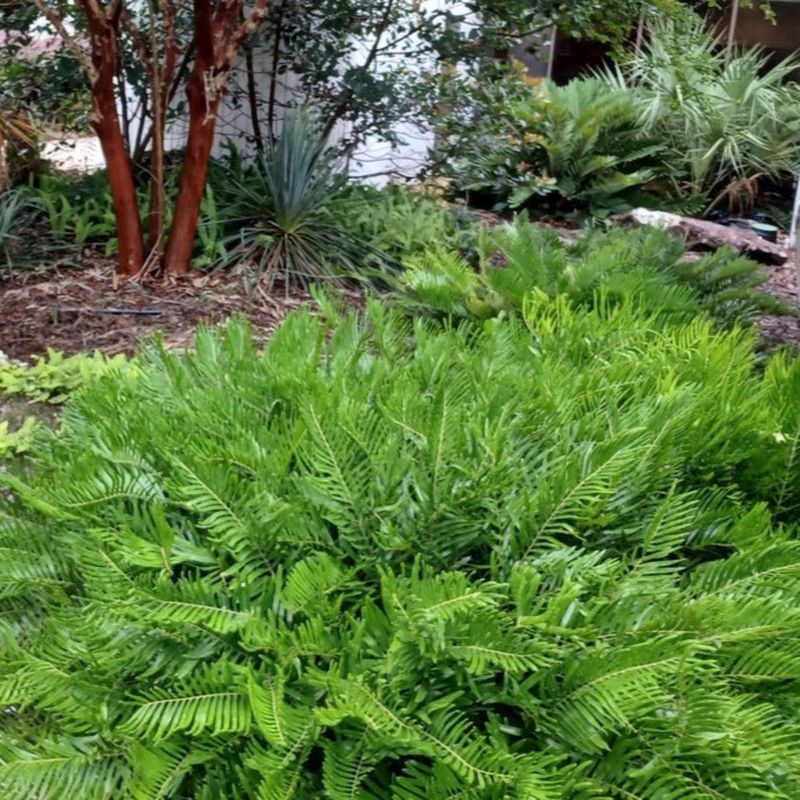
Bare ground in a Florida yard is basically a heat collector. Dark soil and exposed mulch absorb solar radiation all day, then release that stored heat slowly, warming the air around foundation beds and planted areas long after the sun goes down.
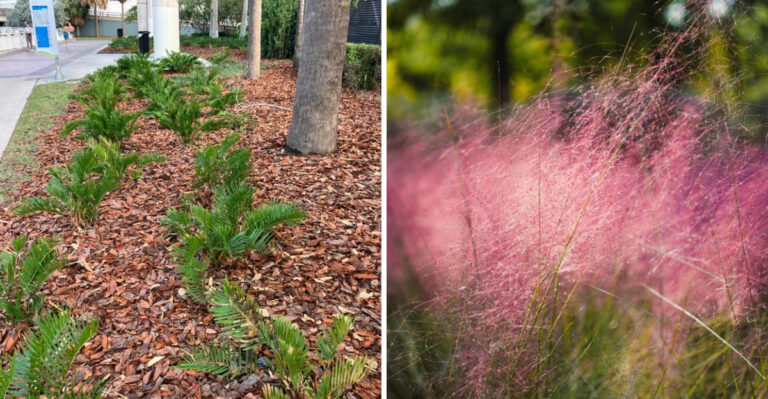
Coontie tackles that problem at ground level, covering soil with its dense, fern-like fronds and keeping the surface temperature noticeably lower throughout the day.
Florida’s only native cycad, coontie grows low and slow, typically reaching 2 to 3 feet tall, making it a perfect fit for foundation plantings, bed edges, and spots under trees where taller plants would block views or feel out of scale. Its dark green foliage stays attractive year-round without much attention, and the plant handles drought, poor sandy soils, and even salt spray with ease.
Covering bare ground with coontie replaces a heat-absorbing surface with a living, cooling layer that also looks polished and intentional.
UF/IFAS notes that coontie is extremely adaptable across Florida, performing well in full sun to heavy shade. It is also the sole host plant for the Atala butterfly, a Florida native that was once thought to be gone from the state entirely.
Plant it in groups of three or more for the most effective ground coverage and the best visual impact around foundation beds and planting areas.
9. Muhly Grass Softens Sun-Baked Spots In Open Planting Areas
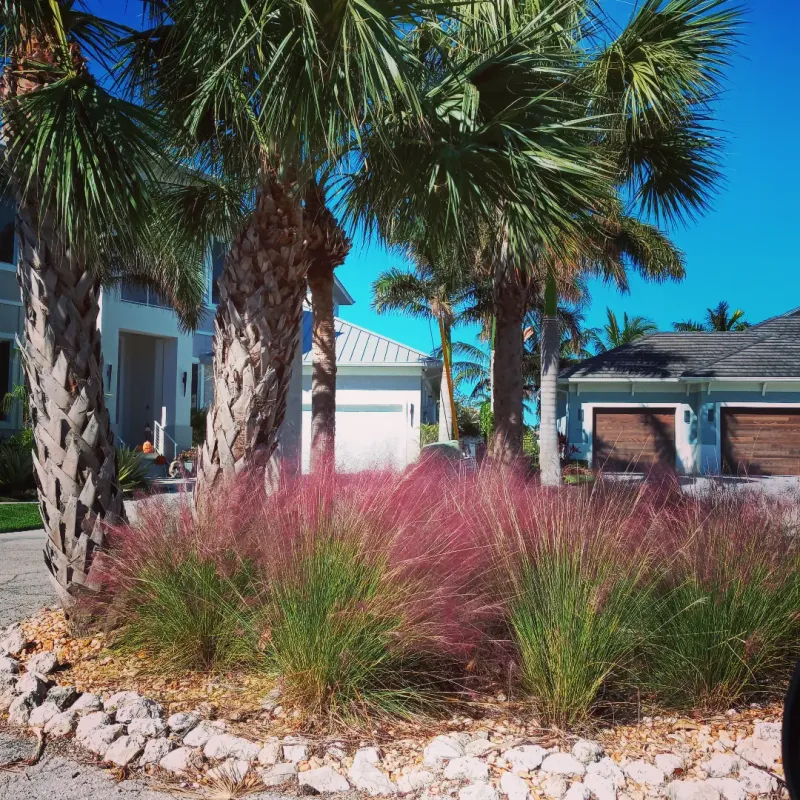
Open, sunny planting areas in Florida yards can look and feel brutally harsh in summer: sandy soil baking under direct sun, no shade, and very little visual softness to break up the heat. Muhly grass changes that equation.
Its fine-textured, arching blades cover exposed ground and reduce direct solar contact with the soil surface, while its spectacular pink and purple fall plumes add a cloud-like softness that makes a hot, open area feel more inviting.
Native to Florida and much of the southeastern United States, muhly grass is a proven performer in full sun and poor, sandy soils, exactly the conditions that describe many open landscape areas across the state. It grows in dense clumps about 3 feet tall and wide, and when planted in drifts or groupings, it creates a living carpet that shades soil, holds moisture, and reduces the harsh, sun-blasted look of exposed planting beds.
The cooling effect may be more modest than a shade tree, but in open areas where trees are not practical, muhly grass makes a real difference.
UF/IFAS highlights muhly grass as an outstanding Florida native ornamental grass that requires very little care once established. Water it regularly through the first summer, then scale back as the roots settle in.
Cut clumps back to about 6 inches in late winter to encourage fresh, healthy growth and the best fall color display.
10. Seagrape Protects Sunny Borders Breezy Patios And Coastal Yards
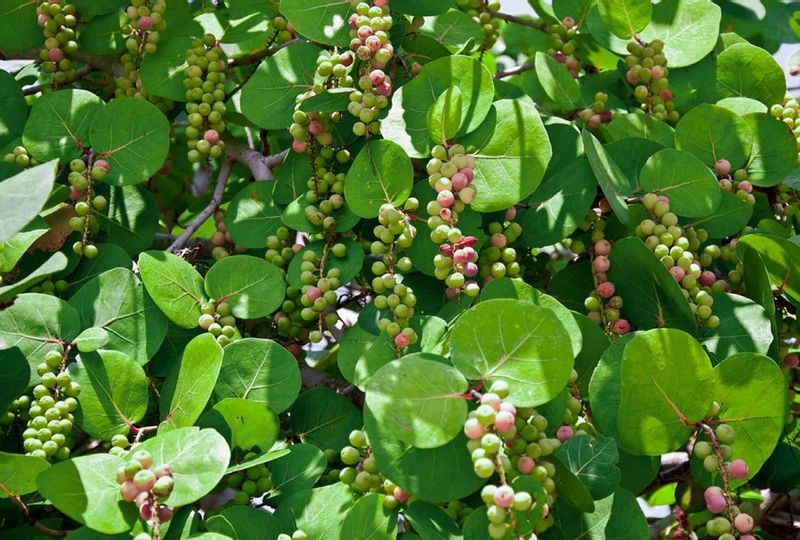
Coastal Florida yards face a unique combination of challenges: intense sun, salt-laden winds, and sandy, nutrient-poor soil that many plants simply cannot handle. Seagrape thrives in exactly those conditions, and its large, leathery, round leaves do something few coastal plants can match: they create substantial shade and wind buffering along sunny borders and breezy patios where the heat and exposure would otherwise be relentless.
Seagrape can grow as a sprawling shrub or a small tree, reaching 15 to 25 feet in favorable spots. The oversized leaves act like natural parasols, blocking direct sun over borders, patios, and outdoor seating areas.
When planted in a row or allowed to form a loose hedge along a sunny property edge, seagrape creates a thick, cooling green barrier that also filters the hot, drying winds that sweep through coastal Florida landscapes in summer.
UF/IFAS confirms seagrape as a Florida native well-suited to coastal landscapes, praising its salt tolerance, drought resilience, and adaptability to sandy soils. The grape-like clusters of fruit it produces are edible and attract wildlife, adding ecological value to its visual and functional appeal.
In non-coastal yards, it performs well too, as long as drainage is good. Avoid heavy pruning during active growth periods to keep the canopy dense and effective as a heat and wind buffer.
11. Wild Tamarind Casts Welcome Shade Across Wide Open Yards
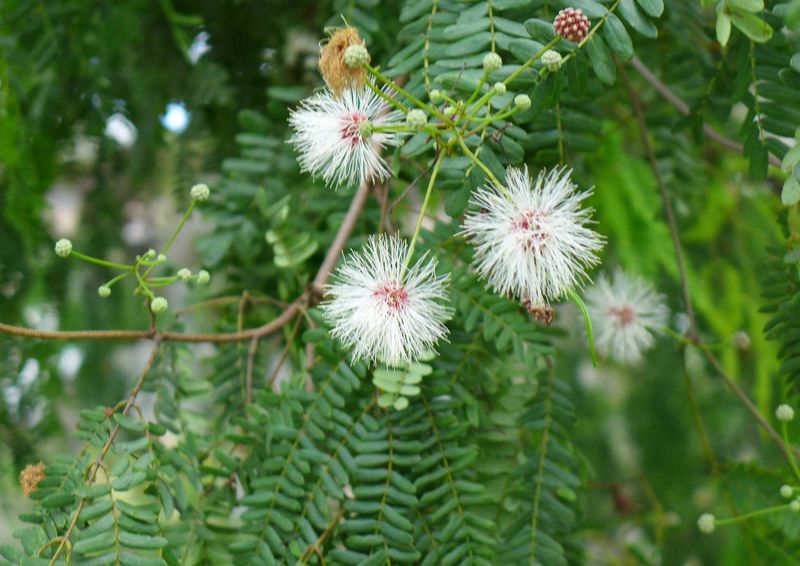
Wide open Florida yards with no canopy cover can feel like parking lots in July, all heat and glare with nowhere to escape. Wild tamarind (Lysiloma latisiliquum) is one of the fastest-growing native shade trees available for Florida homeowners, and it fills that open-yard gap with impressive speed.
Within a few years of planting, it begins casting real, meaningful shade across large swaths of yard space that would otherwise bake in the afternoon sun.
Native to South Florida and the Florida Keys, wild tamarind grows quickly into a broad, spreading canopy that can reach reaching 25 to 50 feet. The feathery, compound leaves create a light, dappled shade rather than dense darkness, which is ideal for yards where you want cooling without blocking every bit of light.
The canopy reduces afternoon heat by intercepting solar radiation before it reaches the ground, and through evapotranspiration, the tree releases moisture that lowers air temperature in the surrounding area.
UF/IFAS notes that wild tamarind is best suited to South Florida, performing strongly in USDA hardiness zones 10 and 11 where freezing temperatures are rare. It adapts to a range of soil types and handles drought reasonably well once established.
Plant it with plenty of open space to allow the canopy to spread fully, and position it on the west or southwest side of the yard to intercept the harshest afternoon sun.