These Wild Plants Grow All Along California Roadsides
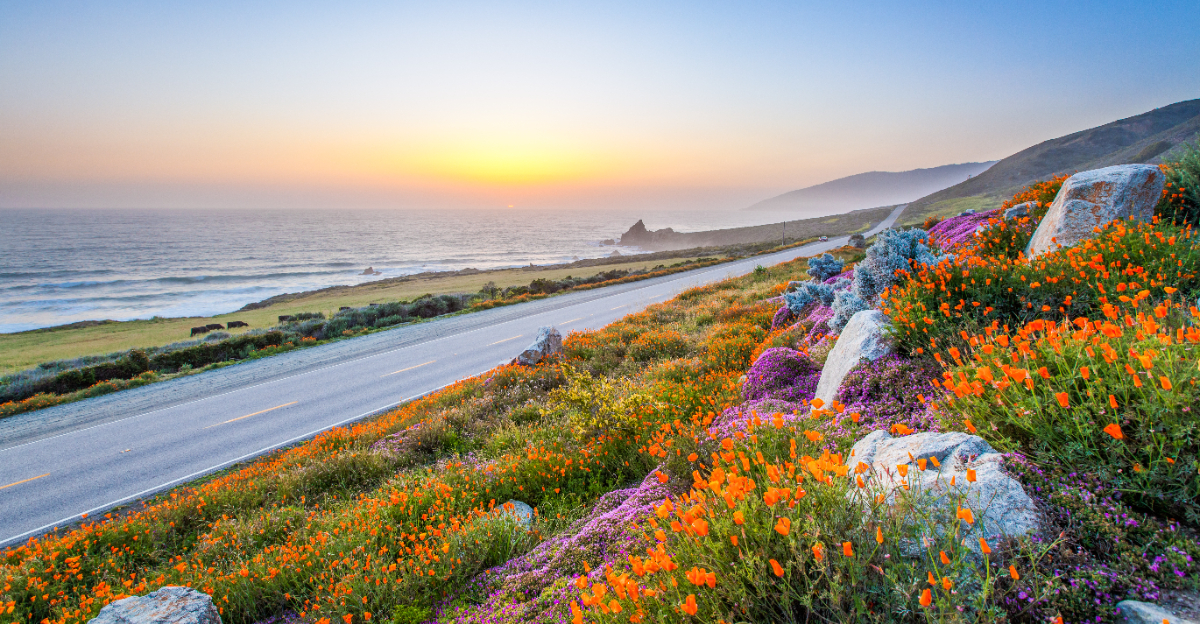
Drive along almost any California road in spring and you’ll notice flashes of color out of the corner of your eye.
Bright blooms pop up along highways, hillsides, and even the edges of parking lots, growing freely without any help at all. It’s like nature decided to decorate the roadside on its own.
These wild plants are tougher than they look. They handle poor soil, heat, wind, and inconsistent water, yet still manage to bloom like they’re in a perfectly tended garden.
Some show up year after year, while others appear in waves depending on rainfall and conditions.
What makes them even more interesting is how effortlessly they grow in places most garden plants would struggle. No fertilizers, no careful planting, no maintenance. Just resilience and perfect timing.
Once you start noticing them, it’s hard not to look for them everywhere. These roadside growers prove that some of the most impressive plants are the ones that thrive without any attention at all.
1. California Poppy
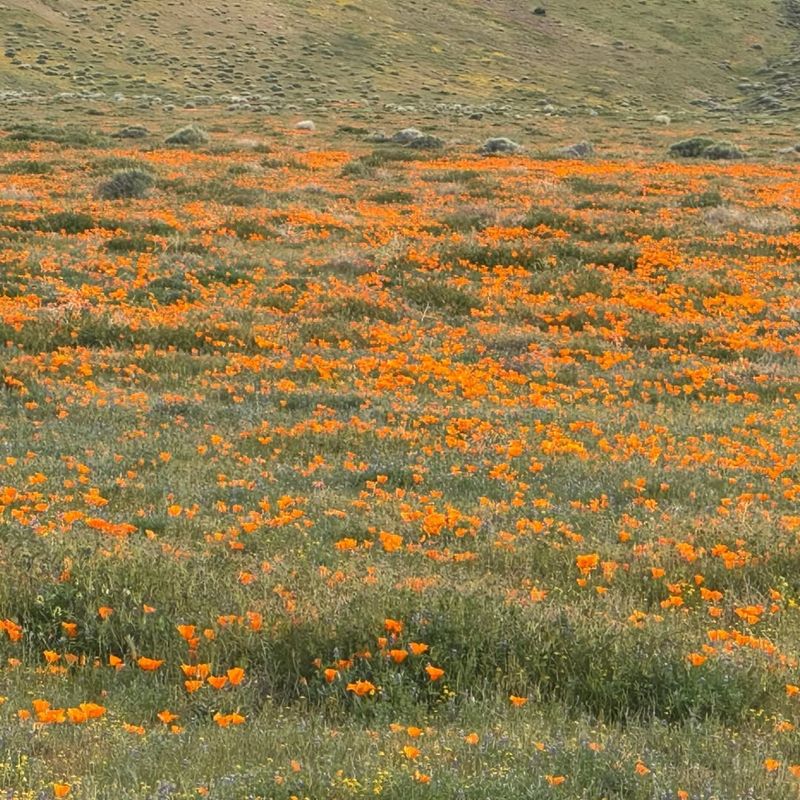
Few sights in California are as instantly recognizable as a hillside covered in bright orange poppies. The California poppy, known scientifically as Eschscholzia californica, is the official state flower and has been since 1903.
It grows just about everywhere across the state, from coastal bluffs to dry inland roadsides.
These cheerful flowers love full sun and well-drained soil, which makes roadsides a perfect home for them. They open wide on sunny days and close up at night or when clouds roll in.
That little behavior makes them feel almost alive in a fun, animated way.
California poppies are annuals, meaning they complete their life cycle in one season and then drop seeds for next year. You do not need to do anything to keep them coming back.
Along California highways, they often form golden carpets that stretch for miles, especially in spring after good winter rains.
Even though they share a name with other poppies, California poppies are not related to the opium poppy. They are completely safe and are actually used in herbal teas to help with relaxation.
Spotting them on a road trip is one of the simple joys of traveling through California.
2. Lupine
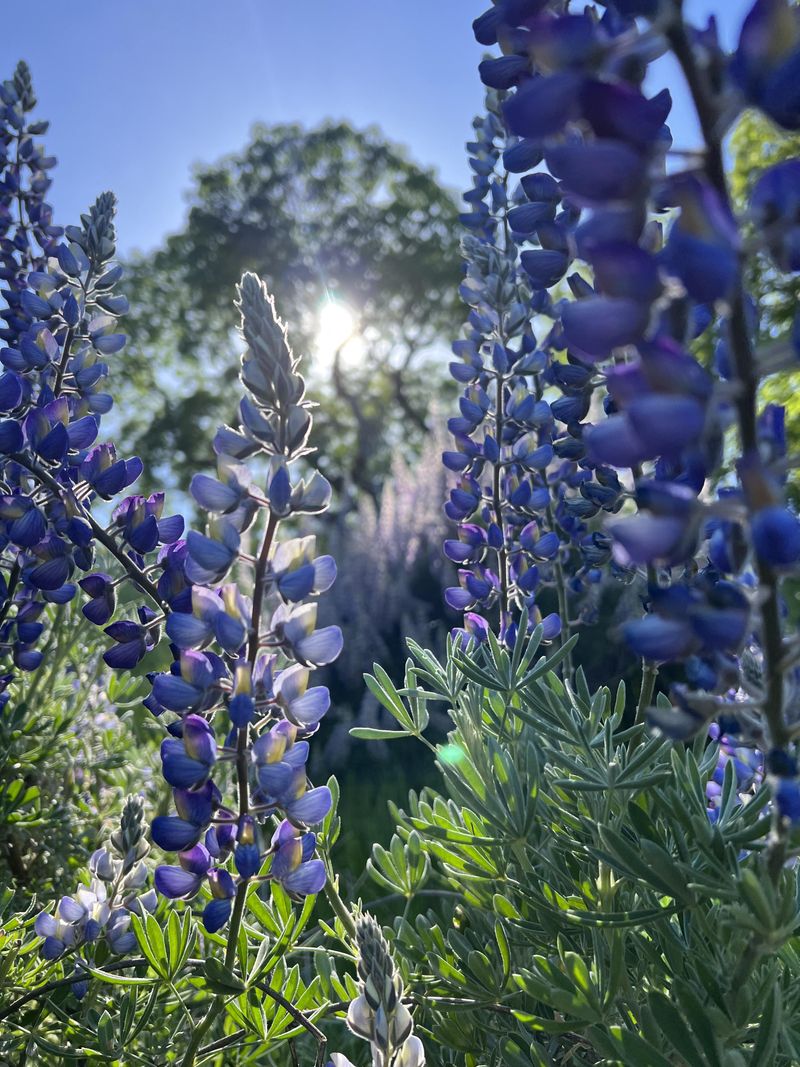
Standing tall with spikes of purple, blue, or sometimes pink flowers, lupines are hard to miss along California roads. They belong to the legume family, which means they actually help improve the soil by adding nitrogen to it.
That makes them good neighbors to other plants growing nearby.
There are dozens of lupine species native to California, and many of them thrive in disturbed areas like roadsides and highway edges. Some grow low to the ground while others can reach several feet tall.
The variety is part of what makes them so interesting to look for on a drive.
Lupine flowers bloom from late winter through early summer depending on elevation and location. In places like the Antelope Valley or along coastal Highway 1, big patches of lupine mix with poppies to create some of the most photographed wildflower displays in the state.
Your California Garden Changes Every Week. Your Plan Should Too.
Gardening in California changes quickly throughout the season. Every Friday you’ll receive a simple weekly plan showing exactly what to plant, prune, fertilize, harvest, and protect so you never miss the right timing.
Bees absolutely love lupine flowers. The blooms are designed so that a bee’s weight triggers the flower to release pollen, making lupines a key food source for native bees across California.
If you stop near a patch of lupines on a warm day, you will likely hear them buzzing with activity.
3. Tidy Tips
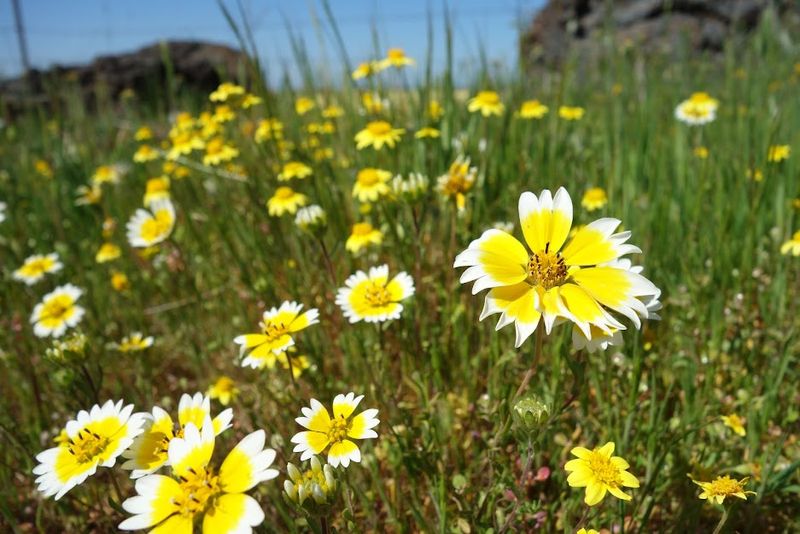
Tidy tips have one of the most fitting names in the plant world. Each sunny yellow petal has a neat white tip at the end, giving the flower a clean, almost painted look.
The scientific name is Layia platyglossa, and it is native to California grasslands and open areas, including roadsides throughout the state.
These flowers are low-growing and often form cheerful clusters close to the ground. They bloom in spring, usually from March through May, and do especially well in years with good winter rainfall.
Along California’s Central Valley roadsides and open hillsides, they often grow alongside poppies and goldfields in colorful mixed patches.
Tidy tips are considered a great indicator of a healthy native plant community. When you see them growing along a roadside, it usually means the area has not been too heavily disturbed or sprayed with herbicides.
That makes them a small but meaningful sign of ecological health.
Gardeners in California love tidy tips because they are easy to grow from seed and attract a wide range of pollinators.
If you scatter some seeds in a sunny spot with decent drainage, they will likely reward you with blooms the following spring. They bring a little bit of roadside California magic right to your backyard.
4. Yarrow (California Yarrow)
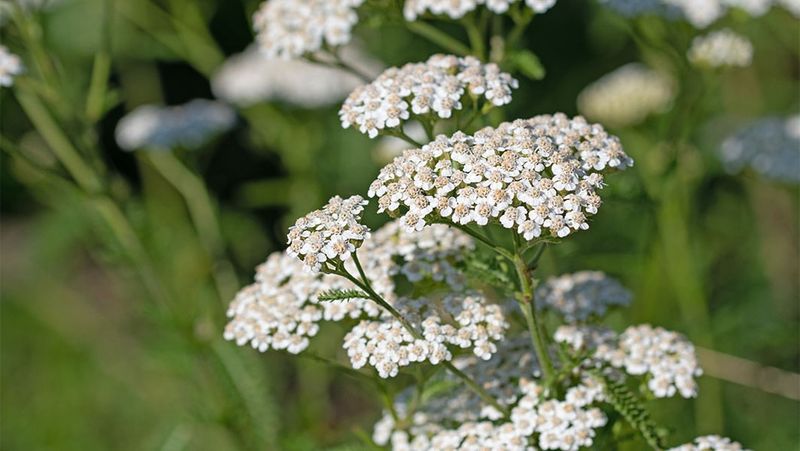
Yarrow is one of those plants that looks delicate but is actually incredibly tough. It grows along roadsides all across California, from the coast to the mountains to dry inland valleys.
The flat-topped clusters of tiny white flowers sit above feathery, fern-like leaves that have a strong, pleasant herbal scent when you crush them.
California yarrow, or Achillea millefolium, blooms from spring through fall, giving it one of the longest flowering seasons of any native plant in the state.
That long season makes it a reliable food source for butterflies, beetles, and beneficial wasps that visit the flowers regularly.
One of the most fascinating things about yarrow is its history. People have used it for centuries as a medicinal herb to help with minor wounds and inflammation.
In fact, the plant’s scientific name comes from the Greek hero Achilles, who was said to have used it to treat soldiers on the battlefield.
Along California roadsides, yarrow often grows in large clumps that can spread over several feet.
It handles drought well and does not need much care to thrive, which is exactly why it does so well in roadside conditions. Spotting its white flower clusters on a highway drive is a small but satisfying moment.
5. Douglas Iris
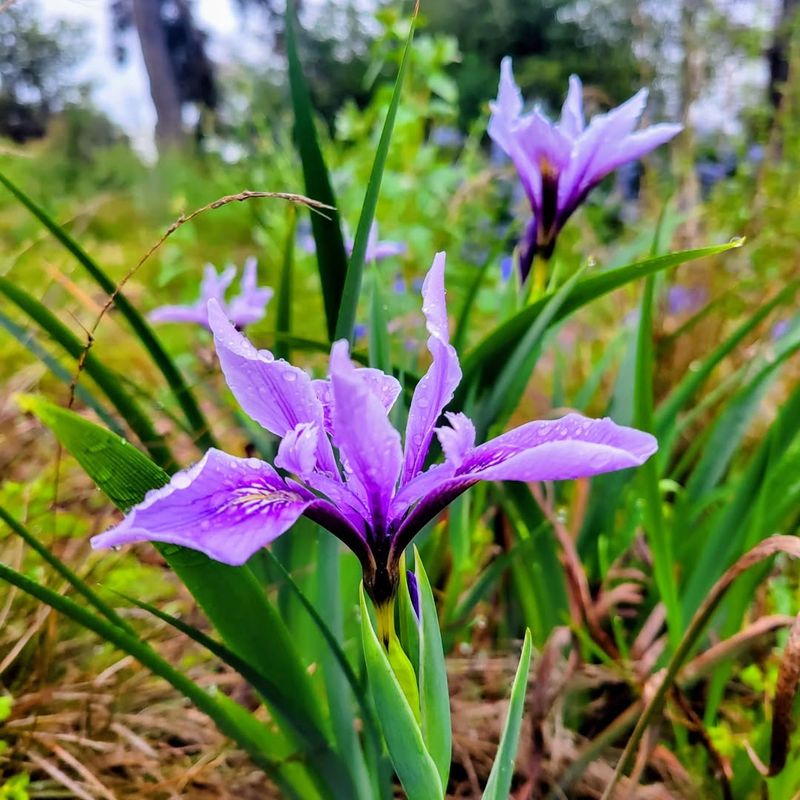
There is something almost elegant about coming across a Douglas iris growing along a shaded California road.
The flowers are a rich mix of purple, violet, and sometimes cream or yellow, and they look like something you would see in a fancy garden.
But these beauties grow completely on their own along roadsides, especially in Northern California and coastal areas.
Douglas iris, or Iris douglasiana, is native to California and Oregon and tends to grow in areas with partial shade and well-drained soil. You will often find it along forest edges, coastal bluffs, and shaded road cuts where other plants struggle to get established.
Its dark green, sword-like leaves stay green year-round.
These irises bloom in late winter to early spring, usually from February through April. They are one of the earliest native flowers to show up after the rainy season, which makes them a welcome sign that warmer weather is on the way.
Douglas iris is also an important plant for native bumblebees, which are some of the few insects strong enough to push into the flower and reach the nectar inside.
Along California’s coastal roads, seeing a cluster of Douglas iris in bloom is like finding a small treasure tucked into the hillside.
6. Cream Cups
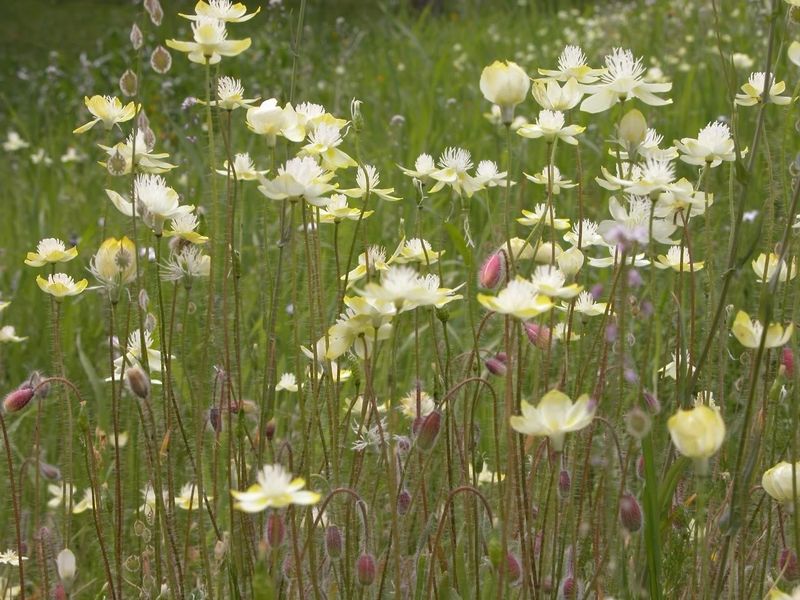
Cream cups might not get as much attention as poppies or lupines, but they are just as charming.
These small, cup-shaped flowers are creamy white to pale yellow with a cluster of bright yellow stamens in the center.
They belong to the poppy family and often grow right alongside California poppies in open grassy areas and roadsides across the state.
The scientific name is Platystemon californicus, and as that name suggests, it is a California native through and through. Cream cups love open, sunny spots with loose, well-drained soil, which makes roadside edges and disturbed grassy areas ideal for them.
They bloom in spring, usually from March through May.
Up close, each flower has a soft, papery texture that catches the light in a really pretty way. They only grow a few inches tall, so you might miss them if you are driving fast.
But if you slow down or stop for a walk along a California wildflower road, you will often find them carpeting the ground in delicate clusters.
Cream cups are a favorite among native plant enthusiasts because they are so understated yet beautiful. They also attract small native bees and flies that help pollinate nearby plants.
Finding them growing along a California roadside is a quiet reminder that beauty does not always need to be loud to be noticed.
7. Goldfields
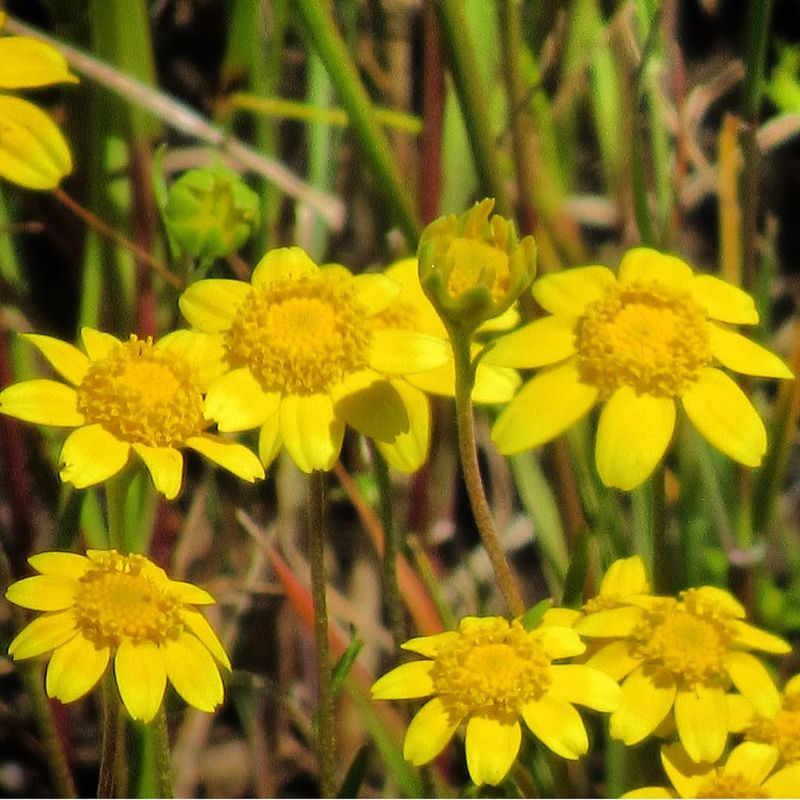
When you see a California hillside or roadside that looks like it has been painted solid yellow, there is a good chance goldfields are responsible.
These tiny but mighty flowers, known scientifically as Lasthenia californica, grow in dense masses that can cover entire fields and road shoulders in a brilliant golden blanket.
The effect is absolutely stunning.
Goldfields are annuals that bloom in early to mid-spring, often peaking from March through April.
They thrive in areas with seasonal flooding or heavy winter rain, which makes the edges of California roads and low-lying fields perfect for them.
After a wet winter, goldfields can put on a show that draws visitors from all over.
Each individual flower is quite small, maybe the size of a dime, but when thousands of them bloom together, the display is impossible to ignore. They often grow alongside tidy tips and poppies, creating a patchwork of yellow, white, and orange that photographers love to capture.
Beyond their looks, goldfields provide important early-season nectar for native bees and other small pollinators that emerge in late winter.
Along California’s Central Valley roadsides and grassy hillsides, goldfields are one of the first signs that wildflower season has truly arrived. They are small in size but enormous in impact.
8. Farewell-to-Spring (Clarkia)
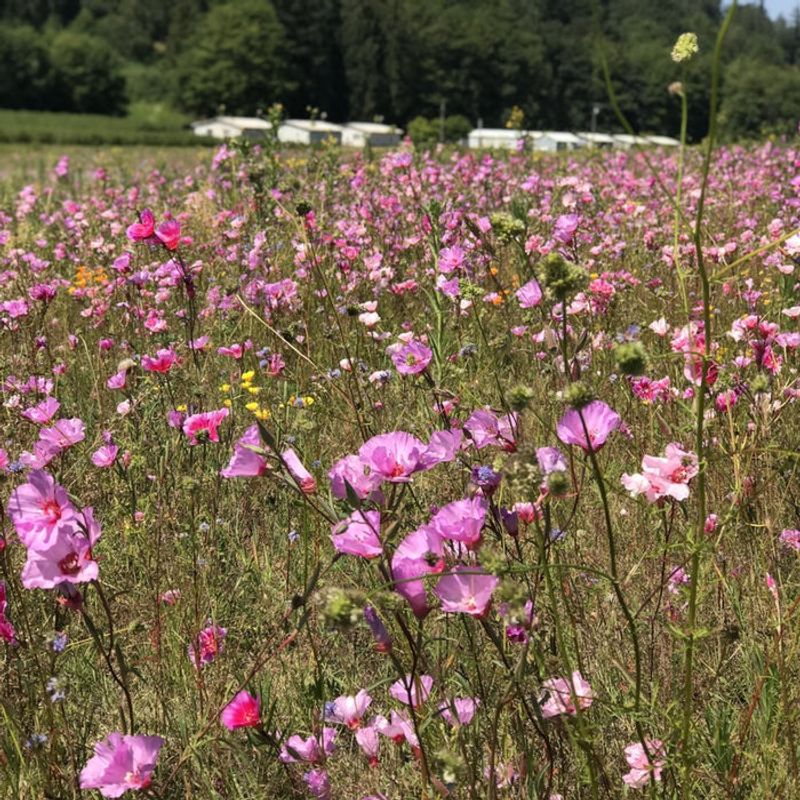
The name alone makes this flower memorable. Farewell-to-spring, also called Clarkia, blooms at the very end of wildflower season, usually from May through July, just as most other spring flowers are fading.
It is like a final curtain call of color before the dry California summer takes over the roadsides.
Clarkia flowers come in shades of pink, rose, lavender, and sometimes white. The petals often have deeper pink or purple markings near the center, giving each flower a painted, artistic look.
Several species grow throughout California, and many of them are found along roadsides, dry slopes, and open woodland edges.
Named after explorer William Clark of the Lewis and Clark Expedition, Clarkia has been growing wild in California long before European settlers arrived.
Native Californians historically gathered the seeds as a food source, which shows just how useful this beautiful plant has been over time. Clarkia plants are slender and can get quite tall, sometimes reaching two feet or more.
Along California roadsides in late spring, drifts of pink clarkia swaying in the breeze create a soft, romantic scene that feels like the landscape is saying goodbye to another wildflower season.
It is a fitting name for a truly lovely plant.
9. Coyote Brush
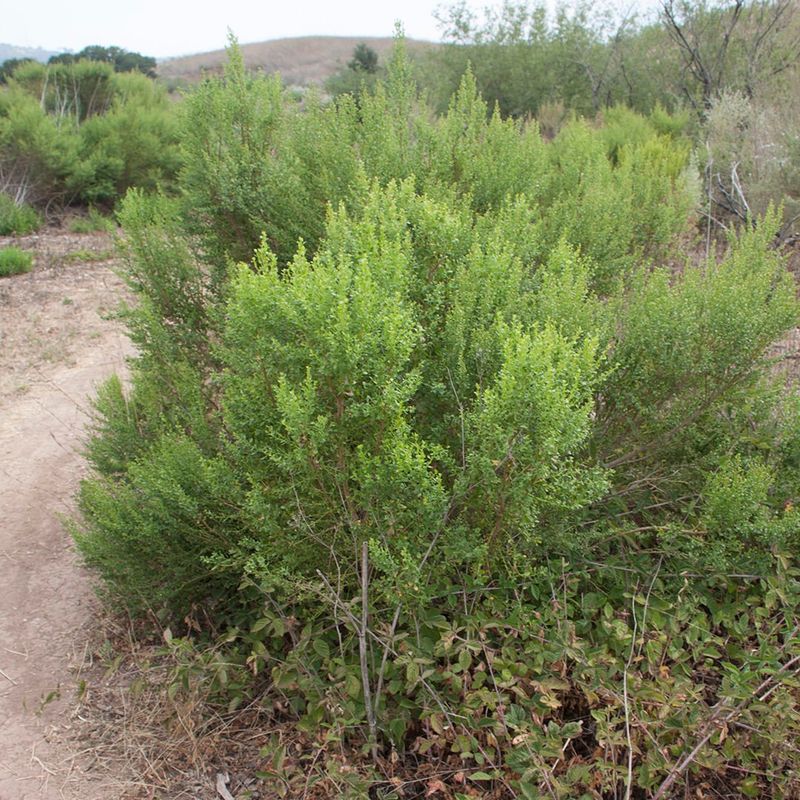
Not every roadside plant in California is a showy wildflower. Coyote brush, or Baccharis pilularis, is a tough, scrubby shrub that quietly does some of the most important ecological work along California roadsides.
It might not stop traffic with its looks, but it is one of the hardest-working native plants in the state.
Coyote brush is incredibly drought-tolerant and grows in a wide range of conditions, from coastal bluffs to dry inland slopes.
You will see it all along California’s Highway 1 and throughout the Coast Ranges, often forming dense thickets on road cuts and disturbed hillsides.
It is one of the first plants to colonize bare ground after a disturbance.
In fall, the female plants produce fluffy white seed clusters that look almost like cotton candy. These catch the wind and carry seeds far and wide, which is part of why coyote brush spreads so efficiently along roadsides.
The flowers, though small, are rich in nectar and attract an impressive number of insects.
Studies have found that coyote brush supports more native insect species than almost any other shrub in California. That makes it a powerhouse for local food webs.
Next time you spot a scruffy-looking shrub along a California road, take a second look. It just might be a coyote brush doing important work right in plain sight.