These Native Plants Survive Texas Heatwaves Even Without Watering
Texas heatwaves do not mess around. When temperatures stay high for days and rain disappears, even strong plants can start looking worn out fast.
Leaves droop, blooms fade, and entire beds can go from lively to stressed before you know it. That is exactly why native plants stand out in Texas gardens. They are not just familiar with the heat. They are built for it.
Some native plants can handle scorching sun, dry soil, and long stretches without watering far better than many popular garden picks. That kind of toughness is a huge advantage for gardeners who want a yard that still looks alive when the weather gets brutal.
It also means less time dragging hoses around and less worry when conditions turn harsh. In a state where extreme heat can feel endless, plants that know how to take care of themselves are worth their weight in gold.
The best part is that tough does not mean dull. Many of these native survivors bring color, texture, and pollinator appeal while standing strong through the hardest part of summer.
Once you see which Texas natives can handle heatwaves without extra watering, your plant choices start getting a whole lot smarter.
1. Texas Sage
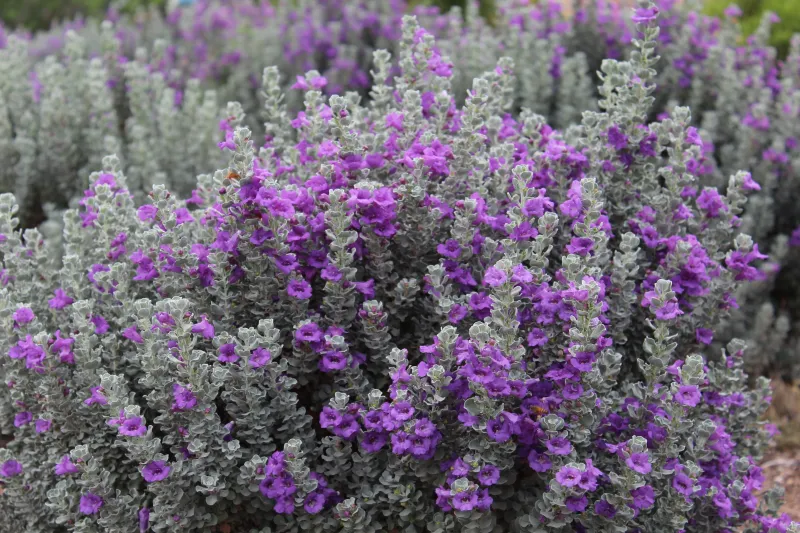
Walk through almost any West Texas neighborhood after a summer rainstorm, and you will likely spot a Texas Sage bush erupting into a cloud of purple blooms. That is actually how many Texans predict rain: when the sage blooms, a storm is coming.
This natural trick has earned it the nickname “barometer bush,” and it is just one of many reasons people across Texas love this plant.
Texas Sage, also called Cenizo or Purple Sage, is a tough evergreen shrub that thrives across the Lone Star State. Its silvery-gray leaves reflect sunlight, which helps it stay cool even when temperatures climb past 100 degrees.
The foliage alone gives any yard a soft, elegant look year-round, even when flowers are not present.
One of the best things about Texas Sage is how little attention it needs. Once it is established in well-drained soil and full sun, it practically takes care of itself.
No regular watering schedule is needed. No fancy fertilizers. Just sunshine, good drainage, and the occasional rainfall that Texas summers do provide.
It typically grows between 3 and 8 feet tall, making it a great choice for privacy hedges or as a standalone accent plant. The purple blooms attract bees and butterflies, adding even more life to your yard.
For Texas gardeners looking for a low-maintenance, heat-loving shrub that delivers serious curb appeal, Texas Sage is a top-tier choice that never disappoints.
2. Blackfoot Daisy
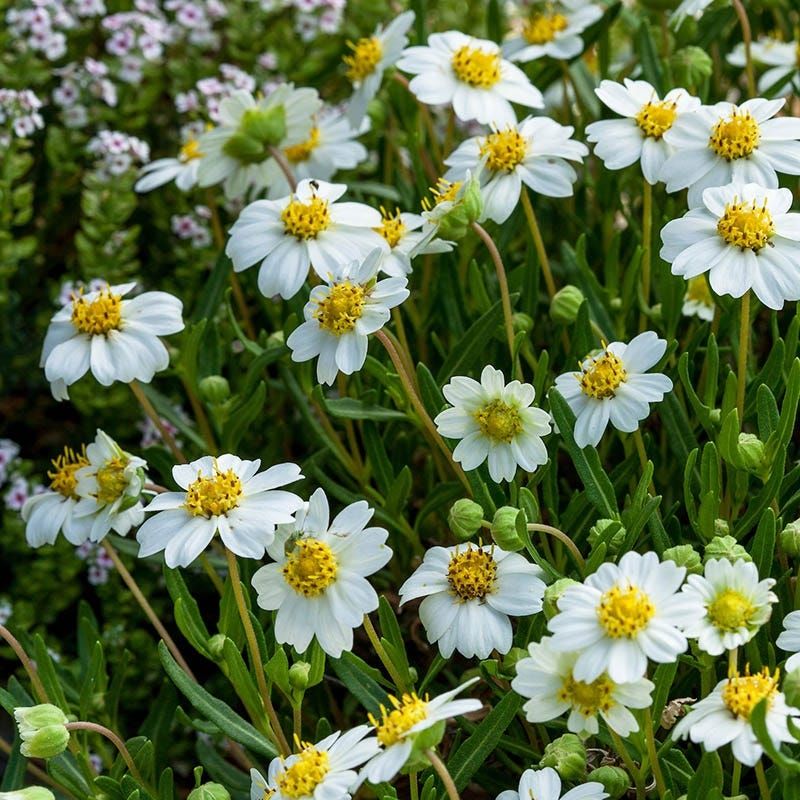
Some plants just make you happy the moment you see them. Blackfoot Daisy is one of those plants.
Its cheerful white petals with sunny yellow centers look like something out of a wildflower meadow, but this little plant is far tougher than it looks.
Native to Texas and the surrounding Southwest, it has learned to thrive where many other flowering plants would struggle. Poor soil? No problem. Intense heat? Bring it on.
Your Texas Garden Changes Every Week. Your Plan Should Too.
Gardening in Texas changes quickly throughout the season. Every Friday you’ll receive a simple weekly plan showing exactly what to plant, prune, fertilize, harvest, and protect so you never miss the right timing.
Blackfoot Daisy grows naturally in rocky, limestone-heavy soils that drain quickly and hold almost no moisture. In fact, giving it too much water or rich soil can actually work against it.
This is a plant that genuinely prefers to be left alone, which makes it perfect for Texas gardeners who want color without constant care.
The blooms are long-lasting and appear from early spring all the way through fall, sometimes even into winter during mild years. That means months of cheerful flowers in your Texas yard with almost no effort on your part.
The plant stays compact, usually reaching about 1 foot tall and 2 feet wide, so it works well along walkways, in rock gardens, or as a border plant.
Bees and butterflies are drawn to the flowers, so planting a few Blackfoot Daisies adds a lively, buzzing energy to your outdoor space.
For a Texas landscape that needs reliable color without the water bill, this sunny little native is a fantastic pick that delivers season after season.
3. Red Yucca
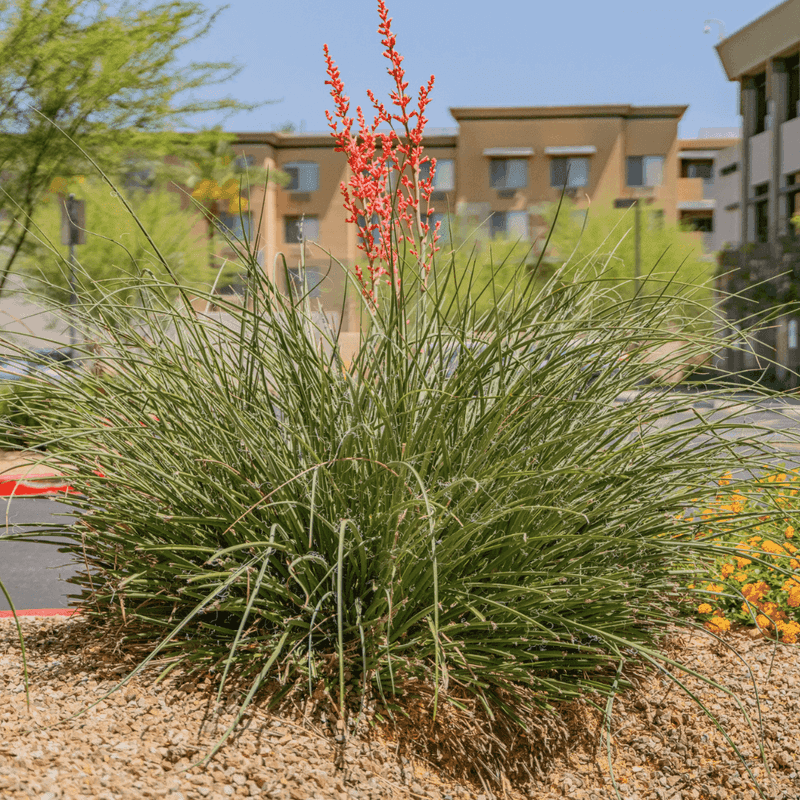
Picture a plant so tough it practically laughs at a Texas heatwave. That is Red Yucca in a nutshell.
Despite the name, Red Yucca is not actually a true yucca. It belongs to the agave family, and it brings all the drought-fighting power you would expect from that tough plant group.
Native to the Chihuahuan Desert region of West Texas, it is built to handle some of the harshest conditions the state can throw at it.
What makes Red Yucca truly special is its dramatic flower show. In late spring and into summer, it sends up tall, arching spikes covered in coral-pink to red tubular flowers.
These blooms are a magnet for hummingbirds, which hover and dart around the plant all season long. Watching hummingbirds visit a Red Yucca in a Texas garden is honestly one of the most satisfying sights in the landscape world.
The plant forms a rosette of long, narrow, grass-like leaves that stay attractive year-round. It does not need irrigation once established and handles full sun beautifully.
Rocky soil, clay soil, sandy soil, it adapts to almost anything as long as water does not pool around its roots.
Red Yucca works well as a focal point in a xeriscape garden, along driveways, or in large container planters on a sunny Texas patio. It is also deer-resistant, which is a major bonus for gardeners in areas where deer regularly browse through yards.
Few native plants offer this combination of drama, wildlife value, and zero-fuss maintenance.
4. Autumn Sage
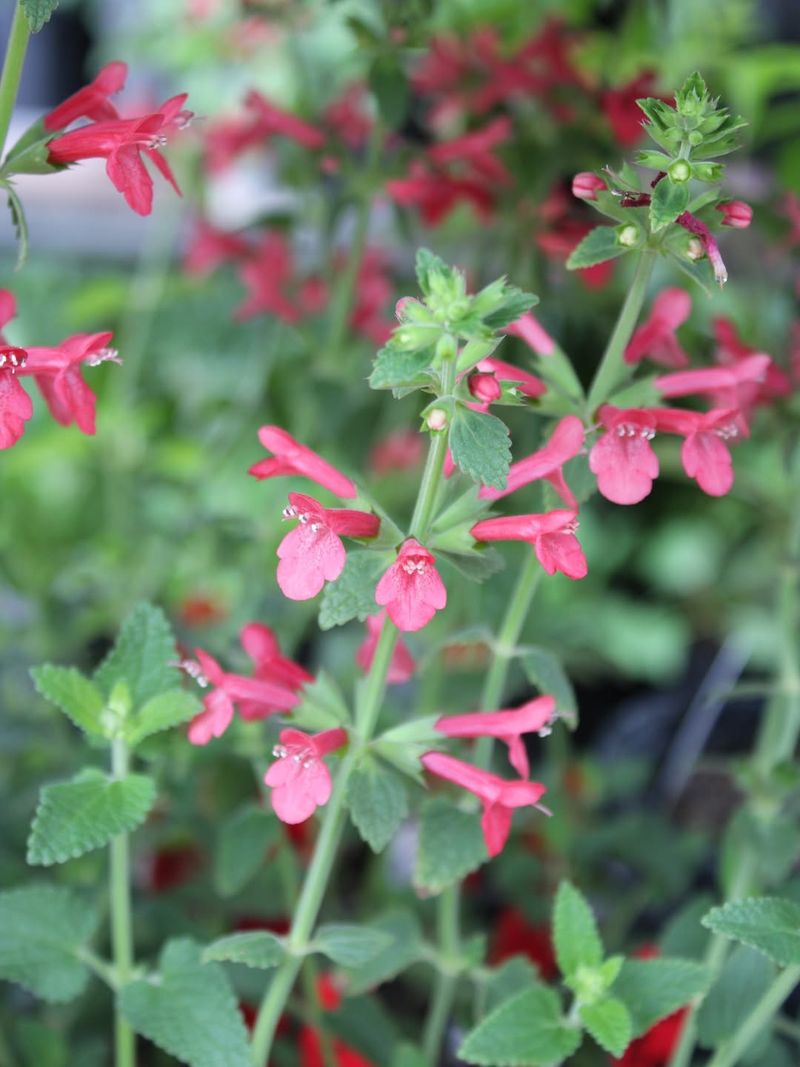
Most flowering plants slow down or stop blooming during the brutal heat of a Texas summer. Autumn Sage does the opposite.
It keeps on flowering through the hottest months and then puts on an even bigger show when cooler fall weather arrives. That kind of staying power is rare, and it is a big reason why this native salvia has become a favorite across Texas landscapes.
Salvia greggii is native to the mountains of West Texas and northern Mexico, where summers are hot and rainfall is unpredictable.
Over time, it developed a deep root system and waxy leaves that help it conserve moisture and push through dry spells without missing a beat.
Once established in your yard, it needs very little supplemental watering, even during extended dry periods.
The flowers are typically bright red, though you can also find varieties in pink, coral, white, and purple. All of them attract hummingbirds and butterflies, making Autumn Sage a wildlife-friendly choice for any Texas garden.
It grows into a tidy, rounded shrub about 2 to 3 feet tall, fitting naturally into borders, raised beds, or mixed plantings. Full sun brings out the best in Autumn Sage. The more sunlight it gets, the more it blooms.
It also handles poor, well-drained soil without complaint, and it does not need fertilizing to perform well.
For Texas gardeners who want a reliable, colorful, pollinator-friendly plant that thrives from spring through fall, Autumn Sage is a near-perfect native option worth every inch of garden space.
5. Damianita
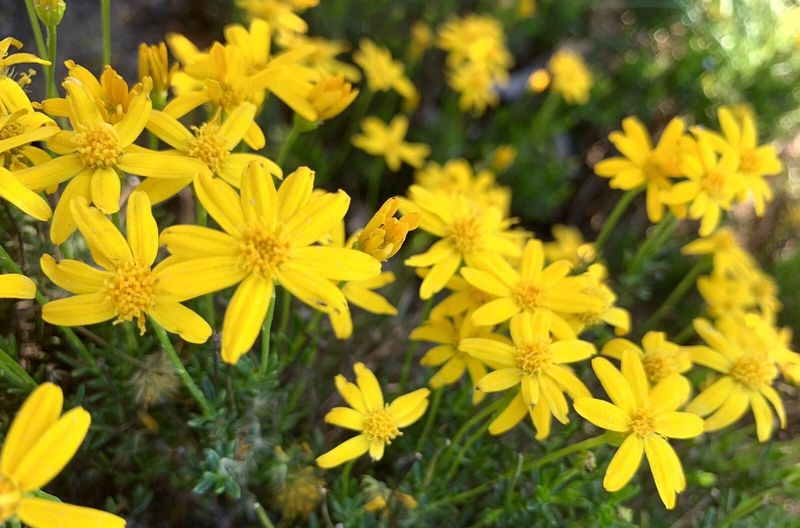
Not every great garden plant needs to be tall and showy to earn its place. Damianita proves that point beautifully.
This compact little shrub from the rocky hills of West Texas and northern Mexico stays low to the ground, rarely growing more than 18 inches tall, but it covers itself in bright golden-yellow flowers that are almost impossible to miss.
Up close, the blooms smell faintly like chamomile, adding an unexpected sensory bonus to your garden experience.
Rocky, alkaline soil is where Damianita truly shines. In fact, the poorer and more well-drained the soil, the happier this plant tends to be.
It is naturally adapted to the limestone-heavy terrain found across much of central and West Texas, so it fits right into the native landscape without any soil amendments or special treatment needed.
Damianita blooms heavily in spring and often again in fall, with lighter blooming possible throughout summer when conditions are right. The evergreen foliage stays attractive between bloom cycles, giving your yard structure and green color even during dry stretches.
It is also deer-resistant, which is a practical bonus in many parts of Texas where deer pressure is a real gardening challenge.
Use Damianita along rock walls, in xeriscape borders, or mixed with other native plants like Texas Sage and Red Yucca for a low-water Texas landscape full of texture and color. Once established, it asks for almost nothing in return.
For gardeners in Texas who want reliable, cheerful blooms without constant watering, Damianita is a hidden gem worth knowing.
6. Buffalo Grass
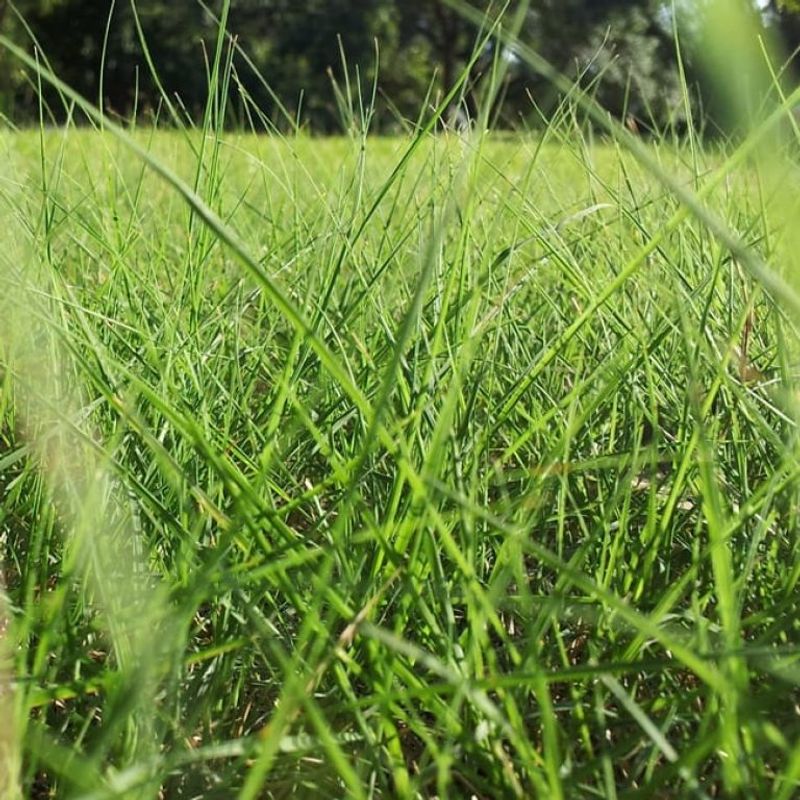
Before European settlers arrived, Buffalo Grass covered millions of acres of the Great Plains, including vast stretches of Texas. Massive herds of bison grazed on it, which is exactly how it got its name.
Today, this same tough native grass is making a strong comeback as a water-smart alternative to traditional lawns across Texas, and for very good reason.
Standard lawn grasses like Bermuda and St. Augustine need regular watering to stay green through a Texas summer. Buffalo Grass needs almost none.
It goes dormant during extreme dry spells, turning a golden-tan color, then bounces back to green when moisture returns. That natural survival strategy is what makes it so well-suited to Texas conditions where summer rainfall can be unpredictable at best.
The grass grows low and fine-textured, usually reaching just 4 to 6 inches tall without mowing. That means significantly less time pushing a lawn mower around your yard.
It also spreads on its own through surface runners called stolons, filling in bare spots over time without much help from you.
Buffalo Grass performs best in full sun and clay or loamy soils, which happen to be common across central and North Texas. It does not do as well in sandy soils or heavily shaded areas, so placement matters.
For Texas homeowners tired of high water bills and constant lawn maintenance, switching to Buffalo Grass is a practical, eco-friendly solution that looks great and holds up even through the toughest Texas heatwaves without breaking a sweat.
7. Prickly Pear Cactus
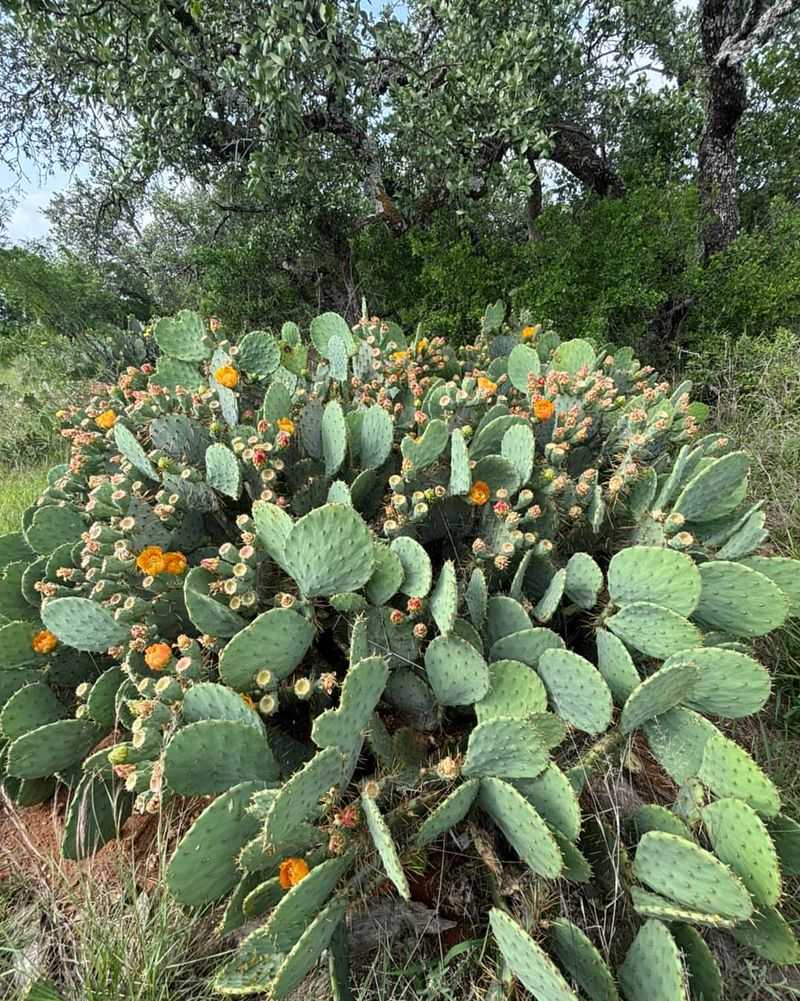
If there is one plant that perfectly captures the spirit of Texas, it just might be the Prickly Pear Cactus. Bold, resilient, a little spiky, and surprisingly generous, this iconic native plant has been part of the Texas landscape for thousands of years.
Indigenous communities across the region relied on it for food, medicine, and water, and it remains one of the most recognizable plants in the entire state today.
Prickly Pear is about as drought-tolerant as a plant can get. Its thick, flat pads, called cladodes, store water inside their fleshy tissue, allowing the plant to survive months without a single drop of rain.
During Texas heatwaves that would stress almost any other plant, Prickly Pear just keeps going, looking as calm and unbothered as ever. No irrigation system required.
In late spring, the plant bursts into bloom with large, silky flowers in shades of yellow, orange, or pink. These give way to the famous red-purple fruits called tunas, which are edible and often used to make jelly, syrup, candy, and even drinks.
The flat green pads are also edible after removing the spines, and they are commonly used in Mexican and Tex-Mex cooking as nopales.
Prickly Pear grows in almost any well-drained soil and thrives in full sun. It requires zero supplemental watering once established and handles Texas summers without flinching.
For a truly no-fuss, drought-proof, culturally rich native plant that adds serious visual impact to any Texas yard, Prickly Pear Cactus stands in a class of its own.