8 Indoor Plants With Long-Lasting Flowers Perfect For Arizona Homes
Some indoor plants give a home a quick burst of color, then seem to fade almost as soon as they settle in.
That is why long lasting flowers feel so rewarding, especially in Arizona homes where indoor plants often do a lot of the heavy lifting when outdoor conditions turn harsh.
A blooming plant near a bright window, on a kitchen counter, or in a quiet corner can change the mood of the whole room without needing much space.
The best part is that lasting color indoors does not have to feel rare or hard to find.
Some plants keep their flowers around far longer than people expect, which makes them especially appealing for anyone who wants beauty that does not disappear after a few days.
In Arizona, that kind of staying power matters even more.
Once a flowering houseplant starts performing well inside, it becomes more than decoration. It starts to make the whole home feel warmer, fresher, and much more alive.
1. Phalaenopsis Orchid Produces Elegant Blooms That Last For Months
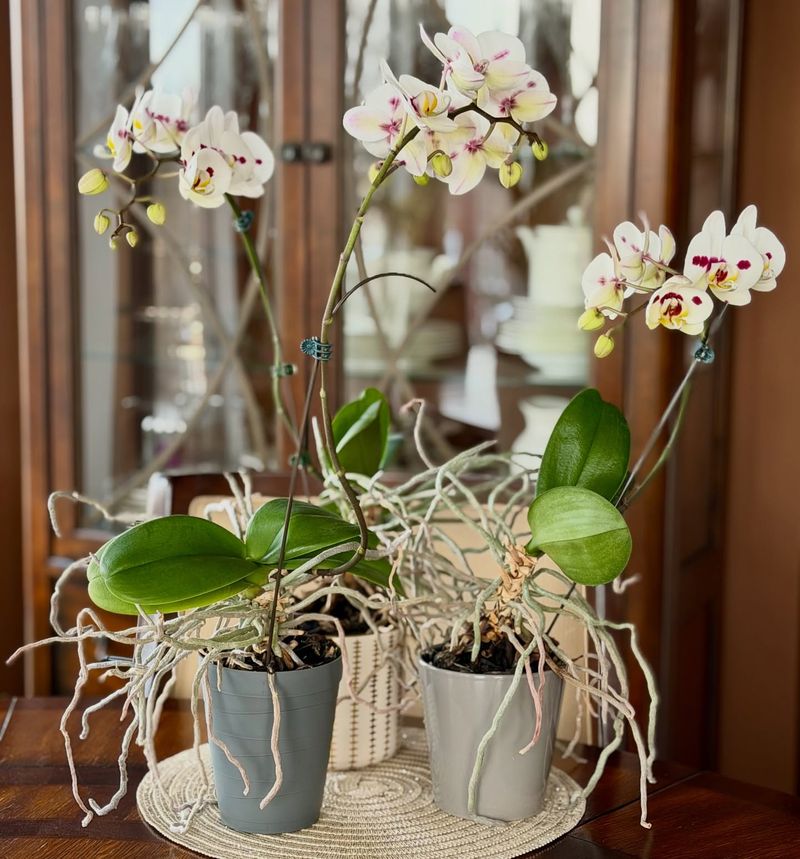
Few indoor plants can hold a bloom for three to four months straight, but the Phalaenopsis orchid pulls it off without much fuss. Arizona homes with bright, indirect light near east or west-facing windows are practically ideal for this plant.
Put it too close to a south-facing window in Phoenix and the leaves will bleach out, so keep it a foot or two back from intense afternoon sun.
Watering is where most people go wrong. Once a week is usually enough, and the best method is to run water through the pot slowly and let it drain completely.
Never let the roots sit in standing water, especially in Arizona where pots can stay warm and moisture can cause rot faster than expected.
After the blooms fade, cut the spike back to a node rather than all the way to the base. With good light and a monthly dose of diluted orchid fertilizer, a rebloom is very possible.
Orchid bark mix works far better than regular potting soil here. Dry Arizona air can stress the roots, so misting occasionally or placing the pot near a small humidifier helps.
Roots that look silvery green are healthy. Patience is key, but the payoff of watching fresh buds open is completely worth it.
2. Anthurium Offers Glossy Flowers With Long Lasting Color
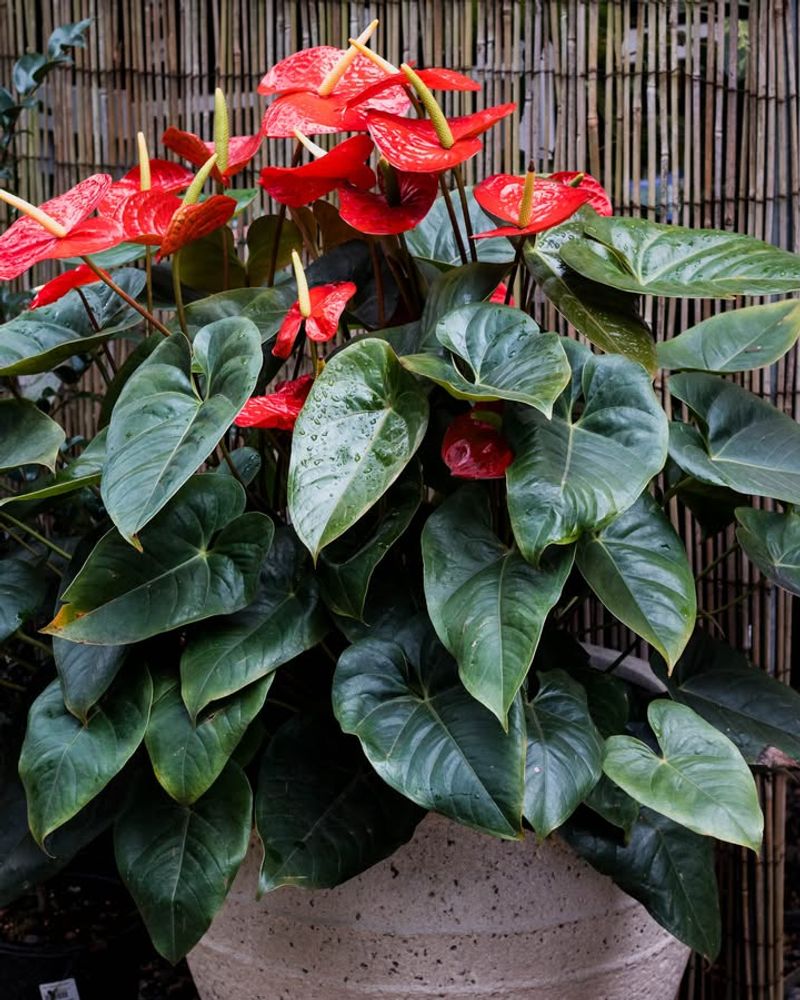
Anthuriums have a quality that most flowering houseplants simply do not have: their blooms are not actually petals. That waxy, heart-shaped structure you see is called a spathe, and it can hold its color and shape for six to eight weeks at a stretch.
In an Arizona home, that kind of staying power is a huge deal when you want consistent color without constant replanting.
Bright, indirect light is what anthuriums want most. A spot a few feet from a sunny window in Tucson or Mesa works well.
Direct sun scorches the leaves fast, and low light slows flowering significantly. Keep the soil slightly moist but never soggy, and make sure the pot drains properly.
Your Arizona Garden Changes Every Week. Your Plan Should Too.
Gardening in Arizona changes quickly throughout the season. Every Friday you’ll receive a simple weekly plan showing exactly what to plant, prune, fertilize, harvest, and protect so you never miss the right timing.
Arizona’s dry indoor air is probably the biggest challenge for anthuriums. Low humidity causes leaf edges to brown and can slow bloom production.
Grouping your anthurium with other plants helps create a small pocket of moisture around them. A pebble tray with water underneath the pot is another easy trick that actually works.
Feed with a balanced liquid fertilizer every six to eight weeks during spring and summer. Anthuriums come in red, pink, white, and even deep purple, so picking a color that fits your space is part of the fun.
Healthy plants bloom almost continuously.
3. Peace Lily Keeps Blooming Indoors With Minimal Effort
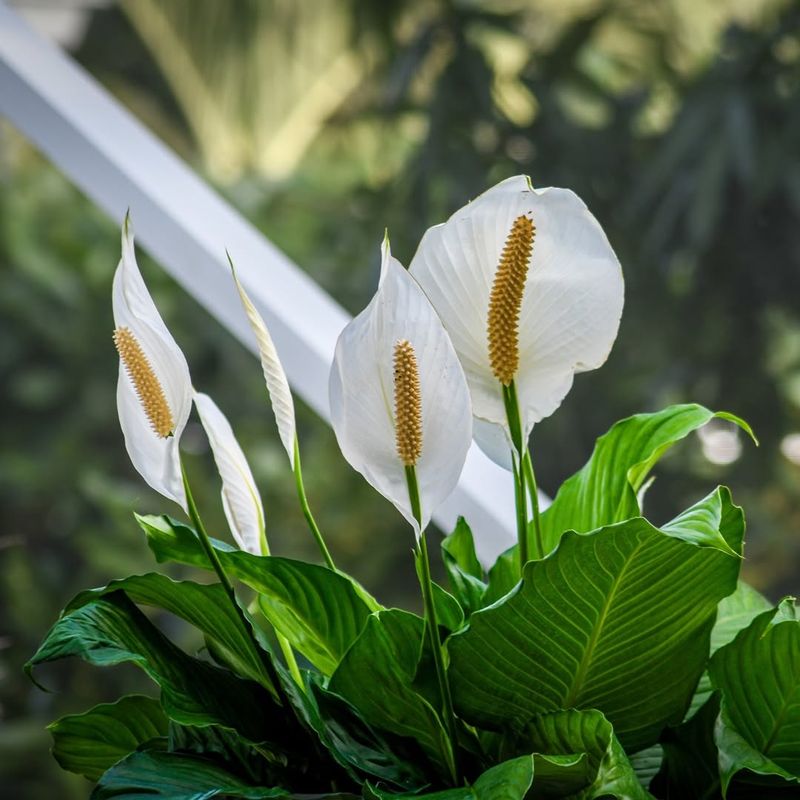
Walk into almost any Arizona home with healthy indoor plants and there is a good chance a peace lily is somewhere in the mix. It tolerates low light better than most flowering plants, which makes it useful in rooms that do not get a lot of natural sun.
Still, brighter indirect light will push it to produce more of those clean white blooms.
Peace lilies are pretty vocal about their water needs. When they start to droop slightly, that is your cue to water.
Do not wait until the leaves go limp and flat, but a little drooping is normal and not harmful. In Arizona, where indoor air tends to be very dry, the soil can dry out faster than expected, so checking moisture levels every few days is a smart habit.
Blooms typically appear in spring and sometimes again in fall. Each flower can last several weeks before it starts to turn green and fade.
Snipping off spent flowers right at the base keeps the plant looking neat and encourages new growth. Wipe the broad leaves down with a damp cloth every couple of weeks to remove dust, which builds up fast in desert environments.
Peace lilies do not need much fertilizer, just a light feeding in spring and summer is plenty to keep them happy and blooming.
4. Kalanchoe Brings Bright Flowers That Hold For Weeks
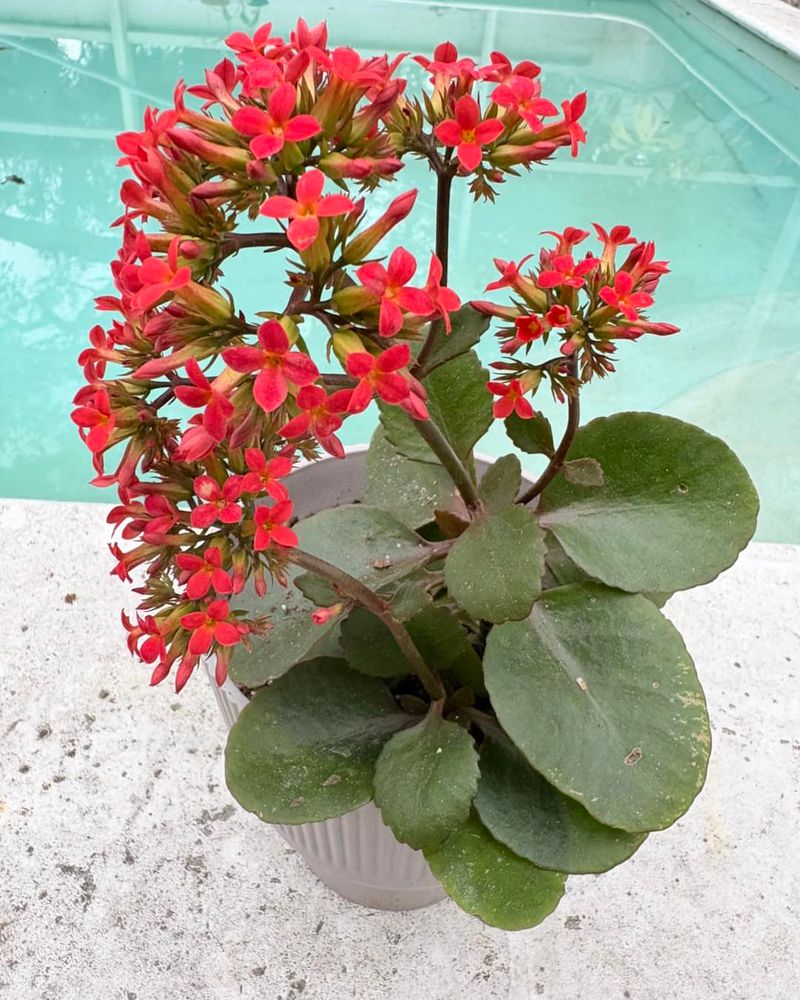
Kalanchoe is one of those plants that just refuses to look tired. Its small, tightly packed flower clusters come in orange, red, yellow, pink, and white, and each bloom cycle lasts four to six weeks easily.
For Arizona homes where harsh outdoor conditions make colorful gardening difficult in summer, having a kalanchoe on the windowsill is a reliable mood booster.
Being a succulent, it handles dry indoor air without complaint. Arizona’s low humidity is practically perfect for kalanchoe, and it does not need misting or extra humidity tricks.
Water it deeply, then let the soil dry out completely before watering again. Overwatering is the main thing to avoid with this plant, and in Arizona’s warm indoor temperatures, the soil dries out at a good pace anyway.
Bright light is where kalanchoe performs best. A south or west-facing window in Scottsdale or Phoenix gives it exactly what it craves.
After the flowers fade, trim them back and reduce watering slightly. To encourage reblooming, the plant needs about six weeks of longer nights, around fourteen hours of darkness per day.
Covering it with a cardboard box each evening and uncovering it in the morning sounds tedious but genuinely works. Within a couple of months, new buds will appear.
Fertilizing lightly during active growth keeps the foliage healthy between bloom cycles.
5. African Violet Stays Compact With Repeated Flower Cycles
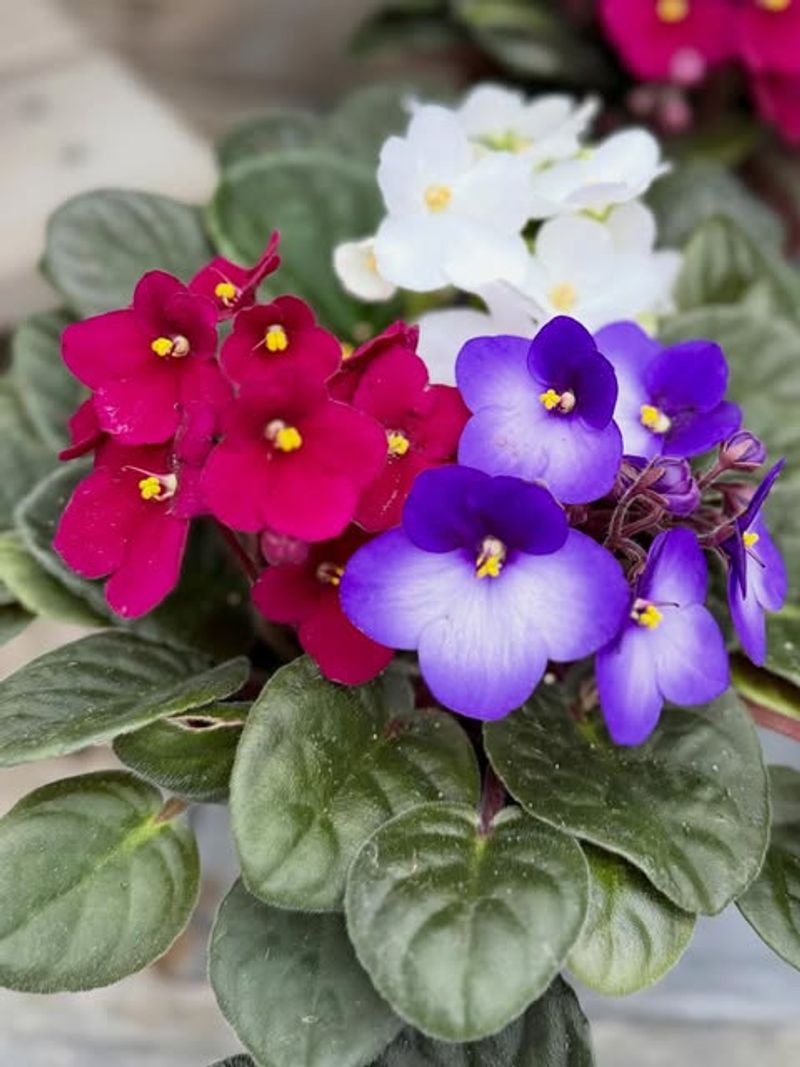
African violets have been a staple of American windowsills for decades, and honestly, their reputation is well earned. What makes them stand out in Arizona is their ability to bloom almost continuously when given the right conditions.
Unlike plants that bloom once and take a long season to recover, African violets can cycle through flowers repeatedly throughout the year.
Bright, indirect light is the sweet spot. An east-facing window in an Arizona home gives them gentle morning sun without the scorching afternoon intensity that south and west windows deliver.
If natural light is limited, a grow light placed about twelve inches above the plant for twelve to fourteen hours a day works extremely well and keeps blooming consistent.
Watering from the bottom is the classic method for good reason. Pour water into the saucer and let the plant soak it up for about thirty minutes, then dump out whatever is left.
Getting water on the fuzzy leaves causes brown spots that do not go away. African violets prefer slightly snug pots, so do not rush to repot into a bigger container.
A pot that is about one-third the width of the plant’s spread is the right size. Feed with an African violet specific fertilizer every two weeks during spring and summer, and you will have a compact, cheerful plant that earns its spot on any shelf or countertop in your home.
6. Bromeliad Produces Long Lasting Colorful Bracts Indoors
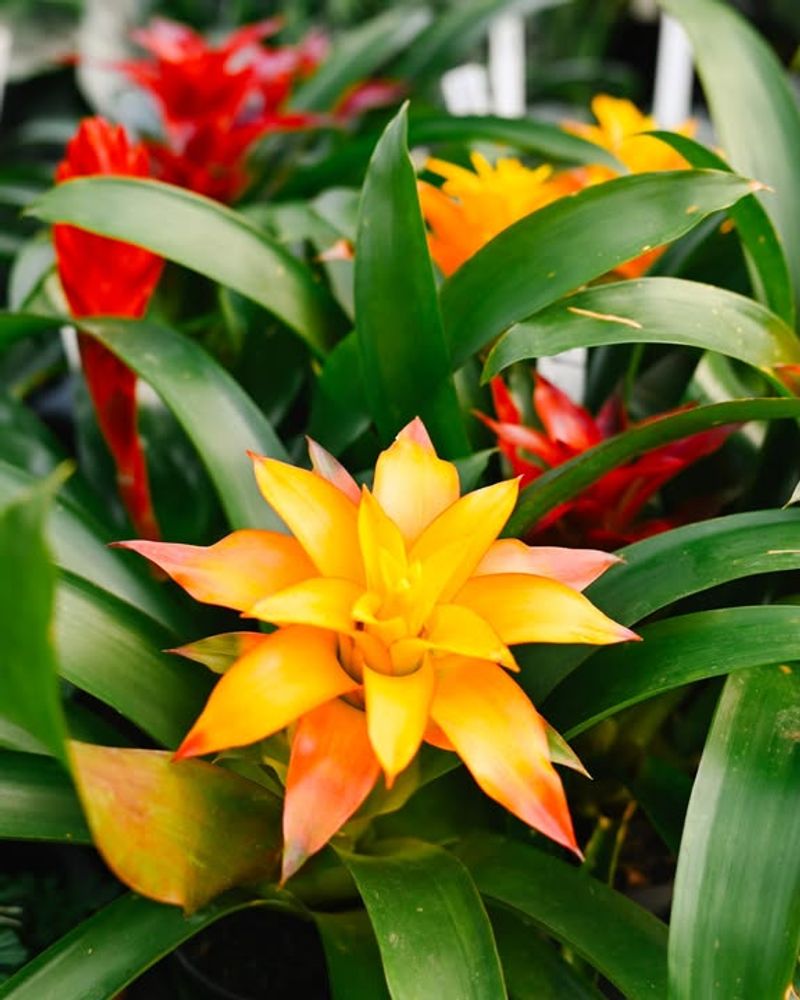
Bromeliads look like something straight out of a tropical rainforest, which makes them an unexpected but stunning choice for Arizona homes. The colorful part that most people call the flower is actually a bract, which is a modified leaf.
That bract can hold its color for anywhere from three to six months, making bromeliads one of the longest-lasting options on this entire list.
Arizona’s dry indoor air does not bother them much as long as you use the right watering method. Bromeliads have a central cup formed by their leaves, and that is where the water goes.
Fill the cup and let it sit, refreshing it every week or two to prevent stagnation. The soil in the pot should stay barely moist, not wet.
Roots mainly anchor the plant rather than drink heavily, so soggy soil causes more harm than good.
Bright, indirect light near a window keeps the colors vivid. Direct Arizona sun will bleach the bracts and damage the leaves.
Once the bract eventually fades, the mother plant will send up small offshoots called pups from the base. Those pups can be separated and potted individually once they reach about half the size of the parent plant.
Each pup will eventually produce its own bract and bloom cycle. It takes patience, but growing new plants from a single bromeliad is genuinely rewarding and costs nothing extra.
7. Christmas Cactus Blooms For Weeks With Proper Care
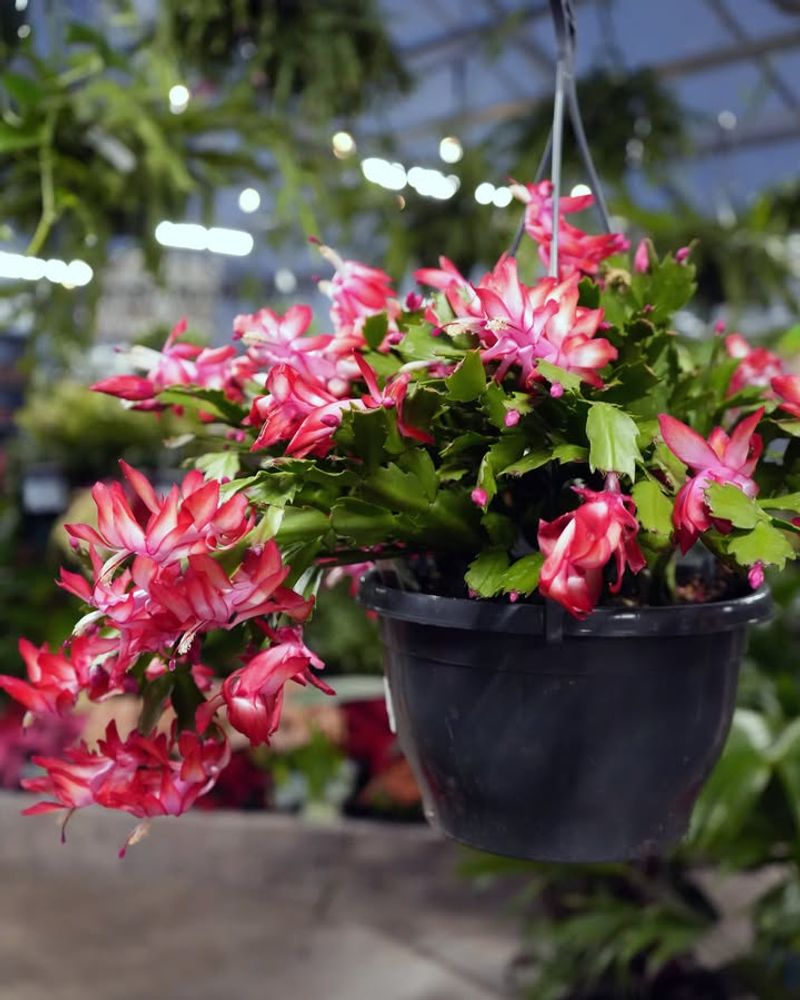
Despite its name, a Christmas cactus is not a desert cactus at all. It actually comes from humid forest environments in Brazil, which means it prefers more moisture than the typical cactus you might picture.
That said, it adapts well to Arizona homes as long as you stay on top of a few key details that make a real difference in whether it blooms or just sits there looking green.
Timing is everything with this plant. Flower buds form when the plant gets cooler temperatures and longer periods of darkness in fall.
In Arizona, where indoor temperatures stay warm year-round, you may need to move the plant to a cooler room or near a window where nights are naturally cooler. Limiting light to about twelve hours a day for six weeks in fall is the trigger for bud development.
Once buds appear, keep the plant in consistent conditions. Moving it around, changing the temperature suddenly, or letting the soil dry out completely can cause buds to drop before they open, which is incredibly frustrating after all that effort.
Water when the top inch of soil feels dry, and keep it away from heating vents, which are everywhere in Arizona homes during winter. Blooms in shades of pink, red, white, and purple open one by one over several weeks.
After flowering, give it a rest period with reduced watering before building back up in spring.
8. Clivia Produces Bold Flowers That Last Longer Than Most Indoor Plants
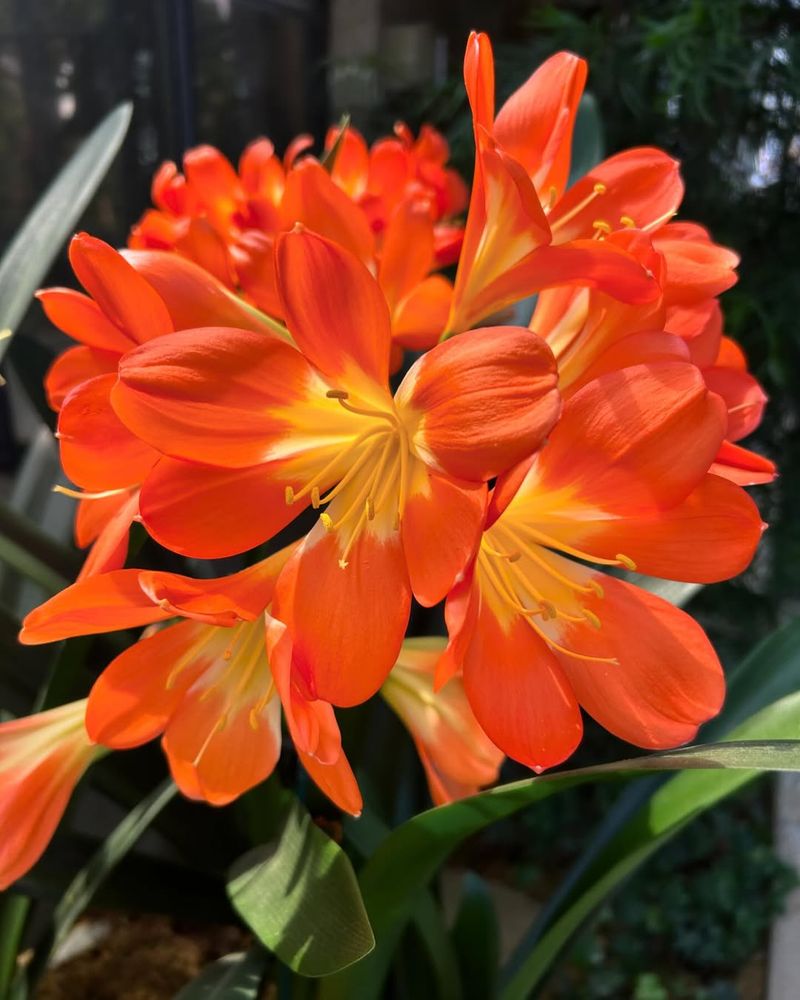
Clivia is not a plant you see in every home, which is a shame because it is genuinely impressive. Clusters of trumpet-shaped flowers in bold orange, yellow, or red rise up on tall stalks above dark, strap-like leaves.
Each bloom cluster can last three to four weeks, and the plant itself is nearly indestructible compared to many other flowering houseplants available for Arizona homes.
Bright, indirect light suits clivia well. A north or east-facing window in a Tucson or Phoenix home provides enough light to keep it healthy and encourage blooming.
Direct sun causes leaf burn, so sheer curtains on a south-facing window are a good compromise if that is the only option. The dark green foliage stays attractive even when the plant is not in bloom, so it earns its space year-round.
Clivia actually needs a cool, dry rest period in fall and winter to set flower buds. Reduce watering significantly from November through January and move it to a cooler spot if possible, around fifty-five to sixty degrees Fahrenheit.
Then resume normal watering in late winter and watch for the flower stalk to emerge. Fertilize with a balanced fertilizer from spring through summer every three to four weeks.
Clivia prefers to be slightly rootbound, so hold off on repotting until roots are visibly pushing out of the drainage holes. Patience with this plant pays off in a big way come bloom time.