These 9 Groundcovers Replace Grass In Western Oregon Yards
In Western Oregon, grass is starting to lose its grip on the yard. Sure, a classic lawn has its place, but it also comes with endless mowing, muddy patches, summer watering, and that familiar cycle of trying to keep it looking alive when it clearly has other plans.
That is why more homeowners are swapping traditional turf for groundcovers that look great and ask for a lot less in return.
These low-growing plants can fill space, soften paths, handle the region’s rainy seasons, and add way more personality than a plain stretch of grass ever could.
Some stay lush and green, some burst into bloom, and others create a thick carpet that helps crowd out weeds. The result is a yard that feels more interesting, more relaxed, and a whole lot easier to manage.
For anyone tired of babysitting a lawn, groundcovers are starting to look like the smarter and prettier choice.
1. Kinnikinnick
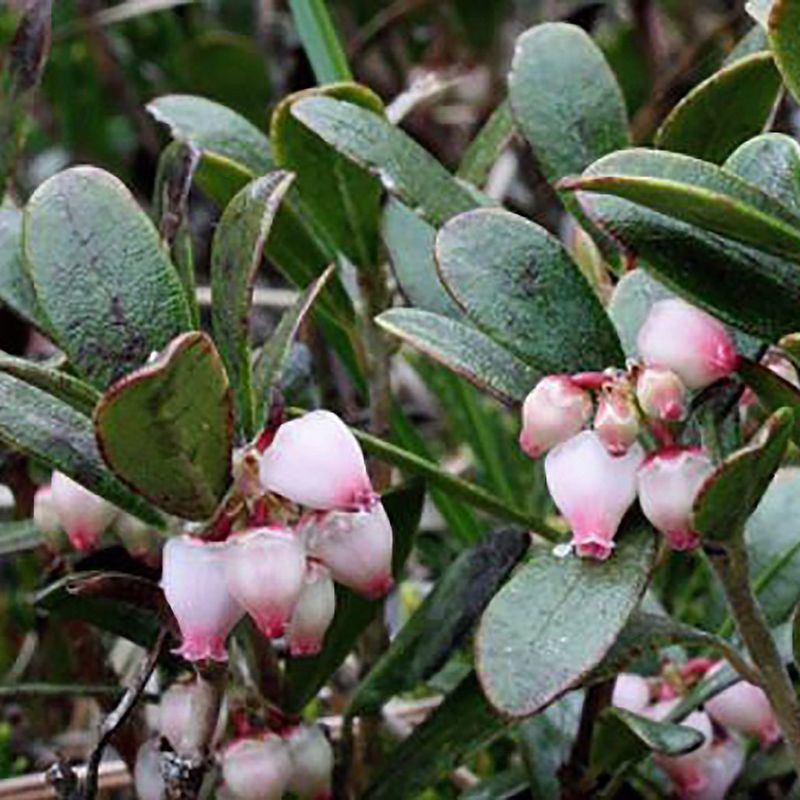
Few plants are as tough and rewarding as Kinnikinnick, a low-growing evergreen shrub that hugs the ground and spreads beautifully over time. Known scientifically as Arctostaphylos uva-ursi, it is native to the Pacific Northwest and thrives in the well-drained soils common across Western Oregon.
Its small, leathery leaves stay green all year long, giving your yard color even in the middle of winter.
In spring, tiny white to pink bell-shaped flowers bloom across the plant. By fall, bright red berries appear, attracting local birds and pollinators to your yard.
It is a plant that gives back to the ecosystem without you having to do much at all.
Kinnikinnick loves full sun and handles dry conditions well once it gets established. It does not need much fertilizer or pruning, making it one of the easiest groundcovers to maintain.
Plant it on slopes or along pathways where grass struggles to grow. Space plants about two feet apart and water them regularly during the first season.
After that, nature takes over. For Western Oregon homeowners who want a native, wildlife-friendly alternative to grass, Kinnikinnick is a top-tier choice that rarely disappoints.
2. Creeping Thyme
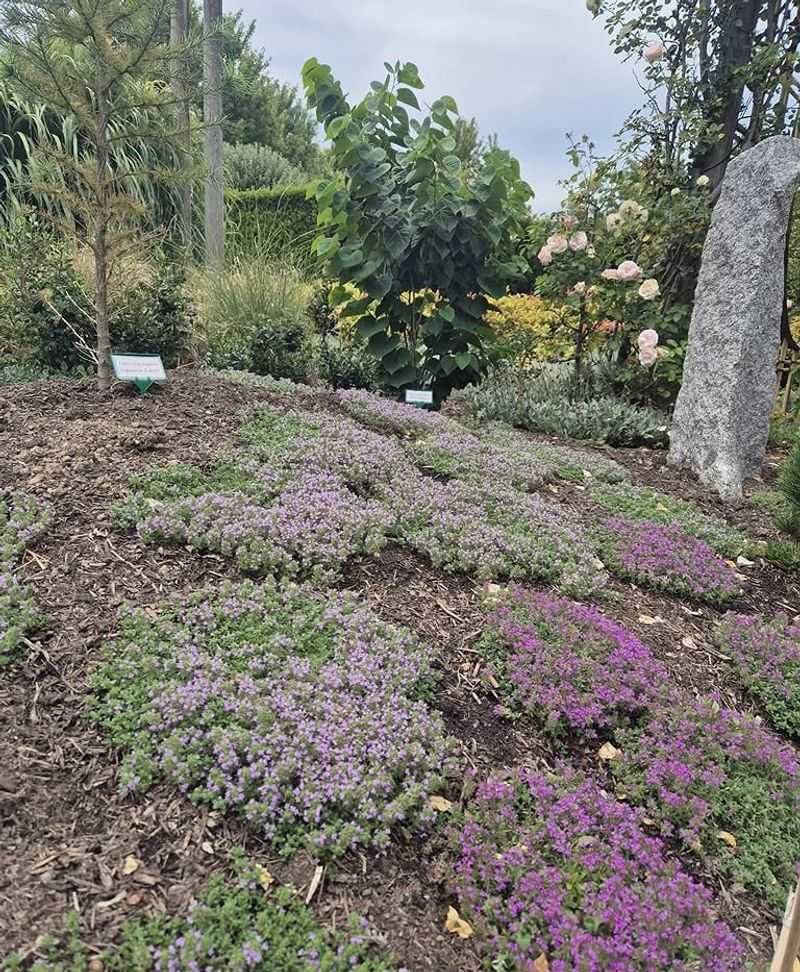
Walk across a patch of Creeping Thyme and you will immediately notice its wonderful herbal scent rising up from the ground. That fragrance alone makes it one of the most popular grass alternatives in Western Oregon yards.
This low-growing perennial spreads into a thick, soft mat that stays only a few inches tall, making mowing completely unnecessary.
Creeping Thyme thrives in full sun and handles dry soil like a champion. Western Oregon summers can get warm and dry, and this plant handles that season without missing a beat.
It blooms in late spring and early summer, covering itself in tiny pink or purple flowers that attract bees and butterflies by the dozens.
One of the coolest things about Creeping Thyme is that it can handle light foot traffic. Plant it between stepping stones or along garden paths for a stunning, functional look.
It grows well in poor or sandy soils, so you do not need to amend your ground much before planting. Simply clear the area, loosen the soil, and set your plants about one foot apart.
Your Oregon Garden Changes Every Week. Your Plan Should Too.
Gardening in Oregon changes quickly throughout the season. Every Friday you’ll receive a simple weekly plan showing exactly what to plant, prune, fertilize, harvest, and protect so you never miss the right timing.
Within a couple of seasons, you will have a lush, fragrant carpet that makes your neighbors do a double take every time they walk by.
3. Bugleweed
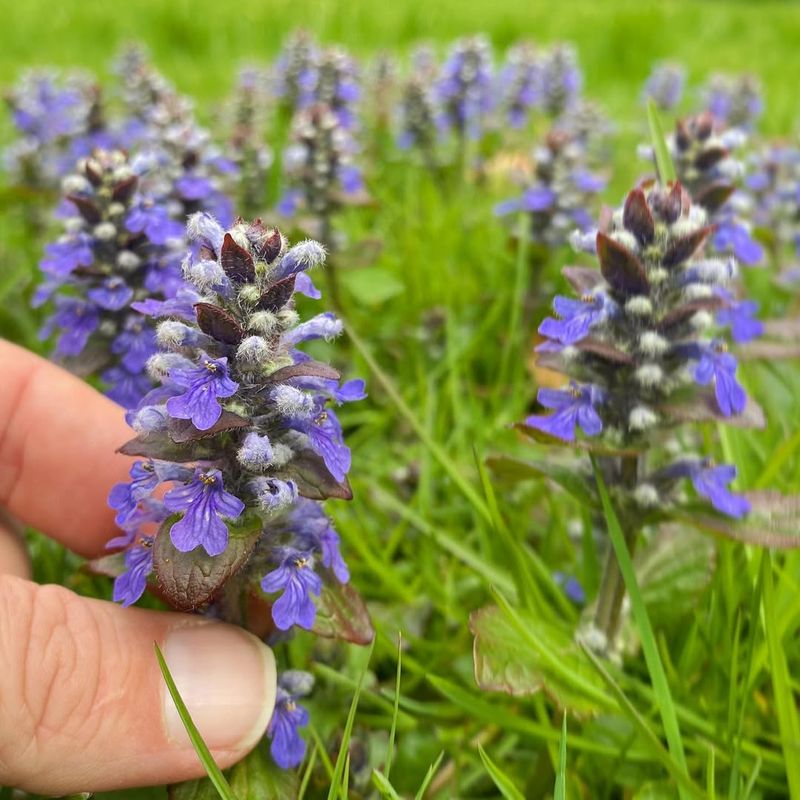
Shady yards in Western Oregon meet their match with Bugleweed, a fast-spreading groundcover that thrives where grass gives up entirely. Also called Ajuga reptans, this plant produces striking rosettes of dark, glossy leaves that come in shades of green, bronze, and purple depending on the variety.
It fills in bare spots quickly and creates a rich, layered look under trees and along shaded borders.
Every spring, Bugleweed sends up tall spikes of blue or purple flowers that stand about six inches high. Those blooms are a magnet for bees and other pollinators, making your yard a little more alive and buzzing with activity.
After flowering, the plant settles back into its low, leafy form and keeps the ground covered all season.
Did you know Bugleweed can spread so well that it occasionally needs to be pulled back from garden beds or lawn edges? Keep an eye on it during the growing season and trim the edges once or twice a year to keep it tidy.
It tolerates moist soil really well, which is great news for Western Oregon winters. Plant it in part shade to full shade for the best results.
It is a reliable, bold-looking plant that makes a strong visual statement with almost no effort required from you.
4. Corsican Sandwort
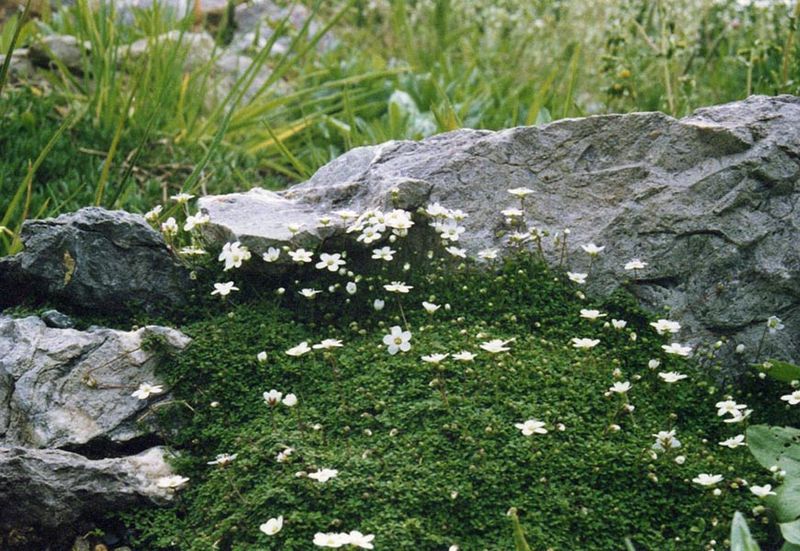
Imagine a groundcover so fine and delicate it looks like a living green velvet cushion pressed between your stepping stones. That is exactly what Corsican Sandwort brings to a Western Oregon garden.
Scientifically known as Arenaria balearica, it forms a tight, moss-like mat of tiny bright green leaves that stays low and dense throughout the year.
This plant is perfect for filling the gaps between pavers, rocks, and stepping stones. It handles light foot traffic better than many other groundcovers, which makes it a practical choice for garden paths and patios.
In spring, small white star-shaped flowers pop up across the mat, adding a subtle charm that feels almost magical up close.
Corsican Sandwort prefers cool, moist conditions, which means Western Oregon is practically its ideal home. The mild, rainy winters and cool springs here give it exactly what it needs to spread and thrive.
Plant it in part shade to full shade for the best coverage. It does not do well in hot, dry spots, so avoid placing it in areas that get intense afternoon sun during summer.
Keep the soil consistently moist during the first growing season and it will establish quickly. Once settled in, it requires very little care and keeps your yard looking neat, lush, and beautifully textured all year long.
5. Rupturewort
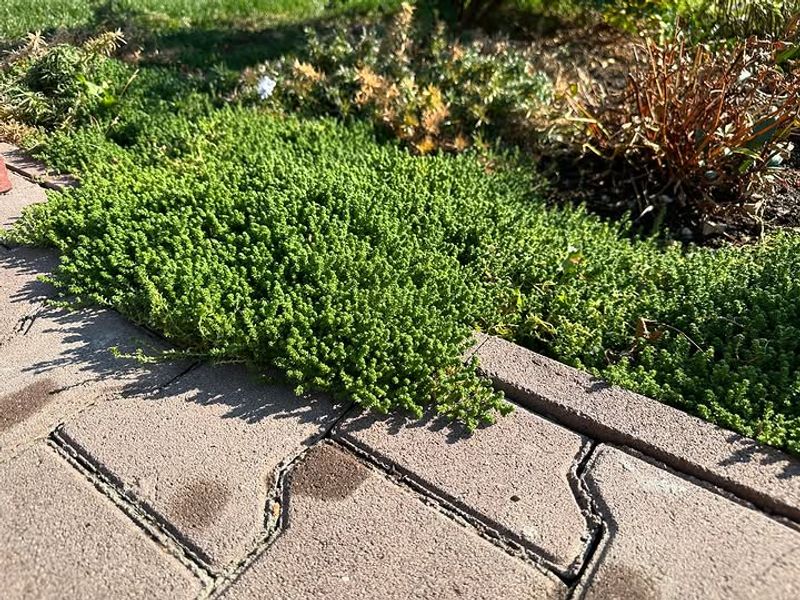
Do not let the unusual name fool you. Rupturewort, also known as Herniaria glabra, is one of the most underrated groundcovers you can plant in a Western Oregon yard.
It forms a perfectly flat, dense mat of tiny emerald-green leaves that stays so low it almost looks like a painted surface on the ground. It is the kind of plant that makes visitors stop and ask what it is.
One of its biggest selling points is its ability to handle foot traffic. Unlike many delicate groundcovers, Rupturewort holds up well when people walk across it regularly.
Plant it between stepping stones, in rock gardens, or anywhere you need a tough, attractive filler that does not grow tall or require mowing.
Rupturewort loves full sun and well-drained soil, making it a solid choice for sunny spots in Western Oregon where grass tends to thin out or struggle during dry summers. It is also drought-tolerant once established, which saves water and reduces your yard maintenance load significantly.
Space plants about six to twelve inches apart for quick coverage. The leaves turn a warm reddish-bronze in fall and winter, giving your yard a subtle seasonal color change.
It is a small plant with a big personality that earns its place in any low-maintenance landscape.
6. Fleabane
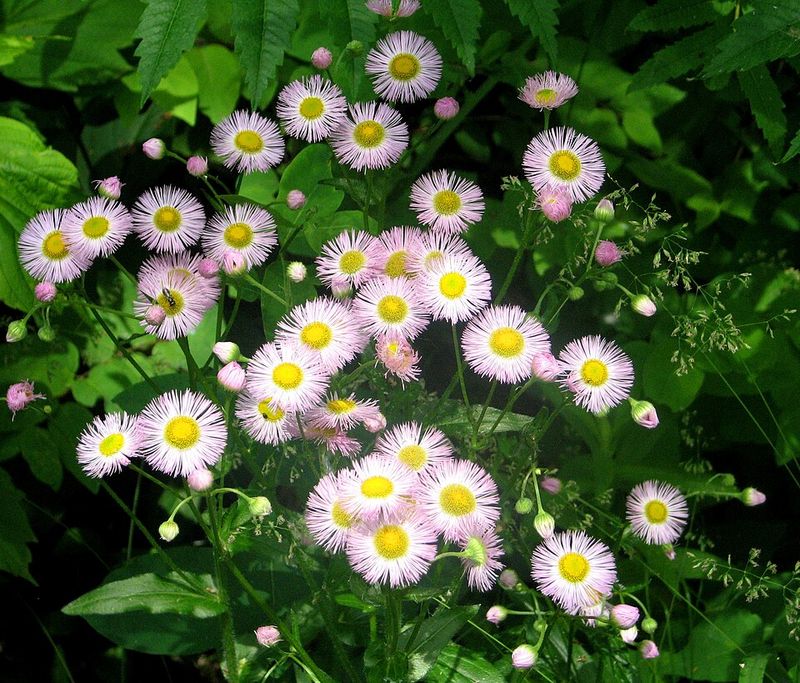
Cheerful and wildly charming, Fleabane is a groundcover that brings a meadow-like energy to any Western Oregon yard. The plant produces masses of small daisy-like flowers with thin white or lavender petals surrounding a bright yellow center.
It blooms for a long stretch from late spring through summer, keeping your yard looking lively and colorful for months at a time.
Fleabane, particularly Erigeron species native to the Pacific Northwest, grows well in rocky or sandy soils where other plants struggle. It is a natural fit for slopes, rock gardens, and dry sunny areas where grass simply refuses to cooperate.
The plant stays relatively low to the ground and spreads at a manageable pace, so it will not take over your entire yard overnight.
Pollinators absolutely love Fleabane. Bees, butterflies, and even small native flies flock to its flowers throughout the blooming season, turning your yard into a mini wildlife habitat.
Western Oregon gardeners who want to support the local ecosystem will find this plant to be a wonderful addition to their landscape. Water it during dry spells in summer while it gets established, but once rooted in, it handles dry conditions with ease.
Pair it with rocks or gravel mulch for a natural, low-water garden design that looks effortlessly beautiful all season long.
7. Hairgrass Sedge
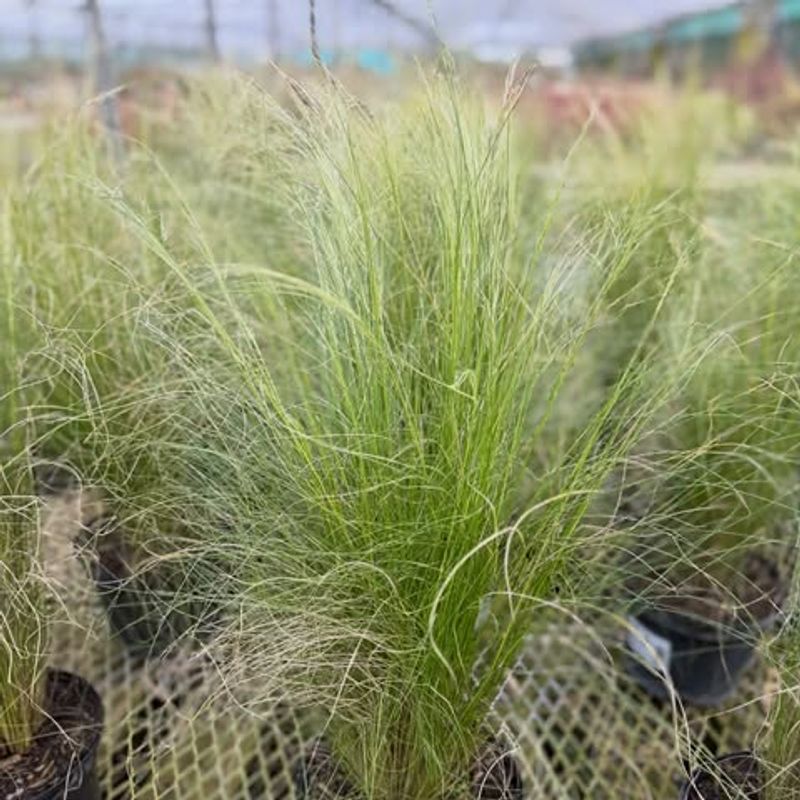
For yards that feel a little wild and natural, Hairgrass Sedge is one of the most elegant options available to Western Oregon homeowners. This fine-textured sedge forms soft, arching clumps of slender green blades that sway gently in the breeze.
It has a look that feels both relaxed and refined at the same time, like a garden that designed itself.
Hairgrass Sedge, often from the Carex or Deschampsia family, thrives in the cool, moist conditions that Western Oregon delivers so reliably. It handles shade well, making it a great choice for areas under large trees where other groundcovers struggle to get going.
It also tolerates seasonal flooding or soggy soil, which can be a real problem in low-lying parts of the Pacific Northwest.
Unlike traditional grass, Hairgrass Sedge does not need regular mowing. You can cut it back once a year in late winter or early spring to keep it looking fresh, but that is about all the maintenance it asks for.
It stays green through most of the winter, which is a major bonus in a region where gray skies dominate the colder months. Plant it in drifts or masses for a natural, flowing effect that softens hard edges and gives your yard a peaceful, meadow-inspired feel that is hard to replicate with any other plant.
8. English Daisy
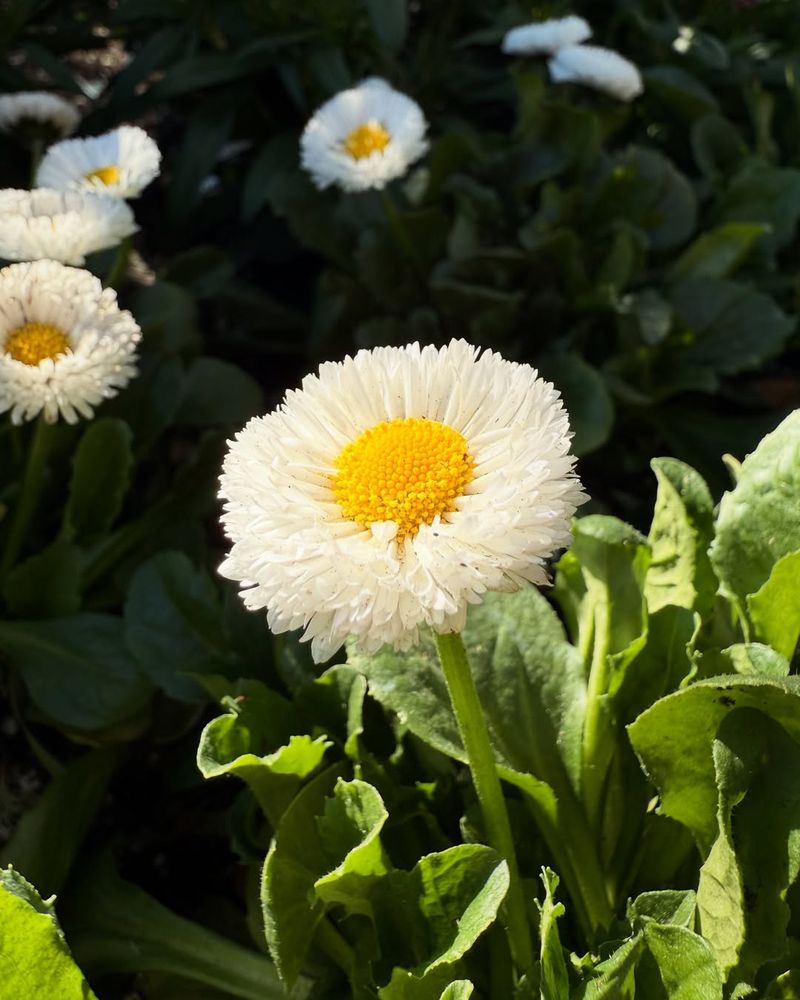
There is something undeniably cheerful about a yard covered in English Daisies. Bellis perennis, as it is formally known, produces compact rosettes of dark green leaves topped with round, button-like flowers in shades of white, pink, and red.
It blooms heavily in spring and again in fall, giving Western Oregon yards two big bursts of color each year.
English Daisy stays low to the ground, usually only four to six inches tall, and spreads steadily to fill open areas. It handles the wet winters of Western Oregon better than many other flowering groundcovers, staying green and healthy even during the rainiest months.
In fact, it almost seems to enjoy the Pacific Northwest climate more than gardeners expect.
Plant English Daisy in full sun to part shade for the best flowering results. It prefers moist, fertile soil and appreciates a light feeding in early spring to kick off the blooming season.
Deadheading the spent flowers encourages more blooms and keeps the plant looking tidy. It self-seeds readily, so you may find new plants popping up in unexpected spots around your yard each spring.
Rather than seeing that as a problem, think of it as free plants filling in your landscape. English Daisy is a simple, joyful plant that makes every yard feel a little more welcoming and alive.
9. Silver Carpet
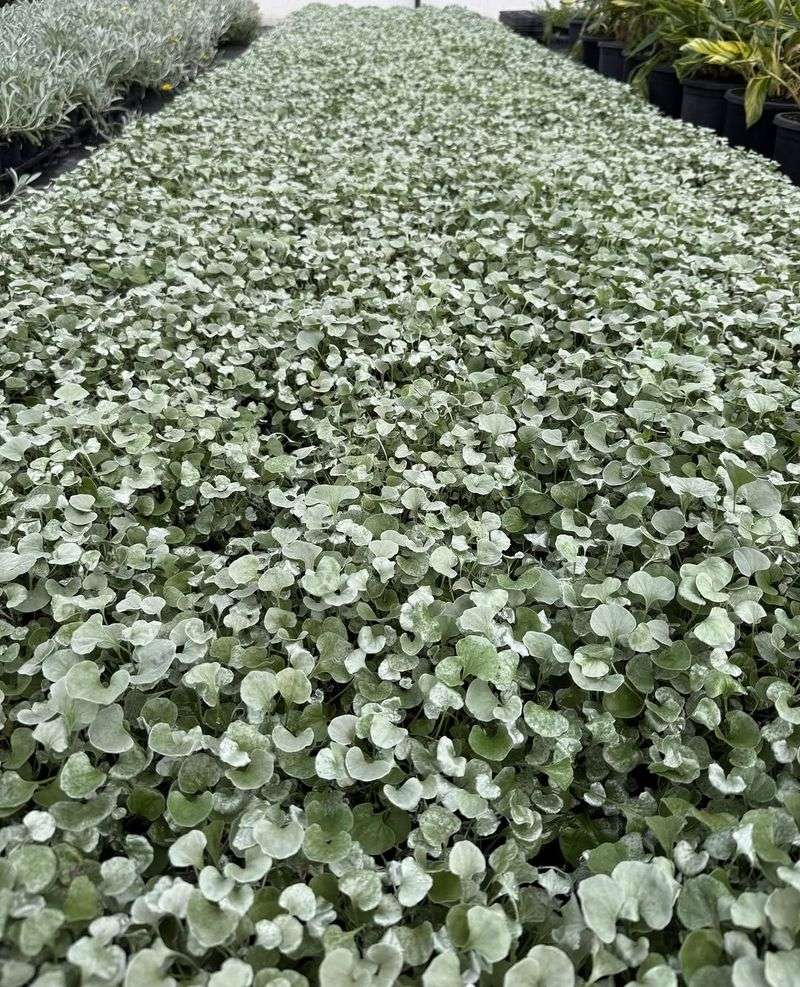
Bold, silvery, and surprisingly soft to the touch, Silver Carpet is a groundcover that turns heads in any Western Oregon garden.
Known botanically as Dymondia margaretae or sometimes referred to as woolly thyme or Stachys byzantina in its carpet form, this plant produces a dense mat of silver-gray leaves covered in fine, velvety hairs.
The texture and color make it stand out beautifully against darker green plants and stone features.
Silver Carpet handles full sun and dry conditions with ease, making it a strong performer during the warm, dry summers that hit Western Oregon. It is drought-tolerant once established and requires very little supplemental watering after its first season in the ground.
That makes it a smart choice for water-conscious homeowners looking to cut back on irrigation costs.
The plant stays low, usually only a few inches tall, and rarely needs any trimming. It spreads slowly but steadily, filling in open areas over a couple of growing seasons.
Pollinators appreciate the small flowers that occasionally appear among the silver leaves. Plant Silver Carpet along garden borders, between stepping stones, or as a large-scale lawn replacement in sunny spots.
Its unique color adds a cool, almost moonlit quality to the landscape that looks stunning at dusk. For Western Oregon yards that want something truly different, Silver Carpet delivers a look that is both striking and surprisingly easy to maintain.