This Is How To Prune Florida Mandevilla Vines For More Tropical Flowers
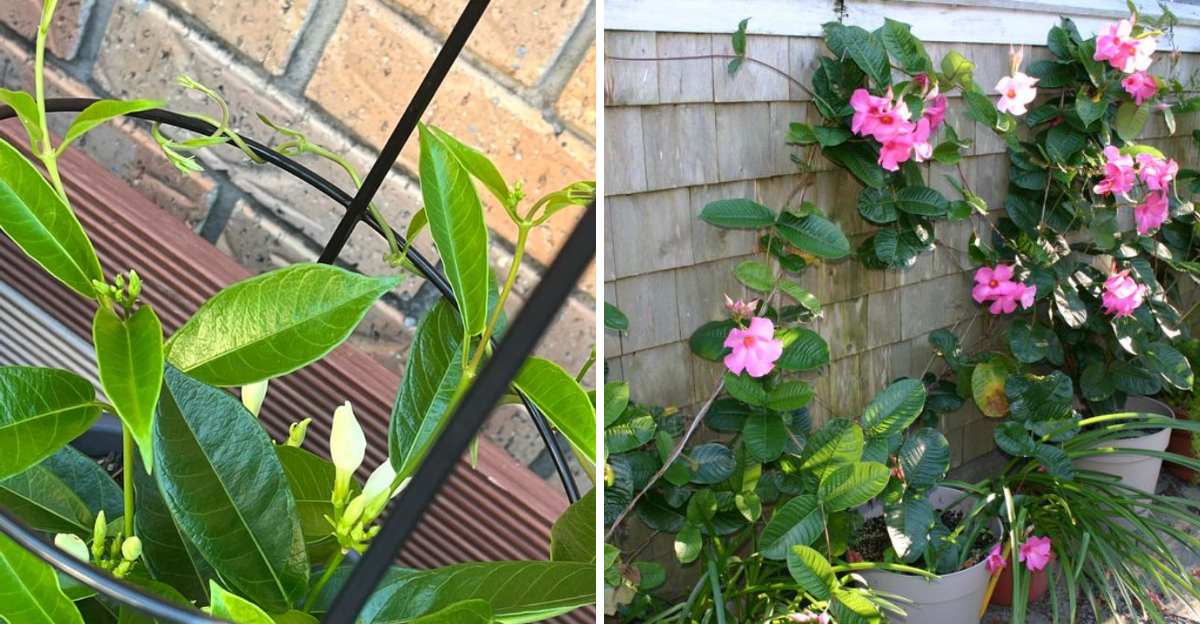
One bad haircut can turn a gorgeous mandevilla into a tangled mess with barely any blooms. One smart trim can do the exact opposite.
In Florida, these fast-growing tropical vines do not stay neat for long. Give them sun, heat, and humidity, and they take off like they own the yard.
That sounds great until the growth gets thin, floppy, and packed with more vine than flowers. The secret is not more fertilizer or more water.
It is knowing where to cut and when to stop. A few strategic snips can wake up sleepy growth, build a fuller shape, and set the stage for a serious flower show.
Done right, your mandevilla stops looking wild and starts looking lush, polished, and packed with color. The difference can be dramatic, and once you see the results, you will never look at pruning as a chore again.
1. Start By Cutting Back The Mess
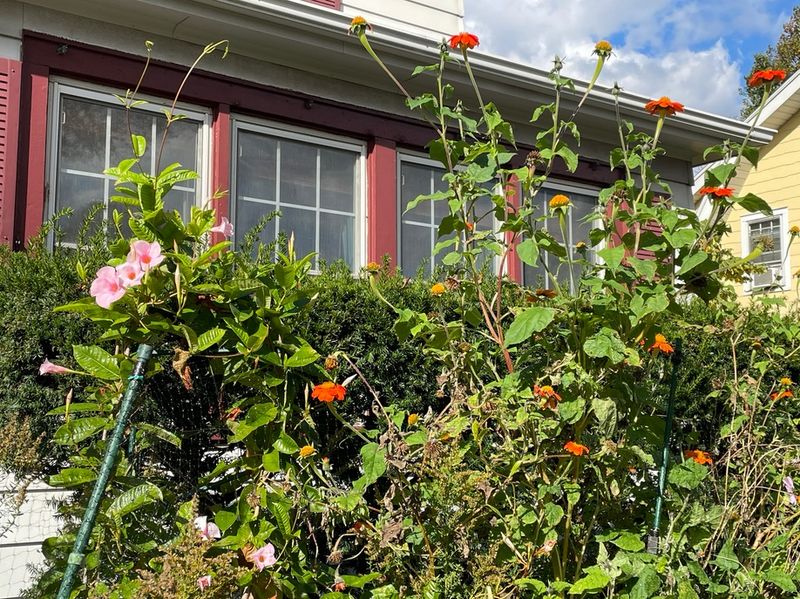
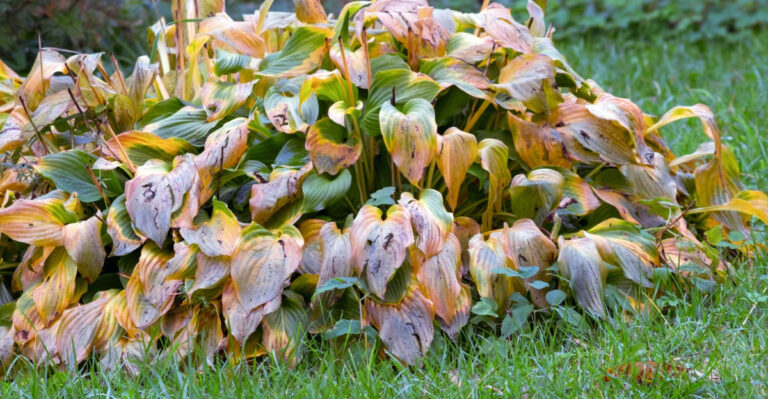
Before any real shaping can happen, you have to deal with the chaos first. Mandevilla vines in Florida can grow aggressively during the warm months, and without regular attention, they quickly turn into a tangled web of crossing stems, withered ends, and overgrown shoots that are hard to manage.
Start your pruning session by stepping back and looking at the whole plant. Identify any stems that are clearly withered, brown, or damaged from past storms or cold snaps.
Florida winters are mild, but a surprise cold night can still leave behind some brittle, lifeless growth that needs to go.
Use clean, sharp pruning shears to remove these problem areas first. Cutting out the mess early gives you a clearer picture of the plant’s actual structure and makes every step after this one much easier.
Always wear gloves when working with mandevilla because its milky sap can irritate your skin. Wiping your blades with rubbing alcohol between cuts helps prevent spreading any potential plant disease.
Getting rid of the clutter is not just about looks. It is the essential first move that sets the entire pruning process up for success.
2. Shape The Vines For Better Blooms
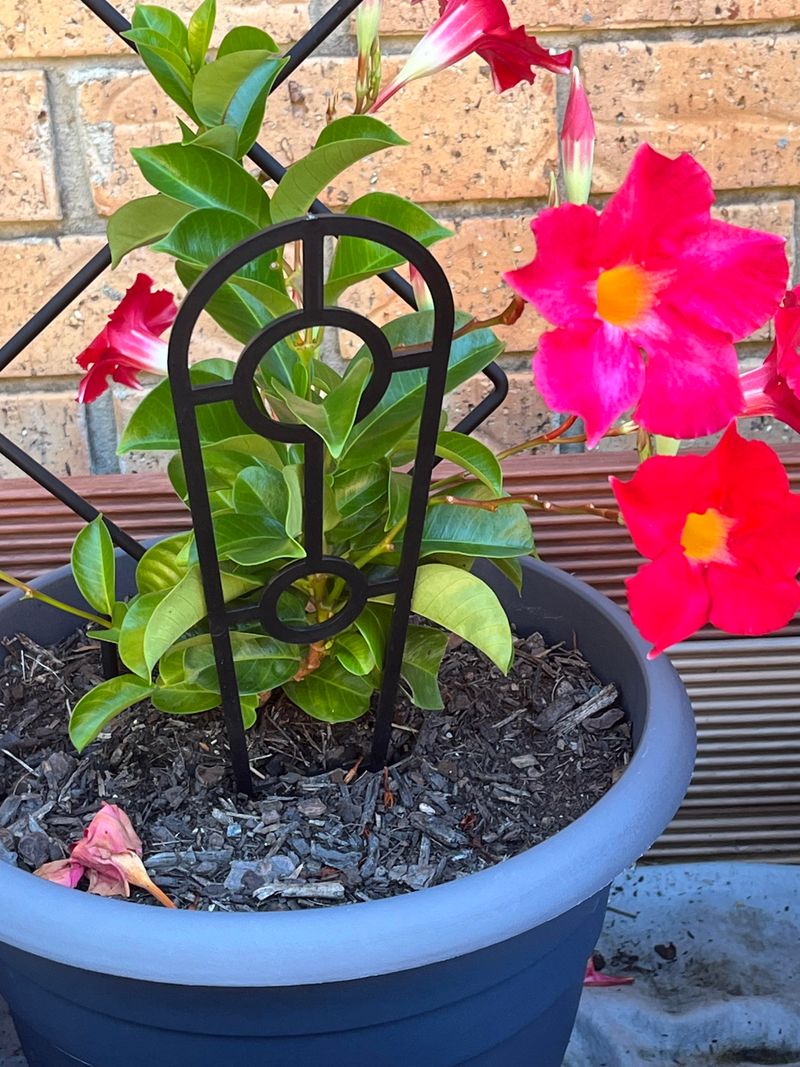
Once the withered and tangled growth is cleared away, shaping the remaining vines becomes much more satisfying. Shaping is not about cutting everything back severely.
It is about guiding the plant into a form that looks intentional, balanced, and ready to produce flowers.
Mandevilla blooms appear on new growth, so trimming back leggy or overly long stems encourages the plant to push out fresh shoots. Those fresh shoots are exactly where your next round of flowers will come from.
A well-shaped vine also catches more sunlight across its entire surface, which supports better overall flowering.
Focus on stems that are stretching too far in one direction or growing away from your trellis, fence, or support structure. Trim these back to a point where the stem still has healthy leaf nodes, because new growth will sprout from those nodes after pruning.
University of Florida IFAS Extension notes that mandevilla responds well to shaping when done thoughtfully rather than aggressively. Aim for a natural, slightly rounded silhouette that complements your garden space.
Your Florida Garden Changes Every Week. Your Plan Should Too.
Gardening in Florida changes quickly throughout the season. Every Friday you’ll receive a simple weekly plan showing exactly what to plant, prune, fertilize, harvest, and protect so you never miss the right timing.
A little shaping goes a long way toward turning a scraggly vine into a showstopper bursting with tropical color.
3. Remove Weak Growth First
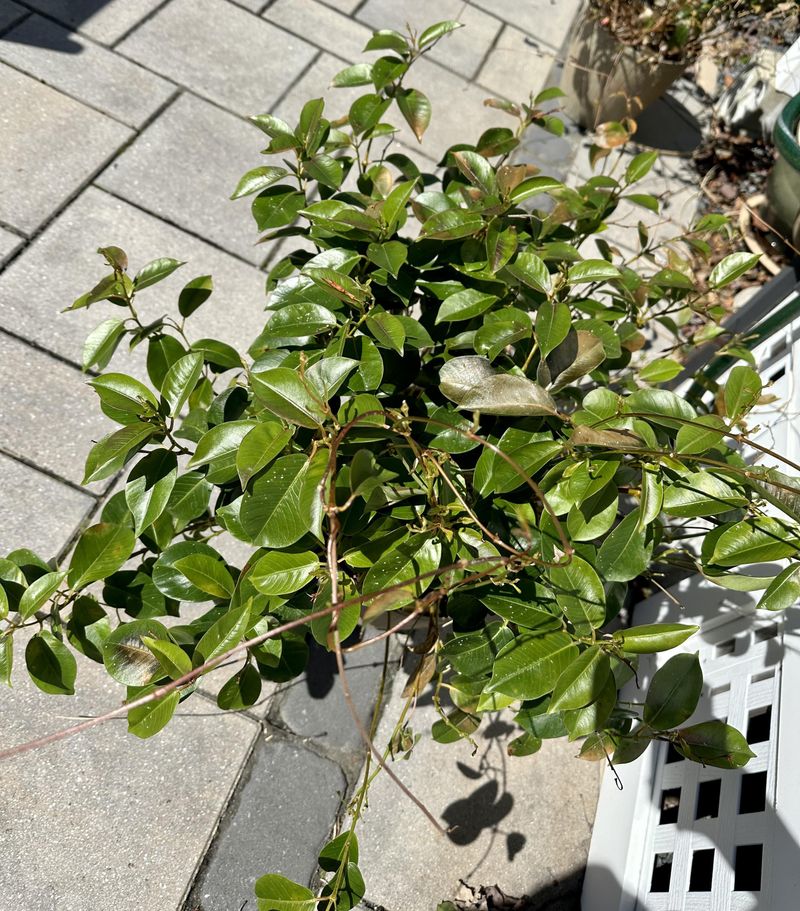
Not all stems on a mandevilla vine are pulling their weight. Thin, pale, or spindly stems rarely produce flowers and they drain energy away from the stronger parts of the plant.
Spotting and removing this weak growth is one of the most effective ways to improve your mandevilla’s overall performance.
Weak stems are usually noticeably thinner than the main vines and may look pale green or yellowish. They often grow in the shaded interior of the plant where sunlight barely reaches.
Since mandevilla blooms on new growth, stems that are too weak to support new shoots are simply not useful to the plant’s flowering potential.
Removing them redirects the plant’s energy toward thicker, more vigorous stems that are far more likely to produce those big, showy blooms Florida gardeners love. Think of it like thinning out a crowded garden bed so the strongest plants have room to shine.
Cut weak stems back to their base or to the nearest healthy junction. Do not leave short stubs behind because they can invite pests or fungal issues in Florida’s humid climate.
Clearing weak growth is a simple step that pays off with noticeably stronger, more productive vines.
4. Open The Plant To More Sun
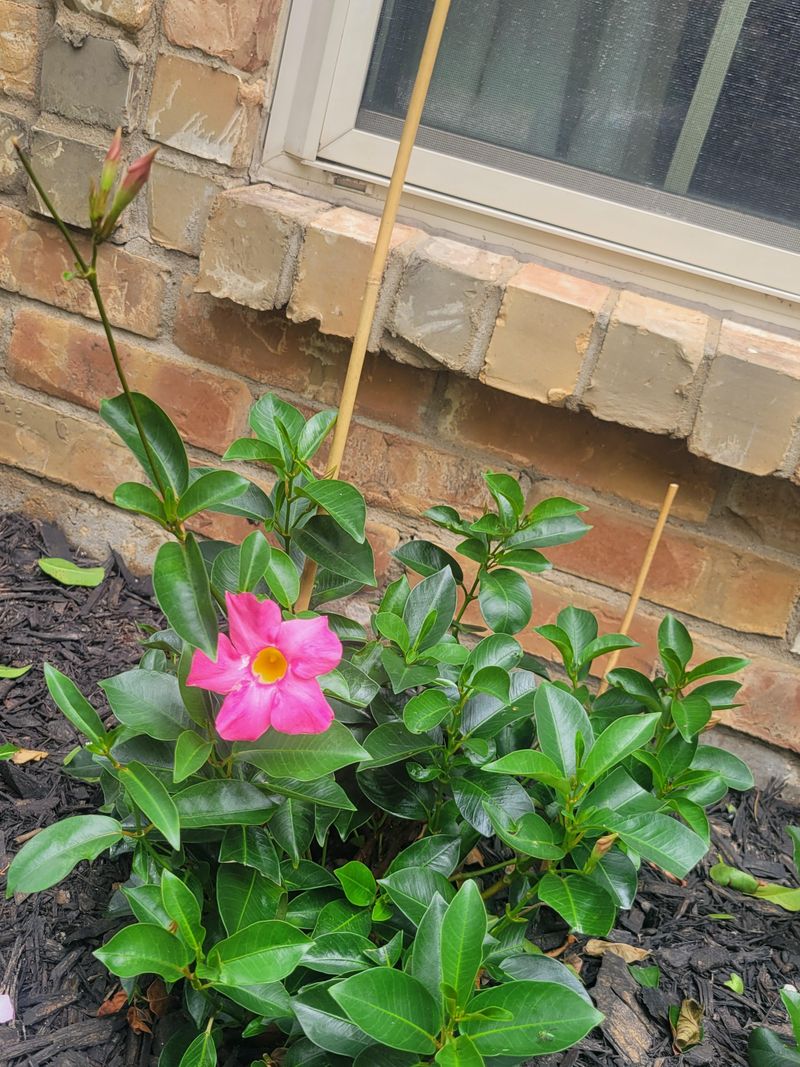
Florida sunshine is one of mandevilla’s greatest assets, but only if the plant can actually use it. When vines grow too densely, the interior of the plant stays shaded and airflow drops, creating conditions that slow down flowering and invite fungal problems.
Opening up the plant changes all of that.
After removing weak and damaged growth, look at the center of the vine. If stems are crossing over each other and blocking light from reaching the inside, selectively remove a few of those interior stems to let sunshine and air move through more freely.
You do not need to strip the plant bare. Even modest thinning makes a meaningful difference.
Better airflow also reduces the risk of powdery mildew and other fungal issues that Florida’s high humidity can encourage. A vine that breathes well tends to stay healthier through the summer months when heat and moisture are at their peak.
According to University of Florida IFAS Extension, good air circulation is a key factor in keeping ornamental vines like mandevilla thriving in Florida’s climate. Opening the plant to more sun is not just a cosmetic improvement.
It is a practical step that supports stronger, healthier flowering all season long.
5. Trim For Fullness Not Just Size
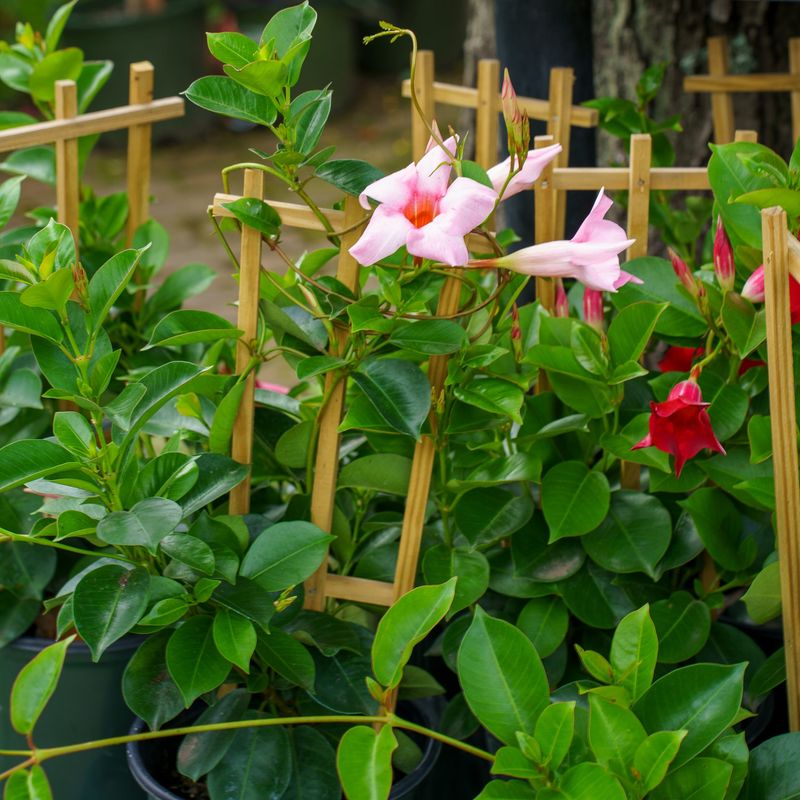
Many gardeners grab their pruning shears and start cutting just to make a plant smaller, but with mandevilla, the real goal is fullness. A vine that looks bushy, dense, and layered with leaves and flowers is far more impressive than one that is simply shorter.
The trick to achieving that lush, full look is pinching or trimming the tips of new shoots rather than cutting long sections all at once. When you remove just the growing tip of a stem, the plant responds by branching out from the nodes below that cut.
Two new stems grow where one was before, and then two more can grow from each of those. Over time, this creates a much denser, more floriferous vine.
University of Florida Gardening Solutions specifically recommends pinching mandevilla tips to encourage branching and a fuller appearance. This technique works especially well on younger plants or on vines that have become leggy from rapid growth during Florida’s long warm season.
You do not need to cut a lot to see a big difference. Regular light tip-trimming throughout the growing season keeps the vine compact, encourages constant new growth, and means more flowers showing off across the entire plant.
6. Snip Spent Growth To Push New Flowers
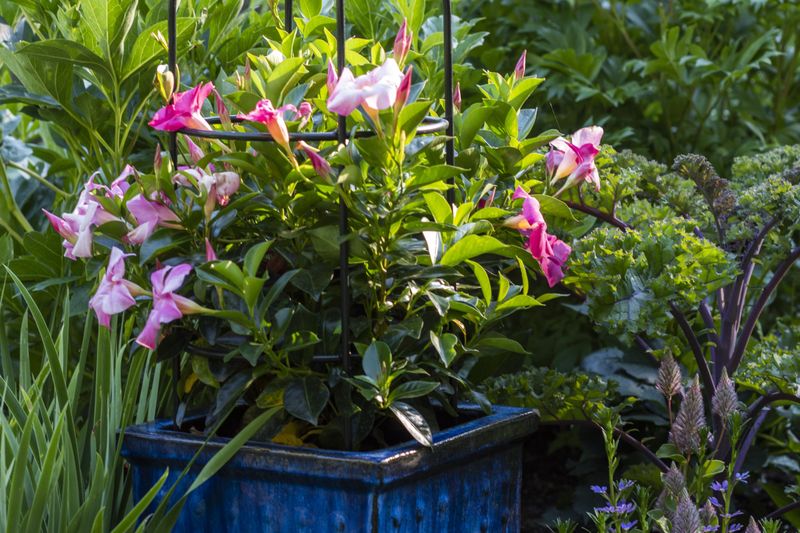
After a flush of blooming, mandevilla can look a little tired. Old flower stems linger, and some sections of the vine start to look worn out compared to the fresh, green growth elsewhere on the plant.
Snipping away this spent growth is one of the easiest ways to encourage the vine to bloom again.
Mandevilla produces its flowers on new growth, so the sooner old, faded stems are removed, the sooner the plant redirects its energy into pushing out fresh shoots. Those new shoots bring new flower buds right along with them.
In Florida’s long growing season, this cycle of removing spent growth and encouraging new flowering can repeat multiple times between spring and late fall.
Focus on stems that have finished blooming and are not showing any signs of new bud development. Trim them back to a healthy leaf node or junction so the plant has a clean starting point for regrowth.
Regular deadheading and light trimming of spent sections keeps the vine looking tidy and signals to the plant that its job is not done yet. Consistent attention to spent growth is one of the simplest and most rewarding pruning habits you can build with your Florida mandevilla.
7. Train Long Vines Before They Tangle
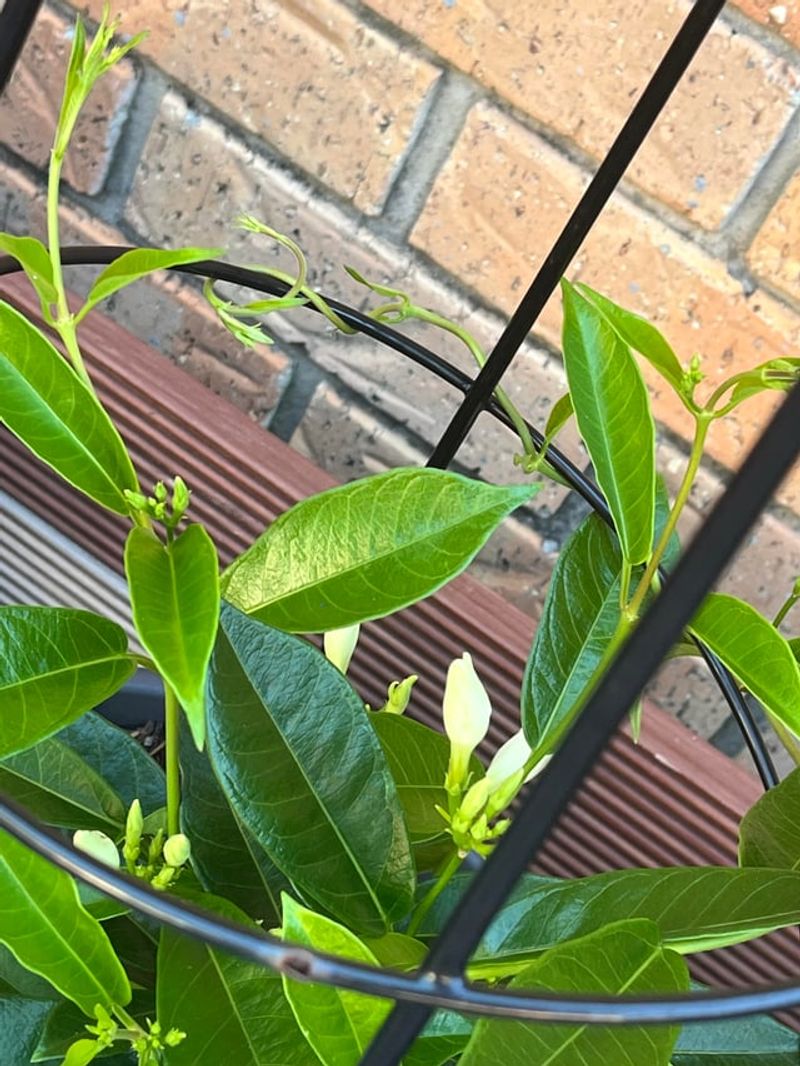
Long, wandering mandevilla stems have a talent for finding the nearest object to wrap around, and not always the one you want them to grab. Before those vines get too long and start weaving themselves into a hopeless knot, guiding them onto your chosen support structure saves a lot of frustration later.
Training is not technically pruning, but it works hand in hand with it. As you trim and shape the vine, take a moment to loosely tie any long stems to your trellis, fence, or arbor using soft garden ties or strips of stretchy material.
Avoid anything that cuts into the stem. The goal is to encourage the vine to grow in the direction you want without restricting it too tightly.
A well-trained mandevilla is not only easier to prune in the future, it also looks more intentional and attractive in your Florida garden. Stems that are spread out across a support structure get better light exposure on all sides, which supports more even flowering.
Check your ties periodically and loosen them as the stems thicken to prevent any constriction. Starting the training habit early, while stems are still young and flexible, makes the whole process much smoother and keeps your vine looking polished.
8. Time Your Pruning For The Best Show
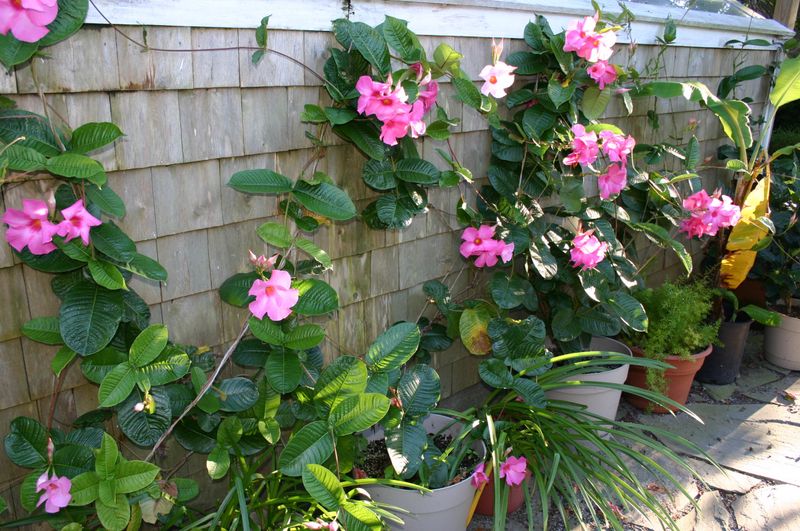
Pruning at the right time makes a bigger difference than most gardeners realize. In Florida, the timing window for mandevilla pruning is more forgiving than in colder states, but getting it right still affects how quickly and abundantly the vine rebounds with new flowers.
The best time for a more significant pruning is late winter to early spring, just before new growth begins pushing out. Cutting back at this point gives the vine a fresh start and sets it up to produce strong, flower-bearing stems through spring and summer.
University of Florida IFAS Extension supports late winter pruning as an effective strategy for encouraging vigorous regrowth in warm-climate ornamentals like mandevilla.
Light tip-trimming and spent-growth removal can happen throughout the growing season without any concern. However, avoid heavy pruning in late fall or early winter because cutting back aggressively right before cooler temperatures arrive can stress the plant and reduce its ability to handle any cold snaps that Florida occasionally experiences.
Pruning too late in the season also removes growth that the vine needs to stay insulated and healthy. Matching your pruning schedule to the plant’s natural growth cycle is the smartest way to keep your Florida mandevilla blooming at its very best.