Do Bird Feeders Attract Raccoons In Georgia (What Actually Causes The Problem)
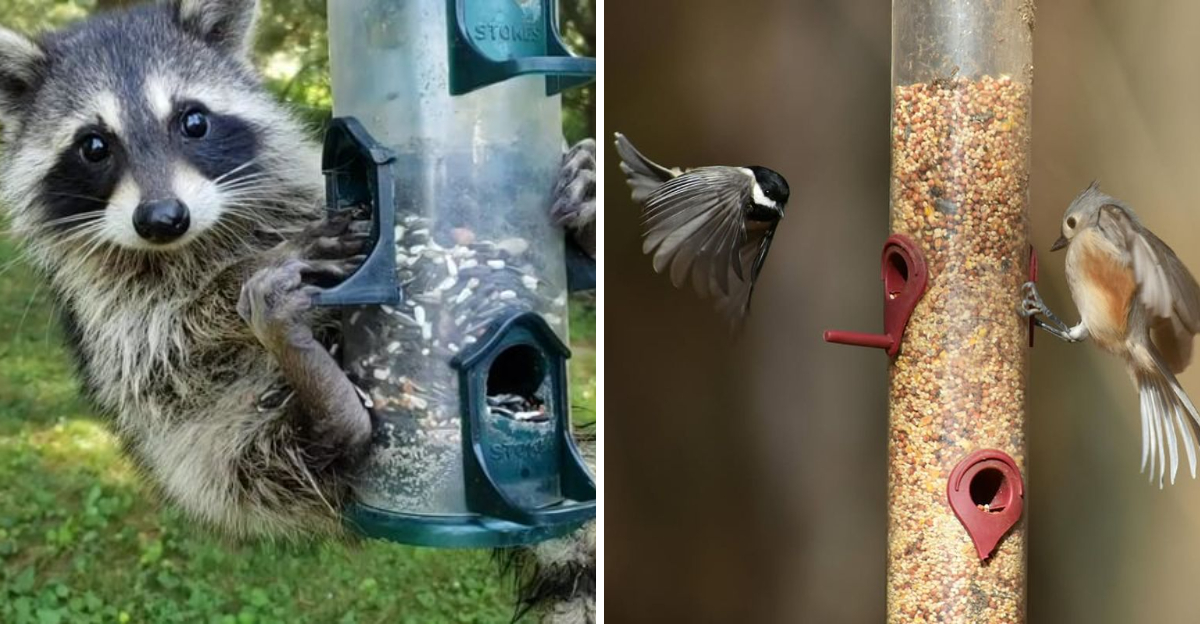
Raccoons and bird feeders in Georgia tend to cross paths more often than most expect, especially once spring activity picks up and food becomes easier to find.
A feeder that seems perfectly placed for birds can quietly turn into a steady food source that raccoons remember and return to night after night.
They are opportunistic, patient, and far more aware of backyard routines than people give them credit for.
It usually does not feel like a problem right away. A little extra seed on the ground or a feeder slightly out of place can be easy to overlook at first.
But those small changes often point to something bigger happening after dark, and raccoons are usually part of that shift.
What makes this frustrating is that it is not always the feeder alone causing the issue. Subtle details around it can make a yard much more appealing without anyone realizing it at first.
1. Spilled Seed On The Ground Attracts Raccoons More Than The Feeder
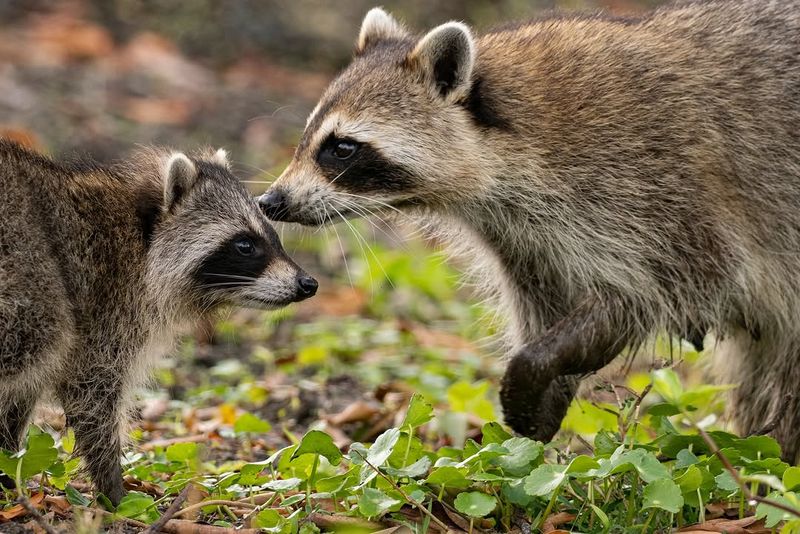
Seed on the ground is the real culprit. Most people assume raccoons are climbing up to raid the feeder itself, but in reality, it is the spilled seed sitting underneath that pulls them in night after night.
Raccoons have an incredibly sharp sense of smell, and scattered millet, sunflower shells, and cracked corn on the ground are basically an open invitation.
Messy feeders make this worse. Tube feeders, platform feeders, and open trays all shed seed constantly, especially when wind picks up or squirrels jostle the feeder around.
Every handful that hits the dirt becomes a signal to any raccoon passing through your Georgia yard.
Switching to a feeder with a built-in seed catcher tray can reduce how much falls. Choosing hulled sunflower seeds also helps because birds eat the whole seed rather than cracking shells and dropping pieces everywhere.
Reducing what lands on the ground is honestly the single most effective step you can take before trying anything else. Raccoons are persistent, but they are also practical.
If the ground reward disappears, many will simply move on to easier spots.
2. Feeders Too Close To Trees Give Raccoons Easy Access
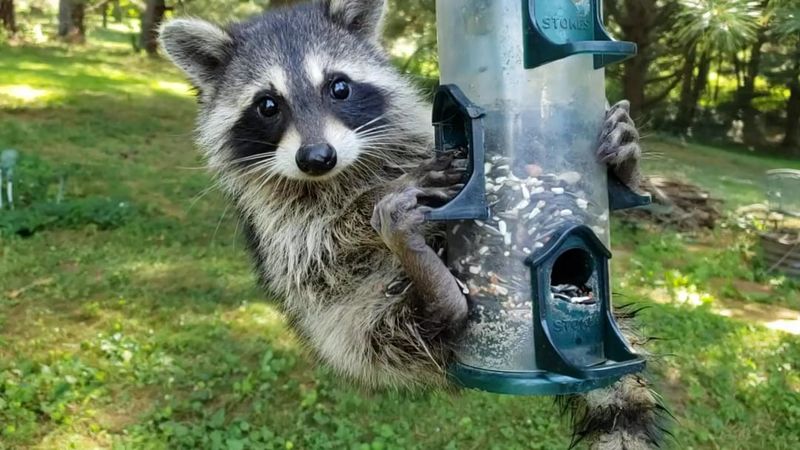
Placement matters far more than most people realize. Hanging a feeder from a tree branch or setting a pole within jumping distance of a fence, deck railing, or trunk basically builds a raccoon highway straight to your seed supply.
Raccoons are agile climbers and surprisingly strong jumpers for their size.
Eight feet is the number to remember. Feeders should sit at least eight feet away from any structure a raccoon could use as a launch point.
That includes tree trunks, wooden fences, porch columns, and even stacked firewood. In Georgia, where oak trees and pines are everywhere, this can feel tricky to manage, but it is absolutely worth the effort.
Even if your pole seems far enough from a tree, overhanging branches can still be the problem. A branch sitting five feet above a feeder gives a raccoon all the reach it needs to swing down and grab the whole thing.
Your Georgia Garden Changes Every Week. Your Plan Should Too.
Gardening in Georgia changes quickly throughout the season. Every Friday you’ll receive a simple weekly plan showing exactly what to plant, prune, fertilize, harvest, and protect so you never miss the right timing.
Trim branches that hang over feeding areas whenever possible.
Smooth metal poles are harder to grip than wood, which adds another layer of difficulty for climbing animals. Pairing good placement with the right pole material creates a real barrier.
Georgia homeowners who have repositioned feeders away from trees often report a noticeable drop in nighttime raccoon activity within just a few days. Raccoons will test the situation a couple of times, but if the easy route is gone, most will redirect their energy toward food that requires less effort to reach.
3. Night Activity Around Feeders Often Means Raccoons
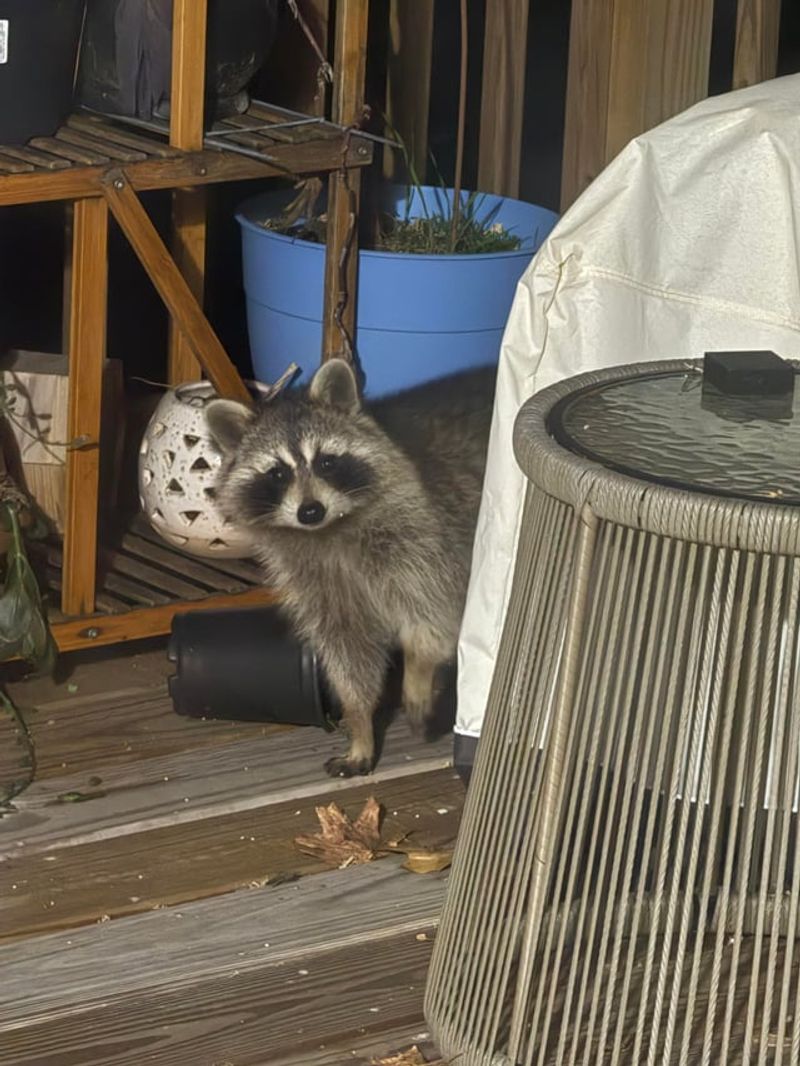
Waking up to an empty or knocked-over feeder is a familiar frustration for Georgia bird watchers. If your feeder was full at sunset and completely drained by morning, raccoons are almost certainly responsible.
Squirrels and birds stop feeding once the sun goes down, but raccoons are just getting started.
Raccoons are nocturnal, which means they do most of their foraging between dusk and dawn. Leaving a stocked feeder out overnight in a Georgia yard is practically a standing dinner reservation for them.
They are not shy about returning to the same food source repeatedly once they know it is reliable and unguarded.
A simple motion-activated camera can confirm what is happening after dark. Many Georgia homeowners are genuinely surprised when they review footage and find raccoons, opossums, and even deer all visiting the same feeder in a single night.
Knowing exactly what is showing up helps you choose the right solution.
Bringing feeders indoors at dusk is the most straightforward fix. It takes about thirty seconds, costs nothing, and completely eliminates nighttime raids.
Some people hang feeders on a hook near the back door so the routine stays easy. If bringing feeders in every night feels like too much, a timed feeder that closes automatically after sunset is another solid option.
Either approach breaks the nightly habit raccoons have built around your yard, and habits that stop being rewarded tend to fade pretty quickly in most wildlife species.
4. Loose Feeders Can Be Knocked Down And Emptied Quickly
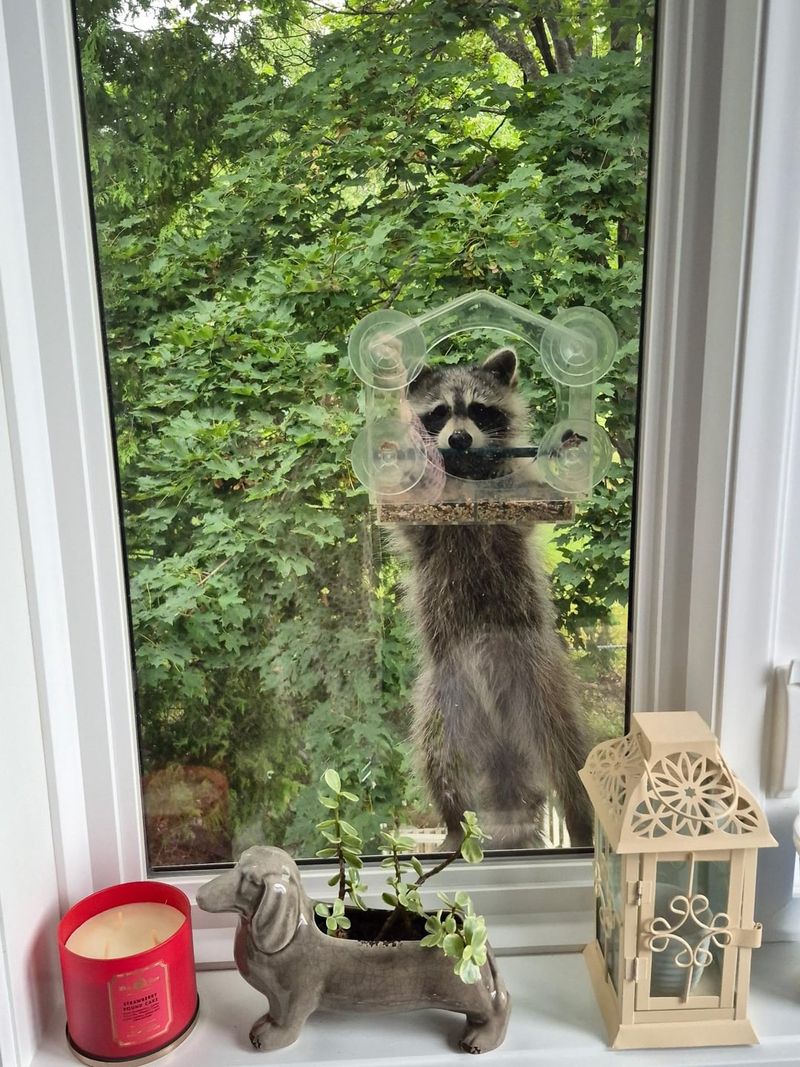
A lightweight feeder swinging from a thin wire is not a deterrent, it is a challenge raccoons will win every single time. Flimsy hanging feeders are easy to pull down, spin around, or shake until seed pours out.
Once a raccoon figures out the trick, it will repeat it every chance it gets.
Raccoons are strong for their size, and their front paws work almost like hands. They can grip, twist, and manipulate objects with surprising precision.
Feeders with flip-top lids, loose perches, or lightweight bases are especially vulnerable. Across Georgia backyards, raccoon damage to bird feeders is one of the most common complaints wildlife experts hear from homeowners during spring and fall.
Switching to a heavier, sturdier feeder with a secure locking mechanism makes a real difference. Weight-sensitive feeders designed to close under heavier animals are worth the investment.
Some models are specifically built to stay closed when anything heavier than a songbird lands on them, which handles squirrels and raccoons at the same time.
Mounting feeders on a solid, anchored pole rather than hanging them from a loose wire also reduces the wobble that makes tipping easy. A feeder that does not swing or shake is far harder to empty through brute force.
Checking your setup regularly for loose parts, cracked plastic, or worn hardware keeps the feeder in good shape and removes weak points raccoons might exploit.
A well-secured feeder in the right spot can hold up for an entire Georgia season without a single nighttime incident.
5. Baffles And Better Placement Help Keep Raccoons Away
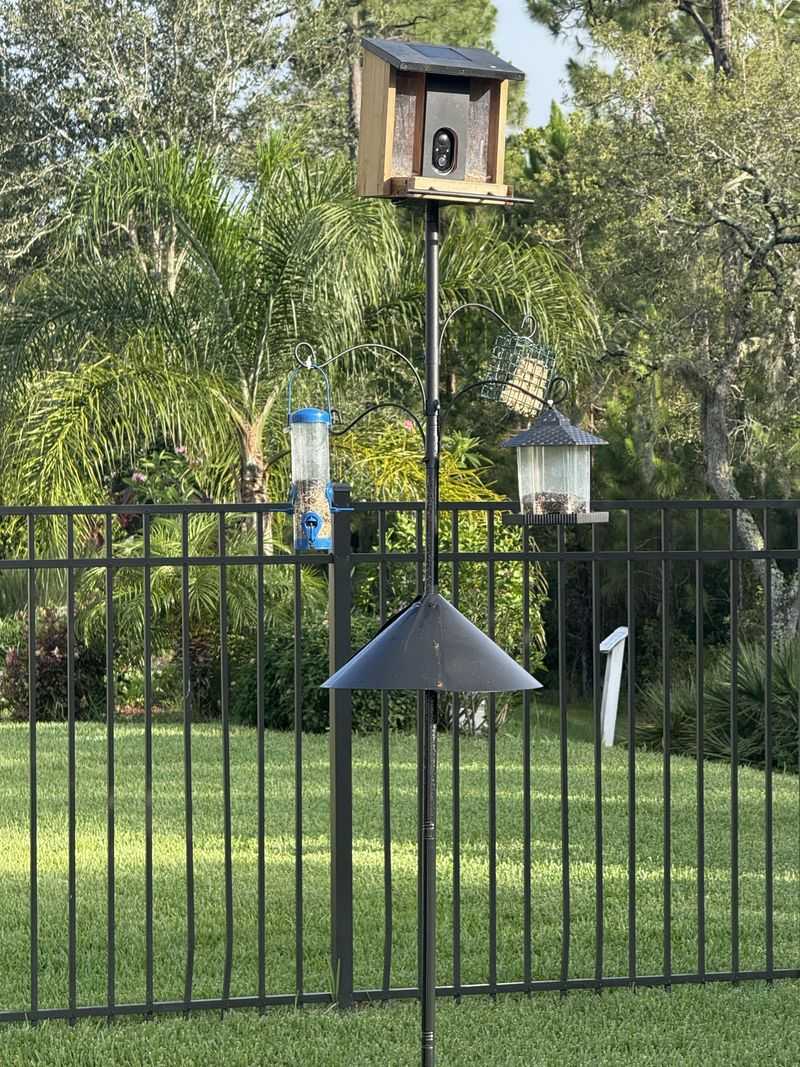
Baffles are one of the most reliable tools in the raccoon-proofing toolkit, and they are still underused by most Georgia bird enthusiasts. A baffle is a physical barrier, usually dome-shaped or tube-shaped, that blocks an animal from climbing up a pole or reaching down from above.
When installed correctly, they work extremely well.
Pole-mounted baffles go below the feeder and need to sit at least four feet off the ground to prevent raccoons from jumping over them. Hanging baffles mount above the feeder and block access from overhead.
Using both together creates a two-layer system that stops most climbing and reaching attempts cold. Raccoons will test it a few times, but once they realize it is not working, they tend to give up and look elsewhere.
Size matters with baffles. A small squirrel baffle will not stop a full-grown raccoon.
Look for baffles at least eighteen inches in diameter, made from sturdy metal rather than thin plastic. Raccoons will push, spin, and lean on them, so flimsy materials fail fast.
Combining a quality baffle with proper pole placement, at least five feet high and eight feet from any climbable structure, creates a setup that is genuinely difficult for raccoons to crack.
Georgia wildlife experts often recommend this combination as the first physical solution before trying anything more complicated.
Spending twenty minutes getting your setup right can save you months of frustration, wasted seed, and early morning cleanup sessions in the backyard.
6. Cleaning Fallen Seed Reduces Repeat Visits
Raccoons operate on a simple reward system. If visiting your yard pays off with food, they will keep coming back.
If it stops paying off, they will gradually shift their attention somewhere else. Cleaning up fallen seed is one of the most direct ways to cut off that reward loop before it becomes a deeply ingrained habit.
Seed under a feeder can build up fast, especially during high-traffic feeding days when birds are active and messy. Millet, cracked corn, and sunflower fragments pile up in pine straw and mulch where they are easy for raccoons to sniff out but harder for you to spot.
In Georgia’s warm climate, this seed also attracts insects and can grow mold quickly, which creates a whole separate set of problems.
Sweeping or raking beneath feeders every two to three days keeps the area clean enough to reduce raccoon interest significantly. Replacing pine straw mulch with gravel or river rock under feeders makes cleanup faster and gives seeds fewer places to hide.
Some Georgia gardeners lay a rubber mat under their feeders to catch fallen seed, which can be shaken out and rinsed in under a minute.
Pairing regular cleanup with a no-mess seed blend, like hulled sunflower hearts or nyjer seed, reduces how much drops in the first place. Birds eat the whole kernel rather than cracking shells and scattering debris.
Less mess below the feeder means less to attract raccoons, and fewer raccoon visits means more peaceful mornings watching actual birds instead of cleaning up after nighttime visitors.
7. Certain Seed Types Attract Raccoons More Than Others
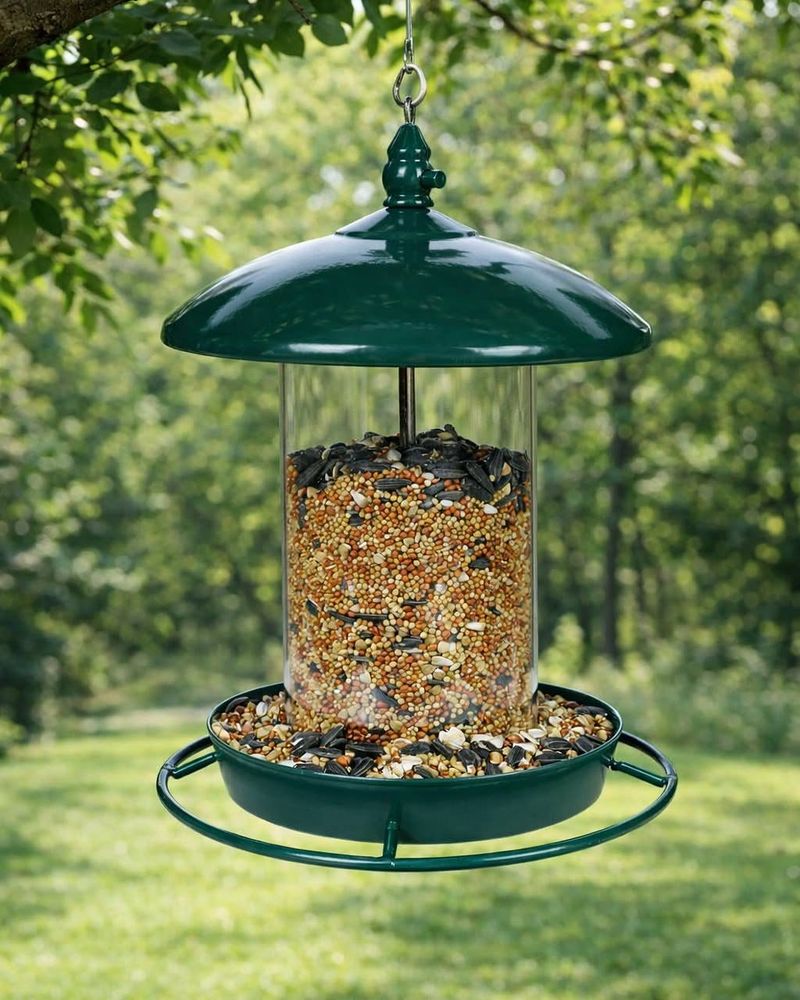
Not all bird seed is equally tempting to raccoons. Sunflower seeds, cracked corn, and mixed seed blends with millet are high in fat and calories, and raccoons are drawn to exactly that kind of energy-dense food.
Understanding which seeds create the strongest attraction can help you make smarter choices at the feed store.
Cracked corn is especially problematic. It is cheap, widely used in mixed blends, and absolutely loved by raccoons.
It also scatters easily and breaks into small pieces that coat the ground under feeders. Dropping cracked corn from your seed mix is one of the quickest changes Georgia backyard bird enthusiasts can make to reduce raccoon interest almost immediately.
Safflower seed is a solid alternative worth considering. Cardinals and chickadees eat it happily, but raccoons tend to ignore it because the bitter coating does not appeal to them.
Nyjer seed, used in finch feeders, is another low-attraction option since it is tiny, not particularly calorie-dense for a mammal, and tends to stay inside tube feeders better than larger seeds.
Suet cakes can also pull in raccoons, particularly during cooler Georgia months when animal fat is especially attractive to foraging wildlife.
Switching to hot pepper suet is an option some bird watchers swear by, since capsaicin does not bother birds but discourages mammals.
Paying attention to what you are putting in your feeders is an easy, low-effort way to make your setup less interesting to raccoons without sacrificing the birds you actually want to attract.