The Creative Birdhouse Ideas You Can Easily Make In Georgia
Putting a birdhouse in a Georgia yard sounds simple and it usually feels like a quick project that should bring birds in right away. Many people try it once, use a basic design, and expect it to work without much thought.
Then nothing really happens. Birds show interest for a moment, check it out, and move on, which makes the whole thing feel like a waste of effort.
That moment catches a lot of people off guard because the idea itself is not wrong. Small details in how a birdhouse looks and works can completely change whether birds use it or ignore it.
Once that becomes clear, the approach shifts. Creative designs are not just for looks, they actually make birdhouses more appealing and useful.
Some of these ideas are simple to make, and they can turn a basic setup into something that finally works.
1. Turn A Gourd Into A Lightweight Birdhouse
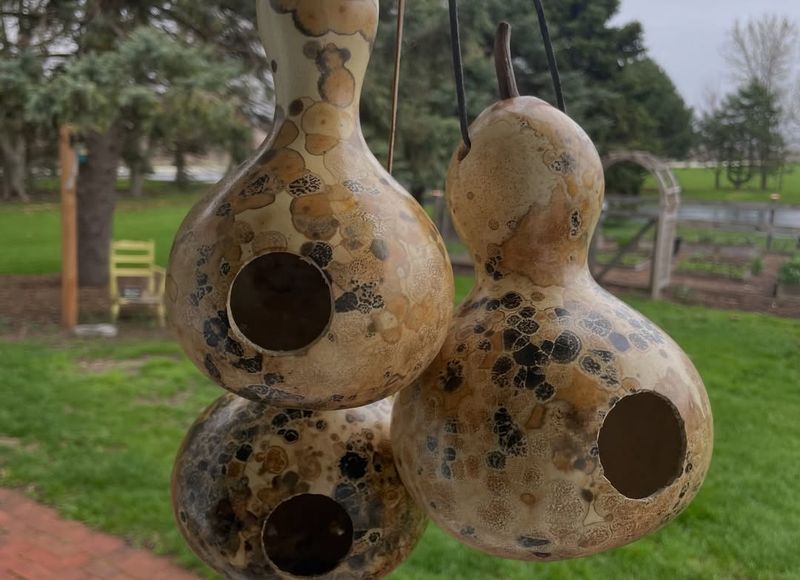
One of the easiest ways to make a charming birdhouse in Georgia is by using a dried gourd. You get a light, natural shell that already feels right at home among trees, flower beds, and cozy backyard spaces.
If you want something rustic without much building, this idea gives you a lot of character with very little effort. Start by choosing a firm gourd, cleaning out the inside, and cutting a small opening that suits the birds in your area.
In Georgia, placing the entrance a little higher on the body can help the nest stay more protected during summer rain and windy spring afternoons.
A few drainage holes in the bottom and small air holes near the top can make the space more comfortable. After that, sand rough edges and seal only the outside with a bird-safe finish so the gourd lasts longer in humid weather.
You can hang it from a sturdy branch, a porch hook, or a simple garden stand where it gets some shade during the hottest part of the day. That small step helps keep the interior cooler in Georgia heat.
What makes this project especially fun is how easy it is to personalize without making it look unnatural. Twine can be wrapped around the top, a perch can be added sparingly, or the surface can be left plain for a more natural woodland look.
In many Georgia yards, a gourd birdhouse blends well with native plants and feels naturally integrated into the landscape from the start.
2. Use A Clay Pot As A Side-Entry Nesting Spot
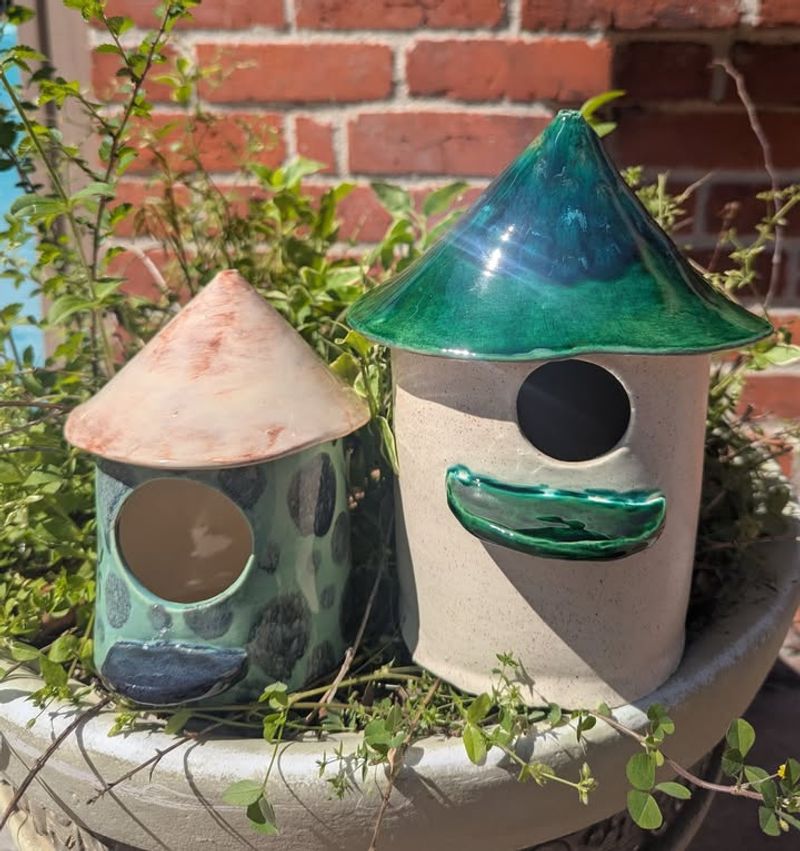
Clay pots are easy to find, budget friendly, and surprisingly useful when you want a birdhouse that looks a little different. By turning one on its side, a side-entry nesting spot is created that feels tucked away and secure.
That shape also brings a warm handmade style that fits well in Georgia gardens. To make it, a small to medium terracotta pot is selected and the wide opening is covered with a wooden circle or sturdy board.
An entrance hole is cut into that cover, then everything is attached tightly so the front stays steady during windy weather.
Your Georgia Garden Changes Every Week. Your Plan Should Too.
Gardening in Georgia changes quickly throughout the season. Every Friday you’ll receive a simple weekly plan showing exactly what to plant, prune, fertilize, harvest, and protect so you never miss the right timing.
Because Georgia can bring sudden storms, secure mounting matters just as much as appearance. The pot can be placed under an eave, fastened beneath a porch beam, or attached to a wooden bracket on a post.
A shaded area is usually best since clay warms quickly in direct afternoon sun, especially during Georgia summers. Drainage holes and a slight downward angle help keep the nesting space dry during heavy rain.
The appeal of this project comes from its simplicity and low tool requirement. The natural terracotta color also blends well with herbs, flowers, and trailing plants nearby.
With proper placement and a stable front panel, a clay pot birdhouse becomes both a functional nesting spot and a decorative feature in a Georgia yard.
3. Mount A Hollow Log For A Natural Look
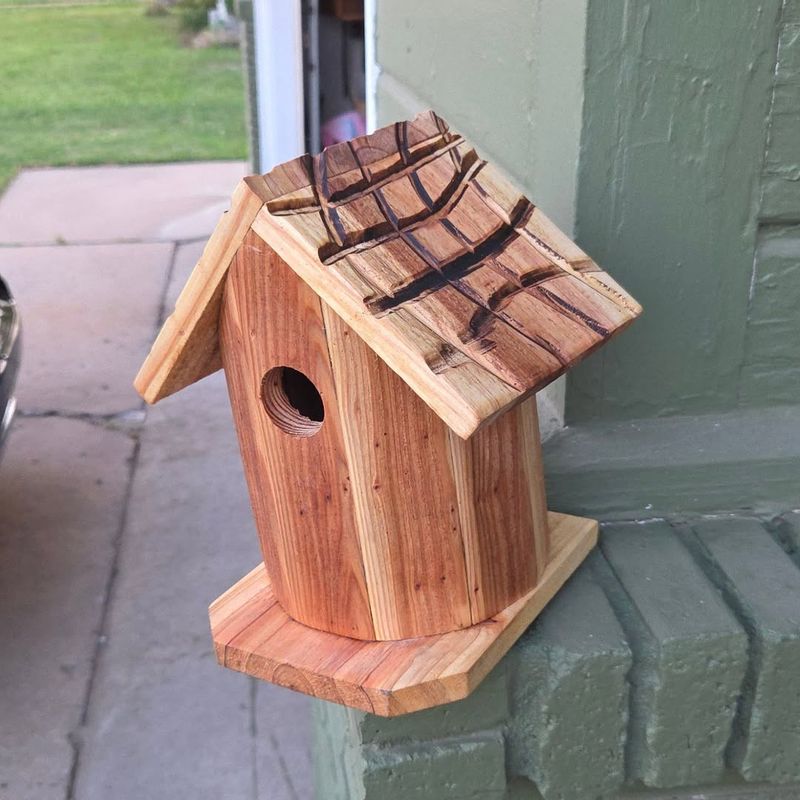
If a backyard style that feels woodsy and understated is the goal, a hollow log birdhouse is a strong option. It brings natural texture into the landscape and fits especially well in Georgia, where pine stands, hardwood trees, and shaded garden edges already shape the environment.
The look of real bark and weathered wood creates a quiet, organic presence that blends into the setting.
A hollow log birdhouse can be made from a naturally hollow branch or by carefully hollowing a small log and adding a secure top and base. The entrance hole should match the type of birds being attracted, and the interior needs enough depth to allow safe nesting.
Drainage and ventilation holes are important to keep conditions stable inside the structure.
Mounting is especially important with this design because wood logs can be heavier than other handmade birdhouses. Instead of using a light hook, securing it to a sturdy post, tree trunk, or solid fence support helps keep it stable during wind and rain.
That stability also helps birds feel more secure when choosing a nesting site.
One of the strongest features of this design is how naturally it blends into a Georgia yard without extra decoration. The bark, grain, and shape already provide visual interest, so no paint or added elements are needed.
Placed near native shrubs or along quieter garden edges, a hollow log birdhouse creates a nesting space that feels simple, natural, and well integrated into the surrounding landscape.
4. Build A Simple Wooden Box With One Opening
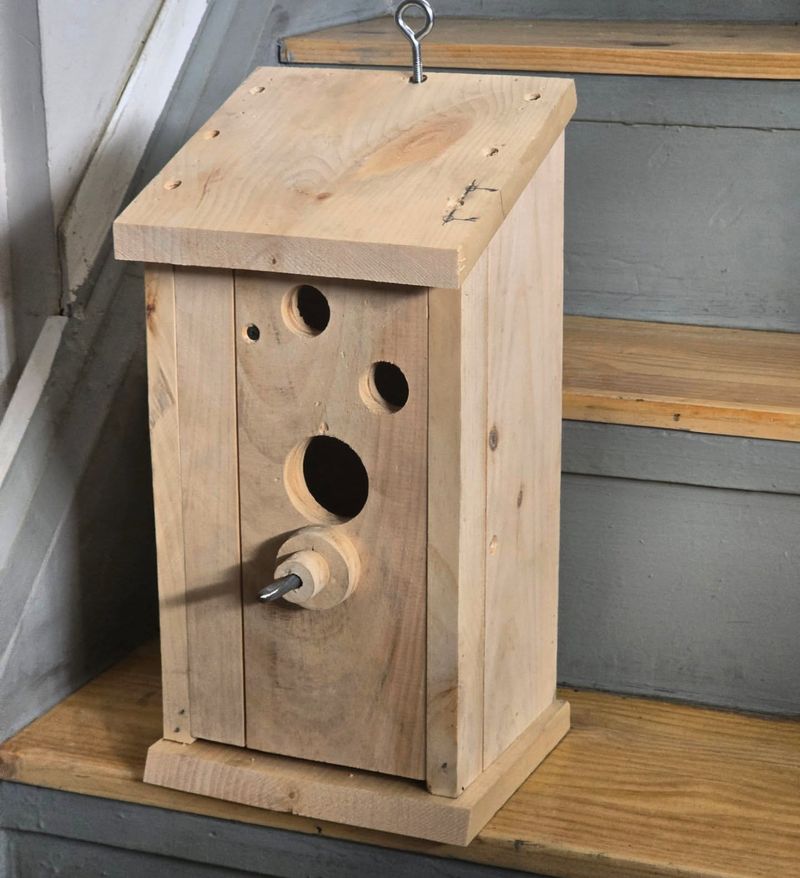
Sometimes the best birdhouse is the simplest one, and a basic wooden box proves that every time. With straight cuts, one entrance hole, and a sturdy shape, it works well in many Georgia yards.
It is also a great beginner project when something useful is needed without a complicated plan.
Cedar and untreated pine are good choices because they are easy to work with and hold up fairly well outdoors. The design should stay plain, with no flashy paint inside, and the roof should extend slightly to keep rain from blowing into the entrance.
That overhang matters more during wet Georgia weather.
During building, access for cleaning should be considered early. A small side panel or hinged roof makes maintenance easier later.
The entrance hole should match the target bird species, and drainage holes in the base help keep the nest dry. A rough interior surface under the opening can also help young birds climb.
Placement matters as much as construction. A calm location away from heavy traffic is best.
Mounting on a post, tree, or fence with some morning light and protection from hot Georgia afternoons gives better results.
5. Repurpose A Hanging Basket For Nesting Use
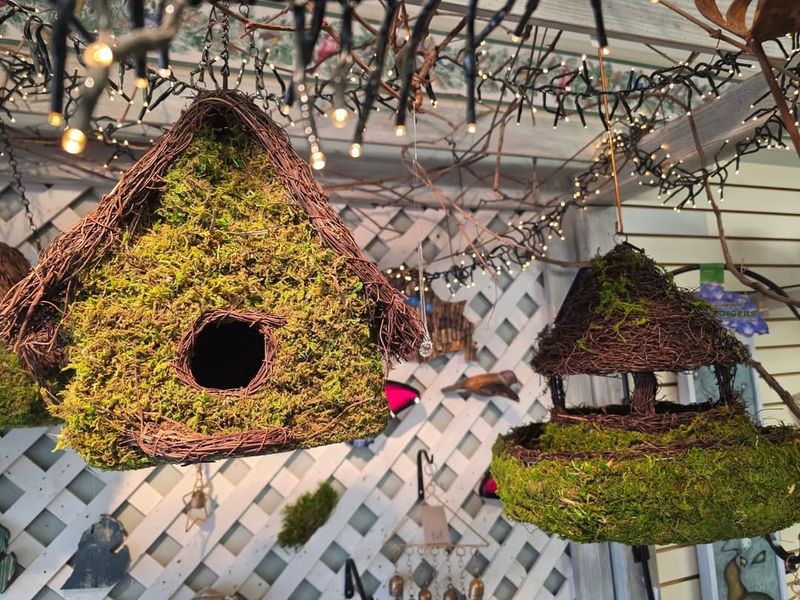
A hanging basket can become a creative nesting spot when a softer, slightly unexpected birdhouse option is needed. It works especially well on porches, covered patios, or sheltered garden corners where birds already feel some protection.
In Georgia, that kind of placement can be especially useful during rainy periods and long stretches of summer heat.
Start with a smaller basket that feels stable rather than oversized or loose in structure. If it has a wire frame and coco liner, adding natural filler inside can help it keep its shape through the season.
The goal is to create a snug, sheltered space that feels dry and secure enough for nesting.
Adding a light wooden back or partial cover can improve structure and provide extra weather protection. Hanging it under a porch ceiling, gazebo, or steady branch helps reduce movement from wind.
Excess swinging can make the space less suitable, so calmer locations work better in Georgia yards.
The appeal of this idea comes from combining usefulness with a decorative look. It blends easily with potted plants, trailing greenery, and shaded seating areas while still offering a functional nesting space when built with care.
Repurposed materials like this can add a handmade, natural feel to outdoor areas while supporting bird activity in a simple and practical way.
6. Fix A Small House Directly Onto A Fence Panel
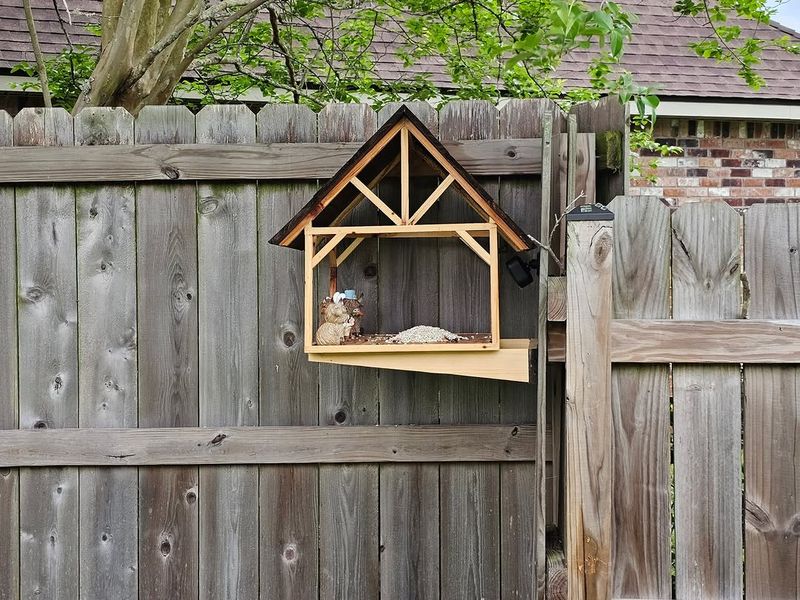
Attaching a birdhouse directly to a fence panel is a smart solution when a yard is short on trees or open post space. It keeps the project simple, uses space that already exists, and still looks attractive when scaled correctly.
In many Georgia yards, it is a practical way to add nesting spots without extra structures.
A compact wooden house usually works best because it sits neatly against the fence without looking bulky. A solid fence panel with minimal movement is important, and mounting it higher helps keep it away from pets and frequent activity.
If the fence gets strong afternoon sun, a side with softer light works better.
Before mounting, drainage and rain flow should be checked. A slightly sloped roof and small drainage holes help protect the interior during Georgia rain.
A secure attachment keeps the house stable during wind and weather changes. Nearby branches or shrubs should not block the entrance too tightly.
A fence-mounted birdhouse can also add simple visual detail to a plain backyard edge. Natural wood blends easily with fencing, while soft paint colors can be used if a more decorative look is wanted.
7. Create A Multi-House Setup On One Post
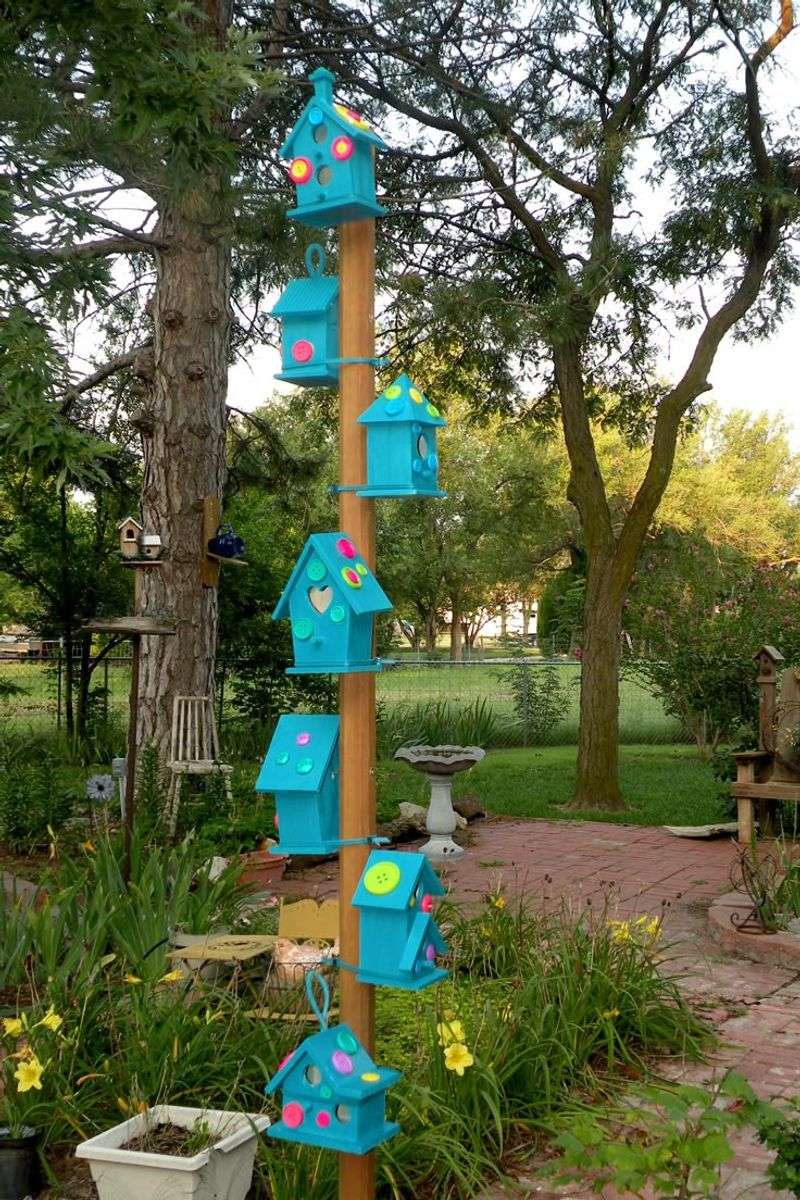
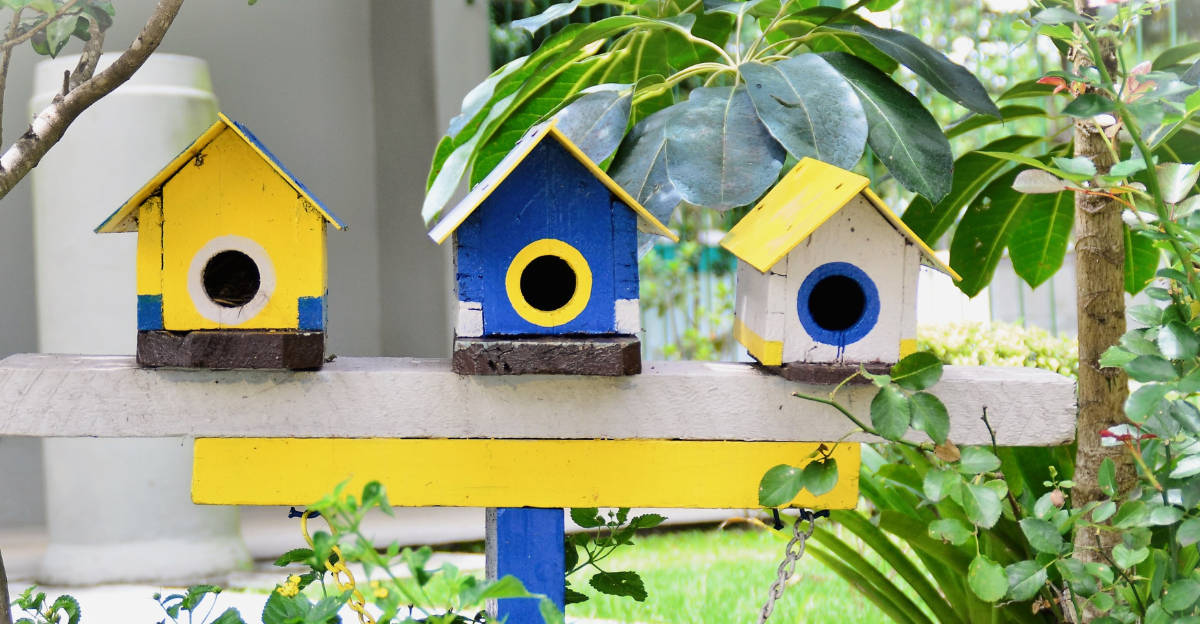
If you want your yard to feel playful and full of personality, a multi-house setup on one post can be a standout project. It creates a strong visual focal point in the garden while displaying several small birdhouses together.
In Georgia, it works especially well near open lawn areas, flower beds, or larger planting spaces.
The key is keeping each house functional rather than treating the structure as decoration only. Every unit should include ventilation, drainage, and an entrance size appropriate for local birds.
Spacing the houses slightly apart helps the setup look cleaner and prevents a crowded appearance.
A sturdy post anchored deeply into the ground is important for stability during storms and windy afternoons. Strong hardware and weather-resistant wood improve durability in Georgia’s shifting conditions.
Individual rooflines on each house also help shed rain more effectively.
From a visual standpoint, natural wood tones create a rustic look, while muted colors can add charm without overwhelming the garden. A softer palette helps the structure blend with trees, shrubs, and native plants instead of standing out too harshly.