This Is The Tiny Pest Destroying Boxwoods In Ohio Yards This Season
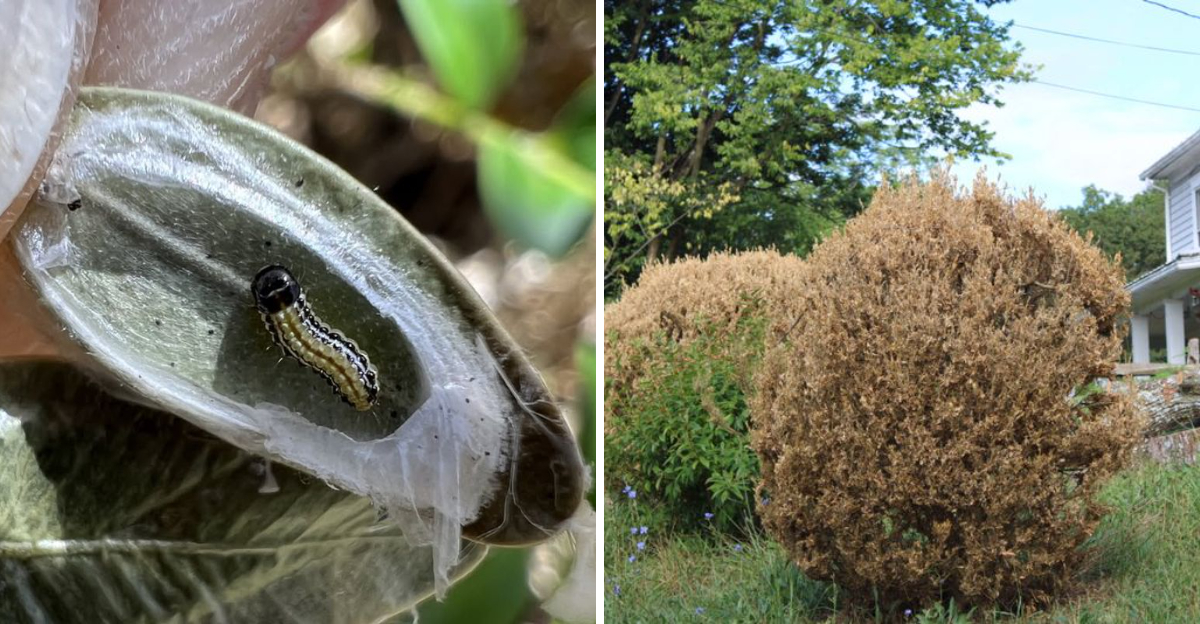
Boxwoods across Ohio yards can look perfectly healthy one week, then suddenly show browning leaves, thinning branches, and bare spots. Many homeowners assume it comes down to weather stress or poor care, yet a much smaller culprit often hides in plain sight.
A tiny pest has started causing serious damage this season, feeding quietly and spreading fast before the problem becomes obvious. By the time symptoms show, the impact can already be significant.
Left unchecked, it can strip foliage, weaken plants, and ruin the clean, structured look boxwoods bring to a landscape. Early awareness makes all the difference.
Spotting the signs and understanding what drives the damage can help protect your plants before they decline further. With the right response, you can stop the spread and keep your boxwoods looking full, green, and healthy through the season.
1. Box Tree Moth Damage Shows Up Faster Than You Expect
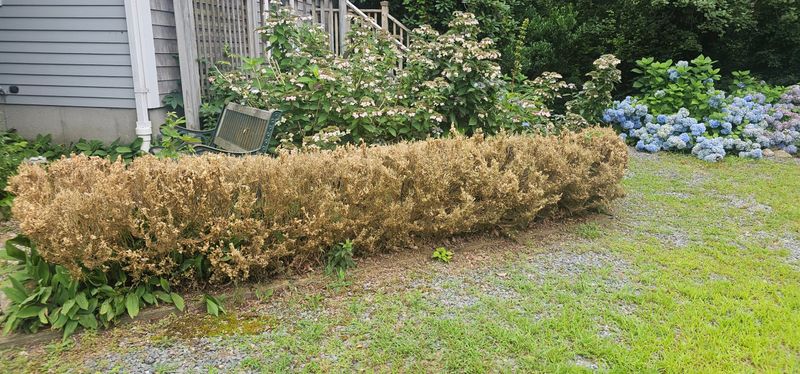
Most homeowners walk past their boxwoods every single day without noticing anything unusual, and then suddenly one morning the shrub looks completely stripped. That is the unsettling reality of box tree moth damage.
The caterpillars of Cydalima perspectalis feed so efficiently and in such large numbers that visible harm can appear within just a few days of an infestation taking hold.
Young caterpillars start by scraping the surface of leaves, leaving behind a thin, papery layer that looks faintly yellowish or translucent. As they grow larger and more aggressive, they begin consuming entire leaves, working their way deep into the shrub’s interior where they are hard to spot.
By the time you notice browning on the outer branches, the inside of the plant may already be heavily affected.
According to Ohio State University Extension, this pest can complete multiple generations between June and October, meaning a single season can bring wave after wave of feeding. Homeowners are often caught off guard simply because the early warning signs are subtle and easy to dismiss as normal seasonal stress.
Checking your boxwoods closely every week during summer is the best habit you can develop right now.
2. Look For Caterpillars Hiding Deep Inside Your Shrubs
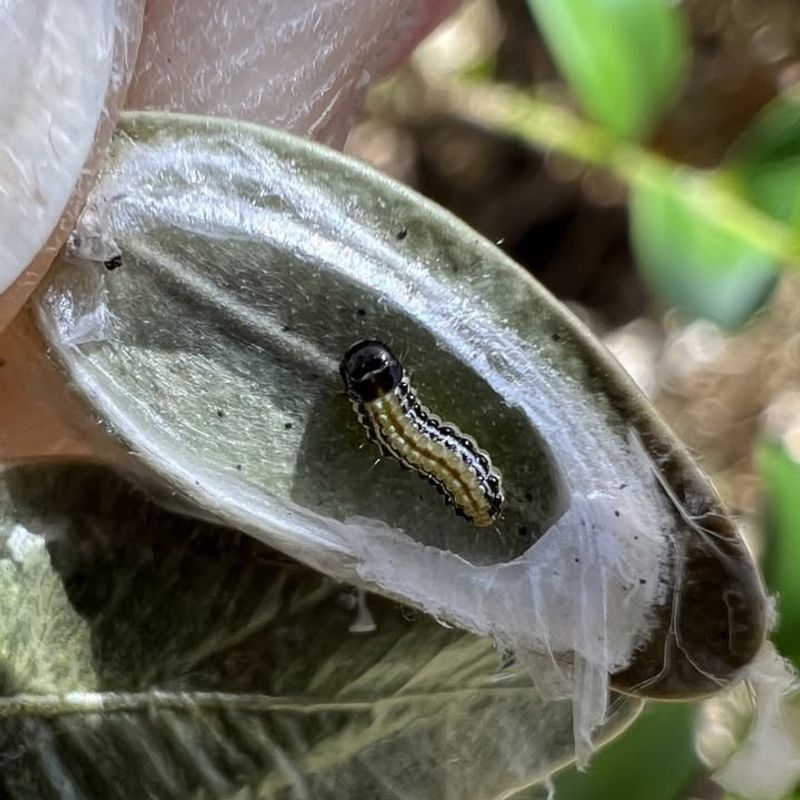
Spotting these caterpillars is not as simple as glancing at the outside of your boxwood. They are masters at tucking themselves deep into the interior of the shrub where dense foliage gives them plenty of cover.
To actually find them, you need to get your hands into the plant and part the branches carefully, looking toward the center where light barely reaches.
Young larvae are lime-green with a shiny black head and faint white spots along their sides. As they mature, dark brown stripes and black markings develop along their bodies, making them slightly easier to identify.
They tend to cluster near stems and feed in groups, especially during the early stages of an infestation.
A practical inspection tip from pest management professionals is to hold a white sheet or tray beneath the shrub and shake the branches firmly. Caterpillars and frass, which is the dark, pellet-like waste they leave behind, will fall onto the surface and confirm whether you have an active infestation.
Your Ohio Garden Changes Every Week. Your Plan Should Too.
Gardening in Ohio changes quickly throughout the season. Every Friday you’ll receive a simple weekly plan showing exactly what to plant, prune, fertilize, harvest, and protect so you never miss the right timing.
Checking every week during the growing season gives you the best chance of catching the problem before populations explode. Early detection makes management significantly more effective and less stressful overall.
3. Watch For Subtle Webbing Early On
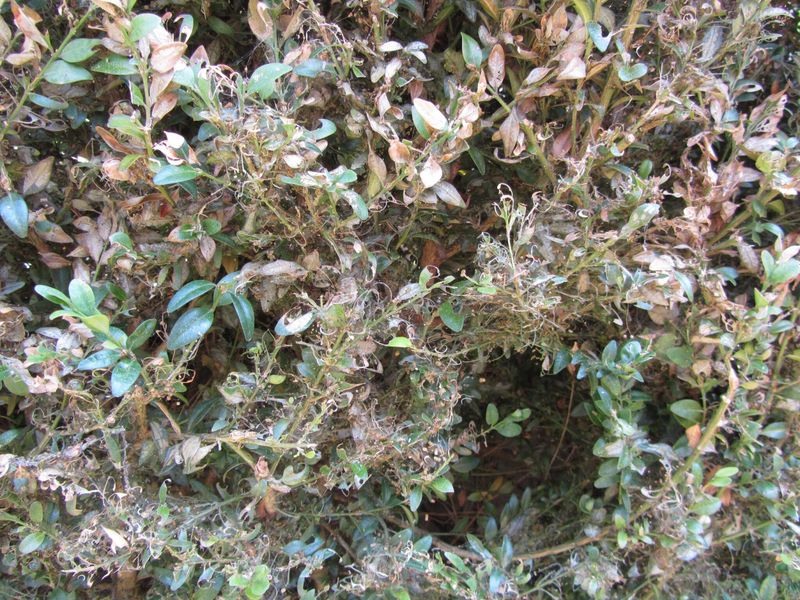
Before the chewed leaves and bare branches appear, there is usually a quieter clue hiding in plain sight inside your boxwood. Fine, silky webbing spun by young box tree moth larvae often shows up well before the feeding damage becomes dramatic.
Most people either miss it entirely or assume it came from a harmless garden spider.
The webbing left by box tree moth caterpillars looks different from typical spider webs. It tends to be messy, dense, and concentrated near clusters of leaves and stems rather than stretched in neat geometric patterns.
You will often find it mixed in with frass and small bits of chewed leaf material, which is a strong indicator that caterpillars are actively present.
Cornell University’s New York State Integrated Pest Management program notes that this webbing is one of the earliest physical signs of infestation and should be taken seriously as soon as it appears. Gently spreading the inner branches of your boxwood with a gloved hand and looking for these clumps of webbing during weekly inspections can give you a significant head start.
Catching the infestation at this stage, before populations build, is genuinely one of the most effective ways to reduce the overall damage your shrubs experience.
4. Expect Rapid Leaf Loss Once Feeding Begins
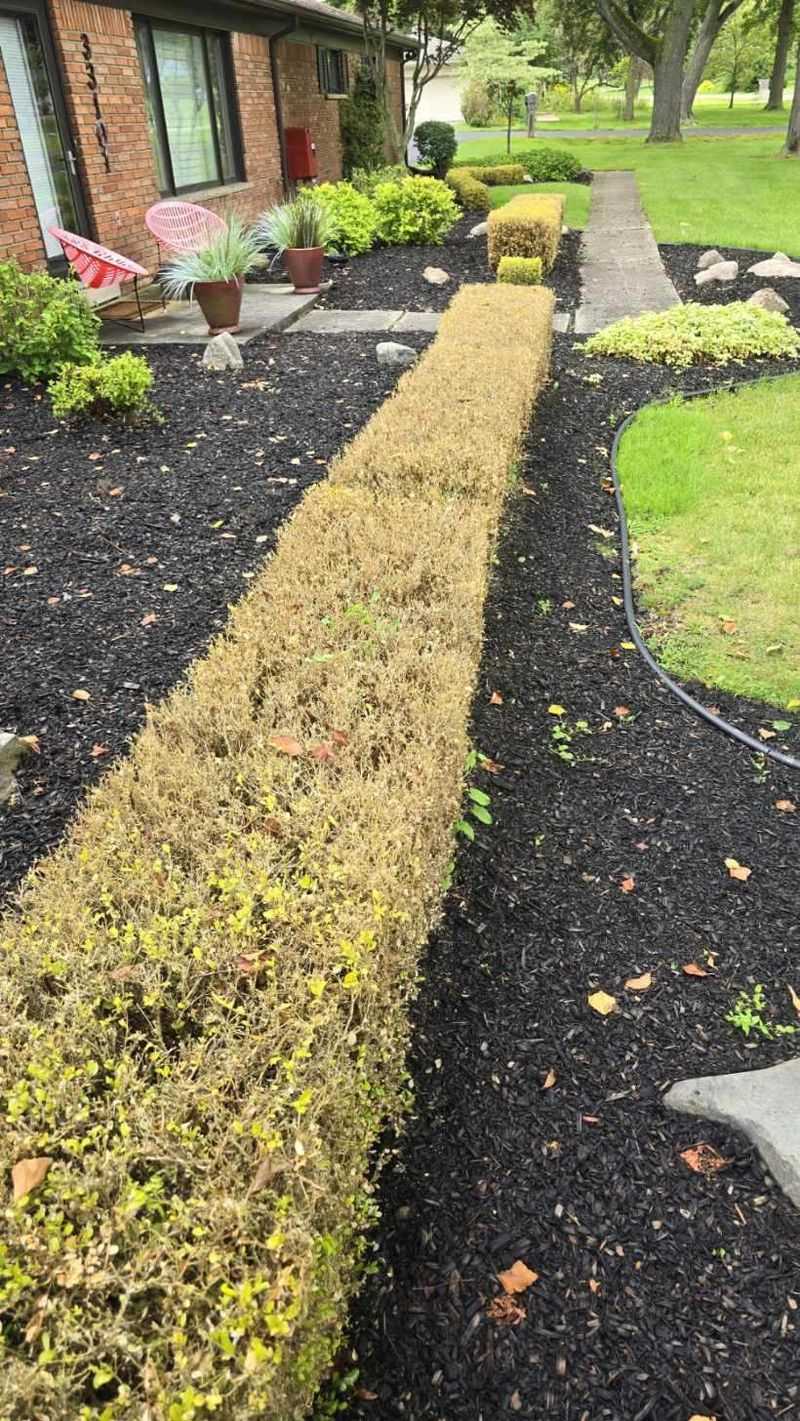
Once a mature population of box tree moth caterpillars gets going inside a boxwood, the pace of leaf loss can be startling. Unlike some garden pests that nibble slowly over weeks, these caterpillars feed intensely and in large groups, working through foliage at a rate that can strip a medium-sized shrub in under two weeks during peak feeding periods.
The progression typically starts with the inner leaves disappearing first, since that is where the caterpillars prefer to stay hidden. Then the damage moves outward, and what you see from the outside begins to look like browning, thinning, or patchy bare spots.
At this point the infestation has usually been active for some time already.
Larger, more established caterpillars in later instars are responsible for most of the heavy defoliation. They do not just eat the soft leaf tissue; they also chew through the thin green bark on young stems, which cuts off the flow of water and nutrients to entire branches.
Boxwoods that experience this level of feeding may struggle to recover fully, especially if multiple generations hit them in the same season. Acting at the first sign of leaf loss, rather than waiting to see how bad it gets, is the approach that gives your shrubs the strongest chance of bouncing back.
5. Understand How Quickly It Spreads Across Ohio Yards
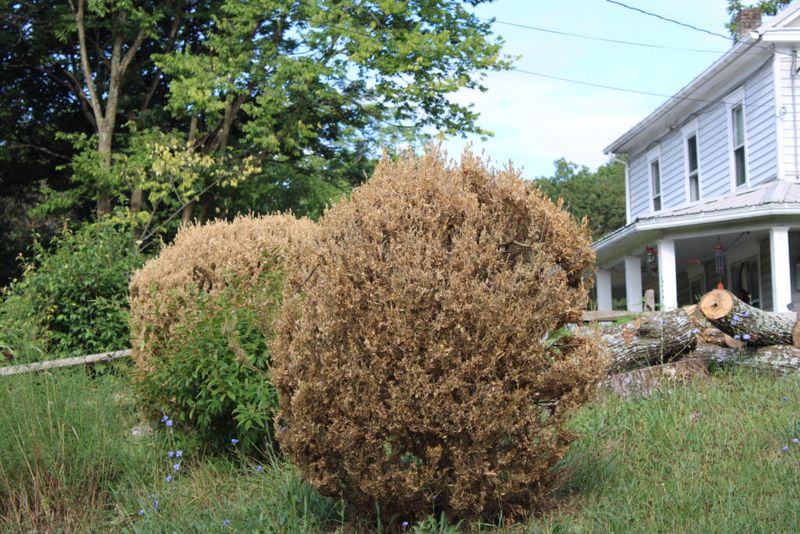
What makes the box tree moth particularly concerning for Ohio homeowners is not just how much damage it causes in one yard, but how efficiently it moves from property to property. Adult moths are strong fliers and can travel considerable distances on their own.
They are also frequently transported through infested nursery plants, which is how the pest initially arrived in North America through contaminated shipments from Europe.
Ohio sits in a region where the moth has been steadily expanding its range. Once established in a neighborhood, populations can build quickly because the pest currently has very few natural predators in North America to keep its numbers in check.
Yards with dense boxwood plantings or multiple shrubs in close proximity are especially vulnerable to rapid spread within a single season.
The Ohio Department of Agriculture encourages residents to report any suspected sightings, which helps officials track the pest’s movement and respond more effectively. Sharing information with neighbors is also genuinely useful, since an untreated infestation next door can easily re-infest a yard you just treated.
Thinking about this pest as a neighborhood-wide challenge rather than a single-yard problem leads to much better outcomes for everyone on the block who has boxwoods they want to protect.
6. Recognize Damage That Mimics Disease
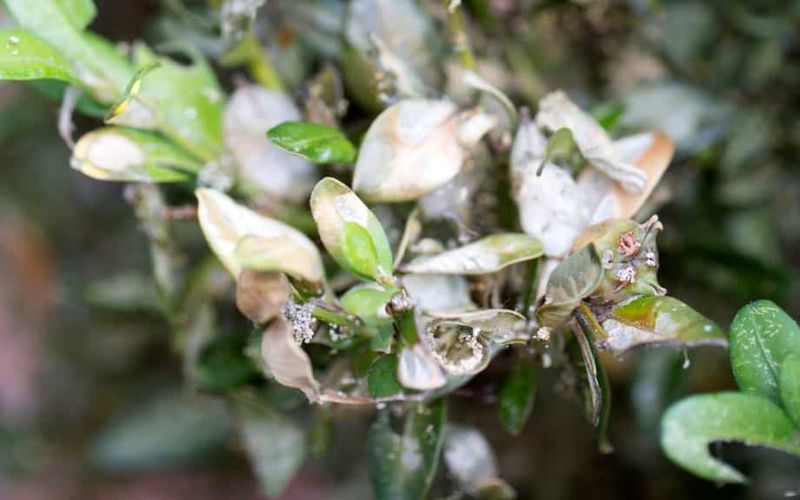
One of the trickiest parts about dealing with the box tree moth is that the damage it causes can look remarkably similar to several common boxwood diseases and other pest problems. Browning, yellowing, and thinning foliage are symptoms shared by boxwood blight, Volutella stem blight, and boxwood leafminer, which means a lot of homeowners spend time treating the wrong problem entirely.
Boxwood blight, caused by a fungal pathogen, typically produces circular brown spots on leaves with dark borders and causes stems to develop dark streaking. Leafminer damage creates blistered, puckered leaves with a yellowish tone but does not usually cause the rapid, widespread defoliation that the box tree moth produces.
The key distinguishing features to look for with box tree moth are the presence of caterpillars themselves, frass, and webbing inside the shrub.
OSU Extension recommends a thorough physical inspection before starting any treatment, because applying fungicides to a caterpillar problem or insecticides to a fungal issue wastes time and money while the real problem keeps getting worse. If you are unsure what you are dealing with, your local county extension office can help you identify the issue correctly.
Getting the diagnosis right from the beginning saves a significant amount of frustration down the road.
7. Know Why This Pest Is Becoming A Serious Problem
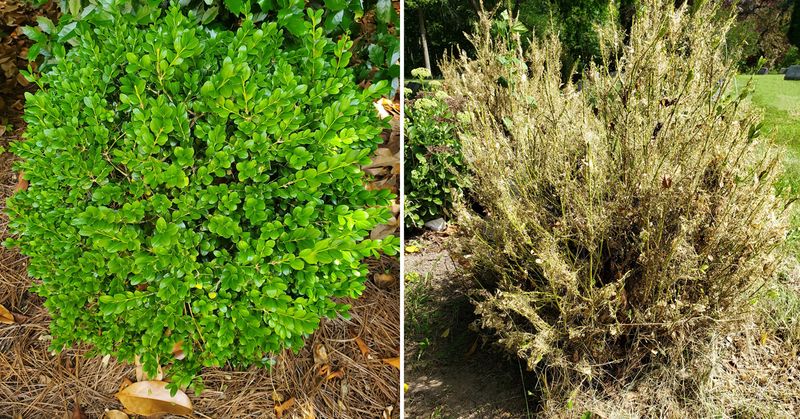
The box tree moth is not just another seasonal nuisance. It is an invasive species without the natural checks and balances that normally keep pest populations manageable, and that distinction matters enormously for how serious the threat actually is.
Back in East Asia, where this moth originates, parasitic wasps and other natural predators help control its numbers. In Ohio, those controls simply do not exist yet.
The moth can produce two to three full generations per season in our climate, according to research from Cornell University. That means populations can multiply rapidly from spring through fall without a natural slowdown.
Each adult female can lay hundreds of eggs, and with multiple generations cycling through the same plants in one year, the cumulative feeding pressure on a boxwood becomes extremely difficult for the shrub to withstand.
Boxwoods are among the most widely used landscape shrubs in Ohio, found in formal gardens, foundation plantings, and commercial landscapes throughout the state. The widespread presence of the host plant combined with the moth’s reproductive capacity and lack of natural enemies creates conditions where infestations can escalate quickly across entire communities.
Staying informed, inspecting regularly, and reaching out to local extension resources are the most practical steps Ohio homeowners can take to stay ahead of this growing problem.