10 Most Popular Annuals To Plant In April In Florida Gardens
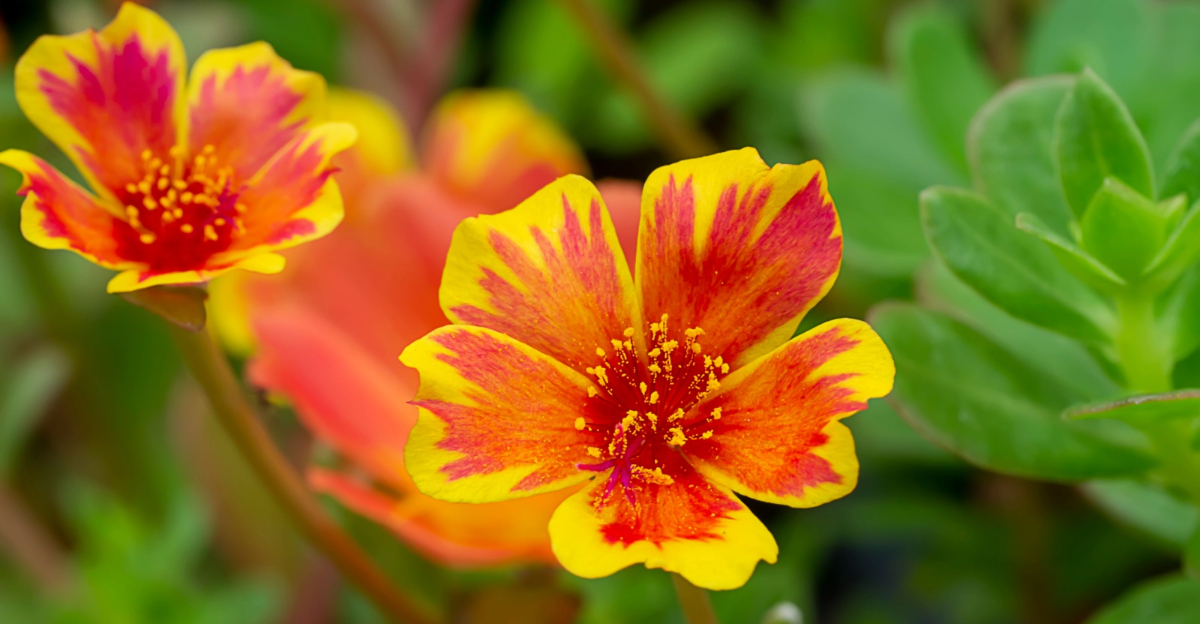
Forget the calendar – the real New Year for Florida gardeners starts the moment April’s rising soil temperatures signal the “all clear” from frost.
With days stretching longer and the sun gaining its tropical strength, the window for a high-voltage, warm-season landscape is officially wide open.
Whether you’re digging into Panhandle clay or sandy South Florida soil, now is the time to lean into annuals that don’t just tolerate the heat – they crave it.
These floral powerhouses are your secret weapon for battling the upcoming humidity and keeping your beds vibrant through the peak of a grueling Florida summer.
1. Zinnias Bring Bright Color That Holds Up In Florida Heat
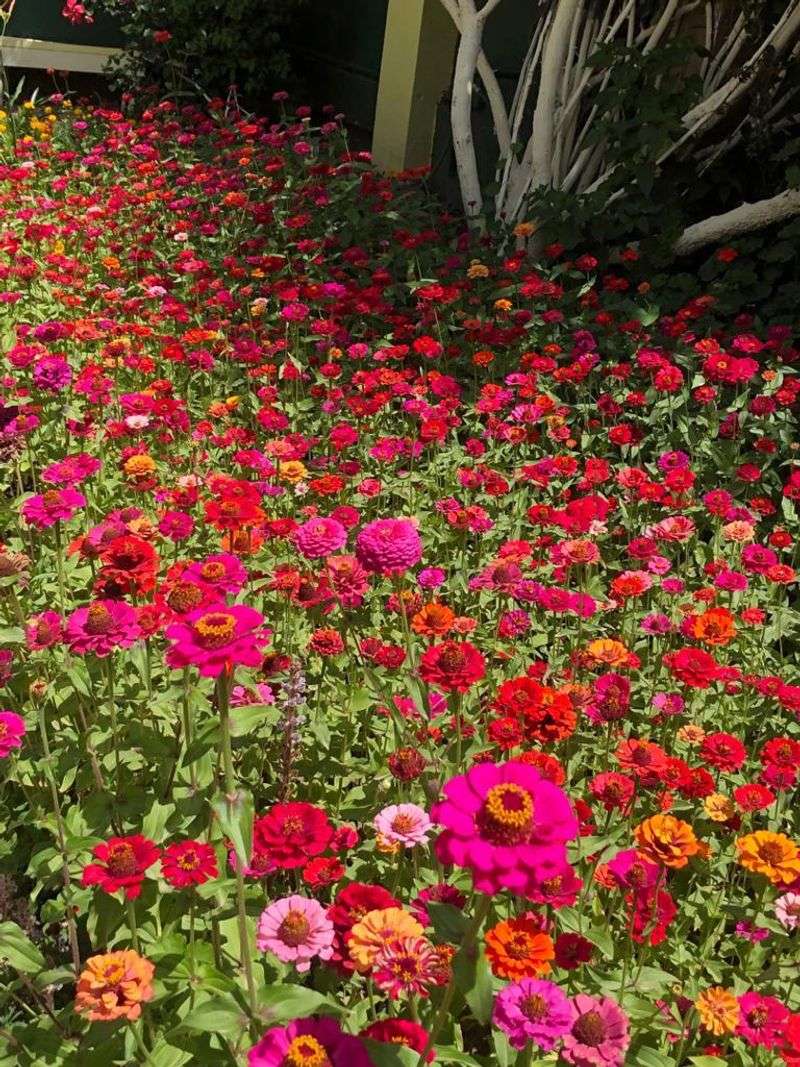
Few flowers match the sheer staying power of zinnias once the Florida heat cranks up in late spring and summer. Gardeners across the state count on them season after season because they simply do not quit when temperatures climb.
Their bold blooms in red, orange, yellow, pink, and purple keep going even when other flowers struggle to survive.
Zinnias grow best in full sun, meaning at least six hours of direct sunlight daily, which is easy to come by in most Florida locations.
They prefer well-draining soil and do not like to sit in soggy ground, so raised beds or slightly elevated planting spots work especially well.
Spacing plants about 12 inches apart helps with air circulation and reduces the chance of powdery mildew, which can sometimes show up in Florida’s humid conditions.
Starting zinnias from seed directly in the ground is one of the most satisfying approaches for Florida gardeners. Seeds germinate quickly in warm soil and begin blooming within about eight weeks.
Removing spent flowers encourages continuous blooming throughout the season. Zinnias also attract butterflies, making them a double reward in any Florida garden during the long warm months ahead.
2. Marigolds Add Reliable Blooms And Easy Care To Garden Beds
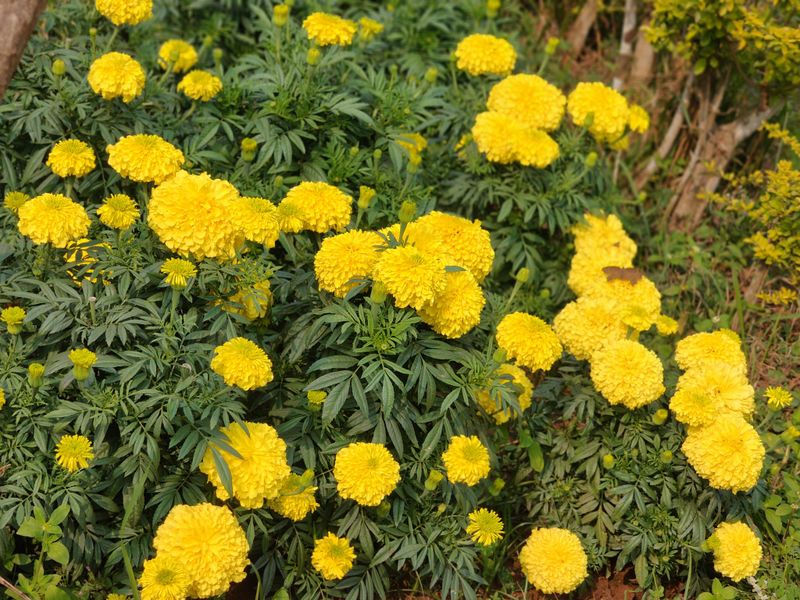
Marigolds have earned their reputation as one of the most dependable annuals a Florida gardener can plant in April. Their cheerful orange and yellow blooms show up reliably and keep producing flowers through the heat of summer with very little fuss.
Even beginner gardeners tend to have great success with them.
One of the most practical benefits of growing marigolds in Florida is their natural ability to deter certain garden pests.
Their scent is known to discourage aphids and whiteflies, making them a smart companion plant near vegetables or other flowering annuals.
French marigold varieties tend to handle Florida’s humidity a bit better than the larger African types, though both perform reasonably well with proper care.
Marigolds need full sun and well-drained soil to look their best. Watering at the base of the plant rather than overhead helps prevent fungal issues that can develop in humid Florida summers.
Removing faded blooms regularly keeps the plant producing fresh flowers. With modest fertilizing every few weeks, marigolds planted in April can continue putting on a colorful show well into fall across much of Florida.
3. Vinca Thrives In Heat And Humidity With Minimal Fuss
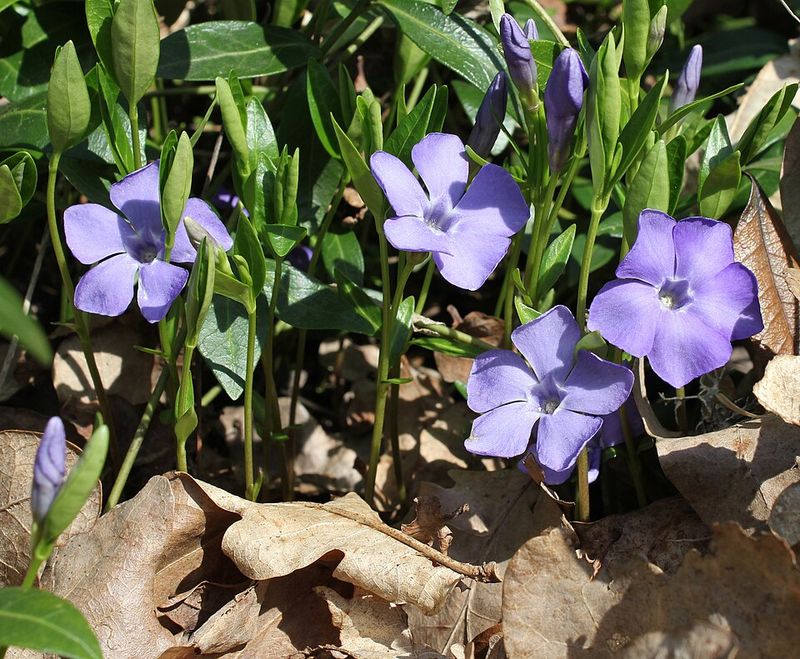
Walk through almost any Florida neighborhood in summer and you will likely spot vinca growing along driveways, in front beds, and around mailboxes.
Your Florida Garden Changes Every Week. Your Plan Should Too.
Gardening in Florida changes quickly throughout the season. Every Friday you’ll receive a simple weekly plan showing exactly what to plant, prune, fertilize, harvest, and protect so you never miss the right timing.
Also called periwinkle, this tough little annual has become a go-to choice for Florida gardeners who want reliable color without spending hours on maintenance.
It shrugs off heat and humidity in a way that few other annuals can match.
Vinca loves full sun and handles dry spells better than many flowering plants, making it especially useful in parts of Florida where summer rainfall can be unpredictable. It grows well in sandy Florida soils as long as drainage is good.
Overwatering is actually one of the more common mistakes with vinca, since wet soil can lead to root rot and fungal problems.
April planting gives vinca plenty of time to establish before the hottest months arrive.
Choose disease-resistant varieties when shopping at Florida nurseries, as some have been bred specifically to handle the humidity of the Southeast.
Space plants about 10 to 12 inches apart to allow good airflow. With a bit of slow-release fertilizer worked into the soil at planting, vinca can bloom continuously from spring through late fall across Florida.
4. Pentas Attract Butterflies With Clusters Of Star-Shaped Flowers
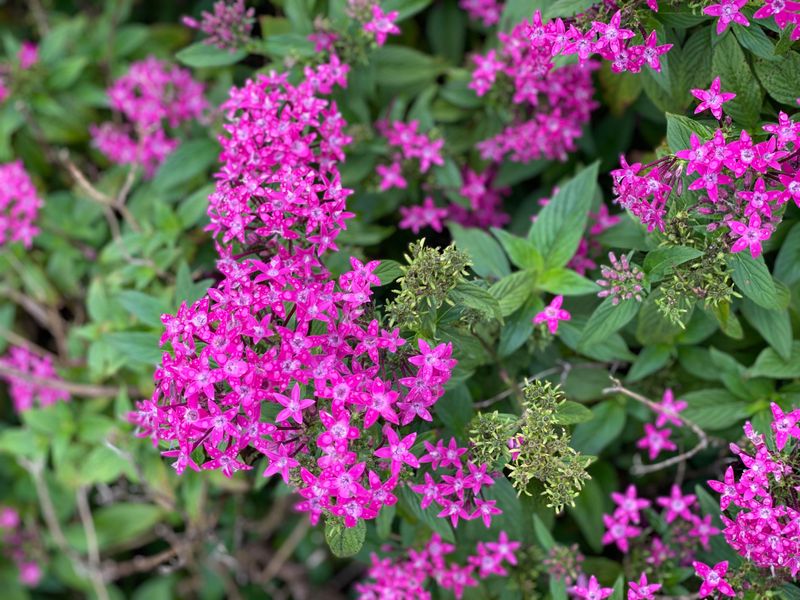
Pentas might just be one of the most wildlife-friendly annuals a Florida gardener can choose for an April planting.
The clusters of tiny star-shaped flowers in red, pink, white, and lavender act like a landing pad for butterflies, and hummingbirds are known to visit them regularly as well.
Watching the activity around a patch of pentas on a warm Florida afternoon is genuinely enjoyable.
Beyond their appeal to pollinators, pentas are remarkably well-suited to Florida’s climate.
They handle heat and humidity without slowing down, and they keep producing flowers even through the most intense stretches of summer.
Full sun brings out the best bloom production, though pentas can manage in spots that receive partial afternoon shade, which is sometimes helpful in South Florida’s intense summer heat.
Pentas grow well in containers or directly in garden beds with well-draining soil. Watering consistently but allowing the soil to dry slightly between sessions keeps the roots healthy.
Light fertilization every few weeks supports steady blooming. Unlike some annuals that fade mid-summer in Florida, pentas tend to keep their energy through the season.
Planting them in April gives them a strong head start and makes them a standout in any Florida pollinator garden.
5. Cosmos Grow Quickly And Add A Light, Airy Look
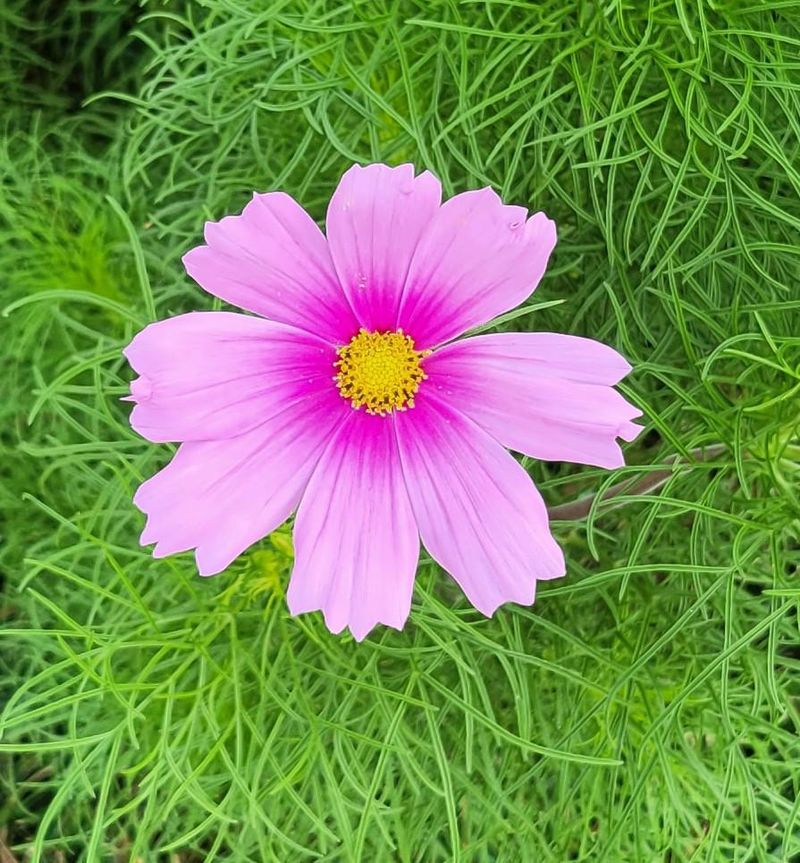
There is something almost effortless about cosmos. These feathery-leaved flowers grow quickly from seed, need very little attention, and produce a soft, romantic look that contrasts nicely with bolder annuals like zinnias and marigolds.
Florida gardeners who want a relaxed cottage-style feel in their beds often reach for cosmos first.
Cosmos do especially well in lean soil, which is good news given that Florida’s sandy ground is not always the richest.
Adding too much fertilizer actually encourages leafy growth at the expense of flowers, so going easy on feeding is smart advice.
Full sun is important, and good drainage keeps the roots from sitting in water during Florida’s rainy season, which overlaps with the later part of the growing season.
Direct seeding in April works well because cosmos germinate fast in warm Florida soil and start blooming in as little as seven to eight weeks.
Taller varieties may need light staking if planted in areas prone to afternoon thunderstorm winds, which are common across Florida in summer.
Removing spent flowers extends blooming, but cosmos also self-seed readily, so new plants may appear on their own next season. Their airy texture and pastel tones make them a charming addition to any Florida spring and summer garden.
6. Sunflowers Create Bold Height And Sunny Color In Summer Beds
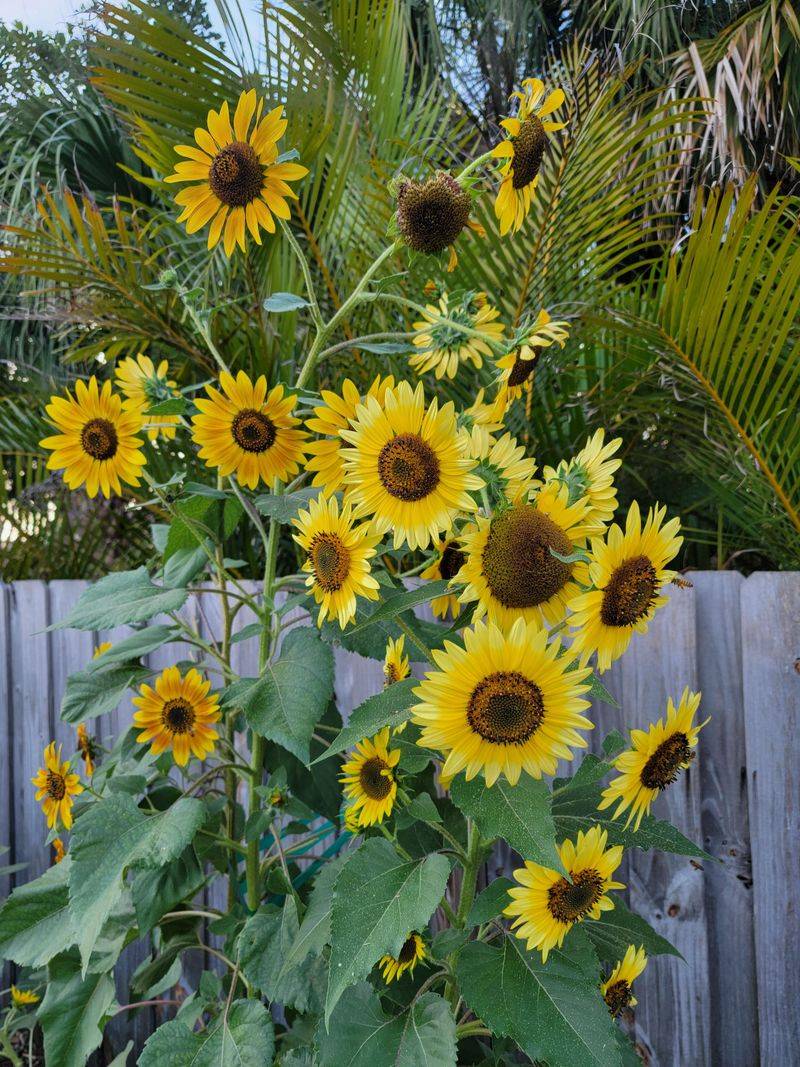
Sunflowers bring a kind of joyful drama to Florida gardens that is hard to replicate with any other annual. Their tall stalks and oversized golden blooms create a bold vertical element that draws the eye from across the yard.
Planted in April, sunflowers take full advantage of Florida’s long, sunny days to grow quickly and bloom by early to mid-summer.
Florida’s sandy, well-draining soil is actually a decent match for sunflowers, which prefer not to have wet feet. Full sun is non-negotiable – these plants need as much direct light as possible to grow strong and tall.
Spacing them about 18 to 24 inches apart gives each plant room to develop without competing for nutrients.
Watering deeply but infrequently encourages roots to grow downward, which helps plants withstand the drying heat of a Florida summer.
Shorter, multi-branching sunflower varieties are worth considering for gardeners with limited space, as they produce multiple blooms per plant rather than a single large head.
Sunflowers are also beloved by birds, particularly goldfinches, who visit seed heads in late summer.
Mixing sunflower varieties of different heights adds interesting dimension to Florida garden beds and keeps color going through the hottest months of the year.
7. Celosia Adds Unique Texture And Vibrant Color To Hot Gardens
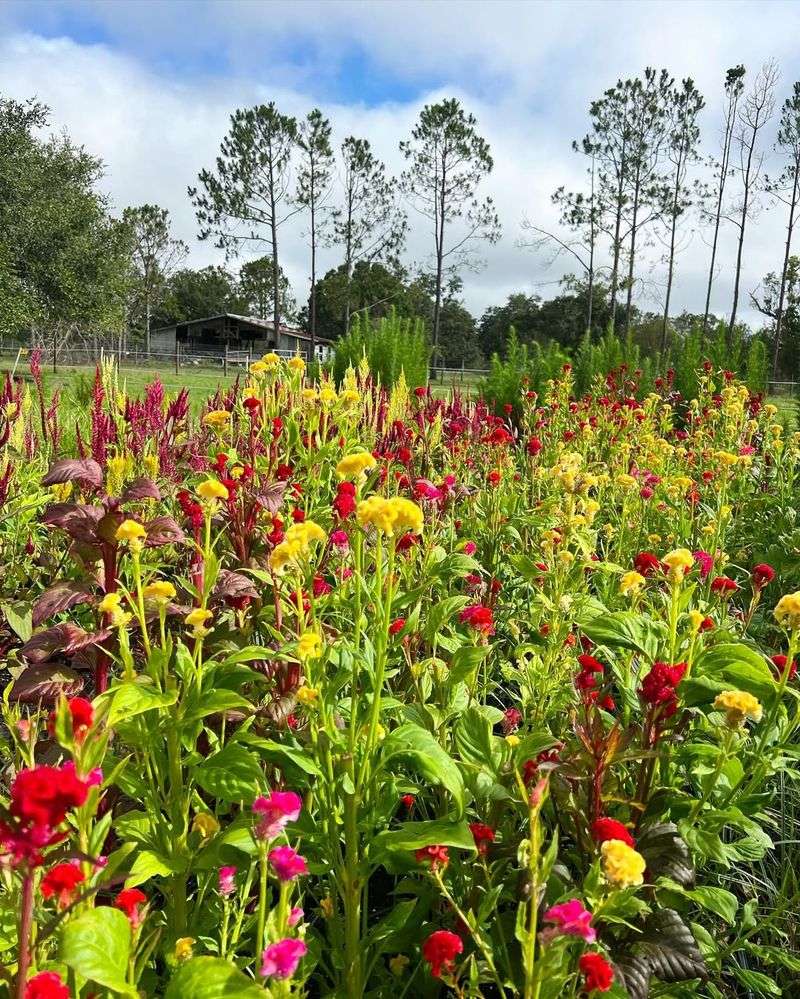
Celosia is one of those annuals that stops people in their tracks at the garden center.
Its unusual blooms come in two main forms – the velvety, brain-like crests of cockscomb types and the feathery upright plumes of plumed varieties – and both bring a texture to Florida garden beds that most other flowers simply cannot offer.
Colors range from deep crimson to electric orange to soft yellow.
Heat is not a problem for celosia. In fact, it thrives when temperatures rise, making it one of the most reliable choices for Florida gardeners planting in April.
It grows best in full sun with well-draining soil and does not need heavy watering once established.
Overwatering in Florida’s humid conditions can lead to stem rot, so letting the soil dry out slightly between waterings is a good habit.
Celosia works beautifully as a border plant, a container specimen, or a cut flower for arrangements. Fertilizing lightly every three to four weeks keeps plants producing vibrant new growth.
The blooms hold their color for a long time, even after cutting and drying, which gives them extra value beyond the garden.
For Florida gardeners looking to add something visually striking to summer beds, celosia is a genuinely rewarding choice.
8. Salvia Produces Long-Lasting Blooms That Pollinators Love
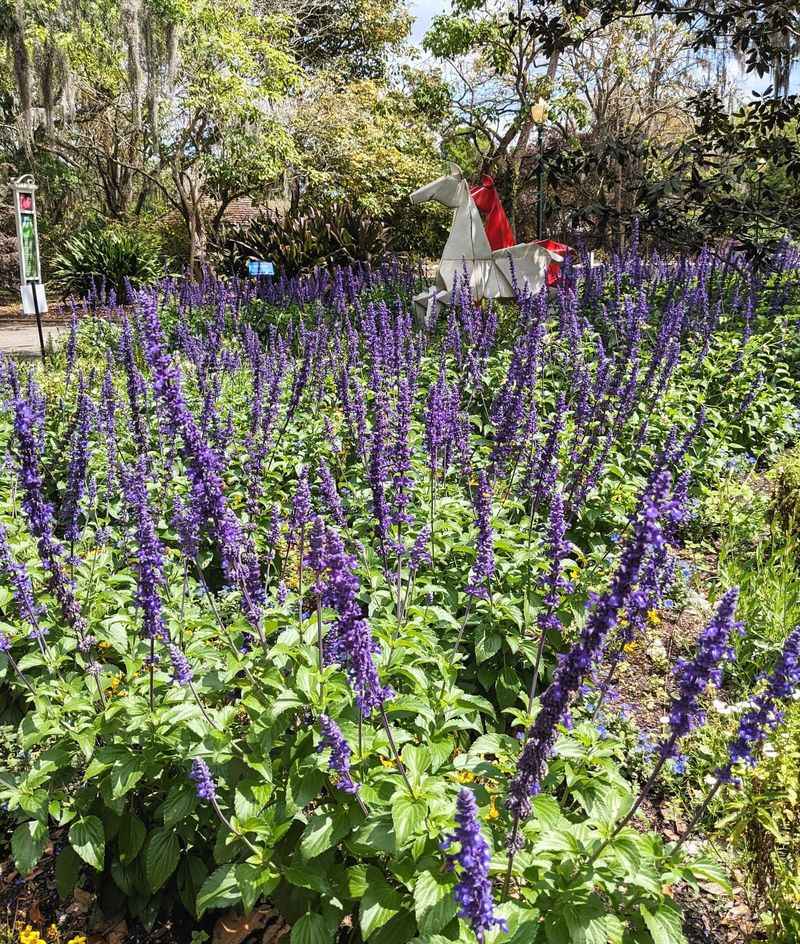
Salvia earns high marks from Florida gardeners for one very practical reason – it just keeps blooming.
Where some annuals take a midseason break during the hottest Florida months, salvia pushes through and continues producing its tall flower spikes in shades of red, blue, purple, and white.
Hummingbirds and native bees are frequent visitors, which adds life and movement to any garden space.
Red salvia, also known as scarlet sage, is among the most heat-tolerant options and a classic choice for Florida landscapes.
Blue salvia varieties also perform well and offer a cooler visual contrast when planted alongside warm-toned zinnias or marigolds.
Both types prefer full sun and well-drained soil. Florida’s sandy soils drain quickly, which actually works in salvia’s favor since it dislikes sitting in overly wet ground.
Planting salvia in April gives it time to settle in before summer heat peaks. Cutting back leggy stems encourages fresh growth and new flower spikes throughout the season.
A balanced slow-release fertilizer applied at planting provides steady nutrition without encouraging too much leafy growth at the expense of blooms.
With proper spacing of about 12 to 18 inches, salvia plants fill out nicely and become a dependable anchor in Florida summer garden designs.
9. Gomphrena Offers Durable Flowers That Handle Heat With Ease
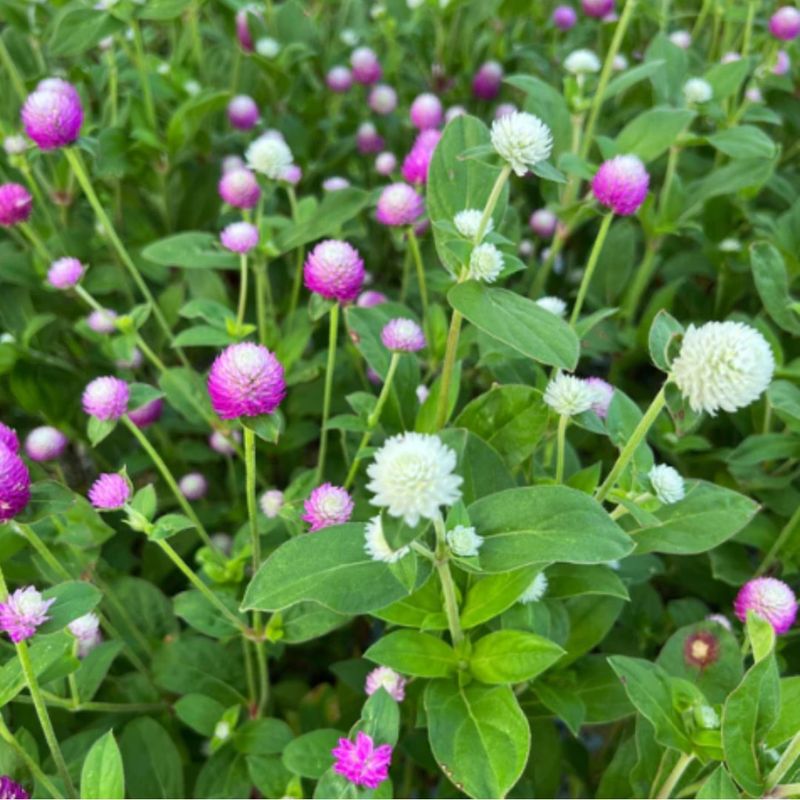
Gomphrena, often called globe amaranth, is one of those underappreciated annuals that deserves far more attention in Florida gardens.
Its rounded, clover-like blooms in purple, magenta, pink, and white hold their color and shape for an impressively long time, both on the plant and when cut for dried arrangements.
Florida gardeners who discover gomphrena often wonder why they waited so long to try it.
The real strength of gomphrena is its ability to handle Florida’s summer heat and humidity without missing a beat. While many annuals start looking ragged by July, gomphrena stays neat, upright, and colorful.
It thrives in full sun and performs best in well-draining soil, which Florida’s sandy ground provides naturally.
Drought tolerance is another standout quality – established plants can handle dry stretches that would stress other flowering annuals.
Planting gomphrena in April gives it a full season to shine. Space plants about 12 to 15 inches apart and apply a light layer of mulch to help retain moisture during dry periods.
Very little trimming of old blooms is required, as they don’t detract from the plant’s appearance. Butterflies and bees visit gomphrena regularly, adding extra ecological value.
For Florida gardeners who want low-effort, high-reward color from spring through fall, gomphrena is a genuinely smart pick.
10. Portulaca Spreads Low With Bright Blooms In Dry Conditions
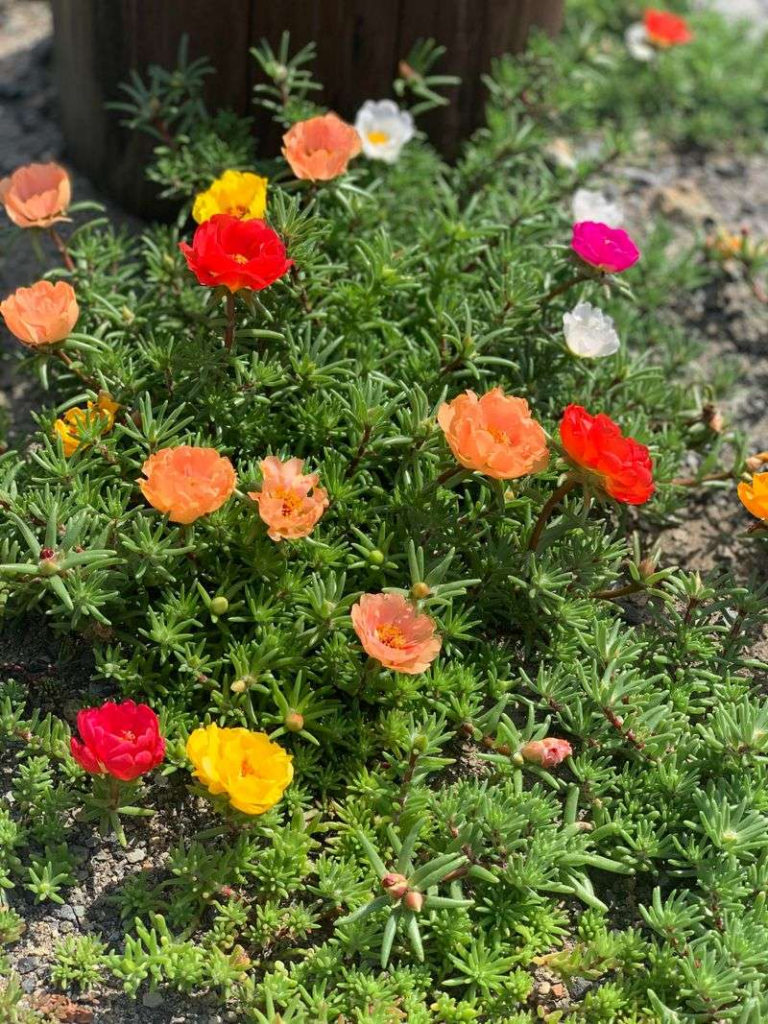
Portulaca, sometimes called moss rose, is built for the kind of hot, dry conditions that challenge most other flowering plants. Its succulent-like leaves store moisture, allowing it to push through dry spells that would leave other annuals wilting.
Florida gardeners with sandy, fast-draining spots that struggle to support other flowers often find that portulaca thrives exactly where nothing else will.
The blooms are small but come in a dazzling range of colors – red, orange, yellow, pink, white, and bicolor varieties all exist.
Flowers open wide in full sun and tend to close on cloudy days or in the evening, which is just a natural trait of the plant rather than a sign of stress.
Portulaca spreads outward in a low, trailing habit that makes it excellent for ground cover, rock gardens, and the edges of raised beds.
April planting in Florida gives portulaca warm soil to germinate and establish quickly. It grows well with very little fertilizer and actually prefers lean conditions.
Overwatering is the main thing to avoid – soggy soil leads to root problems fast.
With proper drainage and full sun, portulaca produces cheerful blooms from spring through the end of summer, making it one of the most carefree annuals available to Florida gardeners.