9 Florida’s Most Overused Trees And What To Plant Instead For Less Work
Drive through almost any Florida neighborhood and the pattern starts to feel familiar. The same trees show up yard after yard, chosen for quick shade or fast growth, then slowly turn into high-maintenance headaches.
Dropping leaves, messy fruit, constant pruning, and pest issues can take the fun out of a landscape that should feel easy in Florida’s climate. Many of these trees became popular for good reasons, but they are not always the best long-term fit for heat, humidity, and sandy soil.
There are smarter choices that bring the same beauty, structure, and shade without the extra work.
Swapping out a few overused picks for better alternatives can lighten your workload and make your yard feel cleaner, calmer, and far more manageable year round.
1. Live Oak Outgrows Small Yards Fast
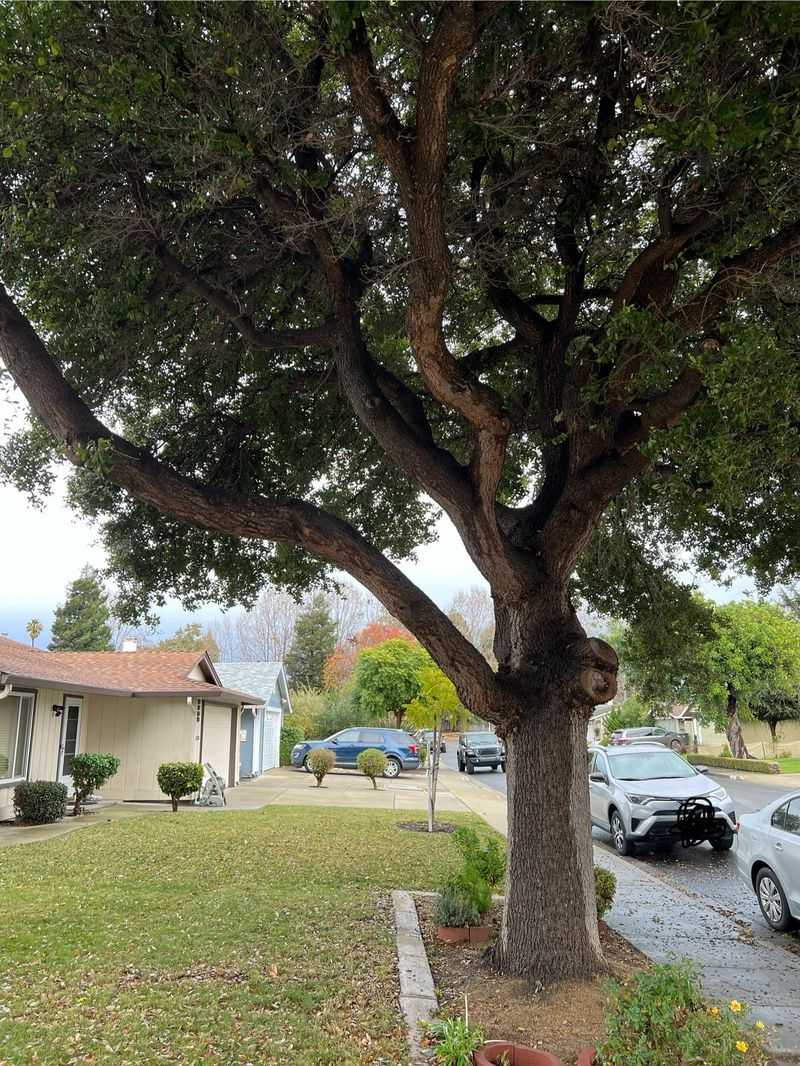
Few trees in Florida are as beloved as the live oak, and for good reason. It is strong, long-lived, and gorgeous.
But here is the problem nobody warns you about at the nursery: a mature live oak can spread 60 to 80 feet wide, with roots that travel just as far underground. Plant one too close to your house and within a decade you are dealing with cracked sidewalks, lifted driveways, and roots probing your foundation.
Many homeowners plant live oaks in small front yards thinking they will stay manageable. They will not.
Pruning a large live oak costs hundreds of dollars per visit, and improper cuts invite disease. The canopy is so dense that grass and garden plants underneath struggle to survive without extra attention.
A smarter swap is the Dahoon Holly (Ilex cassine), a Florida native that tops out around 20 to 30 feet. It offers year-round interest with bright red berries that birds absolutely love.
Dahoon Holly handles wet and dry soils, needs almost no pruning, and fits comfortably in smaller landscapes. According to UF/IFAS, it is a reliable, low-maintenance choice that respects the space around your home.
2. Southern Magnolia Creates Heavy Shade And Mess
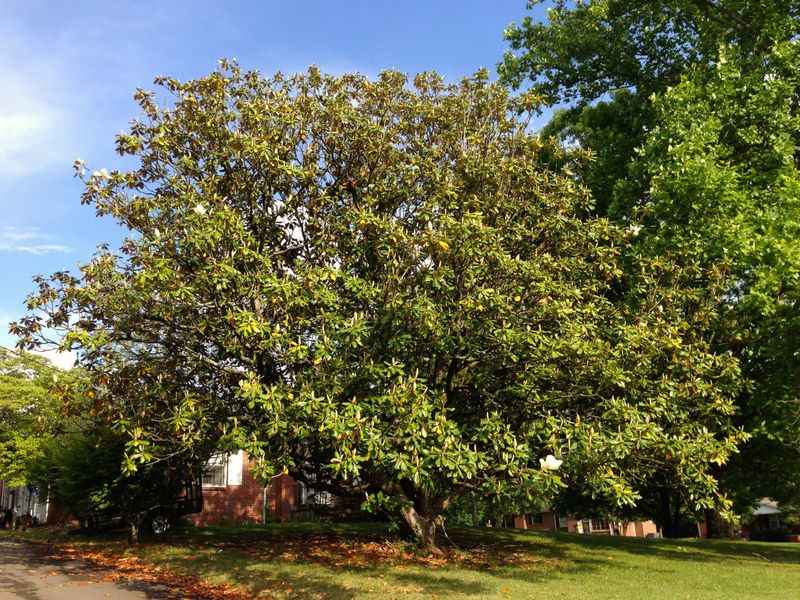
Southern Magnolia is one of those trees that looks absolutely stunning in photographs. Those giant white flowers and glossy leaves are hard to resist at the garden center.
But living with one is a different story entirely. The canopy is so dense it blocks nearly all sunlight, making it nearly impossible to grow grass or garden plants underneath.
The leaf drop is relentless. Unlike deciduous trees that drop leaves once a year, Southern Magnolia sheds its large, leathery leaves year-round.
Those leaves are tough, slow to break down, and can blanket your lawn in a thick layer that smothers everything beneath. Raking them up feels like a part-time job.
Sweetbay Magnolia (Magnolia virginiana) is a far more yard-friendly option. It grows to a modest 10 to 20 feet in most Florida landscapes, offers the same beautiful white flowers with a lovely lemony scent, and lets more light filter through its canopy.
It is native to Florida, handles both wet and moderately dry soils, and requires very little intervention once established. Compact cultivars are available for even tighter spaces, making it a practical and beautiful upgrade for most Florida homeowners.
Your Florida Garden Changes Every Week. Your Plan Should Too.
Gardening in Florida changes quickly throughout the season. Every Friday you’ll receive a simple weekly plan showing exactly what to plant, prune, fertilize, harvest, and protect so you never miss the right timing.
3. Red Maple Struggles In The Wrong Soil
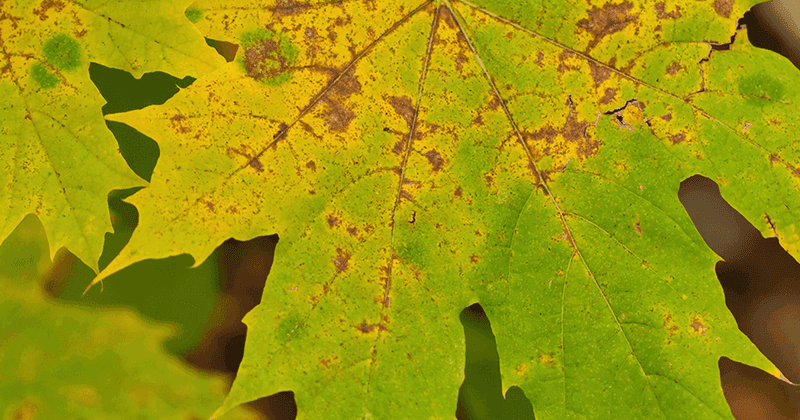
Red maple gets planted all over Florida because of its reputation for stunning fall color and fast growth up north. The reality in Florida is more complicated.
The species performs well only in specific soil conditions, and much of the state has sandy, alkaline, or compacted soil that leaves red maples looking pale, stressed, and disappointing.
Chlorosis, which causes leaves to turn yellow due to nutrient deficiencies, is a very common complaint from Florida homeowners who planted red maples in the wrong spot. The tree may survive, but it rarely thrives unless you are constantly amending the soil and supplementing with fertilizer.
That kind of ongoing effort adds up fast in both time and cost.
The key is matching the right ecotype to your specific location. Florida-native red maples (Acer rubrum, Florida ecotype) sourced from local nurseries are far better adapted to the state’s conditions than nursery stock grown in other regions.
For drier or more alkaline sites, UF/IFAS recommends exploring alternatives like native Sweetgum (Liquidambar styraciflua) in appropriate zones. Choosing a tree that naturally suits your soil from the start eliminates the cycle of corrective treatments and frustration that comes with a mismatched planting.
4. Queen Palm Needs Constant Care To Look Good
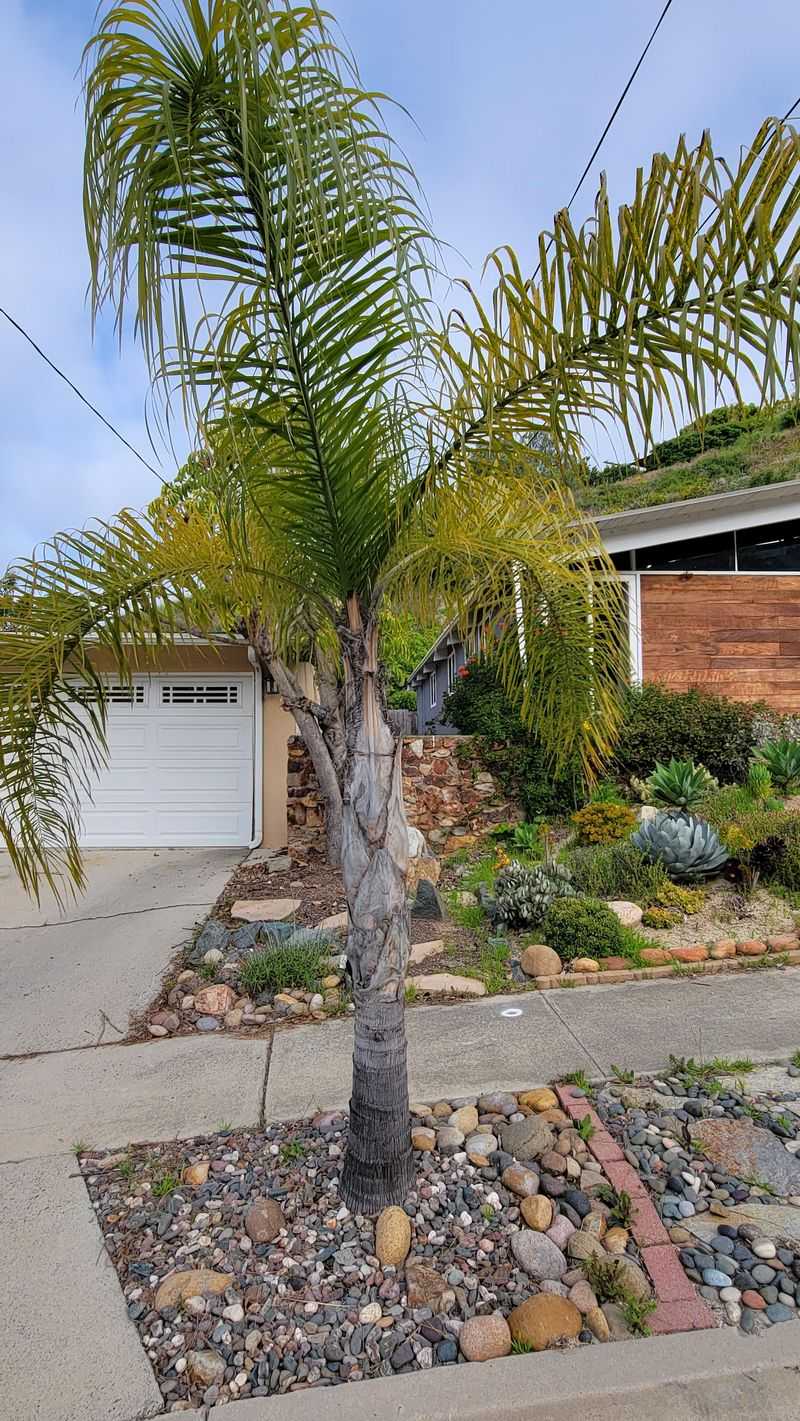
Queen palms line streets and fill front yards across South and Central Florida, and it is easy to see the appeal. They grow quickly, look tropical and elegant, and are widely available at every nursery.
The trouble starts shortly after planting, when the maintenance demands begin stacking up.
Queen palms are notorious for nutrient deficiencies in Florida’s sandy soils. Without regular applications of a specialized palm fertilizer containing potassium, magnesium, and manganese, the fronds turn yellow and the tree looks shabby fast.
The fruit clusters are also a constant headache, dropping messy orange fruits that attract insects and stain surfaces. Pruning is needed multiple times per year to keep the tree looking presentable.
Sabal Palm (Sabal palmetto), Florida’s official state tree, is a dramatically better choice for low-maintenance tropical style. It is deeply adapted to Florida’s soils and climate, resistant to cold snaps and salt spray, and requires essentially no fertilizing once established.
Sabal palms are also significantly more wind-resistant during hurricanes than queen palms. They may grow more slowly, but once they are settled in, they largely take care of themselves, saving you money and weekend hours year after year.
5. Crape Myrtle Gets Overpruned And Overused
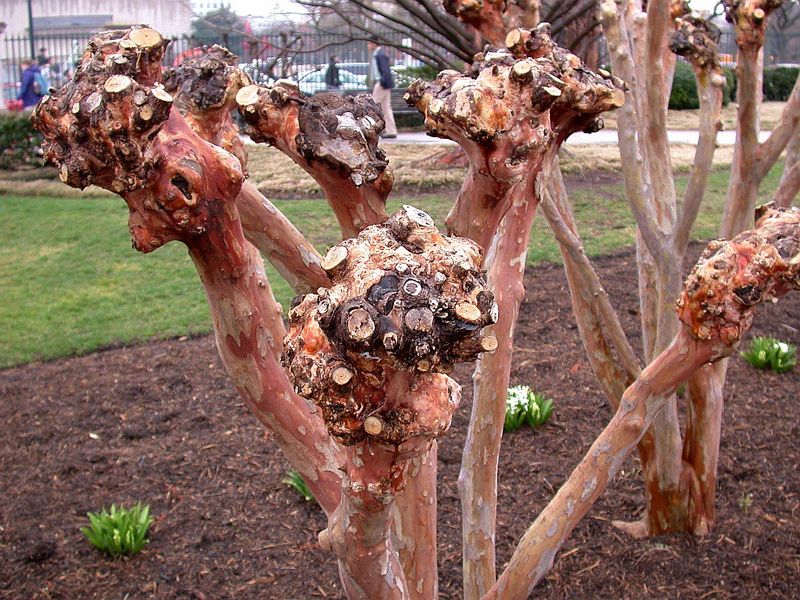
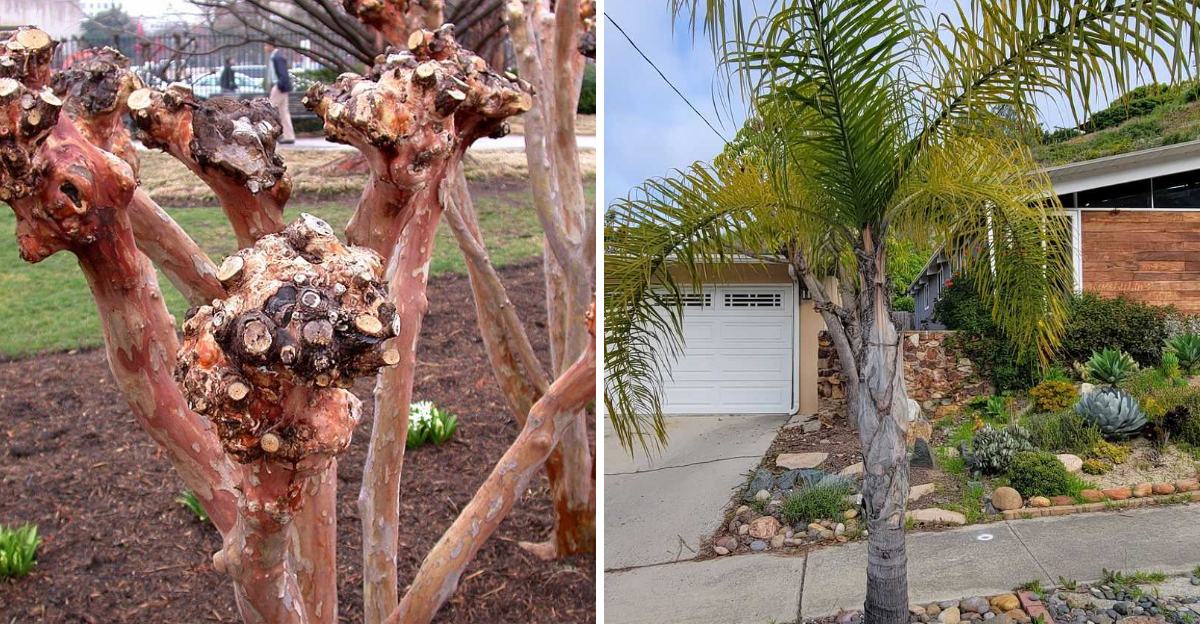
Every summer, neighborhoods across Florida turn into scenes of overpruned crape myrtles. Homeowners and landscapers grab chainsaws and hack crape myrtles back to ugly stubs, thinking it encourages better blooms.
It does not. Topping crape myrtles weakens the tree, creates dense clusters of weak branches, and makes the tree more vulnerable to pests and disease over time.
Beyond the pruning problem, crape myrtles are simply everywhere. You will find them in every parking lot, median strip, and front yard in the state.
While they are not invasive and do bloom reliably, their overuse in Florida landscapes has made them a landscaping cliche that requires more upkeep than most people expect. Aphids, sooty mold, and powdery mildew are recurring issues that demand attention.
Chickasaw Plum (Prunus angustifolia) is a charming native alternative that delivers a beautiful show of white spring blossoms without the pruning drama. It grows as a small tree or large shrub, typically reaching 15 to 25 feet, and produces small fruits that wildlife eagerly eat.
It is tough, adaptable to a range of Florida soils, and has a natural shape that looks attractive without constant cutting. Native pollinators absolutely flock to it in early spring.
6. Ficus Roots Cause Serious Damage
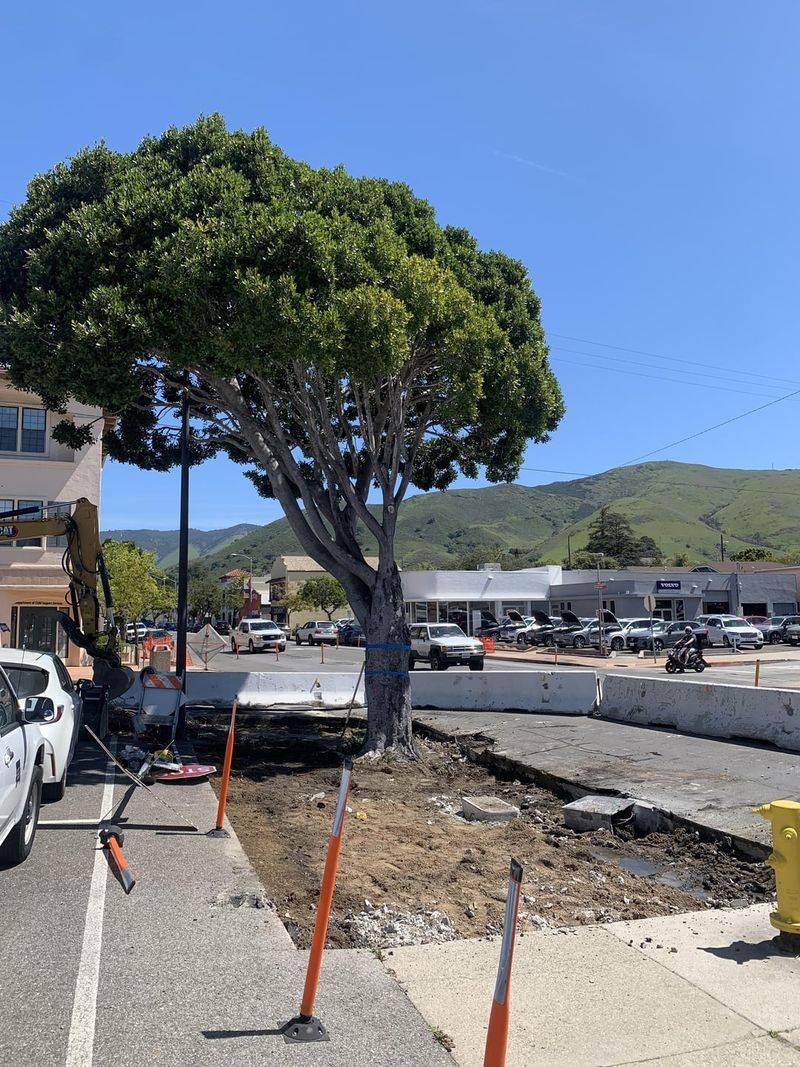
Ficus trees have been a go-to choice for Florida privacy screens and shade trees for decades. Their fast growth and dense evergreen canopy make them look like the perfect solution.
What they do not advertise is what happens underground. Ficus root systems are extraordinarily aggressive, spreading far beyond the canopy and infiltrating sewer lines, cracking sidewalks, and undermining building foundations.
Repair bills from ficus root damage can run into thousands of dollars. Homeowners often do not realize the roots are the culprit until plumbing backs up or a driveway starts heaving.
On top of that, ficus trees are highly susceptible to thrips infestations, which can cause significant leaf drop and leave the canopy looking thin and damaged.
Simpson’s Stopper (Myrcianthes fragrans) is a Florida native that checks all the boxes ficus promises without delivering. It grows as a dense evergreen shrub or small tree, provides excellent privacy screening, and produces fragrant white flowers followed by colorful berries that birds love.
The root system is well-behaved and non-destructive. UF/IFAS recommends it as a versatile, low-maintenance native that fits beautifully into a wide range of Florida landscapes without threatening your infrastructure.
7. Australian Pine Does Not Belong In Florida
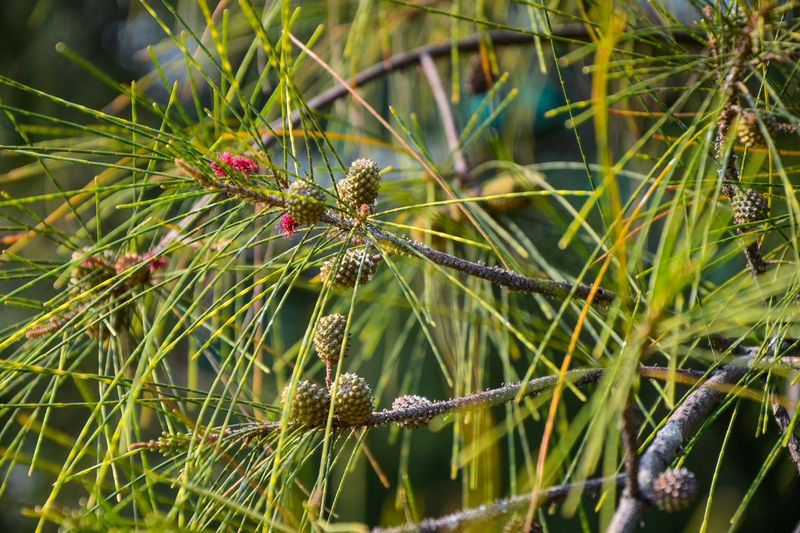
Surprisingly, Australian Pine is not actually a pine tree at all. It belongs to the genus Casuarina and was introduced to Florida in the early 1900s for erosion control and shade.
That decision has caused serious ecological problems that continue to this day. Florida has classified it as a Category I invasive species, meaning it aggressively spreads and displaces native plants in ways that damage local ecosystems.
Australian Pine forms dense monocultures along beaches and coastal areas, shading out native sea oats and other plants that stabilize sand dunes. Its shallow root system makes it prone to toppling in tropical storms, turning each tree into a potential hazard.
The fallen needles create a thick mat that prevents native seedlings from getting established, essentially locking out competition.
Slash Pine (Pinus elliottii) is a genuinely Florida-native pine that provides similar height, shade, and a naturalistic look without any of the ecological baggage. It is well-adapted to Florida’s sandy soils and periodic flooding, supports a wide range of native wildlife, and is approved for planting throughout much of the state.
Slash pine grows tall and strong, provides habitat for birds like the Florida scrub-jay, and causes no harm to the surrounding ecosystem.
8. Chinese Tallow Spreads Fast And Takes Over
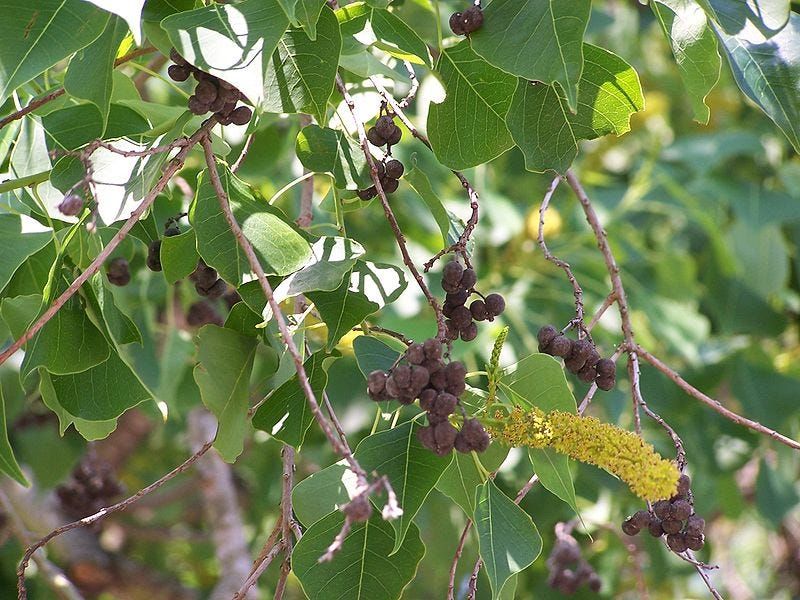
Chinese Tallow was once marketed as an ornamental tree and even promoted for biofuel production. Today, Florida and several other southeastern states recognize it as one of the most problematic invasive trees in the region.
It spreads with alarming speed, producing enormous quantities of seeds that birds distribute widely, allowing it to colonize natural areas, wetlands, and forest edges far from where it was originally planted.
Once established, Chinese Tallow shades out native vegetation and alters soil chemistry in ways that make recovery difficult. It leafs out earlier than native trees in spring, giving it a competitive edge that lets it crowd out slower-growing natives.
Florida’s natural areas, from flatwoods to floodplains, are increasingly threatened by its spread.
Florida-ecotype Red Maple (Acer rubrum) is one of the best native substitutes for homeowners who want fast growth, attractive seasonal color, and a tree that actually belongs here. When sourced from local Florida nurseries, it is adapted to the state’s wet and dry cycles, produces lovely reddish spring flowers and seeds, and supports dozens of native wildlife species.
It grows reasonably fast, stays within manageable proportions in most yards, and contributes positively to the local ecosystem rather than disrupting it.
9. Weeping Willow Breaks Easily And Spreads Roots
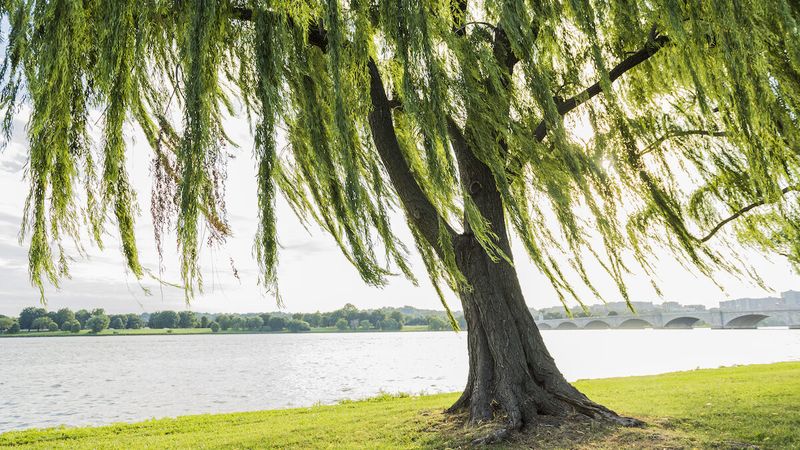
There is something undeniably romantic about a weeping willow. Those long, graceful branches swaying in the breeze look peaceful and poetic.
But planting one in a Florida yard is a decision many homeowners deeply regret. Weeping willows have some of the most aggressive water-seeking roots of any common landscape tree, and they will find your irrigation lines, drainage systems, and underground pipes with almost surgical precision.
The wood is also notoriously weak. Florida’s frequent summer thunderstorms and occasional tropical systems snap weeping willow branches regularly, leaving debris scattered across the yard after every major weather event.
Cleanup becomes a recurring chore from June through November. The tree also struggles in Florida’s sandy, well-drained upland soils unless it has constant access to moisture.
Bald Cypress (Taxodium distichum) delivers a similarly dramatic, graceful silhouette without any of those problems. It is one of Florida’s most iconic native trees, thriving in both wet and moderately dry conditions.
Bald cypress has strong, rot-resistant wood that handles storms far better than weeping willow. Its feathery foliage turns a warm copper-orange in fall, offering seasonal interest that is rare in Florida landscapes.
UF/IFAS consistently recommends it as a top-tier native tree for a wide range of Florida sites.