7 Things That Help Young Trees Survive And Thrive In Arizona’s Dry Soil
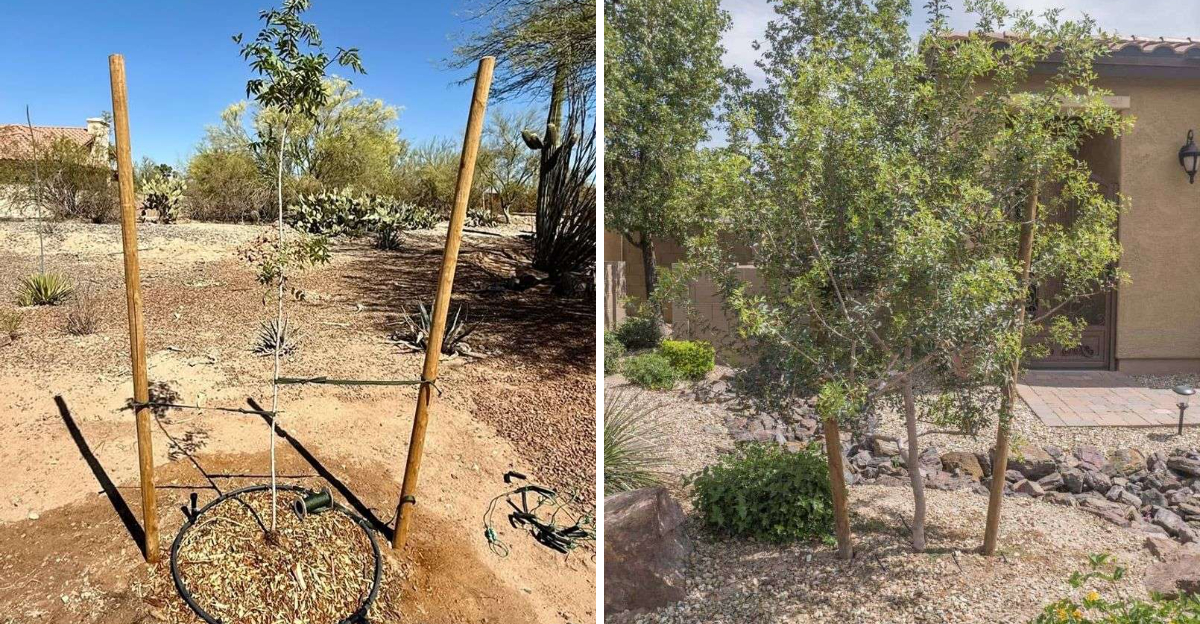
Young trees often struggle more than expected in Arizona’s dry soil, even when everything seems to be done right. The ground drains quickly, moisture disappears fast, and roots have a hard time settling in during those early stages.
What makes the biggest difference is not doing everything at once, but focusing on a few key details that support steady root growth.
Small changes in how the soil is handled, how water is given, and how the area around the tree is managed can shape how well it establishes over time.
When those early conditions are right, young trees grow stronger, hold up better against heat, and need less correction later. Missing those details can slow everything down and lead to stress that shows up long after planting.
Getting it right early sets the tone for how the tree performs moving forward.
1. Deep Watering Builds Strong Root Systems
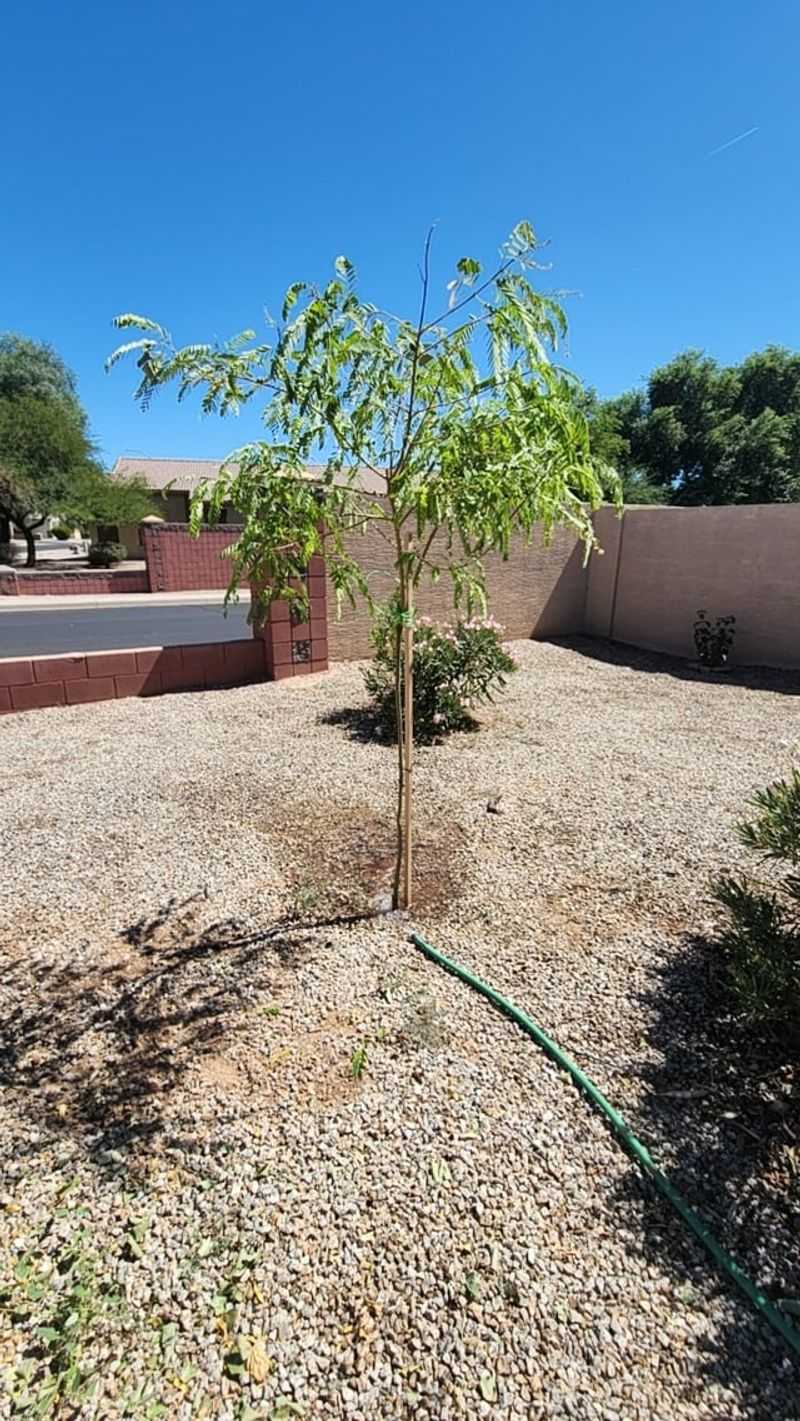
Shallow watering is one of the biggest mistakes people make with young trees in Arizona. When you sprinkle a little water on the surface, roots have no reason to reach downward — they just hang out near the top of the soil where moisture disappears fast in the desert heat.
Deep watering means getting moisture down 2 to 3 feet into the ground. A slow drip hose or a soaker hose left running for an hour or two does the job far better than a quick spray from a garden hose.
Setting up a simple basin around the base of the tree also helps funnel water directly where it needs to go.
In Arizona, watering early in the morning is a smart habit. Less water evaporates before it soaks in, and the tree gets a good drink before temperatures climb.
During the first year, young trees typically need deep watering once or twice a week in summer and every two to three weeks in cooler months.
Over time, deep watering trains roots to chase moisture further into the soil. Trees with deep root systems handle Arizona’s dry spells much better than those with shallow roots.
A tree with deep roots is anchored and resilient — it can pull water from deeper, cooler layers of soil even when the surface is bone dry.
Skipping deep watering is a shortcut that catches up with you. Put in the effort during the first two years and the tree will reward you for decades.
2. Proper Planting Depth Prevents Early Stress
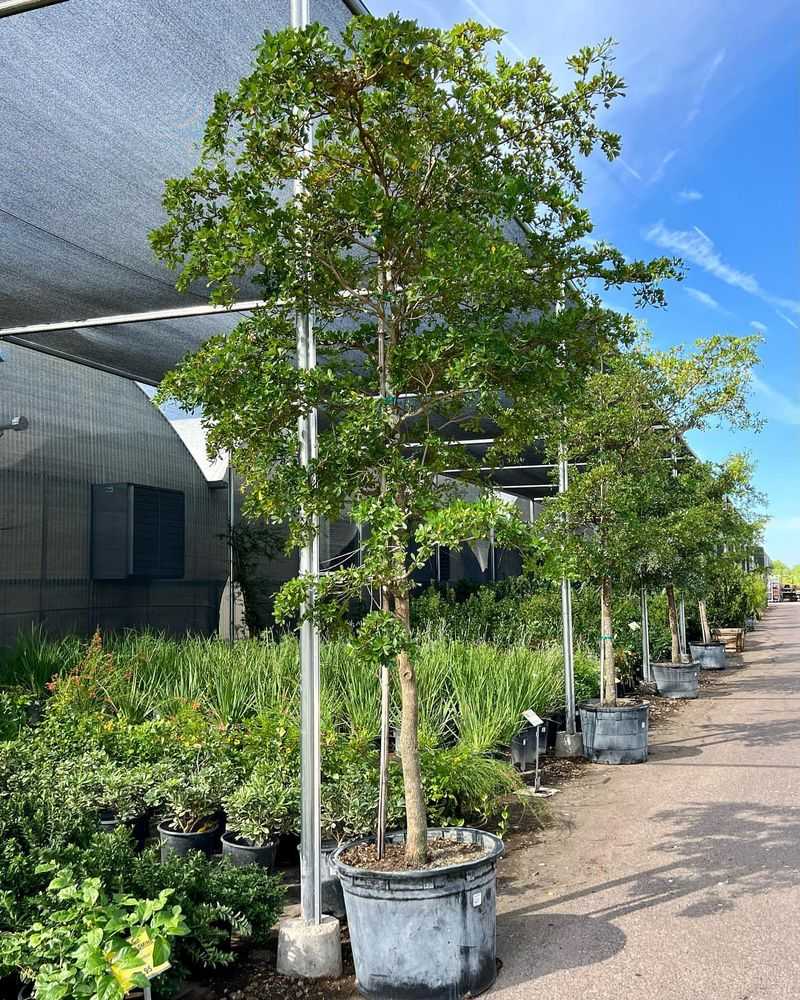
Get the planting depth wrong and a young tree will struggle from day one — no matter how much water or care you throw at it afterward. Planting too deep is surprisingly common, and it quietly suffocates the root zone by cutting off the oxygen roots need to function.
Arizona soil can be tricky. Caliche — that hard, chalky layer found in many parts of the state — sits just below the surface in a lot of yards.
If you hit caliche while digging, break through it or choose a different spot. Roots cannot push through that layer on their own, and a tree sitting above an impenetrable barrier will never develop a proper root system.
Your Arizona Garden Changes Every Week. Your Plan Should Too.
Gardening in Arizona changes quickly throughout the season. Every Friday you’ll receive a simple weekly plan showing exactly what to plant, prune, fertilize, harvest, and protect so you never miss the right timing.
The hole should be wide, not deep. A good rule of thumb is to dig two to three times wider than the root ball but only as deep as the root ball itself.
Set the tree in place so the root flare — the spot where the trunk widens at the base — sits slightly above the surrounding soil level.
Backfill with the original native soil rather than amended potting mix. In Arizona, trees actually benefit from learning to grow in the native soil right away.
Filling the hole with rich soil creates a comfortable pocket that roots never want to leave, which limits how far they spread.
Taking an extra 20 minutes to get the planting depth right pays off hugely. A well-planted tree skips a lot of early stress and starts growing with purpose.
3. Mulch Helps Soil Hold Moisture
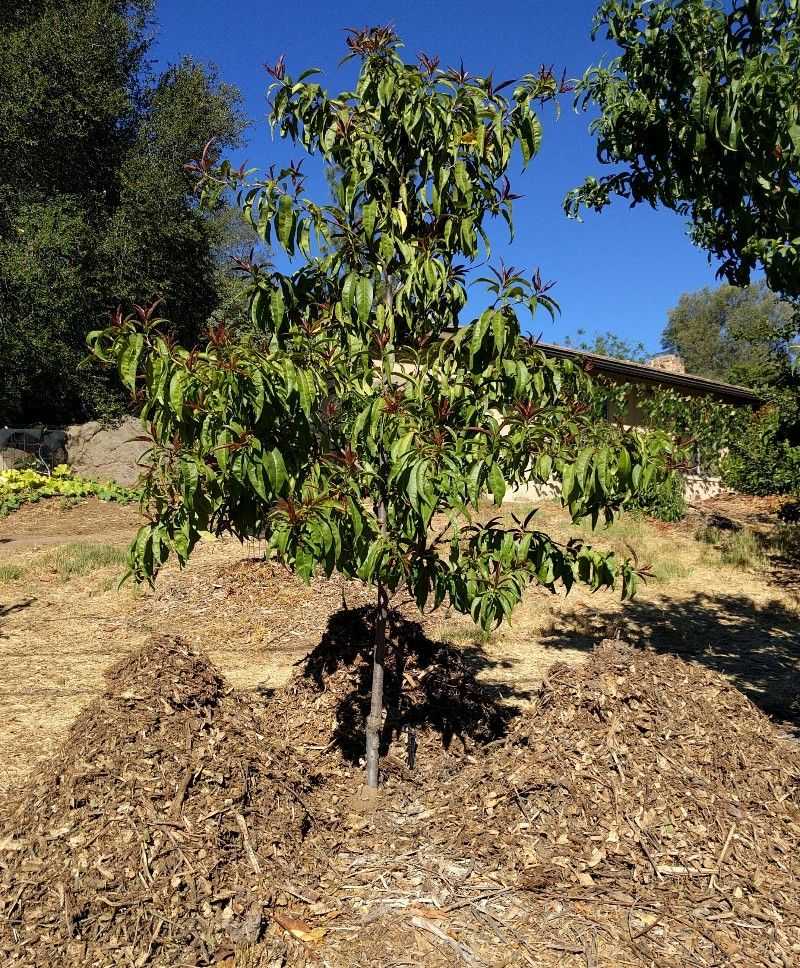
Arizona soil loses moisture fast — sometimes within hours of watering on a hot summer day. A layer of mulch acts like a blanket, slowing down evaporation and keeping the root zone cooler and damp for much longer than bare soil ever could.
Spread organic mulch — wood chips, shredded bark, or straw — in a ring around the base of the tree. Aim for a depth of 3 to 4 inches.
Keep the mulch a few inches away from the trunk itself, because mulch piled against the bark traps moisture against the wood and invites problems like rot and pests over time.
Beyond holding water, mulch does something else really useful in Arizona: it moderates soil temperature. Ground temperatures in Arizona can reach extreme levels during summer, which stresses roots near the surface.
A good mulch layer keeps those roots from cooking.
Organic mulch also breaks down gradually, adding a small amount of organic matter to Arizona’s notoriously nutrient-poor soil. It is not a dramatic change, but over a few years it improves soil structure and helps beneficial soil microbes establish themselves around the root zone.
Refreshing the mulch layer once a year keeps it effective. After a full Arizona summer, mulch breaks down and thins out.
Adding a fresh layer each spring before the heat arrives keeps the benefits going strong throughout the hottest months.
A bag of wood chips from the hardware store or free chips from a local tree trimming service are both great options for Arizona yards.
4. Correct Staking Supports Early Growth
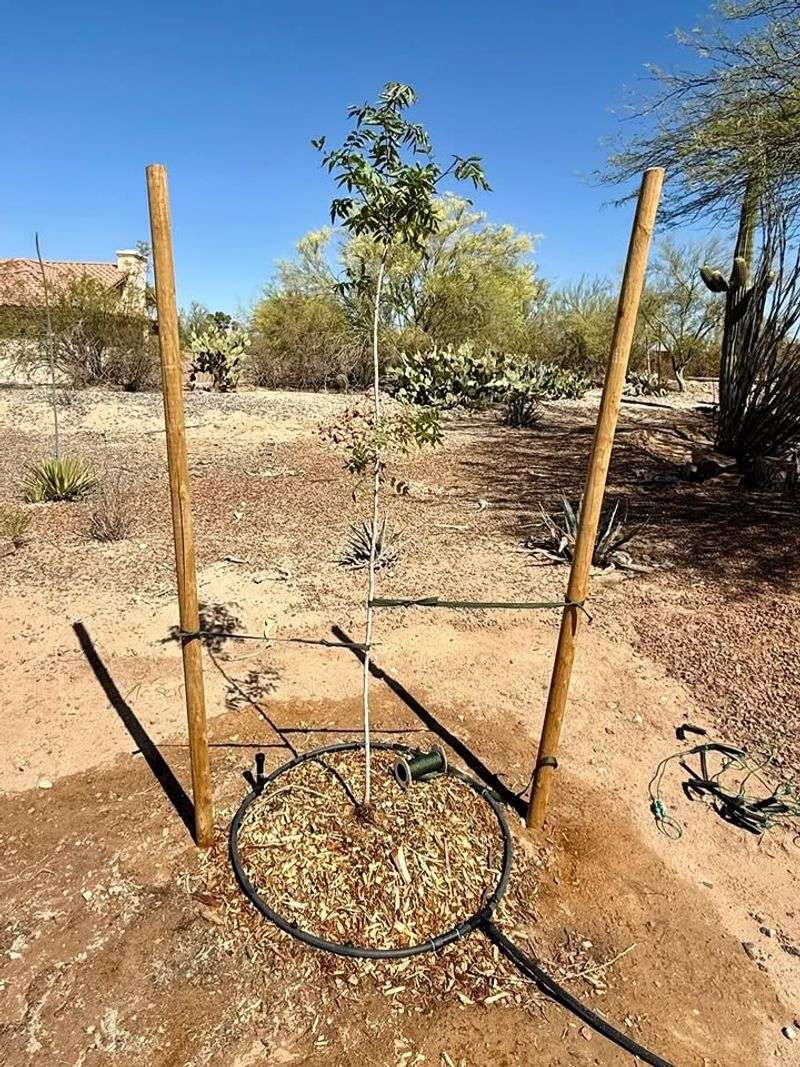
Arizona winds can be surprisingly brutal, especially during monsoon season when gusts roll in fast and hard. A young tree with an undeveloped root system has almost no chance of staying upright through a strong monsoon wind without some support.
Staking done correctly gives a young tree stability while still allowing the trunk to flex slightly. That slight movement is actually important — it encourages the trunk to develop strength and thickness over time.
A tree strapped too tightly to a rigid stake never builds that natural toughness and ends up weaker in the long run.
Use two stakes placed opposite each other, outside the root ball. Soft, wide ties — rubber tree straps or strips of old garden hose — work better than wire or rope, which can cut into the bark as the trunk grows.
The ties should hold the tree upright but still let it move an inch or two in any direction.
Leave stakes in place for no longer than one full year. Keeping them longer than that actually prevents the root system from anchoring properly, which defeats the whole purpose.
Check the ties every few months to make sure they are not digging into the bark as the trunk expands.
In parts of Arizona where monsoon winds are especially strong, a third stake can be added during storm season for extra support. Just remember to remove all stakes and ties once the tree has had enough time to establish a firm footing in the soil on its own.
5. Gradual Sun Exposure Prevents Shock
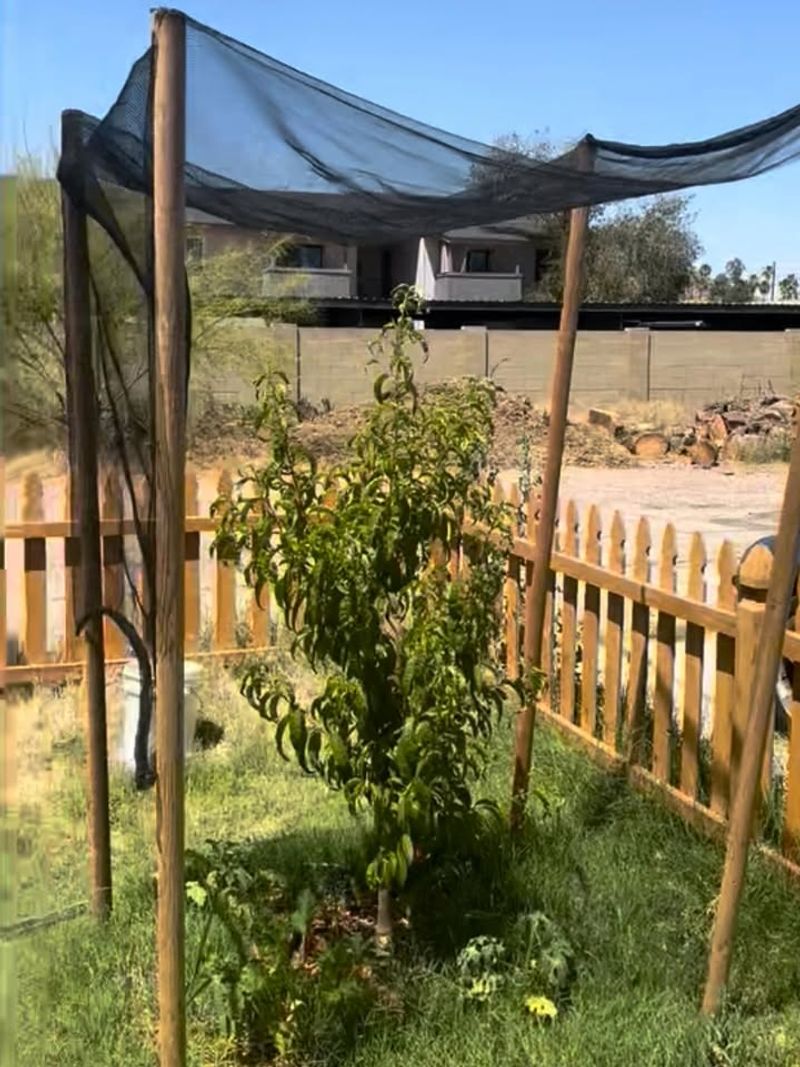
Full Arizona sun in July is not a gentle introduction for a young tree fresh from a nursery.
Nursery trees often spend their early lives in partial shade, and dropping one directly into a spot that gets blasted by eight to ten hours of direct desert sun can push it into serious stress within days.
Sunscald is a real concern in Arizona — it happens when intense sun heats up the thin bark of a young tree faster than it can handle. The bark cracks, the tissue underneath gets damaged, and the tree has to spend energy recovering instead of growing roots.
Pale-barked trees are especially vulnerable.
Temporary shade cloth is an easy fix. A simple frame built from rebar or PVC pipe with 30 to 50 percent shade cloth draped over it gives the tree a buffer.
Start with more shade and gradually reduce it over several weeks so the tree adjusts at its own pace.
Planting in fall or late winter is another way to sidestep the worst of Arizona’s sun intensity. Trees planted between October and February get several mild months to settle in before summer arrives.
By the time the heat peaks, the root system has had time to grow and the tree handles sun exposure much better.
Whitewashing the trunk with diluted white latex paint is a trick old Arizona gardeners use on young trees with smooth bark. It reflects sunlight and keeps bark temperatures lower during the hottest months of the year.
6. Well-Draining Soil Prevents Root Rot
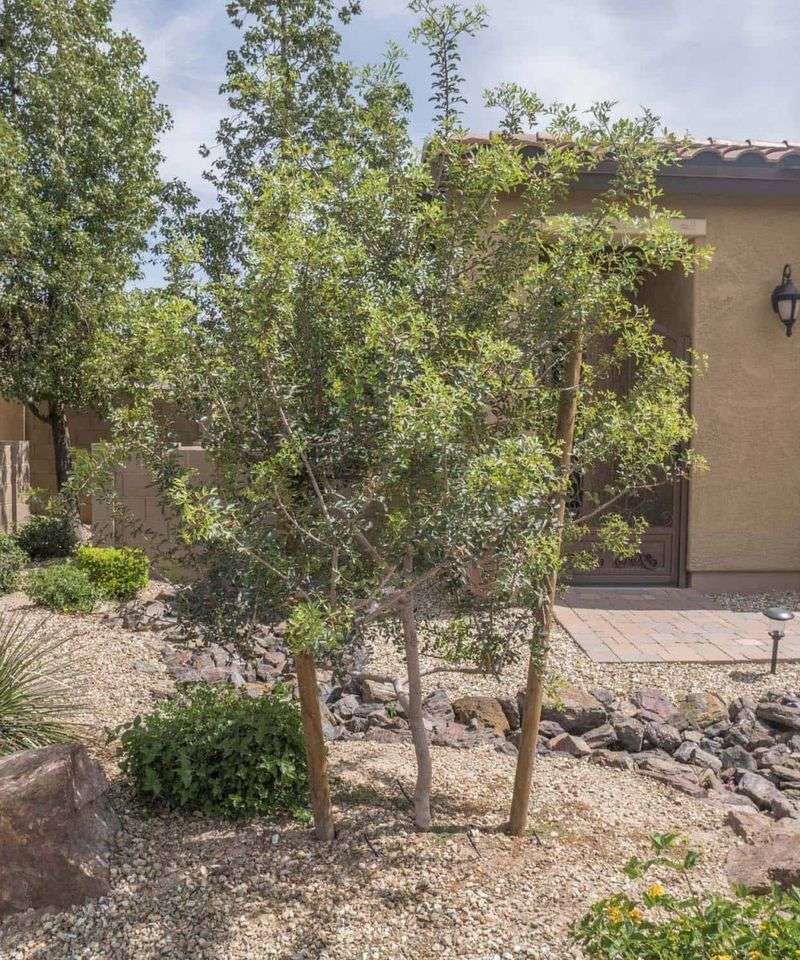
Soggy roots in Arizona might sound like an unlikely problem, but it happens more than you would expect. Caliche layers, clay pockets, and compacted soil can all trap water around the root zone, and roots sitting in waterlogged soil start to break down fast.
Before planting anywhere in Arizona, check how well the soil drains. Dig a hole about a foot deep, fill it with water, and watch.
If water is still sitting in the hole two hours later, drainage is a problem that needs to be addressed before a tree goes in.
Breaking up caliche with a rebar rod or renting a jackhammer for stubborn patches allows water to move through the soil profile instead of pooling. In areas with heavy clay, mixing in coarse sand or gravel improves drainage noticeably.
Raised planting beds are another option in spots where the native soil simply will not cooperate.
Choosing the right tree species also plays a role. Trees native to Arizona — like Palo Verde, Desert Willow, and Ironwood — evolved in fast-draining desert soils and handle dry conditions far better than many non-native species.
Putting an Arizona native in well-draining soil is setting it up for exactly the environment it knows how to handle.
Overwatering combined with poor drainage is the most common reason young trees fail in Arizona landscapes.
Checking soil moisture before each watering session, rather than following a fixed schedule, helps avoid the waterlogged conditions that damage root systems over time.
7. Consistent First-Year Care Improves Survival
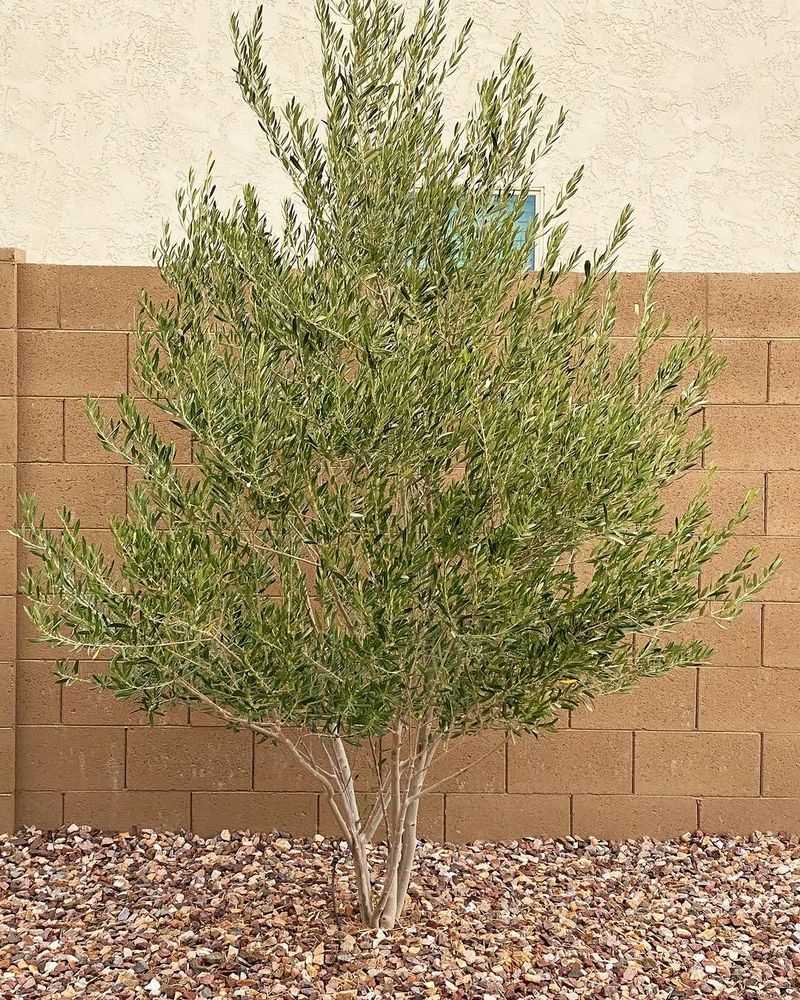
Ask any experienced Arizona gardener and they will tell you the same thing — the first year is everything.
A young tree that gets consistent attention during its first twelve months builds the kind of root system and trunk structure that carries it through decades of desert summers.
Consistency does not mean hovering over the tree every day. It means showing up regularly, checking in, and adjusting care as conditions change.
Arizona weather shifts dramatically between seasons, and what a tree needs in December is completely different from what it needs in August.
Keep a simple log. Write down when you watered, how much, and what the soil moisture felt like when you checked.
Over a few weeks, patterns emerge — you start to know exactly how your specific yard drains and how quickly the soil dries out in different seasons. That kind of local knowledge is genuinely useful.
Watch for signs of stress: yellowing leaves, wilting during cooler parts of the day, or bark that looks sunken or discolored. Catching problems early in Arizona means you have time to correct them.
A tree showing stress in May can usually be helped before summer heat arrives in full force.
Fertilizing lightly during the first spring with a balanced slow-release fertilizer gives young trees a nutritional boost without overwhelming them.
Arizona soil is often low in nitrogen and organic matter, so a modest supplement helps without pushing too much fast, weak growth.
Stick with it through that first year and the tree handles Arizona on its own terms from year two onward.